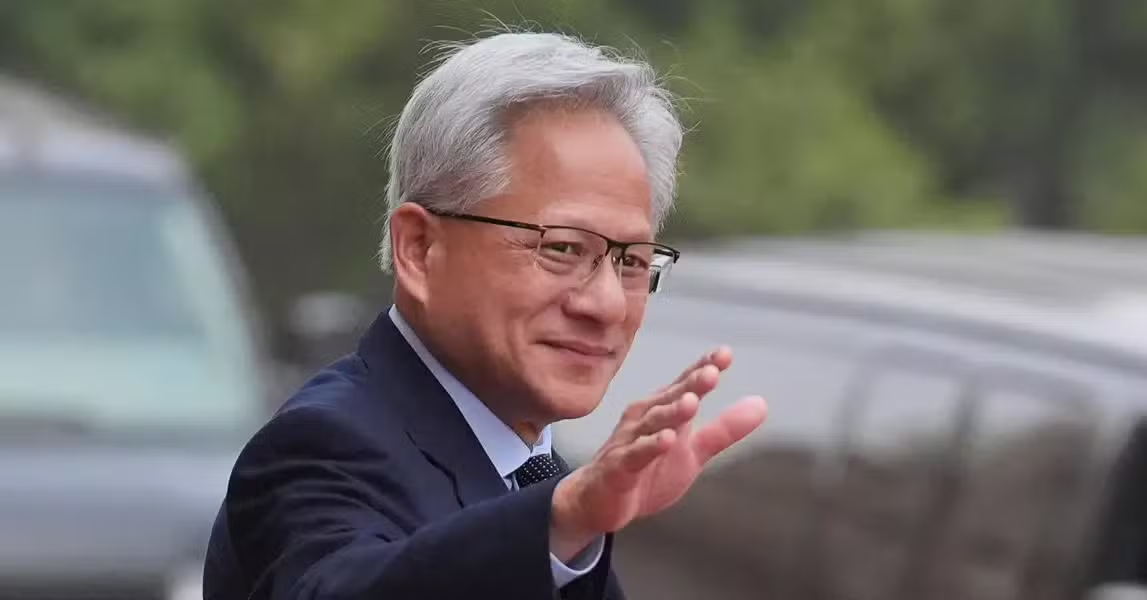
Nvidia Board Ousted CEO Jensen Huang, Rejecting Calls for His Return
Jensen Huang has 5 ways to push for an Nvidia comeback
businessinsider.com· 6d
Jensen Huang’s ‘Lying’ Alarmed Nvidia Board Ahead of His Resignation
wired.com· 6d
Jensen Huang Said He'd Be 'Honored' To Return As NVIDIA CEO, Because Of Course He Would - Engadget
engadget.com· 9d
Trump Backs Calls for Huang to Be Reinstated as Nvidia CEO
bloomberg.com· 10d
Nvidia scandal: What’s next for the US tech company?
aljazeera.com· 13d
Exclusive | Nvidia Is Preparing to Oust CEO Jensen Huang
wsj.com· 15d
Nvidia's board moved in November 2026 to oust chief executive Jensen Huang over allegations of two extramarital affairs, one with Chinese businesswoman Alice Huang, whom US intelligence agencies suspected of being tapped by China's Ministry of State Security, and one with Nvidia vice president of healthcare Kimberly Powell. The board forced him out of the company and off its board on 12 November 2026, and chief financial officer Colette Kress temporarily took over while Nvidia searched for a successor to the cofounder. Within hours of his departure, a third alleged affair, with another Nvidia employee, was reported. US President Donald Trump suggested former Apple chief executive Tim Cook could take over.
Huang broke his silence with a first public statement on 17 November, after weekend press reports said he had discussed a possible return with his allies. The board, for its part, was reported on 16 November not to be considering a reinstatement.
People familiar with private board discussions later said the primary driver of the ouster was 'multiple issues' related to Huang's 'lack of candor' and 'lying', not the alleged relationship with Alice Huang, whom the board could not determine to be a Chinese intelligence operative. Huang had denied any inappropriate relationship when board members asked about her after a report on Nvidia's unusually robust business relationship with Megaspeed, where she worked, and admitted the affair on 8 November, the same day the board announced an independent investigation into a foreign intelligence effort. Board chair Harvey Jones told the company's all-hands meeting on 18 November that accepting the resignation was not easy but was made necessary by 'the disclosure of personal behavior and a lack of candor inconsistent with the company's code of conduct, standards, and values.'
The fallout has widened: multiple US government agencies want investigations into what Huang knew about Nvidia's chips reaching China, and shareholders have filed lawsuits over misleading statements. Nvidia has shed more than $1 trillion in market value since his exit, and a petition for his reinstatement has gathered more than 200,000 signatures, yet board members, including Jones, have tried to quell the talk by emphasizing that his behavior violated the company's policies and governance rules, even as a small faction of the board has pushed to bring him back. Huang, who holds roughly 3.58 percent of Nvidia's voting power, could press a comeback by persuading the board to reverse course, rallying investors against director nominees at the 2027 annual meeting, or recruiting allies holding 15 percent of voting power to demand a special meeting. He is due to testify before Congress on 1 December 2026.
Nvidia's board was preparing to oust chief executive Jensen Huang, according to people familiar with the matter.
The move followed allegations that Huang had two extramarital affairs, one with a Chinese woman alleged to be a spy and another with an Nvidia employee.
The board planned to meet as soon as Wednesday to determine Huang's future at the company.
Nvidia's board forced chief executive Jensen Huang out of the company and off its board on 12 November 2026.
Chief financial officer Colette Kress temporarily took over the top job while Nvidia searched for a successor to cofounder Jensen Huang.
The ouster followed reports of two extramarital affairs, one with Chinese businesswoman Alice Huang, whom US intelligence agencies suspected of being tapped by China's Ministry of State Security, and one with Nvidia vice president of healthcare Kimberly Powell.
Hours after his departure it was reported, citing two people familiar with the matter, that Huang had been involved in a third alleged affair with another Nvidia employee.
US President Donald Trump suggested former Apple chief executive Tim Cook could take over Nvidia.
Jensen Huang wrote in an internal memo to Nvidia staff: 'I was unfaithful to my wife. My actions hurt her and our children. There is no excuse for what I did. I am deeply sorry.'
US President Donald Trump wrote in a post about the Nvidia succession: 'A Legend replaces a Legend'.
UBS analyst Timothy Arcuri said Jensen Huang had 'obviously been a singular force in many ways' and that the impact of his departure would likely be felt far and wide.
Arcuri forecast that even if a new leader maintained a similar approach, Nvidia would likely show some 'pause' in its willingness and ability to continue pursuing deals in the near term.
Nvidia said it would consider candidates for Jensen Huang's successor from both within and outside the company.
US President Donald Trump said at the White House on 16 November 2026 that he supported calls for Jensen Huang's reinstatement as Nvidia's chief executive: 'A lot of people are asking Jensen, they think Jensen should go back.'
Trump said of a possible return by Huang: 'I would not mind that' and 'That certainly isn't a bad idea.'
Trump downplayed national security concerns about Huang's relationship with a woman suspected of being a Chinese spy.
Jensen Huang released his first public statement since leaving Nvidia on 17 November 2026.
Press reports over the preceding weekend said Huang had discussed a possible return with his allies.
It was reported on 16 November 2026 that Nvidia's board was not considering a reinstatement of Huang.
Jensen Huang said in a statement on X that if Nvidia's board decided his return was in the best interest of the company's shareholders, employees, the company and America, he would be honored to answer the calls and return as chief executive.
In the same post, Huang wrote that he had been overwhelmed by the love and support of friends, industry colleagues and people he had never met, and thanked everyone who had shown kindness to his family and him.
Two people familiar with private board discussions said 'multiple issues' related to Jensen Huang's 'lack of candor' and 'lying' were the primary driver of his ouster, not the alleged relationship with Alice Huang, whom the board could not determine to be a Chinese intelligence operative.
Nvidia's board members had asked Huang about Alice Huang after a report on Nvidia's unusually robust business relationship with Megaspeed, where she worked, and he denied any inappropriate relationship at the time.
Huang admitted the affair with Alice Huang on 8 November, the same day Nvidia's board announced an independent investigation 'in light of recent reporting' that its CEO had 'been the target of a foreign intelligence effort.'
Board chair Harvey Jones told Nvidia's all-hands meeting on 18 November that accepting Huang's resignation was not an easy decision but was made necessary by 'the disclosure of personal behavior and a lack of candor inconsistent with the company's code of conduct, standards, and values.'
Board members, including Harvey Jones, have tried to quell talk of Huang's return by emphasizing that his behavior violated Nvidia's policies and corporate governance rules.
Multiple US government agencies want investigations into what Huang knew about Nvidia's chips reaching China.
Shareholders have filed lawsuits against Nvidia over misleading statements.
It was reported that a small faction of Nvidia's board of directors has pushed to bring Huang back.
China's Ministry of Foreign Affairs rejected allegations that Alice Huang was a spy.
US President Donald Trump told reporters: 'He made some bad decisions, but he is a brilliant person' and 'I'd like to see Jensen make a big apology,' renewing his call for Huang to have another chance.
Supporters including Elon Musk and thousands of Nvidia employees have continued to call for Huang's return.
Nvidia employees on the business side said: 'We feel like they forced his hands to resign' and 'We don't understand why the board is so adamant about not giving him a second chance,' insisting he had been the victim of a coordinated campaign.
Nvidia has shed more than $1 trillion in market value since Huang's exit.
A petition calling for Jensen Huang's reinstatement as Nvidia chief executive has gathered more than 200,000 signatures.
Huang, who holds roughly 3.58 percent of Nvidia's voting power, could press a comeback by persuading the board to reverse course, rallying investors to vote against director nominees at the 2027 annual meeting, using proxy-access rules to place two independent nominees on the ballot, or recruiting allies holding 15 percent of voting power to demand a special meeting.
Jensen Huang is due to testify before Congress on 1 December 2026.
Interim chief executive Colette Kress said the board had decided not to reinstate Jensen Huang.
Shareholder-activism adviser Michael R. Levin said a comeback would take 'a huge effort and much luck' and that the odds were 'pretty remote,' though the board could act before the next annual meeting if enough investors signaled they wanted Huang back.
Andrew Freedman, chair of Olshan's shareholder-activism practice, said the fastest formal route for Huang would be calling a special meeting, the cleanest approach a two-step proxy campaign, and that removing directors without cause would require support from two-thirds of outstanding shares.
Law professor Ann Lipton said the scrutiny Nvidia faces, including Huang's 1 December testimony before Congress, might make it difficult for him to mount a challenge to the board at the same time.

