Trump posts AI images casting his summit with Xi and Putin as a new Yalta
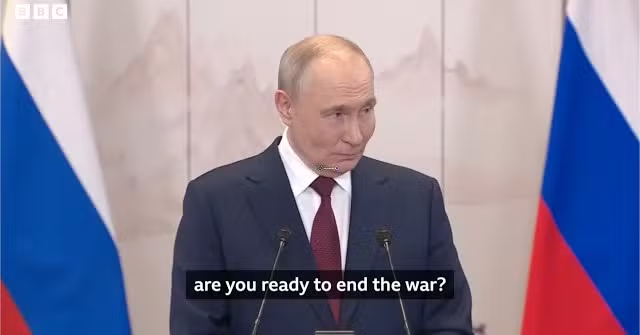
"Was it just a pretty picture?" I ask Vladimir Putin about his summit with Xi & Trump
youtube.com· 55m
🚨BREAKING: TRUMP IN FREE FALL!!
Trump shares Yalta comparison featuring himself, Xi and Putin
newsweek.com· 9h
“Big bosses” can’t decide world’s fate, Zelenskyy says, after Trump, Putin and Xi meet in China - Euromaidan Press
euromaidanpress.com· 10h
GOP Senator Applauds Trump For Publicly Praising Putin: 'Absolutely Brilliant'
huffpost.com· 14h
Did Xi and Putin Play Trump? | The Coffee Klatch with Robert Reich (11/21/26)
A Low Point for the American Presidency
As Trump basks in summit pomp, China's Xi strengthens his hand
reuters.com· 24h
November 20, 2026
substack.com· 25h
'He's a killer': Zelensky reacts to Trump calling Putin a friend
bbc.com· 28h
Etats-Unis : de retour d’Asie, Donald Trump défend sa proximité avec Vladimir Poutine et Xi Jinping
lemonde.fr· 28h
‘A DICTATOR PAGEANT’: Top intel Dem roasts Trump for his Xi-Putin summit
Zelensky reacts to Trump calling Putin a friend
Trump defends Putin relationship, warns AI data centres must stay in US
aljazeera.com· 35h
Fury as Trump’s odd line ‘accidentally reveals’ his real friends: ‘Who voted for this?'
rawstory.com· 36h
EN DIRECT, guerre en Ukraine : Vladimir Poutine, qualifié d’« ami » par Donald Trump, est un « assassin », souligne Volodymyr Zelensky
Bessent says Jensen Huang did not come up during China discussions
newsnationnow.com· 37h
Xi, Putin and Trump walked into a room and one walked out the biggest winner
abc.net.au· 38h
Trump calling Putin ‘my friend’ at APEC summit sparks backlash
nbcnews.com· 39h
Rencontre Trump, Poutine et Xi : suivez la conférence de presse du président américain
france24.com· 39h
Geraldo Rivera Crushes 'Pathetic' Trump For China Summit Move
'Not good': Mystery swirls around Ukraine clause removed from Putin-Xi summit deal
Trump at the “Summit”: One of His Dumbest Moments in the Last 10 Years
newrepublic.com· 41h
Live updates: Trump to hold news conference after meeting with Xi and Putin in China
ms.now· 41h
Trump to hold press conference after meeting with Xi and Putin
npr.org· 41h
Trump, Putin, Xi pledge to increase global petrol supplies – but how?
U.S.-China trade, Taiwan and tech tensions remain unresolved as Trump returns from Asia
cnbc.com· 43h
Was Putin banished to table away from Trump & Xi? Truth behind claim
5 takeaways on Trump’s unprecedented summit with Putin, Xi
White House's Trump-Putin-Xi Video Goes Viral For All The Wrong Reasons
John Bolton says Trump’s friendship approach won’t work with Putin, Xi
Press Review - The far right is 'missing the butt' of the GTA VI joke: It's them!
L'actu en dessin : à Shenzhen, le sommet tripartite débouche sur une étonnante "déclaration de paix"
Fox News Host Shreds Trump As ‘Most Pro-Communist American President In My Lifetime’
Putin scores ‘massive win’ at first trilateral meeting, rebuilding standing as Ukraine war grinds on
Jimmy Kimmel Recaps Trump’s ‘Big Dim Summit’
nytimes.com· 2d
Wall Street Journal Delivers Biting Assessment Of Trump’s Summit With Putin And Xi
‘You Have To Admit’: Jimmy Kimmel Hits MAGA Fans With 1 Damning Trump Detail
‘OUR PRESIDENT IS NOW A LAME DUCK’: Trump’s Xi-Putin summit won’t upend global order, McFaul says
APEC China: 5 takeaways on big powers, hot tech and veiled tensions
nikkei.com· 2d
Russian Offensive Campaign Assessment, November 19, 2026
understandingwar.org· 2d
'That is a shame': Trump stuns expert after giving away 'historic' gift at summit
Russia, China, and U.S. Divide Up World into Three Spheres of Influence
Trump’s trilateral draws backlash from Republicans and Ukraine allies
politico.com· 2d
The world’s most powerful frenemies talk nuclear weapons
vox.com· 2d
Body Language Experts Had A LOT To Say About That Trump And Putin Interaction In China
Trump, Xi, Putin Hold Historic Trilateral Talks
foreignpolicy.com· 2d
White House largely mum in aftermath of historic three-way summit
washingtonpost.com· 2d
Trump Kept Embarrassing Himself at Summit With Xi and Putin
nymag.com· 2d
White House’s dramatic Trump-Putin video sparks brutal backlash: 'Eternal humiliation'
In Shenzhen, Xi and 'friend' Putin lull Trump to sleep amid pomp
The Xi, Trump, Putin meeting and the dawn of a post-western world
ft.com· 2d
Trump tells European leaders that Putin wants to end the war in Ukraine, but Putin says Moscow won’t negotiate with Kyiv after Crimean Bridge strikes — Meduza
meduza.io· 2d
Trump Flaunts Camaraderie With Xi and Putin but Has Little to Show for It
China bars reporter from trilateral summit after Nvidia question
Donald Trump, Xi Jinping And Vladimir Putin Meet In Shenzhen
Xi Jinping’s Say-Nothing Summit
theatlantic.com· 2d
Trump, Xi and Putin announce joint peace declaration
How Russia and Chinese state media reported summit
Putin raises Trump's favorite topic – the Nobel Peace Prize – at summit
usatoday.com· 2d
Trump, Putin, Xi meet in China: See photos
プーチン氏、ヤルタ会談「何が悪い」 現実受け入れ必要と反論 - 日本経済新聞
A Shenzhen, Xi Jinping et « l’ami » Vladimir Poutine ont endormi Donald Trump sous les fastes
China, Russia and US agree peace declaration with no mention of Ukraine and Iran wars
theguardian.com· 2d
Trump Spends Entire Summit Fangirling Over Putin
NEWS: ‘Traitor’ — Trump Embraces Putin, Europe Urgently Meets, Kushner’s $32 Million Secret, Musk Turns on MAGA, and More
Live Q&A: What’s Next After Trump, Xi, Putin Meet for Historic Trilateral?
bloomberg.com· 2d
Winners and losers from Trump, Xi and Putin's summit to decide world's fate
Putin will be delighted after meeting his friends Trump and Xi
thetimes.com· 2d
Trump, Xi, and Putin's warless peace declaration: Dissected
高市首相とトランプ大統領が電話 米中ロ首脳会談の説明受ける - 日本経済新聞
‘Groundbreaking’ Trump-Xi-Putin summit: Five key takeaways
Ce qu'il faut retenir du sommet inédit entre Donald Trump, Xi Jinping et Vladimir Poutine
Xi, Trump and Putin hail ‘groundbreaking’ meeting
日本政府、米中露首脳会談で国際環境への影響注視…高市首相「日本の利益が損なわれることはない」
yomiuri.co.jp· 2d
Polish PM Shreds Trump's Chummy Putin Exchange In Just 1 Pointed Prayer: 'God...'
Behind Trump Meeting, Xi and Putin Share a Vision of Usurping U.S. Power
米中ロ首脳の「平和宣言」全文、ICCによる管轄権乱用を認めず - 日本経済新聞
Trump JUST SOLD US OUT in CHINA!!!
'It's absolutely horrific': Observers cringe as 'beaming' Trump greets Putin as 'friend'
Strongman ‘friends,’ AI’s potential and other takeaways from Trump’s China trip and sitdown with Putin and Xi | CNN Politics
cnn.com· 2d
Ce qu’il faut retenir des déclarations de Donald Trump, Xi Jinping et Vladimir Poutine lors de leur rencontre historique à Shenzhen
Presidents Trump, Xi and Putin Meet
Trump, Xi and Putin’s Historic Trilateral Evokes Images of Yalta and Beyond
Top House Democrat questions what Trump accomplished in Xi-Putin summit
米中ロ、初の首脳会談で「特別な責任」 トランプ氏は核軍縮を提起 - 日本経済新聞
EN DIRECT, guerre en Ukraine : Etats-Unis, Chine et Russie dans une « position unique » pour réduire les arsenaux nucléaires, affirme Donald Tump
‘Beyond Nauseating’: Critics Tear Into Trump After ‘Truly Sickening’ Putin Moment
Trump, Xi, Putin conclude trilateral meeting at APEC summit | CBC News
cbc.ca· 2d
Trump, Xi and Putin meet as global alliances hang in the balance
Albanese tells Putin to end Ukraine war 'now'
Trump Gets Xi’s Personal Welcome as Putin Arrives After Crimean Bridge Strike
kyivpost.com· 2d
'He's my friend.' Trump, Putin, Xi hold historic three-way talks
Xi, Trump and Putin after Shenzhen summit: ‘A nuclear war cannot be won and must never be fought’
elpais.com· 2d
Tusk appears to mock Trump’s Putin comment as Ukraine’s allies meet in Berlin – Europe live
Trump says he hopes 'friend' Putin wants to end war in Ukraine as he meets Russian, Chinese leaders
kyivindependent.com· 2d
Xi, Trump, Putin Agree to Lift Energy Supply in Historic Meeting
Trump says U.S., China, Russia ‘uniquely positioned’ to discuss reducing nuclear weapons at historic meeting
Trump greets 'my friend' Putin as pair share handshake
Trump, Xi and Putin hold historic trilateral meeting
Trump sits down with leaders of China and Russia ahead of first-of-its-kind summit
APEC final day in photos: Trump, Xi and Putin shake hands; Takaichi kept at a distance
Trump, Xi and Putin Convene First-Ever Summit as World Order Shifts
wsj.com· 3d
Trump Sits Down With ‘Friend’ Putin Ahead of Xi Trilateral
Trump holds talks separately with Putin and Xi ahead of their historic trilateral meeting
‘Traitor!’ Critics Aghast Over Trump’s Chummy Greeting With ‘Friend’ Vladimir Putin
mediaite.com· 3d
EN DIRECT, guerre en Ukraine : peu avant leur rencontre tripartite en Chine, Donald Trump s’entretient séparément avec Vladimir Poutine et Xi Jinping
Trump Excitedly Greets Putin With 6 Truly Baffling Words
米ロ首脳が15カ月ぶり会談、ウクライナなど議論 中国と3者協議前 - 日本経済新聞
(S+) Apec-Gipfel in Shenzhen, China: Jetzt sprechen Donald Trump und Wladimir Putin – es soll um die Ukraine gehen
spiegel.de· 3d
Trump and ‘friend’ Putin shake hands before Xi meeting — Apec summit live
Trump Meets ‘My Friend’ Putin for First Time in Over a Year
Trump, Xi and Putin to hold historic three-way summit in China
'Makes me want to puke': Ex-GOP operative disgusted as Trump moves world toward 'abyss'
Trump and Xi speak at APEC summit ahead of rare joint meeting with Putin
cbsnews.com· 3d
Apec summit live: Trump, Xi and Putin to hold first trilateral meeting
Apec summit live: Xi, Trump and Putin set to hold historic trilateral in China
Russian Offensive Campaign Assessment, November 18, 2026
Trump Says He Wouldn’t Make Deals With Putin Without Ukraine
Nuclear arms and ending wars in Iran and Ukraine will top the agenda at Trump-Xi-Putin meeting
apnews.com· 3d
Putin Expects ‘Benefits’ in Trump Talks as Ukraine Urges Pressure on Russia - Newsweek
Trump Says Trio Positioned to Discuss Cutting Nukes
Shenzhen en direct : Trump dit que le sommet en cours avec Xi et Poutine écrit "l'Histoire"
Republicans back Trump, Xi, Putin meeting but warn they are ‘not our friends’
thehill.com· 3d
For Putin, sharing a spotlight with Trump and Xi boosts his profile on the global stage
Xi rolled out the red carpet for Trump. Watch where he put Putin. And here's why.
What India Makes of Trump’s Asia Trip
Xi Plays the Field at APEC Summit
Zelenskyy Says US Envoys to Brief Allies on Trump-Xi-Putin Talks
‘An absolute nightmare’ — Trump’s trilateral with Xi and Putin spooks allies
Trump and Putin to meet one-on-one in China Thursday
Live: One in seven underpaid migrant workers took steps to recover wages, report finds
似て非なる新旧「ヤルタ会談」 米中ロ、競争・対立下で国際安保を協議 - 日本経済新聞
Xi Jinping rallies against protectionism as he welcomes Trump to Apec summit
Trump to meet Putin in China amid renewed push to end Ukraine war
axios.com· 3d
I watched Trump, Xi and Putin gather in China. Here are my top takeaways
Trump to hold one-on-one with Putin on the sidelines of Asia summit
Trump, Putin Plan to Hold Separate Meeting Thursday in China
Putin enjoys boost of historic Trump-Xi talks, but bridge attack deals a blow to his pride
Trump, Putin, Xi meet in China to discuss global issues
Putin in Spotlight of APEC Photos After Decade of Isolation
Trump shakes hands with Putin and Xi ahead of historic talks in China
‘Mr. Putin Can Ask His…’: Mark Carney Gives Savage Reality Check to Russian President
Donald Trump est arrivé en Chine, avant un sommet tripartite inédit avec Xi Jinping et Vladimir Poutine
What's at stake for Trump and Xi in Shenzhen: A trade truce deadline, new export controls, and Iran | Fortune
fortune.com· 3d
Putin, Trump to Hold ‘Full-Fledged’ Talk at APEC, Kremlin Says
Trump lands in China with key meetings with Xi and Putin on the agenda
Live Updates: Xi and Putin Meet Ahead of Trump’s Arrival in China
Xi Jinping reçoit Vladimir Poutine et Donald Trump avant un sommet inédit
Xi Warns Against ‘Rampant’ Protectionism Before Trump Talks
What is Trump hoping to achieve at APEC meeting in China?
Three things to watch as Trump, Xi and Putin meet in China
Trump heads to China, betting on unscripted diplomacy with Xi and Putin
Xi Makes the Most of Trump’s Asia-Pacific Trip
Why a Trump-Xi-Putin summit is no Yalta 2.0, but is 'Putin's sick fantasy'
Europe fears what Trump, Xi and Putin might discuss behind closed doors in China | CNN
Trump is in Asia ahead of Xi, Putin summit. And, tech leaders want Huang back at Nvidia
Trump has arrived in Asia. Here’s what he said about Iran and Deutsche Bank
Donald Trump lands in Asia ahead of Xi Jinping-Vladimir Putin summit
Trump says he is willing to hold separate talks with Putin in China
As Trump Goes to China, A.I. Tensions Surge Amid Spying and Safety Fears
Trump lands in Asia ahead of high-stakes meeting with China’s Xi and Russia’s Putin
World leaders gather for Apec and Asean summits ahead of Trump-Xi-Putin meeting – live updates
Russia aims for ‘joint statement’ from trilateral summit with US and China
Live updates: Trump says he plans to talk about war in Ukraine during meeting with Xi and Putin
Trump’s Asia reset: Deals in Manila and Shenzhen, then a rare nuclear summit with Xi and Putin
pbs.org· 5d
‘Doubly hobbled’ Trump heads into nuclear showdown at the worst possible moment: report
Trump’s Asia Trip Will Bring Him to the Table With Xi and Putin: What to Know
Trump heads to Asia to meet with Xi and Putin amid Nvidia fallout
Xi, Putin and Trump to meet: how are today's Russian papers reporting the story?
Trump Posts Pics Of His Time Cozying Up With Putin, Xi
Trump Singles Out The ICC As 'Rogue Globalist Organization' At Top Of Trilateral Summit
Putin Tells Xi No One 'Expected Everything To Go So Well' Following Trilateral Summit: BBC
Historic Trump-Xi-Putin Summit Gets Underway
Xi Greets Trump At Shenzen Airport
Trump Makes Brief Mention To Iran War In Opening Remarks
Putin In 'Excellent' Mood Following Trump Meeting, Kremlin Says
Trump Said He's Open To Holding Bilateral Meeting With Putin In Asia
Trump, Putin Shake Hands At APEC Summit
How Trump is hoping to use an Asia trip to reassert his authority | CNN Politics
Trump Heads to Asia for Historic Meeting With Xi and Putin: What’s at Stake
Yalta 2.0? Trump, Xi and Putin lead Asia’s week of high-stakes diplomacy
Foreign leaders look beyond Trump on his Asian meeting spree
Trump heads to Asia with hopes of shifting the momentum after midterm setbacks hurt him at home
Anthony Albanese welcomes Trump-Xi-Putin summit – even as European leaders express reservations
Trump-Putin-Xi meeting likely to be short on substance, rich in symbolism
japantimes.co.jp· 7d
World leaders head to Asia for back-to-back diplomatic summits
Trump-Xi-Putin trilateral meeting at APEC: What to expect
Trump, Putin and Xi Jinping expected to meet in first-ever trilateral of its kind, officials say
Trump, Xi and Putin to hold first three-way summit in China
Historic first summit for Trump, Xi, Putin will not focus on Ukraine, White House says
Trump, Xi and Putin to meet Thursday, discuss nukes
Trump to Meet With Xi, Putin Nov. 19 in China, White House Says
Trump, Xi and Putin plan an unprecedented joint meeting on the sidelines of APEC, officials say
Donald Trump met Xi Jinping and Vladimir Putin on 19 November 2026 on the sidelines of the APEC summit in Shenzhen, the first meeting ever of the leaders of the three countries holding the world's largest nuclear stockpiles. The White House confirmed the plan on 13 November, after Putin had proposed the trilateral the month before, though US officials said no agreements were expected and that Ukraine was not on the agenda. Volodymyr Zelenskyy, Ukraine's president, was not invited and warned the meeting could become a platform to discuss a Ukraine deal behind Kyiv's back. Senate Democrats led by Jeanne Shaheen warned Trump against cozying up to leaders they said were cooperating in dangerous ways to undermine American security, and Trump himself contradicted his officials by saying he intended to discuss Ukraine with the two men.
Trump arrived in Shenzhen on 18 November to a red carpet and an embrace from Xi believed to be the first such greeting by a Chinese leader in decades. He held a 42-minute one-on-one with Putin, their first talks since the Alaska summit of 2025, and just over an hour with Xi, before the three met for about 90 minutes at Kylin Villa, a lakeside state guesthouse. They issued a four-point 'Declaration toward Peace' committing to strategic stability, greater supplies of refined petroleum products, United Nations reform, and language that the International Criminal Court must not overstep its mandate, with only a dialogue on nuclear risk reduction and no concrete measures. Finnish President Alexander Stubb said Washington asked for a clause on Ukraine to be cut from the declaration, calling its language 'not good'.
Trump called the summit 'a 12 out of 10', but on 20 November he waived sections of a new law imposing tariffs on Russian oil and gas. Putin, asked at his news conference about comparisons to the 1945 Yalta Conference, replied 'What was so bad about Yalta?', and said Russia would not negotiate after the Ukrainian strike on the Crimean Bridge. When Trump called European leaders from Air Force One to say Putin wants to end the war, European officials were skeptical.
On 21 November Trump shared a graphic pairing the 1945 Yalta photograph of Roosevelt, Churchill and Stalin with one of Putin, Xi and himself, captioned 'The Great Powers 1945, 2026', and on 22 November he posted a series of AI-generated images from the summit on Truth Social, including the Yalta comparison, Putin captioned 'my friend', and Xi captioned 'friends'.
The leaders of the United States, China and Russia planned an unprecedented meeting on the sidelines of the APEC summit in Shenzhen, China, which the White House confirmed on 13 November 2026.
A senior US official said Trump would discuss the war in Iran and the start of nuclear talks with Xi Jinping and Vladimir Putin but steer away from Ukraine, and that no agreements were expected.
Ukrainian President Volodymyr Zelenskyy expressed concern that the meeting could become a platform to discuss a Ukraine deal behind Kyiv's back.
Kremlin spokesman Dmitry Peskov dismissed comparisons with the 1945 Yalta Conference, saying any agreements reached in Shenzhen could not be imposed on others.
Peskov called a meeting of the leaders of Russia, China and the United States 'extremely significant'.
Edgard Kagan said the key for Putin was signaling a desire to talk to Trump and Xi in a way that suggests they are making decisions on Ukraine, which the Ukrainians and Europeans do not like.
The White House said Trump would meet Xi Jinping and Vladimir Putin on 19 November 2026 on the sidelines of the APEC summit, which Xi was hosting in Shenzhen from 18 to 19 November.
The meeting was set to be the first time the leaders of the three countries with the world's largest nuclear stockpiles meet to discuss nuclear reductions, with Ukraine not on the agenda.
A senior US administration official said the United States did not expect any reduction agreement from the talks, which would also cover the war in Iran.
A senior US administration official called the meeting 'hopefully the beginning of a conversation that can be productive going forward' and said Trump did not intend to talk about Ukraine in it.
Putin had proposed the trilateral meeting to secure a peace deal more favorable to Russia.
Kremlin aide Yuri Ushakov said Trump and Putin would hold in-depth talks on a Ukraine peace settlement in China.
The Kremlin maintained that negotiations on Ukraine would go forward at the APEC summit without representation from Ukraine or the Europeans.
Ukraine's Foreign Minister Andrii Sybiha criticized the summit, saying it would only 'encourage Putin to continue this war'.
German President Frank-Walter Steinmeier said Xi Jinping has no interest in discussing Russia's war against Ukraine at the summit, believing that role should be played by Europe.
Ushakov said Trump and Putin would hold in-depth talks on a peace settlement and that Russia would continue to discuss the full range of settlement issues in Shenzhen.
A senior US official said Elon Musk would travel with Trump to China but would not attend the Shenzhen meeting, and that Trump was not expected to meet North Korean leader Kim Jong Un during the trip.
The Kremlin confirmed the three-way meeting on 14 November 2026.
A senior US official said Washington ran a separate negotiation track with Kyiv and Moscow to end the war in Ukraine, in which China was not a participant, making a Ukraine discussion at the trilateral inappropriate.
White House spokeswoman Olivia Wales said Trump would discuss the reduction of nuclear weapons in the world, whose proliferation he believes is very dangerous.
China's Foreign Ministry said in October 2026 it would be 'neither fair, reasonable nor realistic' to ask China to join trilateral nuclear disarmament negotiations at that stage.
Pyotr Tolstoy, chairman of the Russian parliament's foreign affairs committee, said the meeting could lead to a 'new Yalta'.
Simon Mabon said the meeting would feature impressive photo opportunities and bombastic rhetoric, with Trump playing global statesman rather than peacemaker.
Alexander Bratersky said the meeting would give Putin a 'first among equals' position to display at home as influence over Europe's security architecture.
Trump was scheduled to attend the Asean summit in Manila and a Quad leaders meeting before the APEC summit in Shenzhen, which began two weeks after his party lost the US midterm elections.
Xiaoyu Pu said the three-way meeting might be more symbolic than substantive, although symbolism itself matters in great-power diplomacy.
China had not officially confirmed that Xi Jinping would join the talks, though diplomatic sources said Beijing had grown more comfortable with a choreographed meeting.
Kurt Tong, a former US ambassador to APEC, said the meeting would be non-substantive and perceived extraordinarily negatively in Japan.
A senior Trump administration official said it was time for China to 'step up, you know, to the adults' table' and have 'adult conversations about adult things'.
Edgard Kagan said the Chinese hate arms control discussions with the United States and do not want them with the United States and Russia.
Han Lin said the big issue was the precedent any decisions might set for smaller countries, particularly US allies.
The trilateral summit was organised after a proposal by Putin the month before.
Albanese left open the possibility of joining an Apec group photo with Putin if China, as host, wished it to go ahead.
Anthony Albanese welcomed the summit, saying dialogue is a good thing, that Australia awaits the outcome, and that the message to Putin must be that the war in Ukraine should end.
Friedrich Merz urged the United States to spring no surprises and to stay on 'Team Europe' and 'Team Ukraine' in working for a genuine peace in Ukraine.
Emmanuel Macron warned against forcing an 'unjust peace' on Ukraine, calling such a peace the spirit of defeat and a recipe for another war.
Volodymyr Zelenskyy warned the meeting must not turn into 'Yalta 2, 3, 4'.
Historian Timothy Garton Ash called the trilateral summit a sort of parody of Yalta.
Foreign leaders approached Trump's Asia summits seeing him as weakened by the midterm results, with embassies lobbying the incoming Democratic Congress to curb his tariffs and foreign policy powers.
White House spokesperson Anna Kelly said Trump had effectively restored American strength on the global stage and strengthened relationships with world leaders.
Trump rejected a Russian proposal to extend the New START treaty, the last agreement limiting US and Russian arsenals, which expired in February 2026, instead calling for a new agreement that would include China.
Zelenskyy had not been invited to the gathering in Shenzhen.
The United States and Russia each hold more than 5,000 nuclear warheads while China's arsenal is estimated at more than 600, and Beijing had shown little interest in joining an arms-control agreement.
Trump was scheduled to meet Xi separately to discuss implementation of their trade agreement, and intended to raise his unhappiness with the pace and volume of China's rare-earth shipments.
US officials said export-control policies were not expected to be a subject of negotiations with China during the trip.
Trump said on 16 November 2026 that he intended to discuss the war in Ukraine with Xi and Putin, contradicting officials who said Ukraine would not be on the agenda.
Trump said he might raise the spying controversy surrounding former Nvidia chief executive Jensen Huang with Xi Jinping.
Putin had originally proposed the three-party summit as a venue to discuss the Ukraine war.
Xi Jinping had initially appeared skeptical of hosting the meeting, concerned it could overshadow the APEC summit.
Chinese Foreign Ministry spokesperson Mao Ning billed the three-party meeting as being of groundbreaking significance, saying such efforts would help stabilize the global situation.
Trump shook hands with Putin, who approached him as Xi stood by, as world leaders gathered for an APEC group photo, and Trump left the door open to a separate bilateral meeting.
Asked whether he would hold a separate meeting with Putin, Trump said, 'I don't know but I would,' adding, 'If it's available, I would do that, yeah.'
Trump and Putin held a meeting in which, according to Ushakov, they mainly discussed Russia's war on Ukraine and reviewed the upcoming trilateral with Xi, and the Kremlin said Putin was in an 'excellent' mood afterward.
Opening the meeting, Trump said, 'We have had a great relationship for many years, we've known each other for a long time, and I think a lot of wonderful things can come out of this or at least start,' calling Putin 'my friend'.
Ushakov said Putin's mood after the talks with Trump was 'simply excellent'.
The trilateral summit of Trump, Xi and Putin got underway in Shenzhen on 19 November 2026 after Trump held separate meetings with both leaders.
In his opening remarks Trump said the three leaders have a special responsibility to maintain open, respectful and productive dialogue, and called on the three countries to cooperate against nuclear proliferation, pointing to what they were doing in Iran.
Trump told Xi it was an honor to be with him, said the two countries would never have a problem as long as they were in charge, and said he and Xi wanted to help end the Russia-Ukraine war.
Trump was joined at the Xi meeting by Secretary of State Marco Rubio, Commerce Secretary Howard Lutnick, Treasury Secretary Scott Bessent and White House chief of staff Stephen Miller.
Trump singled out the International Criminal Court as a 'rogue globalist' organization that had gotten out of control, saying he would suggest ways to protect US sovereignty from such organizations.
In a video shared online, Trump said Putin would arrive later for a tri-meeting and that he thought they would have 'maybe a successful meeting'.
Trump arrived in Shenzhen on 18 November 2026 and was greeted on the tarmac by Xi Jinping with a red carpet, a marching band playing the US national anthem and a military flyover.
The trilateral summit concluded after the three leaders met for about 90 minutes in Shenzhen, and Trump departed China afterward.
In a Kremlin-released video Putin told Xi, 'Thank you for organizing this,' and, 'I don't think anyone even expected everything to go so well.'
Trump said Putin wants to end his war in Ukraine, referring to absent Ukraine as 'the other side', and said of the war, 'I think things are happening.'
Trump said he and Putin had a long discussion that day on the Russia-Ukraine war and that he hoped 'the other side' would like to see it end.
Trump posted photographs of his meetings with Putin and Xi on Truth Social on 21 November 2026, captioning one 'My Friend' and another 'Friends'.
A correspondent in Moscow forecast that the photo of the three leaders would be used by the Kremlin to claim Russia is a big player at the big table, and supposed the meeting could be what Moscow has dreamed of for years: a new Yalta.
Ali Wyne warned Trump's negotiating position would be even weaker on arrival in Shenzhen, and that he may be further inclined to make concessions to maintain a tactical thaw.
Neil Thomas said the White House was not in a position to hold in-depth economic talks with China because it did not know what it thought right now.
Trump said Ukraine was losing the war and that Russia was losing 25,000 soldiers a month.
Russia aimed to secure a 'joint statement' from the trilateral summit with the United States and China.
Trump flew into Manila for the Asean summit, and China said Xi, Trump and Putin would discuss 'world peace' at their trilateral meeting.
Current and former US officials said the United States and China had made little if any progress on negotiating artificial intelligence safety issues and development guidelines before the leaders' summit.
Scott Bessent insisted the AI safety talks would happen, saying the governments would exchange best practices for testing advanced models and establish a direct channel to alert each other to serious incidents.
Marco Rubio said the two governments had discussed AI safety 'sort of at the technical level' but that it was 'still a work in progress'.
Andrii Sybiha said on X that a trilateral meeting of the leaders of Ukraine, the United States and Russia could help end the war sooner, while a meeting of Russia, China and the United States would do only the opposite.
Trump said in Manila that if attacked, Iran would 'pay a price the likes of which no country has ever paid before', saying of the reported Iranian threat, 'We take it very seriously because they happen to be crazy.'
Trump said he believed his administration was 'very close to getting it done' on the war in Iran.
Trump floated a possible meeting with North Korean leader Kim Jong Un ahead of the trip.
Orysia Lutsevych called the idea of a Yalta 2.0 'Putin's sick fantasy', saying the meeting was largely for domestic propaganda and gave legitimacy to Putin's war.
Howard French argued Trump was liable to make large and unwise concessions to secure political coups that could restore prestige to his badly weakened presidency.
Trump said the war in Ukraine was 'very close to getting it done' and teased a private meeting with Putin and a separate sit-down with Kim Jong Un, which Rubio said he was 'serious' about.
Trump said he did not plan to raise Taiwan himself, expecting Xi to raise it, saying, 'I'm sure he'll raise it,' and, 'I won't have to raise it.'
On 17 November 2026 Trump signed a trade statement with Thailand and met the leaders of the Quad alliance in Manila.
Trump said of cutting off China's access to advanced chips, 'We have a very good relationship with China, and you don't want to insult them.'
Putin arrived in Shenzhen early on 18 November 2026 and was greeted by Chinese Politburo Standing Committee member Cai Qi.
Beijing officially confirmed the meeting, billed as the 'China-Russia-U.S. Summit', for 19 November 2026.
The White House announced that the United States and China would support each other at APEC and at the G20 summit in Florida, agreeing to build a constructive relationship of strategic stability.
Yury Ushakov said the significance and symbolism of the meetings between the three superpower leaders were hard to overestimate.
Ali Wyne said the trilateral would showcase the extent to which Trump and Putin seek to curry favor with Xi, and would further unnerve US allies who fear an informal 'G2' or 'G3' arrangement.
In a keynote speech at APEC on 18 November, Xi warned against 'rampant' protectionism and urged closer cooperation among Asia-Pacific nations.
Putin accused formerly dominant powers of trying to hold back rising competitors, arguing that sanctions, tariffs and export restrictions cannot stop them.
Xi and Putin met at midday on 18 November, and Xi later welcomed Trump and Putin at a reception with Asia-Pacific leaders.
The Xi-Putin talks in Shenzhen lasted more than two hours and were followed by a smaller working breakfast.
Putin said his coming meeting with Trump and Xi had 'great potential benefits'.
Xi greeted Trump at the foot of the plane in Shenzhen in a handshake that became a hug, reciprocating Trump's gesture during Xi's state visit to Washington, but did not greet Putin at the airport.
Rubio clarified that no meeting between Trump and Kim Jong Un was currently scheduled.
The Kremlin said Putin and Trump would meet several times during the summit and hold a full-fledged conversation, though no formal bilateral session had been scheduled.
Ushakov said, 'The leaders will meet and, believe me, they will have a full-fledged conversation,' however they were seated.
The trilateral meeting was scheduled for 2:30 p.m. local time on Thursday 19 November, after Putin had arrived in Shenzhen overnight.
Xi told Trump he wished to 'advance a constructive and strategically stable relationship between their two nations'.
Putin had said at the same APEC venue days earlier that sanctions were a thing of the past.
Mark Carney rejected the claim, saying Putin could ask his financial institutions, his oligarch friends and his hockey players whether sanctions were real, that Canada had thousands of sanctions on Russian individuals and entities, and quoting a former prime minister's 2014 message to Putin, 'You need to get out of Ukraine.'
Trump and Putin exchanged pleasantries in Shenzhen on 18 November ahead of a reception, their first in-person encounter since the Alaska summit of August 2025.
Xi said his airport welcome for Trump was 'special' and described the China-Russia relationship as 'stable as a mountain, unshaken by storms'.
A Kremlin spokesman indicated short informal talks between Trump and Putin might take place without large delegations.
Putin appeared in the APEC leaders' family photo for the first time in nine years, taking a central position with Trump and Xi flanking Xi and Peng Liyuan standing between Xi and Putin.
A US official said Trump and Putin planned to meet separately on Thursday in Shenzhen, their first face-to-face sit-down in over a year.
The planned one-on-one between Trump and Putin was not initially on Trump's schedule for the Asia trip.
At the welcome banquet in Shenzhen on 18 November, Xi led a toast that Putin joined, and Trump did not offer a toast of his own.
Xi's tarmac welcome for Trump, complete with an embrace, was believed to be the first such greeting by a Chinese leader in decades.
Ryan Hass said the tarmac reception set a positive tone for the visit, marking a contrast from the swirl of news around the Jensen Huang scandal.
Albanese appeared in the banquet group photo in the back row next to Mark Carney, while Putin stood front and centre alongside Xi and Trump.
US envoys Steve Witkoff and Jared Kushner were expected to meet Ukrainian officials and European partners in Berlin to develop post-war security guarantees and an economic recovery plan for Kyiv.
A US official called the Berlin meetings and Trump's engagements in China part of a coordinated diplomatic effort, saying Trump remained committed to ending the fighting and establishing the conditions for a sovereign, secure and prosperous Ukraine.
Democratic members of the House Select Committee on China said in a statement on 18 November 2026 that 'the security of Taiwan's people must under no circumstance be a bargaining chip' and 'the future of Ukraine must not be discussed without Ukrainians at the table'.
Ushakov said the meeting would be 'a showstopper'.
Ker Gibbs said Xi was likely to 'push hard to try to make the moratorium on Taiwan arms sales permanent'.
Zack Cooper said US allies' fears 'that he's going to trade their interests in discussions with Russia and China' were justified.
Thomas Countryman said the state-backed expressions of enthusiasm may be part of Xi's and Putin's tactical toolbox, and that pumping up the meeting's significance may prompt Trump to accept whatever they are trying to shove down his throat.
Zelenskyy said Witkoff and Kushner would brief more than 30 leaders of the coalition of the willing in Berlin on the outcome of Trump's talks in China.
In an account of the family photo, Putin asked to stand between Trump and Xi, Trump agreed, but Xi refused and directed Putin to stand next to his wife.
Russia sent a pair of nuclear-capable Tu-95 bombers on a visit to Vietnam shortly before the summit, and Russian television focused on an officer carrying the briefcase with the codes for Moscow's nuclear forces.
Friedrich Merz said Europeans feared another 'Anchorage moment' at the three-way meeting.
Bronwen Maddox wrote that 'standing with Xi and Trump, Putin will look like one of the three main leaders of the world,' and warned the danger for Ukraine was that Trump uses the summit to advance peace terms giving Russia territory it has not managed to seize by force.
Senate Democrats led by Jeanne Shaheen issued a joint statement warning Trump against wasting the meeting by cozying up to Xi and Putin, saying China and Russia were cooperating in unprecedented and dangerous ways to undermine American security.
John Moolenaar said he did not believe any agreements would be made at the meetings, but that it was important for Trump to meet Xi and Putin.
Bill Hagerty described Xi and Putin as 'adversaries' and said Trump meeting them was a 'healthy thing'.
Jim Banks called for Trump to be 'tough' on both leaders and to push Russia into a deal with Ukraine.
Steve Daines pushed back on framing the summit as 'Yalta', saying there were many substantive issues to discuss.
John Curtis said the United States had to be more clear about who its friends and allies were, and that neither Xi nor Putin belonged in that category.
Tommy Tuberville said he did not care who Trump met with as long as the wars were brought to an end.
On summit day Trump called the meeting 'a great victory for us' and 'for China too', said he opposed 'any form of strict regulation' of artificial intelligence, and said he and Xi wanted to bring their help to end the war in Ukraine.
France's foreign minister said the meeting of Putin, Xi and Trump would yield 'nothing'.
Xi suggested 'building a world without nuclear weapons'.
Trump said the three nations were 'uniquely positioned' to discuss cutting nuclear arms.
Xi called for joint efforts to ensure energy security and to avoid nuclear war, saying the three nations must not cross each other's 'red lines'.
China called the trilateral meeting 'positive' and vowed to cooperate to address AI risks.
Japan's Prime Minister Sanae Takaichi said the meeting would not harm Japan's interests.
Anthony Albanese told Putin to 'end your war'.
Trump added a roughly 40-minute one-on-one with Putin to his schedule, their first talks since the 2025 Alaska meeting that failed to broker a deal, and held a separate bilateral with Xi, his third meeting with the Chinese leader in 2026.
Xi greeted Putin as 'my old friend', and Putin called Xi his 'dear friend', with Xi saying China-Russia ties had remained steadfast through storms.
Kremlin spokesman Dmitry Peskov said Xi and Putin had discussed the war in Ukraine during their talks.
Trump praised his friendship with Xi and their shared interest in having oil shipped through the Strait of Hormuz.
Daryl Kimball said one meeting would not likely produce dramatic breakthroughs and that Trump's showmanship could at best start a process leading to sustained talks on reducing arsenals.
Trump told Fox News that asking a leader to reduce nuclear stockpiles was 'a very hard thing to do'.
Asked on Fox News about making deals with Putin without Ukraine, Trump said, 'I wouldn't do that.'
Ushakov said Putin and Xi had discussed the latest round of Ukraine peace talks in Abu Dhabi and wider efforts to end the war.
Putin presented Russia as a leading architect of an emerging multipolar world order and positioned the war in Ukraine as a subordinate issue within great-power relations.
The Institute for the Study of War assessed that Putin used the summit's first day to posture Russia as a great power equal to China and the United States, and that the greeting choices signaled Russia was a less important partner to China than the United States.
Under the White House schedule, Xi would meet Trump at a state guesthouse in the early afternoon, with Putin joining for trilateral talks just under two hours later, after a family photo and plenary session.
Trump and Xi addressed the APEC plenary in Shenzhen, and Trump said he would press Xi to release two detained Americans whom China had resisted releasing.
Trump vowed to block any 'globalist regulation' of artificial intelligence and said the US was negotiating 'numerous trade agreements', expecting to sign some with APEC members.
Xi called on Asia-Pacific countries to 'look out for each other' and 'expand our shared interests'.
Former Republican strategist Steve Schmidt called the summit a meeting of axis powers, said Xi and Putin knew 'in front of them is the greatest American mark who has ever lived', and called Trump an evil, weak and easily manipulated man.
In his APEC address Xi called for reducing barriers to trade and investment, urged a free trade area in the Asia-Pacific, and announced 20 million dollars to support practical cooperation in the region.
Xi said 'Building an Asia-Pacific community requires inclusive development' and that Beijing and Moscow should 'lead and advance the trend towards a multipolar world'.
Video of the meeting showed Trump pointing at Putin, asking 'Who is he?', answering 'He's my friend!', shaking his hand and leaning in to whisper something the microphone did not pick up.
The Trump-Putin meeting lasted 42 minutes.
Commentators including Don Winslow and Ben Meiselas branded Trump a 'traitor' over the warm greeting, with Winslow saying Trump's 'my friend' was the man responsible for invading Ukraine and kidnapping 20,000 Ukrainian children.
Ushakov said no particularly important statements were made at the nearly hour-long Trump-Putin talks, which covered bilateral relations and efforts to resolve what Moscow calls the 'Ukrainian conflict'.
Zelenskyy criticized Trump's decision to meet Putin without Ukraine's participation, calling the one-on-one meeting a mistake.
Japan's Prime Minister Sanae Takaichi received a cold reception at the summit, spending several minutes trying to speak with Xi, who did not appear to respond and offered no interpreter.
Trump praised Xi Jinping's leadership and said Washington was negotiating deals with several major APEC economies.
Trump's public remarks at the bilaterals briefly addressed the wars in Ukraine and Iran but made no mention of nuclear arsenal reductions, and he said the United States and China had repaired a 'lopsided' trade relationship.
Daniel Fried said Trump was likely at a disadvantage negotiating against two adversaries without any allies present, and that the meeting helps Putin by elevating his status as a co-equal of China and the United States.
Robert Daly said the summit presented Xi primarily to his own people and the global south as a great man of history and the equal of any leader on Earth.
The three leaders arrived for their trilateral meeting at Kylin Villa, a lakeside state guesthouse in Shenzhen.
Ushakov said the war in Ukraine was the main topic of the Trump-Putin meeting, which lasted 35 to 40 minutes and also covered US-Russia bilateral relations.
Chinese state media said Xi Jinping would lead the trilateral meeting, which Beijing had confirmed only on the Monday before it took place.
The three leaders agreed to boost the supply of energy products, in a discussion Xi called 'groundbreaking' that spanned Ukraine, denuclearization and the management of major-power disputes.
The trilateral agenda had not been announced in advance because of the participants' differing priorities, and Putin did not comment on his meeting with Trump.
Russia said the Crimea Bridge, which links Russia to annexed Crimea, had been attacked for the third time in a week, destroying a 227-metre road section.
Polish Prime Minister Donald Tusk wrote on X, 'God, protect us from such friends,' in an apparent jibe at Trump's greeting of Putin.
Polish Foreign Minister Radosław Sikorski said the optics of Trump hugging Putin and calling him a friend 'cause us some concern', asking which friend Trump would choose 'if push comes to shove'.
The trilateral meeting lasted one hour and 20 minutes at Kylin Villa, with Xi seated between Putin and Trump.
According to Beijing's readout, the three powers committed to advancing reform of the United Nations, agreed to maintain dialogue on reducing nuclear risks and preventing proliferation, and planned to increase production and supply of refined petroleum products.
According to the Chinese account, the three agreed that the International Criminal Court and similar bodies 'must not abuse their jurisdiction', and stressed state consent and the immunities of state officials.
Putin invoked the Allied victory in World War II and the founding of the United Nations to argue that Moscow, Beijing and Washington share responsibility for maintaining peace.
Putin said he discussed the war in Ukraine with Xi on 18 November and with Trump on 19 November at the US president's initiative.
Trump's bilateral with Xi lasted just over an hour.
Xi said at the summit, 'When great powers live in harmony, the world is at peace. When they clash, the world is in turmoil.'
Trump said, 'We are really making history,' said the leaders would discuss 'virtually every issue currently being discussed in the world', and told Xi, 'I'll be asking you to do some more for our farmers because China has an insatiable appetite.'
Putin said, 'That is why it is our task to preserve and strengthen the system of international law established with the creation of this universal organization.'
The talks yielded no immediate breakthroughs, and the joint statement released as they concluded was limited to pledges about cooperating on trade, technology innovation and economic growth.
As the talks began, Putin said all three countries shared an interest in resolving the war in Ukraine.
Xi said as the talks got underway, 'positive interaction among major powers is not a matter of choice, but a mandatory requirement'.
Henry Huiyao Wang said 'The summit is more than symbolic' and that 'Face-to-face dialogue of this kind can help calm down a lot of the world's conflicts'.
Alexander Dugin said the summit 'shows who is important in the world: We are, China and the West'.
The orchestra at the summit venue played the American national anthem for Trump and an excerpt from Tchaikovsky's 'The Nutcracker' for Putin.
Ushakov said Putin and Trump had been seated at different tables at the APEC banquet and had not been able to talk there, expressing hope they would find time the following day.
The three leaders stood for a photo without shaking hands before entering the meeting room at Kylin Villa.
Putin said Russia, China and the United States hold joint responsibility for maintaining international peace and share numerous interests in the settlement of regional conflicts, including Ukraine.
Trump said reducing nuclear weapons is 'a very hard thing to do' because once a country has them it is very hard to give them up, and said he believed all three leaders agreed the International Criminal Court had strayed far beyond its jurisdiction.
Albanese welcomed the meeting and said he hoped for positive outcomes in the interests of the world.
The meeting had first been proposed by Putin during an October 2026 phone call with Trump, offering to meet together with Xi when China hosted the APEC conference.
Trump's meeting with Putin lasted 42 minutes, his talks with Xi about an hour, and the trilateral session about an hour and a half.
Xi has insisted Europe have a seat at the table in any negotiated settlement of the Ukraine war.
Xi said in opening remarks, 'History tells us when great powers are at peace, the world is secure,' and, 'When great powers clash, the world is in chaos.'
Putin said the three nations could make a 'significant contribution to strengthening security and stability in the world'.
Trump said, 'In that sense and I think in lots of other ways, we are making history.'
Trump left for Shenzhen airport after the meeting, speaking briefly with Chinese Foreign Minister Wang Yi before departing on Air Force One for Washington.
The United States, China and Russia pledged to hold a dialogue on reducing nuclear risk and preventing the proliferation of nuclear weapons.
In their joint statement the three leaders reaffirmed that 'a nuclear war cannot be won and must never be fought', said the International Criminal Court and similar bodies 'must not abuse their jurisdiction', committed to reforming the United Nations, and stressed stable energy flows and increased production of refined petroleum products.
Critics including Jamie Bonkiewicz and Damian Low voiced disgust online at the greeting, with Damian Low calling Trump's 'he's my friend' remark truly sickening and telling him to say that to the Ukrainian children murdered and kidnapped.
The Kremlin said on 18 November that the trilateral meeting was expected to last no more than an hour.
French Foreign Minister Jean-Noël Barrot said it was all the better that Trump and Xi wanted to help end the war in Ukraine, that the meeting would yield nothing, and that the three greatest powers were the United States, China and the European Union.
Xi sat at the center of the round table with Trump and Putin on either side, and China and Russia referred to the three countries as 'victor nations' in their talks, with Japan in mind.
Representative Gregory Meeks said he feared the leaders were discussing dividing the world into spheres of influence, questioned the lack of agreements on nuclear weapons and AI safety, and said Trump apparently had no plan, strategy or goals going into the meeting.
After talks of about one hour and 20 minutes, the three presidents promised to 'preserve international stability' in what was called a 'declaration of peace'.
Putin said Russia, China and the United States have a 'common interest' in settling the conflict in Ukraine, and Trump said Ukraine had been the focus of most of his meeting with Putin.
Xi insisted 'all possible efforts must be made to avoid a nuclear war', presenting the atomic weapon as a 'sword of Damocles' hanging over humanity.
Trump patted Kremlin spokesman Dmitry Peskov on the arm and told him, 'You're doing a great job.'
The 'friend' remark drew condemnation online, with the Jay in Kyiv account writing, 'Whatever Putin has on Trump, it's absolutely horrific.'
Putin's delegation at the bilateral included Kirill Dmitriev and Sergey Lavrov, and an aide carried Putin's nuclear briefcase into the meeting.
The three leaders issued a 'peace declaration' after the summit, the full text of which Chinese state media published, and the Russian and US leaders expressed gratitude to China for hosting.
Xi said in opening remarks, 'A transformation not seen in a century is accelerating.'
Japan had conveyed concerns about the summit in advance and urged that it not be held if no results were expected on nuclear disarmament, and its government worried the declaration's International Criminal Court language could divide the Japan-US alliance.
At a press conference in Shenzhen, Prime Minister Sanae Takaichi said Japan would respond appropriately while closely communicating with allied and like-minded countries, and that Japan's interests would not be harmed.
The four-point 'peace declaration' committed the three countries to strategic stability, increased supplies of refined petroleum products, United Nations reform, and language that the International Criminal Court 'must not overstep' its mandate, announcing no concrete measures on nuclear proliferation.
The declaration said the three leaders would 'engage a dialogue on nuclear risk reduction and the prevention of nuclear proliferation' and reaffirmed that a nuclear war cannot be won and must never be fought.
A Kremlin spokesman said Ukraine was not even the 'central topic' of the trilateral meeting, though it was central to Putin's bilateral talks with Trump.
Xi said before the meeting that 'Nuclear weapons should be comprehensively banned and thoroughly destroyed, building a nuclear-free world,' and that 'Nuclear war cannot be won and must not be fought; every effort must be made to prevent it.'
Xi said the countries should shed a 'Cold War mentality' and become friends.
Putin said after the meeting, 'The discussion at the trilateral summit was very frank and helped the leaders to better understand one another.'
Trump said in his opening remarks that 'no peace [was] ever forged by declining opportunities' and that too often past leaders avoided talking to leaders they had disagreements with.
Japanese Prime Minister Sanae Takaichi held telephone talks with Trump on the night of 19 November and was briefed on the summit, after a sought meeting with Xi at APEC did not take place.
The 'Declaration toward Peace' mentioned no wars, not Ukraine, where Russia's invasion is nearing its fifth anniversary, nor Iran, Gaza, Sudan or Taiwan, and its line that nuclear war is bad echoed a statement signed by Ronald Reagan and Mikhail Gorbachev 41 years earlier in the same week.
Shane Croucher judged that what the three leaders agreed on fit on an index card and, like most index cards, probably belongs in the trash.
The closed-door meeting ran 90 minutes, half an hour longer than scheduled, and the United States released its joint statement after Russia and China did.
Trump left the villa and boarded Air Force One without speaking to reporters, and reporters' phones were temporarily removed in what the press pool called a highly unusual move.
Fox News correspondent Jacqui Heinrich said the phone removal raised suspicion that Air Force One 'may not be heading straight home'.
William Yang said Xi used the meeting to demonstrate Beijing's convening power, that China avoided committing to nuclear negotiations it views as unfair, and that it avoided souring ties with Europe since the meeting yielded no conclusion on Ukraine.
Craig Singleton said each leader secured a diplomatic dividend before resolving any underlying dispute, each gaining prestige while giving up little policy ground.
Daryl Kimball said it was positive that the leaders reaffirmed that a nuclear war cannot be won and wish to remain in dialogue on nuclear nonproliferation.
At a news conference after the summit Putin said Trump 'sincerely strives' to end the war and claimed the two share a common approach to 'civilizational values'.
Asked about comparisons to the 1945 Yalta Conference, Putin replied, 'What was so bad about Yalta?'
The declaration's language on the International Criminal Court, which has a warrant out for Putin's arrest, was read as a possible challenge to the warrant's legal basis.
At a summit photo-op, Trump arrived first, clapped as Putin approached, shook his hand and pulled him in to pat him on the back.
Putin told a news conference the three men had had a 'free discussion' and that a 'mutual understanding' had taken place, pushing back at suggestions the summit was a photo-op by calling it 'a serious collaborative work'.
Putin called the summit 'a page that will remain in diplomatic history', defended the 1945 Yalta Conference as having confirmed victory over Nazism and led to the founding of the United Nations, and argued that reality must be accepted.
At his post-summit news conference Putin said he had suggested, 'half-jokingly discussed,' nominating Trump for the Nobel Peace Prize.
Putin said, 'I don't know if the current Nobel Peace Prize has any value,' citing examples of it being awarded for political reasons rather than real achievements for international peace.
Trump called the trip a 'Great and Highly Consequential Trip' in a Truth Social post as he returned to Washington.
Putin credited Xi with initiating the meeting, saying China's role was decisive, and warned that retaliation for the Crimean Bridge attack would be 'many times more painful', accusing Kyiv and European governments of blocking peace in Ukraine.
Nearly a thousand journalists signed up to cover the APEC summit in Shenzhen, where Xi avoided any public debate of the world's most pressing crises.
Simon Shuster judged the summit amounted to nothing historic once the speeches and private talks ended, which he said seemed to be Xi's intention, though closed-door deals may have been made.
China barred reporter Annmarie Hordern from covering the opening remarks of the trilateral meeting after she asked Trump during his bilateral with Xi whether former Nvidia chief executive Jensen Huang had been disloyal to the United States, and the White House said it pushed to have her reinstated but Chinese officials insisted she remain excluded.
Trump said of media restrictions at the summit, 'It's too bad the media couldn't see some of it, because every move was perfectly executed.'
The three leaders were largely silent on artificial intelligence, and China agreed to discuss arms control while the leaders announced little concrete beyond continuing a dialogue on reducing nuclear risks.
Asked by a Fox News reporter whether he would seek help from the other leaders in ending the conflict with Iran, Trump said, 'We don't need any help.'
Trump said the three-way conversation was a way to disrupt the 'partnership without limits' between Xi and Putin, an alignment he said 'should have never been allowed to happen'.
Trump told an interviewer that 'one of the great presidents of China' had greeted him on arrival, saying of Xi, 'He's never gone to the airport to meet somebody'.
Trump called European leaders from Air Force One, telling them his conversation with Putin had gone well and that Putin wants to end the war, while European officials were skeptical.
Trump told the European leaders they could save money and lives by ending the war, questioning the billions the coalition of the willing was providing Ukraine in aid.
Putin said after the Crimean Bridge strikes he had dropped the idea of a ceasefire in certain areas, saying, 'After the strikes on the Crimean Bridge, we will not negotiate.'
Trump told an NBC News reporter that Putin was extremely unhappy with Zelenskyy over the Crimean Bridge strikes, but that he would make no final decisions about the war without Zelenskyy.
The White House posted an 18-second video to its official X account showing Trump walking in slow motion alongside Putin and Xi as orchestral music plays.
After Trump's meetings with Xi and Putin, the details of what transpired remained largely out of view, with the White House saying little.
The roughly 70-minute summit concluded with no mention of future nuclear negotiations or a potential arms reduction treaty, and the nuclear reassurance was the last of four items in the joint statement.
Senate Minority Leader Chuck Schumer called the summit 'a historic embarrassment that people will remember long into the future' and 'a betrayal of the United States by a president who loves nothing more than to bow down to our adversaries for a photo op'.
Behavioral experts Denise Dudley and Abbie Maroño read Trump's 'Who is he? He's my friend!' remark as an audience-directed performance and a display of power, noting a subtle dominance tug-of-war in the handshakes but also strong synchrony and rapport between the two leaders.
Trump waived sections of a new law imposing tariffs on Russian oil and gas, and energy markets showed little reaction to the summit news.
Neither the White House readout nor the leaders' statements mentioned Ukraine or a peace proposal.
Republicans including John Cornyn and Cynthia Lummis denounced the agreement to increase fuel supplies as a 'big mistake' that would not reduce fuel prices, with Cornyn saying Russia uses export proceeds to fund the war that kills Ukrainian civilians.
Ukrainian parliament member Oleksandr Merezhko called the meeting 'problematic' with 'unfortunate' optics, saying Putin came out ahead only in terms of propaganda.
White House spokesperson Olivia Wales said Trump was advocating more oil on the market to lower gas prices and remained committed to achieving a lasting, just peace in Ukraine.
Steve Witkoff said Trump had adamantly supported a peaceful end to the war and made Ukraine a principal part of the trilateral.
John Erath said the meeting was aimed at a short-term dip in world oil prices, with little thought given to the long-term effects on Ukraine or elsewhere.
Former ambassador Michael McFaul said Putin has violated fundamental rules of the international system and that leaders who believe in international law should talk to him only to end his criminal activities in Ukraine, since engagement on any other issue only normalizes him.
Richard Stengel said no American president had ever put the two principal adversaries on equal footing with the United States, calling the trilateral Putin's dream and shameful.
Michael McFaul argued Putin, not Trump, walked away the clear winner, writing that the most consequential outcome was 'a giant gift to Vladimir Putin' of a photo creating the impression he was a respected leader of a third great power.
At his news conference Putin said there would be no negotiations following the Ukrainian strike on the Kerch Strait Bridge, that Russian forces would retaliate, and rejected European security guarantees and any foreign troops in post-war Ukraine.
Putin said there was 'no point' in Ukraine holding on to the remaining 10 percent of Donetsk Oblast that Russian forces allegedly do not occupy, called the bridge a purely civilian facility, and claimed he had accepted compromises at the Anchorage talks that Ukraine and Europe must now accept.
Putin claimed Ukraine's 2014 Revolution of Dignity was a 'military coup' that forced him to launch the invasion, saying he 'did not start any war at all'.
The Institute for the Study of War assessed that Putin used the summit to posture Russia as a superpower and secure US and Chinese support for his maximalist and unchanged demands to end the war in Ukraine.
Michael McFaul rejected calling the summit a new world order or 'Yalta 2.0', said it was a great photo op for Putin, forecast it will not create a new multilateral organization because Trump is now a lame duck, and predicted the first meeting of the three leaders will also be their last.
Trump praised his meeting with Putin and Xi as 'a 12 out of 10'.
Jimmy Kimmel mocked Trump's warm greeting of Putin in his monologue, joked that the only thing left Trump could give Putin is Alaska, and told Trump's supporters that even if they voted for him they have to admit he has the worst taste in friends.
Late-night hosts mocked the summit, with Jimmy Kimmel dubbing it 'the big dim summit', Michael Kosta joking Trump fell asleep and that other leaders should make the sleeping president sign 'The Iran war is over', and Seth Meyers joking that a friend who interfered in an election to destabilize NATO is no friend at all.
Putin held bilateral meetings with at least seven world leaders over the two days of the summit.
Putin said he would consider attending the December G20 meeting in Miami after discussing it with Trump.
Putin said all three leaders agreed the trilateral format was useful and such meetings could take place again.
At his press briefing Putin defended the invasion of Ukraine, blaming NATO expansion and Ukraine's leadership, and said, 'If they truly want to end the conflict, they should agree to the compromises ... We accepted those terms; now, it is up to Ukraine.'
Joerg Wuttke called the summit 'a massive win for Putin', saying it was 'as if the world has forgiven'.
Andrius Tursa said the three-way summit was 'arguably a diplomatic victory for Moscow' and that Putin will likely seek to institutionalize the format, though his stance leaves little scope for a ceasefire.
On Fox News' 'The Five,' Harold Ford Jr. called Trump 'the most pro-communist American president in my lifetime', said he was 'disgusted' to hear Trump greet Putin as his friend, and told Trump, 'Mr. President, they're both tapping you along.'
Former national security adviser John Bolton said Putin and Xi do not see Trump as a friend the way he may see them, that the way to impress them is 'to speak their language, which is the language of power', and that the summit's substance was 'pretty close to zero'.
The White House video, captioned 'Peace through strength', had drawn more than 4.8 million views on X by early Friday.
The video drew fierce backlash, with Adam Kinzinger asking 'In what way did you show strength?', Garry Kasparov calling it an 'eternal humiliation', Dan Shapiro calling it 'the most pathetic thing I've ever seen', and David Frum mocking that 'Xi stole Trump's lunch, ate it in front of him, and then made Trump dab Xi's mouth with Trump's napkin'.
A viral image suggesting Putin had been seated at a separate table from Trump and Xi at the APEC banquet was likely doctored, with footage showing all leaders at one long table.
Former Belarusian diplomat Pavel Slunkin and researcher Igor Denisov debunked the claim, noting Putin was seated beside Peng Liyuan near Xi, and that Ushakov's actual words were that the two leaders were not seated next to each other so could not talk there.
Ian Bremmer said the optics of the trilateral were impressive but there was not much happening, and Gary Dvorchak said the intrigue was around not what was said but what remains unresolved, noting Taiwan and North Korea's absence from the nuclear declaration.
Energy analysts expressed skepticism about the petrol pledge, with Hamad Hussain calling it political noise and noting Washington lacks spare refining capacity, Russia is constrained by Ukrainian attacks on its energy infrastructure, and China's crude imports are disrupted by the war in Iran.
US Energy Secretary Chris Wright said his department is 'talking about reopening every refinery we can' to boost global fuel supply.
Trump did not formally take questions while in China, unlike Putin who held a news conference, and scheduled a White House news conference for noon on 20 November 2026 to discuss the summit and the trade agreements reached in the Philippines.
Suzanne Maloney said the trip enabled Trump to bask in the glow of great power amity after a bruising election outcome, and that Putin and Xi recognized Trump's command of US politics is beginning to wane and will look to what comes next.
Trump's news conference began about 20 minutes late, with White House officials handing reporters two sheets of talking points touting 'historic deals in the Indo-Pacific' and the four points of the 'declaration toward peace'.
Senator Jeanne Shaheen said Trump was 'without a doubt' played by Xi and Putin, calling the summit 'a photo op that provided no deliverables, no benefits to the people of the United States'.
Joe Scarborough said Trump 'humiliated himself' and 'shamed America' at the summit, accusing him of 'kissing up' to Putin and 'acting like he worshipped' Xi.
Michael Tomasky called the summit bogus and just another empty-calorie Trump circus show, saying Trump's nuclear remarks were daft and ahistorical given the US arsenal is about 10 percent of its Cold War height, and that what was said behind closed doors gives plenty of reason to worry.
Finnish President Alexander Stubb said Washington asked for a clause on Ukraine to be cut from the joint declaration, would not reveal its contents, and said only that its language was 'not good'.
Chuck Schumer said, 'Xi Jinping and Vladimir Putin are playing Donald Trump like a cheap violin.'
Lyle Morris said the summit gave Putin 'a platform to legitimize his war of aggression over Ukraine with seemingly little repercussions'.
Geraldo Rivera called Trump's chummy exchange with Putin pathetic, asking why Trump does not tell his friend to stop bombing hospitals, daycare centers, civilian homes and energy infrastructure in Ukraine.
White House spokesperson Anna Kelly said Trump had 'truly restored American power after four years of weakness under Joe Biden'.
Trump defended the remark in an interview, saying, 'It's nice to have people that have 4,000 nuclear weapons as a friend as opposed to an enemy.'
Danish Prime Minister Mette Frederiksen said it was 'very incomprehensible' that Trump would meet with Putin.
British Prime Minister Andy Burnham said Trump spoke passionately about the war's horrific loss of life, and NATO Secretary-General Mark Rutte defended the principle of nuclear powers meeting to pursue diplomacy.
Senators Mark Kelly and Jeanne Shaheen condemned the remark, with Kelly saying 'Putin is not my friend... when the president of the United States refers to him in that way, it emboldens him,' and Shaheen calling Putin a 'murderous war criminal'.
Bill Browder described his 'revulsion and disgust' at Trump's words, saying Putin should not get any respect, let alone from the American head of state.
Jonathan Eyal said it was striking to see Trump crossing the room 'with an effusive smile on his face and gushing about "my friend". It all felt very natural and very real.'
Zelenskyy shrugged and walked offstage when asked about Trump's comment at the end of the coalition of the willing news conference in Berlin.
An Australian analysis concluded Putin was perhaps the biggest winner of the summit, gaining a public return to the top table of global politics and equal stature with two superpowers without making any compromises on Ukraine, while Xi burnished his image as a diplomatic powerbroker.
A Kremlin aide said Putin was in a 'brilliant mood' when asked about the meeting.
Scott Bessent said former Nvidia chief executive Jensen Huang did not come up during the China discussions, while Trump told Fox News he 'might have' brought the matter up 'briefly' with Xi.
At his White House news conference Trump defended calling Putin his friend, saying, 'I have fantastic relations with Putin. It's a very good thing,' while Zelenskyy told CNN that for Ukraine Putin is 'an enemy' and 'an assassin'.
Zelenskyy said talking about Putin as a friend means he does not feel enough pressure and gives him the feeling he can continue his operations.
Asked whether Putin is a friend to America, Trump replied, 'I can't speak to America,' saying he has been dealing with Putin since the 'Russia, Russia, Russia hoax' and considering him somebody he has a very good relationship with.
Critics including Greg Sargent, Tommy Vietor and Jon Favreau seized on the line, with Favreau writing he can't think of a line that better sums up Trump's presidency than 'I can't speak to America'.
Zelenskyy told CNN's Jim Sciutto of Putin, 'for us, he is a killer'.
Representative Castro said Trump came out of the summit with no results on ending the war in Iran or on securing rare earth minerals for US companies, calling it basically a dictator pageant with Trump, Xi, and Putin.
Speaking in the White House press room on 20 November, Trump called the summit 'a beautiful energy', described his relations with Xi and Putin as 'fantastic', and said of the summit's Ukraine discussion, 'in this case, it was two against one'.
Trump said his four-day tour included meetings with more than 20 leaders and concluded trade agreements with Thailand and the Philippines.
At his 20 November news conference Trump said the United States, China and Russia are the three most important nations because together they control 92 percent of the world's nuclear weapons.
Anne Applebaum wrote that the actual purpose of the meeting was 'to produce propaganda photographs and video clips that each of the three leaders will now use to mask their political failures', and that it made China look like 'the only serious country in the room'.
Former senior diplomat Ned Price said the three leaders want to do away with 'these rules of the road, the rules of the road that have worked in our favor for the past 80 years' and replace them with something very different.
China's Foreign Ministry said the United States and China agreed to map out an action plan for building a 'constructive relationship of strategic stability', giving no details or timeline, and that Xi pressed his demand that the US 'keep doing the right thing' on Taiwan.
Dan Wang said China secured additional strategic space, including the US stance on Taiwan and easing of the technology embargo, and that strategically the US has gained nothing.
Kuo Yu-jen said the summits achieved the goal 'which was to keep dragging things out and keep talking'.
Phillips O'Brien called the summit a low point in the history of the American presidency, said Putin and Xi both loathe Trump and played their roles well, and forecast the summit will weaken the United States.
Charlie Sykes said the summit was ghastly and pathetic, that Trump showed no self-awareness of how easily he was played, and that Putin came out with a symbolic win, no longer a pariah.
Robert Reich said the meeting gave Putin what he wanted most, the world seeing him on stage with the two other biggest strongmen, and that the only outcome was a statement that the International Criminal Court should not have jurisdiction over heads of state like them.
Senator Mike Lee called Trump's publicly calling Putin his 'friend' a 'masterstroke' and 'absolutely brilliant', saying Trump exudes strength and confidence.
Television host Laura Ingraham said the remark was 'classic Trump'.
Zelenskyy told NBC News, 'Big countries always think they can make decisions about the future of the whole world. Huge mistake, absolutely. You can't decide about some country, even a small country, without this country.'
Trump shared a graphic on Truth Social on 21 November 2026 pairing the 1945 Yalta photograph of Roosevelt, Churchill and Stalin with a photo of Putin, Xi and himself, captioned 'The Great Powers 1945, 2026'.
Trump had already embraced the comparison, describing the summit in Shenzhen as 'bigger than Yalta'.
Trump posted a series of AI-generated images from the summit on Truth Social, including a Yalta comparison captioned 'the great powers 1945 2026', images of Putin captioned 'my friend' and Xi captioned 'friends', and a photo captioned 'goat'.

