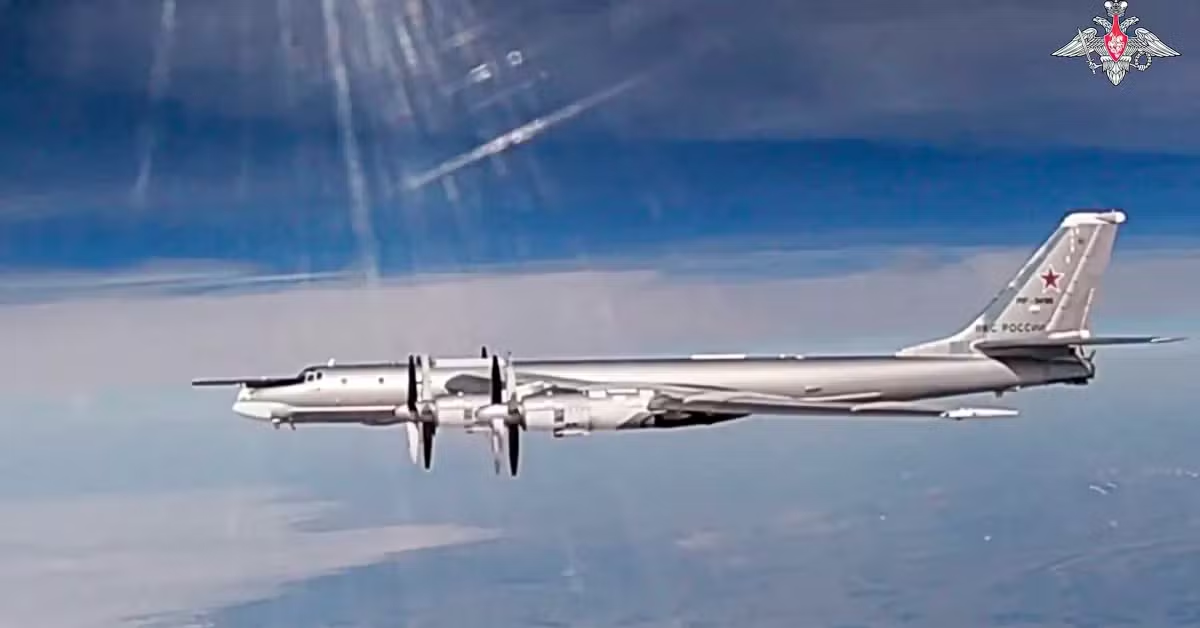
South Korea lodges protest with Russia after warplanes near Ulleung island
Russian Warplanes Trigger Alarm Among U.S. Partners in Asia
thetimes.com· 2d
Ukraine war latest: 'Evacuation, air raid,' — Russian military aircraft approach South Korean island, trigger alert
kyivindependent.com· 2d
South Korea issues shelter warning over Russian military flights
euronews.com· 2d
Russian Warplanes Trigger Alarm Among U.S. Partners in Asia
wsj.com· 2d
South Korea Says Russian Military Planes Entered Its Air Defense Zone - The Moscow Times
themoscowtimes.com· 2d
'Evacuation, air raid,' — Russian military aircraft approach South Korean island, trigger air raid alert
Why S Korea issued air raid alert after Russian jets flew near its airspace
aljazeera.com· 3d
South Korea Issues First-Ever Air Raid Warning Over Russian Warplanes, Scrambles F-15K Fighters
united24media.com· 3d
La Corée du Sud en alerte après l’intrusion d’avions militaires russes
liberation.fr· 3d
South Korea issues 'take shelter' warning after Russia aircraft fly near airspace
channelnewsasia.com· 3d
Corée du Sud: des avions militaires russes repérés dans la zone de défense aérienne du pays
rfi.fr· 3d
South Korea issues 'take shelter' warning after Russia aircraft fly near airspace
reuters.com· 3d
South Korea says suspected North Korean aircraft breached island's airspace
apnews.com· 3d
South Korea scrambles fighters after Russian aircraft enter its air defense zone
stripes.com· 10d
South Korea scrambles fighter jets after Russian military aircraft enter air defense zone
Several Russian military aircraft entered South Korea's air defense identification zone over the East Sea on November 17, 2026. The military detected them before they entered and deployed fighter jets as a precaution, and the aircraft left without violating South Korean sovereign airspace. Russian planes had entered the zone several times in recent months, since Moscow does not recognize the designation.
On November 23 the government said an aircraft had breached its airspace near Ulleung island and ordered residents to move to underground facilities, a civil defense warning that was lifted three minutes later. Officials first described the plane as Russian, then revised that to possibly North Korean, and a provincial government withdrew an erroneous warning of a North Korean incursion. The military said Russian aircraft came very close to the airspace above the island but did not intrude, and its jets flew tactical maneuvers to prevent any incident.
The next morning, November 24, about five Russian aircraft approached South Korea's territorial airspace near Ulleungdo island, prompting the country's first-ever air raid warning over a potential violation. F-15K fighter jets were scrambled, and an alert reading "Evacuation, air raid" in English told residents to move to underground shelters at 7:52 a.m. local time; it was lifted shortly before 8 a.m., about five minutes after it was issued. After the fighters deployed, the Russian aircraft changed course toward Japan and left the identification zone after roughly 20 minutes.
South Korea's military believes Russia would likely have violated its airspace had the fighters not been deployed, and the Defense Ministry said a Russian aircraft flew up to the limit of the country's airspace. Military sources said the planes were Russian, correcting an earlier report that a presumed North Korean aircraft had violated the airspace.
On November 24 South Korea's Ministry of National Defence summoned Russia's military attache, Colonel Nikolai Marchenko, and lodged a formal complaint over the incident, demanding measures to prevent a repeat.
South Korea's Joint Chiefs of Staff said several Russian military aircraft entered the Korea Air Defense Identification Zone over the East Sea on November 17, 2026.
The military detected the Russian aircraft before they entered the zone and deployed fighter jets as a precaution against possible incidents.
The Russian aircraft briefly entered the zone and departed without violating South Korean sovereign airspace.
South Korea's government said an aircraft breached its airspace near Ulleung Island and ordered residents to move to underground facilities or shelter inside buildings.
The Ministry of the Interior and Safety first reported that a Russian aircraft had breached South Korean airspace.
The government later revised its assessment, describing the aircraft as possibly North Korean, and lifted the evacuation order for Ulleung Island.
South Korea's military tracked multiple Russian aircraft on the verge of entering the airspace over Ulleung island and scrambled fighter jets, which conducted tactical maneuvers to prevent any incident.
The Safety Ministry issued a rare civil defense warning telling residents of Ulleung island to take shelter due to airspace intrusion by Russian aircraft, and lifted it three minutes later.
South Korea's military said the Russian aircraft came very close to the airspace above Ulleung island but did not intrude into the country's airspace.
A provincial government issued a warning in error that an aircraft suspected to be North Korean had entered the area, then withdrew it.
Russian planes had entered South Korea's air defense identification zone several times in recent months because Moscow does not recognize the designation.
Joint Chiefs of Staff spokesperson Jang Do-young said at a briefing, "Airspace intrusion was anticipated, therefore in order to protect the safety of our people, we issued a warning preemptively."
South Korea's defence ministry spokesperson Chung Binna said the ministry would summon the Russian military attache later that day to lodge a stern protest.
Yonhap, citing military sources, corrected its earlier report that a presumed North Korean aircraft had violated South Korea's airspace, saying the planes were Russian.
South Korea's Interior Ministry lifted the shelter alert for Ulleung island shortly before 8 am local time, about five minutes after it was issued.
South Korea's Defense Ministry said a Russian aircraft flew up to the limit of the country's airspace and that fighter jets were mobilized in response.
South Korea issued its first-ever air raid warning over a potential airspace violation by Russian military aircraft after about five Russian aircraft approached its territorial airspace near Ulleungdo Island on November 24.
The country scrambled F-15K fighter jets, and the Interior Ministry told Ulleungdo residents to move to underground shelters at 7:52 a.m. local time, lifting the warning three minutes later.
After the fighters deployed, the Russian aircraft changed course toward Japan and left the Korean Air Defense Identification Zone after roughly 20 minutes.
Military sources cited by Yonhap suggested the Russian aircraft could have crossed into South Korea's sovereign airspace had South Korean fighters not been deployed.
South Korea's Ministry of National Defence called in Russia's military attache, Nikolai Marchenko, to lodge a formal complaint over the incident.
South Korea's Ministry of Foreign Affairs said it had conveyed its regret over the incident to Russia and called for measures to prevent a recurrence, sending a message to the Russian embassy in Seoul without summoning the ambassador.
South Korea's military believes Russia would likely have violated its airspace on November 24 had Seoul not reacted by scrambling fighter jets.
The alert sent to Ulleungdo residents read "Evacuation, air raid" in English.
South Korea's Defence Ministry summoned Russia's military attache, Colonel Nikolai Marchenko, on November 24 and demanded measures to prevent a repeat.
South Korea's Defence Ministry said repeated unannounced entries into the Korea Air Defence Identification Zone and the latest close approach could unnecessarily raise tensions on the Korean Peninsula and across the region.
Joint Chiefs of Staff spokesman Jang Do-young said the Russian aircraft came "right up to the brink of violating our airspace" near an island 80 miles east of the Korean Peninsula.
The Russian Embassy in Seoul said the warplanes committed no violations of international law while conducting the flight near the South Korean island.

