Bundestag passes €556 billion 2027 budget with €210.4 billion in new borrowing
Germany locks in €11.6 billion for Ukraine's defense next year. Parliament also lets Berlin sign deals now and pay through 2031
euromaidanpress.com· 37h
German Bundestag approves record 2027 budget as borrowing hits €210bn
euronews.com· 43h
German lower house of parliament passes 2027 budget
reuters.com· 43h
On November 27, 2026, the Bundestag passed Germany’s €556 billion 2027 federal budget by 317 votes to 260. It provides for €210.4 billion in new borrowing, including €123 billion from the core budget, and €61.8 billion in core-budget investment.
Core defence spending is set to rise to €109.7 billion in 2027 from €82.2 billion in 2026, reaching €150.9 billion with Ukraine support and other security spending. The budget also sets total defence spending, including the Bundeswehr special fund, at about €139.4 billion, up from €108.2 billion in 2026.
The budget allocates €11.612 billion for Ukraine’s security, defence and stabilization, including more than €9 billion for direct support through the Federal Defence Ministry. It allows the government to take on nearly €8.7 billion in commitments for later years, including payments through 2031.
The Bundestag also passed a Budget Accompanying Act that lowers electricity tax to the EU minimum for all consumers in 2027, freezes basic-income support rates until mid-2028, and cuts the pension-insurance subsidy by €3 billion in 2027. It raises spirits taxes from 2027 and introduces a sugary-drinks tax from 2028.
The Bundestag passed Germany’s €556 billion 2027 federal budget on November 27, 2026, with 317 votes in favour and 260 against.
The budget provides for €210.4 billion in new borrowing, including €123 billion from the core budget, and sets core-budget investment at €61.8 billion.
Core defence spending is set to rise to €109.7 billion in 2027 from €82.2 billion in 2026, reaching €150.9 billion including Ukraine support and other security spending.
Interest expenses in the core budget are set to reach €41.4 billion in 2027.
The Bundestag passed a 2027 Budget Accompanying Act that lowers electricity tax to the EU minimum for all consumers in 2027, freezes basic-income support rates until mid-2028, cuts the pension-insurance subsidy by €3 billion in 2027, raises spirits taxes from 2027 and introduces a sugary-drinks tax from 2028.
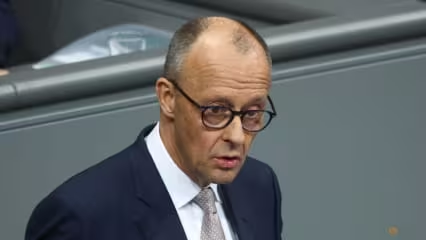
Finance Minister Lars Klingbeil said, “It is right that we invest in the railways and in climate protection. It is right ... that we invest in our security.”
Lars Klingbeil said, “We are putting up the money for defence so that Ukraine can defend its freedom. No child born in Germany today should ever have to experience war again.”
Germany’s finance ministry forecast core-budget interest expenses of around €81 billion per year by 2030.
Lars Klingbeil said, “We will have no choice but to ask people to make some sacrifices.”
Lars Klingbeil forecast that negotiations for the 2028 budget would be more challenging.
Marcel Fratzscher criticised the government’s plans, saying they lacked the courage to implement reforms, cut subsidies and spending, or raise taxes.
Marcel Fratzscher forecast a massive conflict by the 2028 budget at the latest.
Marcel Fratzscher said it would have been better to address the problem immediately rather than keep putting it off.
The Federal Ministry of Finance forecast that Germany’s general government debt-to-GDP ratio could exceed 72 per cent by 2028.
The Federal Ministry of Finance projected a general government deficit of 5.25 per cent of GDP in 2027.
Lars Klingbeil said, “We will not be able to avoid asking people to make sacrifices.”
Lars Klingbeil said the financial burdens resulting from reforms must be shared fairly.
Germany’s 2027 budget allocates €11.612 billion for Ukraine’s security, defence and stabilization, slightly more than the €11.547 billion allocated for 2026.
More than €9 billion of the Ukraine allocation is designated for direct support through the Federal Defence Ministry, about €1.15 billion to replenish Bundeswehr stocks after weapons transfers, and almost €649 million for European Peace Facility contributions.
The Ukraine allocation allows the government to take on nearly €8.7 billion in commitments for later years, including payments through 2031, so it can sign Ukraine-related contracts in 2027 and pay for them in later budgets.
The budget sets Germany’s 2027 defence spending, including the Bundeswehr special fund, at about €139.4 billion, up from €108.2 billion in 2026.