White House fires US cybersecurity chief after week of nationwide tech outages
Hacks, AI and conspiracy theories: why are we having so many outages?
theguardian.com· 2h
The Outages Are Just Getting Started
wired.com· 19h
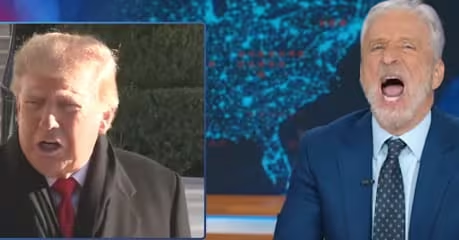
Checked Out: Trump Nods Off as America Breaks Down
youtube.com· 32h
Outages in US cause worry, despite official attempts to downplay concerns
aljazeera.com· 41h
The week everything fell apart
theverge.com· 42h
Transcript: MAGA Rages at Markwayne Mullin over On-Air Fiasco: “Idiot”
newrepublic.com· 45h
The ‘new norm’: How AI is driving mass tech outages
politico.com· 2d
Trump’s Nothing-to-See-Here Approach to the Outages
theatlantic.com· 2d
‘The whole internet screams at once’: Downdetector logged 6.4 million U.S. outage reports in a week as Microsoft, the FAA, Chase, and Apple went down | Fortune
fortune.com· 2d
Trump acts as White House press secretary as outages test admin messaging
newsweek.com· 2d
Our Tech Landscape Has Gotten Worse—and Is Breaking Down in Real Time. Feat. 404's Jason Koebler
What’s With All These Outages?
These tech outages are giving Y2K, AI agent style | TechCrunch
techcrunch.com· 2d
Alicia on Trump’s comments on outages: ‘Nothing stresses me out more than a man telling me to relax’
Major Cities Update Emergency Advice as Mass Outages, Weather Events Hit US - Newsweek
Amid recent banking outages, should you start carrying cash again? Top advisors weigh in
cnbc.com· 2d
Stephen Miller Abruptly Yanks Markwayne Mullin From TV After Disastrous Fox News Hit: Report
huffpost.com· 2d
Trump says people stockpiling food, water amid outages should ‘relax’
newsnationnow.com· 2d
First Draft – Now We Know What Stands Between Trump’s U.S. and Total Collapse: A Cabinet of Idiots
zeteo.com· 2d
How to tell a cyberattack from a plain old outage
arstechnica.com· 2d
‘Did A.I. Break the Internet?’ and Other Things We’ve Worried About This Week
nytimes.com· 2d
A wave of outages has Americans preparing for doomsday
washingtonpost.com· 2d
Seth Meyers: Markwayne Mullin's Latest Comment On Outages 'Makes No F**kin Sense'
Tech outages are piling up, and AI is raising the stakes. Could this be the new normal?
apnews.com· 3d
Trump tells Americans”relax” after wave of tech chaos
Amidst fears of AI-cyberattacks, Satya Nadella says lots of critical infrastructure is 'unpatchable' | TechCrunch
‘We’re in TROUBLE’: Trump’s former Intel Chief has WARNING about tech outages under Trump leadership
National security leaders say recent outages are unrelated. Washington remains skeptical.
Trump officials seek to ease anxiety over sweeping tech outages
thehill.com· 3d
It feels like everything is breaking, and it's not even hackers
motherjones.com· 3d
The U.S. Tech Outage Wave, Explained
foreignpolicy.com· 3d
相次ぐ米大規模障害、「対AI防御のシステム修正が要因」米情報長官ら - 日本経済新聞
nikkei.com· 3d
'Interesting': John Kennedy stops Fox News host in his tracks with bizarre attack idea
rawstory.com· 3d
Evidence Is Growing That the Massive Tech Outages Are Trump’s Fault
futurism.com· 3d
Here are all of the recent major outages, national disruptions
usatoday.com· 3d
National Security EXPERT SLAMS Trump Over OUTAGE CHAOS!!
What’s causing all these outages? The internet is held together with shoestring and bubblegum | CNN Business
cnn.com· 3d
AI was probably involved in recent tech outages — just not in the way you expect
businessinsider.com· 3d
Intelligence officials say service disruptions are unrelated, not malicious
Director Of National Intelligence Says Tech Outages Across Country Are ‘Unrelated’
JD Vance cancels NYC appearance as major outages hit US
Vance Pulls Out of an Event to Attend Meetings About Outages
washingtonsun.com· 3d
Trump admin defends response to tech, FAA outages at House hearing
JD Vance cancels interview to hold crisis talks over tech outages
thetimes.com· 3d
Banks and the NSA Admit That Yes, It Was AI That Caused the Massive Outages
MAGA questions Trump administration after wave of tech outages
Trump admin insists recent closely timed tech outages aren't connected
US tech outages blamed on rush to fix bugs found by AI
ft.com· 3d
Michael Kosta Slams Trump's Blasé Response To Numerous Nationwide Outages
Aux Etats-Unis, des pannes en cascade soulignent la vulnérabilité des infrastructures américaines, accrue par l’IA
lemonde.fr· 3d
Cyber expert's ominous 'world is ending' answer on outages spooks Washington: 'Disturbing'
Bank and tech outages are ‘not a coincidence,’ Andrew Yang says
Analysis: What should really scare Americans amid blitz of tech outages | CNN Politics
‘I’m not a conspiracy theorist, but …’: Public voices concerns after outages
Trump Shrugs Off Nationwide Outages & Iran Is So Pissed They Might Dirty Bomb Him | The Daily Show
Rubio says there's "zero evidence" recent tech outages are related
cbsnews.com· 4d
Rubio says tech outages are not part of 'systemic attack' against US
bbc.com· 4d
Jesse Watters twists Bill Gates’ words as 'one big crazy coincidence' engulfs Trump admin
Trump administration faces right-wing pushback on its response to the outages
nbcnews.com· 4d
Cascade of Outages Triggers Conspiracy Theories—and Finger-Pointing
wsj.com· 4d
Bank CEOs, NSA Tell Congress That AI-Driven Patches Are Behind Outages
Outage chaos sparks disturbing theory tied to one page of Project 2025 playbook: report
‘Quite A Coincidence’: Lawmakers Keep A Wary Eye On Various System Outages
After Days of Digital Outages, Americans Wonder if the Country Is Breaking
A string of tech outages disrupted flights, banking, and major apps. Here's what officials have said about the causes.
A wave of tech outages raised fears of sabotage. The explanation may be much simpler.
Bill O'Reilly Sounds The Alarm Over Tech Outages — And Demands A 'Spokesman' From Trump Admin
6 major outages in 6 days: From Outlook to the NSA, what we know so far
Rubio says 'zero' information that US outages are linked or caused by a malign actor
Trump Says Nationwide Outages Are “Fine” as More Systems Go Down
truthout.org· 4d
Clueless Republican Representative Blames New iPhone for Tech Outages
Trump shrugs off grounded flights and apparent cyberattacks: ‘It’s life’
dailykos.com· 4d
Widespread outages hit banks, air travel, the NSA and Apple, disrupting seemingly everything
Apple, NSA, U.S. banks hit with outages, Trump says everything is ‘fine.’ Follow live updates.
ctvnews.ca· 4d
Ex-Trump Aide Fears Something Is ‘About To Go Catastrophically Wrong’
Even Fox News Is Creeped Out By Massive Outages: ‘It Doesn’t Seem Like’ Everything’s Fine
Even Trump's Ex-Press Secretary Is Worried Amid Recent Outages: 'What's Happening?'
Lawmakers want answers from the Trump administration on recent tech outages
Homeland Security head swears ‘we are not under attack’
Trump on all those outages: "It's fine"
Tech blackout? Outages hit banks, airlines and government agencies
Confusion as FBI disputes startling claim surrounding nationwide groundings
Leavitt: White House needs to ‘calm the temperature’ after nationwide tech outages
The Trump White House is starting to admit AI is breaking the internet, from bank accounts to airlines | Fortune
Inside Microsoft’s giant Outlook outage
Americans wanted answers about grounded flights. Trump officials offered Buttigieg, DEI, and trans athletes
advocate.com· 4d
Markwayne Mullin Pushes Unhinged Theories on FAA Disaster
‘It’s life’: Trump brushes aside concerns about outages
Trump Downplays JPMorgan and Microsoft Outages, Saying ‘It’s Life’
bloomberg.com· 4d
Trump administration dismisses crisis fears after string of disruptive tech outages | CNN Politics
What to know about the online banking delays affecting major US banks
abc.net.au· 5d
The FAA Crashes Out Over a Router & Why Is Trump Protecting AI and Jensen Huang? | The Daily Show
Fox News anchor alarmed as 'trifecta of turmoil' wallops Americans: 'What is going on?'
BROKE: The Biggest Bank in America Just Locked Customers Out of Their Own Money As 5 Major Banks Announce MASSIVE Outage
substack.com· 5d
Chase Bank Transactions Disrupted by ‘Technical Issue’ Amid Outage Reports
Yet Another System Crashes in Trump’s America
🚨 BREAKING: US BANKS GO DOWN!!!
Major U.S. banks report widespread service outages
Customers at some of the nation's largest banks are reporting difficulty accessing accounts online
NEWS: Trump Attacks Reporter Over Ground Stop, Service Member Blows the Whistle, Military Families Furious, Trump Cuts Teacher Pay, Republicans Block Judges
A week of outages shows infrastructure can’t be an afterthought | Fortune
FAA Administrator Denies AI Could Have Caused Ground Stop
'It's Fine': Trump Dismisses Concerns About Recent Tech Troubles Impacting Americans
Trump Again Stresses No Connection Between Outages: ‘All Separate Events’
Trump Tells Female Reporter Who Asked About FAA That She Has ‘No Talent’
AI-Driven Patches Widely Blamed For Recent System Outages
Vance Cancels NYT DealBook Appearance To Tend To Tech Outages
Markwayne Mullin: Tech Industry Source Believes ‘SI’ Is Causing Outages
Transportation secretary still doesn't totally rule out that a cyberattack may have hit the FAA, and the FBI is assisting the probe | Fortune
Outlook went down, then air traffic systems. It’s been a bad week of outages.
Buttigieg Weighs In On FAA Ground Stop At Denver Conference
Duffy: Air Traffic System Gave Inconsistent Data Prompting Shutdown
Nationwide Ground Stop Is Lifted, FAA Confirms
Ground Stop Disrupting NBA, NHL And College Football Travel For The Weekend
The Content Creator Behind Scott Colom's Viral Ad Tells Politico How It Came Together
Airports May Be Running Out Of Room To Put Planes During Ground Stop
A nationwide air traffic ground stop on 13 November 2026 delayed nearly 10,000 flights and cancelled about 20,000, the biggest of a week of outages hitting Microsoft's Outlook, banking services including JPMorgan Chase's, Apple services and the National Security Agency's internal network. Transportation Secretary Sean Duffy said legacy switches and routers became overloaded and issued inconsistent data, blamed Congress for not funding newer equipment, and pressed for $50 billion to upgrade air traffic control.
The Federal Aviation Administration paused installation of the routers after tracing the instability to a newly installed Juniper router with unexplained activity; a cyberattack was not at first ruled out. At a House Homeland Security Committee hearing on 18 November, FBI Deputy Director Christopher Raia testified that no malicious cyber activity had been found, and officials described separate maintenance issues rather than a coordinated attack.
Microsoft said a latent defect in a network fix deployed since July 2026 caused its outage. Director of National Intelligence Jay Clayton said patching after an October 2026 PHP alert left systems, including the NSA's, unable to restart.
President Trump blamed former Transportation Secretary Pete Buttigieg, and Homeland Security Secretary Markwayne Mullin drew criticism for flying a government plane to a football game while travelers were still stranded; he was later pulled from television appearances over his messaging. Americans began stockpiling food, water and cash, and the outage tracker Downdetector logged 6.4 million US reports in the week ending 17 November.
On 19 November 2026 the White House fired the US cybersecurity chief and appointed a replacement.
The Federal Aviation Administration had announced days before the failure that it was expanding its $875 million SMART artificial intelligence system to manage air traffic across the national airspace.
The ground stop left NBA, NHL and college teams scrambling to reach weekend games, with some chartering buses.
The Federal Aviation Administration lifted the nationwide ground stop shortly after 8 p.m. EST on 13 November 2026, roughly four hours after it began.
The Federal Aviation Administration ordered a nationwide ground stop on 13 November 2026 after its legacy air traffic control communications system became overloaded and issued faulty data, delaying nearly 10,000 flights and cancelling 5,000.
Sean Duffy said legacy switches and routers became overloaded with data and issued inconsistent data, forcing the shutdown, and largely blamed Congress for not funding newer equipment.
President Trump had not publicly addressed the ground stop as of the evening of 13 November 2026.
Markwayne Mullin said at a press conference that the public was never in danger, that the stoppage was not another 9/11, and that it did not appear to be the result of a cyberattack or artificial intelligence.
Sean Duffy largely blamed Congress for the ground stop, saying it had failed to provide funding for newer equipment.
Pete Buttigieg said the ground stop should not be about politics and that there needed to be answers and transparency about what happened.
President Trump told Fox News the ground stop did not seem to be the result of a cyberattack or an artificial intelligence issue, describing a situation of old, broken infrastructure, some of it more than 50 years old.
Airports ran close to ground saturation during the stop, running out of space at gates, tarmacs and taxiways to park planes.
Microsoft's Outlook email service went down worldwide in the days before 14 November 2026.
Transportation Secretary Sean Duffy said the fiber-optic changeover caused routers across the air traffic control system to be flooded with more than 1,000 connection attempts every four to five seconds.
A second router in Amarillo, Texas, where no work was underway, also began broadcasting data into the FAA network during the disruption.
The routers under investigation were taken to an L3Harris laboratory in Florida, where the FBI was assisting the probe.
Officials said a cyberattack had not been totally ruled out as the cause of the ground stop.
L3Harris said it was supporting the FAA's investigation to understand the conditions that led to the 13 November ground stop.
Vice President JD Vance withdrew from a New York Times DealBook Summit appearance minutes before it began to attend meetings in Washington on the outages.
Wall Street executives and the National Security Agency told Congress the outages stemmed from AI-driven security fixes pushed faster than systems could absorb, according to officials familiar with the conversations.
President Trump said at a press conference, "They are all separate events."
Markwayne Mullin said an unnamed tech industry source believes "SI," or super intelligence, is causing the outages, and said he could say with 98 percent certainty that there was no cyberattack.
The Federal Aviation Administration paused installation of the routers linked to the ground stop after tracing the instability to a newly installed Juniper router that showed unexplained activity.
FAA Administrator Bryan Bedford called speculation that artificial intelligence caused the ground stop "completely unfounded."
While flights were grounded, President Trump posted about renovating a Washington golf course and an entertainment industry bill rather than the outage.
President Trump blamed the Biden administration for the ground stop, saying, "I hate to blame anybody, but the Biden administration hooked up a lot of copper into glass."
President Trump said of the ground stop, "I don't take any responsibility."
Sean Duffy warned, "You will have more of these."
Markwayne Mullin said no one would be fired over the outage.
JPMorgan Chase said a software bug in its on-premise hardware was delaying transactions on 16 November 2026, said the problem was not cyber-related, and said customers still had access to their funds.
The disruption at JPMorgan Chase drew thousands of complaints on outage trackers, with customers at Bank of America, Wells Fargo, U.S. Bank, Capital One, Truist and Zelle also reporting problems.
The Microsoft outage took roughly two days to fix and, by some estimates, cost about $7 billion in lost productivity.
Senior Federal Aviation Administration officials denied that the agency's $875 million SMART artificial intelligence system, launched nationwide on 10 November, had anything to do with the failure.
Jon Favreau questioned on X that the homeland security secretary was sharing anonymous guesses that AI may be causing the outages.
President Trump and other administration officials answered questions about the ground stop by blaming former Transportation Secretary Pete Buttigieg and criticizing gender-inclusive aviation terminology and transgender athletes.
Pete Buttigieg wrote that he launched the FAA's copper-to-fiber transition and that the administration had "so far failed to explain why their execution of it triggered the worst FAA communications breakdown this century."
Microsoft internally rated the Outlook outage at its highest severity level after more than 80 percent of Exchange servers became unresponsive within two hours of the failure beginning on the morning of 12 November 2026.
Gary Marcus told Fortune he doubted the public was getting full candor on the incidents and recommended the federal government ask for a temporary recall on AI agents until the situation is under better control.
The FBI's Cyber Branch disputed reports that the bureau had taken possession of the router blamed for the ground stop, saying it had not taken possession of any equipment.
The 13 November ground stop led to the cancellation of about 20,000 flights and disrupted nationwide organ donation networks.
Jesse Watters said the government was telling people everything is fine about the tech outages and that it does not seem like everything is fine.
Alyssa Farah Griffin said it feels like something is about to go catastrophically wrong, reminding her of February of 2020 right before COVID hit.
United Airlines pilots told air traffic controllers the outage affected the system that helps determine a plane's final weight.
Markwayne Mullin said, "I can tell you with complete certainty that we are not under attack. There's no cyber threat that's taking place. The homeland is very secure."
Senator Josh Hawley said, "If this is all a coincidence, it's like the greatest coincidence in the history of the world."
Representative Beth Van Duyne suggested heavy AI use outpacing data capacity or the release of the new iPhone, rather than a cyberattack, could explain the outages.
President Trump said he had spoken with JPMorgan Chase executives about the banking outage and was not worried.
Sources said the National Security Agency's classified internal network, NSANet, had been unstable for weeks before it went down.
Marco Rubio said, "We have zero evidence or any reason to believe that any of these isolated or individual instances have anything to do with nefarious actors, with cyber hackers, with criminals, with another nation state, with a malign actor of any kind."
President Trump said of the outages, "It's life. When you're big and powerful and you have all the money, things like that happen. It's fine."
Karoline Leavitt, Trump's former press secretary, said, "What I would say to the White House is transparency is key."
Laura Loomer wrote, "Our leaders are lying to us. This is very clearly a coordinated cyber attack."
Tricia McLaughlin, a former Department of Homeland Security spokesperson, wrote, "Americans aren't stupid. We want and deserve to know what's really going on."
Meghan McCain wrote, "Someone high in the administration needs to get on tv and tell the American people NOW what is going on."
The National Security Agency attributed the outage to scheduled routine maintenance and said its mission-critical capabilities remained fully operational.
Microsoft said a latent defect in a network fix it had deployed beginning in July 2026 caused its outage, compounded by about 14 percent of its servers being offline for an unrelated reason.
Senate Commerce Committee Democrats led by Maria Cantwell asked Transportation Secretary Sean Duffy and FAA Administrator Bryan Bedford in a 16 November letter to explain the cause of the ground stop.
Sean Duffy used the ground stop to press Congress for $50 billion to upgrade air traffic control, up from the $30 billion he had previously sought.
House Minority Leader Hakeem Jeffries said, "These developments are troubling, and it's unclear if it's all infrastructure-related or whether there's some malignant activity," and called for a bicameral briefing.
Bill O'Reilly said a string of technical meltdowns four or five days in a row was not a coincidence and called on Congress to create a new department to protect the United States in cyberspace.
The National Security Agency's classified internal communications network stopped working for several hours on 17 November 2026.
United Airlines resolved a technology issue on the evening of 16 November 2026 after a system outage delayed hundreds of departing flights.
Charles Schwab resolved a brief website outage on 17 November 2026.
Apple said an internal update caused outages to Apple Pay, iCloud and other services on 17 November 2026.
Senator Mark Warner said there was no indication of a cyberattack and the evidence pointed to legitimate efforts to secure systems, while warning that AI was putting tremendous strain on systems not built to handle its pace.
Senator Mark Warner said cutbacks at the Cybersecurity and Infrastructure Security Agency under FBI Director Kash Patel may have created a vulnerability.
Online conspiracy theories tied the outages to Project 2025's proposals to restructure the Federal Aviation Administration.
Andrew Yang said the outages were not a coincidence, blamed "incredibly bad leadership," and urged people to change their passwords and keep a few weeks of cash on hand.
Nicole Perlroth wrote that the disruptions were "just the opening chapter."
A senior administration official said there was no indication the outages were a cyberattack or coordinated action, attributing them to system upgrades, patching and hardware work.
Kevin Mandia said, "We're updating to withstand and be more resilient, and sometimes you do that at a speed where you couldn't test all the potential outcomes of the update," and forecast more outages in the AI age.
Chris Krebs, former director of CISA, said pushed upgrades sometimes behave abnormally and tip over, which he thought explained a lot of what was seen with Microsoft and maybe the FAA.
The FBI's Dallas field office posted about cyber criminals or state hackers exploiting a "super intelligence-powered penetration testing framework."
Kevin Carroll, a former Homeland Security counsel, said the outages amount to a slow-rolling cyber attack in which Iran probes American infrastructure just below the level that would force a US response.
Katie Phang said she did not think the outages were a coincidence and believed the timing was intentional.
Workday confirmed a service disruption affecting two of its data centers on 13 and 14 November 2026, saying it was not a security incident.
Senator John Kennedy said he believed the outages involved attacks and asked, "When bad actors like Iran do these things, why don't we fight back? WE have the most advanced AI, why don't we go shut down every air conditioner in Iran?"
The Cybersecurity and Infrastructure Security Agency has lost more than 1,000 employees under the Trump administration, and Markwayne Mullin declined to say directly at the House hearing whether the cuts were a mistake.
Cybersecurity professionals dubbed the month before the outages "Black October" amid a wave of vulnerabilities surfaced with AI assistance.
Homeland Security Secretary Markwayne Mullin drew criticism for flying a government plane to a college football game while travelers were still stranded by the ground stop.
Senator Rick Scott wrote, "The American people can see everything happening with these service outages, and they feel like they're not getting the whole story. You can't blame anybody for that. I'm a member of Congress, and I feel that way!"
Megyn Kelly said Markwayne Mullin "seems like an idiot" and that she has zero faith in the person heading a very serious agency.
At a House Homeland Security Committee hearing on 18 November 2026, national security officials testified that the outages were separate maintenance issues rather than a coordinated attack, while skeptical lawmakers pressed for clarity.
FBI Deputy Director Christopher Raia testified that federal investigators had found no malicious cyber activity related to the outages.
Jay Clayton told the House Homeland Security Committee, "Based on what we know today, after a great deal of diligence, these are separate service outages associated with maintenance and technical changes. They are not a coordinated or state-sponsored attack."
Representative Mike McCaul said the NSA outage coupled with the other incidents raises suspicion, and that though the incidents sound like technical glitches, he worries about a foreign adversary.
Microsoft chief executive Satya Nadella said a lot of America's critical infrastructure, from firmware to HVAC systems, runs software that is unpatchable, and that the need to patch instantly will create instability.
President Trump told a Fox News interviewer that Americans stockpiling food and water over the outages should "relax," saying "everything is good" and calling them "individual events."
Director of National Intelligence Jay Clayton said patching after an October 2026 PHP alert caused some systems to not come back up as expected, and that this was what happened at the National Security Agency.
Seth Meyers joked that Markwayne Mullin's explanation for the outages made no sense and sounded like "a gym teacher subbing in for health class."
Americans began stockpiling food, water and cash in response to the wave of outages.
Matthew Prince, chief executive of Cloudflare, said most of what was being seen was standard background noise, because stuff breaks and that is the nature of complex systems.
The White House pulled Homeland Security Secretary Markwayne Mullin from television appearances over his messaging on the outages, with Stephen Miller intervening from Manila to put Marco Rubio and Jay Clayton forward instead.
Financial advisors recommended keeping from three days to two weeks of cash at home as preparedness, not panic, in case payment systems or banking services go down.
Major US cities issued precautionary emergency preparedness advice as public concern over the outages grew.
It was reported that no one inside the Trump administration was running point to connect the dots across the outages, and that the administration was largely deferring to private industry.
Miles Taylor forecast rolling outages of essential services during what he called the likely bumpiest period in the history of cybersecurity, and recommended Americans stockpile food and water, keep cash and protect their documents.
Dave DeWalt said the outages were most likely the "growing pains of a security system that's getting stronger, not weaker," as AI surfaces long-standing flaws faster than enterprises can patch them.
The outage tracker Downdetector logged 6.4 million US outage reports in the seven days ending 17 November 2026, four times a typical week.
The Microsoft outage drew nearly 3.9 million US reports and was the tracker's largest since an Amazon Web Services outage in October 2025.
The JPMorgan Chase outage drew about 90,000 US reports, roughly 165 times normal and more than twice any other US bank outage in 2026.
On 17 November 2026 Downdetector flagged 67 US services as having problems, the broadest day of 2026.
Mark Giles, director of Ookla Research, said the timing looked like a bit of a coincidence with nothing really linking the outages, calling the week a big blip on par with longer-term trends.
A critical vulnerability was discovered on 17 November 2026 in the Java programming language, which underpins systems used by 90 percent of Fortune 500 companies, prompting urgent patching guidance from CISA.
Senator Mark Warner said "this is not going to stop" and urged industry leaders to explain to the public that patching vulnerabilities will take some time.
The White House fired the US cybersecurity chief and appointed a replacement on 19 November 2026, days after the wave of outages.
Deanne Criswell, who led the Federal Emergency Management Agency until 2025, said the first answers cannot be taken as the absolute answers because vulnerabilities can be buried deep within the system.