Supreme Court to hear challenges to Connecticut and Illinois assault weapons bans
The Supreme Court will decide whether assault weapons bans violate the Second Amendment
pbs.org· 2h
Why the Supreme Court's next gun rights case is one of its biggest
usatoday.com· 5h
Supreme Court to weigh AR-15 bans. What you need to know
Years after Sandy Hook massacre, US Supreme Court case targets assault weapons ban
reuters.com· 14h
The Supreme Court scheduled arguments for Dec. 2, 2026, on challenges to Connecticut’s assault weapons ban and Cook County, Illinois’s restriction on semiautomatic rifles. The Second Amendment Foundation and individual gun owners brought the challenges after lower courts upheld the laws, and the Trump administration backed them.
The Second Circuit rejected the challengers’ argument that AR-15-style rifles are protected because they are in common use, while the Seventh Circuit upheld Cook County’s restriction. The Supreme Court agreed to consider both challenges together. Sandy Hook Promise filed a brief emphasizing that a weapon’s capabilities matter.
As of 2026-11-29, arguments are scheduled for Dec. 2, 2026.
The Supreme Court scheduled arguments for Dec. 2, 2026, on challenges to Connecticut's assault weapons ban and Cook County, Illinois's restriction on semiautomatic rifles.
The Second Amendment Foundation and individual gun owners challenged the laws after lower courts upheld them.
The Trump administration backed the challengers in the case.
The Second Circuit upheld Connecticut's ban, rejecting the argument that AR-15-style rifles are protected because they are in common use.
The Seventh Circuit upheld Cook County's restriction.
The Second Amendment Foundation's Bill Sack said the stakes were exceptionally high and that allowing a categorical ban on the country's most popular guns would make the right to keep and bear arms a dead letter.
Connecticut argued that governments may restrict unusually dangerous weapons, and that AR-15-style rifles are exceptionally lethal and frequently used in mass-casualty events and killings of law-enforcement officers.
Connecticut said AR-15-style rifles or similar guns were used in 12 of the 17 deadliest U.S. mass shootings since 2012.
The challengers argued that AR-15-style rifles are in common use and therefore cannot be banned under the Supreme Court's precedents.
The challengers called the term assault weapon political and said it exploits confusion between semiautomatic rifles and fully automatic machine guns.
Supporters of the bans said the firearms industry had long referred to such guns as assault rifles or assault weapons.
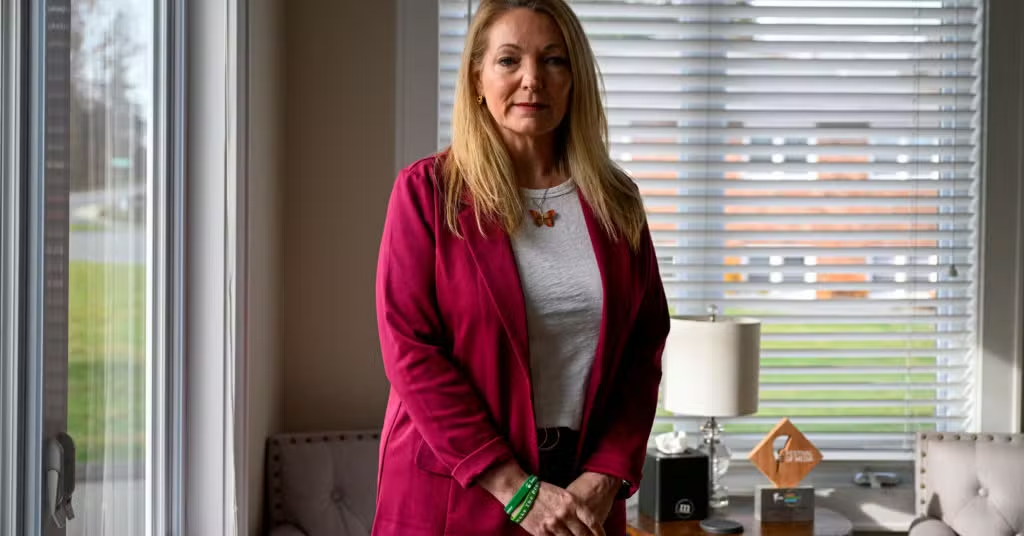
Debi, a Newtown teaching assistant who had cared for children killed at Sandy Hook, said she worried about the consequences of lifting the ban.
The Supreme Court agreed to consider the Connecticut and Cook County challenges together.
The Trump administration argued that the restrictions violate the Second Amendment.
Gun-rights advocates argued that millions of Americans own and lawfully use AR-15-style rifles, including for self-defense, so the rifles are protected by the Second Amendment.
Connecticut argued that AR-15-style rifles are especially dangerous and their high-velocity ammunition can cause catastrophic damage.
Supporters of the bans argued that governments should be able to restrict firearms they consider especially dangerous.
Nicole Hockley said the cases' outcome could affect how states respond to the threat of mass shootings.
Sandy Hook Promise filed a brief in the Supreme Court case emphasizing that a weapon's capabilities matter.
Nicole Hockley said Dylan Hockley's killer would not have been able to kill 20 first-graders and six adults in less than five minutes if he had brought a handgun to Sandy Hook Elementary School.
Nicole Hockley said the Bushmaster XM15-E2S used at Sandy Hook was not a typical firearm and was designed to cause catastrophic damage quickly.
The Second Amendment Foundation's Adam Kraut said that if a state could ban America's most common rifle, the Second Amendment would mean little in practice.
F. Lee Francis said the Supreme Court would have to address what its Heller decision meant and whether its language had practical effect.
Eric Ruben said judges have struggled with whether policymakers can ban firearms based on danger or uncommon use, and whether common use prevents a ban.
Nicole Hockley said the bans were an 'important prevention tool' and that it would be devastating if the Supreme Court removed them.
Survivors of assault-weapon shootings said in a court filing that AR-15s' ease of use, bullet velocity and rate of fire make them 'uniquely destructive'.
Connecticut argued that criminal organizations, terrorists and lone gunmen seeking mass casualties had selected AR-15-style rifles because a relatively unskilled shooter could use them to carry out such an attack.
Nicole Hockley said the Court's decision would affect how states could protect people and children, and that children's safety should be valued as strongly as gun rights.
Nicole Hockley said she planned to listen to the arguments from the Supreme Court's public benches.
The Second Amendment Foundation's Bill Sack called the case the biggest and most pernicious problem in gun control and the 'Super Bowl of gun rights for the time being'.
The Trump administration argued there was no historical basis for banning weapons in common use by law-abiding citizens, unlike especially dangerous weapons such as machine guns.
Defenders of the Connecticut and Illinois laws argued the rifles were designed as weapons of war and remain especially dangerous.
Connecticut's attorneys said the rifles fire one round per trigger squeeze but their high-velocity rounds cause catastrophic damage to the human body.
Attorneys for the laws argued that widespread sales do not prevent states from regulating the rifles through democratically elected lawmakers.
Cook County's lawyers argued legislatures should be able to act when a new weapon poses an unacceptable threat to human life.

