Myanmar's Min Aung Hlaing will not comply with parts of ICJ Rohingya genocide ruling
Myanmar refuses to comply with 'inappropriate' parts of ICJ genocide ruling
bbc.com· 25h
Myanmar won't comply with 'inappropriate' parts of genocide ruling: Leader
channelnewsasia.com· 26h
Myanmar says it will not fully comply with ICJ genocide orders
reuters.com· 26h
Génocide des Rohingya : la Birmanie refusera les exigences de la CIJ qu'elle juge "inappropriées"
france24.com· 30h
What Does the ICJ Ruling Mean for Myanmar?
foreignpolicy.com· 2d
Malaysia to repatriate another 6,803 Myanmar nationals despite ICJ genocide ruling
thehindu.com· 2d
Words are not enough after the Myanmar genocide ruling. The world can do better – but it must take these steps | Gordon Brown
theguardian.com· 3d
Israel likely to lose Gaza genocide case if ICJ follows Myanmar ruling, Tel Aviv scholar says
middleeasteye.net· 3d
Eliav Lieblich, juriste israélien : après l’arrêt de la CIJ reconnaissant la responsabilité birmane dans le génocide des Rohingya, « il est fort probable qu’Israël soit condamné » pour Gaza
lemonde.fr· 4d
El fallo del Tribunal Internacional de Justicia sobre el genocidio rohinyá influirá en el caso de Gaza
elpais.com· 5d
Following ICJ Ruling on Myanmar Genocide, Is Israel Next?
truthout.org· 5d
Rights groups urge sanctions after ICJ finds Myanmar guilty of genocide against Rohingya
pbs.org· 6d
Malgré l’arrêt historique de la Cour internationale de justice, les Rohingya ne sont pas près de rentrer en Birmanie
ICJ Finds Myanmar Committed Genocide. What Comes Next?
UN court cites military Facebook posts while finding Myanmar guilty of genocide
theverge.com· 6d
Myanmar, China object to landmark ICJ ruling on Rohingya genocide
aljazeera.com· 6d
Does The Hague's genocide ruling on Myanmar foreshadow an Israel verdict? - Michael West
michaelwest.com.au· 6d
What does the ICJ’s Rohingya genocide ruling mean for Gaza?
Myanmar calls international court ruling on Rohingya genocide 'unfair'
abc.net.au· 7d
U.N. top court’s landmark ruling on state-sponsored Rohingya genocide ‘unfair,’ Myanmar says
nbcnews.com· 7d
Myanmar calls ICJ ruling on genocide 'unfair'
Myanmar dismisses UN court ruling finding country responsible of Rohingya genocide as 'unfair'
apnews.com· 7d
« La Birmanie doit ramener les Rohingya chez eux », exhorte le président de l’Assemblée générale de l’ONU, après la décision historique de la CIJ sur le génocide de 2017
Celebrations in Australian suburbs at international court's genocide ruling
Tears of joy, prayers for return home: Rohingya react to genocide ruling
Rohingya: Historic International Court of Justice ruling finds Myanmar guilty of genocide
Myanmar: Statement by the Spokesperson on the judgement of the International Court of Justice
europa.eu· 7d
In the Rohingya refugee camps, watching Myanmar being found guilty of genocide: 'This is a time to remember those who are no longer with us'
Rohingya : un arrêt historique de la Cour de justice internationale reconnaît la Birmanie coupable de génocide
Jeremy Bowen: Myanmar genocide verdict is historic and could have far-reaching implications
bbc.co.uk· 7d
The Genocide Ruling Against Myanmar Is a Remarkable Moment for the Rohingya – and Global Justice
zeteo.com· 7d
Historisches Urteil: Die Machthaber in Myanmar haben Völkermord an den Rohingya begangen
taz.de· 7d
World reacts to ICJ finding Myanmar guilty of genocide against Rohingya
ロヒンギャ迫害でジェノサイド初認定、国際司法の転機 ガザにも影響 - 日本経済新聞
nikkei.com· 7d
ICJ Finds Myanmar Guilty of Committing Genocide Against Rohingya Muslims
The ICJ’s historic genocide judgment belongs to the Rohingya
prospectmagazine.co.uk· 7d
Dans les camps de réfugiés rohingya, après la reconnaissance du génocide commis par la Birmanie : « C’est d’abord un moment pour se souvenir de ceux qui ne sont plus là »
Myanmar Committed Genocide Against the Rohingya, Top Global Court Finds
nytimes.com· 7d
Myanmar becomes first state found responsible for genocide by UN court
axios.com· 7d
Myanmar committed genocide against Rohingya minority, top UN court rules
Gerechtshof stelt genocide op de Rohingya vast: ‘Dit is slecht nieuws voor Israël’ - The Rights Forum
rightsforum.org· 7d
For the first time, UN’s highest court finds a country responsible for genocide: Myanmar
politico.com· 7d
Myanmar committed genocide against Rohingya minority, top U.N. court rules
washingtonpost.com· 7d
What the ICJ genocide ruling means for the Rohingya people
La ONU declara culpable de genocidio contra los rohingyas a Myanmar, el primer Estado condenado por este crimen - BBC News Mundo
国際司法裁、初のジェノサイド認定 ミャンマーによるロヒンギャ迫害 - 日本経済新聞
ICJ rules that Myanmar committed genocide against Rohingya muslims
Top U.N. court rules Myanmar committed genocide against the Rohingya
npr.org· 7d
Myanmar committed genocide against Rohingya, ICJ rules
Breaking: Myanmar committed genocide against Rohingyas, UN court says
Uno-Gericht stuft Myanmars Vorgehen gegen Rohingya als Völkermord ein
spiegel.de· 7d
Myanmar committed genocide against Rohingya Muslims, UN court rules
thetimes.com· 7d
UN court rules Myanmar committed genocide in landmark ruling
ft.com· 7d
La Birmanie a commis un génocide à l’encontre de la minorité rohingya, statue la Cour internationale de justice
ミャンマーのロヒンギャ迫害、ジェノサイドと認定 ICJが判決 | 毎日新聞
mainichi.jp· 7d
UN top court finds Myanmar guilty of committing genocide against Rohingya minority | CNN
cnn.com· 7d
Myanmar found guilty of genocide against Rohingya people by top UN court
thenational.scot· 7d
Myanmar committed acts of genocide against Rohingya minority, world’s top court rules
El Tribunal Internacional de Justicia concluye que Myanmar cometió genocidio contra los rohinyás
UN top court finds Myanmar guilty of genocide against Rohingya
LIVE: ICJ verdict in Myanmar Rohingya genocide case
youtube.com· 8d
Live Updates: Myanmar Faces Genocide Verdict at U.N. Court Over Rohingya Massacres
Myanmar committed genocide against its Rohingya minority, UN's top court rules
Les forces birmanes ont tué "des milliers de civils rohingyas", déclare la CIJ
La CIJ juge que la Birmanie a commis un génocide à l'encontre des Rohingya
In a landmark judgment, top UN court says Myanmar committed genocide against the Rohingya
ICJ to rule on Rohingya genocide case against Myanmar: What’s at stake?
ICJ to rule on Rohingya genocide case against Myanmar
ICJ Rules Myanmar Committed Genocide Against Rohingya
ICJ to rule on Rohingya genocide case: What to expect
What to Know About the Myanmar Genocide Case at the World Court
Fears grow that US will impose sanctions on ICJ judges ahead of Myanmar genocide ruling
In A Landmark Judgment, Top U.N. Court Says Myanmar Committed Genocide Against The Rohingya
huffpost.com· 11d
World’s top court to rule if Myanmar committed genocide against Rohingya
The International Court of Justice ruled on 19 November 2026 that Myanmar committed genocide against its Rohingya minority in the 2017 military operation in Rakhine State, the first time the court has found a state responsible for genocide. The case was brought in November 2019 by The Gambia, backed by the 57-member Organisation of Islamic Cooperation, and in January 2026 the judges heard closed-door testimony from Rohingya survivors who had travelled from camps in Bangladesh.
The court found Myanmar's forces killed about 10,000 Rohingya, burned villages systematically while sparing those of other ethnic groups, and later destroyed evidence by building a government base on cleared village sites. It rejected Myanmar's defence that the campaign was a legitimate operation against insurgents, ruling that a counter-terrorism aim does not preclude genocidal intent, and found the roughly 815,000 Rohingya targeted in northern Rakhine, about 58 percent of the group, a substantial part of it. By 14 votes to one it ordered Myanmar to cease violations, investigate and punish those responsible, allow the safe and voluntary return of those who fled, compensate victims, and report on restitution by November 2028. Six judges dissented, accepting grave atrocities but arguing forced displacement was a reasonable alternative explanation.
The verdict drew responses on several sides: Britain expelled Myanmar's defence attaché, rights groups called for military and economic sanctions, and China criticised it. Enforcement depends on the UN Security Council, which scheduled consultations at the United Kingdom's request, but China and Russia would most likely protect Myanmar, and any council action was reported to face an almost certain US veto.
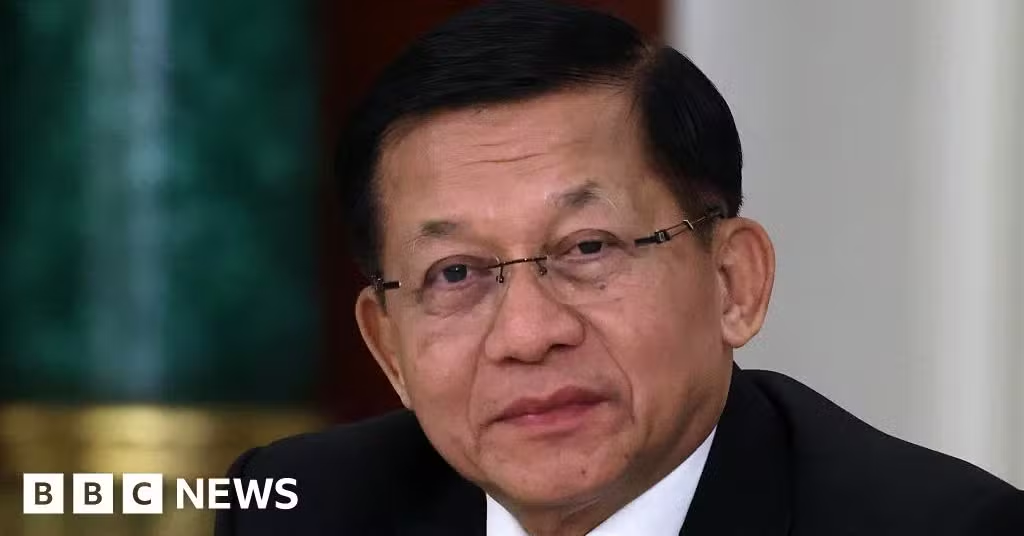
On 26 November 2026, Myanmar's leader Min Aung Hlaing said his government would not comply with the parts of the ruling it deems "inappropriate", state media reported.
The International Court of Justice in The Hague was set to rule on whether Myanmar committed genocide against its Rohingya minority, in a case The Gambia brought accusing Myanmar of breaching the 1948 UN Genocide Convention.
The ICJ's judges had spent seven years weighing The Gambia's accusations, and no state had ever been found responsible for genocide by the court.
In January 2026 the ICJ heard closed-door testimony from Rohingya survivors who travelled from camps in Bangladesh, including accounts of a child taken from her mother's arms, stabbed and thrown into a fire, and piles of bodies in a mass grave.
Myanmar denied carrying out a genocide, saying its actions targeted an insurgent uprising.
Yanghee Lee, a former UN rights investigator for Myanmar, said the ruling would be historic for Rohingya survivors and urged the international community to seize the opportunity to secure justice and reckon with its failings.
Antonia Mulvey of Legal Action Worldwide said she was cautiously optimistic the court would hold Myanmar fully accountable, and said Myanmar's actions showed patterns of conduct proving clear attempts to destroy the Rohingya group.
Gambian justice minister Dawda Jallow told the court the case was not about esoteric issues of international law but about real people, real stories and a real group of human beings targeted for destruction.
US UN ambassador Mike Waltz warned the ICJ must not be allowed to establish a standard for genocide that could be used against allied soldiers.
A displaced Rohingya man living in Myanmar said the Rohingya were not asking for sympathy alone but for justice, recognition, equal rights and a future in which their children could live safely and with dignity in their own homeland.
Supporters of the case said the judgment should compel states to block arms transfers and jet fuel supplies.
On 19 November 2026 the ICJ ruled that Myanmar committed genocide against the Rohingya minority in its brutal 2017 military operation.
The court's 15-judge panel rejected Myanmar's defence that the 2017 campaign was a legitimate operation against insurgents.
ICJ President Yuji Iwasawa said the court found in a 9-6 decision that Myanmar "has committed genocide against the Rohingya group in northern Rakhine state, in violation of its obligations under the Genocide Convention."
ICJ judges took advice on how to protect their assets from potential US sanctions ahead of the genocide ruling.
The Foundation for Defense of Democracies predicted a genocide ruling would lead the US to impose sanctions on the ICJ.
Mike Waltz warned Navi Pillay and the 15 ICJ judges that Washington "will not allow globalist, faux judges to weaponise the law against our troops".
Waltz asserted that ad hoc judge Navi Pillay was "tipping the scales" in the Myanmar proceedings to lower the legal threshold for proving genocide, telling her, "We see your agenda and we'll be watching the ICJ's handling of these proceedings very closely".
US Secretary of State Marco Rubio said in a speech that for the "global elite" international law is "an instrument to advance their interests under the pretence of universal principles".
The judgment made Myanmar the first state, as opposed to an individual, held to account for violating the 1948 Genocide Convention.
By 14 votes to one, the ICJ ordered Myanmar to cease any ongoing violation of its obligations under the Genocide Convention.
The ICJ said Myanmar was under an obligation to compensate the Rohingya people.
Enforcement was reported to depend on support from the UN Security Council, where China and Russia would most likely protect Myanmar.
Melanie O'Brien of the University of Western Australia said it was unclear whether Myanmar would comply, that orders such as repatriating displaced Rohingya and protecting them from discrimination present significant challenges, and that compliance would involve a whole cultural shift.
The Gambia filed the case in November 2019 with the backing of the 57-member Organisation of Islamic Cooperation.
The 2017 crackdown in Rakhine State drove more than 740,000 Rohingya to flee to Bangladesh.
The Gambia asked the ICJ to order Myanmar to prosecute those responsible, ensure the safe return of the Rohingya, restore their property, recognise their right to identify as Rohingya, and provide compensation where property cannot be returned.
Myanmar disputed The Gambia's right to seek reparations on behalf of Rohingya victims.
If Myanmar ignored the ruling, The Gambia could ask the UN Security Council to act, a power the council has never used and which any of its five permanent members could veto.
It was the first time the ICJ had found a state responsible for genocide.
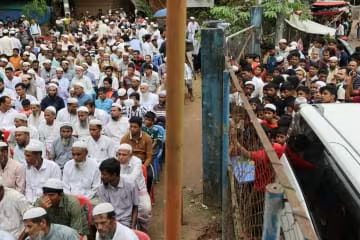
Rohingya refugees at a camp in Cox's Bazar, Bangladesh, reacted as the verdict was translated for a gathered crowd on 19 November 2026.
Andrew Nachemson wrote that the verdict would have immediate and wide-ranging impacts, including for the court's forthcoming judgment on Israel over Gaza.
A UN fact-finding mission concluded that Myanmar's 2017 campaign against the Rohingya included "genocidal acts".
In January 2020 the ICJ ordered Myanmar to take emergency measures to prevent genocidal acts.
In 2022 the ICJ ruled that The Gambia could bring the case because both countries are parties to the Genocide Convention.
Hearings on the merits were held in January 2026, with seven states including Canada, France and the United Kingdom backing The Gambia.
The case was led by Abubacarr Tambadou, then The Gambia's attorney general and justice minister.
The Myanmar judgment was the first final judgment among five genocide cases pending before the ICJ.
Michael Becker said a genocide finding would formally recognise the harm the Rohingya suffered but may do little in the short term, that the court might impose The Gambia's demands only partly or in general terms, and that even far-reaching relief could not be realised under the political conditions on the ground.
William Schabas said the measures The Gambia sought were "robust" and, assuming Myanmar implemented them, the ruling would have significant positive effects on the security, dignity and livelihoods of the Rohingya in Myanmar.
The ICJ found Myanmar's security forces killed thousands of Rohingya civilians, perpetrated widespread acts of sexual violence and extreme violence against children, and attacked fleeing Rohingya in large numbers.
The ICJ said evidence showed Myanmar's forces killed about 10,000 Rohingya.
Rohingya rights activist Yasmin Ullah said it was a great day for the Rohingya and for all oppressed people everywhere who have been told that their suffering does not count and that no one is listening.
The ICJ found that Myanmar's 2017 crackdown showed an intent to destroy the Rohingya minority, the decisive criterion for genocide.
Yuji Iwasawa said, "In view of the totality of the evidence, the court considers that the only reasonable deduction explaining Myanmar's actions is the intent to destroy a substantial part of the Rohingya population in northern Rakhine State."
Myanmar's representative Ko Ko Hlaing said during hearings, "Myanmar was not obliged to stand by with its arms folded and leave the field open to the terrorists".
Dawda Jallow told the court, "Myanmar's Rohingya were targeted by a will to destroy".
A 23-year-old Rohingya rape survivor said "I want justice to be done" and urged the court to rule specifically on the rape of women and ensure severe punishment for perpetrators.
Mohammed Osman said "They shot my father, forced my mother and a few other women into a house, raped them, and then set fire to our home", and hoped the verdict would let him return home to perform funeral rites for his parents and younger brother killed by Myanmar soldiers.
The ICJ found Myanmar engaged in extensive destruction of evidence, burning or otherwise disposing of bodies and bulldozing cleared sites, obstructing any effective investigation into what happened in 2017.
The court found Myanmar failed to investigate, prosecute and punish people, including commanders, who committed offences under the Genocide Convention.
The ICJ found the military actively disseminated and promoted anti-Rohingya hate speech in a systematic and coordinated way, portraying the Rohingya as sub-human and a violent threat, but was not convinced Myanmar directly and publicly incited genocide through private actors or its Facebook posts.
The court identified the Rohingya as a protected group discriminated against by Myanmar for decades, and found the roughly 815,000 Rohingya targeted in northern Rakhine constituted a substantial part of the group.
The ICJ found Myanmar's marriage permission requirements and two-child policy for the Rohingya were coercive measures intended to reduce births within the group, indicative of intent to stop the Rohingya reproducing.
Khin Maung, acting president of the United Council of Rohingya, said the court was addressing the right issues and that the judge's detailed and precise statements reflected what the Rohingya have suffered for so long.
Hannah Beech reported that Rohingya refugees in the Cox's Bazar camps mostly did not know about and largely did not expect the genocide trial.
The ICJ said Myanmar should have known there was a risk of genocide when armed civilians participated in the military campaign, and violated its obligation to prevent genocide.
The ruling was the fourth time since the Nazi Holocaust that an international court found the crime of genocide had been committed.
The court established that at least four genocidal acts were proven: mass killing of civilians, forced displacement of hundreds of thousands, serious bodily and mental harm, and the prevention of birth.
Toby Cadman said proving specific intent to destroy a group is an extremely high bar the ICJ had never before found a state to meet, and that much would depend on what comes next, including possible Security Council action and sanctions.
Step Vaesen said the ruling was extremely important because the Rohingya had waited ten years for justice and because genocide is such a difficult act to prove.
Rohingya refugee Murshid Alam said the judgment was "the difference between being told our history was a tragedy, and being told our history was a crime that must be answered for."
The ICJ ordered Myanmar to allow and facilitate the safe, voluntary and dignified return of those who fled the violence to their place of residence.
The court ordered Myanmar to investigate and punish anyone suspected of committing genocide, with compensation to be determined at a later date.
The ICJ found Rohingya villages were systematically destroyed and replaced with non-Rohingya inhabitants.
Dawda Jallow told reporters after the ruling, "the victory belongs to the Rohingya. They survived. They testified."
Maria Elena Vignoli of Human Rights Watch said the ruling was a long-awaited recognition of the suffering the Rohingya endured and an important precedent for victims of grave crimes around the world in their own quest for justice.
Anna Holligan said for many victims the ruling has enormous symbolic value but does not by itself guarantee a safe return home, since the proceedings were not a criminal process.
The ICJ ordered Myanmar to cease all acts of violence, take immediate and effective steps to investigate all persons suspected of culpability, prosecute and punish the guilty, and provide guarantees of non-repetition.
The court's restitution measures require Myanmar to allow safe and voluntary return, return or replace damaged collective property, facilitate the search for the disappeared, ensure proper burials, and provide rehabilitation and protection from persecution.
The ICJ ordered Myanmar to submit a report within two years, by a November 2028 deadline, outlining how it will adopt restitution.
Matthew Smith of Fortify Rights called 19 November a huge day for the Rohingya, forecast the ruling would give momentum to efforts to hold perpetrators individually criminally accountable, and said reparations must be comprehensive and shaped by survivors, including compensation, restitution of confiscated land, restoration of citizenship and guarantees of safe return, medical care and livelihoods.
Arsalan Suleman, lead counsel for The Gambia, called the judgment a landmark victory for the Rohingya and an important step toward accountability honouring the courage and perseverance of victims and survivors.
Britain announced it was expelling Myanmar's defence attaché from the United Kingdom.
UN Secretary-General Antonio Guterres called the ruling a demonstration of international justice and a reaffirmation that impunity for such horrific acts must not stand.
UK Foreign Secretary Ed Miliband said Britain was urgently calling for a UN Security Council session to discuss the judgment and that further measures would be announced in the coming days.
An umbrella organization of Myanmar opposition groups said the struggle for justice will continue and called on the international community to ensure the judgment is fully implemented.
Mohammad Rofik, a Rohingya refugee in Cox's Bazar, welcomed the ruling as a victory for the Rohingya community and the whole community of Myanmar.
The court made clear that genocidal intent can exist alongside other objectives, so a state can suppress an armed uprising and still act with intent to destroy a group.
The judgment recorded that the Rohingya have lived for many generations in Myanmar, and took the destruction of their language and cultural heritage into account in establishing intent to destroy the group.
Marcel Brus called the ruling groundbreaking, including in treating sexual crimes against Rohingya women as evidence of genocidal intent and in weighing the historical context of discriminatory laws and the hateful language turned against the Rohingya.
UN human rights chief Volker Türk said the suffering inflicted on the Rohingya was a "stain on the conscience of humanity" and that the decision "must now translate into real action".
Philippe Sands KC described the judgment as historic and "right up there with the great moments of international justice: Nuremberg, Pinochet, and others".
Mohammed Nowkim, a Rohingya driven out of Rakhine in 2017, said "This is like formal recognition of our suffering" and that the Rohingya had waited decades for justice.
Antonia Mulvey said the court had for the first time found rape and sexual violence to be an act of genocide and had rejected Myanmar's counter-terrorism defence.
Dawda Jallow said on the steps of the Peace Palace shortly after the ruling, "We will stand with the Rohingya until justice is served."
Juliette McIntyre said the case was a decade in the making and very important for the Rohingya, and that relatively powerful states would likely put pressure on Myanmar, though how much it heeds that pressure is a question.
James Goldston of the Open Society Justice Initiative said the decision "reaffirms the vital role" international institutions play "in establishing truth".
Mohammed Yeasin said "I am happy about the I.C.J., but I don't know when my sorrows will end."
Maria Elena Vignoli urged concerned governments to press Myanmar's junta to comply with the judgment and ensure the safe and voluntary return of Rohingya refugees to Myanmar.
It was the first time a state unaffected by a genocide brought a case against another state under the 1948 Genocide Convention.
The Special Advisory Council for Myanmar, co-founded by Yanghee Lee, urged countries and blocs including the European Union to tighten arms and jet fuel embargoes on Myanmar.
Yanghee Lee called the judgment a watershed moment for every Rohingya, said Min Aung Hlaing was "not going to punish himself", and said the judgment was not the end of the Rohingya's suffering but the beginning of a call to action.
Yasin Arfat said justice must go beyond a judgment and include accountability, reparations, and concrete steps so the Rohingya can return to their homeland with dignity, security and equal rights.
The ICJ found Rohingya villages were systematically burned and destroyed while neighboring villages belonging to other ethnic groups were spared.
The ICJ ordered Myanmar to enact laws implementing the Genocide Convention, help locate missing people, return or replace lost property, and protect the Rohingya from discrimination.
Amnesty International Secretary General Agnes Callamard called the ruling a rare moment of justice and a wake-up call, noted that Min Aung Hlaing, who oversaw the campaign as armed forces chief, is now Myanmar's president following engineered elections, urged governments not to welcome him on the international stage and to stop all weapons and security transfers to Myanmar, and called for a global arms embargo and referral of the situation to the International Criminal Court.
Kjell Anderson forecast the ruling would not immediately change the situation on the ground but should create moral clarity for regional states, like Malaysia, Thailand, India and China, that are close to Myanmar's government and in some cases sending Rohingya back into danger.
Yasuhiro Ueki called the ruling historic for placing genocide responsibility with the state, forecast that the vetoes of China and Russia would block effective Security Council measures, and said Myanmar's leaders, including Aung San Suu Kyi, who defended Myanmar at the court, would one day be judged.
Myanmar's shadow National Unity Government said it respects the authority of the ICJ and its judgment, pledged to consider the findings and orders, and reaffirmed a commitment to accountability and preventing further atrocities.
The Gambia welcomed the ruling with "profound satisfaction", called it "a historic day for international justice", and urged Myanmar to comply with the judgment "fully and without delay".
The Organisation of Islamic Cooperation commended the judgment, saying it offered "redress for victims" and upheld "the principle of no impunity".
Rohingya activist Nay San Lwin said justice for the Rohingya means restoration of citizenship, recognition of their identity and safe and dignified return home, and said the struggle would continue until those demands are met.
Wai Wai Nu of the Women's Peace Network said the ruling had permanently shattered the military's decades-long efforts to erase Rohingya identity, deny their existence and dismiss their suffering.
Sven Hansen called the verdict a slap in the face for Myanmar's military, above all Min Aung Hlaing, and said it could dim the diplomatic elevation the general has recently enjoyed.
Alonso Gurmendi called the ruling a historic victory won against a global legal architecture almost designed to never find that a state committed genocide.
Jeremy Bowen called the verdict historic, said the Rohingya were getting long-overdue justice, and forecast it would significantly affect the court's other genocide cases by clarifying the standard of evidence needed to prove genocidal intent.
By a majority of its 14 judges, the ICJ found Myanmar violated the UN Genocide Convention six times.
The European Union said compliance with ICJ decisions is not optional but an obligation under international law, urged Myanmar to fully implement the ruling without delay including restitution and compensation, and called on all states to respect the court's decisions.
Michael Kugelman forecast the ruling would affect negotiations between Bangladesh and Myanmar on the return of Rohingya refugees, with Bangladesh needing stronger assurances of safe return under any repatriation arrangement.
Nasir Uddin of the University of Chittagong said the ruling is important to ensure justice and accountability and essential to establish the concept of global justice.
Umme Ruman said she celebrated with tears of joy because for the first time the world acknowledged what happened to her people, calling the verdict proof of the Rohingya's suffering.
Mohammad Rehan said his first thought was that the verdict could open the door for the Rohingya to return home.
Penny Wong called on Myanmar to comply fully with the ICJ judgment and its obligations under international law.
Robi Alam of the Rohingya United Youth Network said the judgment represents recognition of the suffering Rohingya parents and grandparents endured and hope for the younger generation, and urged the international community, including Australia, to translate it into diplomatic pressure, accountability and support for a safe, voluntary return.
Asma Nayim Ullah said the judgment finally recognised the persecution of her people as a genocide rather than a claim that Rohingya burned down their own homes, and said the priority now is supporting displaced Rohingya communities.
Sydney lawyer Ko Ko Aung said the decision was symbolic and its meaning for Rohingya still living in camps unclear, crediting years of work documenting the case.
Khalilur Rahman, president of the UN General Assembly and Bangladesh's foreign minister, told thousands of refugees at Cox's Bazar that Myanmar must take the Rohingya home, urged it to comply in good faith and show it is carrying out the court's decisions, and said history would remember that the road to their country opened on 19 November 2026.
Myanmar's presidential spokeswoman Khine Khine Soe dismissed the ruling as unfair, saying "Not all 15 judges agreed with the decision, it was not a unanimous ruling. I would say that it was unfair."
The ICJ found Myanmar violated provisional measures issued in 2020 to preserve evidence.
The court convicted Myanmar on four of the five prohibited acts listed in the Genocide Convention.
Germany was among the states that backed The Gambia's case, asking the court to consider the treatment of children, sexual violence and forced displacement as well as killings.
The ICJ ruled that Myanmar's counter-terrorism aim did not preclude genocidal intent, and that a comparatively low death rate did not rule out genocide.
The six dissenting judges said the majority had departed from the ICJ's 2015 ruling in Croatia v Serbia, calling its approach so indeterminate that it borders on arbitrariness.
Australian judge Hilary Charlesworth and US judge Sarah Cleveland voted with the majority on every finding, while Vice-President Julia Sebutinde and Chinese judge Xue Hanqin dissented.
Former Australian ambassador to Myanmar Christopher Lamb said the judgment will bind the UN system, that the definition of intent will have impact well beyond the Myanmar case, and that governments who had spent years waiting for the court would not be waiting anymore.
Diana Buttu said the Israeli case is far clearer than Myanmar's was on the issue of intent, pointing to statements by Israeli officials and the actions of the soldiers themselves.
Nimer Sultany said the court's application of the law to the facts in Myanmar makes it highly likely the court will reach a similar conclusion in the Israel case.
Melanie O'Brien said the decision will affect other cases because genocides have similarities in how they are committed.
China criticised the verdict a day after issuing a statement alongside the United States and Russia calling on international bodies such as the ICJ to refrain from abusing their jurisdiction.
Malaysia planned to resettle 10,000 Rohingya migrants in Turkiye.
One of the ICJ's judges is Chinese and voted in Myanmar's favour on all but one count.
Chinese foreign ministry spokesperson Guo Jiakun said rulings by the UN's top court are "not conducive to the settlement of disputes" and that the international community should make joint efforts to avoid complicating the issue.
Rights groups called for military and economic sanctions against Myanmar, targeting its oil and gas sector and the networks supplying weapons to its military.
The UN Security Council scheduled closed consultations on the ruling for 25 November 2026 and a private meeting for 7 December 2026, at the United Kingdom's request.
Reports of the court's death-toll finding differed, with one account putting the number of Rohingya killed at about 100,000 against the court's stated estimate of about 10,000.
Because the International Criminal Court is under US sanctions, any Security Council action on Myanmar was reported to face an almost certain US veto.
Daniel Forti of the International Crisis Group said it was unlikely the Security Council would act immediately since any action would likely be blocked by China and Russia, and forecast The Gambia might eventually pursue a General Assembly resolution calling on Myanmar to comply.
General Assembly spokesperson Melissa Summers said Khalilur Rahman planned to hold an informal dialogue with the UN's 193 member nations on the ruling.
Justice for All called on the US administration to support a General Assembly resolution demanding Myanmar's compliance and international monitoring, called for global support for a Rohingya reparations fund, and argued sanctions should target Myanmar's oil and gas sector and arms networks.
Yasmin Ullah said the judgment "will only mean something if governments act on it", called on every UN member state to implement it starting with sanctions against Min Aung Hlaing, and said, "Make Myanmar pay reparations to the people it destroyed."
The ICJ found Myanmar failed to enact legislation giving effect to the Genocide Convention.
The court held that the 815,000 targeted Rohingya amounted to about 58 percent of the 1.4 million Rohingya Myanmar said lived in the country, a substantial part of the group.
The ICJ confirmed that a state does not have to kill all members of a group, or do everything it can to destroy it, to be held responsible for genocide.
The court found Myanmar breached the 2020 evidence-preservation order by building a government base on former Rohingya village sites and destroying the remains of at least five villages.
The court held that expelling people in harsh conditions and preventing them from returning home can cause the serious mental harm covered by the Genocide Convention.
The six dissenting judges accepted Myanmar's forces committed grave atrocities but considered forced displacement a reasonable alternative explanation for its conduct.
Eliav Lieblich of Tel Aviv University forecast Israel will probably lose South Africa's genocide case if the ICJ applies the reasoning of its Myanmar ruling, saying Israeli officials have supplied evidence of genocidal intent easier to prove than Myanmar's and calling the moment "a real earthquake".
Lieblich said the statements by senior Myanmar officials the court relied on seem mild compared with those of Israel's leadership, and that two parts of the majority's interpretation "fundamentally undermine Israel's position".
Lieblich wrote that anyone who defends against genocide accusations by arguing their actions amounted to other serious crimes has already lost, and that in many respects Benjamin Netanyahu's government dug the hole itself.
Malaysia said it had repatriated 10,476 Myanmar nationals in 2026, including 1,476 aboard a Myanmar naval vessel on 29 September 2026, and planned to send a further 6,803 home in December.
Malaysian Prime Minister Anwar Ibrahim defended his government's engagement with Myanmar's military leadership despite the ruling, said talks with Min Aung Hlaing had brought progress on repatriation, said Malaysia had secured a guarantee of a safe and dignified return, and said none of those repatriated had faced pressure.
Myanmar's leader Min Aung Hlaing said his government would not comply with the parts of the ICJ genocide ruling it deems "inappropriate", Myanmar's state media reported on 26 November 2026.
Min Aung Hlaing called the case a "partial accusation" against Myanmar, said the term "genocide" has seriously damaged Myanmar's reputation, and said he considers himself primarily responsible for everything that happens in the country and will not accept any action that could harm the nation.
Myanmar's foreign ministry said the 2016-2018 operations "were not carried out with genocidal intent but instead were limited in scope and duration, lasting only a matter of days."