Trump orders federal contractors to notify White House before responding to Congress
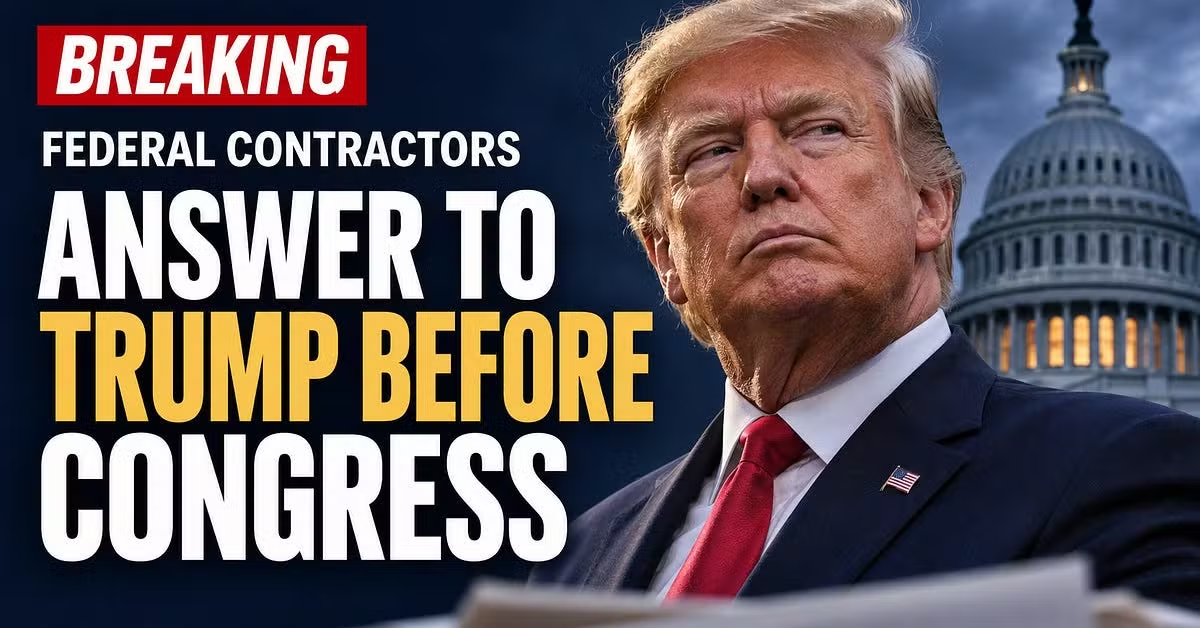
BREAKING: Donald Trump Just Ordered Federal Contractors to Answer to Him Before They Answer to Congress
substack.com· 8h
Trump orders federal contractors to check with White House before responding to Congress
npr.org· 11h
Trump Moves to Restrict Congressional Oversight of Contractors
nytimes.com· 13h
Trump orders federal contractors to check with White House before responding to Congress
pbs.org· 14h
Trump Orders Contractors to Get Approval for Congress Queries
bloomberg.com· 15h
Trump's new executive order tells federal contractors to check with White House before responding to Congress
cbsnews.com· 15h
Trump orders contractors to check with White House over any congressional inquiries
theguardian.com· 16h
Trump directs federal contractors to coordinate with White House on congressional requests for information | CNN Politics
cnn.com· 16h
New Trump executive order seeks to thwart Democrats’ investigations
ms.now· 16h
White House Limits Federal Contractors’ Ability to Respond to Democratic-Led Investigations
washingtonsun.com· 16h
New Trump executive order seeks to block federal contractors from talking to Congress
politico.com· 16h
Trump limits Congress’s accesses to confidential agency, contractor information
newsnationnow.com· 16h
Trump orders federal contractors to check with White House before responding to Congress
apnews.com· 17h
Trump Tightens Grip on Information Shared With Congress - Newsweek
newsweek.com· 17h
'Nothing to see here': Ex-Trump official flags order Trump tried to bury on Friday night
rawstory.com· 18h
Trump limits Congress’s accesses to confidential agency, contractor information
thehill.com· 18h
'Good for Dems': Conservative says Trump's 'massive coverup' order may blow up in his face
As Democrats Pledge 'Accountability,' Trump Tries to Limit What Federal Contractors Can Tell Congress | Common Dreams
commondreams.org· 18h
White House seeks to limit information contractors should share with Congress
washingtonpost.com· 19h
Trump orders federal contractors to notify White House before giving Congress information
cnbc.com· 25h
Trump orders federal contractors to notify White House before giving Congress information
reuters.com· 31h
PROTECTING THE EXECUTIVE'S PRIVILEGES AND ENHANCING EFFICIENCIES IN FEDERAL CONTRACTING
whitehouse.gov· 31h
Trump Orders Federal Contractors To Notify White House Before Giving Congress Information
huffpost.com· 6d
President Donald Trump issued Executive Order 14438 on November 20, 2026, requiring federal contractors and subcontractors to notify the White House and their contracting agencies of any congressional request about their work for the executive branch. The order directs them to abide by instructions from the White House or the agency to withhold communications the administration deems protected by executive privilege, and contractors that fail to comply could face termination of their contracts or debarment from future federal work.
The order declares it United States policy to prevent uncoordinated disclosures to Congress, stating that lawmakers cannot seek information from executive branch agencies, employees, or contractors without a valid legislative purpose. It accuses certain congressional leaders of threatening executive prerogatives by seeking confidential information and harassing private companies that contract with the government. The White House warns that without confidentiality, agencies will be chilled from sharing sensitive information with contractors and may reduce reliance on them.
The order expands the administration's effort to limit congressional oversight before Democrats, who won both chambers in the November 2026 midterms, take control in January. Days earlier, on November 18, White House Counsel Will Scharf told agencies to obtain White House approval before employees agree to testify and said committee chairs should not send information requests until the next Congress begins. Democrats are preparing investigations anyway: Robert Garcia, expected to chair the House Oversight Committee, has asked Trump family members, Vice President JD Vance, and other officials to preserve documents, with Jamie Raskin set to lead the Judiciary Committee.
President Donald Trump issued Executive Order 14438 on November 20, 2026, requiring federal contractors and subcontractors to notify the White House and contracting agencies of any congressional request about their work for the executive branch.
The order requires contractors to abide by instructions from the White House or the contracting agency to withhold communications the administration deems protected by executive privilege.
Executive Order 14438 declares it United States policy to prevent uncoordinated disclosures to Congress, stating that Congress cannot seek information from executive branch agencies, employees, or contractors without a valid legislative purpose.
The order accuses certain congressional leaders of threatening to intrude on executive prerogatives by seeking confidential information and harassing private companies that contract with the federal government.
Contractors that fail to comply could face termination or cancellation of their contracts and debarment or suspension from future federal work.
The order applies to subcontractors and directs each agency to promptly inform all contractors and subcontractors of the new obligations and require their compliance.
The order directs the Office of Management and Budget to develop guidance on ensuring contractor compliance and coordination between agencies, contractors, and the White House.
The order warns that if communications with contractors cannot remain confidential, agencies and the White House will be chilled from sharing sensitive information and may reduce or eliminate reliance on contractors.
The order expands President Trump's efforts to limit congressional oversight before Democrats take control of Congress in January.
The White House defended the order as necessary to protect sensitive government communications, including those involving national security.
The White House said contractors responding independently to congressional requests could expose privileged information and force the administration into costly legal disputes.
The order came the same week White House Counsel Will Scharf directed federal agencies to obtain White House approval before employees agree to testify before Congress.
Democrats won control of both chambers of Congress in the November 2026 midterms and have begun laying groundwork for investigations into the administration and Trump family business dealings.
White House Counsel Will Scharf said certain Democratic investigations could amount to criminal conduct.
Public Citizen co-president Lisa Gilbert said in a Saturday statement that the order, dressed up in fancy talk about executive privilege and enhancing efficiencies, is nothing but a naked ploy to protect the perpetrators of corruption, and that it will not succeed.
Bill Kristol, editor-at-large of The Bulwark, said the order looks like chief of staff Stephen Miller lining up ducks for a massive coverup, and argued that routing decisions through the White House means any withheld or destroyed information leaves a trail straight to the president's own staff.
In a post on X, Bill Kristol asked whether the executive order and the White House Counsel memo put the Trump White House in the middle of all the coverups, writing "Good for the Dems."
Kurt Bardella, a former Republican spokesman for the House Oversight Committee, wrote "Coordinate = obstruction."
White House Counsel Will Scharf warned Rep. Robert Garcia, the incoming Democratic chair of the House Oversight Committee, a week before the November 16 memo that some investigative tactics "may cross the line into blatant criminality."
Will Scharf told top Democrats that their requests for documents trigger no obligation for the administration to respond while they are in the minority, accusing them of trying to "harass and aggrandize."
Stephanie Grisham, President Trump's former White House press secretary, wrote in a post on X, "An executive order signed on a Friday night with no fanfare...nothing to see here folks..."
Jacqueline Alemany of MS NOW called the executive order "newsy" in a post on X.
White House Counsel Will Scharf issued a letter on November 18 saying committee chairs should not submit requests for information until the next Congress begins.
The executive order applies to all contractors and subcontractors, a universe of tens of thousands of businesses.
Rep. Robert Garcia said the executive order is part of the administration's "blatant attack on Congress' constitutional right to conduct oversight," and that despite efforts to impede investigations, "we're just getting started."
Rep. Jamie Raskin called Trump's order "totally unprecedented and blatantly unlawful," and said public contractors have a "duty and a right to speak truthfully when Congress calls."
In a fact sheet, the White House framed the new requirements as "protecting executive privileges from congressional overreach."
Legal analysts said the order's legality and enforceability are unclear, and that it is unlikely a federal contractor could invoke executive privilege to ignore a congressional or court subpoena.
Legal analysts said it is uncertain whether the administration can unilaterally impose new conditions on existing federal contracts, something courts have often rejected.
Legal analysts said advance notice to the White House might give the Justice Department enough time to mount a legal challenge to a congressional or court demand.
Legal analysts said the directives could collide with laws guaranteeing whistleblowers in the federal workforce and at government contractors the right to contact Congress about waste, fraud, or abuse without reprisals.
The order came days after Democrats on the House Oversight and Judiciary committees renewed plans to investigate the administration and asked officials to preserve communications for possible subpoenas.
House Democrats intend to launch their investigations in January 2027, with Jamie Raskin expected to chair the House Judiciary Committee and Robert Garcia the Oversight Committee.
Rep. Jamie Raskin said federal contractors are paid with taxpayer dollars, not Trump's personal billions.
Rep. Jamie Raskin forecast that after two years of MAGA Republicans in Congress colluding with "Trump Inc.," accountability and the rule of law are coming.
Rep. Robert Garcia sent notices asking Trump family members, Vice President JD Vance, and other officials to preserve documents.
Senator Maggie Hassan of New Hampshire said, "every federal contractor should know that this executive order does not override their obligation to comply with congressional requests for information or subpoenas," and that "Congress will get the information that it needs, and, if necessary, we will use every authority available to us to get it."
Government watchdog groups said the executive order is an effort to cover up widespread abuse of the contracting process over the previous two years, including lucrative contracts doled out to political allies and unqualified bidders.
Lev Parnas said that before a single subpoena has gone out, Donald Trump is telling the companies that hold the receipts that their business with the government depends on keeping quiet.
Lev Parnas called the executive order a warning dressed up as a legal privilege.
Lev Parnas forecast that most people will have moved on from the executive order by Monday.

