Boehly consortium signs US-backed deal to take 100% of Lukoil International
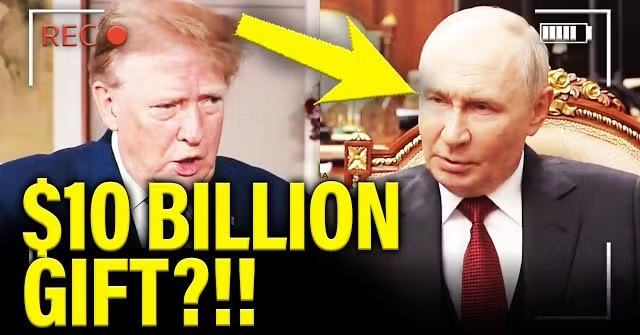
🚨 All HELL BREAKS LOOSE over Trump’s $10 Billion PUTIN GIFT!!!
youtube.com· 20h
BREAKING: Trump Just Handed Putin $10 Billion In Stock While Handing A Mega-Donor Gets $16 Billion In Russian Oil. The American Taxpayer Get Used As Cover To Drop Sanctions While Footing The Bill.
substack.com· 20h
Lukoil's global retreat driven by politics, co-founder says
reuters.com· 26h
US Consortium announces deal to acquire sanctioned Russian oil company Lukoil's global subsidiary
kyivindependent.com· 33h
Russian oil firm Lukoil’s overseas assets sold to investors led by US billionaire Todd Boehly | CNN Business
cnn.com· 40h
Billionaire financier Todd Boehly strikes deal for Lukoil assets
ft.com· 40h
American Billionaire Signs U.S.-Backed Share Swap Deal to Buy Lukoil Global Assets
themoscowtimes.com· 41h
EXCLUSIVE: Boehly signs US-backed share swap deal to buy Lukoil global assets
A consortium led by Todd Boehly and including the US International Development Finance Corporation signed a deal with sanctioned Russian oil company Lukoil to acquire its international energy assets, Boehly announced on November 25. The next day the consortium signed a definitive agreement to take 100 percent of Austria-based Lukoil International GmbH, which holds everything Lukoil owns outside Russia, in exchange for restricted shares in PJSC Lukoil and other Russian companies worth $10 billion. The portfolio, valued at about $16 billion, spans some 40 countries, with oilfields in Azerbaijan and Kazakhstan producing about 350,000 barrels a day, refineries in the Netherlands, Bulgaria and Romania, and gas stations across 16 countries.
The swap avoids any direct cash payment to Russia: a bank working for Boehly's group was reported to have bought the $10 billion of frozen Lukoil securities from about ten American and British funds for about $3 billion, roughly 30 cents on the dollar, under a plan drawn up by Xtellus Partners. The idea was initially rejected by the US Treasury but won support from the State Department, and the exchanged shares will be held in escrow in the United Arab Emirates so that no windfall reaches the Russian company. The development corporation was reported to be set to own roughly 15 percent and take a board seat, with Washington sharing in future profits after private investors recoup their capital plus an agreed return.
The Syrian-Qatari Al-Khayyat brothers and Abu Dhabi's International Holding Company left the consortium in the week before the announcement, removing partners whose commercial ties to Jared Kushner could have drawn scrutiny from Democrats who will control Congress from next year. Vladimir Putin was reported to have raised the Lukoil sale with Donald Trump's envoys Steve Witkoff and Jared Kushner at the Kremlin on September 5, 2026, and the envoys said they would help move it along.
The deal faces political resistance: Democratic congressman Gregory Meeks has introduced a bill barring the development corporation from any transaction involving Russian-owned energy assets anywhere in the world, and Republican Senator Roger Wicker and Democratic Senator Jeanne Shaheen co-signed an October letter warning against any deal that financially benefits Russia. The consortium is awaiting a license from the Treasury's Office of Foreign Assets Control, and Boehly says closing could take up to a year.
Todd Boehly says he signed a deal with Lukoil for a consortium that includes the US International Development Finance Corp to acquire the sanctioned Russian oil company's international energy assets.
The deal swaps Lukoil securities worth $10 billion for the company's international assets, a portfolio valued at around $16 billion that spans operations in 11 countries producing about 350,000 barrels of oil per day, including major oilfields in Azerbaijan and Kazakhstan, refineries in the Netherlands, Bulgaria and Romania, and a service station network including stations in the United States.
The US International Development Finance Corp will take an as-yet-undisclosed ownership stake that gives Washington a share of future profits after private investors recoup their capital plus an agreed rate of return, as well as a role on the company's governing board.
The consortium is awaiting a license from the Treasury Department's Office of Foreign Assets Control, and Boehly says closing the deal could take up to a year.
The share swap idea was initially rejected by the US Treasury but won support from the State Department.
The Lukoil securities to be exchanged were bought from US and British funds and US depositary banks that held them on behalf of retail investors.
The swapped shares will be held in an escrow account in the United Arab Emirates rather than going straight to Lukoil, because the US Treasury prohibited any windfall to the Russian company.
The consortium's partners include US bank Xtellus Partners and UAE-based Catena Investment Holding, and Boehly declined to detail their equity stakes.
The Syrian-Qatari Al-Khayyat brothers and Abu Dhabi-based International Holding Company left the consortium in the week before the deal's announcement.
Boehly and a US International Development Finance Corp official say the deal, if approved, would curb Moscow's ability to fund its war in Ukraine and replace Russian with US influence in strategic markets.
Boehly says the deal is "basically exchanging shares that are worthless to Americans ... for cash that is going back to them".
A source familiar with the process says the Treasury will review the deal to ensure US national security is safeguarded.
Boehly says the venture will be renamed.
The two investors' departures remove partners whose commercial ties to Jared Kushner could have drawn scrutiny from Democrats who will control Congress from next year.
A US International Development Finance Corp official says moving strategic energy infrastructure assets into US or allied partners' hands is a key policy priority of the administration.
Boehly's investment firm Eldridge announced that the consortium, which includes the US International Development Finance Corporation, agreed to buy Lukoil International from its sanctioned Russian parent.
The deal is structured as a share swap in which restricted shares in Lukoil's Russian parent and other Russian companies are exchanged for Lukoil International's equity, and Eldridge says it avoids any direct cash payment to Russia.
Lukoil's international portfolio also includes 2,000 retail gas stations across 16 countries in Europe, North America and Central Asia, and an international trading business.
In a statement, Eldridge says the deal will "secure critical global energy assets under American and allied ownership".
Petras Katinas, a research fellow at the think tank RUSI, said the deal demonstrates the efficiency of sanctions, and forecast that transferring refineries and fuel stations to non-Russian owners will reduce Moscow's trade influence and remove a source of future earnings for Lukoil.
The acquisition target is Austria-based Lukoil International GmbH, which Lukoil will give up for restricted shares of PJSC Lukoil and other Russian companies in exchange for 100 percent of its equity.
The sale consideration will be held in a restricted custodial account for five years or until sanctions are lifted, and Lukoil International will be completely severed from Lukoil upon closing.
Democratic Rep. Gregory Meeks, ranking member of the House Foreign Affairs Committee, condemned the deal, saying the administration "will stop at nothing to empower Russia and undercut Ukraine" and that "the American people deserve to know why a U.S. government agency is taking an ownership stake in a Russian oil company's portfolio while Russia continues its war."
Democratic strategist Jessica Tarlov wrote in a post on X that the US is "swooping in to help the Russians again" and called the move "seriously f*cked up."
Two people familiar with the terms say Lukoil's overseas portfolio spans about 40 countries, with oilfields in Azerbaijan, Kazakhstan and nine other countries producing about 350,000 barrels per day.
Lukoil co-founder Vagit Alekperov said in an interview on Russian state TV's 'Vesti' programme that the company did not make the decision to withdraw from international markets on its own, that the withdrawal was driven more by political factors, and that Lukoil still hopes to return to international markets.
The consortium signed a definitive agreement to take 100 percent of Vienna-based Lukoil International, which holds everything Lukoil owns outside Russia.
The US International Development Finance Corporation was reported to be set to own roughly 15 percent of the portfolio and take a seat on its board.
The deal was reported to value Lukoil International at about $16 billion, down from the $22 billion Lukoil carried it at on its books before sanctions.
A bank working for Boehly's group was reported to have bought the $10 billion of frozen Lukoil securities from about ten American and British funds for about $3 billion, roughly 30 cents on the dollar.
Xtellus Partners was reported to have drawn up the plan to hand Lukoil $10 billion of its own stock in exchange for the international business.
Vladimir Putin was reported to have raised the Lukoil sale with Donald Trump's envoys Steve Witkoff and Jared Kushner at the Kremlin on September 5, 2026, and the envoys were reported to have said they would help move the sale along.
The ownership of Catena Investment Holding remains unknown, and Boehly will not disclose who owns what in the consortium.
Gregory Meeks has introduced a bill barring the US International Development Finance Corporation from any transaction involving Russian-owned energy assets anywhere in the world.
Incoming House Oversight chair Robert Garcia sent document preservation notices on November 18, 2026, covering Jared Kushner and Donald Trump's sons.
Republican Senator Roger Wicker and Democratic Senator Jeanne Shaheen co-signed an October 2026 letter warning against any Lukoil deal that financially benefits Russia.
Gregory Meeks called the deal a "shameful deal" and demanded the administration halt the US International Development Finance Corporation's role in it immediately.
Dean Blundell writes that private investors wanted the US International Development Finance Corporation's backing as a security blanket before touching Russian assets.
Dean Blundell argues the escrow clause parks a $10 billion block of Lukoil's own stock with a release date tied to the day sanctions are dropped.
The administration's defense of the deal is reported to be that it takes strategic energy assets out of Russian hands, sends no cash to Moscow and will return billions to taxpayers.
MeidasTouch's host says Ukrainian President Volodymyr Zelensky has hit back hard against both Putin and Trump, and that Trump delivered a major gift to Putin in the form of about $10 billion.
MeidasTouch's host recommends that the Lukoil deal should require the approval of Congress and the people rather than just the Treasury Department.
MeidasTouch's host says the deal is a way for Putin to avoid future sanctions on Russian oil, because if the United States is the main shareholder in Russia's foreign oil assets it could not sanction itself.
MeidasTouch's host questions why the deal was $10 billion when the Lukoil assets are purportedly worth $16 billion, suggesting the difference reflects the value going to Russia and of the US being a shareholder in a Russian company.

