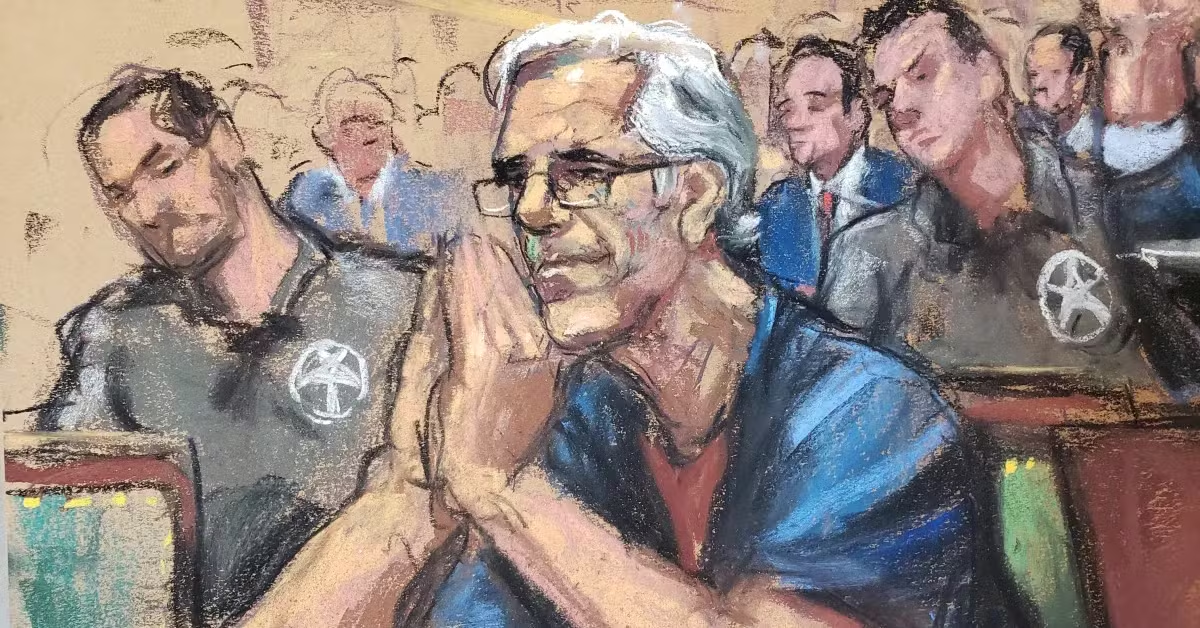
Michael Freeman says Jeffrey Epstein was killed
‘Jeffrey Epstein wasn’t suicide’: the doctor staking his name on it
thetimes.com· 25h
Why a trio of experts alleges Jeffrey Epstein did not die by suicide
aljazeera.com· 10d
NYT FLIPS On Epstein: Expert Says IT WAS MURDER
youtube.com· 10d
Jeffrey Epstein noose recreated, forensic analyst says injuries don’t fit hanging
newsnationnow.com· 11d
Epstein’s death more likely homicide than suicide, forensic expert says
Epstein neck wounds point to homicide for expert: 'Doesn’t look like a hanging mark'
rawstory.com· 12d
Forensic expert says Epstein was likely killed, but NYC medical examiner stands by suicide ruling | CNN
cnn.com· 12d
Why this forensic expert says Epstein's injuries point to homicide
Jeffrey Epstein's death may not have been suicide, new analysis by leading forensics expert suggests
cbsnews.com· 12d
Epstein's death may not have been suicide, new analysis suggests
yahoo.com· 12d
Forensic expert says his analysis of autopsy photos suggests Epstein was killed - AOL
aol.com· 12d
Forensic expert says his analysis raises doubts about how Epstein died
bbc.com· 12d
Epstein death "result of a homicide", claims forensic medicine expert | BBC News
Challenging Consensus, Scientist Says Photos Show Epstein Was Killed
nytimes.com· 12d
Forensic Scientist Michael Freeman Says Jeffrey Epstein Was Killed
huffpost.com· 13d
Forensic scientist Michael Freeman said on November 16 that a yearlong review of Jeffrey Epstein’s autopsy file led him to conclude Epstein was killed, most likely by strangulation from behind. Freeman said photographs showed a deep, branched neck mark and injuries including fingernail marks and a shoulder hemorrhage. He had reviewed photographs and examination records but had not examined Epstein’s body.
Freeman said the medical examiner first ruled the death undetermined, then called it a suicide, without reassessing that conclusion after obtaining a guard’s account. He said the ligature was never recovered, the cell was not secured or tested, and investigators did not establish which fabric had been around Epstein’s neck. Freeman’s research had not been peer reviewed, and a journal had rejected it. The planned presentation at University College London was canceled, citing student well-being, and moved to Middle Temple in London.
Freeman and colleagues published their report and the autopsy files on November 16. The next day, his team presented its research, saying it found no evidence that a hanging had taken place. Mark Epstein, who had provided Freeman the file, called for a new investigation on November 18.
On November 19, Freeman, Anders Eriksson and Itiel Dror released a report arguing the injuries were more consistent with homicide than suicide. It said either the guard’s account of finding Epstein hanging was false or the body had been deliberately positioned to make the death look like suicide.
Forensic scientist Michael Freeman said his yearlong review of Jeffrey Epstein’s autopsy file led him to conclude Epstein was killed.
Michael Freeman said photographs of Epstein’s body showed injuries suggesting a struggle that ended in strangulation.
Michael Freeman said, "The pattern and distribution and multitude of injuries are not explained by a suicidal hanging."
Michael Freeman presented his findings on Epstein’s death at London’s Middle Temple after University College London withdrew as the venue.
Mark Epstein gave Michael Freeman the autopsy file in November 2025 and posted autopsy photographs online shortly before the presentation.
Michael Freeman said the neck mark was deep, ragged and branched into a Y shape, and that injuries including fingernail marks, a neck abrasion and a shoulder hemorrhage supported strangulation from behind.
Michael Freeman and his co-authors continued seeking a publisher for their analysis after a journal rejected it.
University College London canceled the planned talk, citing student well-being, and it was moved to Middle Temple with attendees told to watch online.
Michael Freeman said his first thought on seeing an autopsy photograph was, 'Wait a minute, that doesn't look like a hanging mark.'
The New York City medical examiner’s office said it stood by its determination that Epstein died by suicide.
Other forensic pathologists who reviewed some photographs said the neck mark was atypical for hanging but that the images alone could not establish what happened.
Mark Epstein said other experts he consulted were inconclusive, adding, 'They were all hemming and hawing.'
Michael Freeman said he did not know who might have killed Epstein and was focused on oversights in the death investigation, asking 'how did this get so sideways?'
Michael Freeman criticized investigators for not testing Epstein’s fingernails for DNA.
Michael Freeman said his review of the autopsy evidence and the circumstances described for finding Epstein led him to conclude the death was a homicide, most likely strangulation from behind followed by suspension with the same ligature.
Michael Freeman said the autopsy evidence included a deep left-shoulder hemorrhage, apparent fingernail marks above the ligature and facial injuries consistent with blunt force trauma.
Michael Freeman said he had the autopsy photographs and examination records but had not examined Epstein’s body.
Michael Freeman said the ligature was never recovered and that investigators did not establish which fabric in the cell had been around Epstein’s neck.
Michael Freeman said Epstein’s cell was not treated as a possible crime scene and was not secured, fingerprinted or subjected to DNA testing.
Michael Freeman said the medical examiner initially ruled the death undetermined, later declared it a suicide, and did not reassess that conclusion after the guard’s account was obtained.
Michael Freeman said the full autopsy file he received from Mark Epstein would be uploaded when his lecture took place.
The BBC presenter said Freeman’s conclusion was a leap given that he was not a practicing forensic pathologist and had not seen the body.
The BBC presenter said an atypical mark does not necessarily mean homicide.
Michael Freeman said the guards who found Epstein were telling the truth.
Michael Freeman said the evidence should be revisited because the determination could be wrong.
Michael Freeman said he hoped his work would clarify the issue.
Michael Freeman published his research and the medical examiner’s files after presenting his findings in London.
Michael Freeman said he was not paid by Mark Epstein for his analysis.
Dr. Barbara Sampson said, 'I stand firmly behind our determination of the cause and manner of death for Mr. Epstein. The cause is hanging, the manner is suicide.'
Michael Freeman said the injuries and the way Epstein’s body was found did not match, leaving homicide as the remaining explanation.
Michael Freeman said he had 'no idea' who might have killed Epstein and that identifying a killer was not part of his investigation.
Michael Freeman’s research on Epstein’s death had not been peer reviewed.
Michael Freeman said he was open to hearing where he was wrong and invited people to examine the evidence themselves.
Michael Freeman and colleagues constructed a three-dimensional biomechanical analysis using the autopsy images and the account of the officer who said he found Epstein hanging from a bedpost.
Michael Freeman said the neck showed a second ligature mark below and at a different angle from the first, which he said could not be explained by a suicidal hanging.
Michael Freeman said an orange fabric ligature found in the cell could account for the neck injuries, but that the fabric was not collected for the medical examiner.
Michael Freeman said Epstein had an injury on his back as well as deep bleeding in his left shoulder that was not explained by hanging.
Michael Freeman said Epstein’s body being cold to the touch indicated he had been dead for at least a few hours.
Michael Freeman said he planned to resubmit his report for publication.
Michael Freeman said the injuries together were most consistent with homicidal strangulation from behind using a narrow, knotted fabric ligature.
Michael Freeman said his three-dimensional models showed some neck injuries could be consistent with hanging, but other injuries, including the shoulder hemorrhage, were not.
Michael Freeman said the medical examiner’s investigation overlooked injuries and that his analysis favored homicide over suicide.
Michael Freeman said a newly released autopsy photograph showed hemorrhage in the deltoid muscle, which he considered evidence of blunt force trauma around the time of death.
The report and Epstein’s autopsy file were released to the public.
The New York City medical examiner’s office said, 'Our office stands by its determination.'
Michael Freeman said an undetermined finding would have been the most prudent determination.
Michael Freeman’s team presented its research in London, saying it found no evidence that a hanging had taken place.
Mark Epstein said he learned the findings on Monday night.
Mark Epstein called for a full-scale murder investigation, saying, 'They should open up a full-scale murder investigation, which was never done. We now know he was murdered. We now know he could not have committed suicide.'
Mark Epstein said he found the report’s conclusion absolutely convincing.
Mark Epstein called for a new investigation after Michael Freeman’s findings were made public.
Forensic analyst Joseph Scott Morgan and graduate students recreated the noose found in Epstein’s cell and tested it, identifying its knot as a tautline hitch.
Joseph Scott Morgan said the findings about Epstein’s death deserved closer examination.
Michael Freeman, Anders Eriksson and Itiel Dror released a report arguing that Epstein’s injuries were more consistent with homicidal strangulation than suicide.
The report said the prison staff did not photograph Epstein before moving his body, investigators failed to identify the ligature, the guard initially refused an interview, and the medical examiner was not allowed to visit the prison.
The report said the experts believed either the guard’s account of finding Epstein hanging was false or the body was deliberately positioned to make the death look like suicide.
Itiel Dror said investigators faced political pressure and that emotion and politics influenced what should have been a scientific decision.

