Young leftists and Lula's Army helped Lula defeat Flávio Bolsonaro in Brazil's runoff
President Luiz Inácio Lula da Silva lost Brazil's first-round presidential vote on 4 October 2026 to his right-wing rival Flávio Bolsonaro, and some commentators declared him a lame duck. The day after, without asking Lula's campaign's permission, André Janones launched Lula's Army, a WhatsApp community of more than 10 million people. Young grassroots organizers also began mass mobilizations on 5 October in Rio de Janeiro and other cities, without waiting for official directives.
On 6 October 2026, young Partido dos Trabalhadores lawmakers publicly demanded that Lula stop selling his biography and start offering a future. The students' initiative is pointed to as the starting landmark of the popular movement behind his turnaround. On 11 October, Lula marched down São Paulo's Avenida Paulista with an estimated 1 million supporters in the March for Democracy, organized by student groups, LGBTQ groups, and fan networks. That same day a court shut Janones's channel down, after which the electoral court changed its rules and the channel came back.
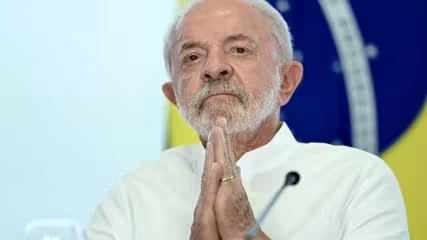
Within weeks the campaign borrowed the movement's playbook, and Lula and his vice president Geraldo Alckmin began posting selfie-style videos. Lula defied expectations and won a higher-turnout second-round vote that consolidated support for his fourth term as president, with multiple sources crediting the comeback to Janones, the 'general' of Lula's Army, who remains a strong ally despite no longer being an active member of the Partido dos Trabalhadores.
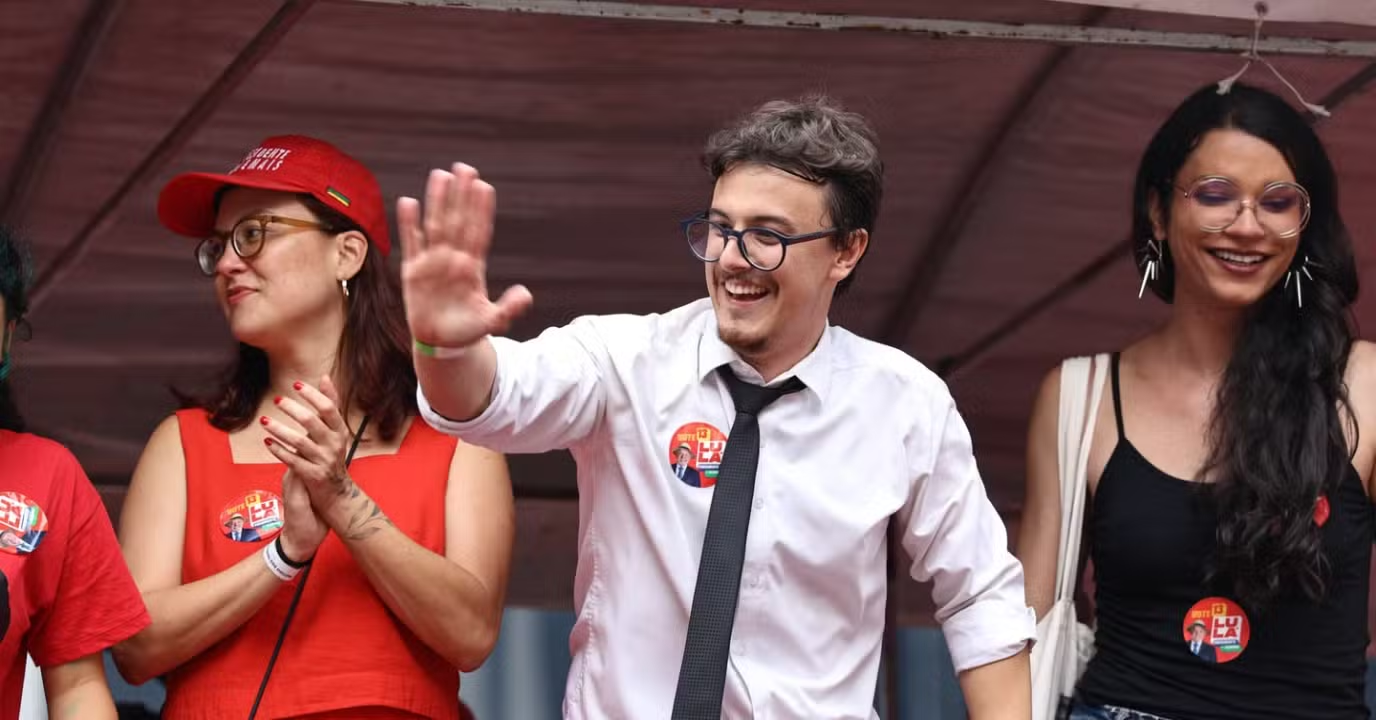
On 25 October, Lula appeared on stage at a victory celebration on Avenida Paulista surrounded by young lawmakers largely unfamiliar to the public, including Ana Julia Ribeiro, a 26-year-old from Paraná, sharing the crowd's applause with them. Rosa Amorim, a 29-year-old activist from the Landless Workers' Movement in Pernambuco, and Guilherme Cortez, a 28-year-old lawyer from São Paulo, had been elected to Brazil's parliament in the legislative elections on 4 October. On 27 November 2026, Lula will visit the Federal Fluminense University in Niterói, Rio de Janeiro, to thank the students who mobilized for his candidacy, to be received by rector Roberto de Souza Salles and vice-rector Luciana Freitas, and to publicly recognize students who turned the reaction to the first round into a street campaign.
President Luiz Inácio Lula da Silva will visit the Federal Fluminense University in Niterói, Rio de Janeiro, on 27 November 2026 to thank the students who mobilized for his candidacy in the second round.
During the visit, Lula is to be received by the Federal Fluminense University's rector Roberto de Souza Salles and vice-rector Luciana Freitas.
Lula intends to publicly recognize students who mobilized at a moment of electoral uncertainty and helped turn the reaction to the first round into a street campaign.
The students' initiative is pointed to as the starting landmark of the popular movement that contributed to Lula's electoral turnaround against Flávio Bolsonaro.
Flavio Bolsonaro, Lula's right-wing rival, won Brazil's first-round presidential vote on 4 October 2026, and some commentators declared Lula a lame duck.
André Janones launched Lula's Army, a WhatsApp community of more than 10 million people, on 5 October 2026, without asking Lula's campaign's permission.
Young grassroots organizers began mass mobilizations on 5 October 2026 in Rio de Janeiro and other cities, without waiting for official directives.
On 6 October 2026, young Partido dos Trabalhadores lawmakers publicly demanded that Lula stop selling his biography and start offering a future.
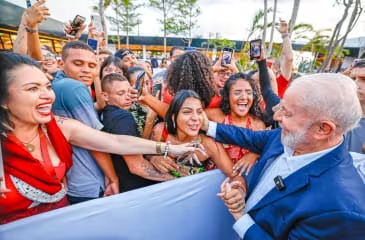
On 11 October 2026, Lula marched down São Paulo's Avenida Paulista with an estimated 1 million supporters in the March for Democracy, organized by student groups, LGBTQ groups, and fan networks.
A court shut André Janones's channel down on 11 October 2026, after which the electoral court changed its rules and the channel came back.
Lula defied expectations and won a higher-turnout second-round vote that consolidated support for his fourth term as president.
Multiple sources credit Lula's comeback to André Janones, the 'general' of Lula's Army, who remained a strong ally despite no longer being an active member of the Partido dos Trabalhadores.
Within weeks, Lula's campaign borrowed the movement's playbook, and Lula and his vice president Geraldo Alckmin began posting selfie-style videos.
Maria Clara de Oliveira, a 25-year-old photographer in São Paulo, said she flipped many votes, mostly women's, and that what worked was being frank, talking, and understanding the person's reality.
Lorrana Freitas, a 27-year-old first-time organizer, said the strategy was not each person flipping a vote but each person who joined bringing one more person.
Lorrana Freitas said the new tone made politics feel within reach, leaving her closer, more active, and more included in political life than before.
Lorrana Freitas said that if no one talks to young people, someone else will.
Nicole Montilla, an 18-year-old first-time voter, said the best way to end the Bolsonaro-versus-Lula polarization was to vote 13, Lula's ballot line.
Lucas Souza, a 20-year-old student, said his father declared that they were all bad and did not vote at all after Souza talked his father's ear off, taking a vote away from Flavio Bolsonaro.
Lucas Souza said a friend turned his large K-pop fan page into a political operation, and that the fanbase 'practically became a member of the campaign.'
Lucas Souza said the mobilization was not coming from Lula's campaign but was more spontaneous, and that the campaign itself did not really know what to do.
Lucas Souza said young people were the ones who mobilized and took to the streets, and that he does not know what would have happened if they had waited for the government.
Lucas Souza said his chats have remained active and focused on politics, and that the election of charismatic younger politicians has helped keep younger voters engaged.
Nicole Montilla credited Guilherme Cortez, a progressive elected to Brazil's national congress in 2026, for the continuation of youth and mass engagement in person and on social media.
Maria Clara de Oliveira said people always have to be reminded, as real political education, that politics happens every day.
On 25 October, Lula appeared on stage at a victory celebration on Avenida Paulista surrounded by young lawmakers largely unfamiliar to the public, sharing the applause of the crowd with them.
Rosa Amorim, a 29-year-old activist from the Landless Workers' Movement in Pernambuco, and Guilherme Cortez, a 28-year-old lawyer from São Paulo, were elected to Brazil's parliament in the legislative elections on 4 October.
Ana Julia Ribeiro, a 26-year-old from the state of Paraná, stood behind Lula at the celebration.
At the celebration on Avenida Paulista, Lula declared, 'I owe this victory to the rebellious youth who rose up to defend democracy.'

