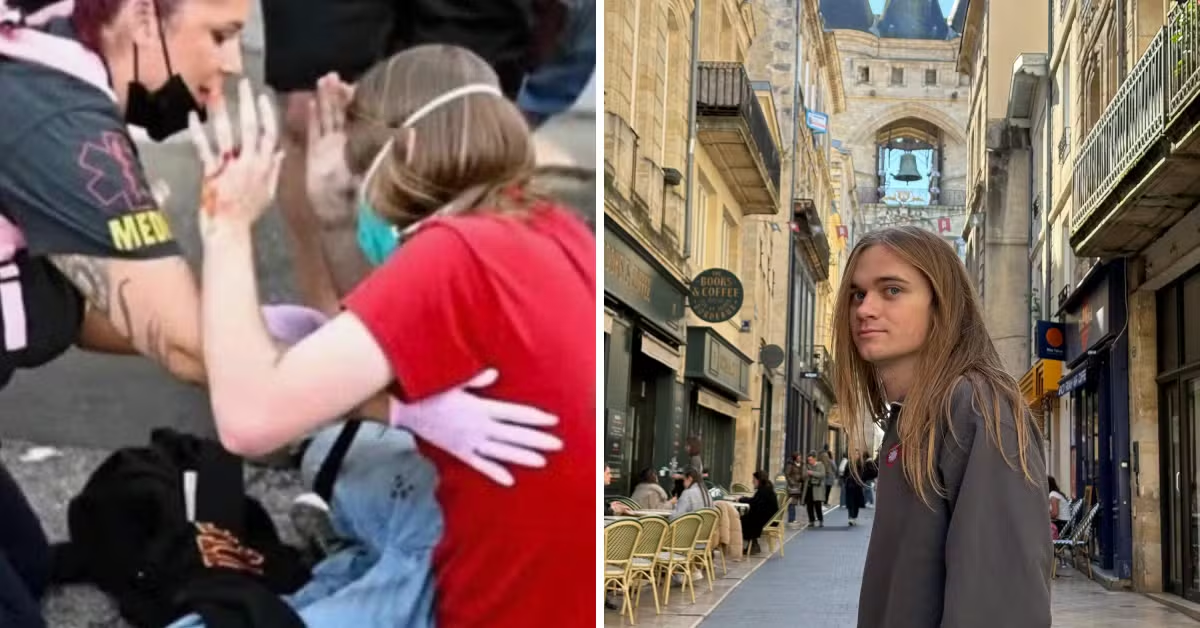
Tucker Collins sues US government over eye lost to DHS projectile at No Kings protest
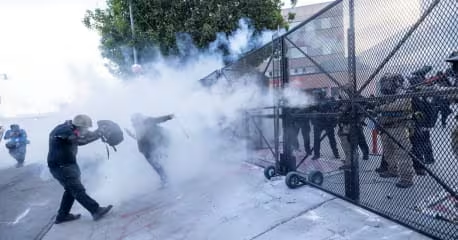
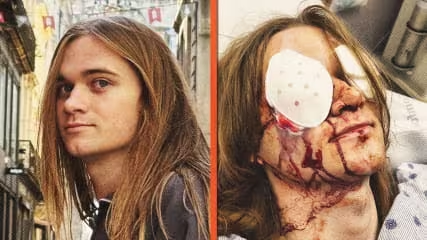
Tucker Collins was struck in the face by a less-lethal projectile fired by a Department of Homeland Security officer as he photographed a No Kings protest in Los Angeles on 28 March, and doctors surgically removed his right eye.
In November 2026, Collins filed a civil rights lawsuit against the United States government and ten unidentified DHS officers, named as Does 1 through 10, in the U.S. District Court for the Central District of California. The suit alleges excessive force in violation of his Fourth Amendment rights and violations of his First Amendment rights to free speech and assembly, and adds claims for assault and battery, negligence, intentional infliction of emotional distress, a violation of California's Bane Civil Rights Act, and claims against the United States under the Federal Tort Claims Act. It seeks past and future medical expenses, prosthetic and ophthalmologic care, educational expenses, and loss of earning capacity.
A bystander video shows Collins holding a camera in front of demonstrators standing behind a steel barrier when he falls to the ground clutching his face. The person who fired has not been identified, and the Department of Homeland Security has not confirmed it was one of its officers. Collins' lawyer said the projectile most likely came from an FN-303 launcher and was aimed at his head, in violation of federal and common law enforcement policies, and the lawyer and family say the shooting violated California law restricting the use of projectile launchers by law enforcement.
According to the complaint, federal officers began firing less-lethal projectiles at the demonstration at about 5 p.m., and Collins, who was 20 to 30 feet from the fence at the detention center and did not approach it, throw objects, or threaten officers, did not see which officer fired the one that struck him. Volunteer medics treated him at the scene before he was taken to California Hospital Medical Center, where doctors found an orbital fracture and projectile material in his eye socket and removed his eye the next day, inserting a silicone implant.
Collins says the loss of his eye has left him with permanent monocular vision, impaired his depth perception and peripheral vision, made everyday tasks like driving difficult, and put his planned avionics career at risk, while he has also experienced anxiety, nightmares, and panic attacks and fears being injured again if he keeps attending protests. He will need prosthetic and ophthalmologic care, and possibly cosmetic and reconstructive surgery, for the rest of his life. The complaint says he submitted a 100 million dollar administrative claim to the Department of Homeland Security, Customs and Border Protection, U.S. Border Patrol, and Immigration and Customs Enforcement in April, and that more than six months passed without a final decision.
A Department of Homeland Security officer shot Tucker Collins in the face with a less-lethal projectile as he photographed a No Kings protest in Los Angeles on 28 March.
Doctors surgically removed Collins' right eye after he was struck.
Collins filed a civil rights lawsuit in November 2026 against the United States government and unidentified Department of Homeland Security officers.
The lawsuit seeks damages for excessive force in violation of his Fourth Amendment rights and for violations of his First Amendment rights to free speech and assembly.
According to the lawsuit, Collins will need prosthetic and ophthalmologic care, and possibly cosmetic and reconstructive surgery, for the rest of his life.
Collins states in the lawsuit that he wants to keep attending protests but is afraid of being injured again.
Collins' attorney V. James DeSimone said, 'Tucker never posed a threat to anyone. No one around him was throwing anything, no one ordered the crowd to disperse, and still an officer fired a projectile into his eye.'
DeSimone said, 'The Constitution protects the right to peacefully assemble and to document what our government does in public, and simply recording what is happening in plain view should not cost anyone their sight.'
Collins said in his lawsuit, 'It feels safer to climb a mountain than to exercise my First Amendment rights.'
A bystander video shows Collins holding a camera in front of demonstrators standing behind a steel barrier when he falls to the ground clutching his face.
The person who fired the projectile has not been identified, and the Department of Homeland Security has not confirmed it was one of its officers.
Collins' lawyer said the projectile most likely came from an FN-303 launcher and was aimed at his head, in violation of federal and common law enforcement policies.
Collins' lawyer and family say the shooting violated California law restricting the use of projectile launchers by law enforcement.
The lawsuit seeks past and future medical expenses, prosthetic and ophthalmologic care, educational expenses, and loss of earning capacity.
Collins says the loss of his eye has impaired his depth perception and peripheral vision, made everyday tasks like driving difficult, and put his planned avionics career at risk.
In an April statement, the Department of Homeland Security called the demonstrators violent rioters who threw rocks and other objects at officers, and said agents used 'the minimum amount of force necessary to protect themselves, the public and federal property' after several warnings.
V. James DeSimone said the video of the episode does not in any way show a violent crowd.
DeSimone and Collins' family have called on the officer who shot him to be criminally prosecuted.
Collins said in an interview that the loss of his eye has thrown many unknowns over his future and affected his present life.
Collins filed the lawsuit in the U.S. District Court for the Central District of California, naming ten Department of Homeland Security officers whose identities were unknown as Does 1 through 10.
The complaint says Collins was 20 to 30 feet from the fence at the detention center and did not approach it, throw objects, or threaten officers.
Federal officers began firing less-lethal projectiles at the demonstration at about 5 p.m., and Collins did not see which officer fired the one that struck him.
Volunteer medics treated Collins at the scene before he was driven to an emergency room and transferred to California Hospital Medical Center, where doctors found an orbital fracture and projectile material in his eye socket and removed his eye the next day, inserting a silicone implant.
The lawsuit adds claims for assault and battery, negligence, and intentional infliction of emotional distress, alleges a violation of California's Bane Civil Rights Act, and brings claims against the United States under the Federal Tort Claims Act.
The complaint says Collins submitted a 100 million dollar administrative claim in April to the Department of Homeland Security, Customs and Border Protection, U.S. Border Patrol, and Immigration and Customs Enforcement, and that more than six months passed without a final decision.
The lawsuit says Collins has permanent monocular vision, missed about a week of classes, and has experienced anxiety, nightmares, and panic attacks since the incident.
V. James DeSimone said, 'It is deeply disturbing that the maiming of Tucker Collins, resulting in the loss of his eye was widely reported and captured on video and, yet, there is no law enforcement response, to date, on the Federal, State or Local level to prosecute the offending officer for his crime.'
DeSimone said, 'Once again, it is left to civil rights attorneys to attempt to achieve some semblance of justice for the permanent and irreversible harm caused to this courageous young man.'
The Department of Homeland Security said seven warnings were issued before crowd-control measures were deployed and that some people in the roughly 1,000-person crowd threw rocks, bottles, and concrete blocks at officers, leading to several arrests.
The Department of Homeland Security said the First Amendment protects speech and peaceful assembly, not rioting.

