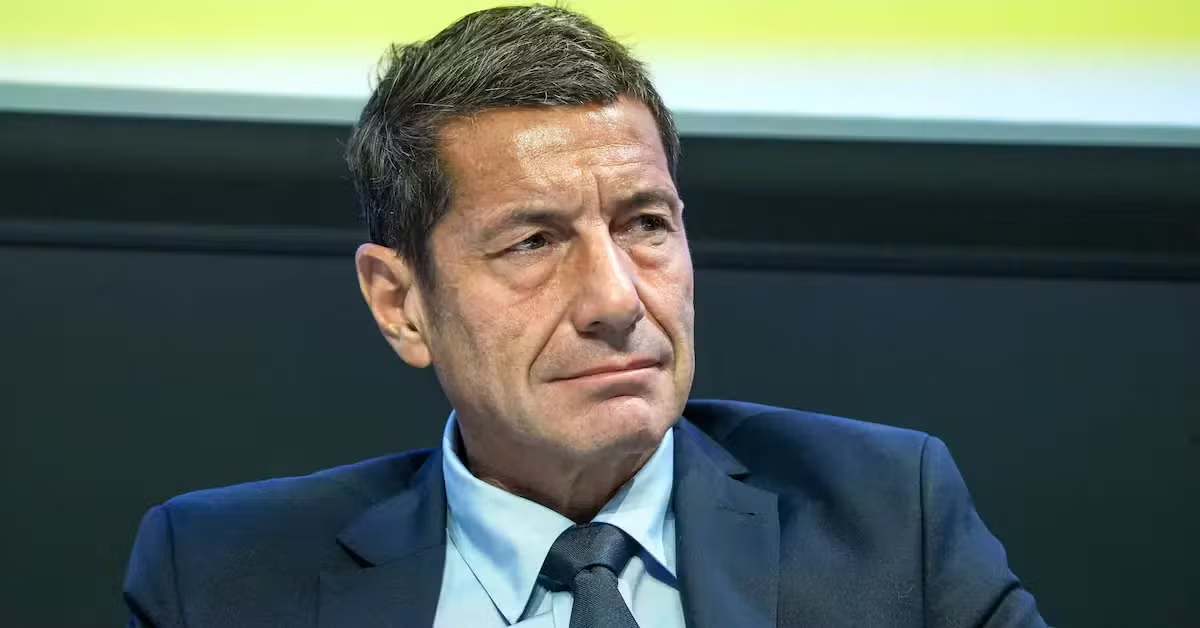
Lisnard calls primary a way to eliminate the Macronists and sets two conditions
Pour David Lisnard, la primaire de la droite et du centre est un «moyen d’éliminer les macronistes»
liberation.fr· 5d
Présidentielle 2027 : David Lisnard voit dans une primaire de la droite et du centre « un moyen d’exclure les macronistes »
lemonde.fr· 5d
FACE AU DUEL MÉLENCHON - LE PEN : CE QUE LES MACRONISTES SE DISENT EN PRIVÉ
youtube.com· 6d
Présidentielle 2027 : la droite et le centre posent la première pierre d’une primaire incertaine, avec ou sans Edouard Philippe
Une primaire de la droite et du centre prend forme avec les équipes d'Attal, Retailleau et Lisnard
france24.com· 9d
The campaign teams of Gabriel Attal, Bruno Retailleau and David Lisnard agreed on 17 November 2026 on the principle of a two-round, as-open-as-possible primary for the 2027 presidential election, with two possible date pairs: 17 and 24 January, or 24 and 31 January 2027. The agreed perimeter would exclude candidates of extreme parties, according to Renaissance, and Reconquête's participation is seen as unlikely, while Édouard Philippe of Horizons remains invited. A two-euro participation fee for voters is envisaged, and the three campaigns' representatives are to meet again on 26 or 27 November to settle sponsorships, common values and the debates.
By 18 November the three campaigns had formed a common technical team around their campaign directors and endorsed a primary open to a large electorate, held by electronic voting except for a few physical polling stations per department, with significant sponsorships required to prevent a proliferation of testimonial candidacies.
The accord then frayed: right after the 17 November meeting, Lisnard denied his colleagues' assertion that a principle agreement had been found, while Bruno Le Maire, not yet a declared candidate, answered 'why not' when a possible primary was raised at his programme presentation. On 21 November Lisnard told the Journal du Dimanche he sees a right-and-centre primary as a way to eliminate the Macronists and the candidates who scatter votes before the first round, setting two practically unrealizable conditions: the participation of Édouard Philippe, who categorically refuses to take part, and that of far-right candidate Éric Zemmour, which would be a casus belli for Gabriel Attal. Following his recent breakthrough in opinion polls, Lisnard is suspected of no longer wanting the primary he has always called for.
The campaign teams of Gabriel Attal, Bruno Retailleau and David Lisnard agreed on 17 November 2026 on the principle of a right-and-centre primary for the 2027 presidential election, held in two rounds and as open as possible.
The three campaigns agreed on two possible date pairs for the primary: 17 and 24 January 2027, or 24 and 31 January 2027.
According to Renaissance, the agreed perimeter would exclude candidates of extreme parties, and Reconquête's participation is seen as unlikely.
Édouard Philippe of Horizons remains invited to the primary, and Les Républicains says no one made his presence a precondition for holding it.
A two-euro participation fee for voters is envisaged for the primary.
The three campaigns' representatives are to meet again on 26 or 27 November 2026 to discuss the remaining rules, including sponsorships, common values and the debates.
David Lisnard judged that Édouard Philippe's participation in the primary is indispensable and said on TF1 that pressure must be put on him, since accepting the competition without him would let Philippe stay on his Aventine and leave doubt over whether the primary is organised at all.
A Horizons official said, 'we won't go, but they are convinced we will crack'.
Jordan Bardella mocked on X the 'backroom deals' between 'the openly Macronist' Attal, 'the converted Macronist' Retailleau and 'the masked Macronist' Lisnard.
The three campaigns have formed a common technical team around their campaign directors for the primary.
The three parties endorsed a primary open to a large electorate, held by electronic voting except for a few physical polling stations per department, with a modest two-euro participation fee.
A significant number of sponsorships is required from primary candidates to prevent a proliferation of testimonial candidacies.
Othman Nasrou, secretary general of Les Républicains, said the exchanges between the three campaigns were very constructive.
Right after the 17 November meeting, David Lisnard denied his colleagues' assertion that a principle agreement had been found for a primary.
Bruno Le Maire, not yet a declared candidate, answered 'why not' when a possible primary was raised at his programme presentation.
A supporter of Gabriel Attal said in a statement read on the show, 'There is urgency in the rallying of the democrats of the right and the centre; our candidates are collapsing.'
David Lisnard said the primary competition must be as broad as possible, including Attal, provided criteria to be worked out with Nicolas Dupont-Aignan and Reconquête are respected, and that Édouard Philippe is indispensable.
Le Média's Nils said he doubts David Lisnard really wants a primary while the Lisnard camp rides a poll-driven momentum.
Jean-Bernard Gayoranucci said he does not see a central-bloc agreement coming, since every announced accord is denied within days by one candidate or another, and suggested it might be better if the divorce happened now or by January so one or two remaining candidates could truly campaign.
David Lisnard said in an interview with the Journal du Dimanche that he sees a right-and-centre primary as a way to eliminate the Macronists and the candidates who scatter votes before the first round.
Lisnard set two practically unrealizable conditions for the primary: the participation of Édouard Philippe, who categorically refuses to take part, and that of far-right candidate Éric Zemmour, which would be a casus belli for Gabriel Attal.
Following his recent breakthrough in opinion polls, Lisnard is suspected of no longer wanting the primary he has always called for.
In the Journal du Dimanche interview, Lisnard said, 'I will not, for that matter, ask Mr. Gabriel Attal to support me if I win.'
Lisnard said of Bruno Retailleau, 'I think Mr. Retailleau and I are close and that we could work together.'
Lisnard said that if Édouard Philippe did not take part, 'we would have all the disadvantages of a primary without the advantage of a real selection.'
Lisnard said Reconquête!, Éric Zemmour's party, 'should also be able to compete in the primary if it respects its conditions of access.'
Lisnard's rivals accuse him, like Éric Ciotti, of favoring the union of the rights.