OpenAI's GPT-6.2 Astra identified the creator of an 1808 Yale sketchbook in 22 minutes
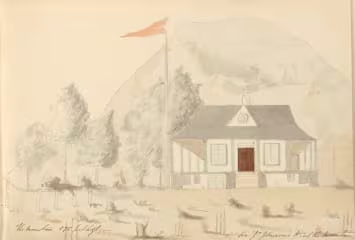
Mark Humphries began testing OpenAI's GPT-6.2 Astra in late October 2026 in the ChatGPT Windows Desktop app, and early on gave it images of an anonymous 1808 sketchbook held at Yale University's Beinecke Library, naming Kendall and Berczy as possible artists.
The model ruled both candidates out by placing them elsewhere when the dated drawings were made, then read the primary documents a human historian would consult, including Joseph Frobisher's Montreal dinner diary and a published letter by John Askin Jr. After 22 minutes and 1 second it concluded that Louis-Guy-Charles-Guillaume de Rohan-Chabot, vicomte de Chabot (1780-1875), probably made the travel drawings, tracing its finding to a single footnote in Juliette Reboul's 2014 PhD thesis on aristocratic families fleeing the French Revolution. It suggested confirming the hypothesis by ordering a microfilmed diary of Chabot's trip, which it located in the Special Collections of Cleveland State University.
When Humphries ordered the documents, the diary's handwriting showed the same distinctive letter forms as the sketchbook, and its itinerary placed Chabot in the same places on the same days as the dated drawings. Chabot's 18 June 1808 entry, written after his canoe reached Fort St. Joseph, recorded that he took a sketch and described the exact view in the matching drawing.
The journal runs to some 162 pages and carries excerpts from long-destroyed North West Company papers shedding new light on the fur trade, and Chabot's extended stop at Niagara Falls raises the possibility that other drawings survive. Humphries later ran the same test with Fable 5.2, which reached the same conclusion in about 35 minutes but failed to identify the journal, and when given the diary, GPT-6.2 Astra hedged, calling it 'an anonymous diary attributed to Chabot'.
Humphries, who said on 2026-11-25 that he belongs to a community of OpenAI users with early access to models for testing, found the Yale librarian he contacted received the finding warmly, though the library has not yet acted on it and Yale did not respond to a request for comment.
Mark Humphries began testing OpenAI's GPT-6.2 Astra in late October 2026 in the ChatGPT Windows Desktop app.
Early in his testing, Humphries gave GPT-6.2 Astra the images of an anonymous 1808 sketchbook held at Yale University's Beinecke Library, named Kendall and Berczy as possible candidates, and asked it to identify the artist.
The model ruled out Kendall and Berczy by placing them elsewhere when the dated drawings were made, then read the primary documents a human historian would consult, including Joseph Frobisher's Montreal dinner diary and a published letter by John Askin Jr.
After 22 minutes and 1 second, GPT-6.2 Astra concluded that Louis-Guy-Charles-Guillaume de Rohan-Chabot, vicomte de Chabot (1780–1875), probably made the travel drawings.
The model suggested confirming its hypothesis by ordering a microfilmed diary of Chabot's trip, which it had located through an archival inventory in the Special Collections of Cleveland State University.
The model traced its finding to a single footnote in Juliette Reboul's 2014 PhD thesis on aristocratic refugee families fleeing the French Revolution.
After Humphries ordered the documents from both archives, the diary's handwriting showed the same distinctive letter forms as the sketchbook, and its itinerary placed Chabot in the same places on the same days as the dated drawings.
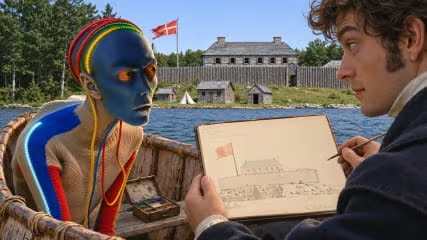
Chabot's 18 June 1808 entry, written after his canoe reached Fort St. Joseph, recorded that he took a sketch and described the exact view shown in the matching drawing.
Chabot's journal runs to some 162 notebook pages and carries excerpts from long-destroyed North West Company papers shedding new light on the fur trade, while his extended stop at Niagara Falls raises the possibility that other drawings survive elsewhere.
Humphries later ran the same test with Fable 5.2, which reached the same conclusion in about 35 minutes but failed to identify Chabot's journal.
When given the diary, GPT-6.2 Astra hedged, preferring to describe it as 'an anonymous diary attributed to Chabot' rather than say he wrote it.
Mark Humphries described the new journal as a major find of significant interest to both Canadian and fur trade historians.
Mark Humphries called the identification of Chabot a remarkable find, made in 22 minutes.
Mark Humphries said it is remarkable that an AI model was able to autonomously make the discovery and contribute new knowledge to these fields.
Mark Humphries said both of the model's doubts were improbable in the extreme and that excessive or unreasonable doubt is counterproductive for a researcher.
Mark Humphries said a footnote in a PhD thesis on refugee families is not where a human historian of the fur trade would tend to look.
GPT-6.2 Astra's reasoning traces reported finding a promising entry in Frobisher's diary recording that the vicomte de Chabot left Lachine for Kaministiquia with William McGillivray and William McKay on 6 June 1808, five days before the sketchbook places its traveller on the Ottawa River.
Mark Humphries said he is a member of a community of OpenAI users that gets early access to models for testing.
A librarian at Yale whom Humphries contacted received the finding warmly, though the library has not yet acted on the information, and Yale did not respond to a request for comment.
OpenAI president Greg Brockman reposted Humphries' account, celebrating the model's solution to a 'significant historical mystery.'
Humphries asked, 'Are you going to devote the years and years to doing that? The answer is probably no.'
Humphries said, 'I'm not a handwriting expert.'
Humphries called the diary entry 'the X-marks-the-spot kind of thing you don't typically find as a historian.'

