A historian says AI found the author of a 200-year-old anonymous sketchbook in just 22 minutes
In a Business Insider report, historian Mark Humphries says he used OpenAI's GPT-6.2 Astra to solve a 200-year-old mystery in 22 minutes: the author of an anonymous 1808 travel sketchbook held at Yale's Beinecke Rare Book and Manuscript Library. The model, which he tested through a community of OpenAI users with early access, drew on primary sources like a fur trader's dinner diary and a club's meeting minutes to name Louis-Guy-Charles-Guillaume de Rohan-Chabot, vicomte de Chabot. Humphries says the AI also gave him a path to prove the conclusion himself, leading him to a diary Chabot kept whose handwriting looked identical, whose dates lined up, and which described a sketch of Fort St. Joseph matching one in the sketchbook. He stresses a human could do the same work, but the documents named hundreds of people to check, and he is more ambivalent about AI than people think, saying his goal is to show historians what the models are capable of.
KI ermittelt in 22 Minuten den unbekannten Zeichner eines Skizzenbuchs von 1808
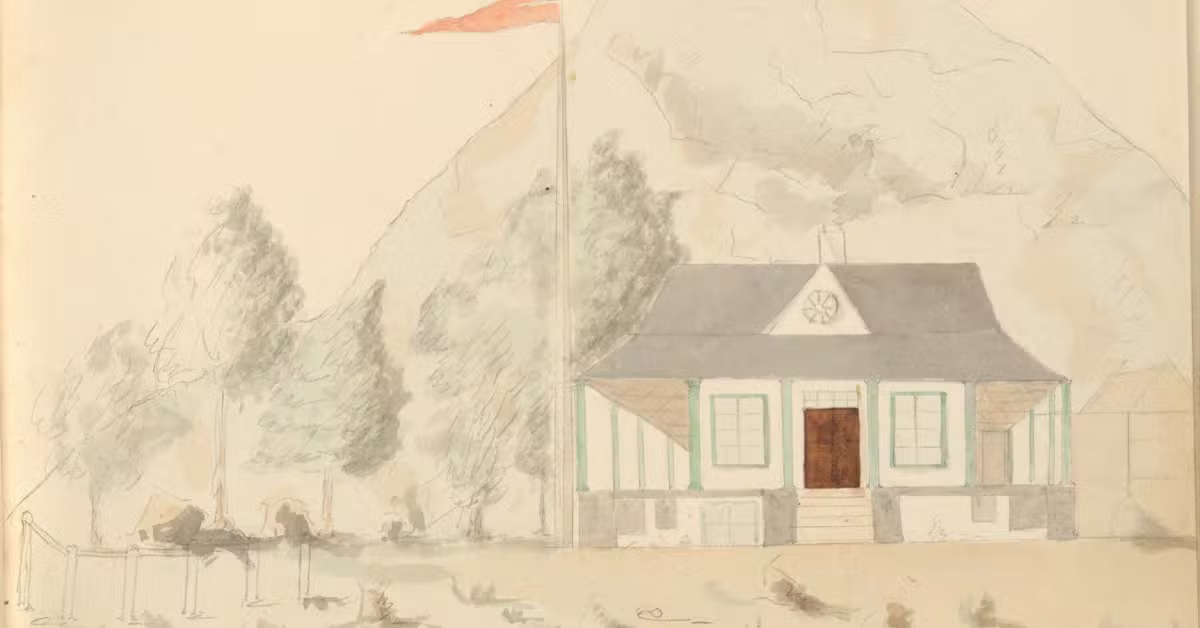
In a news report, heise.de relays historian Mark Humphries' blog account that OpenAI's GPT-6.2 Astra, given only the images of an unattributed 1808 sketchbook held by Yale's Beinecke Library, identified its previously unknown artist in 22 minutes: Louis-Guy-Charles-Guillaume de Rohan-Chabot, a little-known French aristocrat brought to Canada by the Revolution. The model suggested checking a microfilmed copy of his diary, which showed identical handwriting and an 18 June 1808 entry reading 'I made a sketch' matching a sketchbook picture exactly. Humphries says the model got there through a detour a human historian would not take, and he thinks a human would probably never have found the artist. He expects AI to upend historiography much as it did mathematics, with a trust crisis likely come spring or summer, and heise.de concludes that historiography's coming crisis should be less fundamental than mathematics' was.
GPT 6.2 Astra Solves a Historical Mystery
In a blog post on his Generative History newsletter, historian Mark Humphries reports that OpenAI's GPT-6.2 Astra, given minimal prompting and images of an anonymous 1808 sketchbook at Yale's Beinecke Library, identified its creator in 22 minutes and 1 second as Louis-Guy-Charles-Guillaume de Rohan-Chabot, vicomte de Chabot, an obscure French aristocrat turned British Army officer who spent 1808 in Canada. The model also predicted that a microfilmed diary of Chabot's journey, traced to a single footnote in Juliette Reboul's 2014 PhD thesis and ordered from Cleveland State University, would prove the hypothesis, and Humphries says it did: the handwriting matches the sketchbook's distinctive letter forms, the itinerary aligns perfectly with the dated drawings, and Chabot's 18 June 1808 entry describes the exact view of Fort St. Joseph depicted in a drawing. Humphries says the recovery of Chabot's largely unknown 162-page journal is itself a major find for historians of Canada and the fur trade, and that no human could plausibly have made the identification, since it required reasoning no fur trade expert he consulted had followed. He adds that Fable 5.2 later reached the same conclusion in about 35 minutes, suggesting such capabilities now exist across frontier models, though GPT-6.2 Astra oddly hedged even when the diary proved the case beyond reasonable doubt.

