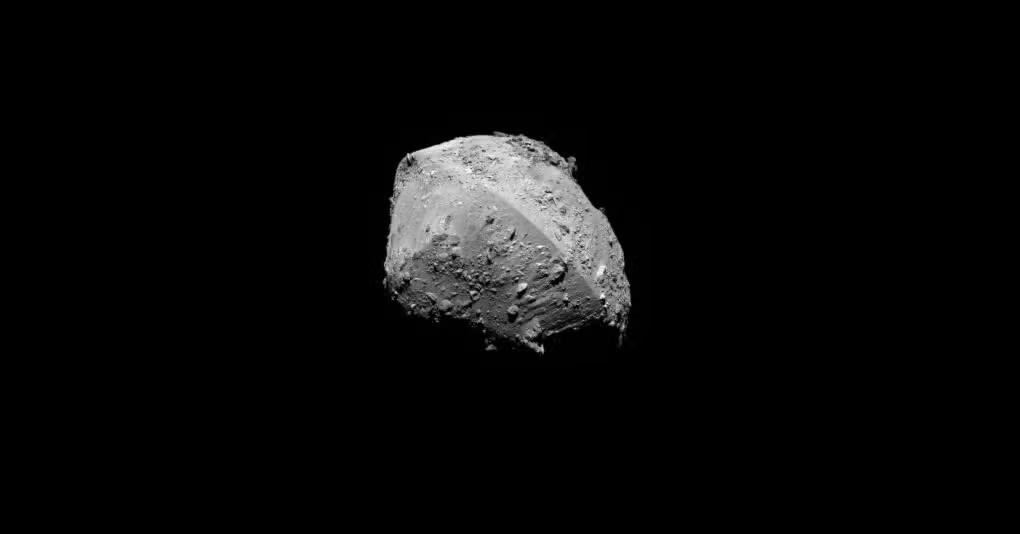
Europe's Hera mission returns to the chaotic scene of a cosmic smashup
In a report for Ars Technica, Stephen Clark writes that Europe's Hera spacecraft has reached the Didymos asteroids and returned its first views of the scene of NASA's DART experiment, which slammed into the moonlet Dimorphos in 2022 and shortened its 12-hour orbit by about 33 minutes. Hera's images show DART left a crater the size of a stadium, nearly as big as the asteroid itself, and principal investigator Patrick Michel says the impact both carved a crater and reshaped Dimorphos, a transition scientists cannot yet explain. Hera also found hundreds of boulders around the asteroids, ranging from football to washing machine size, which scientists think may be debris thrown off by the impact or relics of Dimorphos's ancient formation, though they need more data to say. According to ESA's plan, Hera will fly closer over six months and release two CubeSats to attempt landings on Dimorphos, with its data meant to help scientists learn how to deflect an asteroid that actually threatens Earth.
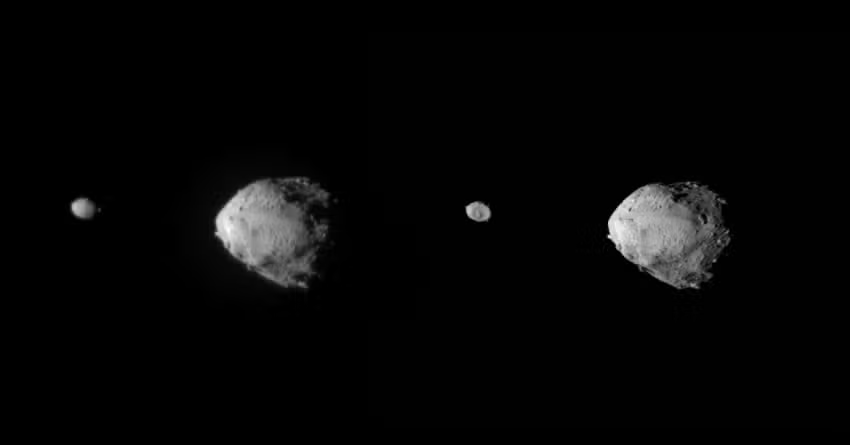
Hera's Images of Smashed Asteroid Moon Dimorphos, Unveiled
A Sky & Telescope article by Emily Lakdawalla reports that ESA's Hera mission unveiled images on November 25, 2026 showing NASA's DART impact transformed the asteroid moon Dimorphos far more than anyone had expected. The once rounded face of Dimorphos was flattened into a wide crater almost as large as the body itself, and its rotation is no longer synchronized with its orbit, so it now tumbles chaotically around the asteroid Didymos. Hera also discovered more than 100 football-sized to washing-machine-sized boulders orbiting the system, blasted off by the impact or possibly from Didymos, which scientist Heli Greus called a big shock and a danger to Hera and its CubeSats, whose planned trajectories pass through the boulder rings. The mission is orbiting about 30 kilometers from the system, hopes to reach one meter per pixel resolution, and its CubeSat trajectories can be adjusted as it learns more.
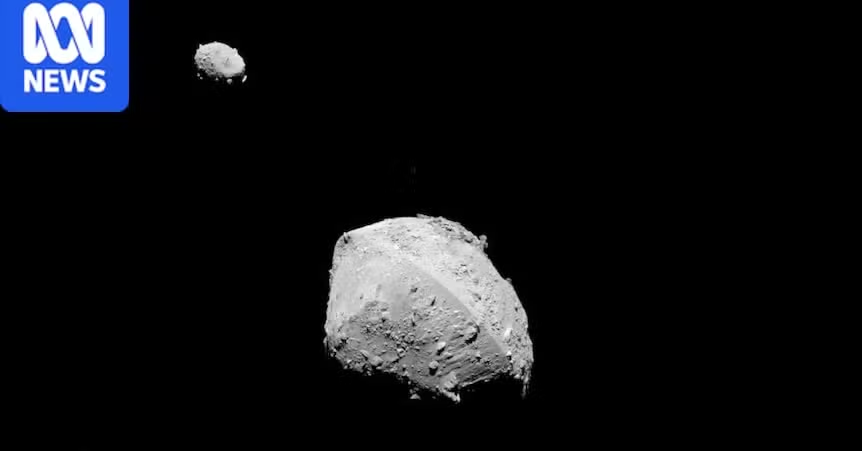
New photos reveal stadium-sized crater in asteroid knocked off course by NASA
New photos from the European Space Agency's Hera spacecraft show that NASA's 2022 DART mission, a proof-of-principle test of knocking an asteroid off its course, left the asteroid Dimorphos with a stadium-sized crater covering nearly its whole struck side. The oblong asteroid, about 151 metres wide and orbiting its companion Didymos, also remains tumbling in a chaotic way, with hundreds of boulders floating around the pair, though ESA sees no evidence of major changes on the side opposite the impact. Hera mission scientist Michael Küppers calls the combination of the crater and the untouched far side surprising, noting it was known that DART succeeded in changing Dimorphos's orbit but not what happened to the asteroid itself. Hera, now observing from about 25 to 30 km, is to close to within 13 km for higher-resolution images and in January will deploy two CubeSats to study the asteroids' interior structure, work Küppers says is needed to apply the kinetic impactor technique should an asteroid ever be found on a collision course with Earth.
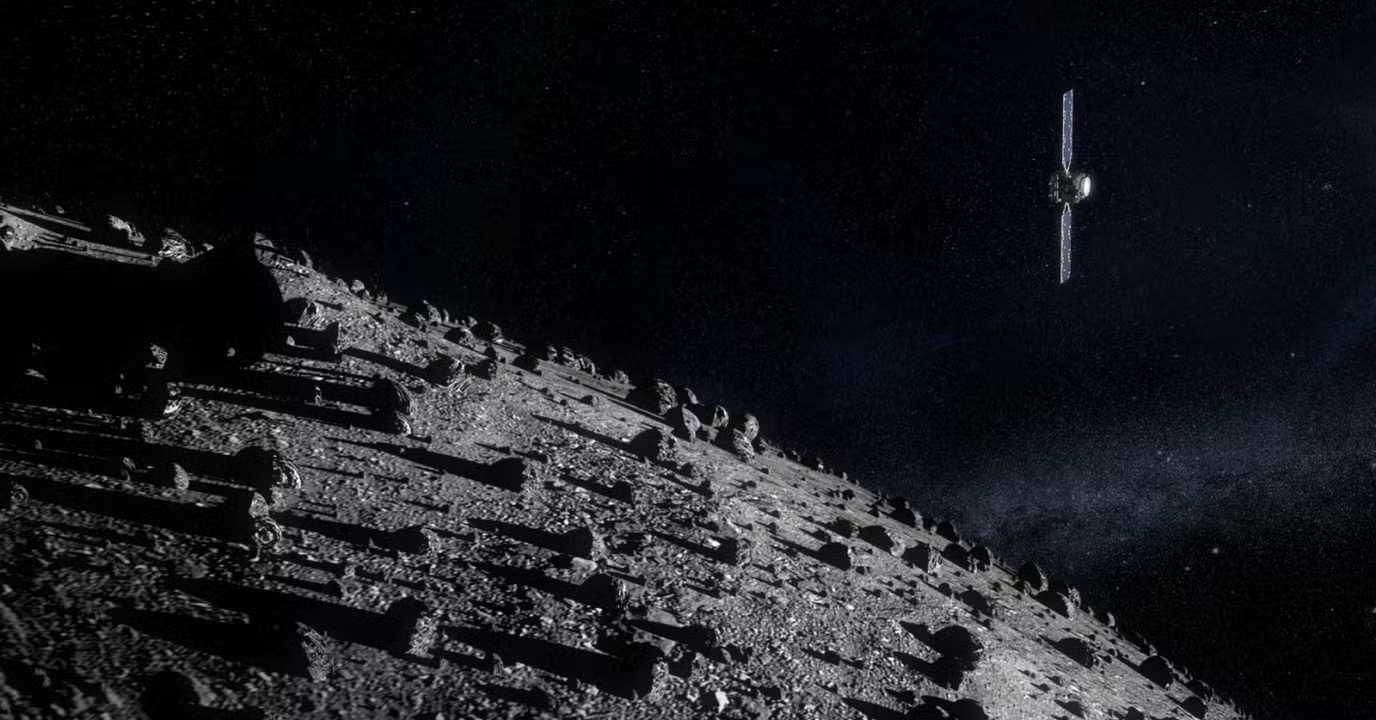
NASA's DART mission left a stadium-sized crater in an asteroid, the ESA finds - Engadget
The ESA's Hera spacecraft has found that NASA's 2022 DART mission, which deliberately crashed into the asteroid Dimorphos to shift its orbit, left a crater the size of a sports stadium that extends across the asteroid's entire width, according to Patrick Michel, Hera's principal investigator. Hera also revealed that both Dimorphos and its parent asteroid Didymos are surrounded by hundreds of orbiting boulders, though the impact did not disturb the boulder fields covering the rest of Dimorphos. The images were captured from about 25 to 30km away by Hera's cameras and infrared instruments. NASA and other agencies are exploring asteroid deflection as a way to protect Earth from dangerous future impacts, and Hera mission manager Ian Carnelli said that combining the two missions is a decisive step toward making it a reliable tool. In December 2026 the ESA plans to move Hera closer for higher-resolution images, and in January 2027 it will deploy CubeSats, one probing the asteroid's interior with radar and another prospecting its surrounding dust.
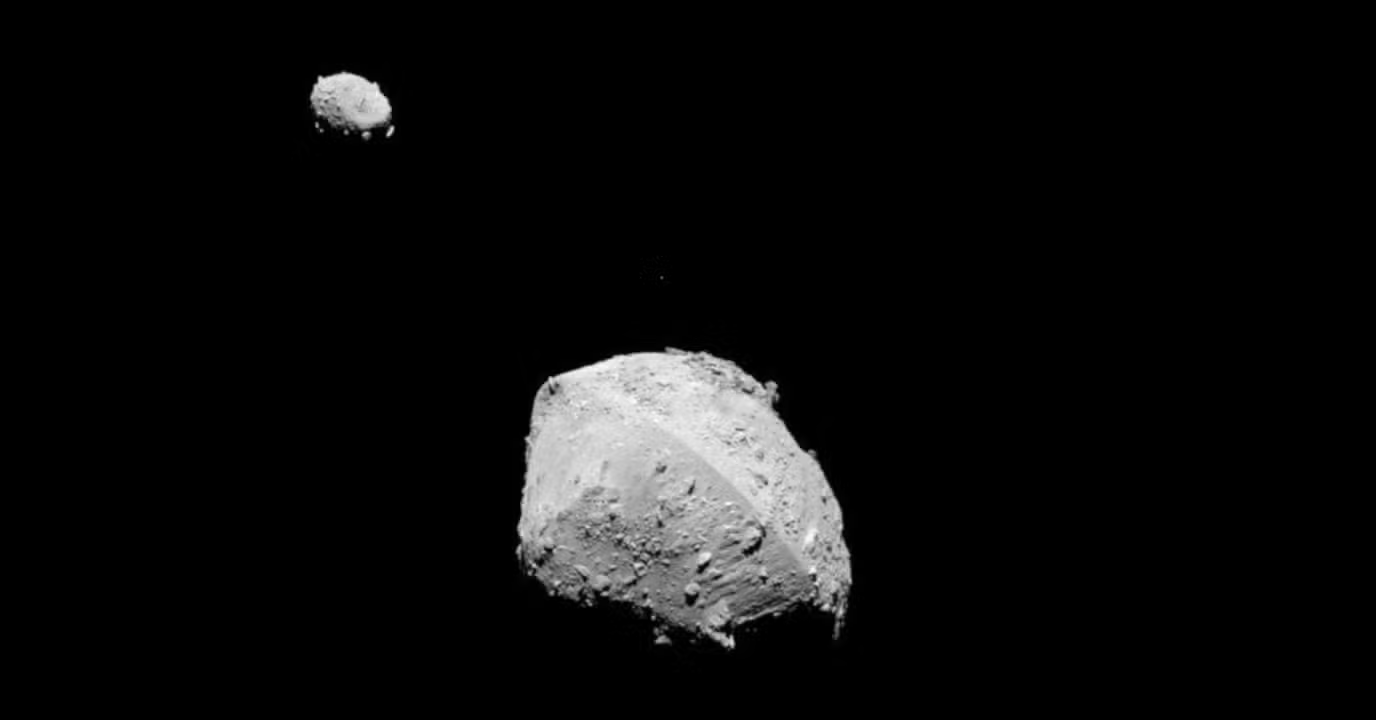
New images reveal crater on asteroid struck by DART spacecraft
Reuters reports on new images from the European Space Agency's Hera spacecraft showing that Dimorphos, the small asteroid struck by NASA's DART spacecraft in 2022, is left with one side flattened by a stadium-sized crater and tumbling in space. The images, photographed on November 7, 2026, from 29 km away, show the crater covering nearly the whole front side of the oblong, 495-foot-wide asteroid as it orbits its companion asteroid Didymos. Hera mission scientist Michael Kueppers says the impact side is completely covered by a crater, with the visual impression that a piece of the asteroid was cut off, and calls it surprising that the opposite side shows no evidence of major changes. DART was a proof-of-principle test showing a spacecraft could alter the trajectory of an object headed toward Earth, and Kueppers says studying what the impact did to Dimorphos is needed to apply the technique to a real threat. Hera is due to come within 8 miles of the asteroids in the coming month and in January will deploy two CubeSats to study the asteroids' interior structure.
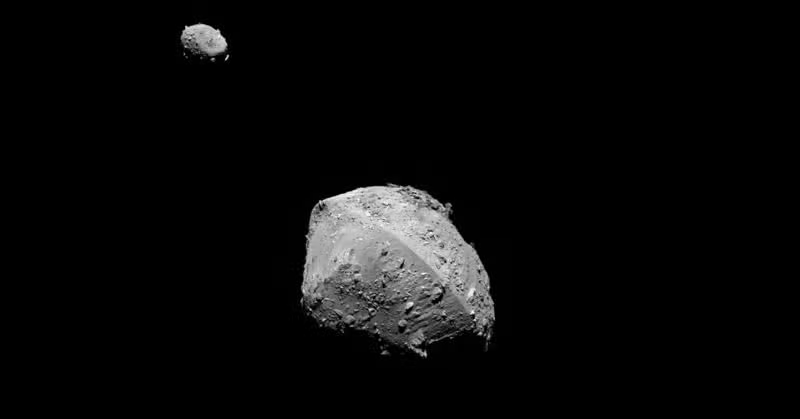
ESA mission reveals stadium-size crater left by first planetary defense test | CNN
ESA's Hera spacecraft has reached the asteroid Dimorphos, and its first released images show a stadium-size crater that flattened one of the asteroid's previously rounded faces, left by NASA's 2022 DART impact, humanity's first planetary defense test, in which a spacecraft hit the space rock at 13,645 miles per hour to test whether an asteroid could be deflected. Hera's early observations also revealed a surprise: hundreds of previously unknown boulders encircle the asteroid pair, and scientists cannot yet say whether they are debris from the DART impact or came from the larger asteroid Didymos, which Dimorphos orbits. Mission team members said the impact sent Dimorphos into a chaotic tumble, and Hera's December close approach, plus CubeSats due to land on the asteroid, should measure its mass and show exactly how well DART worked, refining models for deflecting asteroids that could one day threaten Earth.
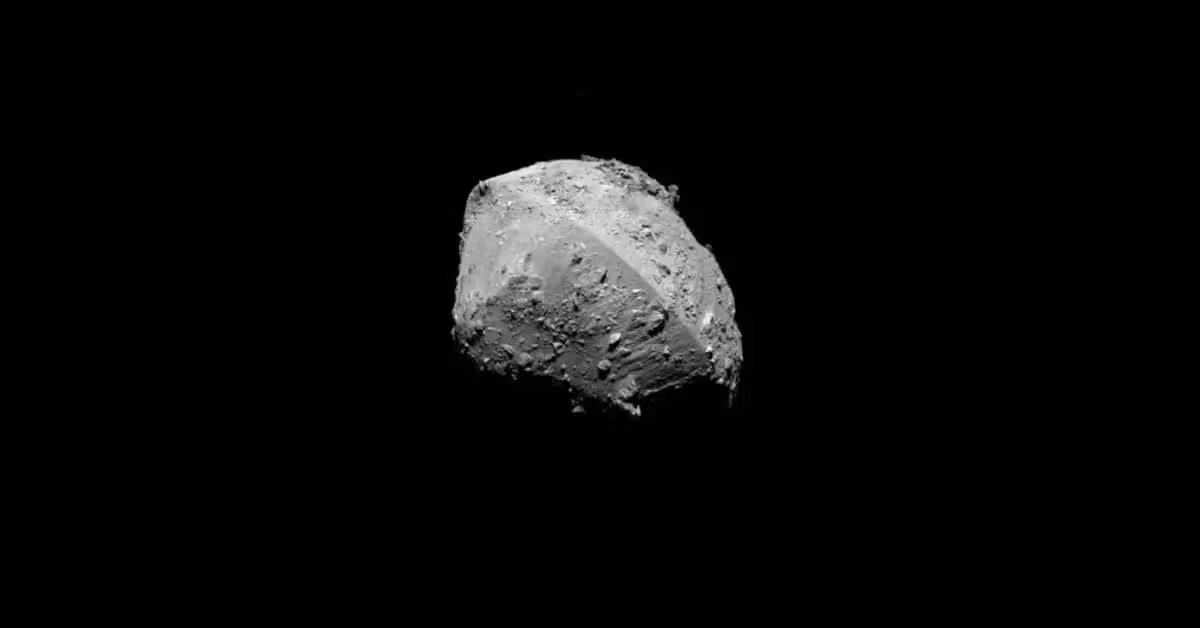
In 2022, NASA struck an asteroid. Now, we are finally seeing the massive impact up close
In a Scientific American article, the European Space Agency has released new images from its Hera mission showing the aftermath of NASA's 2022 DART impact on the asteroid Dimorphos. Hera, launched in 2024 to study the aftermath, captured the small 151-meter asteroid's face flattened into a crater that principal investigator Patrick Michel says is the size of a sports stadium and spans Dimorphos's entire width. The images also offer new insight into how the impact changed Dimorphos and its moonlet Didymos, altering the binary system's orbit. The 2022 mission demonstrated for the first time that deflecting an asteroid on a collision course with Earth may be possible.
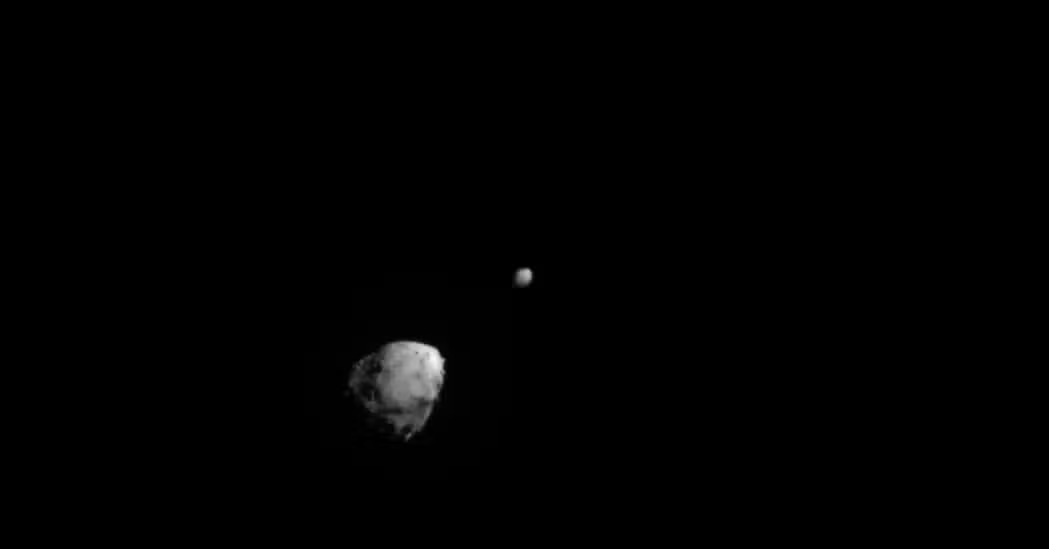
Europe’s Hera Mission Releases Close-Up Images of the Asteroid Hit by a NASA Spacecraft
A New York Times science article reports that the European Space Agency's Hera mission released its first close-up images of Dimorphos, the asteroid NASA's DART spacecraft deliberately struck in 2022, and the views left scientists awestruck but full of fresh questions. Hera, launched in 2024 and arrived in early November 2026, found that the crater DART excavated is far bigger than anticipated, almost as large as the asteroid itself, confirming that Dimorphos is a loosely bound rubble pile that convulsed like a fluid when hit. The asteroid is missing a decent chunk but remains in one piece on its changed post-DART orbit, which the deflection test showed is possible. Hera's images also reveal hundreds of boulders left moving around the system by the impact, an entirely unexpected swarm scientists are scrambling to navigate through safely, and in early 2027 the spacecraft will deploy two small satellites to probe the asteroid's interior and makeup.
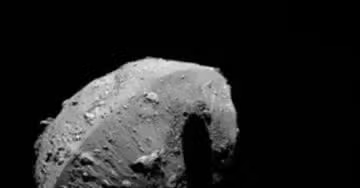
Did it work? Results of first attempt to shift the path of a deadly asteroid
The Times reports that a spacecraft is investigating whether crashing a probe into an asteroid could prevent Armageddon. The probe in question was deliberately flown by NASA into the pyramid-sized asteroid Dimorphos four years before the article's publication, in the first attempt to shift the path of a deadly asteroid, and the question is whether it worked.
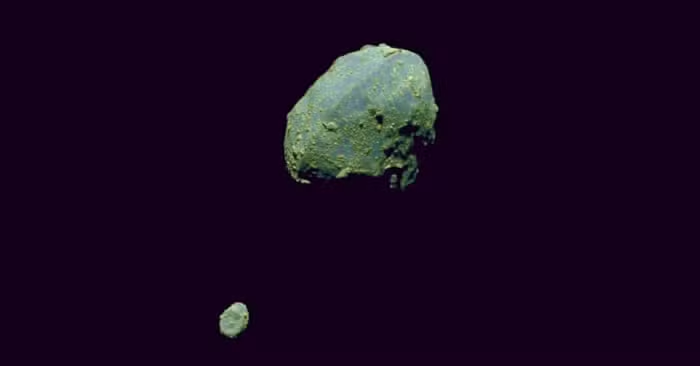
Spacecraft crash left asteroid tumbling in orbit with huge crater on one side
A Financial Times article reports that a spacecraft crash left an asteroid tumbling in orbit, with a huge crater on one side of it.
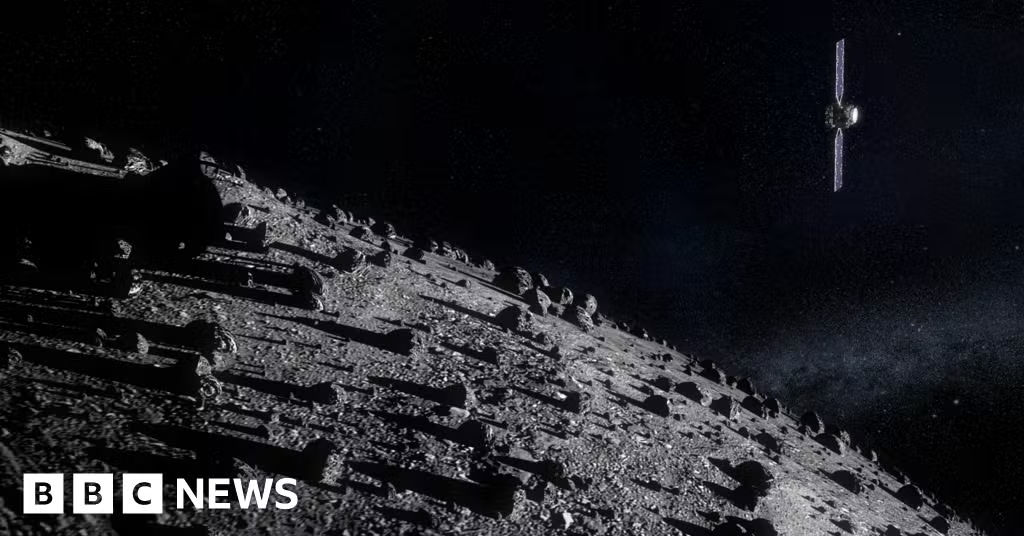
Hera spacecraft investigates damage at asteroid "crash scene"
ESA's Hera spacecraft has arrived at the asteroid Dimorphos to investigate the damage left when Nasa's Dart spacecraft deliberately smashed into it in 2022, the first ever test of planetary defences. Dart was obliterated on impact, but the crash changed Dimorphos's orbit around its larger companion Didymos by about 33 minutes, showing an asteroid's path could be altered. Hera, carrying instruments and two shoe-box-sized satellites, will spend the next year scouring the crash scene, and a key task is measuring Dimorphos's mass to work out how effective Dart's shove was. Mission principal investigator Patrick Michel says Hera is like Inspector Columbo going back to the crash scene, and that the impact may have left a crater or entirely reshaped the asteroid.
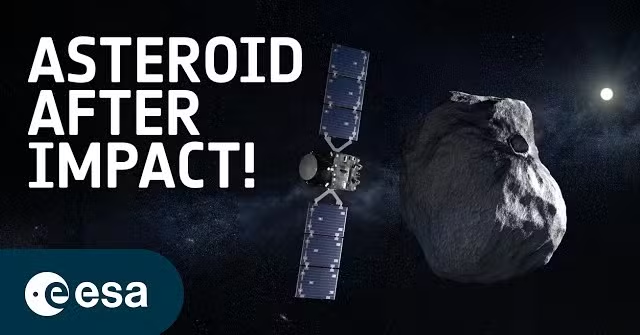
Revealing Hera's first images of asteroid Dimorphos
The European Space Agency announces a livestream from Berlin's Museum für Naturkunde on Wednesday 25 November at 19:45 CET revealing Hera's first images of the asteroid Dimorphos. Four years after NASA's DART mission became the first to impact an asteroid, the Hera mission arrived at Dimorphos after a two-year journey to find out exactly what happened. The livestream will show the binary asteroid system of Didymos and its moonlet Dimorphos up-close, and Hera's leading scientists will discuss whether DART and Hera prove asteroid deflection is a viable planetary defence method. ESA says the photos will reveal how the impact affected the 151-meter-diameter asteroid, and calls Hera's arrival another step towards protecting Earth from an asteroid fate like the dinosaurs'.

