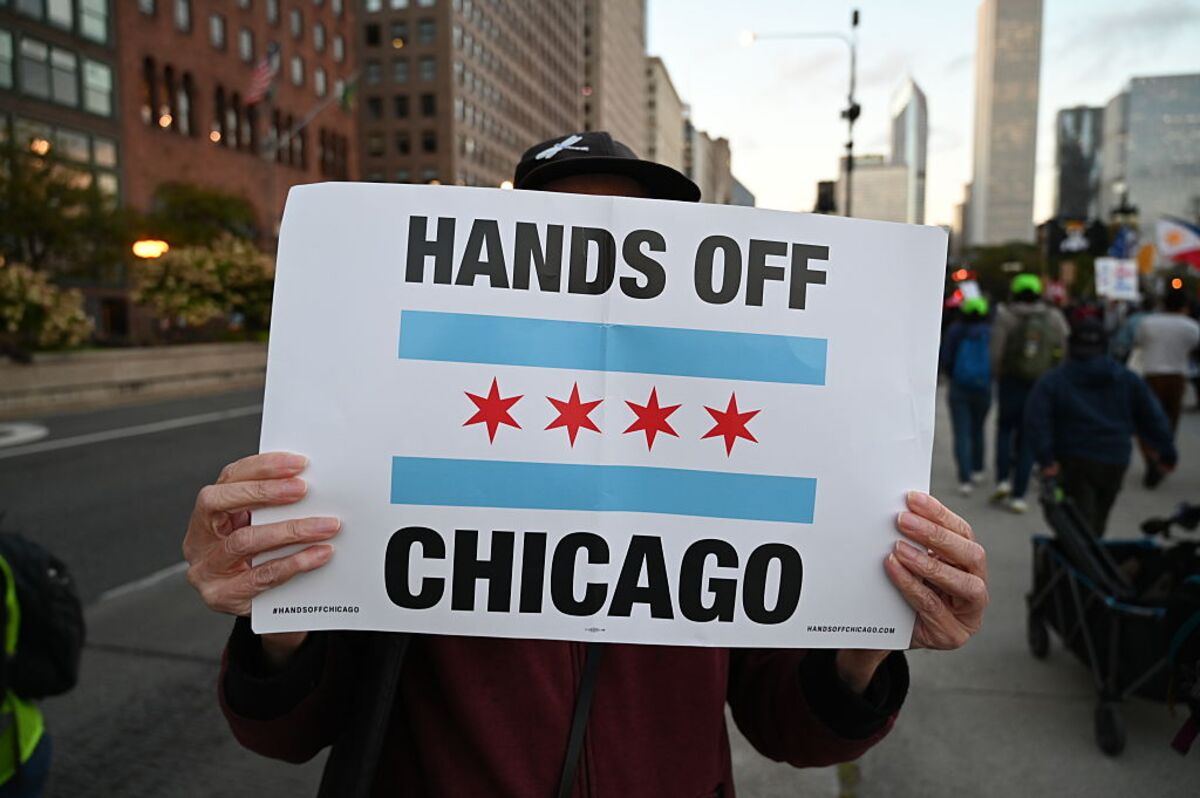
Hearing on DOJ conduct in collapsed Broadview Six case delayed to December
Summary
- The Justice Department's Broadview Six case against protesters at an ICE facility in Broadview, Illinois, collapsed in May 2026 after a judge found alleged grand jury misconduct.
- The six, most of them local Democratic figures, were indicted in October 2025 over a September 2025 protest during Operation Midway Blitz; all charges were later dropped.
- Judge April Perry ordered US Attorney Andrew Boutros and three prosecutors to testify at a hearing on possible sanctions or criminal contempt.
- The hearing, first set for November 16, was delayed to December 2 at the attorneys' request and with the Justice Department's consent.
- Associate Attorney General Stanley Woodward questions the judge's authority and cites a Fifth Amendment 'Catch-22' for prosecutors.
- Perry found the Justice Department's production of records, including an email to Boutros about the misconduct, fell short of her demands.
Reactions
- Former US attorney Barbara McQuade wrote that the Trump administration risks squandering federal prosecutors' presumption of regularity, to the detriment of public safety.
- Associate Attorney General Stanley Woodward argued in filings that the hearing presents prosecutors a 'Catch-22' and that no authority exists for the judge's 'mini-trial.'
- Judge April Perry wrote that the timing of Woodward's filing 'could easily lead one to conclude' its goal was unnecessary delay.
- Boutros has denied politics drove his office's charging decisions: 'Not a single case... involving politics in our decision-making. Full stop. Period. Zero.'
- Perry told lawyers her 'sole focus' was 'lack of candor, concealment of material facts, or other misconduct that occurred before me.'
- The Justice Department declined to comment on the pending litigation.
Timeline newest first
Judge April Perry set a December 2026 hearing in Chicago on whether US Attorney Andrew Boutros or his office concealed grand jury misconduct or political pressure in the Broadview Six case.
Judge April Perry delayed the Broadview Six hearing from November 16 to December 2, at the attorneys' request and with the Justice Department's consent.
In a motion dated November 10 signed by Associate Attorney General Stanley Woodward, the Justice Department asked the court to clarify what law authorizes the November 16 hearing and to limit or forgo the inquiry.
Sources newest first
- The DOJ’s Failure in Chicago Will Have Nationwide Consequences
A Bloomberg column by former US attorney Barbara McQuade argues that the Trump administration risks squandering federal prosecutors' presumption of regularity, to the detriment of public safety. In the Broadview Six case, charges against six protesters were dropped in May 2026, and Judge April Perry has set a December 2026 hearing on whether prosecutors, including US attorney Andrew Boutros, concealed grand jury misconduct or political pressure.
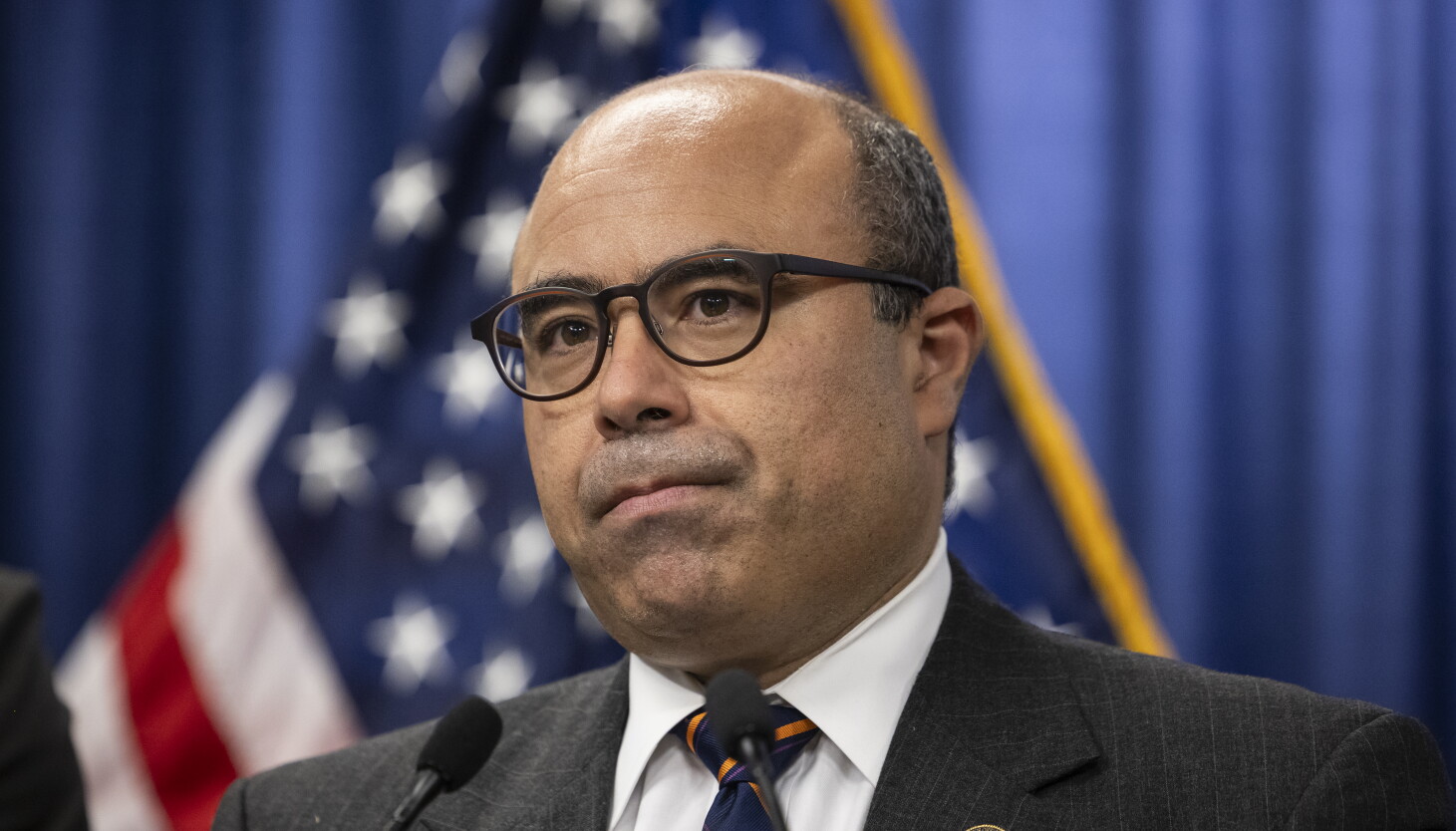 'Broadview Six' judge delays potentially explosive hearing featuring top prosecutor's testimony
A Chicago Sun-Times report says U.S. District Judge April Perry delayed until Dec. 2 a hearing where U.S. Attorney Andrew Boutros and other prosecutors must testify about the collapsed 'Broadview Six' case, which stems from a protest at an immigration facility and could bring sanctions or contempt findings. The delay, granted at the attorneys' request, followed a testy exchange with Justice Department official Stanley Woodward, who argued the prosecutors faced a "Catch-22" between testifying and invoking the Fifth Amendment.
gov.uscourts.ilnd.488591.305.0.pdf
The Justice Department files a motion asking Judge April M. Perry to clarify what law authorizes a 16 November 2026 evidentiary hearing in United States v. Rabbitt and others, at which she has ordered the US Attorney and three assistants to testify live. It argues the court cannot act as prosecutor in a potential criminal contempt inquiry, that the setup creates a Fifth Amendment Catch-22 for the prosecutors, and that the court should limit or forgo the inquiry and leave the matter to the Executive Branch.
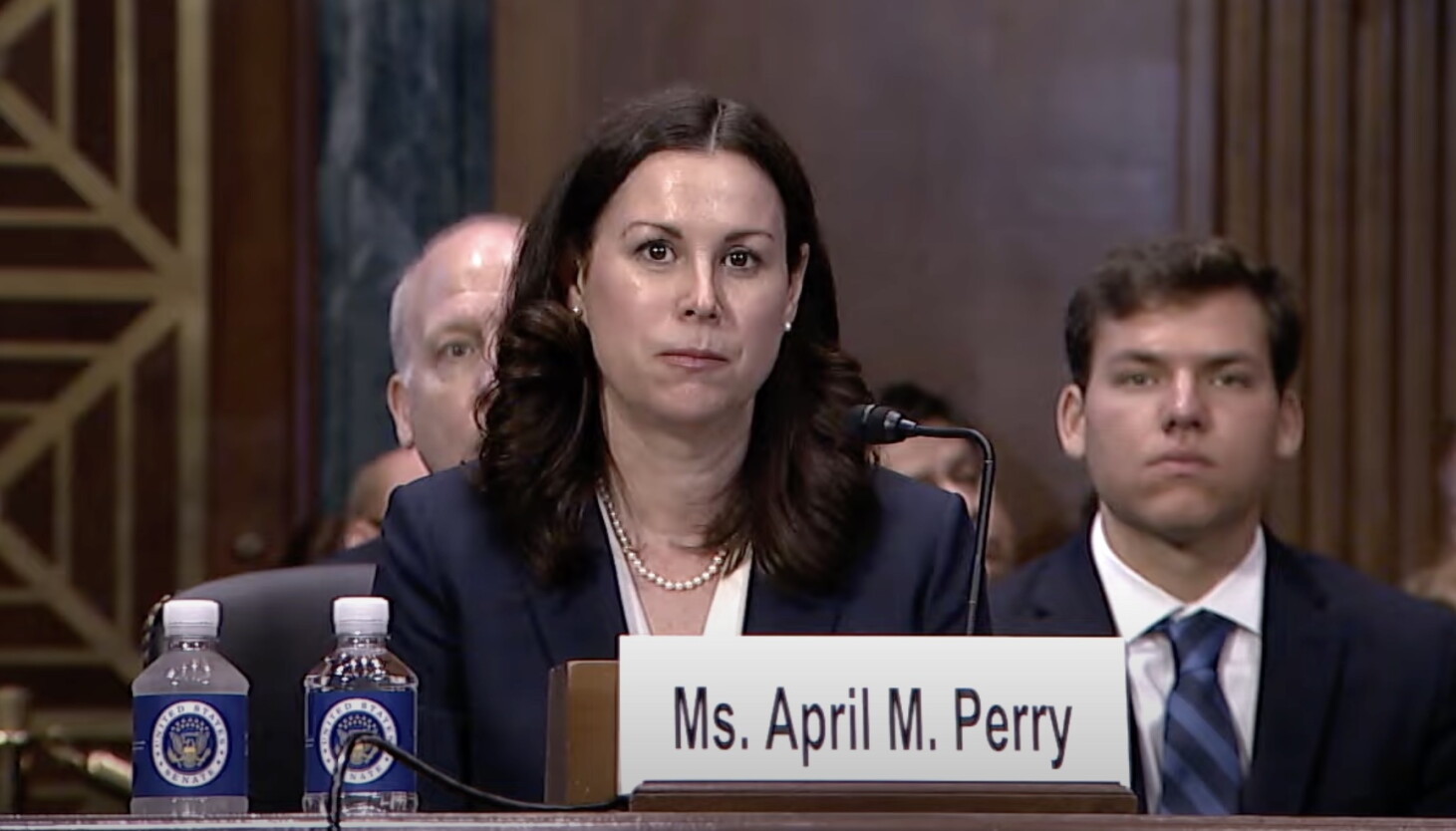 Feds question 'Broadview 6' judge's authority as clash over top prosecutor's testimony inches closer
The Chicago Sun-Times reports that the Justice Department is questioning U.S. District Judge April Perry's authority to hold a "mini-trial" over the collapsed "Broadview Six" case, where U.S. Attorney Andrew Boutros and other prosecutors face possible sanctions or criminal contempt. Associate Attorney General Stanley Woodward raised the possibility of prosecutors invoking the Fifth Amendment, while Perry complained the government's record production fell short and ordered Boutros to testify Nov. 16.
gov.uscourts.ilnd.488591.297.0.pdf
In a criminal case before Judge April M. Perry, the court granted prosecutor William Hogan's request to intervene for the 16 November 2026 evidentiary hearing but denied moving its date, saying counsel's vacation does not affect it. She will move it to 19 November only with agreement from all four witnesses, and outlined hearing rules including no cross-examination and possible mitigation evidence if sanctions loom.
 'Broadview Six' prosecutor asks judge to delay high-stakes hearing where feds could take the stand
A Chicago Sun-Times article reports that Assistant U.S. Attorney William Hogan, ordered to testify about the collapsed 'Broadview Six' case, asked Judge April Perry to push the Nov. 16 hearing to Nov. 23 because his attorney will be out of town, and to clarify whether his attorney may cross-examine witnesses. Judge Perry ordered Hogan, U.S. Attorney Andrew Boutros, and others to testify amid misconduct allegations that doomed the case, and has questioned whether the Justice Department's filings aim at delay.
gov.uscourts.ilnd.488592.292.0.pdf
The United States asks Judge April M. Perry in United States v. Rabbitt, Abughazaleh, Martin, Straw, and Sharp for an extension until 9 November 2026 to respond to her 9 October 2026 request for evidence, saying its attorneys are still reviewing documents for responsiveness and privileges. The 4 November 2026 motion is filed by Associate Attorney General Stanley E. Woodward, Jr.
Background newest first
 Exclusive: Judge Bars DOJ Attorney from Appearing in Case: "Deliberate Attempt to Mislead the Court"
justsecurity.org· 4d
Ryan Goodman and Jonah Miller report that on November 9, 2026, Judge Sanket J. Bulsara barred DOJ attorney Thomas Price from ever appearing again in Benitez v. Department of Homeland Security, calling his letter misrepresenting the scope of the Sanchez Alfaro injunction a bad-faith, deliberate attempt to mislead the court, and said he would likely disqualify two other DOJ attorneys unless they show they were not involved in drafting the letter. The Benitez case alleges immigration officers in New York arrest people based on ethnicity without required warrants, and Bulsara warned the government's office it is "on notice."
 In Trump’s Washington, Prosecutors Can’t Count on Grand Juries to Take Their Side
nytimes.com· 4d
Alan Feuer and Michael S. Schmidt report for The New York Times that federal prosecutors in President Trump's Washington are suffering an extraordinary run of grand jury rejections, with Washington panels refusing indictments in at least three cases in two weeks, including one against a double-voting suspect, and similar failures in Chicago, Los Angeles, and Virginia. The reporters attribute the rejections to cases tied to Trump's troop surge, immigration crackdown, and pursuit of his perceived enemies, while Magistrate Judge Zia M. Faruqui chastised prosecutors for making an end run around grand juries via a criminal complaint that he threw out.
 Chicago Sun-Times: Chicago news, politics, sports and more
The Chicago Sun-Times' homepage centers on Illinois' midterm elections: live results, Gov. JB Pritzker beating Darren Bailey for a third term, Juliana Stratton winning Dick Durbin's U.S. Senate seat, and long lines and ballot glitches at Chicago voting sites. Elsewhere it tracks the Bears' trade for Jeffery Simmons and 34-17 win over the Seahawks, a $260 million police misconduct settlement, DoorDash's $17 billion offer for Instacart, the deaths of DJ Sam Chatman and Rabbi Capers Funnye, and reviews of Writers Theatre's 'The Royale' and Geese at the Salt Shed.
 Former Chicago FBI chief sues, alleging he was pushed out over ‘politically motivated’ cases
washingtonpost.com· 12d
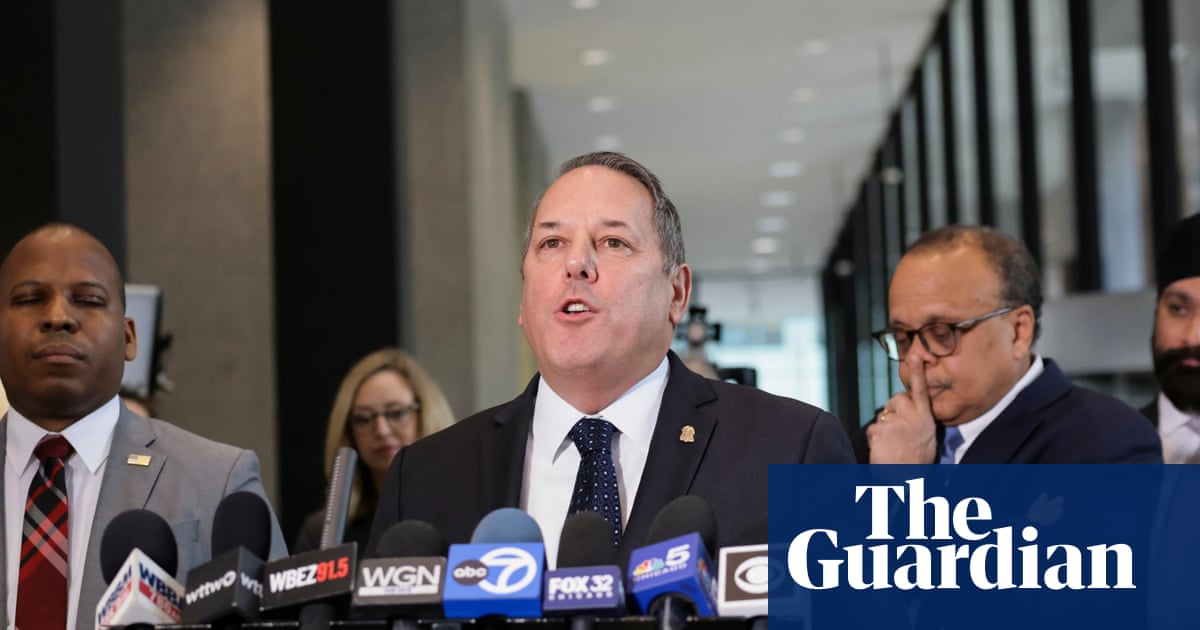 Ex-FBI chief in Chicago sues DoJ, claiming he was pressured to investigate Trump’s foes
theguardian.com· 12d
The Guardian reports that former FBI Chicago chief Douglas DePodesta is suing the Department of Justice, alleging he was pressured during Operation Midway Blitz to pursue "politically motivated" investigations and was unlawfully forced out after blaming US attorney Andrew Boutros for the failed prosecution of the Broadview Six anti-ICE protesters. His suit names FBI director Kash Patel and attorney general Todd Blanche, alleges defamation and due process violations, and says only about 6% of Boutros's protest cases ended in guilt; the DOJ and FBI did not respond to inquiries.
 Kids Are Being Harmed by Tear Gas, Pepper Spray Under Trump. There Could Be Long-Term Consequences.
propublica.org· 27w
A ProPublica investigation found at least 79 children across the country were harmed by tear gas or pepper spray as immigration officers sharply ramped up chemical weapon use during President Trump's immigration crackdown, and warns the chemicals — which are especially toxic to children — could carry long-term consequences. Federal judges in Chicago and Portland found officers used excessive force or showed "deliberate indifference," while DHS defended its agents' conduct and experts urged uniform policies and training.
