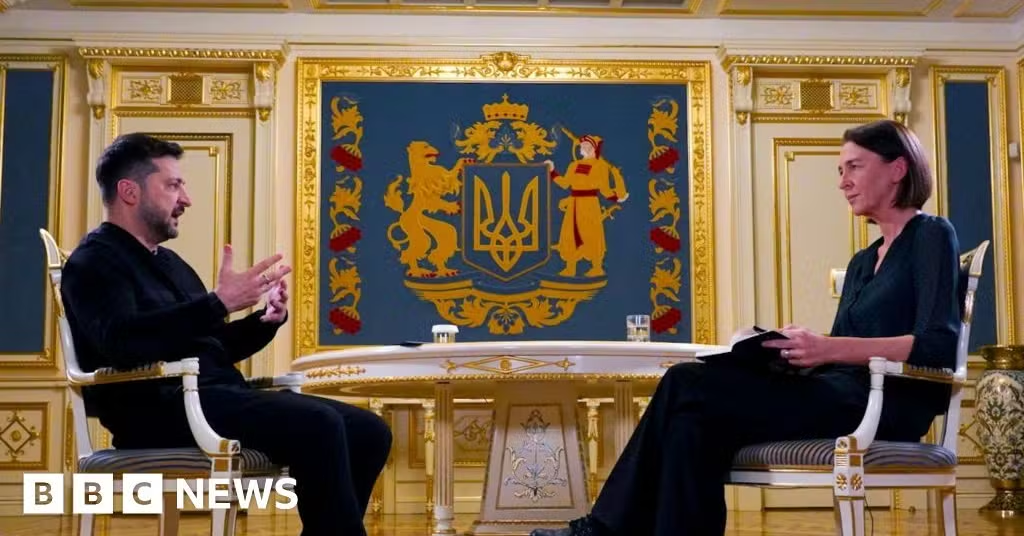
Zelensky tells BBC US too focused on Middle East and not pushing Russia hard enough
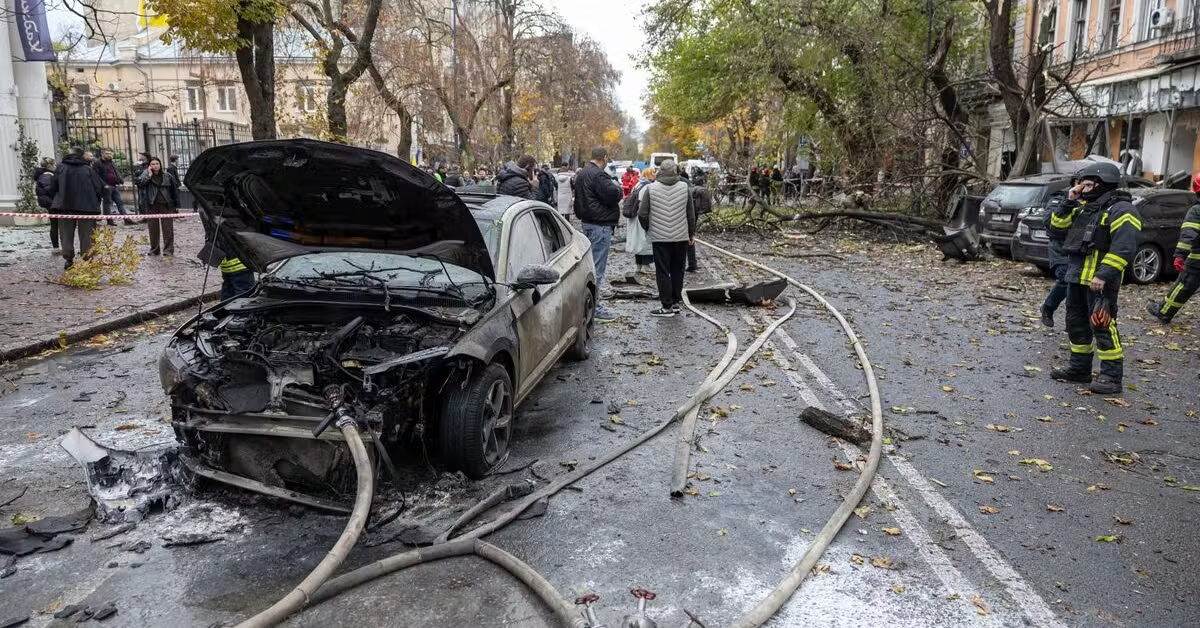
In an interview with the BBC's Sarah Rainsford in Kyiv, Ukraine's President Volodymyr Zelensky says the United States is too focused on the Middle East and is not pushing Russia hard enough in the peace talks, and he urges it to live up to its reputation as a strong country with power and respect. His complaint comes as the latest round of talks, mediated in Abu Dhabi, made no obvious progress, with Russia judging by its public statements back at its initial hardline positions and the Kremlin resisting European negotiators at the table, though Zelensky expects talks to resume in December. The report says Donald Trump's two envoys often seem more in tune with Moscow's position than Kyiv's, while the US argues it is being neutral, a stance Zelensky rejects, saying trying to be very neutral with the aggressor means supporting both the victims and the aggressor. He also says delays in delivering anti-ballistic missiles are costing Ukrainian lives, calls Putin an aggressor and a killer who cannot be a friend, and says Ukraine is bracing for a difficult and dangerous winter as strikes on Kyiv's bridges and power stations plunge much of the city into darkness.
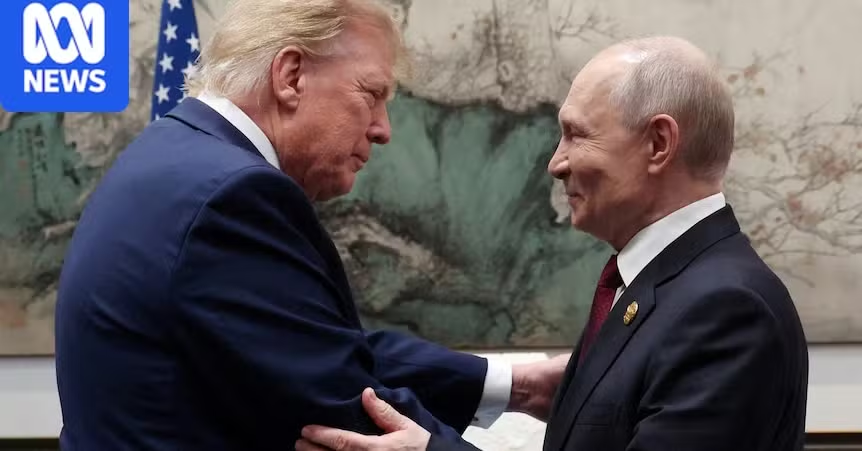
Trump urges Putin to end 'military aggression' in Europe
Donald Trump has urged Vladimir Putin in a Truth Social post to end what he calls Russia's military aggression against territories throughout Europe, broader language than he has used before, as Ukraine braces for more attacks. Trump says he hopes a Russia-Ukraine deal can be made quickly and calls the monthly death toll a complete bloodbath. Jared Kushner, who is mediating the talks with envoy Steve Witkoff, says the negotiations have hit a deadlock over the fate of Ukrainian territory, though he believes Putin wants peace and has agreed not to use nuclear weapons. Volodymyr Zelenskyy warns Russia is preparing another major attack on Ukraine's power grid, after crews worked to restore electricity in six regions following a night of ballistic missiles and 113 drones.
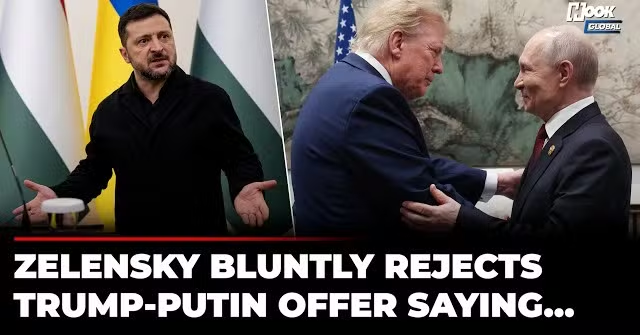
‘They Will Simply Deceive Us’: Zelensky Shuts Down Trump-Putin Deal; Reveals Lesson Learnt In Crimea
In a Hook Global video, Zelensky shuts down a possible Trump-Putin deal over Ukrainian territory, saying Russia will simply deceive Ukraine if it gives up its land without a shot. He argues that no security guarantee not clearly written can be relied on, that a voluntary departure from Donbas would signal to Russia's leadership permission to take other regions, and that retreating from Donbas would mean losing the war. He cites the Crimea lesson: Ukraine did not defend it, was told by the American administration there should be no escalation, was handed documents that guaranteed nothing, and Russia then occupied other territories, while he says the Minsk agreements guaranteed only the start of a full-scale war. He adds Russia will have to agree to a ceasefire because it is already losing more than 50,000 per month and its energy, logistics, and economic capacity, and that everything must be done so there is peace, with negotiations a priority. Molanov, a representative of the occupied and destroyed Popasna, calls its destruction a victory, says his community will definitely return and rebuild the Luhansk region no matter the cost, and backs whatever decision Zelensky makes.
Kushner blames stalled peace talks on alleged Ukrainian attack on Putin’s residence — an attack both U.S. intelligence and Trump say did not happen — Meduza
In a news report, Meduza writes that U.S. envoy Jared Kushner said the Ukraine-Russia peace negotiations stalled in early 2026 because of an alleged Ukrainian drone attack on Vladimir Putin's residence in Valdai at the end of December 2025, which he said pushed Putin back. Kushner said he joined the talks in November 2025 and that some progress was being made, but that afterward both sides wanted to gain ground on the battlefield and showed no flexibility through September 2026. The attack claim traces back to Russian Foreign Minister Sergey Lavrov, who announced it on December 29, 2025. According to the CIA, Ukraine did not target Putin's residence; its drones had tried to strike a military facility in the same region, not near the residence. Trump himself said on January 5, 2026 that he did not believe the strike happened, saying something occurred fairly nearby but had nothing to do with the house. Ukrainian President Volodymyr Zelensky called Lavrov's statement yet another lie from Russia.
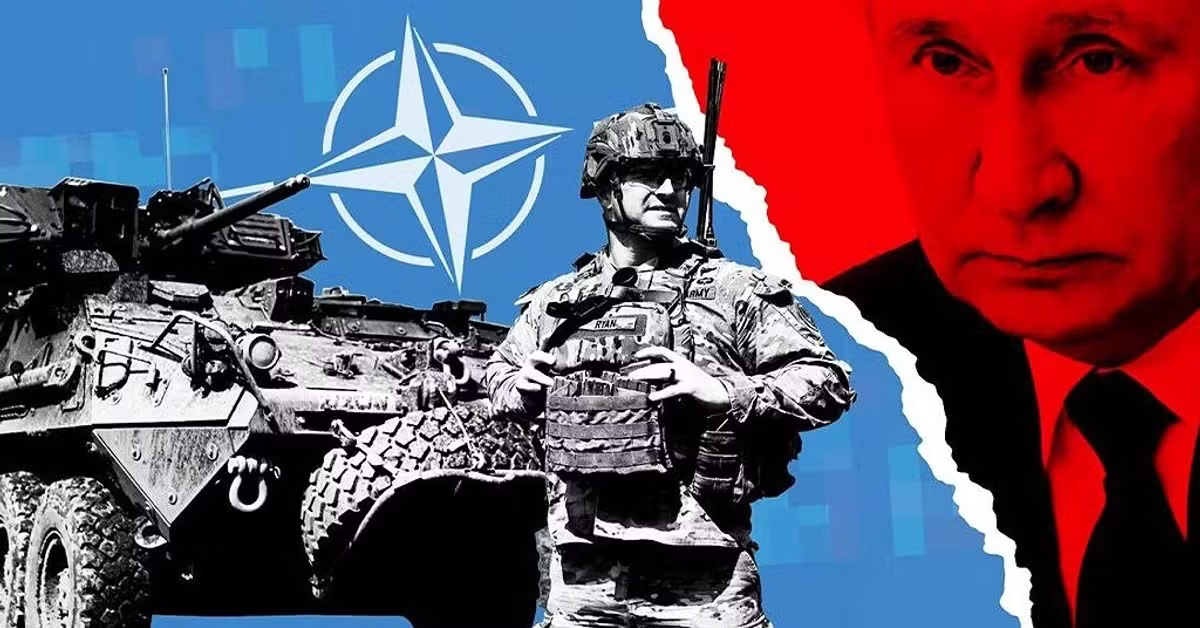
Europe is at war with Russia, US envoy Kushner claims, calling Ukraine conflict a "proxy war"
In an interview with Axel Springer CEO Mathias Döpfner on the MD Meets podcast, US President Donald Trump's Special Envoy Jared Kushner describes the war in Ukraine as a proxy war in which Europe is funding and arming Ukraine against Russia, warning it would not take much miscalculation for the conflict to escalate massively. Kushner dismisses European countries' fears of Russian aggression as unfounded, calls Ukraine's demands for security guarantees excessive, and says other countries cannot provide more specific commitments than NATO's Article 5 stipulates. He presents NATO as a defensive alliance and says fears on both sides stem from misunderstandings, while adding that Russia has long seen Ukraine's corridor as a red line. In response, President Volodymyr Zelenskyy expressed doubts that Ukraine and the US share the same understanding of Article 5-style security guarantees.
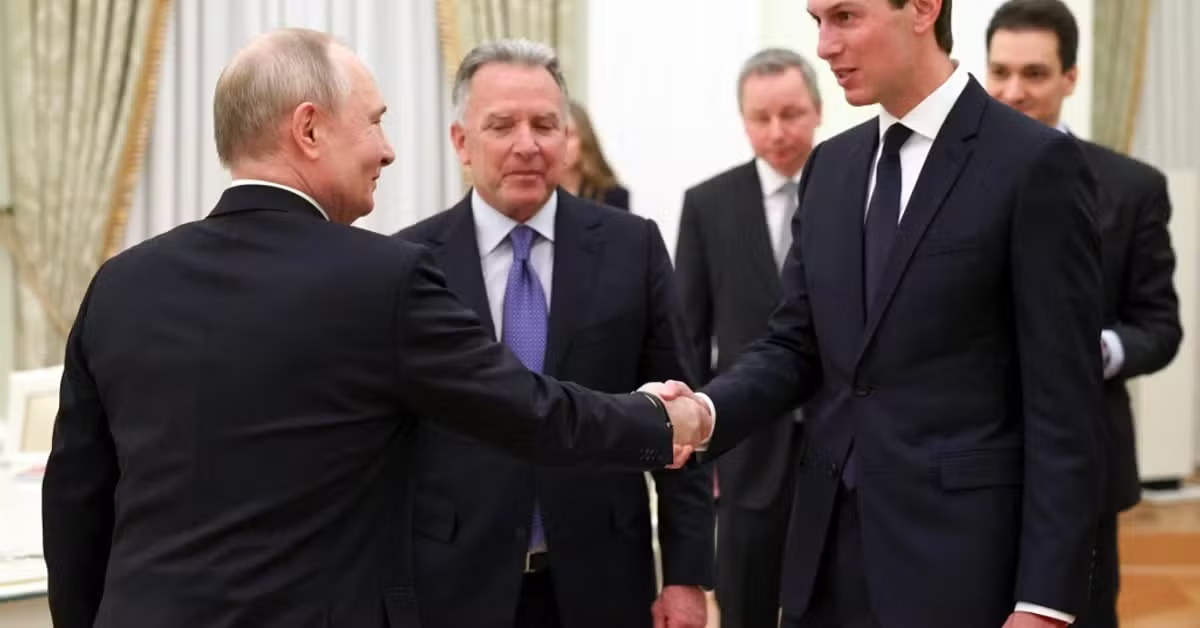
Kushner Admits Putin Is Uninterested in Ceasefire, Calls Russia’s Invasion of Ukraine a ‘Proxy War’
In an interview on the MD Meets podcast released Nov. 25, 2026, Jared Kushner, President Trump's son-in-law and negotiator alongside Steve Witkoff, says the US pushed hard for a ceasefire-first approach 'but it doesn't seem that President Putin is interested in that', as negotiators concluded Putin lacked confidence that halting hostilities would lead to a lasting settlement. He calls the war 'effectively become a proxy war where Europe is funding and arming Ukraine against Russia' and praises Putin for showing restraint on nuclear weapons. Kushner acknowledges the territorial dispute is deadlocked and says Washington is now pursuing a broader postwar security framework involving Ukraine, Russia and Europe, arguing such agreement could make the parties more flexible on where the line is drawn; he says Washington assumes Ukraine's NATO accession will not be part of a settlement but that 'without a security guarantee from America, Ukraine will not be safe in the future'. Kyiv Post notes that throughout the interview Kushner never explicitly identified Russia as the aggressor or Ukraine as the victim, instead framing the war as stemming from misunderstandings and miscalculations, and calls Putin 'a grandmaster of politics'.

Kushner: Europe has no convincing plan for peace
In a podcast interview with Mathias Döpfner reported by the Telegraph, Jared Kushner, Donald Trump's son-in-law and envoy, says Europe has no convincing plan for peace in Ukraine: 'We've asked the Europeans or the Ukrainians if they have a better idea on how to get there, but nobody has presented us with one so far.' He argues talks should focus on post-war security and economic arrangements first, saying the territory issue would 'become much easier to resolve' once that relationship is defined, while European and Ukrainian leaders insist a ceasefire must come before such negotiations and warn Putin is using the process to redraw Europe's security arrangements in his favour. Kushner, who has met Putin four times this year, praises him as a 'grand master of politics' and a 'historic figure' who may want 'a new beginning' with America, and denies the White House pressured Zelensky, saying 'we have not put any pressure on President Volodymyr Zelensky or the Ukrainians.' He also blames a Ukrainian attack on Putin's Valdai residence for pushing Putin back, echoing the Kremlin's account that Trump later said US intelligence did not support.

Kushner: Europe has no convincing plan for peace
In a podcast interview with Axel Springer chief executive Mathias Döpfner, Jared Kushner, Donald Trump's son-in-law and a leading US envoy on Ukraine, says Europe has yet to come up with a convincing plan to end the war and that when the Americans asked Europeans and Ukrainians for a better idea, nobody presented one. He says he pushed Putin very hard on the European position that a ceasefire must come before wider talks on European security, but that Putin does not seem that interested, and he says the focus should be on the post-war period to get a peace that lasts. He reports that Putin has accepted an 'Article 5-like' security guarantee for Ukraine in principle, though Ukrainians want more specificity and doubt the talks are moving forward. The Telegraph expects his comments, which repeat the Kremlin's claim that an alleged Ukrainian attack on Putin's Valdai residence set back the talks, to cause concern among leaders in Europe and Ukraine.
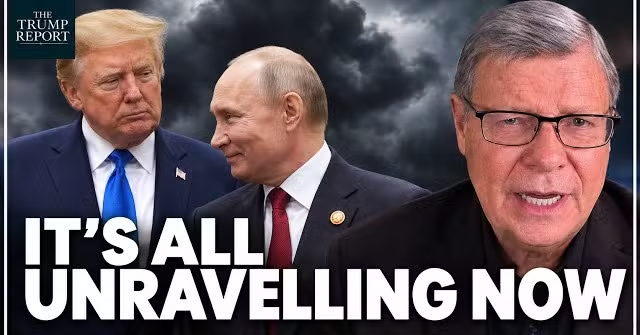
This just ‘blew a hole’ in Trump’s claims about Putin — it’s all unravelling now | Charlie Sykes
In a podcast interview with Maddie Hale, political commentator Charlie Sykes argues that after Donald Trump's midterm defeat his presidency is unravelling, with the Nvidia-China scandal and the collapse of the business-deal approach to Putin exposing Trump as weak toward both leaders. Sykes calls Nvidia the administration's worst scandal: Trump pressured the board to reinstate Jensen Huang weeks after his resignation over alleged ties to a suspected Chinese intelligence operative, attorney general Todd Blanche admitted the government had not investigated the matter, and Trump floated a pardon ahead of Huang's Senate testimony. On Ukraine, Sykes says the reportedly abandoned plan to lure Putin with business deals blows a hole in Trump's claims a peace deal was near, arguing Kushner and Witkoff misread Putin, who wants land, not money, and will deal only when it suits him. Both see Trump doubling down with unpopular tariffs on around 16 trading partners and more concessions to Putin and Xi in an unconstrained, legacy-focused lame-duck phase.
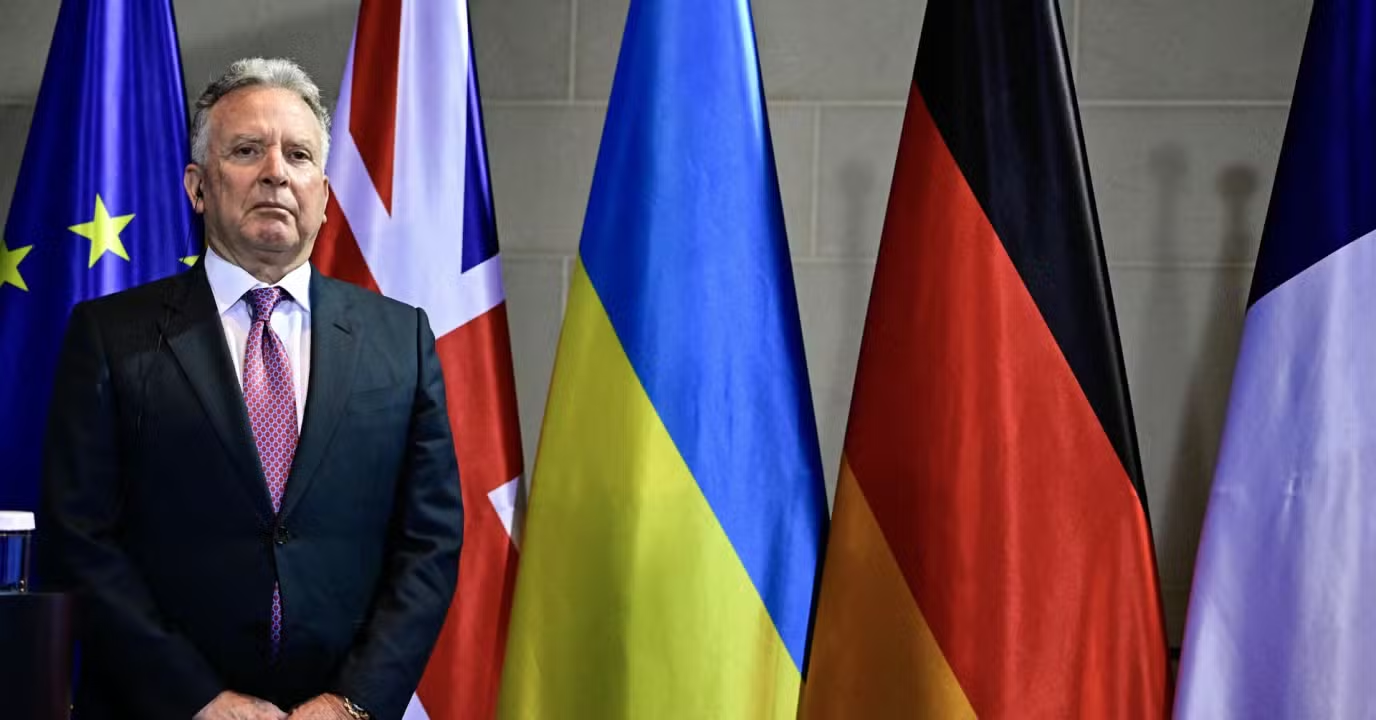
Exclusive: US rules out troops, military bases in Ukraine under post-war security guarantees, falling short of Kyiv's expectations
In an exclusive report, the Kyiv Independent says U.S. negotiators have privately ruled out sending troops or setting up military bases in post-war Ukraine as part of security guarantees, according to people familiar with the talks, falling short of Kyiv's expectations. The U.S. is pushing for guarantees modeled on NATO's Article 5, but an Article 5-like arrangement does not specify who would respond to an attack or whether force would be required, and President Zelensky says the commitments must be on paper and remain in force long after Trump leaves office. Kyiv still sees NATO membership as the clearest protection, which Moscow continues to reject, and Russian officials have said foreign troops on Ukrainian soil would be absolutely unacceptable. Two anonymous U.S. officials also describe significant confusion inside the Trump administration about what form the guarantees would take, with State Department diplomats sidelined by Trump's envoys.
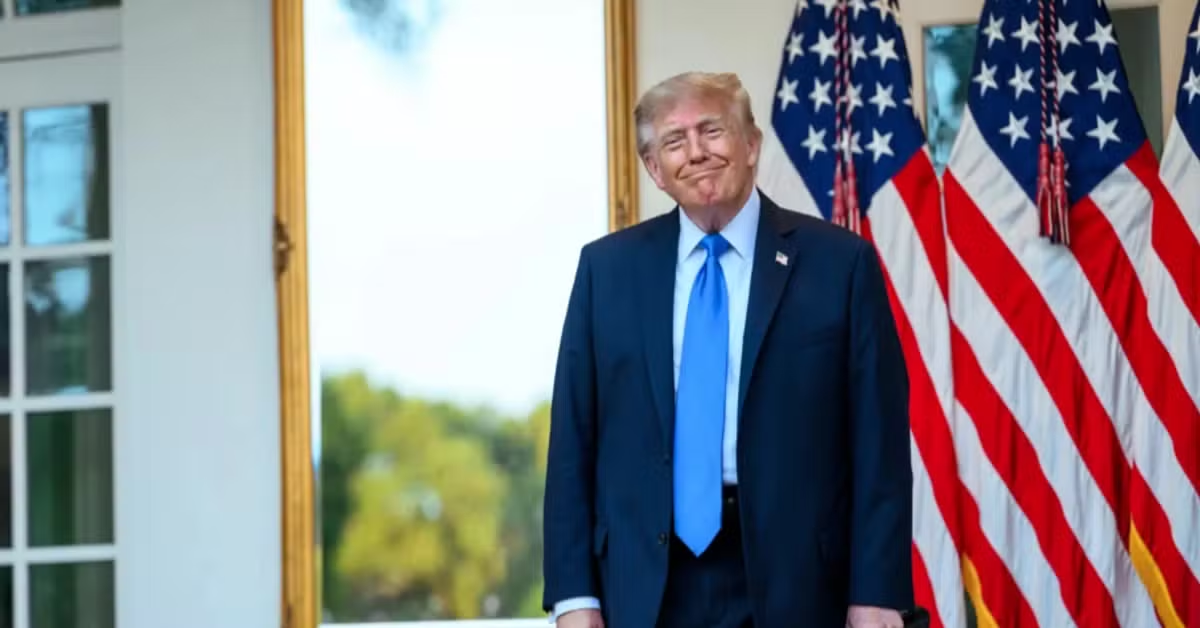
Trump laughs at Zelenskyy's remarks about peace deal by January: "He wants me to do what?"
Ukrainska Pravda reports Donald Trump's amused reaction to Volodymyr Zelenskyy's remarks that Trump's envoys Jared Kushner and Steve Witkoff are pushing to end Russia's war against Ukraine as soon as possible, ideally by January. Asked about it, Trump laughed, asked 'Who said that?' and then 'He wants me to do what?', smiling and exchanging a glance with a senior aide. He said 'I'm not under a timeline. I just like to see it end,' adding that 'it takes two to tango' and that sometimes Putin looks ready while Zelenskyy does not, and sometimes the other way around. Zelenskyy, speaking in an interview with Bloomberg, had said Ukraine may have to make significant concessions while Putin shows no signs of wanting to end the war, and that Ukraine wants peace but 'not at Ukraine's expense alone'.
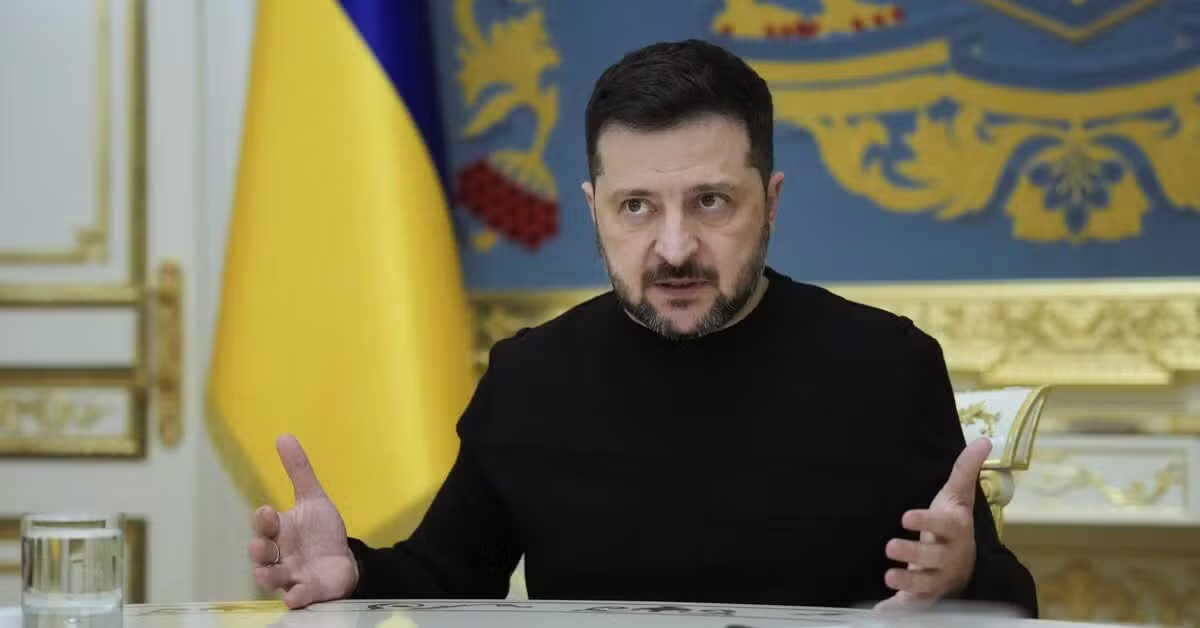
Zelenskyy Will Seek Aid From New US Congress if Trump Fails to Reach Peace Deal
In a Bloomberg interview at his office in Kyiv on November 23, 2026, President Volodymyr Zelenskyy says he will reach out to the new Democrat-controlled US Congress if President Donald Trump cannot strike an acceptable deal with Vladimir Putin. He calls it time to sit down at the negotiating table and end the war, and says support for Ukraine and sanctions must be strong enough to send a clear signal to the Russians.
Zelenskyy Wants Congress to Pressure Putin If Trump Can’t Win Deal
Volodymyr Zelenskyy says he will reach out to the new Democrat-controlled US Congress to intensify pressure on Russia if Donald Trump cannot convince Vladimir Putin to end the war by the end of the year. In a Bloomberg interview late Monday, November 23, he says Ukraine would seek a robust package of US military aid and tougher sanctions on Russia if no peace deal acceptable to Kyiv is reached.
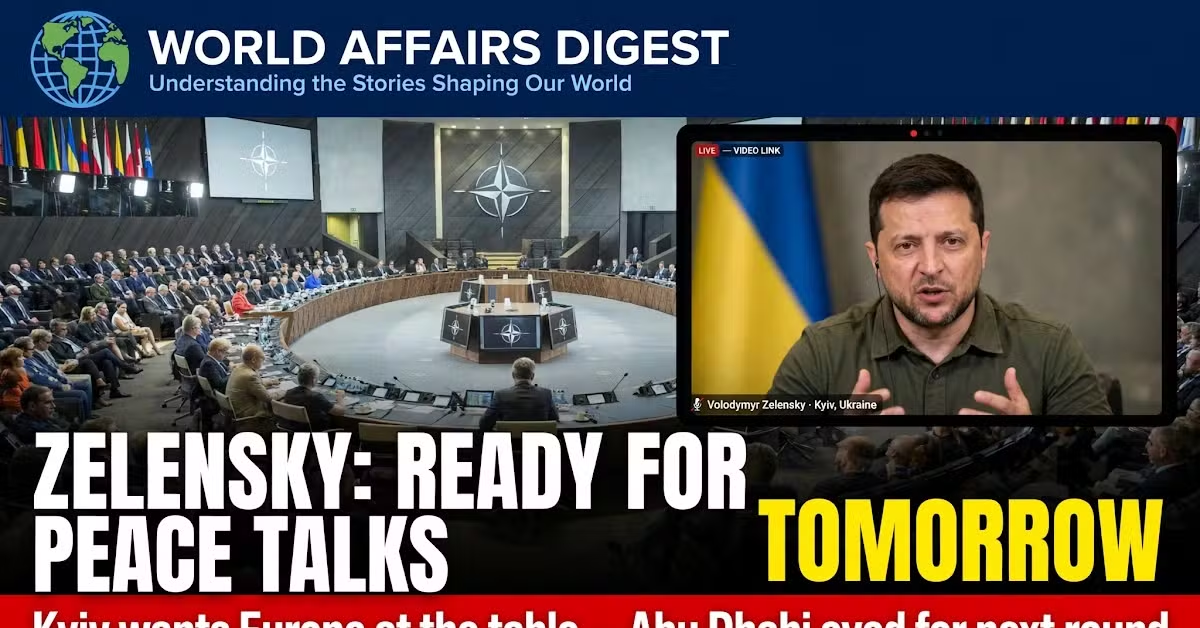
Zelensky Ready for Four-Party Ukraine Peace Talks Tomorrow | World Affairs Digest
 blogspot.com· · 3d
World Affairs Digest reports that Volodymyr Zelensky, addressing the NATO Parliamentary Assembly by video link, says Ukraine is ready for four-party peace talks with Europe, the United States and Russia 'literally tomorrow', and that partners want a meeting before Christmas. But Moscow has not agreed to the meeting as he describes it, and no date or venue has been fixed. European governments, whose push to join the process grew after being excluded from the last round of US-mediated talks in Abu Dhabi on 10-11 November, are central to Kyiv's aim of agreeing a shared Western agenda beforehand, and German Chancellor Friedrich Merz says adviser-level talks could happen again in Abu Dhabi, though only 'in the near future'. On security, US envoy Jared Kushner has said Washington might consider an Article 5-style guarantee, which Zelensky welcomes while saying major questions remain about how it would work without full NATO membership.
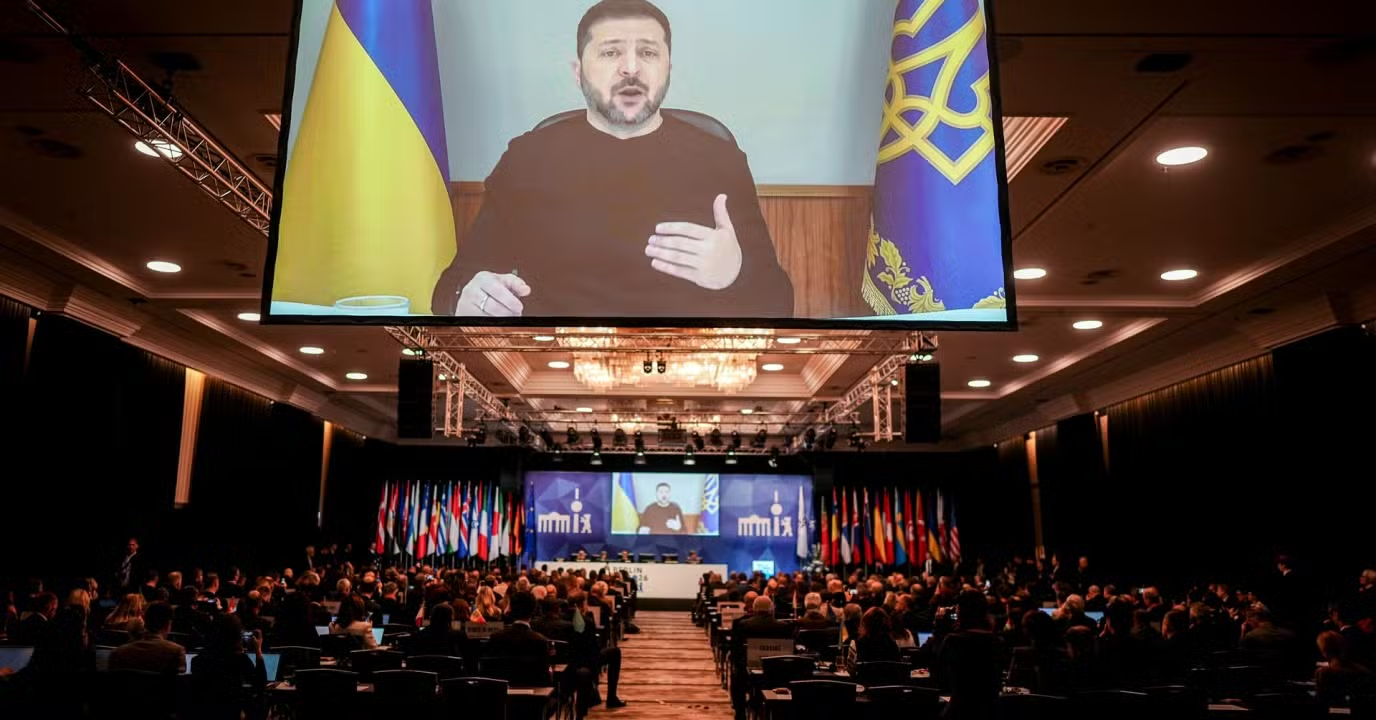
Zelensky calls for NATO to admit Ukraine at alliance assembly
In a Kyiv Independent news report, President Volodymyr Zelensky calls on NATO to admit Ukraine in a video address to the 72nd Annual Session of the NATO Parliamentary Assembly in Berlin, saying that if security guarantees are a key condition for peace, it should be said out loud what many are thinking, and that membership would be more effective and reliable. He argues Ukraine inside the alliance could offer its hard-won expertise in modern warfare. The assembly meets after a string of Russian escalations, including three missiles that hit eastern Poland and airspace violations reported by Moldova and Finland. NATO Secretary General Mark Rutte says not all allies currently agree on letting Ukraine join and that the alliance alone decides membership, while German Chancellor Friedrich Merz calls it a mistake not to admit Ukraine at the 2008 Bucharest summit. Ukraine's new defense minister, Yevhen Khmara, warns the assembly that Russia produces a ballistic missile every five hours and calls for more joint weapons production.
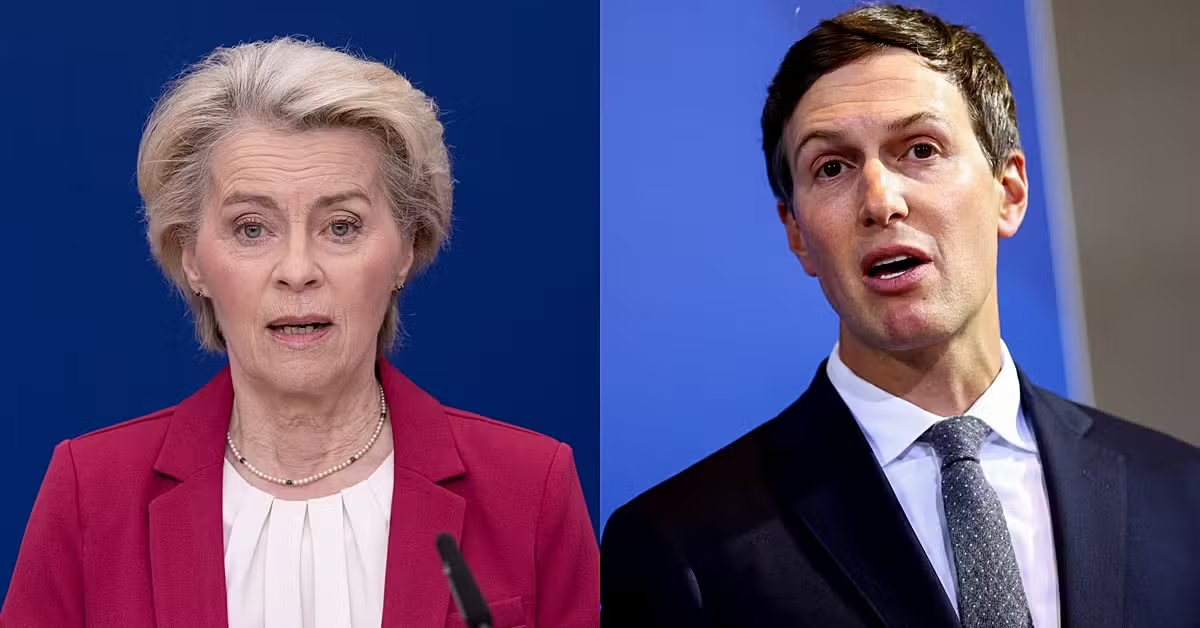
Von der Leyen and Kushner clash over peace talks sequence
A Euronews news report covers a friction point between the EU and the United States in the peace talks to end Russia's war on Ukraine: Ursula von der Leyen and Jared Kushner cannot agree on when and how European security architecture should be discussed. Kushner, the US envoy brokering the negotiations, writes that security guarantees for Ukraine cannot be finalised in isolation from post-war European security architecture, that nothing is agreed until it is agreed, and that the US aims for a common understanding over the coming weeks, while warning Trump would sign off on an Article 5-like guarantee for Ukraine only if it were highly unlikely ever to be invoked. Von der Leyen and other European leaders see the issue as a Russian trap and insist a ceasefire must come first, a view German Chancellor Friedrich Merz echoed at the Coalition of the Willing meeting in Berlin on 19 November 2026: first peace in Ukraine, then agreements on Euro-Atlantic security. European leaders reject outright Russia's demands, tabled again at the last round of talks in Abu Dhabi, that NATO roll back to its 1997 borders, demands NATO Secretary General Mark Rutte also says cannot happen, and Russia so far refuses multilateral talks with the US, Ukraine and Europe at once.
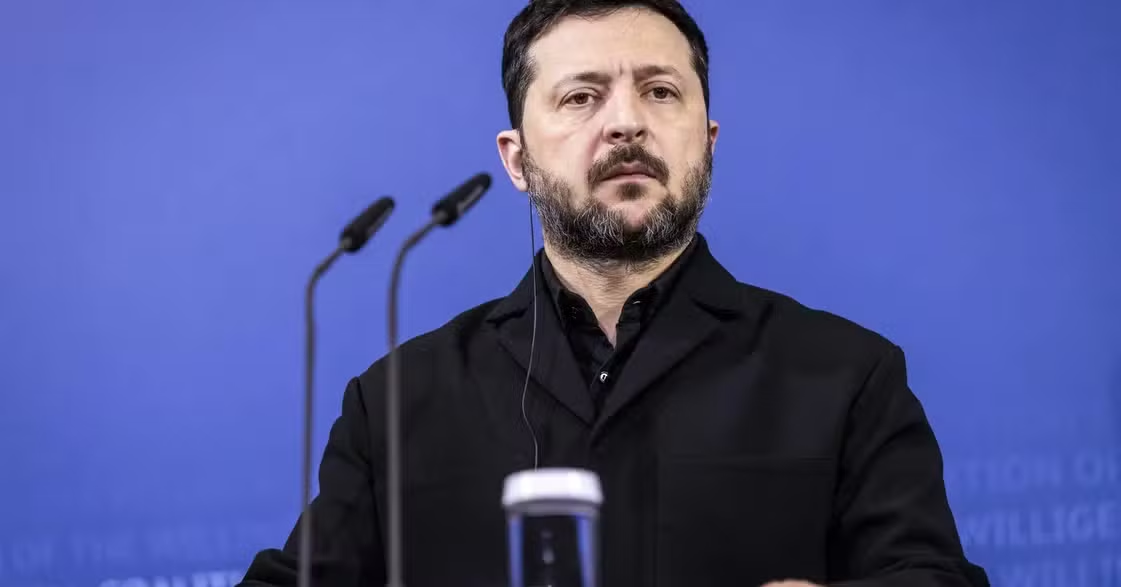
Zelenskyy Says New Congress Should Force Putin To End Ukraine War If Trump's Peace Push Fails
In a Bloomberg interview, Ukrainian President Volodymyr Zelenskyy says the incoming Democratic-controlled Congress should force Russian President Vladimir Putin to end his war in Ukraine if President Donald Trump's latest peace push fails. Ukraine wants the conflict to end, he says, but cannot accept peace at any cost: "We very much want peace too, but not at Ukraine's expense alone." He says the U.S. has limited and delayed the Patriot air defense systems Ukraine needs, and criticizes Washington, saying, "Politically, it looks as though [the U.S.] is pursuing the same course as Putin, who wants to force Ukraine to capitulate." The HuffPost live-updates article also carries other news, including the deportation of U.S.-born dual citizen Brian José Morales García to Mexico, Todd Blanche's guarded answers on the Nvidia CEO's reinstatement, and the Army's court-approved plan to detonate lead azide in Iowa.
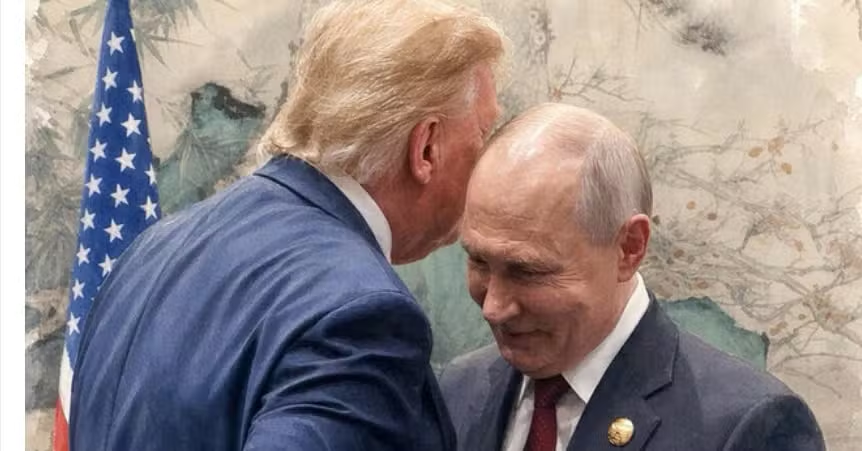
Weekend Update #212: The Clock Is Ticking
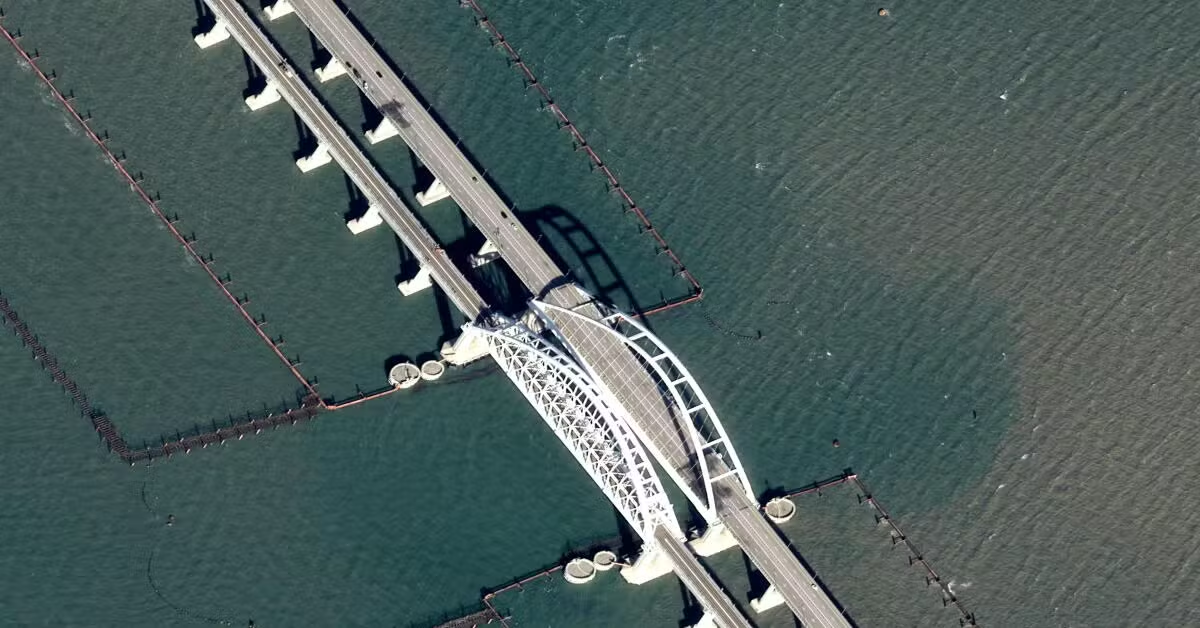
In his Substack newsletter, Phillips P. OBrien argues the clock is ticking on the Trump administration's unchecked power: with the new Congress sitting on January 3, 2027, the administration is in close to panic mode, frantically trying to force Ukraine and Europe into a Putin-friendly deal before then. He says reports of the push became a veritable flood, with US envoys Steve Witkoff and Jared Kushner warning their counterparts the talks could be the last realistic chance before Washington's political dynamics shift. Meanwhile Ukraine keeps gaining on the battlefield: its forces took down the road section of the Kerch Bridge in a homegrown operation weeks in the making, and cleared Russian infiltrators from Sumy oblast in Operation Cheburechna, liberating more than 600 acres. OBrien argues a deal handing over the Donbas would split Ukraine terribly, wipe out the defensive line the Ukrainian army is using to devastate the Russian army, and give Russia a chance to rebuild and come again.

Zelensky suggests new round of peace talks could happen during G-20 summit
In its live developing-stories page, the Washington Post leads with Volodymyr Zelensky's suggestion that the next round of trilateral Ukraine peace talks could take place on the sidelines of the Group of 20 summit at President Donald Trump's Miami golf resort in mid-December. Zelensky says, according to Ukrainian media, that the United States proposed holding the talks before Christmas and that he agreed, saying the sooner there is a result the better. Trump has invited Vladimir Putin to the summit but not Zelensky, and Germany urged Trump to invite him, arguing it would be unacceptable for other countries to decide Ukraine's fate without Ukraine's involvement. U.S.-brokered talks resumed in the United States Arab Emirates with agreement only on humanitarian relief, and the article judges a peace deal at the summit improbable given Russia's hard-line position. The page also follows Senator John Cornyn's primary loss to Ken Paxton and his feud with Trump over a blocked judicial nominee, Virginia's first measles death since 1978 as the United States loses its measles-free status, a $7.25 billion settlement of the Roundup cancer litigation, and a jury's conviction of Jonathan Rinderknecht for starting the 2025 Palisades Fire.
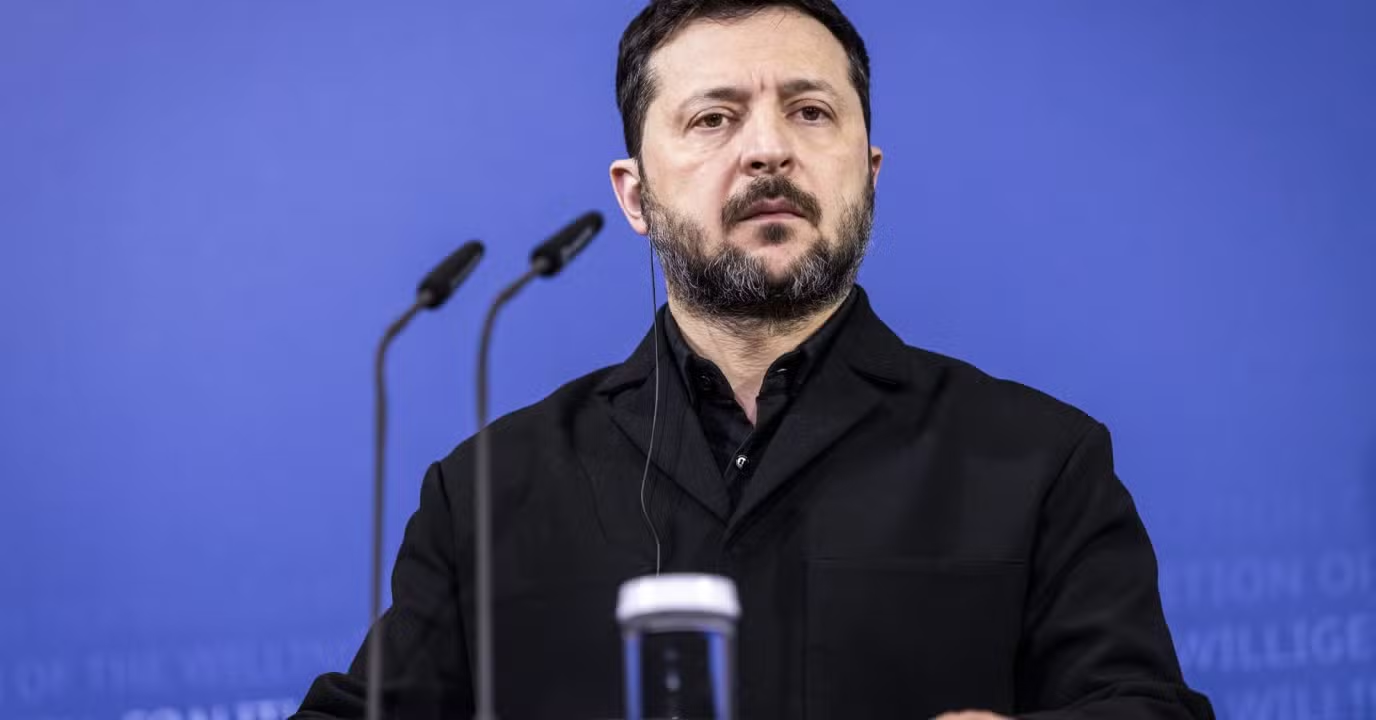
Zelensky says Ukraine has yet to see written commitments on NATO-style security guarantees
President Volodymyr Zelensky says Ukraine has yet to see written commitments on how proposed NATO-style security guarantees would work, telling reporters on Nov. 21 that answers must be on paper, not just words. The statement follows U.S. envoy Jared Kushner's remark at talks in Berlin on Nov. 19 that Washington was open to guarantees modeled on NATO's Article 5 collective defense clause. Zelensky says it remains unclear who the collective would consist of and whether it would repel the aggressor, and he wants guarantees lasting decades beyond President Trump's time in office. NATO membership remains his preferred guarantee; without it, Ukraine would need an army of around one million personnel.
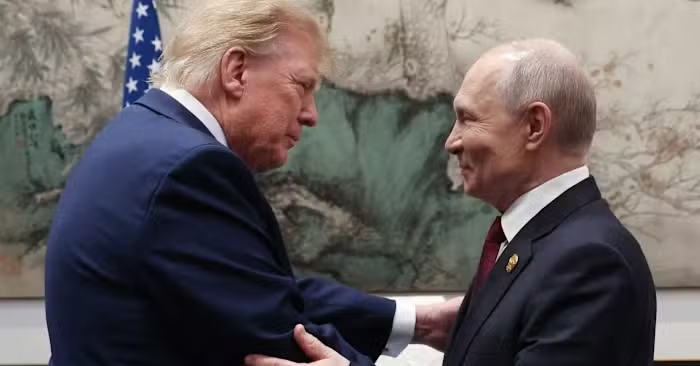
Donald Trump seeks Ukraine peace deal before January
The Financial Times headline reports that Donald Trump is seeking a Ukraine peace deal before January.
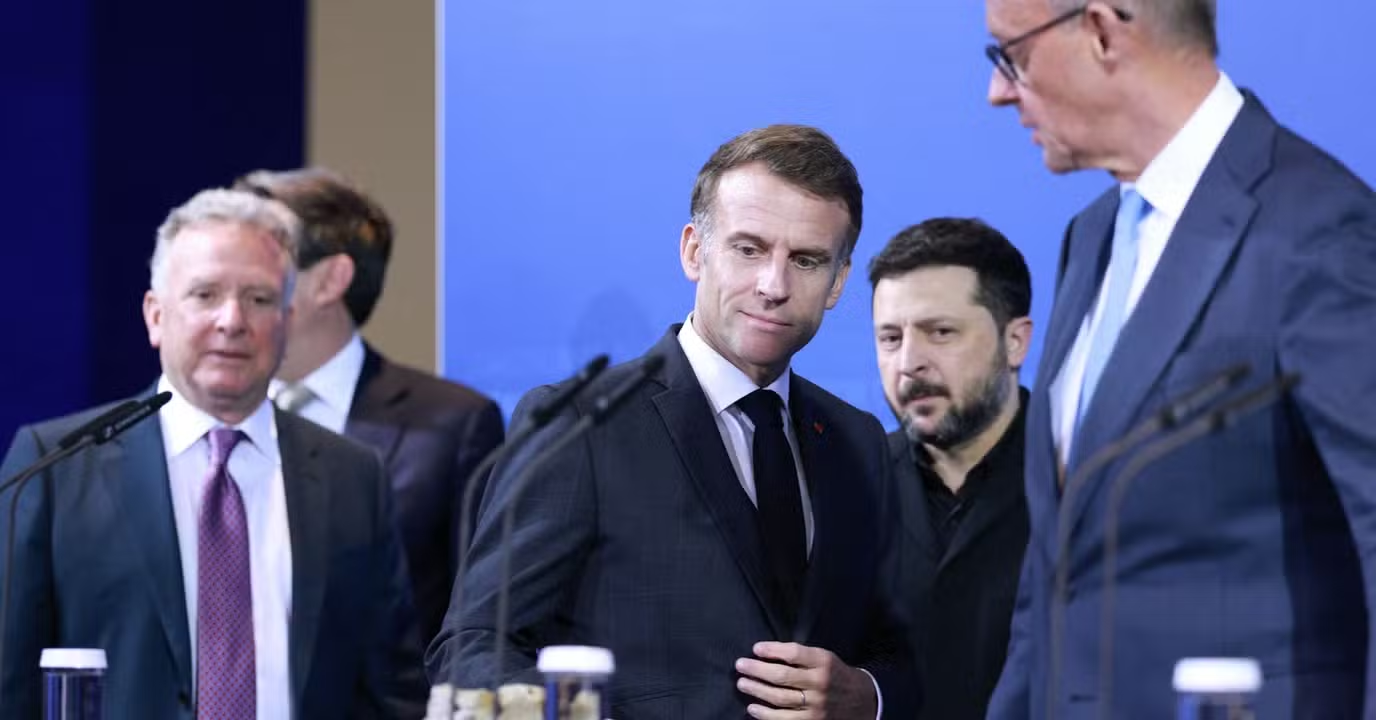
EN DIRECT, guerre en Ukraine | L’Elysée évoque une adhésion à l’OTAN du pays et réclame une pleine place pour les Européens dans les négociations
Le Monde's live blog on the war in Ukraine reports a massive Russian strike with more than 110 missiles and 400 drones overnight of 19 to 20 November 2026, killing eight people and hitting Kyiv and nine regions, and the fall of two Russian missiles and probably a jet-powered drone in southeastern Poland without injuries. The Elysée said that giving Kyiv protection of the kind provided by the North Atlantic Treaty would amount to Ukraine's membership of NATO, which France defends, and set two requirements for talks Vladimir Putin invited them to in Moscow: a common position among Kyiv, Washington and the Europeans, and full European participation in the negotiations. Polish Prime Minister Donald Tusk said the entry of Russian projectiles into Polish territory 'does not look like an accident' and called it an intentional provocation, while US President Donald Trump had presented earlier incursions as errors by Putin. Ukraine's air force said it downed or neutralized 462 devices, and President Volodymyr Zelensky asked allies to speed up air defense deliveries including Patriot missiles.
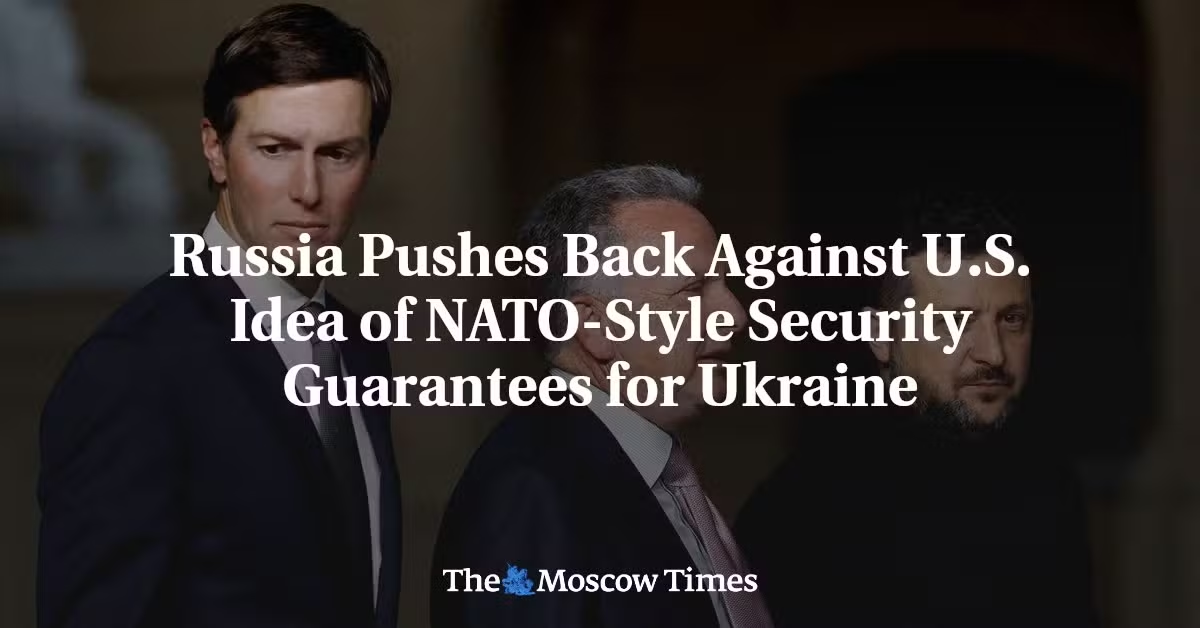
Russia Pushes Back Against U.S. Idea of NATO-Style Security Guarantees for Ukraine - The Moscow Times
Russia pushed back against the U.S.-backed idea of NATO-style security guarantees for Ukraine, with Deputy Foreign Minister Sergei Ryabkov saying any form of "quasi-membership" in NATO for Kyiv was totally unacceptable to Moscow, Russian state media reported. His comments came a day after U.S. negotiator Jared Kushner said at a Berlin summit that he and Steve Witkoff had "gotten the Russians comfortable with the concept that any security guarantee for Ukraine would be based on Article 5," and after French President Emmanuel Macron said the question of Ukraine's NATO membership should be reopened. Ryabkov said Ukraine must first recognize Russia's demand that it never join NATO, and confirmed a potential visit to Moscow by British, German and French representatives was being worked on. Separately, Foreign Ministry spokeswoman Maria Zakharova said including EU foreign policy chief Kaja Kallas in future talks would collapse them, which Kallas rejected, saying she speaks for all 27 EU member states.
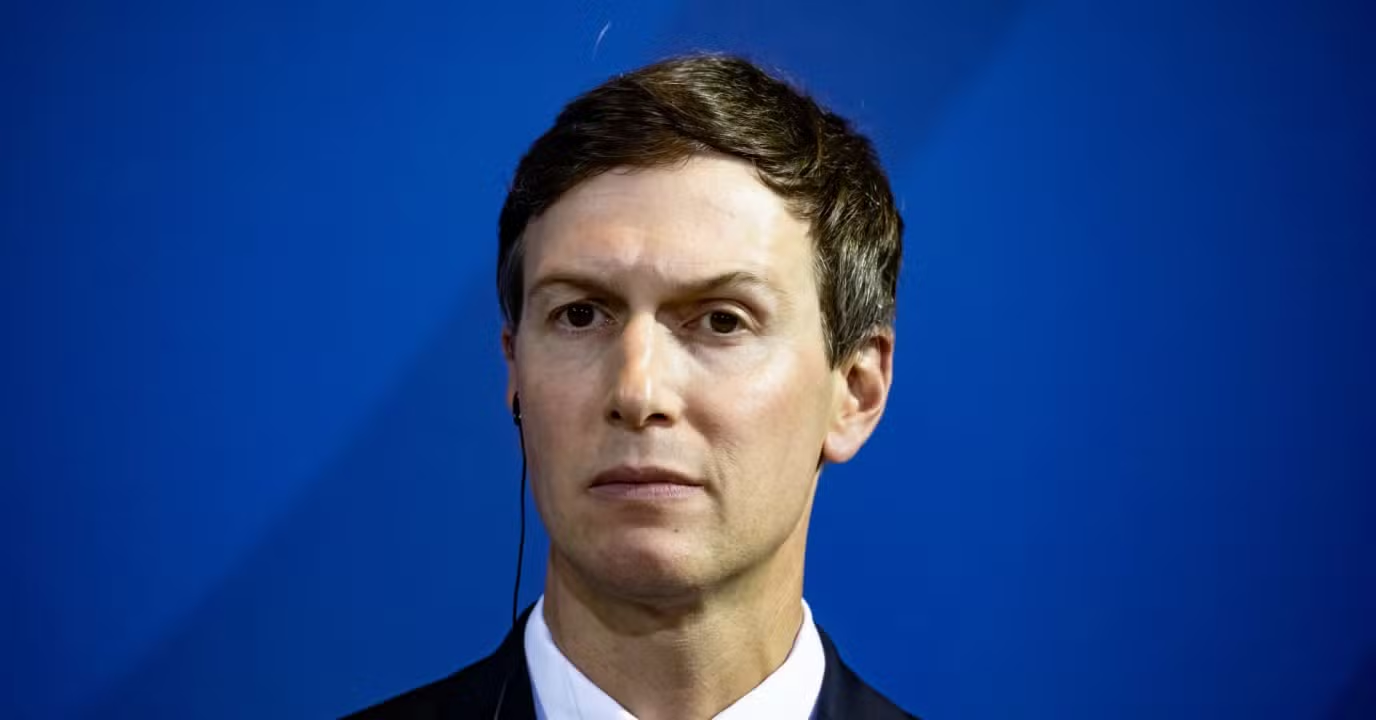
Kushner says Russia 'comfortable' with idea of NATO-like security guarantees for Ukraine
U.S. envoy Jared Kushner says Russia appears comfortable with security guarantees for Ukraine based on NATO's Article 5, which treats an attack on one member as an attack on all. Speaking at a news conference in Berlin after the Coalition of the Willing summit, Kushner said any guarantee would be a really big deal from America's perspective and that President Donald Trump is open to it, though it has to be in America's interest. Kushner, attending the conference alongside fellow envoy Steve Witkoff as the pair lead efforts to end the nearly five-year war, added that Russia's stated intention is not to fight another war once this one ends. It was not immediately clear what form such guarantees would take or whether either Russia or Ukraine would accept them.
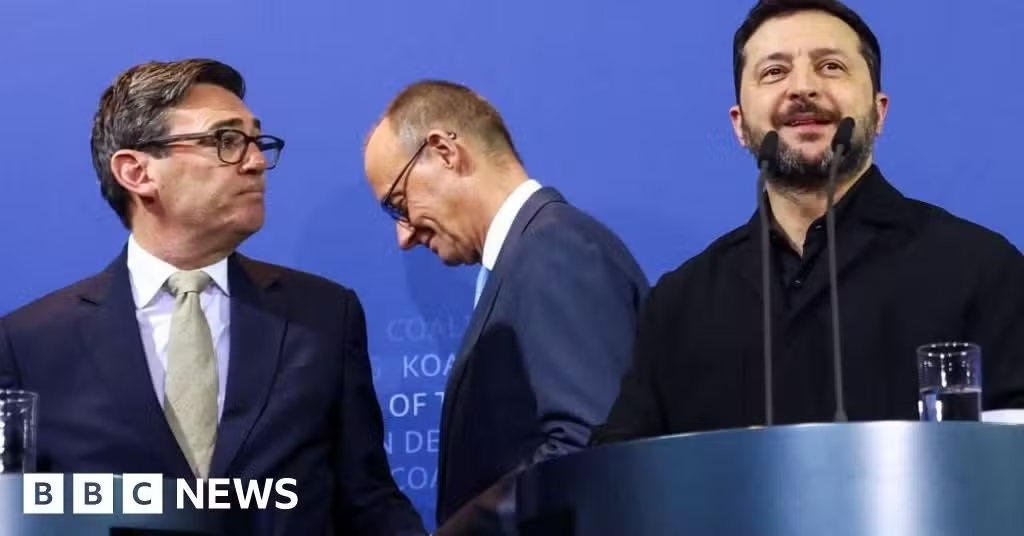
Europe ready for talks with Russia on ending war in Ukraine, leaders say
European leaders have said they are ready for negotiations with Russia on ending the war in Ukraine, speaking at a Berlin summit of Kyiv's allies attended by US President Donald Trump's envoys. German Chancellor Friedrich Merz said Europe would enter serious talks on European security only after a peace agreement with Ukraine, and is sceptical about the negotiations but believes the chance of peace is increasing with US involvement. Trump's envoy Jared Kushner said the Russians are now willing to trust the Americans' instinct that Europeans should be at the table, and that Moscow is comfortable with Ukraine having security guarantees based on Nato's Article Five. President Vladimir Putin, however, said Russia wants to first clarify what Europe would bring to the talks, inviting European officials to Moscow to set out their positions, and Moscow's aide Yury Ushakov suggested several more rounds of discussions would be needed before any expanded format. The BBC reports that little in Moscow's rhetoric or actions suggests the Kremlin is scaling down its war, as Russian strikes continue on Kyiv's energy infrastructure and a drone attack killed one person in the city's Podilskyi district.
Kushner says Russia is ‘comfortable’ with NATO-like security guarantees for Ukraine to end war
An AP News report says US envoy Jared Kushner told European allies that Russia is comfortable with NATO-like security guarantees for Ukraine as part of a deal to end the war, which is nearing the five-year mark. Kushner and fellow envoy Steve Witkoff discussed support for Ukraine with European allies in Berlin. Witkoff added that Donald Trump discussed Ukraine and a peaceful end to the war during trilateral talks with the Russian and Chinese leaders on 19 November 2026.
Trump Says He Wouldn’t Make Deals With Putin Without Ukraine
Bloomberg reports that ahead of his meeting with Vladimir Putin, Donald Trump sought to tamp down concerns that he would strike agreements with the Russian leader without Ukraine's input. In a Fox News interview, Trump said of making deals with Putin without Ukraine, "I wouldn't do that." Trump gave the interview from Shenzhen, where he was attending the Asia-Pacific Economic Cooperation summit.
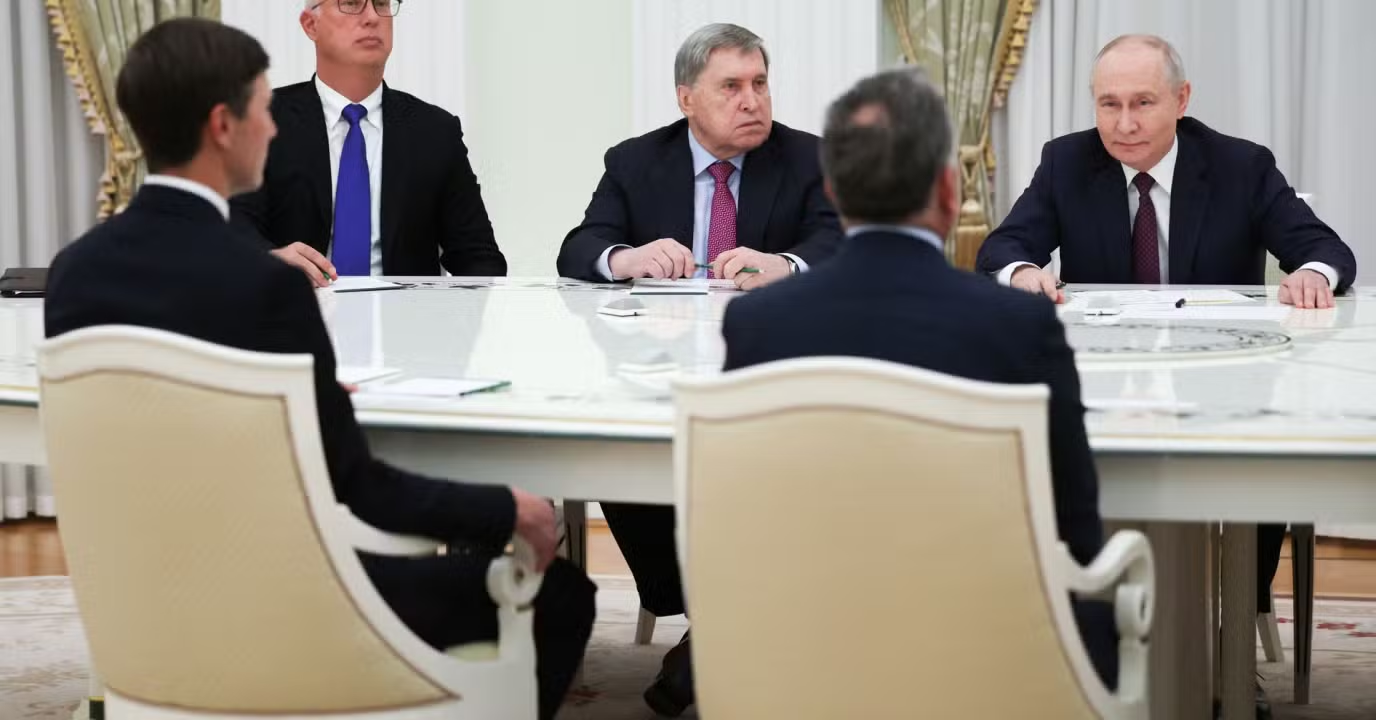
Exclusive: Trump's envoys warn Russia that time is running out to secure a deal on Ukraine
In an exclusive report, the Kyiv Independent writes that U.S. envoys Steve Witkoff and Jared Kushner have warned their Russian and Ukrainian counterparts that the current round of peace talks could be the last realistic opportunity to secure a deal before political dynamics in Washington shift. The warning reflects concerns that Russia's leverage could fade as Democrats move closer to taking control of Congress, which could bring renewed bipartisan pressure to increase aid to Ukraine and trigger congressional scrutiny of the administration's dealings with the Kremlin. Envoys have been pressing this argument since September 2026, after Russia backed away from planned trilateral talks, and Moscow has since agreed to resume them; the Kyiv Independent reports the message appears to have helped bring Russia back to the table. Yet the negotiations in Abu Dhabi on November 10-11 offered little sign Moscow would soften its demands: the Russian delegation arrived with strict instructions and showed little willingness to discuss an energy ceasefire, chief negotiator Vladimir Medinsky said 'every inch of our land will be returned to Russia, one way or another,' and a senior Ukrainian official said Russia's territorial demands remained unchanged. Trump's team is running two tracks in parallel, negotiations to end the war and discussions of reshaping security ties between Russia and Europe, an idea European officials say they are not on board with. The next test is expected in Berlin on November 19, 2026, where U.S. envoys, Ukrainian officials, and European representatives are due to coordinate positions.
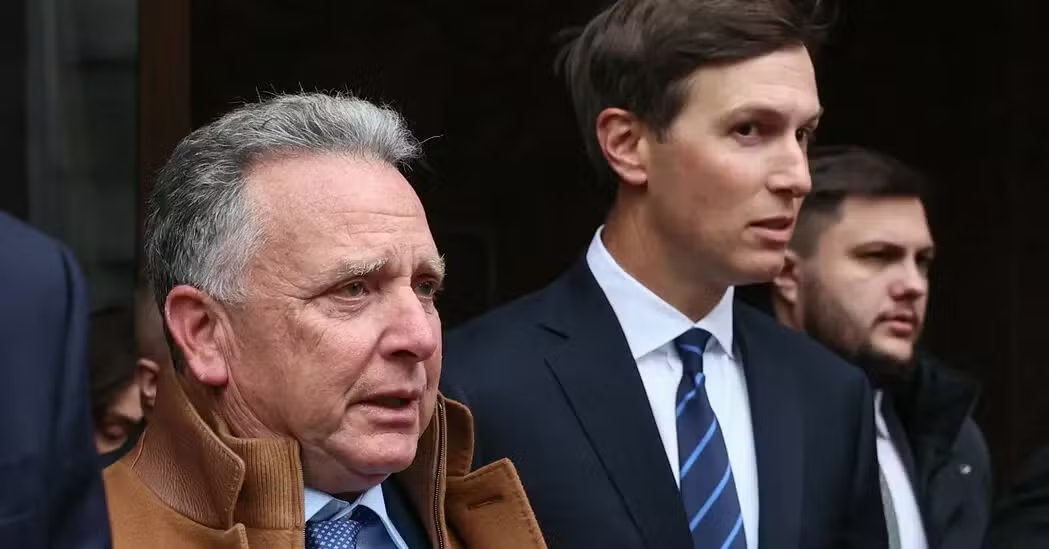
Ukraine Talks Run Up Against Deep Enmity Between Russia and Europe
The New York Times reports that President Trump's envoys, Steve Witkoff and Jared Kushner, are trying to end the Ukraine war by addressing Russia's broader demands about European security, but the deep enmity between Russia and Europe is complicating their diplomacy. Meeting Putin at the Kremlin and joining talks with Russian and Ukrainian officials in Abu Dhabi, the envoys argued that a postwar security arrangement could lay the groundwork for Putin to end his war, while pushing back when he questioned whether Europe wanted peace. Russia opened the talks with hard-line demands, including that NATO and the European Union stop treating it as a threat and reduce NATO's presence on the continent, demands European officials such as Ukraine's foreign minister call delusional and unacceptable. The envoys are due in Berlin on Thursday to meet the new European negotiating team alongside Ukrainian officials, though the Times judges the prospect of an agreement tenuous at best.
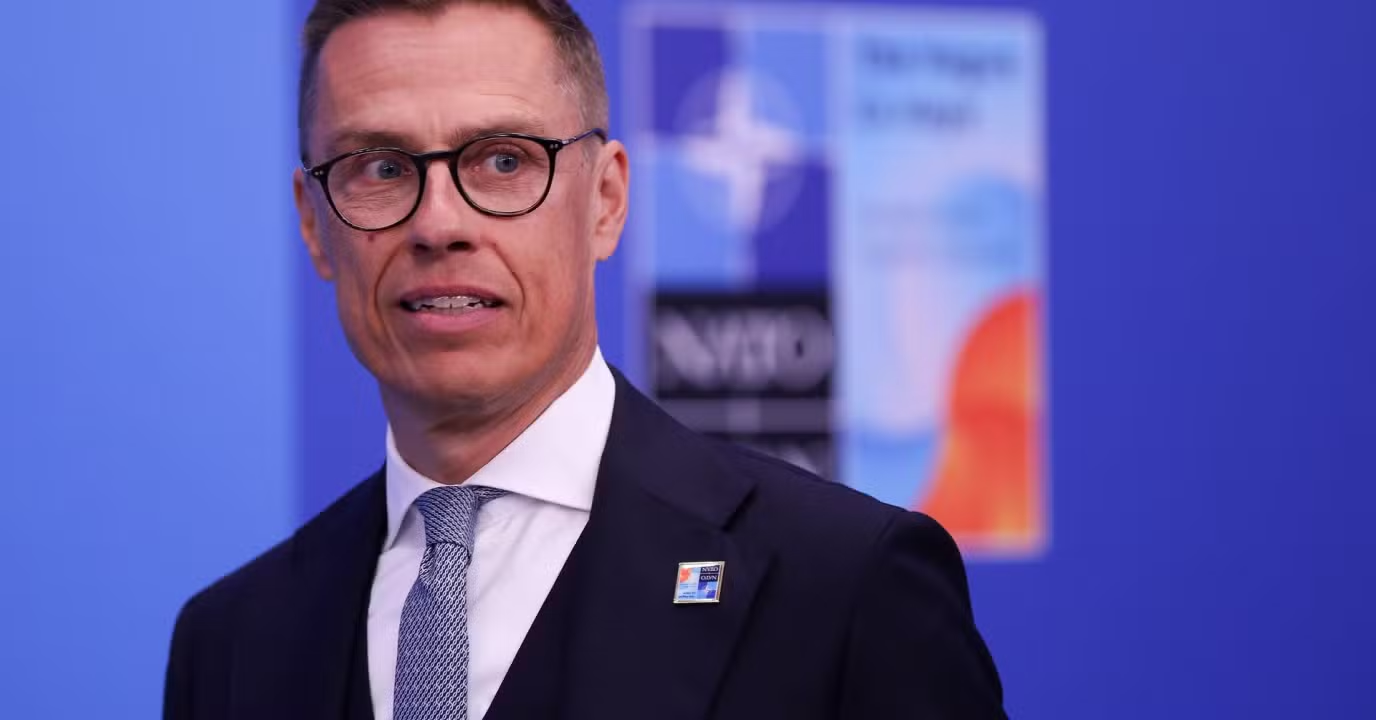
Finland's Stubb urges Europe to take Russia talks into its own hands after 'irresponsible' US reliance
Finnish President Alexander Stubb urges European leaders to engage directly with Vladimir Putin with the same message, saying reliance on the United States to handle talks with Moscow is irresponsible and that Europe must become an agenda setter. In a Financial Times interview, Stubb says Putin is ready to engage with Europe and that there will be no deal without the Russian leader's agreement, while cautioning that talks involving European, NATO, Ukrainian, Russian, and US officials could reach an impasse. The Kremlin has repeatedly rejected an EU seat at the negotiating table, and Stubb is the latest European leader to call for one. The report also covers the day's war news, including a missile attack that struck two bridges in Kyiv.
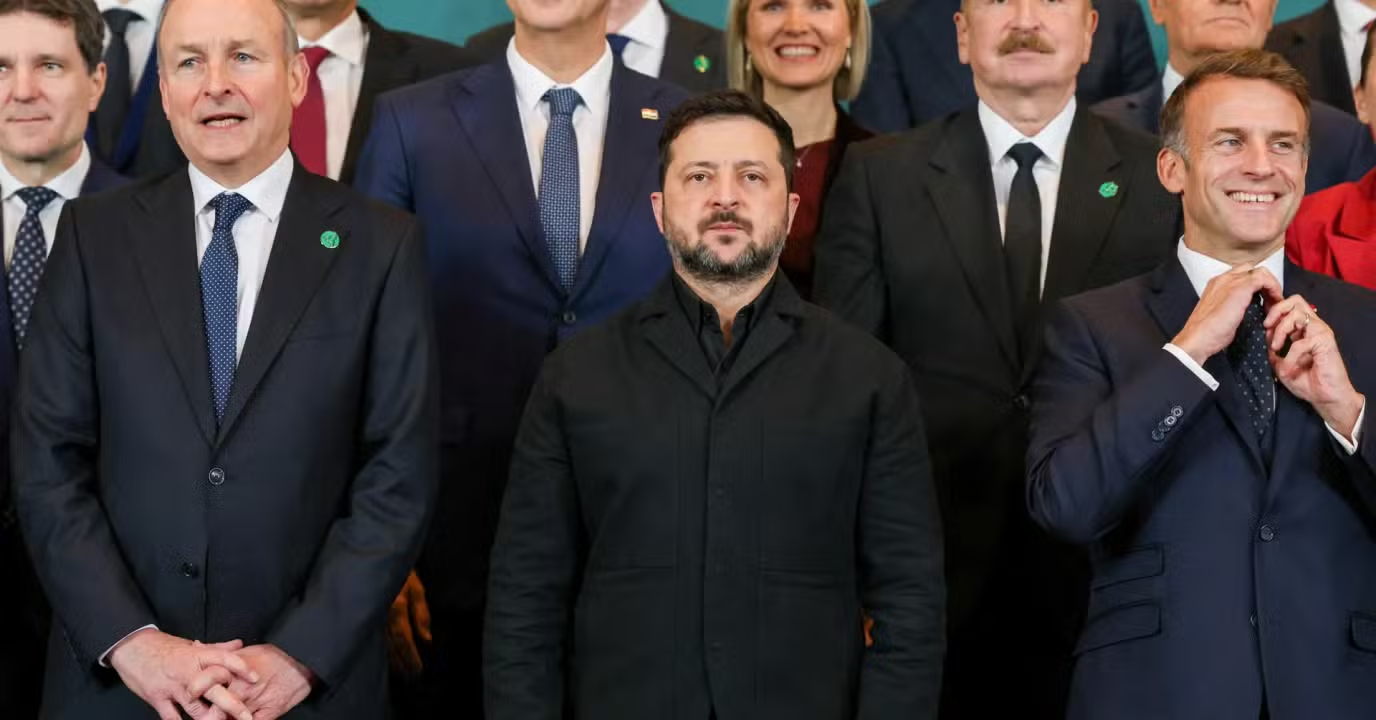
Ukraine holds peace talks with US, Europe as conflict escalates
A news report says Ukraine held new talks with United States and European officials on ending the war with Russia on 16 November 2026, hours before Kyiv's mayor reported strikes on the North and South bridges across the Dnipro River, while Ukraine hit a key bridge in Russia in what Russian defence ministry data indicates was the biggest overnight drone attack on Russia since 2022. The talks follow a meeting in Abu Dhabi where US, Ukrainian and Russian officials sat together for the first time in nine months, agreeing on a prisoner exchange but no breakthrough on ending the war. Russian aide Yuri Ushakov says Russia has not agreed to expand the talks beyond the existing delegations and no date is set, while US envoys Steve Witkoff and Jared Kushner say European representatives will join the next round, which Zelenskyy says will follow a Berlin meeting with the Coalition of the Willing.
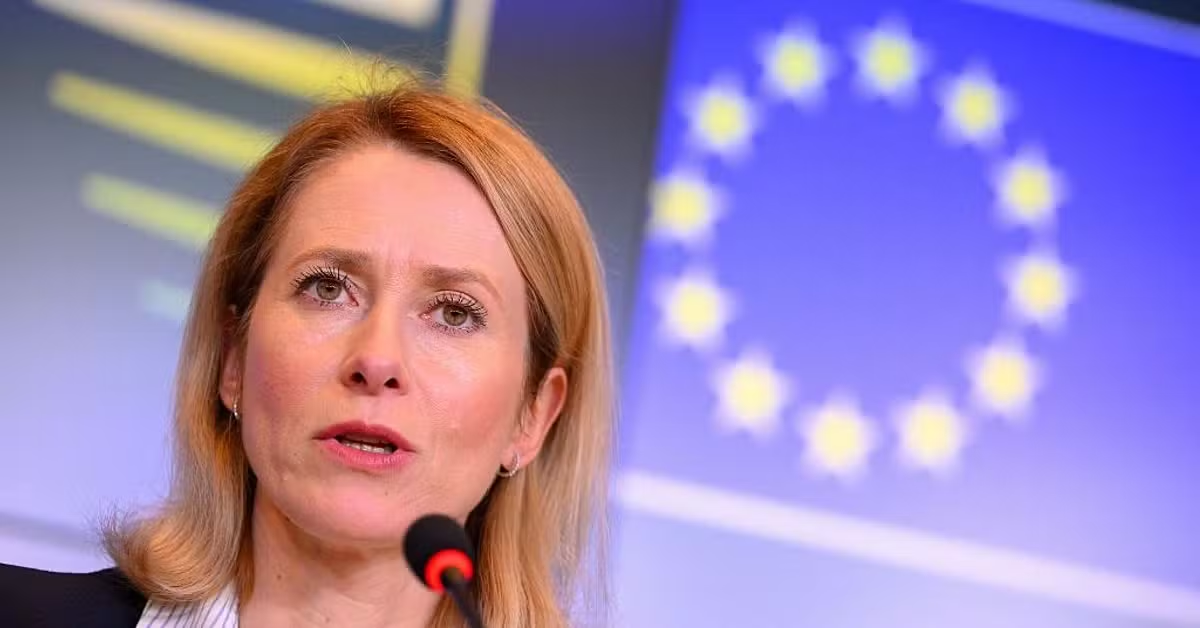
Russian demands are 'absurd,' ceasefire must come first, Kallas comments on Ukraine peace talks
EU foreign policy chief Kaja Kallas calls Russia's demands in the Ukraine peace talks absurd and says negotiations must first secure a full ceasefire, telling Moscow: "Stop this, and we can then sit down and negotiate the peace agreement." Her comments on November 16, 2026, ahead of an EU foreign ministers' meeting in Brussels, follow a round of U.S.-mediated talks in Abu Dhabi that brought no breakthrough: Moscow still demands Ukraine cede the partially occupied Donbas region, a non-starter for Kyiv, and rejects a ceasefire as the first step. European officials attended the Abu Dhabi negotiations but did not take part in direct talks with Russia, though on November 13 European leaders agreed that EU institutions and five European countries will jointly represent Europe in future talks. Kallas says the EU has leverage through its sanctions and the roughly 200 billion euros in Russian assets immobilized in the bloc.
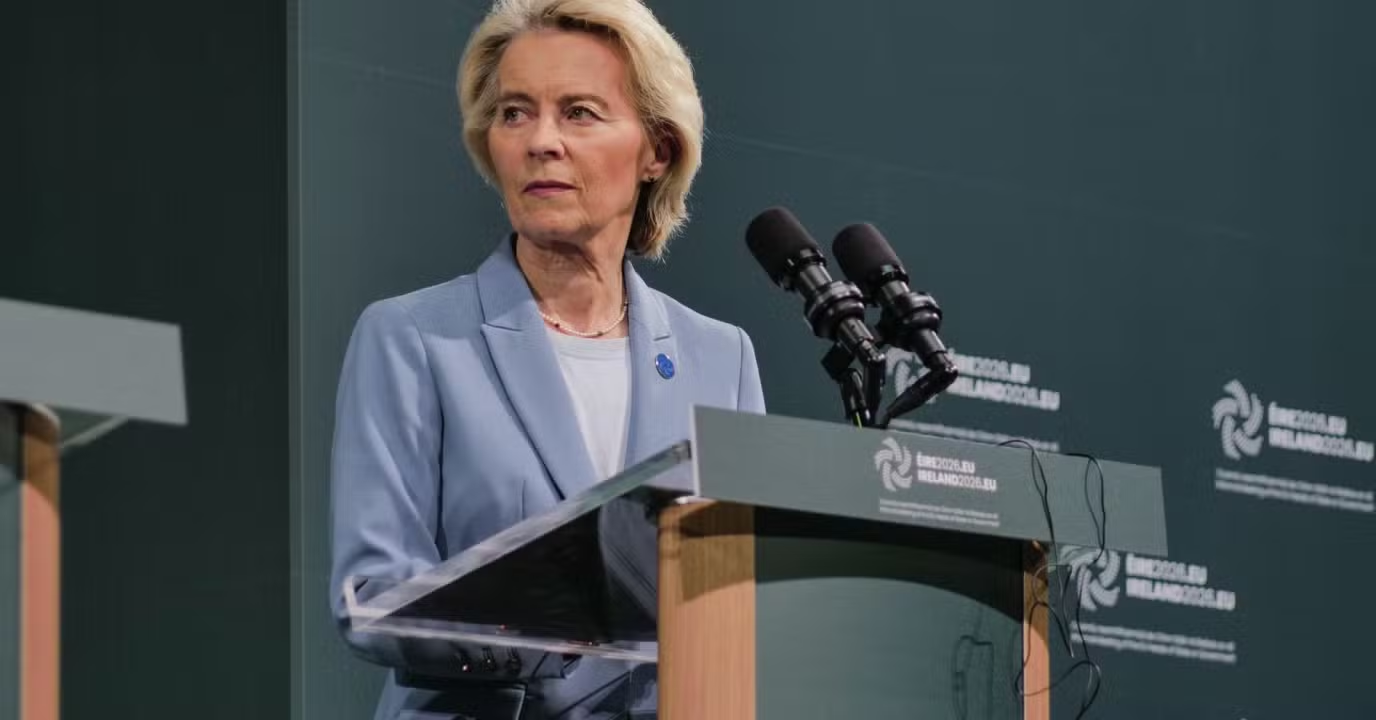
Europe will 'closely engage' in peace negotiations between Russia, Ukraine, von der Leyen says
European Commission President Ursula von der Leyen says Europe will closely engage in future peace negotiations between Russia and Ukraine, writing on X that it will do so through the E5 plus EU format. European leaders agreed on November 13 that EU institutions and five countries, France, Germany, Italy, Poland, and the United Kingdom, will jointly represent Europe in talks to end Russia's war against Ukraine. The commitment follows trilateral negotiations between the United States, Russia, and Ukraine held in Abu Dhabi on November 11-12, which took place after President Volodymyr Zelensky repeatedly called for Europe to take part in peace talks. Von der Leyen said that in the meantime Europe will ensure maximum support for Ukraine and maximum pressure on Russia.
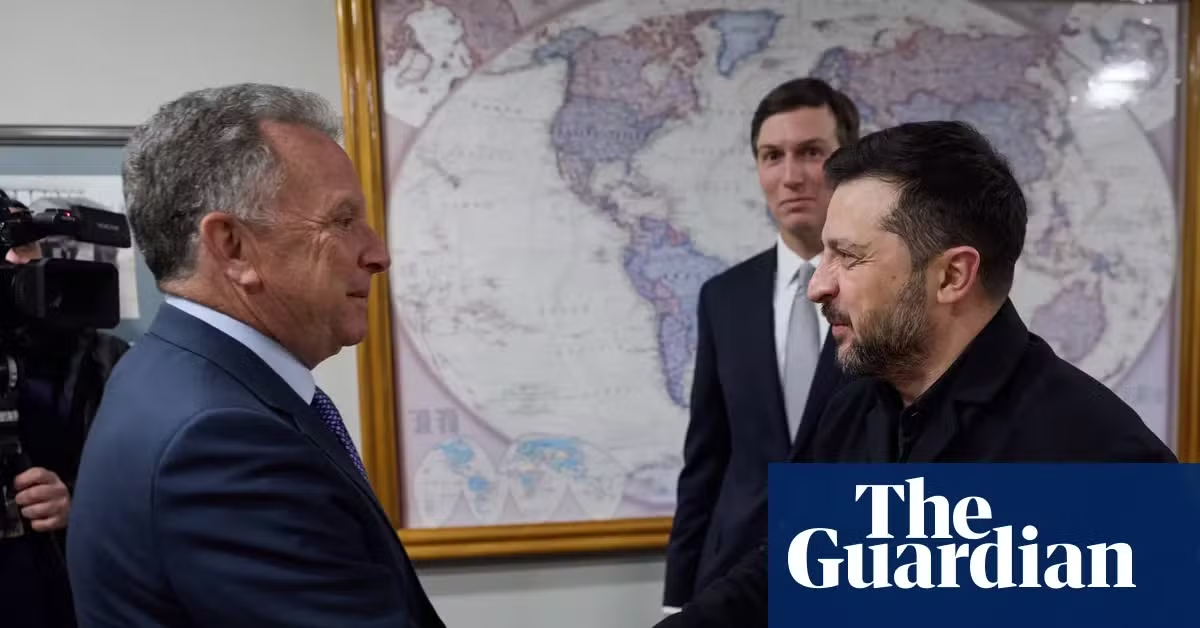
Ukraine war briefing: US proposes Kyiv cede land to Russia for Nato membership, Zelenskyy says
The Guardian's Ukraine war briefing reports Volodymyr Zelenskyy's claim that the US has, for the first time, asked whether Ukraine would withdraw from parts of the Donbas region it still holds in exchange for joining Nato: 'The Americans raised a question: What if Ukraine joins Nato? Would Ukraine withdraw from Donbas?' He calls the idea dangerous, saying it could let Russia weaken Nato and reshape borders, and says Kyiv is not ready to concede territory, though he would put the question to a referendum if Ukraine received a package of security guarantees, a strong well-funded army, and reconstruction funds. Washington and Nato have not commented. He also rejects any commitment to neutrality and accuses SpaceX of restricting Ukraine's Starshield satellite system for five days, which Kyiv suspects is deliberate US pressure on him to concede to Vladimir Putin.
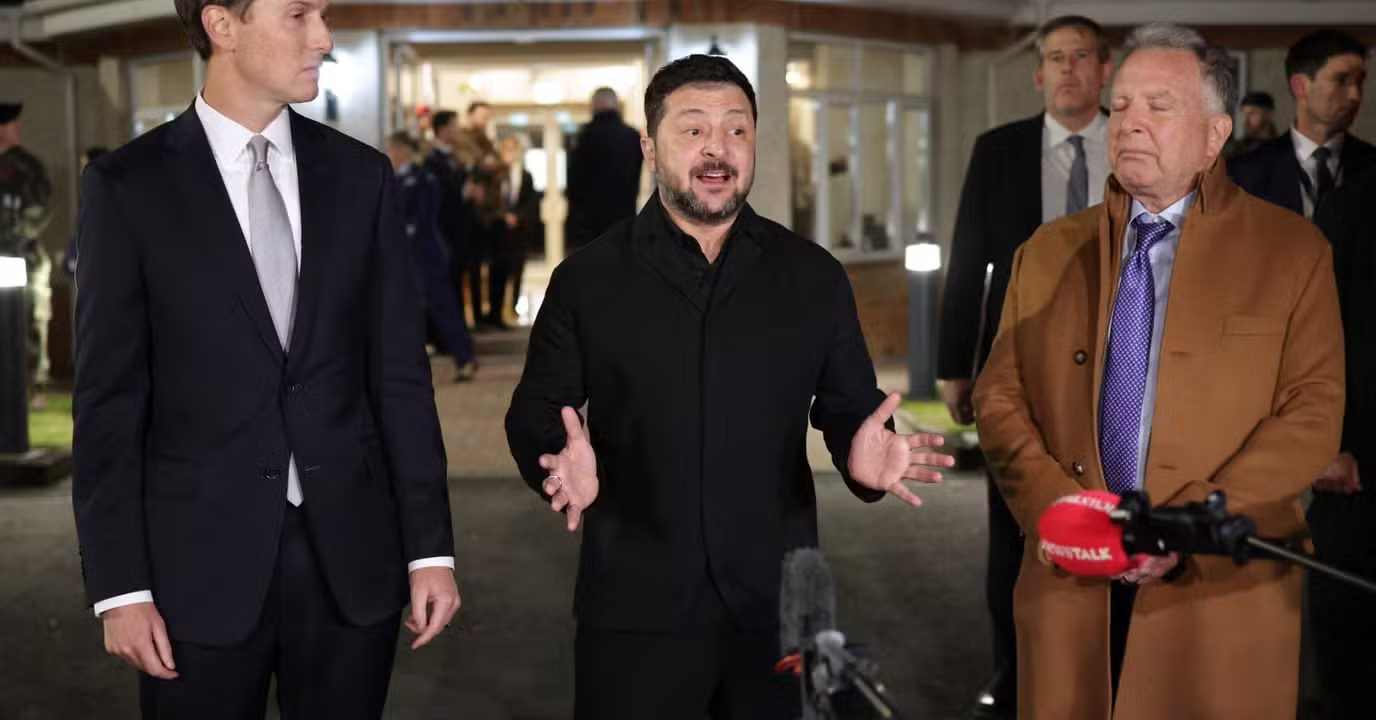
EN DIRECT, guerre en Ukraine : Volodymyr Zelensky affirme que les Etats-Unis ont évoqué des concessions territoriales en échange d’une adhésion à l’OTAN
In its live blog on the war in Ukraine, Le Monde reports Volodymyr Zelensky's statement that the United States have, for the first time, raised ceding Ukrainian territory in exchange for Ukraine's NATO membership, days after the last round of peace talks in Abu Dhabi. American emissaries Jared Kushner and Steve Witkoff had met Vladimir Putin in Moscow, then Zelensky in Dublin, on 12 November. Zelensky says Ukraine will not withdraw its troops from the part of the Donbass it still controls and will not enshrine neutrality in its constitution, since neutrality would give no long-term security guarantee. He adds that the Russian delegation in Abu Dhabi declared it had no mandate to discuss a ceasefire, saying the decision rested with Putin, and that the Americans will go to Putin on the question. The Europeans have decided to keep the format of the previous talks, with France, Germany, the United Kingdom, Poland, Italy and EU representatives, despite Moscow's veto on widening the negotiations.
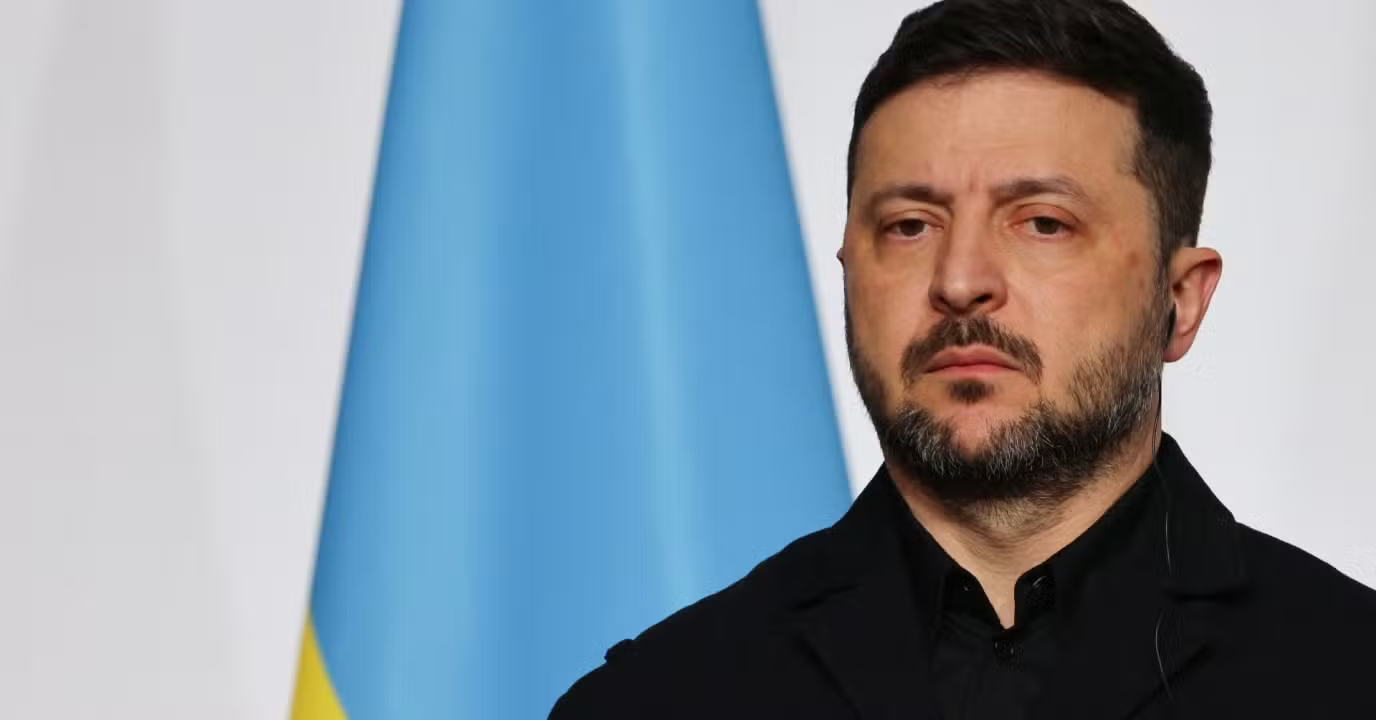
U.S. floated idea of Ukraine ceding Donbas for NATO membership, Zelenskyy says
In remarks released after two days of U.S.-brokered talks with Russia in Abu Dhabi ended without a breakthrough, Ukraine's President Volodymyr Zelenskyy says U.S. negotiators floated the idea of Ukraine withdrawing from its eastern Donbas region in exchange for joining NATO. He says it was the first time the talks had linked NATO membership to territorial concessions, and that NATO is back on the agenda, though Putin has long called Ukrainian membership a red line for Moscow. Zelenskyy says Kyiv is not ready to concede territory but would put the question to a national referendum if Ukraine received a package of security guarantees, a strong and well-funded army, and rebuilding funds. He also says Putin personally does not support a ceasefire, and rejects Putin's proposed humanitarian truce in Kostiantynivka as an attempt to take the city without a fight.
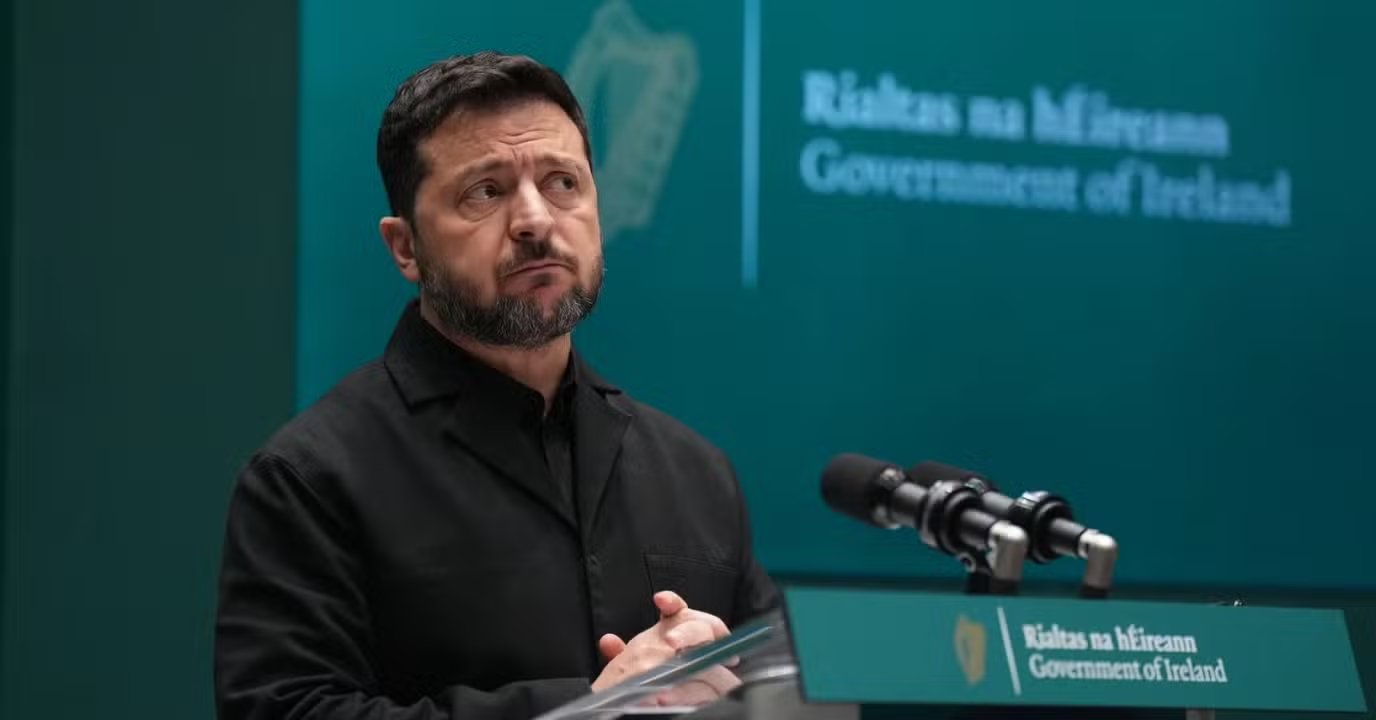
US proposed Donbas swap for NATO membership - Zelensky
Ukrainian President Volodymyr Zelensky says the United States has proposed that Ukraine cede land to Russia in exchange for joining NATO, and that the Americans raised the question of whether Ukraine would withdraw from Donbas for the first time. He says Ukraine is discussing specific security guarantees from NATO and the EU, and that if western countries confirm them he will ask Ukrainian society whether to accept them, as he has no right to decide alone. Speaking at a time when European leaders met in Dublin for an informal EU Council meeting, he also called for a US military package that would pressure President Vladimir Putin to end the fighting, while Russian, Ukrainian and US officials met in Abu Dhabi for the first time in nine months. EU leaders agreed that Europe would be represented by the E5, Britain, France, Germany, Italy and Poland, and the EU's institutions at the next peace talks, which European Commission President Ursula von der Leyen said should be met with continued support for Ukraine and maximum pressure on Russia.

Europeans decide on thorny question of who will speak for bloc in Ukraine talks
A news report says European leaders who spent months demanding a seat at the table in talks on Ukraine must first agree on who speaks for Europe. Washington says European leaders will get that seat in the negotiations. But the EU has grown into a bloc of 27 countries whose national interests can clash as often as they coincide, making a single European voice hard to settle on. The report recalls the urban legend in which Secretary of State Henry Kissinger once asked, "Who do I call if I want to speak to Europe?"
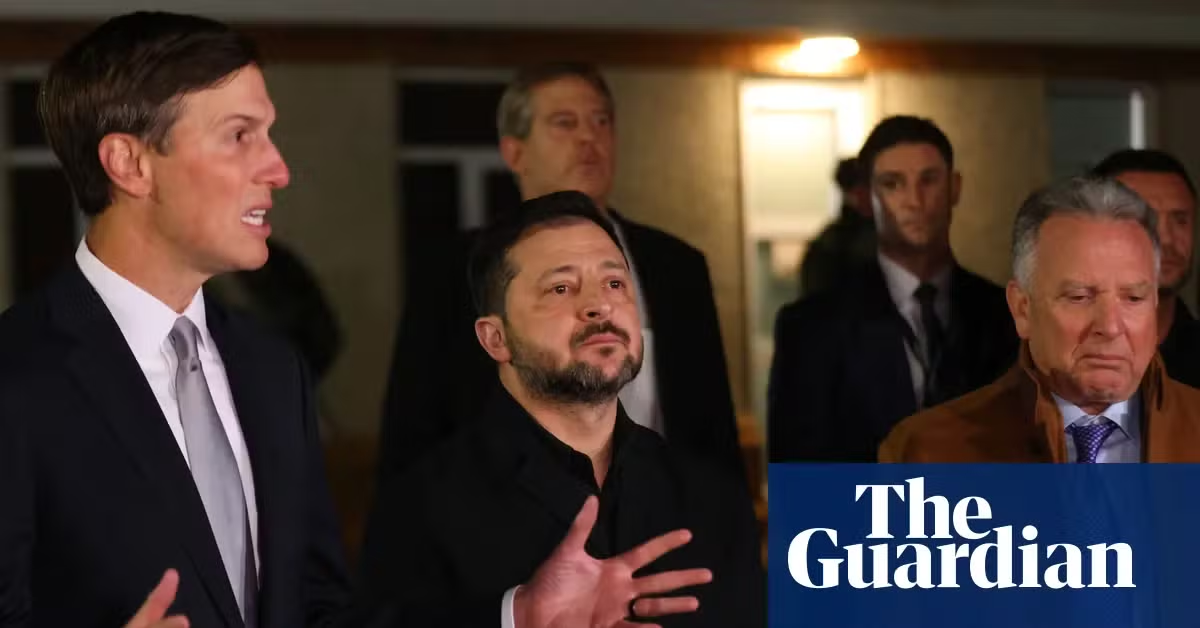
Ukraine war briefing: Europe to join negotiations, says Kushner, as Putin warns against peace keepers
The Guardian's Ukraine war briefing reports that US envoys Jared Kushner and Steve Witkoff, after meeting Vladimir Putin in Moscow and Volodymyr Zelenskyy at a summit in Dublin, say the next round of peace negotiations will expand to include European countries. Kushner says this will allow broader postwar European security arrangements to be addressed alongside territorial issues, and that the US is working toward what could be the largest prisoner exchange of the war. Putin, however, refused to soften his territorial demands and warned Europe that sending peacekeeping troops into Ukraine would amount to a continuation of war, urging Washington to work out with its allies whether they want peace or war. Zelenskyy welcomed European participation and hoped for an agenda on ceasefire and de-escalation, but also said new restrictions were affecting the US-made Starshield battlefield communications Ukraine relies on, and called it strange that the US was discussing a European security order with Russia.

After meeting Putin, U.S. envoys say Europe to join talks on ending Ukraine war
U.S. envoy Steve Witkoff says he secured Russian President Vladimir Putin's agreement for European officials to join the next round of talks on ending Moscow's war in Ukraine. Mary Ilyushina and Ellen Francis report in The Washington Post that there are signs of a looming impasse in the negotiations.
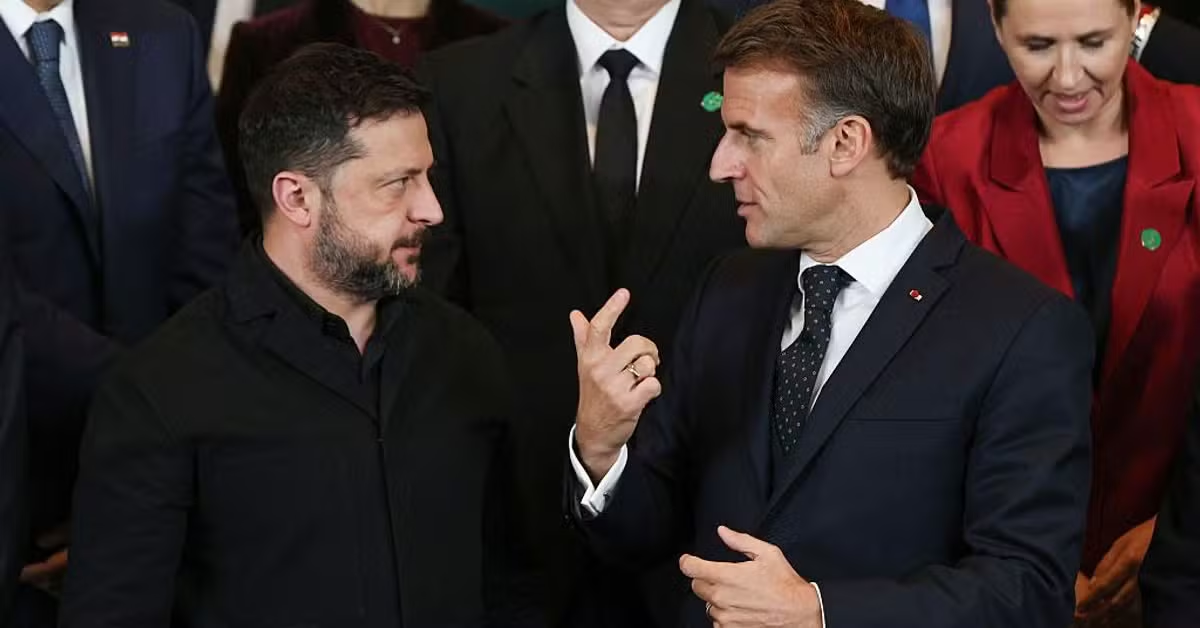
Europe wants a seat at the table with Russia. It can't agree on who gets it
As U.S. special envoys Steve Witkoff and Jared Kushner met with Vladimir Putin at the Kremlin on Nov. 12, European leaders gathered in Dublin were still struggling to agree on who should speak for Europe in the Ukraine peace talks. The 27-member EU has failed to settle on a single representative, with Kaja Kallas arguing the bloc's treaties already give its leaders a mandate to represent it and Estonia's prime minister backing her and Antonio Costa for the seat, while Emmanuel Macron and Friedrich Merz stop short of endorsing that pair and instead want Europe's major powers, including the so-called E3, to lead. U.S. envoy Steve Witkoff says the next round of talks will involve European officials, but the article notes that neither Washington nor Moscow appears particularly interested in creating a formal European seat, a process that has at times also sidelined Ukraine itself. Volodymyr Zelensky says Europe must have a direct role in negotiations and claims that when the Americans and Russians talk, it is not just about security guarantees for Ukraine but about some kind of new security framework between Europe and Russia.
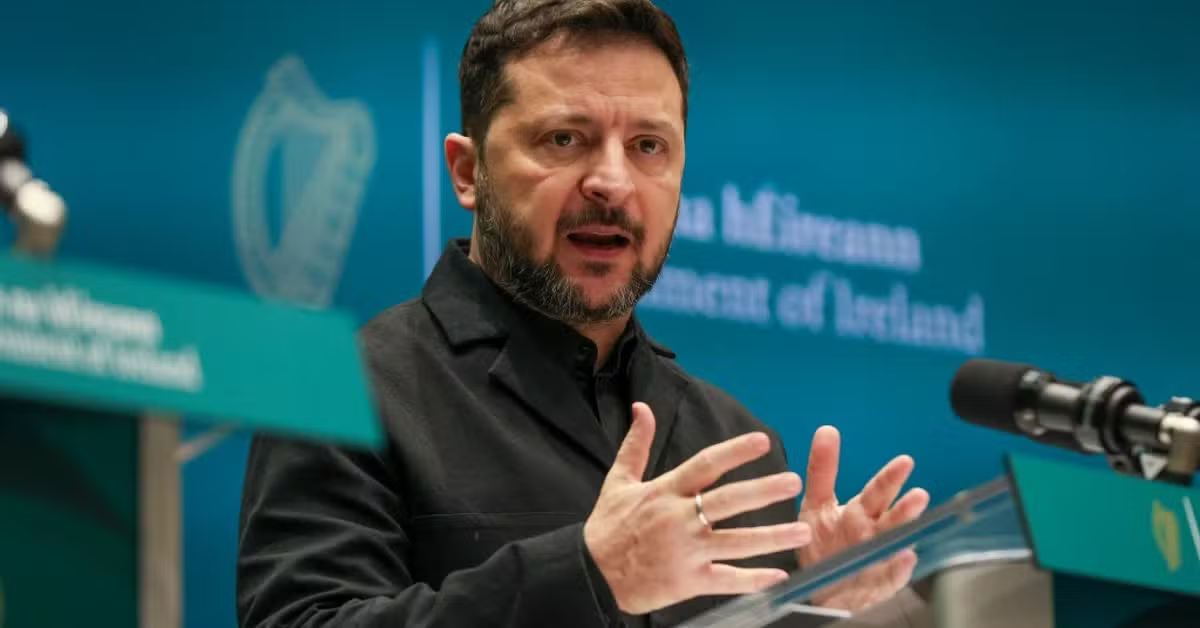
Zelensky Rejects US Pressure to Cede Donbas as Putin Talks Begin
Zelensky, speaking at a press conference in Dublin on November 11, 2026, rejects US pressure to make territorial concessions in Donbas, saying Kyiv will not surrender sovereign territory to end Russia's war and that the repeated American push for Ukraine to leave its land is impossible to discuss with an independent country. His refusal comes as US special envoys Steve Witkoff and Jared Kushner arrive in Moscow on November 12 to meet Vladimir Putin, carrying concrete proposals, before traveling to Dublin for further talks with Zelensky after two days of US-mediated negotiations in Abu Dhabi where, as chief negotiator Rustem Umerov says, significant differences remain. Zelensky calls himself the skeptic on the team, doubting the envoys will return with concrete answers, but says Kyiv will keep pursuing diplomacy while insisting any settlement include concrete American security guarantees, not Russian promises, and an equal voice for Europe, urging European leaders to name their representatives before the end of November.
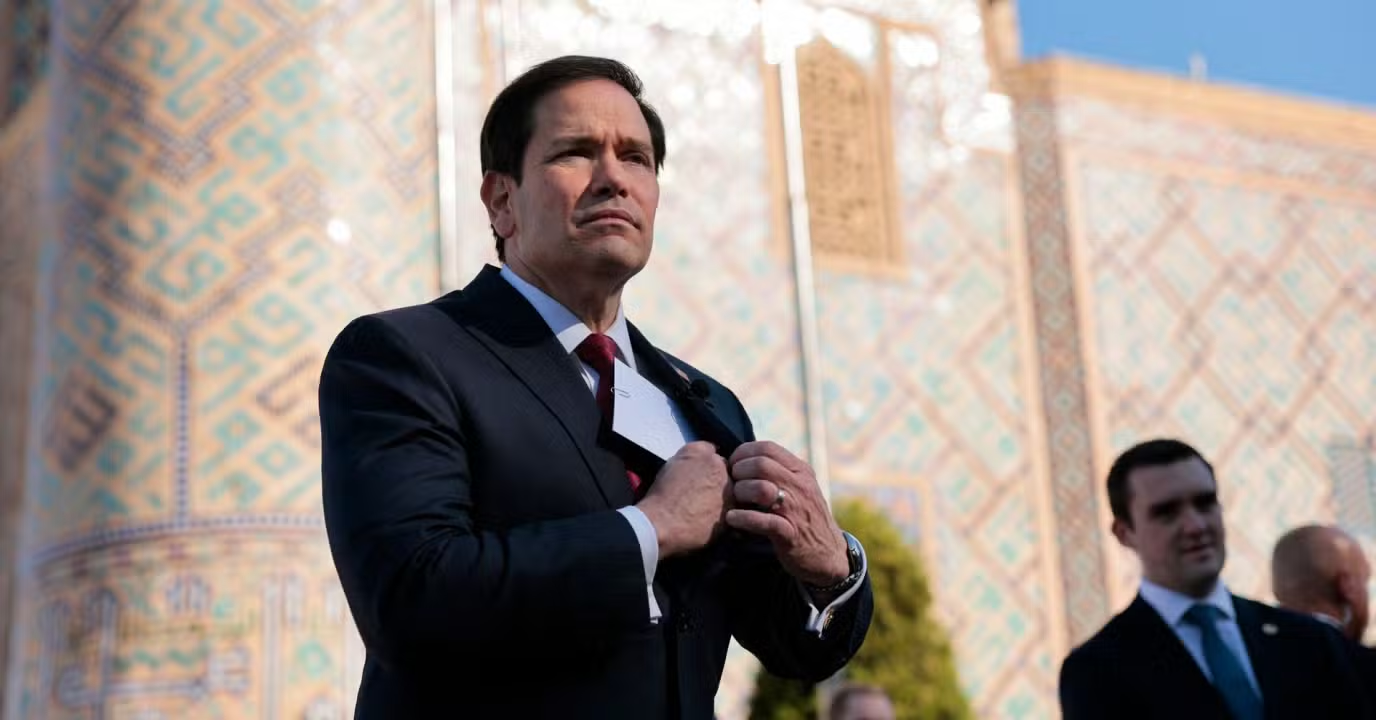
Security guarantees for Ukraine must also be acceptable to Russia, Rubio says
US Secretary of State Marco Rubio says any post-war security guarantees for Ukraine would need to be acceptable to Russia, calling such arrangements essential to a negotiated settlement that ends the war. His comments come as US-mediated peace talks are scheduled in Abu Dhabi on November 10-11, 2026. Asked about NATO-style guarantees, Rubio says no final concrete plan has been settled on, though concepts have been discussed, and treaty-level formalization has not been worked out in detail. He adds that Washington can facilitate the talks and inject ideas but cannot guarantee an agreement, stressing that Ukraine feeling secure after the war will be key to ending it.
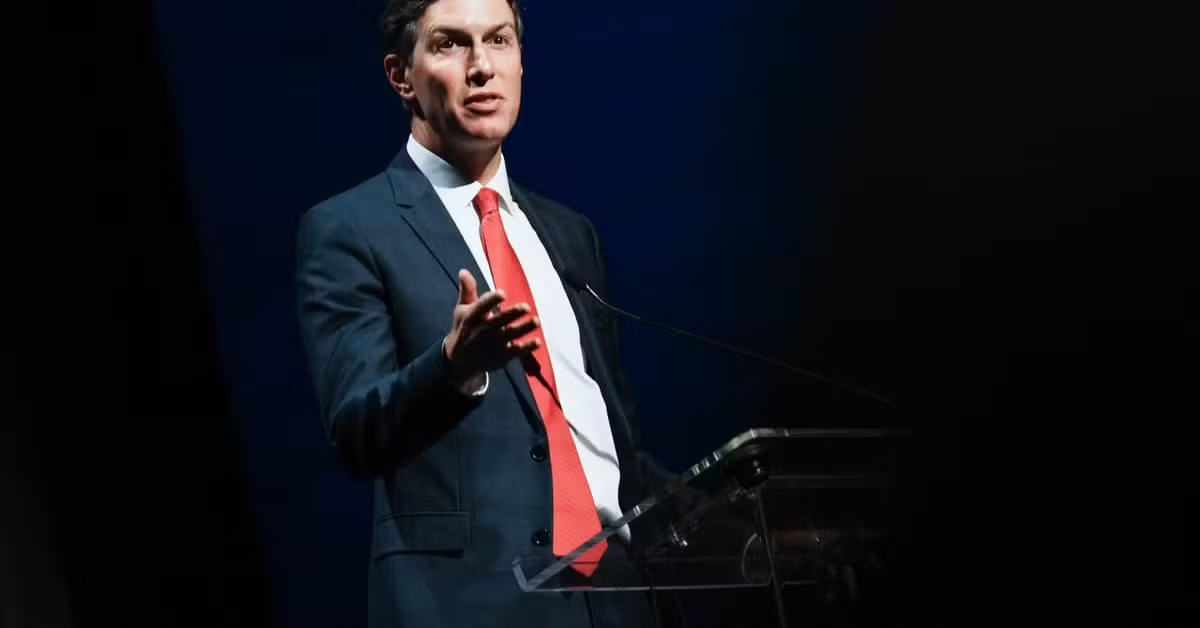
Trump’s ‘big, beautiful’ European security plan isn’t convincing Europe
Politico reports that European capitals are skeptical of a Trump administration proposal for a new Europe-wide security arrangement with Russia, fearing it would sideline the continent and embolden Vladimir Putin. Trump, after meeting Putin's envoy Kirill Dmitriev, said he wants a "big, beautiful agreement" that might involve all of Europe, while envoy Jared Kushner outlined five goals including permanent security consultations and greater military transparency. Three NATO diplomats said allies were not briefed in advance, and EU foreign policy chief Kaja Kallas argued Europe already has a security architecture through NATO and the EU, with Putin holding no veto over European security. Some allies also fear the initiative may be tied to a December review of American troops in Europe.

