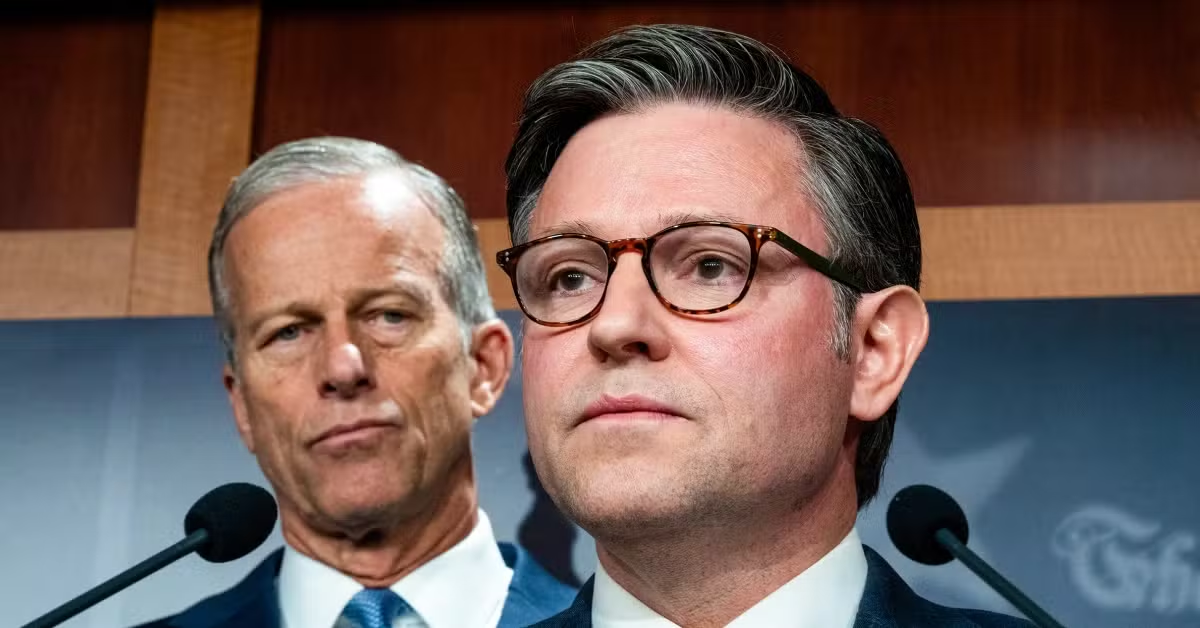
Republicans' hopes fade for a final party-line bill as lame-duck agenda stalls
Republicans still in control of Congress want to pass one final party-line bill carrying President Donald Trump's spending priorities before they surrender their majority to Democrats on Jan. 3, 2027, but the plan is faltering. Senate Republicans emerged from hours of meetings on Nov. 18 without a clear path to advance another such bill, and Majority Leader John Thune said appropriators argued in a closed-door session that day to hold off on reconciliation so bipartisan government funding negotiations could proceed. Many budget hawks are also reluctant to accept Trump's demand that $350 billion in military spending be included in the bill.
The lame-duck agenda is crowded and shrinking. Incoming Democratic Sen. Sherrod Brown of Ohio will be sworn in in December after winning a special election, cutting the Republican majority to 52. Lawmakers must also pass the annual defense policy bill, the farm bill, and a measure to fund the government past a Dec. 11, 2026 deadline, and some senators are discussing a fiscal 2027 spending package combining veterans affairs and Pentagon funding that would need Democratic votes to pass.
The House, meanwhile, can barely function. Attendance problems left leaders unable to hold a vote on two Republican-sponsored bills on Nov. 18, when 14 Republicans did not show up, 11 of them nonreturning members, and leaders cut the workweek short. Outgoing members vacated their offices and moved into cubicles that week, further demoralizing defeated Republican incumbents. After the midterm losses, Senate Republicans reelected their leadership team on Nov. 19 and agreed to a nonbinding resolution to confirm nominees, pass core priorities and attempt another reconciliation bill, as the White House renewed pressure to use the waning days of the trifecta on stalled GOP priorities.
Senate Republicans reelected their leadership team after the midterm losses and agreed to a nonbinding resolution to confirm nominees, pass core priorities and attempt another reconciliation bill.
The White House has put renewed pressure on House and Senate Republicans to use the waning days of their governing trifecta to push through stalled GOP priorities.
President Donald Trump has demanded that $350 billion in military spending be included in the party-line bill, which many budget hawks are reluctant to accept.
Incoming Democratic Sen. Sherrod Brown of Ohio will be sworn in in December after winning a special election, lowering the Republican majority to 52.
Legislators must also advance the annual defense policy bill, the farm bill and a measure to fund the government past a Dec. 11, 2026 deadline.
House leaders were unable to begin floor debate on two Republican-sponsored bills on Nov. 18, 2026 after 14 House Republicans did not show up to vote, 11 of them nonreturning members.
Republican senators are discussing whether to bring to the floor a fiscal 2027 spending package combining veterans affairs and Pentagon funding, which would need Democratic votes to pass.
Outgoing House members vacated their offices and moved into cubicles in the week of Nov. 19, 2026, further demoralizing defeated Republican incumbents.
Sen. John Cornyn said on Nov. 18 that everyone recognizes it will be a herculean effort to get the House and Senate to agree on the scope and the process of the party-line bill.
Sen. John Hoeven said the combined veterans affairs and Pentagon spending package would put Democrats on the spot by forcing them to answer whether they are willing to work with Republicans.
House Budget Chair Jodey Arrington said he does not believe Republicans can win over enough budget hawks to approve President Donald Trump's full $350 billion defense request.
Senate Majority Leader John Thune confirmed that Republican appropriators argued in a closed-door meeting on Nov. 18 to hold off on reconciliation so bipartisan government funding negotiations could proceed.
Senate Republicans emerged from hours of meetings on Nov. 18, 2026 without a clear path to advance another party-line spending bill.
House Republican leaders cut their legislative workweek short on Nov. 18, 2026 because attendance problems left them unable to proceed through regular floor business.
Sen. John Kennedy said of the Senate, "I don't know if we're going to do anything," except confirm judges, adding, "But everything else, I have no idea what we're going to do."
Many Republicans want to pass one final party-line bill carrying President Donald Trump's spending priorities before they surrender control of Congress to Democrats on Jan. 3, 2027.

