
Senate Republicans explore bipartisan path on Trump's $350 billion military funding bill
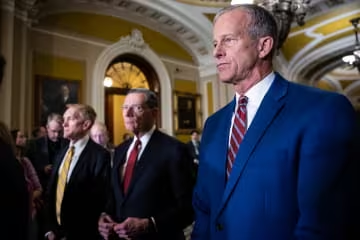
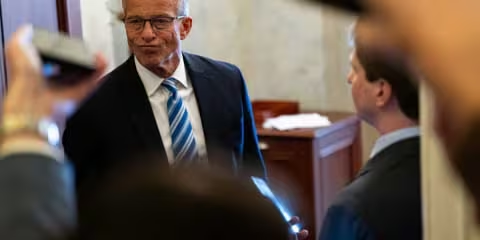
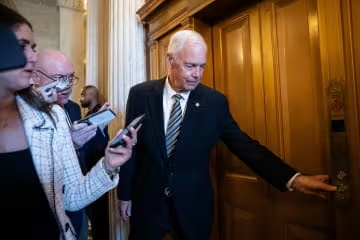
President Donald Trump has demanded that the Senate pass a $350 billion military spending bill with Republican votes alone before Democrats take control of Congress in 2027.
Senate Majority Leader John Thune is now exploring whether Democrats will help fund the military, though he and Budget Chair Ron Johnson have not ruled out a go-it-alone bill.
Republicans hold 53 Senate seats and cannot risk defections on a party-line measure, and a week of private meetings exposed deep unease with another partisan spending push.
Appropriators led by Sen. Susan Collins want the funding to move through the normal bipartisan process; Democrats oppose the request and back a stopgap to avoid a December shutdown.
Senate Republicans left Nov. 18 meetings without a clear path forward, and House Republicans cut their legislative week short over attendance problems.
On Nov. 16, 2026, Senate Budget Chair Ron Johnson said Republicans were probably looking at a relatively simple package and hoped the Senate could pass the resolution that week, remaining noncommittal on whether it would include the $350 billion in defense funding President Trump called for.
Ron Johnson said President Trump's defense request simplified the process amid talks about possibly adding a debt ceiling increase, and John Thune said passing a budget resolution is a matter of whatever can get 50 votes.
House Republicans sent the Senate a budget resolution in July 2026 that would unlock the party-line reconciliation process, including $74 billion in military funding alongside farm aid and election integrity spending, and it has not advanced in the Senate.
Senate Budget Chair Ron Johnson forecast that Republicans could pave the way for a final party-line spending bill before Democrats take control of Capitol Hill in 2027 by putting a fiscal blueprint up for a vote that week.
After huddling with Republican senators on Nov. 18, John Thune told reporters his party would first see whether Democrats would help pass the military funding, while he and Budget Chair Ron Johnson stopped short of ruling out a go-it-alone bill.
A week of private Republican meetings exposed deep unease with another partisan spending push, and with 53 Senate seats Republicans cannot risk defections on a party-line military funding measure.
Appropriators led by Sen. Susan Collins want the military funding to move through the normal bipartisan process, while Democrats remain firmly against the request and back a stopgap to prevent a December shutdown.
Senate Majority Leader John Thune said, "We want to explore all the possibilities for funding the military, one of which would be seeing whether or not there's an appetite on the Democrat side to do it," adding, "I don't know that they will. But we think that we ought to at least explore that possibility."
Sen. Rand Paul warned that some colleagues had missed the voters' message, saying, "All the exit polling showed that people were upset about the price of gas and the Iran war."
Democrats remained firmly against the military funding request and pushed a stopgap bill to prevent a December shutdown and delay the funding fight until they run Congress next year.
Senate Republicans emerged from hours of meetings on Nov. 18, 2026 without a clear path to advance another party-line spending bill, and House Republicans cut their legislative workweek short over attendance issues.
Republican appropriators argued in a closed-door meeting on Nov. 18, 2026 to hold off on reconciliation so bipartisan government funding talks could proceed, a case Senate Majority Leader John Thune confirmed.
Sen. John Kennedy said of the Senate, "I don't know if we're going to do anything," beyond confirming judges, adding, "But everything else, I have no idea what we're going to do."

