US tariffs on China and EU not due until January or February
Why Trump's new tariffs are less of a threat
bbc.com· 14h
Trump doubles down on his tariff agenda
ft.com· 16h
Major US Trading Partners Respond to Trump’s New Tariffs
bloomberg.com· 17h
Five takeaways from Trump's new tariffs
reuters.com· 21h
SHOCKING: U.S. Declares Massive New Trade War After Midterm Defeat
youtube.com· 22h
Trading Partners Wince at Trump’s Latest US Tariff Plan
China and other U.S. trading partners hit back at Trump's new tariff plans
ctvnews.ca· 22h
Are Trump’s tariffs aimed at securing US-friendly trade deals?
aljazeera.com· 23h
Trump's latest tariffs aimed at pressuring Asian trade partners into deals: Analysts
channelnewsasia.com· 23h
Status of Asian nations' trade talks with Trump
China and other U.S. trading partners hit back at Trump's new tariff plans
apnews.com· 24h
China says reserves right to take 'measures' after new US tariffs
Trump Riles Trade Partners With Tariffs That Undercut ‘China+1’
U.S. tariff-hike threats pile pressure on partners to sign trade deals
cnbc.com· 26h
Trump's new tariffs aim to prise global trade from China's grip
US Partners Respond to Tariffs With Anger, Protest and Diplomacy
Asian trade partners of US hit back at Trump’s latest tariffs
Droits de douane : Donald Trump s’entête dans le protectionnisme
liberation.fr· 27h
L'annonce de nouveaux droits de douane américains par Washington suscite l'indignation des pays visés
rfi.fr· 28h
Commentary: New US tariff threat seeks to ramp up pressure on trading partners – will it work?
Nouveaux droits de douane américains: les pays visés s'indignent
france24.com· 30h
L'UE, la Chine et d'autres pays s'indignent des nouveaux droits de douane américains
Trump Aims to Keep Leverage Over Xi With 40% China Tariff Threat
Asian governments push back, seek deals after Trump’s new tariff salvo
Asia-Pacific markets set for subdued open as investors weigh fresh U.S. tariffs
For Trump, doubling down on tariffs is about power, not popularity
Tariff Man Strikes Again
foreignpolicy.com· 35h
Trump just can’t quit tariffs
vox.com· 36h
China Braces for Tariff Hike After US Announcement
Tariff inflation was fading. New proposed tariffs could reverse that
usatoday.com· 38h
Live: ASX to open higher after US tariff announcement
abc.net.au· 38h
US-Zölle: Welche Folgen Donald Trumps neue Strafmaßnahmen für die EU haben
spiegel.de· 39h
World reacts to Trump’s new tariffs as US stocks tumble
Volatility-weary investors side swiped as tariff mayhem adds to tech pain
The White House announced a raft of new tariffs on the same day inflation data came back at nearly twice the Fed’s target | Fortune
fortune.com· 41h
Trump unveils new tariffs amid Russian nuclear space threat
euronews.com· 41h
US Outlines Import Levies as Trump Doubles Down on Tariffs
Trump Wants More Tariffs. How Are They Affecting the Economy?
Trump administration to raise tariffs on China, EU, Brazil and others
pbs.org· 42h
Washington annonce de nouveaux droits de douane contre ses principaux partenaires
Droits de douane : l’UE « conteste fermement » le bien-fondé des nouvelles sanctions américaines
lemonde.fr· 43h
Trump proposing new tariffs on 14 partners including China and European Union
theguardian.com· 43h
Trump announces new trade tariffs: Which countries will they target?
UE, Chine, Brésil... l'administration Trump propose une nouvelle série de droits de douane
US proposes new tariffs on 14 major trading partners, the EU included
Trump proposes new tariffs on China, European Union
Here Are the Economies Hit by Targeted US Tariff Deal Rates
US plans to hike tariffs on China, EU, Brazil and others over subsidized production
chicagotribune.com· 44h
List of Countries Hit By New Trump Tariffs - Newsweek
newsweek.com· 44h
Trump unveils new tariffs on China, E.U. and other U.S. trading partners
ms.now· 44h
Donald Trump persiste avec une nouvelle salve de droits de douane, notamment contre l’UE et la Chine, malgré la claque électorale
Trump unveils suite of new tariffs on major trading partners
L'administration Trump veut instaurer de nouveaux droits de douane contre ses principaux partenaires commerciaux
Trump proposes a new wave of tariffs on China, E.U. and other trade partners
nbcnews.com· 44h
Trump proposes new tariffs on China, Europe and other trade partners
washingtonpost.com· 44h
US threatens doulbe-digit tariffs on EU, China, 12 others after investigation
politico.com· 44h
VIEW US proposes new tariffs aimed at factory overcapacity
U.S. Set to Raise Tariffs on China, EU and Others
wsj.com· 45h
USA planen neue Zölle gegen EU, China und 13 weitere Handelspartner
US proposes new tariffs on 14 trading partners, including China, Japan and the EU – business live
L’administration Trump annonce de nouveaux droits de douane contre ses principaux partenaires commerciaux, dont l’UE, la Chine et le Mexique
US announces new tariff proposals on EU, China, and other trade partners
US announces new tariffs of up to 20% on China, the EU, and 12 other nations
yahoo.com· 45h
Trump Administration Unveils New Tariffs for Dozens of Countries, Citing Unfair Practices
nytimes.com· 45h
Trump unveils new tariffs to fight excess factory capacity, undeterred by midterms defeat
Trump targets China, EU in new round of tariffs | CNN Business
cnn.com· 45h
US Targets China, EU With New Tariffs After Overcapacity Probe
Trump tariffs live: US proposes raising duties on China, India and other major trading partners
US plans to hike tariffs on China, EU, Brazil and others over subsidized production
U.S. proposes new tariffs on 14 trading partners, including China and the EU
Trump set to add new sweeping tariffs, undeterred by midterms defeat
China warns US against imposing new tariffs
China Dismisses US Tariff Prospect as ‘Political Maneuvering’
US proposes sweeping new tariffs on China, others
semafor.com· 2d
US ready to slap tariffs on China, EU and others over subsidized production, AP sources say
US preparing to unveil new tariffs on global trading partners
US Said to Plan New Round of Tariffs on China, EU
Clueless Trump Wants to Bring Back His Most Disastrous Policy
newrepublic.com· 2d
Trump to double down on tariffs after midterms defeat
Donald Trump readies raft of new tariffs on major economies
Trump administration set to unveil new tariffs after probe on excess factory capacity, sources say
Trump administration tees up tariff hikes on EU, China, others
US Readies Tariff Hike on China, EU Goods as Soon as Tuesday
Exclusive | U.S. Prepares to Raise Tariffs on China and Other Countries
U.S. Ready To Slap Tariffs On China, EU And Others Over Subsidized Production: AP
huffpost.com· 4d
The Trump administration has proposed new tariffs on China, the European Union and other major trading partners over subsidized excess industrial capacity, but the duties cannot take effect before early 2027.
Reports of the plan emerged on November 23, and on November 25 US Trade Representative Jamieson Greer formally proposed tariffs on 14 major trading partners, the product of an eight-month Section 301 investigation.
China would face a 20 percent 'deal rate' that could rise to 40 percent if trade talks collapse, and the European Union a 15 percent starting rate that could reach 20 percent. Mexico and Norway were left out because investigations into their trade practices are still under way.
The duties are meant partly to replace the global tariffs the Supreme Court struck down in February 2026, and they follow a broad slate of such Section 301 duties announced in July.
They will not arrive soon: public comments are due by January 5, 2027, a hearing follows on January 25, and a senior official said January is the earliest the duties could take effect.
Greer made the announcement with little fanfare on the eve of Thanksgiving, and Trump made no public remarks. Stock futures slid, with Nasdaq 100 futures down 3.2 percent. Japan formally protested its proposed 15 percent levy, while China signaled it is unlikely to retaliate as long as the tariffs stay within the trade truce the two sides agreed in October 2025.
As of November 26, the two governments say they maintain close communication about extending that truce, which expires on January 10, 2027.
People familiar with the matter said the Trump administration was preparing to raise tariffs on China, the European Union and 14 other economies over subsidized production.
The Office of the US Trade Representative was expected to release the results of a monthslong tariff investigation into industrial subsidies by the 16 economies in the coming days.
The White House and the Office of the US Trade Representative did not respond to requests for comment.
Higher levies targeting excess industrial capacity overseas were reported to be expected in the week of November 24, 2026.
US Trade Representative Jamieson Greer was expected to unveil the results of the tariff investigation into China, the European Union and 14 other nations as early as that week.
The Trump administration argues that the targeted countries harm American companies by supporting their own domestic industrial production.
The Trump administration was moving to replace tariff levies that the Supreme Court had struck down.
The duties were to rely on Section 301 of the 1974 Trade Act, which lets the president impose tariffs to answer unfair economic practices.
US Trade Representative Jamieson Greer's office launched the trade investigation in March 2026 under Section 301 of the Trade Act of 1974.
The administration was set to propose tariff hikes on the night of November 24, 2026, on the European Union, China, Mexico, Japan and 12 other trading partners.
The proposed duties would honor tariff ceilings countries negotiated with the administration, with China's overall rate not exceeding 20 percent and the European Union's staying below a 15 percent cap.
Targeted countries would still be able to weigh in through hearings, public comments and closed-door talks before tariff rates are finalized.
The new duties were expected to carry carve-outs and to allow future reductions if countries take steps to reduce manufacturing overcapacity.
The Supreme Court struck down Trump's global tariffs in February 2026, and the new duties were meant to partly replace them.
The duties would be tailored to each country, with goods from Mexico and Norway unlikely to face immediate levies.
The White House was expected to honor duty caps of 15 percent on goods from the EU, Japan and South Korea and 19 percent for Malaysia.
The US was expected to honor a 20 percent cap on tariffs on Chinese goods only if the trade truce expiring on January 10 was extended.
Ryan Majerus said rates of 15 to 25 percent were possible on countries with excess capacity, stacking on existing tariffs of 10 or 12.5 percent, or lower rates with escalation clauses.
The excess capacity investigation began before the midterm election.
Senate Majority Leader John Thune signaled that more Republicans may join Democrats in pushing back on Trump's trade agenda.
Pennsylvania Governor Josh Shapiro wrote that Trump and JD Vance's tariffs 'continue to screw over families, farmers, and small businesses' and called the administration's economic policies 'a disaster for Pennsylvanians'.
Conservative commentator John Cardillo warned that 'all these new tariffs will do is drive prices higher and hurt American companies' and predicted Republicans would lose the White House in 2028 over them.
Former GOP Congressman Adam Kinzinger wrote that 'Three weeks ago voters told Trump prices were the problem' and that the earlier attempt 'led to higher prices for all of us'.
The anticipated trade action was described as a second step in efforts to replace the broad duties the Trump administration announced in April 2025.
On the night of November 24, 2026, the administration also proposed new tariffs on Brazilian sugar and aircraft, attributed by a senior official to a lack of progress on trade talks.
A senior US official said the administration was proposing a 20 percent tariff on Chinese exports that could rise to 40 percent if trade talks collapsed.
The Chinese tariff would stack with 2018 tariffs but not with 2026 forced-labor tariffs, and would exempt goods identified by the Board of Trade.
A senior US official said the tariffs could take effect in January 2027 at the earliest because the administration must first solicit comments and hold hearings.
A senior US official said the administration did not expect China to retaliate with anything stronger than a statement and may sign more agreements at the G20 the next month.
Chinese Foreign Ministry spokesperson Guo Jiakun called the prospect of new US tariffs political maneuvering and said so-called overcapacity is a false proposition, urging both sides to maintain their trade truce.
Beijing urged Washington on November 25, 2026 to uphold the stable development of trade relations as reports circulated of planned tariffs on China and other partners.
Guo Jiakun said tariff wars are not in 'anyone's interest' and issues should be resolved 'through consultation on the basis of equality, respect and mutual benefit'.
Guo Jiakun said the two sides should 'work together to effectively implement the important consensus reached by the two heads of state and uphold the stable development of China-US economic and trade relations'.
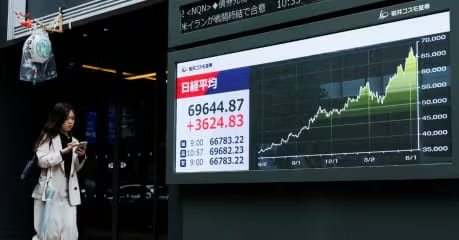
The prospect of new US tariffs weighed on global stock markets on November 25, 2026, with Nasdaq futures down more than 2 percent.
The 16 economies in the excess capacity probe were China, India, Japan, South Korea, Mexico, Vietnam, Taiwan, Thailand, Malaysia, Indonesia, Switzerland, Norway, Singapore, Bangladesh, Cambodia and the European Union.
The administration singled out China as the biggest source of excess industrial capacity, which it says floods world markets with steel, aluminum, electric vehicles, appliances and solar products.
ING analysts wrote that while the legal justification for tariffs keeps changing, US protectionism is becoming increasingly difficult to unwind.
A senior US official said the 14 trading partners had been notified and that their tariffs would not exceed rates announced in framework reciprocal trade deals.
The duties would not stack on existing tariffs except in China's case, facing a new 20 percent levy on top of the 25 percent imposed in 2018 over forced technology transfers.
The duties on China could jump to 40 percent if China does not uphold the trade truce agreed with Trump in Busan, South Korea, in October 2025.
China's foreign ministry said in a statement, 'The so-called 'overcapacity' does not really exist'.
The tariff plans were rolled out early on Wednesday, November 25, 2026, the day before Thanksgiving, after a senior administration official briefed reporters in a late-night call.
The planned import taxes were also meant to help replace tariff revenues lost when the Supreme Court ruled in February 2026 that Trump could not bypass Congress to impose across-the-board tariffs.
For some Chinese goods, the new 20 percent tariff would stack on other import taxes for a total rate of 45 percent.
The US proposed higher import taxes on raw and refined sugar from Brazil and a new 10 percent tariff on aircraft that would hit Embraer, Brazil's largest aircraft maker.
A senior official said the tariffs would not stack on Section 232 tariffs on automobiles, steel and aluminum, or on July 2026 forced-labor levies of 10 to 12.5 percent.
The administration argued the targeted countries' subsidized output had helped create a US goods trade deficit recently exceeding $1 trillion annually.
President Trump said the import taxes will bring back manufacturing jobs and reduce the federal deficit.
The Trump administration formally proposed new tariffs on 14 major trading partners including China, India and the European Union after an eight-month Section 301 investigation.
The US Trade Representative's notice cited unprofitable carmakers in China and Japan, large German and Irish surpluses as evidence against the EU, and the hefty surpluses of Singapore, Norway and Switzerland.
A senior US official said each of the 14 partners was found to 'create, sustain, or contribute to structural excess capacity and production in manufacturing sectors' that burdens US commerce.
A senior US official said the duties might not be implemented until January because of a public notice and comment period, with no timeline for completing the Norway and Mexico probes.
US officials briefed congressional committees the evening before the announcement, and the affected countries were also notified.
The proposed 20 percent China tariffs would come on top of roughly 25 percent first-term duties and would not apply to about $30 billion of imports under the Board of Trade.
Specific rates were to be published in a Federal Register notice that day; Mexico and Norway, the only two probed partners left out, faced no new duties.
Greer said conversations are still ongoing with Mexico as that trade investigation continues.
Jamieson Greer said the focus was 'on economies that we have evidence appear to exhibit structural excess capacity and production in various manufacturing sectors, such as through larger persistent trade surpluses'.
The European Union's proposed starting tariff rate would be 15 percent, rising to 20 percent if pre-existing trade agreements are not honored.
The proposal calls for broad exclusions for energy, food that cannot easily be grown in the US, certain semiconductor chips and pharmaceuticals.
A senior White House official said he believes retaliation will be limited and noted that trading partners received advance notice of the proposed actions.
The announcement came shortly after Trump and Xi Jinping struck a notably friendly tone at a meeting.
The USTR proposed capped rates of 18 percent for Cambodia, Indonesia, Malaysia, Thailand and Bangladesh, 15 percent for Japan, South Korea, Taiwan, the EU and Switzerland, and 10 percent for Singapore.
Vietnam would face a capped rate of 20 percent if it reaches a trade agreement with the US, rising to 35 percent if negotiations fail.
India would face a 17 percent tariff rate if an agreement is finalized and a 25 percent rate if talks fail.
The proposed tariffs would not take effect until after a public hearing on January 25.
Greer said Mexico and Norway were excluded because investigations into their trade practices remain under way.
A senior administration official estimated the new duties would apply to a fraction of the goods arriving from each targeted country.
The administration described the proposed 20 percent rate on many Chinese goods as a 'deal rate' that could rise depending on ongoing talks.
A US official said the investigation had concluded that a 40 percent tariff on China and a 35 percent rate on Vietnam was warranted.
Canada and the United Kingdom were not included in the list of countries facing the new tariffs.
Jamieson Greer said in a statement the tariffs respond to decades of 'market distorting practices that tilt the trade balance in their favour while eroding America's manufacturing base'.
The European Commission said, 'We strongly reject the premise that Europe is a source of structural overcapacity,' and said the EU and US share a real concern about global overcapacity.
Pawan Kumar, who runs Indian seafood processor Sprint Exports, said tariff uncertainty had made it 'really hard to run a business' and warned Indian exporters would struggle if competitors like Ecuador were exempted.
Trade expert Jayant Menon said the new approach, applying lower and more uniform rates to fewer jurisdictions, is likely to withstand legal challenges.
US stock futures slid after the proposal, with S&P 500 futures down 2.1 percent and Nasdaq 100 futures down 3.2 percent.
CIBC Capital Markets' Sarah Ying said most of the Section 301 tariffs were well expected and the move is not a 'Liberation Day 2.0'.
MUFG's Lee Hardman said the tariffs were not that surprising and should mean no major effect on the inflation outlook.
The new duties would be imposed concurrently with the summer 2026 Section 301 tariffs, with countries paying only the higher of the two rates.
Tiffany Smith of the National Foreign Trade Council said a perpetual, unilateral tariff on top trading partners is unlikely to solve excess capacity and will simply add long-term costs for US businesses and consumers.
Jamieson Greer said, 'When it all nets out, it really will just top up a few percentage points.'
Greer said a broad negotiation with trading partners will follow and none of the tariffs would take effect earlier than a couple of months.
Greer said talks with Canada were continuing, with some outstanding 'sticking points'.
Australia was not among the countries affected by the proposed tariffs.
Representative Don Beyer said raising tariffs after their Election Day rejection under the pretense of a sham investigation shows Congress cannot leave these authorities in the president's hands.
Senator Ron Wyden said Trump is trying 'to reconstruct his illegal global tariffs, no matter the cost to American families, workers, and small businesses'.
Public comments on the proposal are due by January 5, 2027, with hearings beginning January 25, 2027, and no date set for the duties to take effect.
The draft notice sets out an option of tariffs of up to 20 percent on EU goods if ongoing talks and commitments are found 'unsatisfactory'.
Any tariff already charged under Section 301 over forced labor would be deducted from the proposed Chinese tariff rates.
Tariffs on European and Japanese products would rise in total from 10 percent to 15 percent once the new tariffs take effect.
European Commission spokesperson Olof Gill said, 'We firmly contest that idea.'
Washington accuses Chinese companies of investing in Vietnam, Indonesia and Cambodia to bypass earlier US tariffs.
The investigation singled out the car industries of China and Japan, Singapore's computer chips and Norway's fuel and seafood exports.
Dmitry Grozoubinski said, 'The legislation is supposed to be a scalpel, and they used it like a flamethrower,' arguing Section 301 was not meant to set the US tariff code.
The tariffs are the second major batch of Section 301 duties, after a broad slate announced in July on more than 80 countries including the UK, Mexico and Canada.
Jamieson Greer said he does not expect the new tariffs to rattle the global economy.
The tariff announcement came the same day US inflation data showed price growth running at nearly twice the Federal Reserve's target.
Janus Henderson portfolio manager Bradford Smith said the tariffs set the table for further increases if negotiations break down and will make the Fed's inflation fight more difficult.
The Swiss franc, a traditional safe-haven currency, strengthened even with Switzerland among the targeted economies.
The Nasdaq Composite closed down 0.6 percent on November 25 after tumbling more than 4 percent early, the S&P 500 fell 0.25 percent and the Dow rose 0.3 percent.
The Swiss government said it rejects the allegations stemming from the investigations.
Norwegian Foreign Minister Espen Barth Eide welcomed the decision, saying Norway does not have policies that contribute to overcapacity and Norwegian companies produce in response to market demand.
Georgetown law professor Gregory Shaffer said the administration's use of Section 301 is cynical, aimed at letting the president set tariffs globally and strip Congress of its taxing authority.
Rachel Ziemba of the Center for a New American Security said the timing before the mid-December G20 sets up those meetings for negotiation but raises the risk of inflation and volatility in 2027.
Australian shares were set to open higher after the announcement, with ASX 200 futures pointing up 0.7 percent to 8,729 points.
European Commission deputy spokesperson Olof Gill said the origin of the overcapacity issue 'does not lie in Europe' and Brussels would react 'firmly and proportionately' if Washington violated the 2025 trade agreement.
Jamieson Greer said the United States 'will no longer sacrifice its industrial base' to nations that may be 'exporting their problems'.
Dallas Fed researchers estimated core PCE inflation would have been 2.3 percent in March 2026 without tariffs, against the actual 3.2 percent.
Dan Anthony of the small business coalition We Pay the Tariffs said customers cannot afford more price increases but small businesses cannot afford to absorb tariffs on top of tariffs.
Kelly Weinberger, head of jewelry company WorldFinds, said her firm is still recovering from the last round of tariffs and would have to raise prices again and possibly cut staff hours if the new tariffs go through.
Simon-Kucher's Max Walter said tariffs often take nine to 12 months to show up in shelf prices and a high tariff rarely flows through entirely to consumers.
Jamieson Greer made the announcement on November 25, 2026, the eve of Thanksgiving, with little fanfare, and Trump made no public remarks, in contrast with his 2025 Rose Garden rollout.
People familiar with Trump's thinking said he sees tariffs as a way to wring concessions from foreign leaders, force companies to build US plants, raise cash and court blue-collar voters.
With Democrats set to control Congress, tariffs gained added importance as an economic tool Trump can wield without lawmakers' approval.
Some Republicans in Congress blamed Trump's tariff policy for the party's midterm losses.
A former senior US trade official said the midterm rout likely moderated the proposed tariff rates.
Incoming House Majority Leader Katherine Clark wrote, 'Republicans have learned nothing'.
White House spokesman Matthew Middleton said the administration will 'continue fighting to lower costs' and that ending lopsided trade agreements has been key to Trump's movement.
United Steelworkers President Roxanne Brown called the tariff actions 'long overdue'.
Japan's top government spokesman Minoru Kihara said Japan has no non-market policy practices or structural excess production capacity and called it regrettable that a measure targeting Japan was announced.
Taiwan Vice Premier Cheng Li-chiun said the US goal is to rebuild the legal basis for its reciprocal tariff policy, and the existing agreements will not change and will not be renegotiated.
Vietnam said it is working toward finalizing a trade deal with the US as soon as possible and will act on overcapacity, curb transshipment and tighten forced labor rules to avoid the tariffs.
A spokesperson for China's embassy in Washington said the issue of 'industrial overcapacity' does not really exist and should not be used as a pretext for political manipulation.
India said it engaged constructively in the US investigation, has no structural excess capacity in any sector, and that trade concerns should be addressed in ongoing bilateral trade agreement talks.
China signaled it is unlikely to retaliate against the new US tariffs as long as they remain within the bounds of the previously agreed trade deal.
China's pre-existing US tariffs averaged 12.5 percent over the past year, on top of which the new 20 percent surtax would be added.
EU Trade Commissioner Maros Sefcovic said he firmly rejects the tariff decision and it is important that Washington respect the 15 percent rate agreed with the EU.
Chinese Commerce Ministry spokesperson He Yadong said, 'China urges the United States to correct its erroneous practices and return to the right path of resolving disputes through dialogue and consultation.'
He Yadong said Beijing reserves 'the right to take the necessary measures to firmly defend its rights and legitimate interests'.
The Brazilian presidency said the US decision 'constitutes an unacceptable action within the ongoing bilateral negotiation process' and 'Brazil will not yield to this type of threat'.
Singapore said it is 'very disappointed' by the American measures.
Bangladesh's Trade Minister Khandakar Abdul Muktadir said, 'We hope the United States will do nothing that could affect our bilateral relations.'
The USTR deemed Singapore's Central Provident Fund, which requires contributions of upwards of 20 percent of income, an unreasonable practice that promotes savings in a way that depresses consumption.
Barbara Weisel of the Carnegie Endowment for International Peace said the administration seems to believe it can extract more from Singapore despite their free trade agreement and a US trade surplus.
Japan formally protested the planned 15 percent US levy on its products, while officials from Singapore to Japan signaled a preference for negotiation over retaliation.
China and the European Union signaled they could hit back if Washington pushes beyond the terms of existing trade deals.
The new tariffs would raise the rate on China by roughly 7.5 percentage points while staying within the truce, but the US left room to raise the levies further.
The move came ahead of a fourth Trump-Xi summit of 2026 set for Miami in December 2026 and the trade pact's expiry on January 10, 2027.
The USTR report on Vietnam mentions China more than 250 times and its findings on the EU more than 300 times, citing partners' failure to curb Chinese imports and investment.
Capital Economics chief Asia economist Mark Williams said the measures give the US ammunition if the trade war restarts, and even the actions against the other 13 partners are aimed squarely at China.
The USTR singled out South Korea for its concentration in memory-chip production and outsized government support but excluded South Korean chips from the proposed tariffs.
Beijing urged Washington to implement the $30 billion in agreed tariff reductions and vowed to take measures to protect its rights.
Taiwan faces a 15 percent cap with exemptions for mobile phones and other electronics, and Capital Economics estimates its effective tariff rate would rise to about 9 percent from 6 percent.
Wendy Cutler of the Asia Society Policy Institute said Beijing seems prepared to live with the new rates provided they do not exceed 20 percent.
Cutler said Washington is using the tariffs as leverage to 'secure expected shipments of critical minerals and rare earths, and further purchases of U.S. agricultural goods'.
The tariffs risk undercutting the 'China+1' shift of supply chains out of China, with countries like Vietnam potentially facing rates approaching or exceeding those on Chinese goods.
Chinese Commerce Ministry spokesman He Yadong said citing overcapacity as a reason for tariffs is a 'pretext for protectionism' that disrupts global supply chains and drives up inflation.
Jamieson Greer said, 'China understands that we're going to have some level of tariffs. This falls within that understanding.'
Analysts said the 14 economies targeted by the new tariffs together account for roughly half of the global economy.
Capital Economics' Stephen Brown said the tariffs broadly replace the July 2026 forced-labor tariffs rather than add to them, and will likely keep core goods inflation firm into 2027.
Thai government spokesperson Lalida Persvivatana called the proposal capping Thai tariffs at 18 percent more favorable than expected and said Thailand will keep negotiating for competitive rates and more exemptions.
Malaysia said it does not have excess capacity in its manufacturing sectors and will continue to engage and consult with the United States.
Japan's 15 percent rate matches the ceiling agreed in 2025 trade talks in exchange for a $550 billion Japanese investment commitment, and Washington could raise it to 20 percent if Japan falls short.
Cambodia faces tariffs of up to 18 percent that could rise to 25 percent if negotiations are unsatisfactory, and Bangladesh's 18 percent could rise to 20 percent.
Malaysia's trade ministry said the USTR told it the proposed rate was only indicative, with a final rate to be decided in the first quarter of 2027.
Thailand said it aims to negotiate its proposed rate down below 18 percent from a current 12.5 percent.
Indonesia's top trade negotiator Airlangga Hartarto said US officials told Indonesia it would get a tariff in line with the rate agreed in its deal.
Malaysia said it will continue consultations to ensure its total tariffs do not exceed 19 percent.
The Philippines was not among the 14 economies targeted by the new tariffs.
Peter Draper of the University of Adelaide's Institute for International Trade said the tariffs are designed to push countries without trade deals, including Vietnam, India, China and Singapore, to conclude agreements with Washington.
Hinrich Foundation trade policy head Deborah Elms said some governments may accept higher duties rather than accept Washington's onerous conditions, and the tariffs will drive higher inflation in the United States.
Atlantic Council international economics chair Josh Lipsky said the announcement appears to be an attempt to set up a 'tariff web' meant to outlast the current administration.
Jamieson Greer said Canada's deepening relationship with China is a cause for concern, particularly talk of steel and aluminum waivers.
China said the two governments maintain close communication about extending the trade truce.
HSBC economist Fred Neumann said the tariff news was 'baked in', with markets barely rippling.
The UK was unaffected by the new tariffs but remains subject to a 10 percent global levy under the forced-labor provisions.
More than half of the tariffs on Canada are authorized under Section 338 of the 1930s Smoot-Hawley act.
Jamieson Greer said, 'We expect to have a broad, even a plurilateral negotiation to talk about excess capacity and how to resolve it.'
House Speaker-designate Hakeem Jeffries said the new House will in its first 100 days 'move aggressively to… repeal the Trump tariffs'.