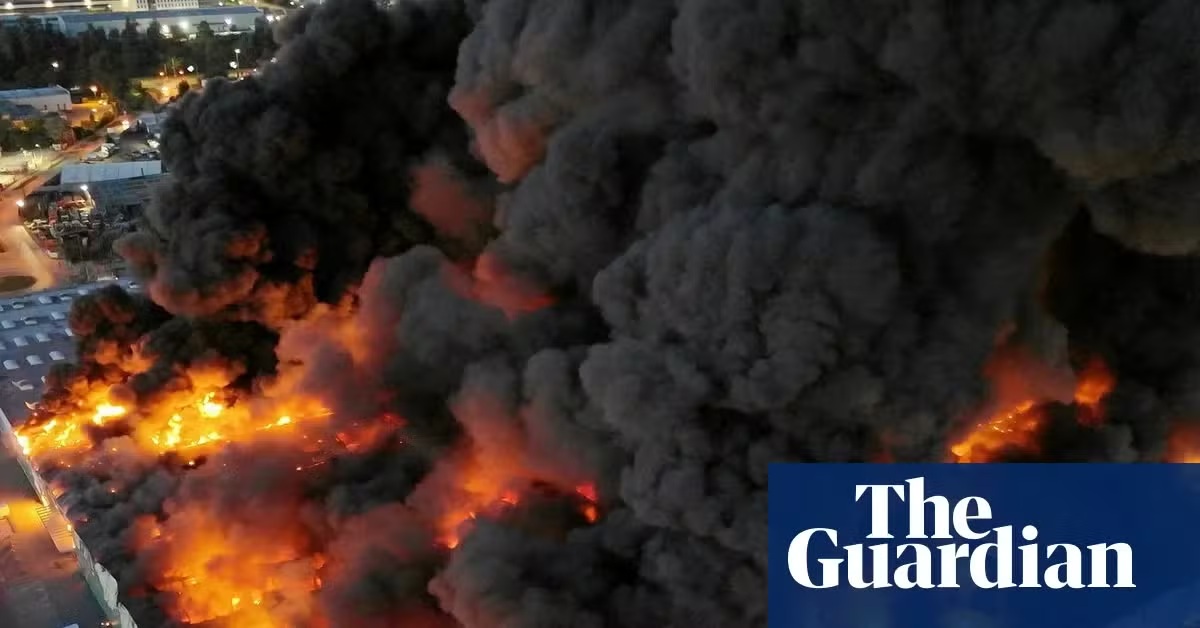
IISS warns Russian sabotage in Europe risks a mass-casualty event
‘Mass-casualty event’ in Europe possible amid rise in Russian sabotage, says thinktank
theguardian.com· 4h
Russian sabotage attacks across Europe fall short of strategic goals, threats remain, report says
kyivindependent.com· 6h
Russia’s hybrid war on Europe evolving, but failing: IISS
aljazeera.com· 7h
Russian sabotage attacks in Europe up 16%, IISS says
reuters.com· 10h
Alleged Russia-directed sabotage in Europe risks mass-casualty event, think tank warns | CNN
cnn.com· 29h
The International Institute for Strategic Studies has warned that Russia-directed sabotage in Europe is intensifying and that a mass-casualty event is possible, as Moscow reportedly targets rail lines, airports and energy networks.
The report, published on November 26, says Russia has turned to sabotage over the past year, with the use of explosives and arson roughly doubling, and attacks rose 16 percent over the year before November 2026. Germany and Poland saw more than half the incidents recorded between October 2025 and September 2026, with 29 Moscow-linked incidents in Poland, and attacks on critical infrastructure, particularly military-industrial and transport facilities, accounted for more than half of all recorded incidents.
Russian intelligence services have recruited a force of proxies who are becoming better at sabotage, using more complex methods including improvised explosive devices armed with timers and detonators. The report cites a Moscow-linked incident in November 2025 in which an explosive charge damaged a Polish railway line used to deliver supplies to Ukraine, and the discovery on August 4, 2026 of an explosives-laden drone near a Ukrainian cargo aircraft in Leipzig, where a second drone is suspected of colliding with a DHL cargo plane the same day. Arrests of proxies, expulsions of Russian intelligence officers and consulate closures have not deterred Moscow, and attacks come in surges that suggest central planning.
The campaign aims to destabilize Europe, weaken backing for Ukraine and test NATO's resolve, and a mass-casualty disaster could bring calls for retaliation and divide European governments. No EU government has set red lines despite recent attacks in Estonia, Lithuania and Romania, and the report calls on Europe to turn national responses into a Europe-wide strategy, publicly signaling what level of harm triggers which response.
The International Institute for Strategic Studies published a report warning that alleged Russia-directed sabotage in Europe is intensifying and that a mass-casualty event is possible as Moscow reportedly targets rail lines, airports and energy networks.
The report says Russia has increasingly turned to sabotage over the past year, with the use of explosives and arson roughly doubling.
The report says Germany and Poland saw more than half of the sabotage incidents recorded between October 2025 and September 2026, with 29 Moscow-linked incidents recorded in Poland.
The report says Russia, while not directly at war with any European nation other than Ukraine, is waging a conflict through proxies intended to weaken European support for Kyiv, and that unconventional war rather than nuclear war poses the immediate threat to Europe.
The report says Russian intelligence services have recruited a force of proxies who are becoming better at sabotage, using more complex methods including improvised explosive devices armed with timers and detonators.
The report says arrests of proxies, expulsions of Russian intelligence officers and consulate closures have not deterred Moscow, and that arrests impose costs on proxies but not on the Russian intelligence services directing them.
The report says attacks come in surges across the continent, suggesting central planning in Moscow, and that one proxy network has coordinated attacks in several countries while competing networks may mean disrupting one does not deter another.
The report says Russian sabotage operates on tactical and strategic levels, damaging aid for Ukraine and trying to make support for Kyiv too costly for European governments, and that a mass-casualty disaster could bring calls for retaliation and divide European governments.
The International Institute for Strategic Studies report states that attacks have focused on sectors critical to the Ukrainian war effort, while attacks on public infrastructure and high-profile locations appear intended to undermine public confidence and support for Ukraine.
The report says Russian sabotage attacks across Europe increased by 16 percent over the year before November 2026.
The report says the sabotage campaign is part of a wider effort to destabilize Europe, weaken backing for Ukraine and test NATO's resolve, as pressure mounts across Europe to scale back support for Ukraine.
The report says attacks on critical infrastructure, particularly military-industrial and transport facilities, accounted for more than half of all recorded sabotage incidents between October 2025 and September 2026.
The report says it is highly likely that Germany and Poland will remain the most targeted states.
The report says Russia's unconventional war on Europe has so far failed in its strategic purpose, noting that military aid to Ukraine continues and European defense spending rose by 12.6 percent in 2025.
The report warns that a mass-casualty incident is possible as the space for miscalculation narrows.
The report cites a Moscow-linked incident in November 2025 in which an explosive charge damaged a railway line in Poland used for delivering supplies to Ukraine.
The report cites the discovery on August 4, 2026 in Leipzig, Germany of a drone laden with explosives near a Ukrainian Antonov cargo aircraft used for military supplies.
Investigators suspect a second drone collided with a DHL cargo plane in Leipzig on the same day, soon after air traffic was suspended.
The report says no EU government has set red lines despite recent attacks in Estonia, Lithuania and Romania.
The report says the key question facing Europe is whether it can turn national responses into a Europe-wide strategy before a mass-casualty event, and calls for Europe to publicly signal what level of harm triggers which response.
The International Institute for Strategic Studies recommends that Europe publicly signal what level of harm triggers which response.
Moscow rejects out of hand all accusations from western governments and intelligence services that it is behind a Europe-wide campaign of drone, cyber, arson and explosive attacks aimed at undermining EU support for Ukraine.

