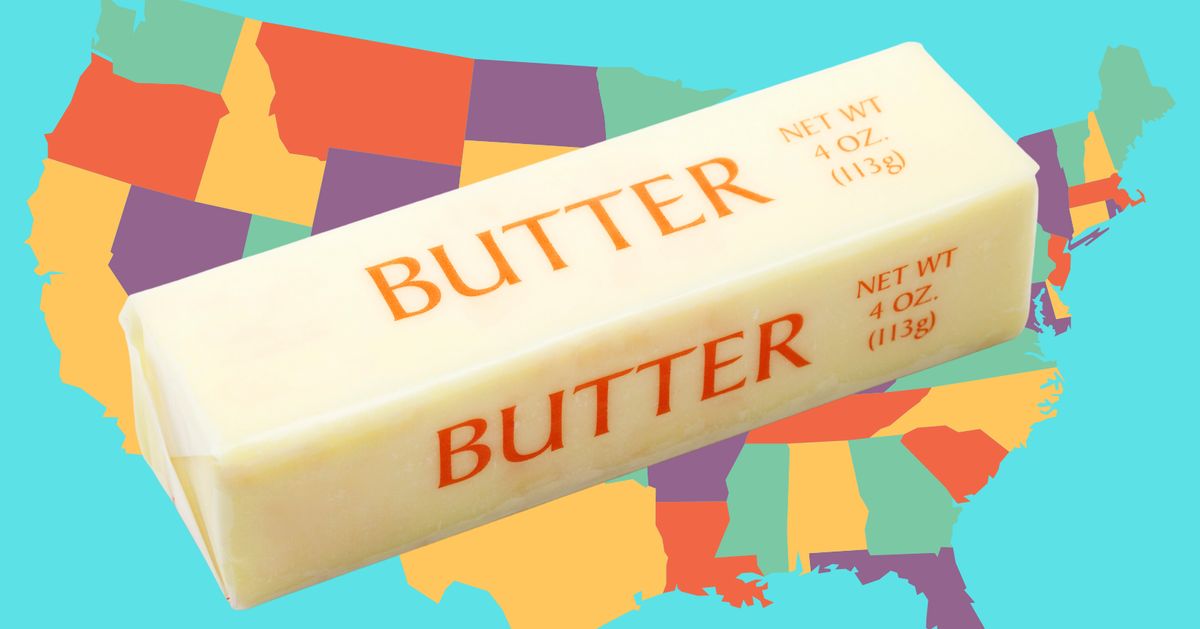
Why East Coast And West Coast Butter Sticks Are Different Shapes
Summary
- Butter sticks sold on the United States East Coast are long and narrow, while West Coast sticks are shorter and wider and sometimes called stubbies.
- The split dates to 1907, when a New Orleans chef asked supplier Swift & C. for quarter-pound sticks instead of 1-pound blocks.
- The narrow eastern sticks became known as Elgin sticks after Elgin Butter Co. in Elgin, Illinois, which made the widely used Elgin Butter Cutter press.
- West Coast dairies ramped up production in the 1960s with newer packaging equipment that skipped Elgin-style machines, producing stubbier sticks.
- Both styles contain the standard 8 tablespoons of butter, and the regional difference persists today.
- Some butter storage products are sold in multiple sizes, with one offering a map graphic so customers can pick the right version.
Reactions
- Panic Inc. co-founder Cabel Sasser tweeted "i'm sorry, what" at a butter dish ad, then wrote "still learning new things every day."
- Paul Carpenter tweeted that butter dishes were designed with tolerances that could not fit both butter stick types.
- John Bruhn, former director of the Dairy Research and Information Center at UC Davis, said the western cube resulted from newer packaging equipment.
- Bakers are advised to measure butter carefully, since the two stick shapes can cause confusion.
Timeline newest first
HuffPost's New York and Los Angeles editors compared their refrigerators' butter and confirmed East Coast and West Coast butter sticks differ in shape.
Sources newest first
- East And West Coast Butter Is Different, And We've All Been Living A Lie
HuffPost's East Coast and West Coast editors compared their refrigerators' butter and found the sticks really do differ: East Coast butter is sold in long, narrow "Elgin" sticks, while West Coast sticks are stubbier, a split dating to 1907 when a New Orleans chef asked Swift & C. for quarter-pound sticks and to 1960s Western packaging equipment that skipped the Elgin-style machines. Panic Inc. co-founder Cabel Sasser tweeted "i'm sorry, what" at a butter dish ad, and HuffPost advises bakers to measure their butter carefully.
