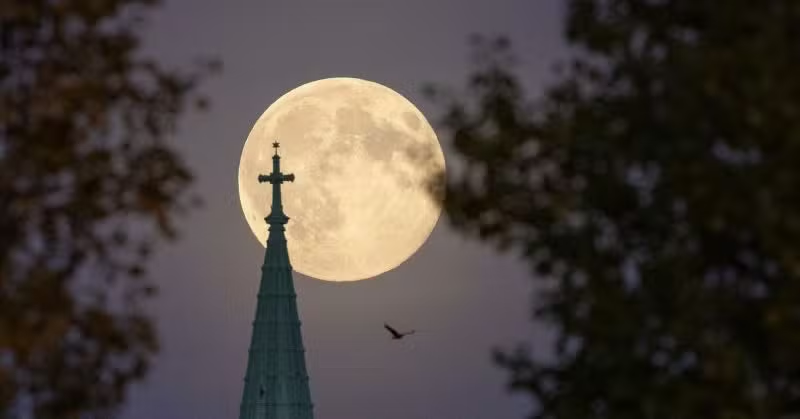
Series of four supermoons begins with November's full Beaver Moon
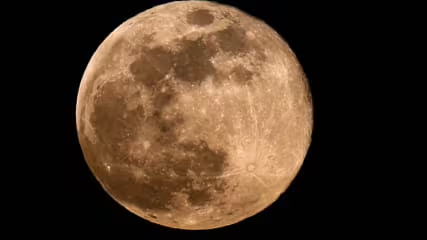
A series of supermoons begins on Nov. 24, 2026, when the full Beaver Moon reaches full phase at 9:53 a.m. EST. It is 2026's second supermoon and the first since January 2026, and the run is set to continue with the Cold Moon, the Wolf Moon, and the Snow Moon.
The Cold Moon reaches peak illumination at 8:28 p.m. EST on Dec. 23, 2026, and at about 221,700 miles from Earth will be the closest full moon of the year. The Wolf Moon follows at 7:17 a.m. EST on Jan. 22, 2027, and the Snow Moon completes the run at 6:23 p.m. EST on Feb. 20, 2027.
Noah Petro, chief of NASA's Planetary Geology, Geophysics and Geochemistry Lab at Goddard Space Flight Center, said November's full moon will appear about 17% larger and 30% brighter than the smallest full moon of the year. The moon was reported to appear full on the evening before its peak and on the two evenings after, rising around sunset, remaining visible all night, and setting around sunrise.
November's full moon has also been described as the first of three consecutive supermoons, a count that differs from earlier reports of a four-moon series.
A series of four back-to-back supermoons will run from late November 2026 through February 2027, beginning with the full Beaver Moon on Nov. 24, 2026, and continuing with the Cold Moon, Wolf Moon, and Snow Moon.
The full Beaver Moon, 2026's second supermoon and the first since January 2026, reaches full phase at 9:53 a.m. EST on Nov. 24, 2026.
The Cold Moon reaches peak illumination at 8:28 p.m. EST on Dec. 23, 2026, and at about 221,700 miles from Earth will be the closest full moon of 2026.
The Wolf Moon reaches its full phase at 7:17 a.m. EST on Jan. 22, 2027, and the Snow Moon completes the run at 6:23 p.m. EST on Feb. 20, 2027.
Noah Petro, chief of NASA's Planetary Geology, Geophysics and Geochemistry Lab at Goddard Space Flight Center, said November's full moon will appear about 17% larger and 30% brighter than the smallest full moon of the year.
The moon was reported to appear full on the evening before its peak and on the two evenings after, rising around sunset, remaining visible all night, and setting around sunrise.
November's full moon was described as the first of three consecutive supermoons, a count that differs from earlier reports of a four-moon series.
Noah Petro recommended viewing the supermoon from a dark area with an unobstructed view of the sky, away from trees, tall buildings, and bright lights.
Kevin Lewis recommended looking up shortly after sunset, when the moon is low on the horizon and offers a particularly striking view.
Noah Petro encouraged people to take a break from the year-end rush, bundle up, and spend a few moments appreciating the moon.

