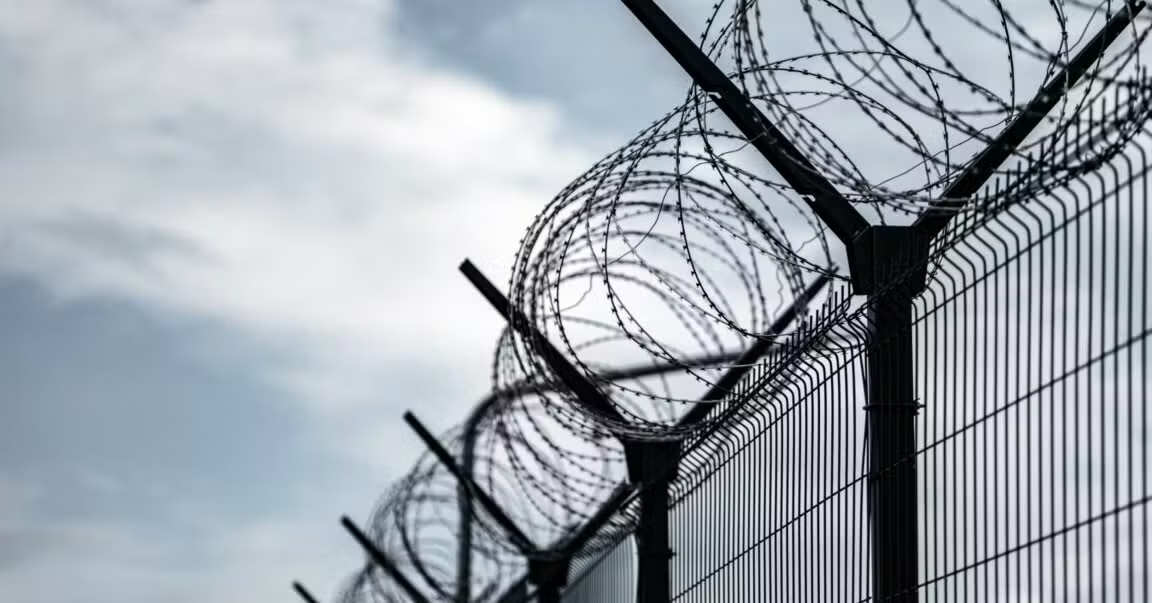
FCC allows state and local prisons to jam contraband cellphones

The FCC voted unanimously on November 19, 2026 to let state and local prisons use jamming technology against contraband cellphones, reversing its long reading of the Communications Act.
Prisons are not required to use jamming, must test that signals outside the walls are unaffected, and must notify officials if jamming devices are moved.
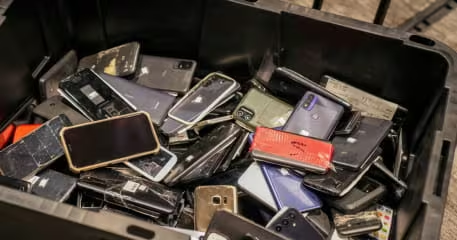
Chairman Brendan Carr says about 25,000 phones are confiscated yearly in state and local prisons and that jamming will help stop crime run from behind bars.
The wireless lobby CTIA, AT&T, and Commissioner Anna Gomez warn the jammers can also block lawful calls, including 911 calls, outside prisons.
Gomez voted yes after safeguards were added but dissented in part over fears families of incarcerated people will pay higher calling prices.
The FCC is seeking comment on next steps such as closing loopholes on other frequencies, and the order could be challenged in court.
Under the new rule, prisons are not required to use jamming, must conduct multiple tests to ensure cell signals outside prisons are not affected, and must notify officials if jamming devices are moved.
Chairman Brendan Carr visited South Carolina officials during the week before the vote and spoke in favor of the measure.
Carr said 25,000 cellphones are confiscated each year in the nation's state and local prisons and cited the 2010 case of South Carolina corrections officer Robert Johnson, who was nearly killed at his home.
Carr forecast that the FCC is putting a new tool in the hands of law enforcement and that it will make a dramatic difference.
Carr said he felt the industry was softening on jamming and that industry opposition has receded substantially.
The FCC voted unanimously on November 19, 2026 to allow state and local prisons to jam cellphones, a practice generally banned under Section 333 of the Communications Act of 1934.
Carr said phones are being used by inmates to order hits, run drug operations, traffic women and children, and unleash mayhem on our communities from behind bars.
Gomez, the sole Democrat on the commission, voted for the measure despite the risk of potential unintended consequences.
The FCC is seeking comment on next steps, including ways to close loopholes on other frequencies and the possibility of quiet zones around correctional facilities.
Commissioner Anna Gomez partially dissented from the order, saying she is worried correctional facilities and prison phone companies will charge higher prices for inmate calling services.
CTIA said a test it ran with the Virginia Tech Applied Research Corporation and the South Carolina Department of Corrections confirmed jammers would block legitimate communications, including 911 calls.
Prison phone companies ViaPath, also known as Global Tel*Link, and NCIC Correctional Services, along with law enforcement groups, supported allowing jamming of contraband phones.
CTIA said in an October 1 filing that the micro-jamming system blocked 911 calls, interfered with public safety communications, and caused interference affecting wireless network infrastructure up to two and a half miles away.
At the FCC meeting, Chairman Brendan Carr said the commission was finally authorizing state and local prisons and jails to use targeted jamming against contraband cell phones for the first time.
Carr said the technology can now be focused with geographic precision, that no facility will be required to use it, and that nearby communities will receive notice before operations start.
Commissioner Anna Gomez said jamming can prevent devices from completing 911 and emergency calls and can interfere with communications networks used by fire, police, and Emergency Medical Services.
Gomez said the FCC should have made clear jamming is not necessary to provide phone and video calls for incarcerated individuals, and she dissented in part because it failed to do so.
Freedom of the Press Foundation Chief of Advocacy Seth Stern said the FCC should have considered the benefits of contraband phones being used to document abuses inside prisons.
The National Association of Police Organizations said the dangers underscore the need to authorize indoor jamming in state and local correctional facilities.
AT&T said in December 2025 comments that the FCC cannot sidestep the prohibition on jamming by saying it is only deauthorizing certain communications.
AT&T said there is no way to limit the reach of jammers to the confines of a facility and that jammers cannot differentiate between contraband devices and legitimate devices.

