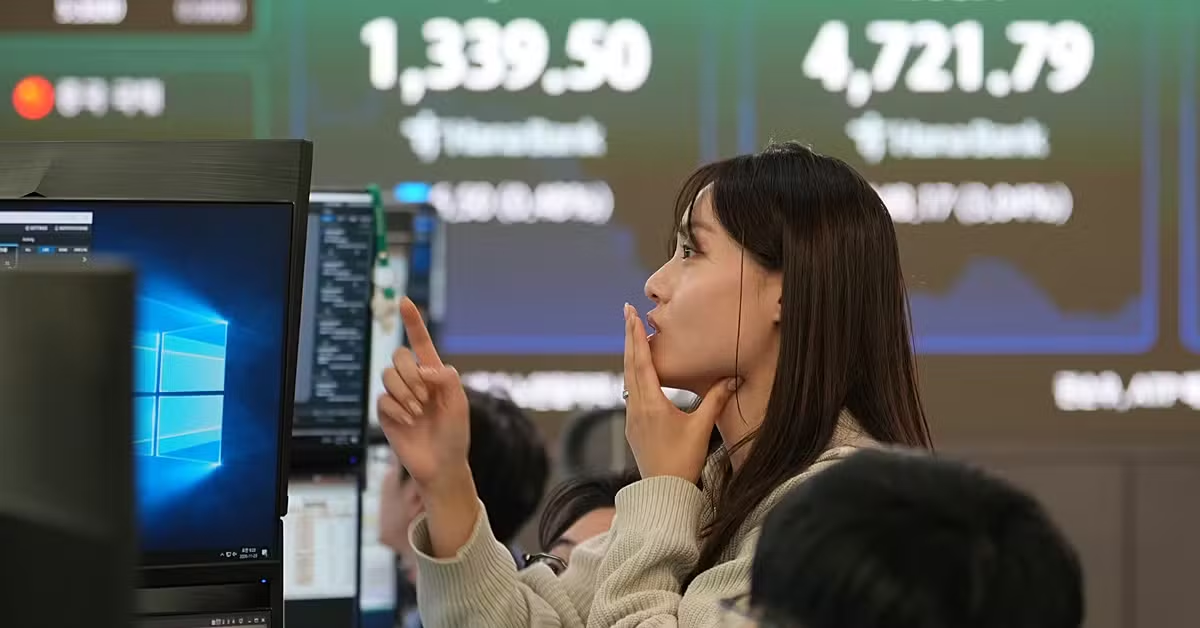
Tech back in the firing line as traders track Wall Street rout
Asian stock markets struggled to recover on 23 November 2026 as tech firms stayed in the firing line after a Wall Street rout, with even a bounce in US futures failing to inspire buying. Scandal-hit Nvidia had plunged 14% in New York, dragging the Nasdaq into negative territory for the year, and the index had lost almost a fifth of its value since hitting a record high in October 2026. The selling carried into Asia, with Seoul diving more than 4% as chipmakers SK hynix and Samsung each dropped 4%, while Hong Kong, Shanghai, Sydney, Singapore, Wellington and Jakarta were deep in negative territory. Authorities in some countries moved to limit the damage: Taiwan made it harder to short stocks, China eased borrowing to buy stocks, and South Korea considered a stabilisation fund unused since the global financial crisis. Traders' fears centred on the AI trade, further Federal Reserve rate hikes, tighter regulation under a Democrat-led Congress, and the US Commerce Department's move to close a loophole letting Chinese firms access Nvidia's AI chips remotely. Forex.com's Fiona Cincotta says nerves over AI capital spending, returns and timing, combined with Democratic control of Congress and higher rates for longer, are fuelling concerns about the sector.
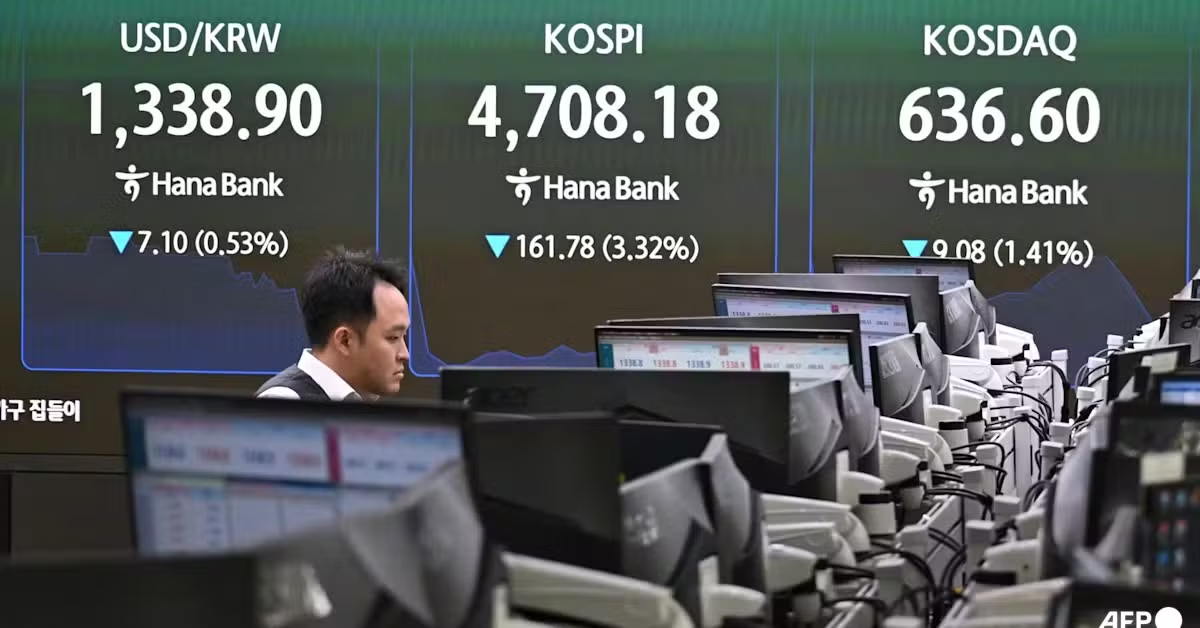
Asian tech back in the firing line as traders track Wall Street rout
Asian stock markets struggled to recover from the previous week's sell-off, with tech firms again in the firing line as investors tracked a rout on Wall Street. Nvidia's 14 per cent plunge in New York dragged the Nasdaq into negative territory for the year, and the selling carried into Asia, where Seoul dived more than 4 per cent as chipmakers SK Hynix and Samsung dropped 4 per cent each. A bounce in US futures failed to inspire buying amid fears over the AI trade, the prospect of more Federal Reserve rate hikes and tighter regulation under a Democrat-led Congress. The losses have led authorities to act: Taiwan is making it harder to short stocks and China has made it easier to borrow money to buy them, while South Korea is considering a stock-market stabilisation fund not used since the global financial crisis.
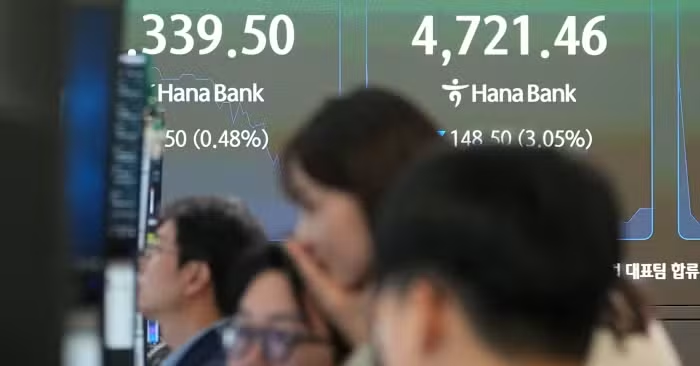
Tech stock sell-off deepens in Asia
The Financial Times reports that a tech stock sell-off is deepening in Asia.
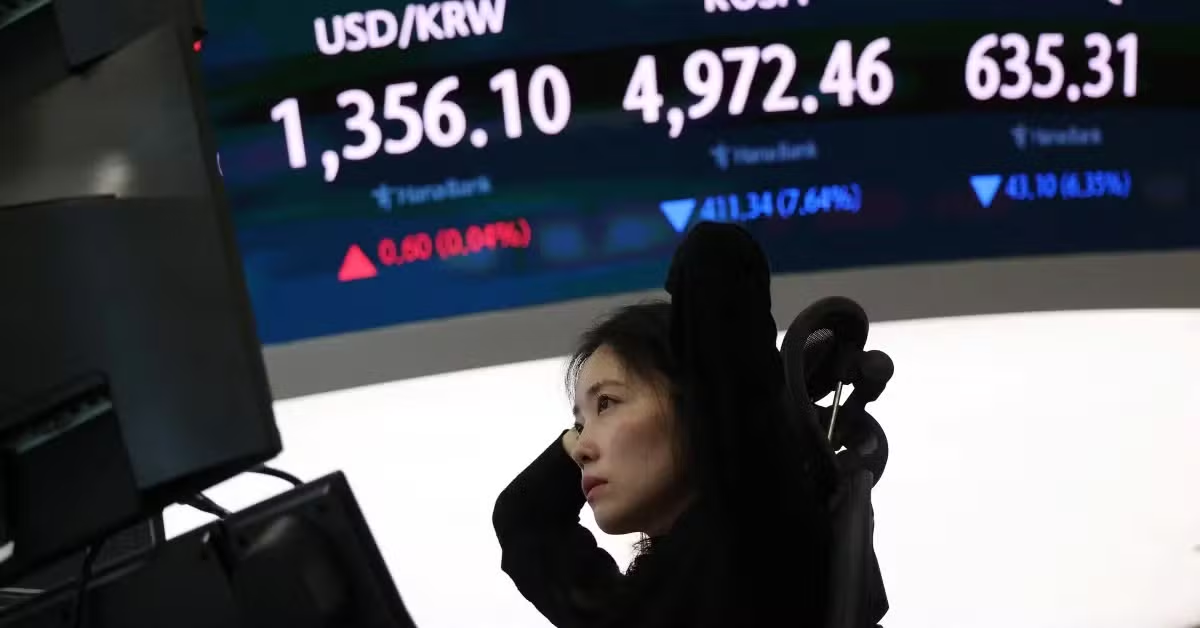
South Korea’s stock market tumbles as AI bubble fears mount
Al Jazeera reports that South Korea's Kospi fell as much as 3.7 percent in early trading on Monday, 23 November 2026, as fears mount that the AI boom may be running out of steam. The drop extends a sell-off from Friday, when the Kospi closed down 5.2 percent, Japan's Nikkei 225 fell 5.1 percent and Taiwan's Taiex dropped 6.2 percent, while Wall Street's S&P 500 posted a seventh straight loss and the Nasdaq erased all of its 2026 gains. Investors have long worried that tech firms cannot sustain their multi-trillion-dollar AI infrastructure investments, concerns Al Jazeera says were worsened by an alleged spying scandal roiling chip giant Nvidia. Investors anticipate more volatile trading as other regional markets open and expect the incoming Democratic-led US Congress to push for tighter regulation of the AI sector.

US futures bounce while Asia markets brace for AI wipeout
US stock futures bounced at Monday's open after last week's wipeout for tech and chip stocks at the centre of the AI boom, while Asian markets braced for more selling. The Nasdaq's 10% weekly drop was its largest since the March 2020 pandemic panic, as investors question whether borrowed money spent on AI data centres will return enough to repay lenders and justify high stock prices. Nasdaq 100 futures rose about 2% and S&P 500 futures around 1%, but Japanese and Hong Kong futures pointed lower and Australian stocks were 0.5% down. Taiwan's regulator tightened short-selling rules, China's exchanges eased margin financing requirements, and South Korea's finance ministry said it would deploy market stabilisation funds immediately if the market keeps falling.
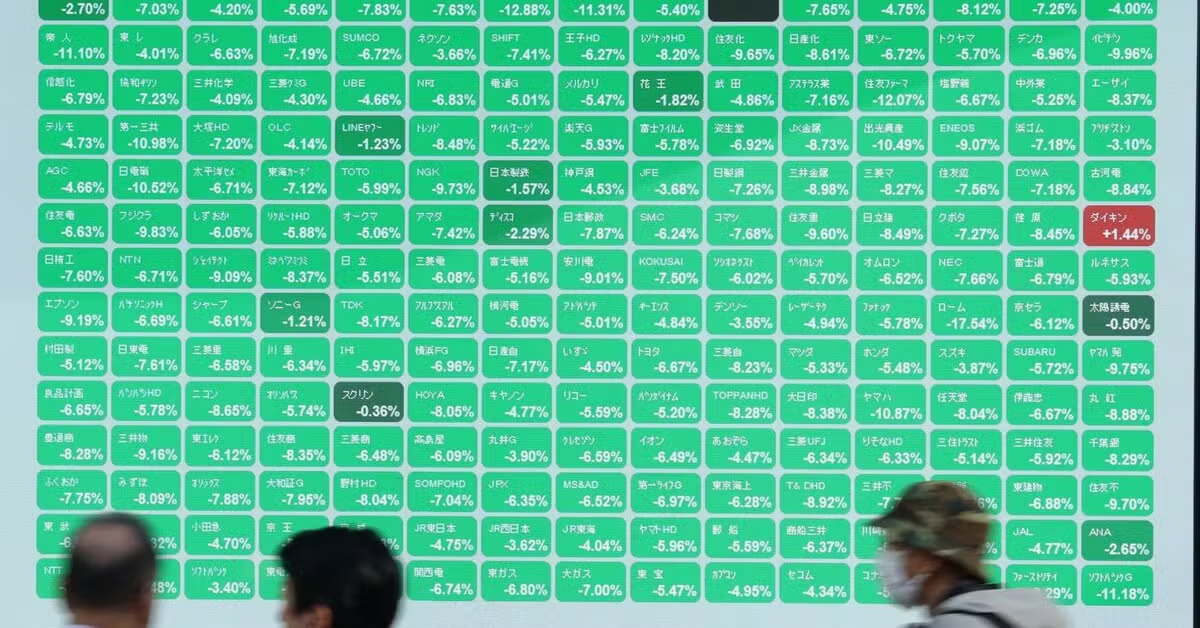
Hong Kong Stocks Open Lower, Nasdaq Futures Climb
In a markets brief, Bloomberg reports that Asian stocks open lower after a sharp selloff in the US, with Nasdaq futures climbing as US equity-index futures bounce. South Korea's Kospi falls 3.6% as tech-heavy markets face pressure, Hong Kong shares dip, and Taiwan's Taiex fluctuates following wider support measures. Asian policymakers reach into their toolkits to shore up equities.

S&P 500 sinks 3.7% and the Nasdaq composite goes negative for the year
A sell-off in artificial intelligence stocks pulled the S&P 500 down 3.7% on Friday, November 20, 2026, its worst weekly loss in more than 18 months, and knocked the Nasdaq composite, which slumped 5.3%, into negative territory for the year. The S&P 500 is now in a correction, more than 10% below its October 6 high, after a seven-day losing streak. Chipmakers bore the brunt: Nvidia closed 13.8% lower and has dropped more than 25% since the Jensen Huang scandal erupted earlier in November, while Anthropic's stock, the biggest public offering ever, fell 9.1% the day after its IPO. The selling spread overseas, with Japan's Nikkei and South Korea's Kospi each down more than 5%. The Associated Press reports the AI trade is losing steam over worries that AI stocks' big values and heavy spending are unjustified, fears worsened by midterm wins for candidates advocating slower data center construction, though one strategist quoted says the bull market that began in 2022 is not over.

Western Digital Stock Falls 12% in the Memory Chip Selloff. It Spun Off Its Flash Business Last Year and Now Sits 65% Below Its Record
A 247wallst.com market commentary by Jeremy Phillips reports that Western Digital stock fell 12% to about $261 on Nov. 20, 2026, the second day of a selloff in AI chip, memory, and storage stocks that began Nov. 19 and saw Seagate, SanDisk, and Micron each down about 12% to 15% and Taiwan's market cap its worst week since 1991. The drop came without company news, and Seeking Alpha and Investing.com tied it to the broad technology selling; Western Digital gets most of its revenue from cloud data centers, whose AI spending investors are questioning. Having spun off its flash business as SanDisk in February 2025, it now sells hard drives, and it reported October quarter revenue up 55% with a December forecast calling for revenue growth of 66% to 72%. At about $261 the stock is still up 52% in 2026 but trades at about 20 times trailing adjusted earnings, and its next report will show whether cloud customers kept ordering through the selloff.
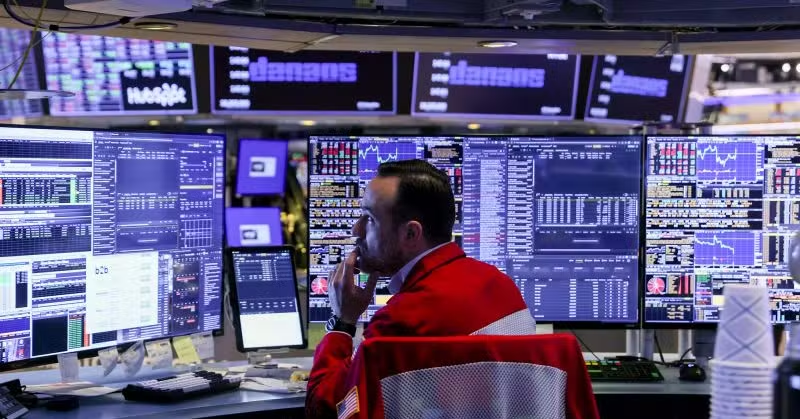
Nasdaq wipes out gains for the year as Anthropic IPO fails to quell AI nerves | CNN Business
A CNN Business report says a bruising tech rout wiped out the Nasdaq Composite's gains for the year on Friday, November 20, 2026, as investors pulled money out of the AI trade. The Nasdaq fell 3.6%, the S&P 500 fell 2.1% on track for a seventh straight day of losses, its longest since February 2020, and both the S&P and the Dow dipped into correction territory. Anthropic's blockbuster debut lost its shine, with shares plunging 13% to around $84.40, just above the $83 IPO price. Investors are also weighing how newly elected Democratic governors will affect the data center buildout and what Nvidia's role will be after CEO Jensen Huang resigned. Steve Sosnick of Interactive Brokers says there is a real exodus out of tech and that buying the dip has given way to selling, while JPMorgan's David Kelly sees fear of too much froth in the tech bet but calls the correction a mild cold rather than a fatal illness, and says it should be over in a week or two.

NuScale Power Sinks 9% as AI Power Sell-Off Hits Nuclear Stocks; Constellation Drops 4%, Oklo Holds Steady
A 247wallst.com market report says an AI sell-off led by Anthropic hit nuclear power stocks unevenly on November 20, 2026, with NuScale Power down 9% to $3.48, Constellation Energy down 4%, and Oklo holding nearly flat at $20.82. NuScale took one of the hardest hits in a sell-off the site reads as market-wide selling in AI power names, and the site says its exposure reflects having no binding customer contracts for its reactor modules, with revenue down 96.6% year over year after one-time Romania engineering fees ended. The site suggests Oklo's steadiness may show investors separating nuclear names by business model, since Oklo plans to own its reactors and sell power directly, though it cautions that one quiet day hardly signals a recovery after a 71% year-to-date drop. Constellation's selling came even as it raised full-year guidance to $12.50 to $12.80 per share and the broader utilities sector traded higher.

Applied Digital and Core Scientific Sink 12% as AI Infrastructure Sell-Off Deepens; TeraWulf Tumbles 10%
In a November 20, 2026 financial article, David Moadel reports that Applied Digital and Core Scientific each fell 12% and TeraWulf dropped 10% as a sell-off in AI infrastructure stocks deepened. All three companies pivoted from Bitcoin mining to hosting AI workloads under long-term leases, which the article argues leaves them sensitive to any doubt about AI spending and to the cost of financing their build-outs. Sentiment toward these names had weakened over the prior two months on doubts about the durability of Big Tech cloud spending and debt-fueled business models, and Michael Burry said on X that he 'tried to warn' investors about CoreWeave and other neocloud and chip names. The sell-off came amid a broader market retreat, with the S&P 500 down 1% and set for its longest losing run since 2020, and the article recommends a cautious approach until the AI infrastructure spending debate resolves.

Vanguard's VXUS Falls 7% and VWO Drops 8.5% This Week as Taiwan's Stock Market Posts Its Worst Week Since 1991. Here's the Loss on a $1 Million IRA and What Rebalancing Rules Say to Do
A 247wallst.com article reports that Vanguard's Total International Stock ETF (VXUS) fell 7% and its Vanguard FTSE Emerging Markets fund (VWO) dropped 8.5% in the week to Friday 20 November 2026, as Taiwan's main index lost 17.5% in its worst week since 1991. Taiwan is about a third of VWO and 8.69% of VXUS, which is what dragged the funds down. On a $100,000 stake, VXUS was down $7,043 and VWO down $8,514, counting Friday's thin pre-market trading. Using a hypothetical 67-year-old retiree with a $1 million IRA, the article calculates her international slice slipped only from 20% of the account to 19.4%, short of the 15% line both Vanguard's 5-point trigger and Larry Swedroe's 5/25 rule wait for, so the rules ask for no trade, and it advises leaving both stock funds alone.

AMD Stock Drops Another 7.0% Before the Bell and Taiwan Semiconductor Slides 4.2% as Nasdaq Futures Fall 1.6% After Asia's Chip Selloff
Chip stocks led a worldwide selloff on November 20, 2026, with AMD down another 7.0% before the bell after a 7.7% drop the day before, and Taiwan Semiconductor down 4.2%, as Asia's losses spread to the US. AMD's earlier drop followed a short seller's report on the company's ties to China, and the stock has now lost 14.2% in two days, sitting 30% below its October 6 record close. The pressure traces to Asia, where Taiwan's market closed its worst week since 1991, with the Taiex down 6.2% on the day, and Nasdaq 100 futures fell 1.6% while Dow futures were flat. Jeremy Phillips reads that gap as a sign the selling is concentrated in chip and AI stocks, though he cautions that pre-market trading is thin and Thursday's session also started higher before turning down.

Global stock markets slump as Anthropic IPO fails to stem AI sell-off
Global stock markets slumped as Anthropic's record-breaking IPO failed to stem a sell-off in AI-linked companies. Taiwan's index fell 6.7% and SoftBank shares dropped 14.5% in Tokyo on worries about its AI bets, while Japan's Nikkei lost 5% and the pan-European Stoxx 600 fell 1.3%. Anthropic's shares, after jumping 17% on Thursday, were down 6% at $91.30 on Friday. Analyst Daniela Hathorn of Capital.com says the IPO showed demand for AI exposure remains strong but has not overcome concerns about elevated valuations, profitability and spending sustainability, and that selling is no longer confined to a handful of tech giants. Asian markets were on track for their worst week since 2020.

Anthropic shares fall 6% in premarket amid AI selloff as Nvidia, AMD shares drop
Anthropic shares fell 6% in premarket trading on Friday morning amid an AI-driven selloff that also left Nvidia and AMD lower. The drop came a day after Anthropic stock soared 17% in its first day of trading, closing at $97.17 per share, following what CNBC calls the biggest initial public offering on record, surpassing SpaceX's debut in June. In Friday premarket trading Nvidia shares were down 1.36% and AMD shares fell 3.31%.
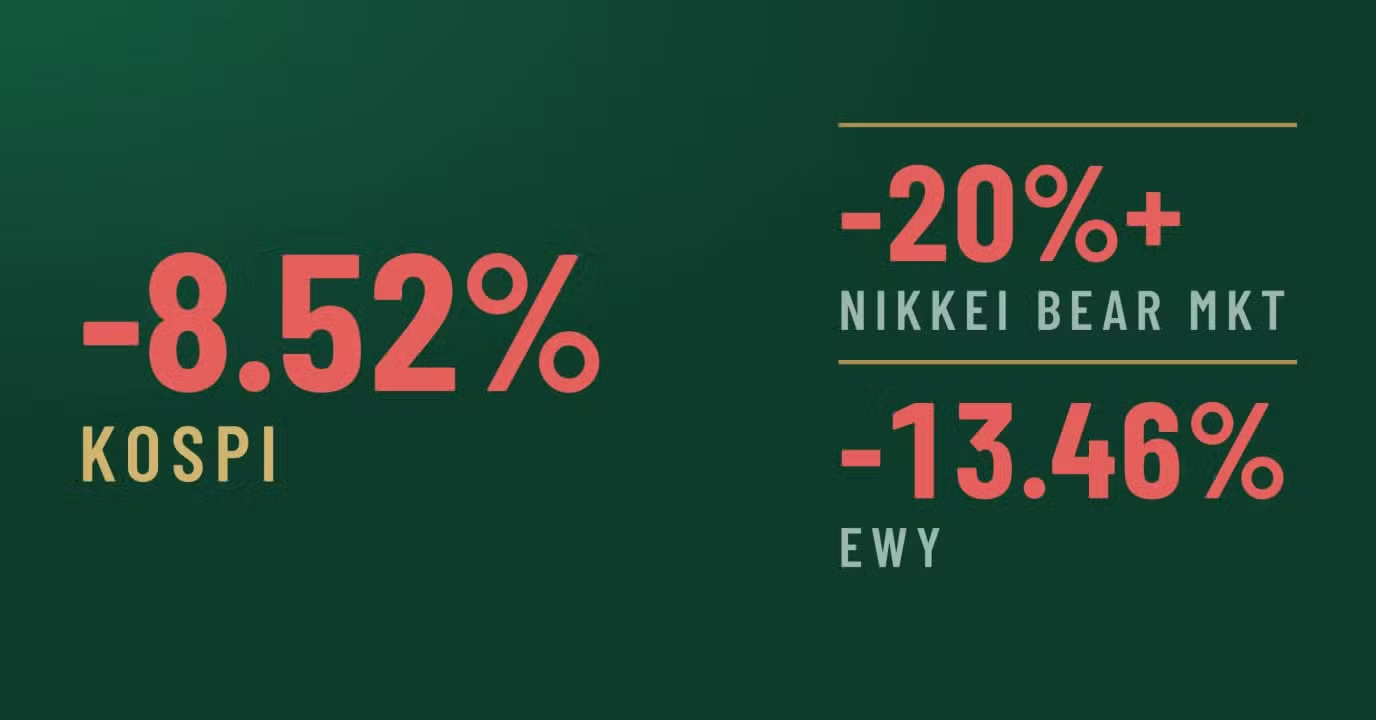
Taiwan Stock Market Falls 6.2% to Cap Its Worst Week Since 1991 as KOSPI Closes Down 5.2% and Nikkei 225 Drops 5.1% in AI Chip Selloff
A 247wallst.com market report says an AI chip selloff that began on Wall Street ran through a full Asian session on November 6, 2026, with Taiwan's Taiex falling 6.2% to cap its worst week since 1991, South Korea's KOSPI closing down 5.2% and Japan's Nikkei 225 dropping 5.1%. For the week, the Taiex lost 17.5%, the KOSPI 7.9% and the Nikkei 7.7%, with heavy losses at chip and AI-linked names such as SoftBank, down 14.5%, Samsung Electronics and TSMC. The selloff followed U.S. losses on November 5, when the Nasdaq fell 2.3% after AMD sank 7.7% on a short seller's report. Author Jeremy Phillips reads the Seoul and Tokyo closes, each finishing below their midday levels, as a sign sellers stayed in control to the end, and notes the three markets' large weight in international and emerging markets index funds.

Tech stocks fall as Anthropic IPO fails to stem broader AI sell-off
Tech stocks fell as Anthropic's initial public offering failed to stem a broader sell-off in artificial intelligence stocks.

South Korea's Stock Market and the Nikkei 225 Sink More Than 4% as the AI Selloff Spreads From Wall Street. Here's How Much of a Target-Date Fund Is in Samsung, SK Hynix and TSMC
247wallst.com reports that South Korea's stock market and Japan's Nikkei 225 both sank more than 4% on the morning of November 20, 2026, as Wall Street's AI selloff spread to Asia. The KOSPI fell 5.04% to 4,879.10, its first trip under 4,900 since February 2026, and the Korea Exchange triggered a five-minute pause on program selling, while Samsung Electronics and SK hynix each dropped about 6% and Taiwan's Taiex lost 5.46% a day after falling 4.40%. To show what that means for ordinary savers, the article notes that Samsung, SK hynix and Taiwan Semiconductor make up about 1.7% of Vanguard's Target Retirement 2030 Fund, a default in many 401(k) plans, so a 61-year-old with $500,000 in such an account had about $6,907 in South Korea and the Seoul drop cost roughly $348.
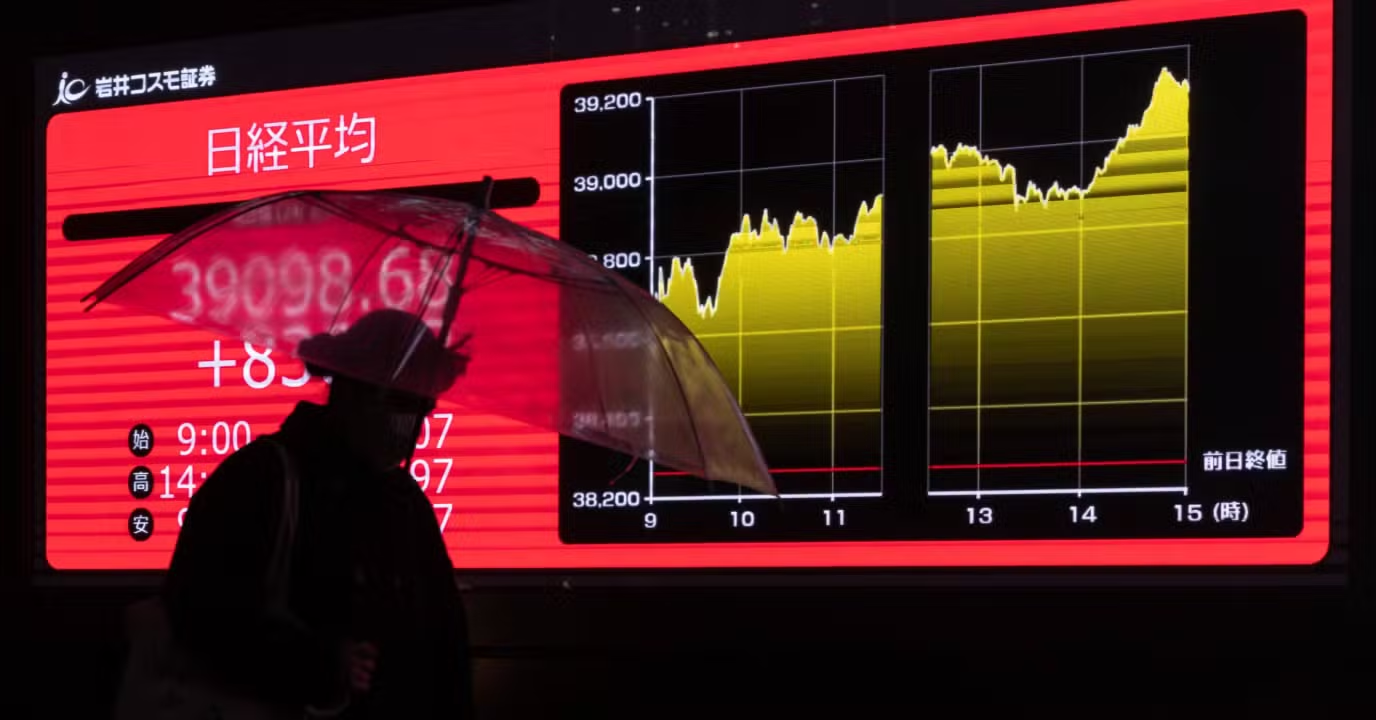
Nikkei 225 Falls 4.5% and SoftBank Plunges 15% as Wall Street's AI Selloff Puts Asian Stocks on Track for Their Worst Week Since 2020
A 247wallst.com news article reports that Wall Street's AI selloff dragged Asian markets sharply lower on Friday, 20 November 2026, putting the region on track for its worst week since 2020. Japan's Nikkei 225 fell 4.5% to 56,790 with SoftBank plunging 15%, Taiwan's Taiex dropped 6.3% after falling 4.4% the day before, and Hong Kong, Shanghai and Sydney also fell, with Reuters reporting MSCI's Asia-Pacific index headed for a weekly loss of about 7%. The declines followed a Wall Street slide in which the Nasdaq closed down 2.3% and the S&P 500 lost 2.0%, its sixth straight decline, while Anthropic's first day of trading did not lift other AI stocks and AMD fell 7.7% after a short seller's report on its China business. In the article's reading, the selloff hits hardest where Asia builds AI hardware, since Taiwan and the Nikkei fell more than twice as far as Shanghai or Sydney, though rising rates are doing part of the damage.

South Korea's Stock Market Sinks 4.6% as KOSPI Heavyweights SK Hynix and Samsung Fall 6% After Wall Street's AI Selloff
South Korea's KOSPI sank about 4.6% on the morning of November 20, 2026, led by falls of roughly 6% in Samsung Electronics and SK Hynix after Wall Street's AI-driven selloff. In its news article, 247wallst.com reads the drop as Seoul catching up to a reversal New York had already marked in, made larger because the two chipmakers make up nearly half the KOSPI's value and take close to three percentage points off the index when both fall about 6%. It tempers that reading: the figures are morning prices, both companies' profits are at records, and a Seoul analyst says fund rotation after a large IPO tends to be short-lived. Foreign investors have sold heavily all year, a net 222 trillion won of KOSPI shares through November 17 with about 85% of it out of Samsung and SK Hynix, in what Kiwoom Securities analyst Han Ji-young called 'essentially... a full-fledged Sell Korea trend.'

SoftBank plunges over 16% as AI sell-off hits Asian tech stocks following Anthropic debut
A CNBC news report says Anthropic's much-anticipated market debut, which valued the AI startup at $1.8 trillion, instead set off a sell-off in AI-linked stocks. SoftBank, which has poured $64.6 billion into OpenAI, Anthropic's rival, led the fall, plunging 16.16% on Friday, its heavy exposure to OpenAI making it especially sensitive to shifts in sentiment toward the AI sector. The sell-off spread through Asian tech, hitting Tokyo Electron, Lasertec, and Renesas in Japan and Nvidia suppliers SK Hynix and Samsung Electronics in South Korea, while the Nasdaq fell more than 2% overnight. CNBC writes that markets question whether massive AI infrastructure investments will generate sufficient returns, and says the IPO failed to resuscitate the AI trade.

Asian tech stocks fall sharply after Anthropic's blockbuster IPO
Asian tech shares fell sharply on the morning of Friday, November 20, 2026, as investors ran out of fresh catalysts after Anthropic's blockbuster initial public offering. Lingering concerns over artificial intelligence restrictions and export controls weighed on sentiment, and AI-related shares had already had a bumpy ride in the preceding weeks amid growing worries over the data center boom.

SanDisk Falls 7% as AI Chip Selloff Hits Memory Stocks Despite Evercore's $2,500 Target; Micron and Western Digital Drop 6%
An AI chip selloff hit memory stocks on November 16, 2026, sending SanDisk down 7% to $826.99 despite Evercore ISI analyst Amit Daryanani keeping his Outperform rating and $2,500 pre-split price target. The drop adds to a 41% decline over the month, though SanDisk remains up 248% in 2026 to date ahead of its 8-for-1 stock split. Micron, Western Digital, and Seagate each fell 6% despite recent results that beat expectations. Daryanani's bull case rests on multi-year supply agreements with committed demand, price limits, and data-center demand for NAND flash, but bearish investors question whether SanDisk's margins above 80% and AI budgets can sustain their pace.

Data centre construction stocks lose $4.2tn as boom in AI trade unravels
Data centre construction stocks have lost $4.2tn in value as the boom in the AI trade unravels.

