Iraq closes two Kurdish-run border crossings as Kurds protest federal takeover
Iraq closes two border crossings in Kurdistan region with Syria and Iran
reuters.com· 24h
Iraqi Kurds protest against Baghdad leader's moves to assert central control
How an oil feud is deepening rift between Baghdad and Iraq’s Kurdish region
aljazeera.com· 27h
Iraq denies reports of troop movements towards Kurdish region
Irak: le Premier ministre ordonne la prise de contrôle des postes-frontières au Kurdistan
rfi.fr· 2d
What are the disputes between Iraq's federal government and Kurdistan region?
Iraq orders takeover of oilfields in areas under Kurdish control
Iraqi PM orders ministry to manage oilfields in areas under Kurdish control
Trump Endorses Iraqi Prime Minister's Push To Assert Central Control
huffpost.com· 4d
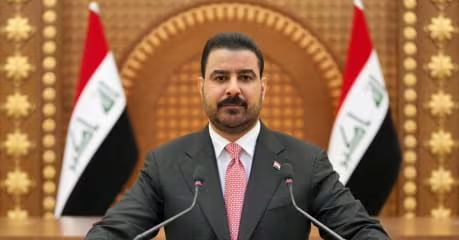
Iraqi Prime Minister Ali al-Zaidi moved to bring the Kurdistan region's border crossings and oilfields under federal control, ordering the border authority to take over all crossings in the region, which borders Turkey, Iran and Syria, and the federal energy ministry to manage oilfields in Diyala, Kirkuk, Salahuddin and Nineveh provinces held by Kurdish security forces. The orders on 24 November 2026 followed an investigation into oil smuggling at the state-run North Oil Company, and came a day after US President Donald Trump publicly endorsed al-Zaidi's campaign. He also directed the Kurdistan Regional Government to approve crude and petroleum exports only through the federal oil ministry, removed the head of the border crossings authority, suspended North Oil Company's director general and his deputies, and ordered the Border Forces Command to close unofficial crossings and all seasonal roads between the four provinces and the Kurdish region. His office said Baghdad would secure and monitor all oilfields with cameras.
The measures rested on conclusions by an inquiry commission that traveled to northern Iraq earlier in November 2026, and the dismissals and suspensions extended to several security officials in Kirkuk province. Iraq's government did not specify how it intended to implement them. The Kurdistan Regional Government said on 25 November that it was working with federal authorities to combat corruption and called for an end to oil smuggling across Iraq.
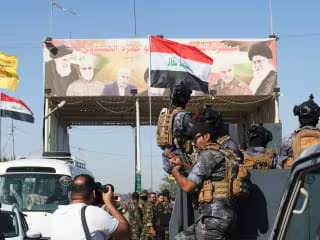
On 26 November Iraq's Federal Supreme Court issued an interpretive ruling affirming federal powers to secure borders, deploy forces across all Iraqi territory, oversee border crossings including those in the Kurdistan region, and oversee oil and gas production, export and revenues. The Border Forces commander said the command had begun implementing the closure order, and Iraqi border forces closed the al-Waleed crossing with Syria and the Bashta crossing with Iran, both in territory administered by the Kurdistan region. Iraq's government denied local media reports that army units were moving toward the region. Al-Zaidi told the energy police to secure all oilfields, and Baghdad sent Popular Mobilisation Forces chief Faleh al-Fayyad to press Kurdish authorities for cooperation.
Thousands of people gathered in Erbil on 26 November to protest the federal plan. Iraq's four presidencies agreed, on a proposal by Supreme Judicial Council head Faiq Zaidan, to hold a national dialogue on 1 December 2026 to resolve the crisis.
President Donald Trump publicly endorsed Iraqi Prime Minister Ali al-Zaidi's campaign to assert central government control over border crossings and oil fields held by Kurdish security forces.
In a Truth Social post, President Donald Trump wrote that the United States supports Ali al-Zaidi's efforts to assert state authority throughout Iraq, stop the smuggling of Iraqi oil, end corruption, bring all weapons under the exclusive control of the state, and build "a united, prosperous, and strong Iraq that makes its own political decisions."
The orders by Iraqi Prime Minister Ali al-Zaidi followed an investigation into oil smuggling at the state-run North Oil Company.
Ali al-Zaidi ordered the federal energy ministry to manage oilfields in Diyala, Kirkuk, Salahuddin and Nineveh provinces that are under Kurdish security control.
Ali al-Zaidi ordered the border authority to take over all border crossings in the Kurdistan region, which borders Turkey, Iran and Syria.
Ali al-Zaidi directed the Kurdistan Regional Government to approve exports of crude oil and petroleum products only through the federal oil ministry.
Ali al-Zaidi removed the head of the border crossings authority and suspended North Oil Company's director general and his deputies pending further investigation.
The office of Prime Minister Ali al-Zaidi said the directive rests on the principle that "national sovereignty is indivisible and protecting Iraq's wealth is a battle for survival in which the state puts an end to all forms of smuggling."
Ali al-Zaidi's office said Baghdad would "secure and monitor all oilfields with cameras", including fields under the security authority of the Kurdish regional government.
Ali al-Zaidi ordered the Border Forces Command to close unofficial crossings along Iraq's international borders, including those in the Kurdistan region, and to close all seasonal roads between the four provinces and the Kurdish region.
Correspondent Mahmoud Abdelwahed, reporting from Baghdad, forecast that the takeover would worsen disputes over oil control and the sharing of budgetary resources between Baghdad and the Kurdish regional government.
The measures were taken on the basis of conclusions by an inquiry commission that traveled to northern Iraq earlier in November 2026.
The dismissals and suspensions extended to several security officials in Kirkuk province, which borders the Kurdistan region.
The Iraqi government did not specify how it intended to implement the measures.
Kurdistan's two ruling parties, the KDP and the PUK, said in a joint statement that the decisions were unilateral and violated the rights and constitutional competences of the region.
Kurdish Prime Minister Masrour Barzani called the measures "totally unacceptable" and said he was surprised by the announcements.
Masrour Barzani said dialogue would continue and that "the door remains open" to an agreement.
Iraq's Federal Supreme Court issued an interpretive ruling affirming federal powers to secure borders, deploy forces across all Iraqi territory, oversee border crossings including those in the Kurdistan region, and oversee oil and gas production, export and revenues.
Iraq's government denied local media reports that army units were moving toward the Kurdistan region.
Iraq's Border Forces commander said the command had begun implementing the order to close all unofficial crossings with neighbouring countries.
Thousands of people gathered in Erbil on 26 November 2026 to protest the federal plan to take over border crossings and oil operations.
Iraq's four presidencies agreed to hold a national dialogue on 1 December 2026 to resolve the crisis.
Iraqi government spokesperson Haidar al-Aboudi said there was "no truth" to reports of army units moving toward the Kurdistan region, that oil smugglers were diverting "tens of billions" into "private pockets and accounts", and that the salaries of the Kurdistan region's public employees were not part of the dispute.
The Kurdistan Regional Government's council of ministers, chaired by Prime Minister Masrour Barzani, said it rejected "any attempt to return Iraq to a centralised system".
Kurdistan Region President Nechirvan Barzani rejected addressing the region in "military language", saying this "does not solve any problem".
Kurdish protesters said the government's plan "touches on their sovereignty and their territorial integrity" and "undermines the constitutional rights of the Kurdish people".
Constitutional law researcher Salim Zakhour said the Federal Supreme Court ruling, issued within 24 hours at Ali al-Zaidi's request, "is final and decisive" but that "there is a political problem" beyond the legal question.
Ali al-Zaidi told the energy police to secure all oilfields.
Baghdad sent Popular Mobilisation Forces chief Faleh al-Fayyad to press Kurdish authorities for cooperation.
The national dialogue set for 1 December 2026 was agreed to on a proposal by Supreme Judicial Council head Faiq Zaidan.
The Kurdistan Democratic Party and the Patriotic Union of Kurdistan called Baghdad's decisions "unexpected and deeply surprising" and warned in a joint statement that undermining the power of the Kurdish political entity is a "red line".
Government spokesperson Haidar al-Aboudi said Ali al-Zaidi is committed to "protecting the people of the region, not threatening them".
The Kurdistan Regional Government said on 25 November 2026 that it was working with federal authorities to combat corruption and called for an end to oil smuggling across Iraq.
A banner in Erbil read: "Kurdistan Region will not submit to an unconstitutional decision or to the imposition of the will of any person or party."
University student Kenjo Khalaf said at a protest in Duhok: "We do not accept an attack on Kurdistan's land and will not allow anyone to interfere in our land. We are a peaceful people and we want security for everyone."
Iraqi border forces closed the al-Waleed crossing with Syria and the Bashta crossing with Iran, both located in territory administered by the Kurdistan region.