Microsoft declares internal Code Red after global Outlook outage traced to latent bug
Microsoft: Konzern reagiert mit »Code Red« auf globale IT-Störung
spiegel.de· 39h
Microsoft declares ‘Code Red’ following 24-hour outage: Here’s what that means - National | Globalnews.ca
globalnews.ca· 41h
Microsoft declares “Code Red” after huge Outlook outage
theverge.com· 47h
Australians told to prepare for more disruption after spate of tech outages
abc.net.au· 6d
Microsoft’s CEO Says He’s “Extremely Sorry” for the Outlook Outage
247wallst.com· 7d
Here are all of the recent major outages, national disruptions
usatoday.com· 8d
Bill O'Reilly Sounds The Alarm Over Tech Outages — And Demands A 'Spokesman' From Trump Admin
huffpost.com· 9d
Inside Microsoft’s giant Outlook outage
Microsoft reveals that an old bug caused the massive outage that took its services offline - Engadget
engadget.com· 9d
Microsoft details how three problems combined for a global outage
arstechnica.com· 10d
Microsoft services fully restored after global disruptions
newsnationnow.com· 12d
Microsoft says services fully restored after global outage
pbs.org· 12d
Microsoft says all services restored after global outage
washingtonpost.com· 12d
One Microsoft glitch stalled courts, government offices and police—exposing how fragile America’s systems really are | Fortune
fortune.com· 13d
Inside Microsoft’s Rush to Get Back Online After a Global Outage
nytimes.com· 13d
Microsoft says affected services fully recovered following worldwide outage
aljazeera.com· 13d
Microsoft 'deeply sorry' for outage as it restores coverage
AI cyberattack rumor debunked: Microsoft says outage was technical
Microsoft 365 Crawls Back to Life After a 24-Hour Outage
wired.com· 13d
Microsoft faces Washington scrutiny after global outage
politico.com· 13d
Was Microsoft hacked? Company says cyberattack not suspected
Microsoft outage 'stark reminder' of how much we rely on tech
bbc.com· 13d
Microsoft 365 Outage Enters Second Day, Disrupts Governments
gizmodo.com· 13d
The Microsoft Outage Is a Warning for the World
Single Point of Everything; 4 Important Questions - CERIAS - Purdue University
purdue.edu· 13d
Microsoft outage gives customers a crash course in dependence on Redmond
theregister.com· 13d
CrowdStrike and Palo Alto Networks Climb 3% as Microsoft Outage Disrupts Outlook and Teams
Microsoft's latest email outage turned into a full blown global cloud crisis | TechCrunch
techcrunch.com· 13d
Japanese workers return to fax machines during ongoing Microsoft 365 outage — 'We're going full analog' say workers forced to ditch PDFs
tomshardware.com· 13d
Microsoft’s massive Outlook outage continues
Microsoft races to restore services after global outage
ft.com· 13d
Microsoft services mostly fixed after 24-hour outage
Microsoft struggles to restore services as outage hits global users
Microsoft-Cloud-Ausfall: E-Mail-Zugriff läuft wieder an
heise.de· 14d
Microsoft says it has "restored" service and and addressed "underlying issue" after worldwide outage
cbsnews.com· 14d
- Claude Status
claude.com· 14d
Ook in Nederland veel problemen door wereldwijde storing Microsoft, 'geen hack'
nos.nl· 14d
Microsoft hit by global outages: What happened and why?
Live updates: Microsoft scrambles to fix major outage affecting millions across the world
nbcnews.com· 14d
Outlook still down? Microsoft outage hits users of 365 service, Teams globally
rnz.co.nz· 14d
What we know about the global Microsoft outage
Microsoft Outage Sends Traders Back to Phones and Fax
bloomberg.com· 14d
Widespread Microsoft Outage Roils Businesses, Governments
wsj.com· 14d
Outlook outage expected to cost Australian businesses billions of dollars
マイクロソフト障害、市場ではFAX活用 投信で基準価格公表に遅れも - 日本経済新聞
nikkei.com· 14d
Microsoft says attempts to fix global outage not going 'as expected'
A negative Outlook: Microsoft scrambles to fix email outage
npr.org· 14d
Is Outlook down? Widespread outage hits Microsoft email and other apps
Live: Microsoft turns servers off and on again to try to fix major outage causing email havoc
stuff.co.nz· 14d
Congressional offices paralyzed by Microsoft outage
Outlook, Teams and More Microsoft Programs Disrupted by Outage
Microsoft apologizes for massive outage that took down Outlook and other 365 services
cnbc.com· 14d
Is Outlook down? Widespread outage hits Microsoft apps. - The Boston Globe
bostonglobe.com· 14d
Massive Microsoft 365 outage disrupts Outlook, Teams, Copilot worldwide
bleepingcomputer.com· 14d
マイクロソフト、「365」世界で大規模障害 メール送れずビジネスに影響 - 日本経済新聞
Is Outlook down? Widespread outage hits Microsoft apps
Is Outlook down? Widespread outage hits Microsoft email and other apps
apnews.com· 14d
Microsoft Outlook is still down
Microsoft's Outlook email hit by new outage | TechCrunch
Microsoft 365 Experiencing Mass Outages With Cloud-Based Services
Microsoft Apologizes As Global Outage Stretches Into Day Two
Outlook went down worldwide on 12 November 2026, and the failure spread within the hour to Teams, Copilot, SharePoint, and other Microsoft 365 services. Reports began around 1 p.m. Eastern, and Downdetector logged nearly 140,000 Outlook complaints at their peak as the disruption reached 74 countries, more than 2,000 times its normal level.
The blackout reached far beyond email: Capitol Hill offices, Britain's National Health Service, Japanese ministries that fell back on fax and paper notices, New Zealand property settlements left hanging, and courts in Britain and the Netherlands. Phishing messages offering outage-related password resets appeared within hours.
Recovery proved stubborn. Servers brought back online kept shutting down again under returning traffic, and Microsoft admitted its fixes were not 'taking as expected.' Access began returning from Asia and Europe, and early on 13 November, after more than 24 hours, Microsoft said it had restored service to the remaining impacted customers and regions, calling it one of the longest outages in its history with more than 7.4 million reports logged worldwide.
A preliminary Post-Incident Report on 16 November traced the failure to a latent bug created by a change deployed to the cloud gateway starting in July, which could exhaust CPU and memory and escaped pre-release testing because the test hardware was less powerful than production machines. It was triggered about 15 hours before the outage when maintenance shifted Teams traffic to a gateway fleet already running 14 percent below capacity, and restarts failed because waiting request queues retriggered the exhaustion. Microsoft said it has since added capacity and traffic-distribution guardrails.
Chief executive Satya Nadella told a New York conference on 18 November he was 'extremely sorry' to those affected, describing the failure as a rare combination of conditions, a hidden bug that sat in the system until a particular traffic pattern triggered it.
On 25 November Microsoft declared an internal Code Red over the outage. In a memo to the Exchange Online teams, Microsoft 365 Core president Jason Henderson called it the most significant in history for Microsoft's customers, and the company set a target of resolving future outages within an hour, holding daily engineering meetings with weekly reviews and deploying AI agents to help engineers diagnose issues faster.
Microsoft apologized as a global outage of Outlook and other Microsoft 365 products, including Teams, stretched into a second day.
Microsoft said it had addressed the outage's underlying issue and was restoring service gradually.
Microsoft said the incident was a technical issue not related to cyber or AI agents, introduced by an issue during an earlier network capacity upgrade that surfaced following a recent network change.
Microsoft said in a statement that it was deeply sorry for the disruption the incident had caused its customers and partners and that it takes the trust they place in its services extremely seriously.
Microsoft reported a massive outage across the Americas on 12 November 2026 affecting Microsoft 365, the cloud suite behind Outlook email, Teams, Word, and Excel.
Microsoft's Microsoft 365 service account said on X that the failures followed a number of servers becoming unexpectedly unavailable after failing automated health checks, straining the remaining infrastructure.
Microsoft said just after 3 p.m. ET that it had taken steps to prevent additional servers from being impacted while it worked to return the affected servers to service.
The outage tracking site Downdetector reported a spike in reports of Microsoft 365 services dropping just after 12 p.m. ET on 12 November 2026.
Microsoft's Outlook email service suffered an outage that prevented users from accessing their inboxes.
Microsoft first flagged the outage as affecting the United States and the Americas, then expanded it to affect any region.
Microsoft said some of its infrastructure was experiencing elevated load and that it was redistributing connection traffic across its worldwide infrastructure to balance the load.
Microsoft's admin center, where it posts outage updates, was itself unreachable during the outage.
Outlook became unavailable across the globe on 12 November 2026, with reports beginning around 1 p.m. ET and people, businesses, and public services unable to reach email through the web or apps.
Microsoft confirmed the outage was hitting Microsoft 365 features that interact with Exchange Online, including SharePoint Online, Teams, and Copilot AI.
Microsoft said it initially had problems rebooting servers and monitoring their health.
Microsoft extended the email timeout to 48 hours to preserve delayed mail during the event.
Microsoft reported early stabilization and gradual improvements in mailbox access and delayed email processing, but said service health remained variable with no ETA for full restoration.
Nearly 130,000 users reported Outlook problems on Downdetector just after 1 p.m. EST on 12 November 2026, with thousands more reporting issues with Teams, Copilot, and Microsoft 365.
The outage disrupted many companies and some government operations and continued into the night.
Microsoft determined that a number of servers failed automated health checks and that its attempts to bring them back online were not immediately taking effect.
Microsoft said it had restored Microsoft Teams in North America, though some users kept reporting Teams connectivity problems.
Users in many parts of Asia were still reporting issues with Microsoft platforms on the morning of 13 November 2026.
Japanese deputy chief cabinet secretary Masanao Ozaki said the outage had affected the Japanese government's IT infrastructure and that the government was keeping a close eye on developments.
Microsoft's Microsoft 365 Status account posted that it was 'aggressively pursuing all pathways to reduce impact.'
Microsoft said it was aware of users experiencing issues accessing Exchange Online mailboxes through multiple connection methods in the Americas.
Microsoft announced the Microsoft 365 outage in a post on X at 3 a.m. Japan time on 13 November, saying it could affect users of its business software in every region.
Japanese users reported failures of email and the Copilot AI assistant, with more than 300 Outlook problem reports in Japan around 6 a.m. Japan time.
Microsoft's service status page showed the outage spanning Teams, the Exchange email platform, Copilot, SharePoint, and Defender XDR.
Microsoft said it had returned some servers to normal operation but had given no timetable for full recovery and was investigating the cause.
United States media companies including Skydance and NBCUniversal were at times unable to use email during the outage.
Microsoft's admin center advisory, tracked as MO1550821, confirmed customers may be unable to connect to Exchange Online, Teams, SharePoint Online, Copilot, and Defender XDR.
Microsoft dated the start of the Microsoft 365 outage to 1:26 p.m. ET on 12 November 2026.
Microsoft paused all deployments, redistributed connection traffic worldwide, moved additional traffic away from affected systems, and restarted affected servers.
A separate Teams outage that morning in the Americas was fully resolved, and Microsoft did not say whether the two incidents were related.
Microsoft said a core process on affected servers was becoming overwhelmed, resulting in a loss of capacity.
Microsoft said it was investigating whether reverting a small number of recent configuration updates could accelerate recovery.
In an update at 6:57 p.m. ET, Microsoft reported limited recovery after returning some affected servers to service.
New reports to Downdetector about Outlook fell from the peak of nearly 130,000 by the night of 12 November 2026.
Microsoft's engineering teams took affected systems offline for fixes and brought them back online in gradual stages while prioritizing the preservation of delayed emails.
At 4 p.m. ET on 12 November, Microsoft said it had validated an alternative service health check method that brought some affected servers back online.
Microsoft was preparing automated recovery systems to continually detect and restart unresponsive servers.
The outage hit external organizations including the United Kingdom's National Health Service and Air India, which rerouted emails while its flight operations continued.
Microsoft said it had not detected any malicious activity causing the outage.
Users began regaining access to email and other services on Friday morning, with Asia Pacific services among the first to normalize.
Microsoft said on Saturday that it had restored service to the remaining impacted customers and regions.
Microsoft said it would issue a full report once its assessment of the outage was complete.
The United Kingdom's National Health Service said the outage was affecting some of its services but that patients should attend appointments as normal.
United States Representative Josh Gottheimer said he had asked for a briefing on the outage and questioned whether something nefarious had gone on at Microsoft, pointing to the size, length, and timing of the incident.
Australian Home Affairs and Cyber Security Minister Tony Burke said Microsoft believed it was dealing with something similar to the CrowdStrike incident, where an update had gone awry.
James Owen, managing partner of Digital Risks at consultancy Control Risks, said the incident highlights a business resilience and dependency issue decades in the making and shows the importance of proper recovery planning.
A hospital group serving South West London and Surrey said calls may be subject to long waits as a result of the disruption.
Air India said it had temporarily rerouted emails so it could continue to receive customer messages and that its flight operations were not affected.
Downdetector showed more than 130,000 users reporting problems with Outlook between 12:15 and 1 p.m. Eastern, with similar spikes for Microsoft 365, Teams, Copilot, and the Microsoft Store.
By 5 p.m. on 12 November the number of users reporting Outlook problems had dropped by more than half.
Customers reported the outage had lasted at least four hours.
The outage left Capitol Hill congressional offices without access to Outlook email for much of the afternoon of 12 November 2026, days into the lame-duck session.
The House Chief Administrative Officer sent a campus-wide alert about the outage, and its spokesperson confirmed House offices were impacted.
Several congressional staffers said some congressional work was put on hold while Microsoft worked to diagnose the problem and restore services.
One House staffer said the outage, which cut off offices' email and calendars including their boss's calendar, cost a day of legislative work.
A second House staffer said the outage was incredibly disruptive because the office was in the middle of end-of-year negotiations on pending legislation and planning for the next Congress.
Sharon Eliza Nichols, communications director for Delegate Eleanor Holmes Norton, said on X she was frustrated by the outage and asked whether official business should start being conducted via direct message.
One Democratic chief of staff said items such as invites and whip notices that people are used to getting by email can be found in other places.
A third Hill staffer said the office was continuing its work through other means of communication.
The global outage was underway in New Zealand from 6:30 a.m. local time, hitting thousands of users including police, councils, and Air New Zealand.
Downdetector said the outage peaked at more than 2,000 times its normal level across 74 countries and territories, with reports about five Microsoft services reaching 19,650 a minute less than an hour in.
Microsoft said the part of its servers that sets up secure connections became overloaded and froze, and it capped incoming traffic in certain locations to keep struggling servers from being overwhelmed.
Microsoft said a network setting had been changed before the issues began and, while unconfirmed as the cause, it was rolling the setting back.
Immigration New Zealand paused the processing of all visa applications during the outage.
The New Zealand Law Society said the outage had disrupted property settlements by preventing firms from issuing undertakings and receiving bank drawdown information.
A New Zealand family's house move was left hanging after solicitors across the entire property chain were locked out of their emails.
Microsoft said servers returned to service could become unresponsive again when receiving traffic despite added traffic management, and it was analysing diagnostic data to find the trigger.
More than seven hours after the outages began, Microsoft still had no estimated time for a fix.
Microsoft said it was preparing a configuration change and rebuilding some servers with a previous software configuration, while temporarily limiting which traffic types could reach affected infrastructure in specific locations.
New Zealand Law Society property law section chairperson Kristine King urged affected practitioners to call the lawyer on the other side of their transaction, use alternatives such as WhatsApp for sharing undertakings, verify contact details, keep up their usual checks before releasing funds, and contact their own bank.
Brennan Coulson, whose stalled settlement led him to the news, questioned how a single tech company's failure could cause such disruption to everyday life, asking how one company can hold so much power.
An NCEA student said the outage left them without class resources or study material held on Teams and OneDrive days before biology and history exams.
Originair asked customers who could not get through by phone to message it via Facebook or Instagram and said its flights were expected to operate on time.
Health New Zealand said patients may experience delays hearing back if they emailed in.
Dunedin City Council said the outage left it unable to check emails or webform queries and gave a phone line for urgent queries.
Opotiki District Council said it had limited or off-and-on access to emails and some staff could not transfer calls between teams.
Ministry of Justice chief operating officer Carl Crafar said courts remained open and operational, remote hearings were going ahead, and urgent applications could be accepted over the counter or via courier.
Early on 13 November, after Outlook had been down for more than 12 hours, Microsoft reported 'marginal success' in its recovery efforts.
The outage affected users in more than 70 countries, including the United States, South Africa, India, and New Zealand.
Companies including OpenAI and Anthropic were affected through their connections to Microsoft 365.
Microsoft said it would continue to treat the incident with urgency and priority until full resolution.
Microsoft said its attempts to fix the outage were not 'taking as expected', having earlier reported positive results.
Downdetector reported the outage had reached 74 countries, with Outlook reports peaking globally at nearly 140,000 around 18:00 GMT on 12 November, more than 2,000 times the normal level.
Microsoft said the outage was unlikely to have come from a cyber-attack.
In Australia, Service NSW urged customers to delay visits to service centres, authorities in the Northern Territory reported services down, and some Australian Medical Association facilities returned to paper prescriptions.
Microsoft said a key part of the affected servers was 'becoming overwhelmed', causing the disruption.
Australian Medical Association president Michael Bonning said the affected systems are not used for direct patient care and that workarounds are always available.
Australia's Home Affairs and Cybersecurity Minister Tony Burke told reporters that Microsoft officials 'do not believe they are dealing with a cyber event' and believe they are dealing with something similar to the CrowdStrike incident, 'where there is an update that has gone awry.'
Paul Spain of New Zealand advisory firm Gorilla Technology said that if the outage was not a cyber-attack it stemmed from 'incredible incompetence' that could cost millions of dollars in economic impact.
OpenAI said it was investigating an issue affecting its connections to Microsoft's services that had caused some tools not to work as expected.
Anthropic said it had identified an issue affecting its links to Microsoft 365 services.
The outage disrupted Japanese financial markets, with market participants turning to faxes and other means after the email used to confirm trade details stopped working.
A trading department at a Japanese investment trust management company said it was told by a securities firm using Microsoft's email system to 'stop placing orders.'
The outage, which began about 3:15 a.m. Australian Eastern time and ran more than 12 hours, was forecast to cost Australian businesses billions of dollars.
Workers across many Australian businesses reported being unable to access email or SharePoint, with some resorting to fax machines to keep operating.
RSM Australia risk advisory partner Ashwin Pal said professional service firms such as lawyers and accountants could lose hundreds of thousands of dollars an hour, that the cost would run into the billions and grow as the United States and Europe came online, and that small businesses on thin margins would be hit hardest.
Tracey Tucker, owner of Queensland business Regal Shower Screens, said a lost day would cost her business at least $30,000, with staff paid to sit unable to process orders.
IT support specialist James Coates said he was inundated with help requests but could not reply through his Outlook-based helpdesk and had to call each client individually.
Liam Jones of the Australian Chamber of Commerce and Industry said the outage would have some businesses reconsidering using Microsoft and urged steps to avoid avoidable disruptions in future.
Australian Industry Group chief executive Innes Willox said the outage showed technology's importance to the economy, especially on a Friday with many hybrid workers at home, and reminded businesses to have backup and contingency plans.
Chloe Mombeshora, service delivery manager at Hubify, said she received numerous calls from clients who thought their internet was down or feared for their business reputations.
Microsoft said there was a 'broad recovery' of its systems after the outage, even though some emails remained undelivered.
The worldwide outage of Microsoft's Outlook, Teams, and Copilot crippled communications and pushed traders back to phones, WhatsApp, and fax machines.
Global banks including Deutsche Bank had spotty access to email, Japanese firms resorted to trading by fax, and traders in Singapore reported some banks were unable to complete financing deals.
Euronext and Nasdaq said they were having email issues during the outage.
Several GP practices across the United Kingdom warned of potential problems and told patients to make urgent queries over the phone instead of by email or web form.
Australian cyber-security expert Troy Hunt said 'Microsoft is a massive part of the internet backbone and reminds us how critical email still is', affecting work, appointments, purchases, and access to accounts and services.
Downdetector reported the disruption spread to 74 countries and territories within an hour, with about 130,000 United States Outlook reports at their peak falling to about 37,000 by 6 p.m. Eastern.
The New Zealand Public Service Commission said the Government Digital Delivery Agency was working with Microsoft and agencies to understand the impact on public services.
Gorilla Technology chief executive Paul Spain said the issue seemed to be Microsoft implementing a change with unexpected consequences, said Microsoft had indicated it was reverting systems to a prior state, and estimated the global economic impact in the billions of dollars and in the millions for New Zealand.
Health New Zealand said there had been minimal disruption to patient services and it was working with its vendor to restore services for staff.
Self-employed lawyer Hamish Cameron said the outage caused significant delays in court proceedings, where everything had to be done orally, making a slow process slower.
Software development firm Catalyst said the outage highlighted New Zealand's vulnerability to global technology glitches.
Microsoft said at about 2:30 a.m. ET on 13 November it was seeing positive results for server stability after applying an upstream authentication and routing configuration patch to a portion of its infrastructure.
Japan's government said the outage had disrupted its inter-ministerial communications.
Japan's Chief Cabinet Secretary Minoru Kihara said multiple services including Outlook had become unavailable, there had been no problems with medical care or electronic patient records, and major financial institutions saw no significant disruption to customer-facing services.
Australian Home Affairs Minister Tony Burke said he had spoken with Microsoft Australia and New Zealand president Jane Livesey and that Microsoft did not believe it was dealing with a cyber event or cyberattack.
Government systems in Singapore and Japan were disrupted, as were communications at the Supreme Court of the Philippines, and Australia's spy agency and federal police were among the organisations hit.
On 13 November Microsoft was rolling back a network change without saying whether that change was to blame for the problems.
Technology analyst Rupert Goodwins said the outage was not unprecedented but embarrassing for Microsoft, argued the evidence pointed to a faulty internal update, and forecast it would increase pressure to find alternatives to Microsoft.
Walter Pasquarelli said the evidence points to a technical failure, advised organisations to plan the minimum viable service they would need in a global outage, and forecast a short dip in Microsoft's shares.
The outage hit the Netherlands as the workday began, with Dutch courts unable to send or receive email and municipalities including Leeuwarden, Barneveld, and Krimpen aan den IJssel reporting problems.
Some people could not work from home because the Microsoft Authenticator app needed to log in remotely did not work.
Microsoft said its 48-hour email timeout adjustment did not apply to third-party mail servers such as Gmail trying to deliver to Outlook addresses.
Analysts forecast the outage could cost companies worldwide billions of dollars because of lost productivity from the lack of Outlook and Teams.
Anthropic's status page reported elevated errors affecting its Microsoft 365 connector from 17:52 UTC on 12 November, with mail, calendar, and search tools failing for most requests and Claude for Outlook affected.
Anthropic recommended following Microsoft's progress on the service incident and said it would update its status post when service was restored.
Microsoft said early Saturday it had completed its efforts to address the underlying issue and restored service to the remaining impacted customers and regions after an outage lasting more than 24 hours.
Industrial technology company Workhorse Group delayed its quarterly earnings conference call because of the outage.
Singapore's Government Technology Agency said government email services were down, and Indian airline IndiGo reported disruptions to its email support services.
Microsoft executive Charles Lamanna said 'technical challenges and failure modes' made the recovery process 'more difficult than normal.'
Yorkville Ives and Co. tech analyst Dan Ives said the Friday the 13th global outage made 'a very bad day in Redmond' and that there will be major questions for Microsoft.
Hong Kong businessperson Danny Lau, who runs an aluminum firm, said his company's Outlook accounts could not receive updates from its United States customers and that a longer disruption could affect his production timeline.
Access to Exchange Online and Outlook on the web appeared possible again from about 12:30 Central European Time on 13 November 2026, after overnight login attempts returned loading symbols, HTTP 500 errors, and unrendered pages.
Microsoft said it was processing a built-up backlog with priority and had extended the email timeout window to 48 hours so delayed messages would not be discarded.
Microsoft's status page still listed about 20 affected services, from Exchange Online and Teams to SharePoint Online and Defender XDR.
German digital politician Henri Schmidt said the outage shows Germany must catch up on digital sovereignty and set up critical state infrastructure so one provider's failure cannot cripple whole administrative areas.
Norwegian ministries and police reported problems, all lawmakers in the Norwegian Parliament lost access to email, and between 80 and 90 Danish municipalities were affected along with the Danish parliament.
Germany's Deutsche Bahn said severe email delays restricted the distribution of rerouting schedules for diverted trains.
European stock market operator Euronext advised listed companies to communicate corporate information by phone after its email teams could not receive messages.
Britain's National Rail warned emailed train tickets could be affected, and Canada's VIA Rail warned passengers might not receive email communications about their trips.
NHS England said staff were enacting long-standing outage measures, including using paper records, with doctor surgeries falling back on phone consultations.
NHS England urged patients to continue contacting services such as 999 and 111 as necessary and to attend appointments as usual.
National Rail advised affected travellers to use its website or apps or contact their ticket retailer directly.
Euronext advised issuers and their agents to contact the relevant exchange operator by telephone for urgent matters.
Norway's Police Directorate said the service disruptions did not affect central police systems or operational capabilities.
Microsoft's service health page said all services including Microsoft 365 and Outlook were operational as of 3 p.m. ET on 13 November, with Downdetector reports down to 1,600 for Outlook from the peak of 130,000.
The Department of Health and Human Services issued an urgent alert stating that several government agencies were affected by the outage.
Major hospital networks including Cleveland Clinic, Massachusetts General, and Mount Sinai were impacted by the outage.
Morningstar DBRS vice president Mario de Cicco said not all businesses will automatically be entitled to compensation, because some cyber insurance policies cover only losses from malicious attacks while this outage appears to have been a technical failure, and some policies include waiting periods.
Service was gradually recovering after an outage of almost two days, though some apps and features remained degraded and there was no ETA for full restoration.
Microsoft reported encouraging recovery progress in Europe, comparative stability in Japan, and improving service in North America.
The outage was reported to be linked to Azure VNet configuration changes.
Japanese workers turned to fax machines and other analog measures to cope with the nearly 24-hour outage that had shut down Outlook, Teams, and Copilot.
Workers forced to ditch PDFs during the outage said 'We're going full analog.'
One person wrote on X that they could not open Outlook, panicked, and were told by their boss to stay home.
The outage, which began as an Outlook and Teams problem, grew into a cascading failure that also knocked out Copilot AI tools, Defender security screening, administrators' Intune dashboards, and some users' cloud-based Windows computers.
Microsoft's engineers initially could not find the cause of the issue causing servers in its data centers to fail.
Kentik internet analysis director Doug Madory said traffic was returning to Microsoft's services after about 18 hours of downtime.
CrowdStrike and Palo Alto Networks shares each climbed 3 percent while Microsoft stock slipped 0.8 percent during the outage.
Commentator David Moadel wrote that Microsoft's modest decline suggested the market viewed the outage as a short-term problem for the company.
Microsoft labelled the incident a 'Service Degradation' in its service systems.
Nextcloud co-founder Jos Poortvliet said mistakes happen across the IT industry, including at companies of all sizes, and that 'our heart goes out to all the admins today.'
Dame Chi Onwurah, chair of the Commons Science and Technology Committee, said the outage highlights the lack of resilience in the United Kingdom's digital infrastructure and the dangers the dependency poses to security, economy, and public services.
Unity Health Toronto declared a Code Grey, its alert for loss of infrastructure, during the outage.
The outage reached the National Health Service, the Scottish Parliament, and Police Scotland.
Microsoft first reported finding no recent change matching the start of the outage, then examined several configuration updates, and by the evening began reverting a network configuration change whose timing matched the start.
Phishing messages offering Microsoft 365 outage-related password resets appeared within hours of the outage.
Richard Buckland, a professor of cybercrime and cyber war at the University of New South Wales, observed that organizations still lack workarounds more than two years after the CrowdStrike failure of July 2024.
Multiple police forces in the United Kingdom said they were unable to accept online crime reports, though phone lines remained available.
New York City's Department of Investigation said housing evictions planned for Friday had been canceled.
Colorado's Arapahoe County Sheriff's Office said online bond payments were not being processed because email notifications were not arriving.
Japan's government staff used phones and chat tools because they could not access Outlook.
Health agencies and local governments in France reported problems with their communications services.
Kentik's Doug Madory said the recovery came in fits and starts and varied by source data center, and forecast the outage is absolutely going to go down as one of the big ones, up there with the Facebook outage of October 2021.
The GMB trade union said staff in the United Kingdom's 111 and 999 services were unable to refer patients in the normal way, creating a massive backlog.
A South African winemaker said his company had been brought to a standstill by the outages.
Microsoft rolled out a patch to improve server stability but had not established the underlying cause of the problem.
Shipping giant Maersk warned customers their emails and notifications could be delayed or disrupted.
Japan's government ministries posted paper notices to notify journalists of their schedules.
Some National Health Service hospitals elsewhere in the United Kingdom had to reschedule procedures.
The Los Angeles County Sheriff's Department said the outage was disrupting its email and other communication platforms.
The City of Austin reported employees could not send or receive emails, and Stanford University and George Mason University reported disruptions.
Charles Lamanna said in an emailed statement that Microsoft was seeing encouraging recovery progress, regretted the impact on customers who depend on its services, and said teams were reviewing what happened and how to prevent similar issues going forward.
Microsoft said email queues were 'approaching normal levels' as recovery continued.
Flora Hamilton, executive director of the Small Business Charter, called the outage a stark reminder of how much firms rely on digital systems, saying access to email is fundamental to small firms' customer communication and income.
Former software engineer Gergely Orosz said what was unusual about the outage was the time Microsoft took to recover, suggested splitting services by region as Amazon's AWS already does, and said the upset showed reliance on a few large United States corporations.
AI strategist Walter Pasquarelli said the outage had put governments', businesses', and critical infrastructure's vulnerabilities and dependence in plain sight.
House Homeland Security Committee Chair Andrew Garbarino said he is seeking more information on the outage from Microsoft and the Cybersecurity and Infrastructure Security Agency.
Many European Union central institutions were able to carry out work throughout the outage.
Garbarino said a disruption felt by everyday Americans, businesses, and government agencies is a reminder of the concentration risk of so much critical infrastructure relying on a small number of providers, and that lawmakers need to understand what happened and how to make the systems more resilient.
A Cybersecurity and Infrastructure Security Agency spokesperson declined to comment on the outage, and White House spokespeople did not respond to a request for comment.
Florian Druckenthaner, spokesperson for Germany's Federal Ministry for Digital Transformation and Government Modernisation, said his office anticipates the German economy will be significantly impacted by the outage.
The United Kingdom's National Cyber Security Centre warned of a rise in scam calls or approaches impersonating IT help desks or Microsoft in relation to the outage.
Microsoft's status page showed the essential Microsoft 365 cloud services were mostly back online.
Independent researcher Jonathan Leitschuh forecast users would likely see messy inboxes and a flood of notifications as Outlook, Teams, Copilot, and other Microsoft 365 systems came back online, possibly hours later as subsystems returned.
Microsoft experts suggested affected premium subscribers may be entitled to a credit on their bill under the service level agreement.
Microsoft said the outage was one of the longest in its history, with more than 7.4 million reports logged worldwide, and that services had fully recovered.
Japan's economy, trade and industry minister Ryosei Akazawa warned of a 'significant impact' from the outage, as Microsoft products were used by a vast number of people.
Indian airlines IndiGo and Akasa Air said their email support services had been affected and they might not be able to receive customers' emails.
Workers in London's financial district said the outage exposed their dependence on the Copilot AI assistant.
Hundreds of Microsoft engineers and top executives worked through the night on a video conference to triage the crisis, and even Microsoft's own staff could not use email.
Scott Guthrie, the most senior executive overseeing Microsoft's computing infrastructure, proposed possible fixes and told teams to prioritize restoring Outlook.
Employees on the call debated how to prevent systems coming back online from being overwhelmed by returning demand, described as a 'stampeding herd.'
Servers brought back online kept shutting down again, in what the report described as a game of Whac-A-Mole.
Microsoft first detected the Outlook problems around 9 a.m. Pacific time on 12 November.
Analysts at William Blair wrote that the outage could prompt enterprises to reassess their dependence on Microsoft's infrastructure.
Maine's judicial branch warned that protection-order requests emailed after 12:30 p.m. on 12 November might never have reached the courts.
A criminal trial in Manchester was suspended for the day with jurors sent home, and some civil court judgments in Britain were pushed to Monday.
The Los Angeles Police Department and the Los Angeles County district attorney's office also had email problems during the outage.
Japan's Foreign Ministry said it could not send or receive emails.
The National Pharmacy Association warned of prescription delays as pharmacies struggled to reach doctors and patients through NHS email.
Toronto's Hospital for Sick Children warned that some calls and emails to staff might not go through.
The University of Sussex warned students and staff about people posing as Microsoft engineers and asking for passwords or other login details on the pretense of fixing email.
The British government said it was working closely with Microsoft to assess any impact on public services and that robust contingency plans were in place to minimize disruption.
Microsoft's preliminary Post-Incident Report said a latent bug, traffic shifts, and reduced server capacity combined to knock Microsoft 365 and Exchange offline from 16:20 UTC on 12 November to 16:10 UTC on 13 November.
The report said a change deployed to the cloud gateway starting in July created a bug in which CPU and memory could become exhausted, and that it escaped pre-release testing because the test hardware was less powerful than production machines.
The report said the gateway fleet was running 14 percent below capacity when, about 15 hours before the outage, maintenance shifted Teams traffic to the primary gateway, freezing more than 80 percent of affected gateways.
The report said restarts and rollbacks failed because waiting request queues retriggered the exhaustion, and Exchange Online could not be rerouted like Teams and OneDrive because of scaling limits.
Microsoft said it has added capacity and traffic-distribution guardrails to avoid a similar outage and extended delivery timeouts so delayed messages would not bounce.
The current report did not address why the mechanisms meant to isolate affected systems by region may have failed.
All of Microsoft's cloud services appeared online and operational as of the Monday morning after the outage.
Sources said the outage began in Switzerland and spread to Mexico and then worldwide as Microsoft's failover systems shifted email traffic elsewhere.
Microsoft marked the outage as 'sev0' in its internal incident tracking system, the highest level, indicating a catastrophic service disruption.
Hundreds of engineers analyzed crash reports, trace logs, and kernel dumps, while servers that entered maintenance mode under unusually high CPU loads could not be brought back without being overwhelmed by waiting traffic.
Bill O'Reilly said the string of technical meltdowns over several days was not a coincidence and asked viewers whether the United States was under a cyber attack of some kind.
Bill O'Reilly criticized the White House for having no official spokesperson to address the tech outages and called on Congress to create a new department to make sure the United States is not attacked in cyberspace and to pass heavy penalties for technology misuse.
Secretary of State Marco Rubio said there was zero evidence the recent isolated outages had anything to do with cyber-hackers, criminals, another nation state, or any malign actor of any kind.
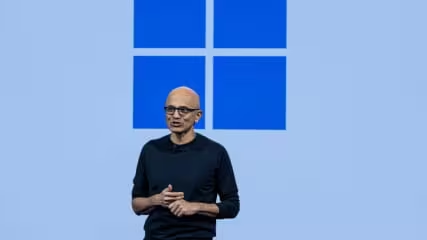
Microsoft chief executive Satya Nadella told a business conference in New York on 18 November that he was 'extremely sorry' to the people affected by the outage.
Nadella described the failure as a rare combination of conditions, a hidden bug that sat in the system until a particular traffic pattern triggered it.
Microsoft had reported no customer credits, refunds, or lost contracts tied to the outage, leaving the financial cost unknown, and had not published a final root-cause report.
In a television interview on the evening of 18 November, Nadella said Microsoft should have done the testing in advance and should have built bulkheads, internal barriers that stop a local failure from spreading across the system.
Microsoft said it would act on the architectural and operational lessons from the outage, with no timeline or budget attached.
Australian Catholic University associate professor Walayat Hussain said there was no sign of a hacker in the Microsoft outage, which looks like Microsoft's own systems tripping over themselves, and that the accident is the real warning.
Microsoft declared an internal Code Red after the nearly 24-hour Exchange Online and Outlook outage, focusing on load shedding, geographic traffic partitioning, and faster recovery mechanisms.
In a memo to the Exchange Online teams, Microsoft 365 Core president Jason Henderson called the outage the most significant in history for Microsoft's customers.
Microsoft is holding daily engineering meetings with weekly reviews, is reported to be deploying AI agents to help engineers diagnose issues, and has set a target of resolving future outages within an hour.
Microsoft engineers exchanged messages across 11 Teams chats during the outage and struggled to maintain a cohesive picture because of fragmented internal tracking systems.
Microsoft engineers kept a running bridge call going during the entire outage, and at one point it hit the maximum of 1,000 participants.
Jason Henderson wrote in the memo, 'Unfortunately, all the work we have done over the years was not sufficient to protect us on Thursday,' and said 'Code Red means that this is the highest priority work for our team.'
Microsoft's corporate vice president of M365 Core and Work IQ, Amanda Silver, said engineers had to work through a 'fog of war' to help resolve the outage.
A Microsoft spokesperson said the Code Red was issued to quickly implement lessons learned from the 24-hour outage and that the work following it is Microsoft's top priority.
Charles Lamanna said at a Code Red review that the affected component had experienced roughly ten years' worth of acceptable failures.
The Code Red allows Microsoft to prioritize testing redundancies and solidifying a backup plan to put in place should a system failure happen again.
Cybersecurity and technology analyst Ritesh Kotak said a Code Red is the highest level of engineering severity, an all-hands-on-deck situation, but warned that no backup plan is foolproof until it has been tested against a real outage.
A Microsoft spokesperson said customers and partners depend on Microsoft's services and that Microsoft owes it to them to not only fix problems when they occur but to do everything it can to keep them from happening again.
Internal Microsoft documents showed engineers exchanged more than 11,000 messages in eleven different Teams chats during the outage, with diagnostic data spread across several internal systems so coordinators lacked an overview.
Jason Henderson admitted that important error fixes had in the past sometimes taken five to six days to become available worldwide.
Microsoft wants to fix future global outages within one hour, to make urgent fixes available worldwide within an hour, and to use artificial intelligence to evaluate system data faster and identify sources of errors.