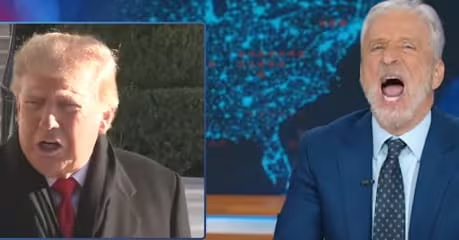
Microsoft declares Code Red overhaul after week of US flight, bank and tech outages
Microsoft issues ‘Code Red’ alert following outage: Report
newsnationnow.com· 2d
Trump Has A Habit Of Using This Seemingly Detached Response During A Crisis — And Experts Have A Theory Why
huffpost.com· 2d
As tech outages mount, some New Yorkers prepare for the worst
aljazeera.com· 3d
US intelligence chief warns of more tech outages
euronews.com· 4d
US intelligence chief predicts more tech outages as systems undergo upgrades
reuters.com· 4d
US intelligence chief predicts more tech outages as systems undergo upgrades
channelnewsasia.com· 4d
Should you stock up to prepare for outages? The U.S. intelligence chief points to COVID as proof 'America is the most amazing and resilient place' | Fortune
fortune.com· 4d
Director of National Intelligence Jay Clayton warns Americans of 'bumps in the road' after tech outages
cnbc.com· 4d
Hacks, AI and conspiracy theories: why are we having so many outages?
theguardian.com· 5d
What to Do Now to Prepare for the Next Bank Outage
wsj.com· 5d
Even FEMA officials are worried about the string of outages and withdrew extra cash — 'This is scary, and there is no leadership' | Fortune
The site everyone checks when the internet breaks just had its busiest week
nbcnews.com· 5d
The Outages Are Just Getting Started
wired.com· 5d
Checked Out: Trump Nods Off as America Breaks Down
youtube.com· 6d
Outages in US cause worry, despite official attempts to downplay concerns
The week everything fell apart
theverge.com· 6d
Transcript: MAGA Rages at Markwayne Mullin over On-Air Fiasco: “Idiot”
newrepublic.com· 7d
The ‘new norm’: How AI is driving mass tech outages
politico.com· 7d
Trump’s Nothing-to-See-Here Approach to the Outages
theatlantic.com· 7d
‘The whole internet screams at once’: Downdetector logged 6.4 million U.S. outage reports in a week as Microsoft, the FAA, Chase, and Apple went down | Fortune
Trump acts as White House press secretary as outages test admin messaging
newsweek.com· 7d
Our Tech Landscape Has Gotten Worse—and Is Breaking Down in Real Time. Feat. 404's Jason Koebler
What’s With All These Outages?
These tech outages are giving Y2K, AI agent style | TechCrunch
techcrunch.com· 7d
Alicia on Trump’s comments on outages: ‘Nothing stresses me out more than a man telling me to relax’
Major Cities Update Emergency Advice as Mass Outages, Weather Events Hit US - Newsweek
Amid recent banking outages, should you start carrying cash again? Top advisors weigh in
Stephen Miller Abruptly Yanks Markwayne Mullin From TV After Disastrous Fox News Hit: Report
Trump says people stockpiling food, water amid outages should ‘relax’
First Draft – Now We Know What Stands Between Trump’s U.S. and Total Collapse: A Cabinet of Idiots
zeteo.com· 7d
How to tell a cyberattack from a plain old outage
arstechnica.com· 8d
‘Did A.I. Break the Internet?’ and Other Things We’ve Worried About This Week
nytimes.com· 8d
A wave of outages has Americans preparing for doomsday
washingtonpost.com· 8d
Seth Meyers: Markwayne Mullin's Latest Comment On Outages 'Makes No F**kin Sense'
Tech outages are piling up, and AI is raising the stakes. Could this be the new normal?
apnews.com· 8d
Trump tells Americans”relax” after wave of tech chaos
Amidst fears of AI-cyberattacks, Satya Nadella says lots of critical infrastructure is 'unpatchable' | TechCrunch
‘We’re in TROUBLE’: Trump’s former Intel Chief has WARNING about tech outages under Trump leadership
National security leaders say recent outages are unrelated. Washington remains skeptical.
Trump officials seek to ease anxiety over sweeping tech outages
thehill.com· 8d
It feels like everything is breaking, and it's not even hackers
motherjones.com· 8d
The U.S. Tech Outage Wave, Explained
foreignpolicy.com· 8d
相次ぐ米大規模障害、「対AI防御のシステム修正が要因」米情報長官ら - 日本経済新聞
nikkei.com· 8d
Jesse Watters’ Wild End Times Rant Prompts Co-Host To Simply Say, ‘Wow’
'Interesting': John Kennedy stops Fox News host in his tracks with bizarre attack idea
rawstory.com· 8d
Evidence Is Growing That the Massive Tech Outages Are Trump’s Fault
futurism.com· 8d
Here are all of the recent major outages, national disruptions
usatoday.com· 8d
National Security EXPERT SLAMS Trump Over OUTAGE CHAOS!!
What’s causing all these outages? The internet is held together with shoestring and bubblegum | CNN Business
cnn.com· 8d
AI was probably involved in recent tech outages — just not in the way you expect
businessinsider.com· 8d
Intelligence officials say service disruptions are unrelated, not malicious
Director Of National Intelligence Says Tech Outages Across Country Are ‘Unrelated’
JD Vance cancels NYC appearance as major outages hit US
Vance Pulls Out of an Event to Attend Meetings About Outages
washingtonsun.com· 8d
Trump admin defends response to tech, FAA outages at House hearing
JD Vance cancels interview to hold crisis talks over tech outages
thetimes.com· 8d
Banks and the NSA Admit That Yes, It Was AI That Caused the Massive Outages
MAGA questions Trump administration after wave of tech outages
Trump admin insists recent closely timed tech outages aren't connected
US tech outages blamed on rush to fix bugs found by AI
ft.com· 8d
Michael Kosta Slams Trump's Blasé Response To Numerous Nationwide Outages
Aux Etats-Unis, des pannes en cascade soulignent la vulnérabilité des infrastructures américaines, accrue par l’IA
lemonde.fr· 8d
Cyber expert's ominous 'world is ending' answer on outages spooks Washington: 'Disturbing'
Bank and tech outages are ‘not a coincidence,’ Andrew Yang says
‘Zero’ evidence that recent cascade of tech outages are linked, says Rubio
Analysis: What should really scare Americans amid blitz of tech outages | CNN Politics
‘I’m not a conspiracy theorist, but …’: Public voices concerns after outages
Trump Shrugs Off Nationwide Outages & Iran Is So Pissed They Might Dirty Bomb Him | The Daily Show
Rubio says there's "zero evidence" recent tech outages are related
cbsnews.com· 9d
Rubio says tech outages are not part of 'systemic attack' against US
bbc.com· 9d
Jesse Watters twists Bill Gates’ words as 'one big crazy coincidence' engulfs Trump admin
Trump administration faces right-wing pushback on its response to the outages
Cascade of Outages Triggers Conspiracy Theories—and Finger-Pointing
Bank CEOs, NSA Tell Congress That AI-Driven Patches Are Behind Outages
Outage chaos sparks disturbing theory tied to one page of Project 2025 playbook: report
‘Quite A Coincidence’: Lawmakers Keep A Wary Eye On Various System Outages
After Days of Digital Outages, Americans Wonder if the Country Is Breaking
A string of tech outages disrupted flights, banking, and major apps. Here's what officials have said about the causes.
A wave of tech outages raised fears of sabotage. The explanation may be much simpler.
Bill O'Reilly Sounds The Alarm Over Tech Outages — And Demands A 'Spokesman' From Trump Admin
6 major outages in 6 days: From Outlook to the NSA, what we know so far
Rubio says 'zero' information that US outages are linked or caused by a malign actor
Trump Says Nationwide Outages Are “Fine” as More Systems Go Down
truthout.org· 9d
Clueless Republican Representative Blames New iPhone for Tech Outages
Trump shrugs off grounded flights and apparent cyberattacks: ‘It’s life’
dailykos.com· 9d
Former CIA Official Blames Elon Musk’s DOGE ‘Vengeance Campaign’ for Widespread Tech Outages
thewrap.com· 9d
Widespread outages hit banks, air travel, the NSA and Apple, disrupting seemingly everything
Apple, NSA, U.S. banks hit with outages, Trump says everything is ‘fine.’ Follow live updates.
ctvnews.ca· 9d
Ex-Trump Aide Fears Something Is ‘About To Go Catastrophically Wrong’
Even Fox News Is Creeped Out By Massive Outages: ‘It Doesn’t Seem Like’ Everything’s Fine
Even Trump's Ex-Press Secretary Is Worried Amid Recent Outages: 'What's Happening?'
Lawmakers want answers from the Trump administration on recent tech outages
Homeland Security head swears ‘we are not under attack’
Trump on all those outages: "It's fine"
Tech blackout? Outages hit banks, airlines and government agencies
Confusion as FBI disputes startling claim surrounding nationwide groundings
Leavitt: White House needs to ‘calm the temperature’ after nationwide tech outages
The Trump White House is starting to admit AI is breaking the internet, from bank accounts to airlines | Fortune
Inside Microsoft’s giant Outlook outage
Americans wanted answers about grounded flights. Trump officials offered Buttigieg, DEI, and trans athletes
advocate.com· 9d
Markwayne Mullin Pushes Unhinged Theories on FAA Disaster
‘It’s life’: Trump brushes aside concerns about outages
Trump Downplays JPMorgan and Microsoft Outages, Saying ‘It’s Life’
bloomberg.com· 9d
Trump administration dismisses crisis fears after string of disruptive tech outages | CNN Politics
What to know about the online banking delays affecting major US banks
abc.net.au· 10d
The FAA Crashes Out Over a Router & Why Is Trump Protecting AI and Jensen Huang? | The Daily Show
Fox News anchor alarmed as 'trifecta of turmoil' wallops Americans: 'What is going on?'
BROKE: The Biggest Bank in America Just Locked Customers Out of Their Own Money As 5 Major Banks Announce MASSIVE Outage
substack.com· 10d
Chase Bank Transactions Disrupted by ‘Technical Issue’ Amid Outage Reports
Yet Another System Crashes in Trump’s America
🚨 BREAKING: US BANKS GO DOWN!!!
Major U.S. banks report widespread service outages
Customers at some of the nation's largest banks are reporting difficulty accessing accounts online
NEWS: Trump Attacks Reporter Over Ground Stop, Service Member Blows the Whistle, Military Families Furious, Trump Cuts Teacher Pay, Republicans Block Judges
A week of outages shows infrastructure can’t be an afterthought | Fortune
FAA Administrator Denies AI Could Have Caused Ground Stop
'It's Fine': Trump Dismisses Concerns About Recent Tech Troubles Impacting Americans
Trump Again Stresses No Connection Between Outages: ‘All Separate Events’
Trump Tells Female Reporter Who Asked About FAA That She Has ‘No Talent’
AI-Driven Patches Widely Blamed For Recent System Outages
Vance Cancels NYT DealBook Appearance To Tend To Tech Outages
Markwayne Mullin: Tech Industry Source Believes ‘SI’ Is Causing Outages
Bessent Ends Up Makes Pro-Vaccine Argument While Excusing Cyber Outages
Transportation secretary still doesn't totally rule out that a cyberattack may have hit the FAA, and the FBI is assisting the probe | Fortune
Outlook went down, then air traffic systems. It’s been a bad week of outages.
Buttigieg Weighs In On FAA Ground Stop At Denver Conference
Duffy: Air Traffic System Gave Inconsistent Data Prompting Shutdown
Nationwide Ground Stop Is Lifted, FAA Confirms
Ground Stop Disrupting NBA, NHL And College Football Travel For The Weekend
The Content Creator Behind Scott Colom's Viral Ad Tells Politico How It Came Together
Airports May Be Running Out Of Room To Put Planes During Ground Stop
The United States suffered its longest nationwide halt to air travel since the September 11 attacks on 13 November 2026, when the Federal Aviation Administration grounded flights for roughly four hours and airlines canceled about 12,460 flights. Transportation Secretary Sean Duffy said a legacy air traffic control communications system became overloaded, flooding routers with more than 1,000 connection attempts every four to five seconds, disrupting radar feeds and aircraft communications at 17 of the FAA's 22 control centers.
The aviation meltdown came amid a wave of technology failures. Microsoft's Exchange Online servers began failing on 12 November, leaving more than 80 percent unresponsive in what the company internally marked as its highest incident level, and the outage took roughly two days to fix, by some estimates costing $7 billion in lost productivity. Outages also hit JPMorgan Chase, which blamed a software bug, United Airlines, Apple, Zelle, Stripe and the National Security Agency's classified internal network, which went down on 17 November during scheduled maintenance. Downdetector logged 6.4 million US outage reports in the week ending 17 November, four times a typical week.
Officials said repeatedly that no cyberattack was involved. Jay Clayton testified the outages were separate service disruptions tied to maintenance and technical changes, not a coordinated or state-sponsored attack, while bank executives and the NSA told members of Congress privately that rushed fixes for vulnerabilities identified by AI models were primarily to blame. Duffy used the episode to press Congress for $50 billion to upgrade air traffic control, up from the $30 billion he had previously sought.
The disruptions unsettled the public: Americans began panic-buying essentials, sales of water-purification tablets rose 154 percent in the four weeks ending 1 November, and the White House fired the US cybersecurity chief on 19 November, days after the disruptions.
On 24 November Microsoft declared a 'Code Red' alert to address deficiencies in its engineering and operational practices. M365 Core President Jason Henderson's memo called the Exchange Online impact the most customer-impacting event in the service's history, and Microsoft attributed the outage to an undetected Windows scalability defect introduced in July, aiming to resolve future outages worldwide within an hour with AI agents helping engineers.
The Federal Aviation Administration issued a nationwide ground stop on 13 November 2026 citing extraordinary circumstances, and lifted it shortly after 8 p.m. EST roughly four hours later.
The ground stop delayed nearly 10,000 flights and led to the cancellation of 5,000 others, with FlightAware reporting more than 6,500 delays.
Transportation Secretary Sean Duffy said a legacy air traffic control communications system became overloaded, with switches and routers issuing inconsistent data, forcing the shutdown.
Airports including Austin-Bergstrom, Ronald Reagan Washington National and Chicago O'Hare ran close to ground saturation, running out of gate, tarmac and taxiway space.
The stop disrupted NBA, NHL and college teams traveling to weekend games, some of which chartered buses or searched for hotel rooms.
Sean Duffy said on X that the stop was due to a communication issue impacting all Air Route Traffic Control Centers and that FAA technicians were investigating.
Duffy largely blamed Congress for the failure, saying it had not provided funding for newer equipment.
Homeland Security Secretary Markwayne Mullin said the public was never in danger and that the stoppage did not appear to be a cyberattack or artificial intelligence.
President Donald Trump told Fox News the outage seemed to stem from old, broken FAA equipment, some of it more than 50 years old, and that no one had taken credit.
As of 6 p.m. ET Trump had not addressed the ground stop, having posted instead on Truth Social about a bipartisan entertainment industry bill.
Pete Buttigieg said the system's redundancies should have caught a single point of failure, and called for answers and transparency rather than politics.
Markwayne Mullin scolded a reporter for not using Trump's preferred term for artificial intelligence, saying, 'We call it SI around here.'
The FAA had announced that week it was expanding its $875 million SMART artificial intelligence tool to help manage air traffic across the national airspace system.
Microsoft's Outlook email service went down earlier in the same week, before the air traffic control communications failure.
Sean Duffy said a copper-to-fiber conversion by contractor L3Harris in El Dorado, Arkansas, flooded routers with more than 1,000 connection attempts every four to five seconds.
A second router in Amarillo, Texas, upgraded weeks earlier, also began broadcasting data into the FAA network, and both routers were sent to an L3Harris lab in Florida.
The FBI began assisting the investigation at the L3Harris lab, though officials said a cyberattack had not been totally ruled out.
Duffy said intelligence agencies saw none of the chatter or footprints normally associated with a cyberattack.
Duffy said, 'we think it was the installation or the router that was the bad actor,' adding there was no indication of a hack.
An L3Harris spokesperson said the company was supporting the FAA's investigation and took the ground stop's impact on travelers seriously.
A technical issue at JPMorgan Chase disrupted online banking for thousands of customers and rippled through the financial industry; the bank said it was a software bug, not a cyberattack.
The banking problems came days after a Microsoft outage affecting Outlook, Teams and the Copilot assistant and after the nationwide ground stop.
Treasury Secretary Scott Bessent said banks are the most resilient companies in the US economy and likened the outages to a vaccine that increases long-term immunity and resiliency.
United Airlines suffered a systemwide outage days after the nationwide ground stop.
Markwayne Mullin said an unnamed tech industry source, not Elon Musk, believes super intelligence, which Trump calls 'SI', is causing the outages by overrunning systems not built for its speed.
Mullin said he could say with 98 percent certainty that he was not seeing evidence of a cyberattack.
Vice President JD Vance pulled out of a New York Times DealBook Summit appearance to attend meetings on the technology outages.
Members of Congress, Wall Street executives and the National Security Agency said AI-based software patches meant to fix cybersecurity vulnerabilities were primarily to blame for the outages.
The Wall Street Journal, citing Microsoft, Chase, the FAA, the NSA and others, reported the root problem behind the outages was system upgrades gone wrong rather than a hack.
Andrew Sorkin told the DealBook audience that Vance was needed in Washington for meetings taking place as he spoke.
Senate Intelligence Committee ranking member Mark Warner said AI allows vulnerabilities to be identified at unprecedented speed, pressuring organizations to patch all at once and straining systems not built for that pace.
President Trump told reporters, 'I don't take any responsibility,' for the ground stop, saying blame belongs with those who failed to act for 40 years.
Trump called NBC correspondent Yamiche Alcindor 'no talent' after she asked whether he would take responsibility for the state of aviation infrastructure.
Trump said at a press conference that the outages were 'all separate events,' drawing a distinction between corporate disruptions and the FAA's outdated infrastructure.
Trump dismissed concerns about the Microsoft, United Airlines and JPMorgan Chase outages, saying, 'It's life. When you're big and powerful and you have all the money, things like that happen. It's fine.'
FAA Administrator Bryan Bedford said the agency traced the network instability to a Juniper Networks router that showed unexplained activity about an hour after being plugged in, and the router was turned over to the FBI.
The FAA paused installation of the routers linked to the ground stop and shut off Juniper routers that were already installed.
Bedford called speculation that artificial intelligence caused the ground stop 'completely unfounded,' saying the FAA's AI system is unrelated to network upgrades and its recommendations require manual approval.
Duffy said there would be answers about the router and that he would share them once they exist.
Lumen Technologies CEO Kate Johnson said the ground stop reinforced the hard truth that 'many companies are trying to build the future on infrastructure that can't support it.'
The FAA had replaced more than 3,500 of the 5,170 communication lines scheduled for upgrades by 2028.
The 13 November ground stop was the longest nationwide halt to US air travel since the September 11 attacks.
Trump blamed the Biden administration, saying, 'the Biden administration hooked up a lot of copper into glass.'
Duffy refused to apologize, saying, 'I can't apologize for what was passed off to us,' and warned, 'You will have more of these.'
Mullin said no one would be fired over the outage.
Customers reported difficulty accessing online accounts at Bank of America, Chase, JPMorgan, US Bank, Wells Fargo and Zelle on 16 November, according to Downdetector.
JPMorgan Chase said the disruption stemmed from a software bug in on-premise hardware systems, was not systemic and showed no evidence of being cyber-related.
JPMorgan Chase said it was working diligently to resolve the issue by the end of the day and that customers still had access to their accounts and funds.
Fox News anchor Martha MacCallum called the wave of outages hitting banks, airlines and Microsoft a 'trifecta of turmoil' and asked what was going on.
Fox News anchor John Roberts questioned whether the outages were all coincidence or whether something was behind them.
Early Warning Services said the Zelle network was fully operational, with delays affecting only payments involving Chase customers.
JPMorgan Chase spokesperson Joe Evangelisti said other banks were impacted only to the extent they were party to a transaction with Chase.
The Microsoft outage took roughly two days to fix and by some estimates cost potentially $7 billion in lost productivity.
United Airlines resolved a widespread but short-lived outage on 16 November that affected departing flights for about 30 minutes, touching fewer than 150 flights.
The highly classified internal communications network used by the National Security Agency went down on 17 November, according to six people familiar with the matter.
Mullin said on CNBC he could say with complete certainty that the United States was not under attack, no cyber threat had taken place and the homeland was very secure.
Director of National Intelligence Jay Clayton said there was no indication of a coordinated cyberattack or state-sponsored activity, calling the incidents an upgrade in patching and systems.
JD Vance said there was no crisis coming and dismissed suggestions that people should build bunkers or stockpile food and water.
Former White House press secretary Karoline Leavitt urged the administration to be transparent with Americans about the outages.
Cybersecurity expert Alex Hamerstone said the meltdowns were connected by aging infrastructure and growing dependence on increasingly complex technical systems.
Trump said he had spoken with banks about the Chase outage and that it would be very much under control.
The FAA launched its SMART system nationwide on 10 November, three days before flights were grounded across the country.
Jon Favreau questioned on X that the homeland security secretary was sharing anonymous guesses that AI might be causing the outages.
Representative Ted Lieu said officials should get facts before speculating, noting the outages could stem from AI, ordinary software bugs or old equipment.
Ryan Goodman called Mullin's response one of the least reassuring from a US leader responsible for Americans' safety.
Trump blamed Pete Buttigieg, saying, 'Buttigieg ruined the system,' and that what Democrats did set the system back.
Buttigieg wrote that he launched the copper-to-fiber transition project and that the Trump administration 'so far failed to explain why their execution of it triggered the worst FAA communications breakdown this century.'
Duffy said it appeared to be a network problem, router problem or installation error, and accused the prior administration of caring about aviation names rather than functionality.
JD Vance blamed aging equipment and said Congress needed to fund a rebuild of the air traffic system.
Microsoft's outage began on 12 November when Exchange Online servers started failing, first in Switzerland, and failover systems spread the problem worldwide, leaving more than 80 percent of Exchange servers unresponsive.
Microsoft internally marked the incident 'sev0', its highest incident level, indicating a catastrophic service disruption, and hundreds of engineers worked to restore service.
The FAA said the data flood destabilized legacy equipment, disrupting radar feeds and aircraft communications at 17 of its 22 Air Route Traffic Control Centers.
An FBI official traced the Chase disruption to a software release the bank rolled out earlier on 16 November.
Gary Marcus urged the federal government to ask for a temporary recall on AI agents and to insist on candid and timely incident reporting.
Karoline Leavitt said a message directly from Trump or a White House official explaining what they knew was needed to 'calm the temperature.'
The FBI's Cyber Branch said it was providing technical assistance but 'has not taken possession of any equipment,' disputing a report that the FBI had taken the router blamed for the meltdown.
The FAA said airlines canceled roughly 12,460 flights during the 13 November ground stop.
Charles Schwab resolved a brief webpage loading issue on 17 November after users reported problems accessing its website.
A separate malicious-code incident inserted code through the Optimizely platform, targeting visitors to sites including Zoom, HSBC and CNN.
The ground stop forced thousands of people to sleep in airports and threw nationwide organ donation networks into disarray.
Senate Commerce Committee Democrats, in a letter led by Maria Cantwell, asked Sean Duffy and FAA Administrator Bryan Bedford on 16 November to explain the ground stop's root cause and report on preventing recurrences.
Hakeem Jeffries said the developments were troubling, that it was unclear whether they were all infrastructure-related, and that a bicameral briefing was needed.
Josh Hawley said if the outages were all a coincidence, it was 'like the greatest coincidence in the history of the world.'
Representative Mike Lawler called on the administration to brief Congress on all the outages so there could be an all-of-government response.
Ron Johnson urged the government to issue more advisories to the public and key businesses on protecting critical infrastructure.
Jesse Watters said the government was telling people everything is fine about the tech outages, and that it does not seem like everything is fine.
Alyssa Farah Griffin said it felt like something was about to go catastrophically wrong, likening the moment to February 2020 right before COVID hit.
Apple's App Store, Apple Music, iCloud and Apple Pay went down briefly on 17 November; Apple blamed an internal update and said it was not a cyberattack.
The NSA said its classified network suffered a 'temporary degradation' during scheduled maintenance and that its mission-critical capabilities remained fully operational.
United Airlines said its outage lasted more than 90 minutes, with pilots reporting the problem involved the system that helps determine a plane's final weight.
White House spokesperson Lauren Bis said there was no evidence of a cyberattack and no crisis for Americans to be worried about.
Senate Majority Leader John Thune said the US will have to 'step up' efforts to deal with such outages across banking, transportation and communications.
Former CIA official Julia Curlee blamed Elon Musk's DOGE 'vengeance campaign' for gutting agencies including CISA, which she said helps defend banks, airports and utilities.
Curlee said a botched FAA upgrade grounding every plane in America showed a real attack could do the same, and the warning should be heeded.
Representative Beth Van Duyne suggested heavy AI use straining data capacity, or a newly released iPhone dragging on systems, could explain the outages rather than a cyberattack.
A source said NSA Net, the NSA's classified internal network, had been unstable for weeks before it went down.
Secretary of State Marco Rubio said there was 'zero' information that the outages were related to each other or caused by a malign actor.
Laura Loomer wrote, 'Our leaders are lying to us. This is very clearly a coordinated cyber attack,' and urged Trump to return to the United States.
Meghan McCain wrote that someone high in the administration needed to tell Americans immediately what was going on, saying no one who lived through COVID would believe it was all a coincidence.
Tricia McLaughlin wrote that Americans aren't stupid and want and deserve to know what is really going on.
Sean Duffy used the ground stop episode to press Congress for $50 billion to upgrade air traffic control, up from the $30 billion he had previously sought.
Microsoft executive Charles Lamanna said a latent defect in a fix deployed from July 2026 overwhelmed servers, compounded by about 14 percent of servers being offline that day for an unrelated issue.
FlightAware expected fewer than 100 flights to be canceled on 19 November as recovery from the ground stop continued.
Bill O'Reilly said several days of technical meltdowns in a row was not a coincidence, said the United States may be under cyber attack, and called on Congress to create a new cyber defense department.
Mark Warner said FBI Director Kash Patel's cutbacks at the Cybersecurity and Infrastructure Security Agency may have created a vulnerability, and that at some point the coincidences become a little overwhelming.
Senator Andy Kim said he suspected companies were hitting hiccups from patching their systems more frequently against AI-enabled cyberattacks.
Senator Mike Rounds said the FAA's very old system failed when an upgrade component did not work as intended and the failure cascaded.
Online conspiracy theories alleged the FAA outage was intentional, meant to build support for Project 2025's push for the agency to operate more like a business, though no official used it to call for privatization.
Actor Wil Wheaton wrote that the infrastructure disruptions and Project 2025 'power grabs' were happening 'exactly the way they drew it up.'
Bank executives and the NSA told members of Congress privately that the outages stemmed from rushed fixes for vulnerabilities identified by AI models, according to three sources familiar with the conversations.
Mullin said the country will see more such disruptions as new technology rolls out.
Jesse Watters aired Bill Gates saying the nation may have to suffer a damaging cyberattack before responding fully, and suggested the outages could be 'an op for a big government takeover.'
Brit Hume said coincidences happen but that when they mount up to that number over a short period, you have to be really suspicious.
Rick Scott wrote that the American people feel they are not getting the whole story about the outages and that as a member of Congress he felt the same.
Duffy told CNN the air traffic control network dates back decades and was what he inherited.
Trump said of fixing the air traffic control network, 'We essentially want to blow it up and put new in.'
Andrew Yang said the outages were not a coincidence, blaming hackers using AI that has outpaced human programmers during what experts call 'Black October.'
Yang warned of an 'incredibly rocky and tumultuous 18 months' ahead and urged viewers to change passwords and keep several weeks of cash on hand.
Nicole Perlroth argued AI-driven pressure to patch faster was behind the failures, writing that the disruptions were 'just the opening chapter.'
Brit Hume called Perlroth's thread 'disturbing, but quite plausible.'
Alyssa Farah Griffin called Perlroth's thread the best she had read on the cyber outages.
A senior Trump administration official briefing reporters by phone said there was no indication the outages stemmed from a cyberattack or coordinated action, attributing them to upgrades, patching and hardware work.
Jay Clayton attributed the NSA disruption to patching a software vulnerability discovered using artificial intelligence.
Encode chief strategy officer Nathan Calvin said the patching arms race shows safety-critical infrastructure relies on vulnerable software on legacy systems and will likely drag on as models advance.
At a House hearing on worldwide threats, Mullin said more than 4,000 planes were landed during the ground stop without a single incident.
Jay Clayton testified that the outages were separate service outages associated with maintenance and technical changes, not a coordinated or state-sponsored attack.
Mullin and FBI Deputy Director Christopher Raia said all information as of that morning indicated the incidents were not coordinated.
Mullin called the safe landing of more than 4,000 planes during the stoppage a great success in itself.
Kevin Mandia said organizations are updating at speeds where they cannot test all outcomes and predicted faster AI-age update rates will probably lead to more outages.
Mark Warner said AI tools prompting a 'mad rush' to patch mean systems cannot absorb the patches and 'I think we will see more.'
Former CISA Director Chris Krebs said pushed upgrades behaving abnormally and tipping over explained a lot of what was seen with Microsoft and perhaps the FAA.
The FBI's Dallas field office posted about cyber criminals or state hackers exploiting a 'super intelligence-powered penetration testing framework' and monitoring suspicious automated activity.
Former Homeland Security counsel Kevin Carroll said the outages amounted to a slow-rolling cyber attack, with Iran and Russia probing infrastructure just below the level that would force a US response.
Host Katie Phang said she did not believe the timing was coincidental and did not trust the administration's explanations.
Workday confirmed a service disruption affecting two of its data centers on 13 and 14 November, saying it was not a security incident and was not connected to other recent outages.
Americans began panic-buying essentials at stores such as Costco as the outages continued.
Senator John Kennedy said the outages looked like attacks and suggested the United States use its AI offensively to 'go shut down every air conditioner in Iran.'
The Cybersecurity and Infrastructure Security Agency had lost more than 1,000 employees under the Trump administration, which proposed cutting the agency's programs by $700 million.
Asked at a House hearing whether the cuts were a mistake, Mullin did not answer directly.
Mullin faced criticism for taking a government-issued plane to a college football game over the weekend while travelers were still grappling with the ground stop's fallout.
Megyn Kelly said Mullin seems like an idiot and that she has zero faith in him.
Laura Loomer wrote that Mullin should resign, calling his performance embarrassing.
FAA Administrator Bryan Bedford said the aviation system is absolutely safe, old and unstable but with layers of redundancy built in to fly safely.
Representative Mike McCaul said the NSA outage coupled with the other incidents raised suspicion, and that though they sound like technical glitches he worries about a foreign adversary.
Microsoft CEO Satya Nadella said much of America's critical infrastructure, from firmware to HVAC and transportation systems, runs unpatchable software that AI-aided cyberattacks could exploit.
Nadella attributed the Outlook outage to a latent bug creating a 'perfect storm' and forecast that the need to patch instantly will create instability.
Trump told Fox News Americans should 'relax,' saying, 'these are individual events,' and that he would let them know if there was a problem.
Trump said potential adversaries were deterred because 'they know they would be hit so hard and nobody wants to do it.'
Marriott said a technical issue caused problems with sign-ins on its website and app on 17 November.
White House chief of staff Stephen Miller pulled Homeland Security Secretary Mullin from TV appearances, replacing him with Marco Rubio and Jay Clayton amid frustration over his messaging on the outages.
A White House official said that despite the mixed messaging from Mullin, the administration was able to take the reins, even overseas, and put together a coordinated response.
A Homeland Security Department spokesperson did not deny the report and instead praised Mullin's leadership.
Financial advisors recommended keeping several days' to two weeks' worth of cash at home as preparedness rather than panic after the banking outages.
Emergency agencies in San Francisco, New York, Chicago and elsewhere urged residents to prepare for disruptions, including by building emergency kits with three days' supplies.
New York City Emergency Management said emergency readiness comes down to three steps: have a plan, gather supplies, and stay informed.
Paula Reid reported that no one inside the administration was running point on the outages, which were being handled largely by deferring to private industry.
Miles Taylor forecast rolling outages during what he called the likely bumpiest period in cybersecurity history and urged Americans to stockpile food, water, cash and power redundancy.
Dave DeWalt said the outages were most likely the growing pains of a security system getting stronger, with AI surfacing vulnerabilities so fast that the surge in patching is disrupting things.
Anthropic's Mythos AI model was being used by governments, organizations and companies to find bugs and push patches at a huge rate, making something breaking more likely the more complicated the fixes.
Payment processor Stripe went down during the wave of outages, causing subscription renewals to fail, according to journalist Jason Koebler.
Jason Koebler said the outages were not directly connected but were part of a bigger trend in software development and how critical infrastructure and software engineers are treated.
The White House press secretary post had been vacant for 34 days since Katie Zacharia's departure, leaving Trump effectively acting as his own spokesman during the outages.
Trump announced on Truth Social that he would hold a press briefing at the White House at lunchtime on Friday.
White House spokesperson Taylor Rogers said the federal government immediately investigated each incident, with no indication of malicious foreign cyberattacks or SI-related attacks.
Downdetector logged 6.4 million US outage reports in the week ending 17 November, four times a typical week, and 14 million worldwide.
Downdetector said the Microsoft outage drew nearly 3.9 million US reports, its largest since an Amazon Web Services outage in October 2025, while Chase drew about 90,000, roughly 165 times normal.
Ookla Research director Mark Giles said the timing looked like a coincidence with nothing really linking the outages, calling the week a big blip on par with longer-term trends.
CISA issued urgent guidance to patch a critical vulnerability discovered on 17 November in Java, which underpins systems used by 90 percent of Fortune 500 companies.
Mark Warner told reporters the outages were 'not going to stop,' encouraging industry leaders to explain that patching vulnerabilities will take some time.
Newsmax's Greg Kelly called Mullin and Duffy bumbling, mumbling, stumbling people, and Matt Walsh said a pre-midterm outage catastrophe would have produced a biblical Republican wipeout.
The White House fired the US cybersecurity chief and appointed a replacement on 19 November, days after the disruptions.
Former FEMA head Deanne Criswell said the first answers cannot be taken as the absolute answers, because vulnerabilities can be buried deep and due diligence is needed.
Outages during the period also struck PlayStation and Gmail.
Two FEMA officials said they had trouble believing the outages were a coincidence, with one withdrawing extra cash and saying, 'This is scary, and there is no leadership.'
Mizuho analyst David Bellinger wrote that consumer anxiety following the Microsoft outage, the ground stoppage and apocalyptic concerns on social media had contributed to increased emergency prep sales at Costco.
Jay Clayton warned Americans to prepare for 'bumps in the road,' saying outages may continue as systems are upgraded to adapt to the AI age.
Jay Clayton said there was no need to stockpile, telling CNN, 'America is the most amazing and resilient place,' and pointing to how Americans fought through COVID.
Jay Clayton predicted more technology outages and disruptions, saying on CNN that 'we are going to have glitches, gaps, interruptions in service' as aging systems are upgraded.
Reddit's r/preppers community gained nearly 12,000 members in a month, and emergency-preparedness company Black Umbrella reported its sales nearly doubled over two weeks.
Sales of water-purification tablets rose 154 percent in the four weeks ending 1 November compared with a year earlier, according to Circana data.
Zohran Mamdani said New York City had assigned specific agencies to be responsible for preparing for large-scale disruptions.
Propaganda researcher Emma Briant said Trump reacted to the outages like a business leader facing a media frenzy rather than a president, and that such a crisis can raise economic panic.
Nick Cull said Trump may downplay the issue because acknowledging insecure infrastructure would give the lie to his claims of personal and national strength.
Microsoft declared a 'Code Red' alert to address deficiencies in its engineering and operational practices, with M365 Core President Jason Henderson writing that 'Code Red means that this is the highest priority work for our team.'
Henderson's staff memo said the impact on Exchange Online was the most customer-impacting event in the service's history.
Microsoft attributed the outage to an undetected Windows scalability defect introduced in July and aims to resolve future outages worldwide within an hour, with AI agents to help engineers.
Microsoft corporate vice president Amanda Silver said the company is specifically focused on load shedding, geographic traffic partitioning and faster recovery mechanisms.