
Green groups' objections derail Rockefeller-backed data center compact talks
Summary
- The Rockefeller Foundation launched the Responsible Data Center Collaborative in summer 2026, private talks among Google, Meta, Microsoft, Anthropic, Nvidia, the Chamber of Commerce, and the Sierra Club.
- The group aimed to craft a national compact ensuring data centers benefit local economies, run on clean energy, and create good jobs.
- In November 2026, more than 100 green groups objected, saying community groups had insufficient participation in the talks.
- The blowback led organizers to cancel a meeting scheduled for the week of November 9, 2026.
- Voter outrage over data centers' energy and water use helped drive Democratic gains in the 2026 midterms, and Democrats are expected to target data center regulation in 2027.
- The fight exposes a divide among environmentalists over negotiating with industry or fighting data center development outright.
Reactions
- Over 100 climate and social justice groups called on the Rockefeller Foundation and Invest in Our Future to end the effort, arguing it channels attention toward false solutions.
- The Hive Fund criticized the initiative as top-down and overly friendly to industry.
- The Natural Resources Defense Council threatened to back out unless organizers include more community groups.
- NRDC's Julie Cerqueira said the council will not participate if community voices do not participate.
- Invest in Our Future spokesperson Melvin Felix said communities should decide whether they want data centers and on what terms, and welcomed ideas to strengthen the effort.
- The Rockefeller Foundation said in a blog post that people's concerns about data centers are real and deserve to be heard.
Timeline newest first
Organizers of the Responsible Data Center Collaborative called off a meeting scheduled for the week of November 9, 2026, after green groups objected to the effort.
Sources newest first
- ‘Backroom conversations’ derail data center group
Politico reports that the Rockefeller Foundation's Responsible Data Center Collaborative — private talks among Google, Meta, Microsoft, Anthropic, and green groups aimed at a "national compact" on data center development — was derailed after more than 100 green groups objected to insufficient community participation, prompting organizers to cancel a November 2026 meeting. The clash exposes a divide among environmentalists over negotiating with industry versus fighting development outright, and comes as Democrats are expected to make data center regulation a top target in 2027.
Background newest first
 Blue wave reaches Texas Capitol as Democrats launch legislative blitz
newsweek.com· 16h
Newsweek reports that after Democrats swept Texas statewide offices and took the Texas House, lawmakers filed roughly 1,520 bills for the 2027 session—outpacing Republicans 2-to-1—aimed at Medicaid expansion, school funding, repealing the voucher program, immigration policy, and data-center oversight. Matt Worthington calls it "a complete sea change of governance," while Karma Chávez cautions the Republican-controlled Senate makes reversals hard.
 Who are Josh Hawley's allies in national data center moratorium? Inside push to halt AI
A Newsweek article profiles the bipartisan allies behind Senator Josh Hawley's push to rein in AI data centers, including Roger Marshall, Jon Husted, Richard Blumenthal, Raphael Warnock and Bernie Sanders, as Hawley urges Senate Republicans to act before Democrats take both chambers in January. Alexandria Ocasio-Cortez introduced a national moratorium bill with Sanders' support, voters backed data center restrictions on ballots in 10 states, and experts like Matt Hasan called accountability warranted but a nationwide halt economically costly.
 OpenAI is betting a data center rebrand will make you hate them less
vox.com· 28h
A Today, Explained episode examines OpenAI's rebranding of data centers as "compute campuses" after the 2026 midterms, where 40 of 41 local ballot initiatives limited the data center buildout. Interviewed from a Texas listening tour, OpenAI's Chris Lehane defends the company's community-first projects and backs legislation imposing a "speed limit" on AI, and sees a strong chance AI becomes the 2028 presidential election's defining issue.
 The datacenter industry is using propaganda to fight opposition | Samuel Woolley, Dean Jackson and Maia Woluchem
theguardian.com· 32h
A Guardian opinion article by Samuel Woolley, Dean Jackson and Maia Woluchem argues the datacenter industry uses propaganda, dark-money campaigns, and labels like "Chinese bots" to undermine community opposition, and urges mandatory transparency requirements. It cites Kevin O'Leary's retracted "proxies for the Chinese government" attack and Google paying The Dalles's legal fees to withhold water-use records.
Democrats, Split the Deal: Why the Senate's Lame-Duck Permitting Bill Is a Trap
netlify.app· 45h
Progressive Policy Rebuttal argues the New York Times' push for Democrats to pass the Bipartisan American Affordability and Jobs Act of 2026 gets policy and politics backward: Section 1401 would let President Trump lock in LNG, pipeline, coal, and detention permits until 2029, and he was recorded saying he would not honor his wind-project promise as Senate voting began. The outlet urges House Democrats to strip the environmental, judicial, Tribal, and detention riders—or reject the bill and legislate from strength when the 120th Congress convenes.
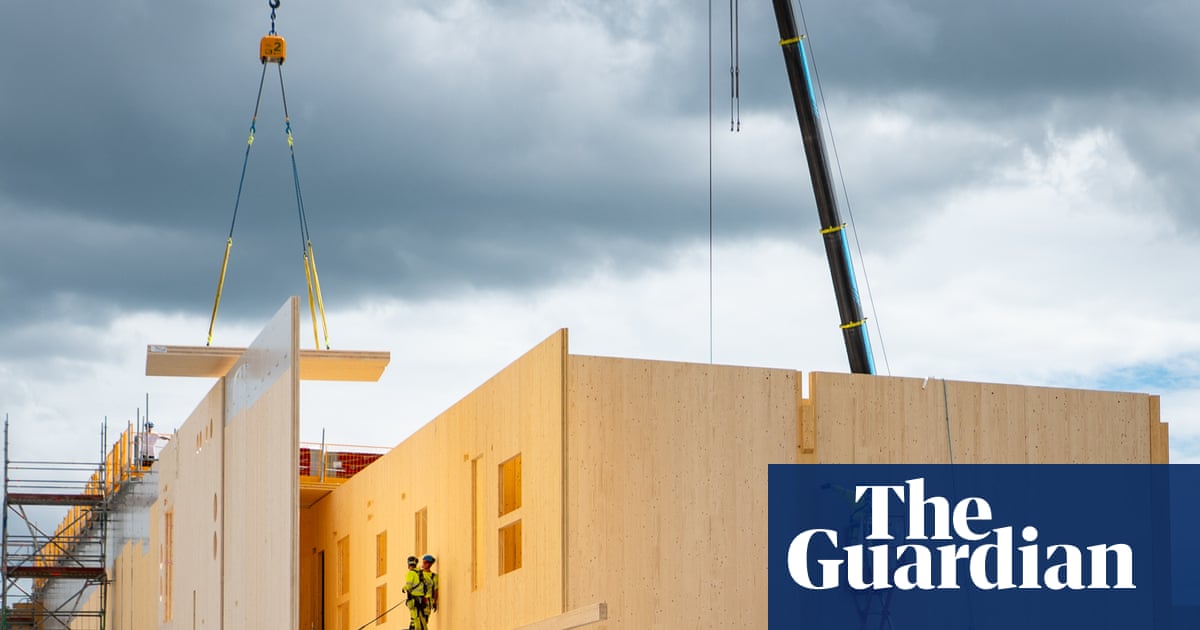 Datacentres are deeply unpopular. Has Sweden made one we can all love?
A Guardian feature visits EcoDataCenter's wooden, renewable-powered datacentre in Falun, Sweden — which it says may be the world's greenest — where excess heat feeds the local district heating system and clients include DeepL, CoreWeave and Mistral. It argues Sweden's cold climate, green grid and locally integrated approach offer a contrast to US datacentre backlash, while noting problems such as Google illegally felling 250,000 trees in Finland and opposition even from a Swedish metal band.
Hawley backs nationwide data center moratorium
POLITICO's "Inside Congress" newsletter reports that Sen. Josh Hawley endorsed a temporary nationwide data center moratorium on November 11, 2026, becoming the first Senate Republican to back one after Democrats ran on the issue in the midterms. It also covers Sen. Rand Paul's move to the HELP Committee, the completed Epstein Files discharge petition, White House counsel Will Scharf's warning of a criminal investigation into Rep. Robert Garcia's Democrats, Rep. Richard Neal's Ways and Means chair bid, Sen. Chris Van Hollen's challenge to Sen. Chuck Schumer, and chip export controls in the defense bill.
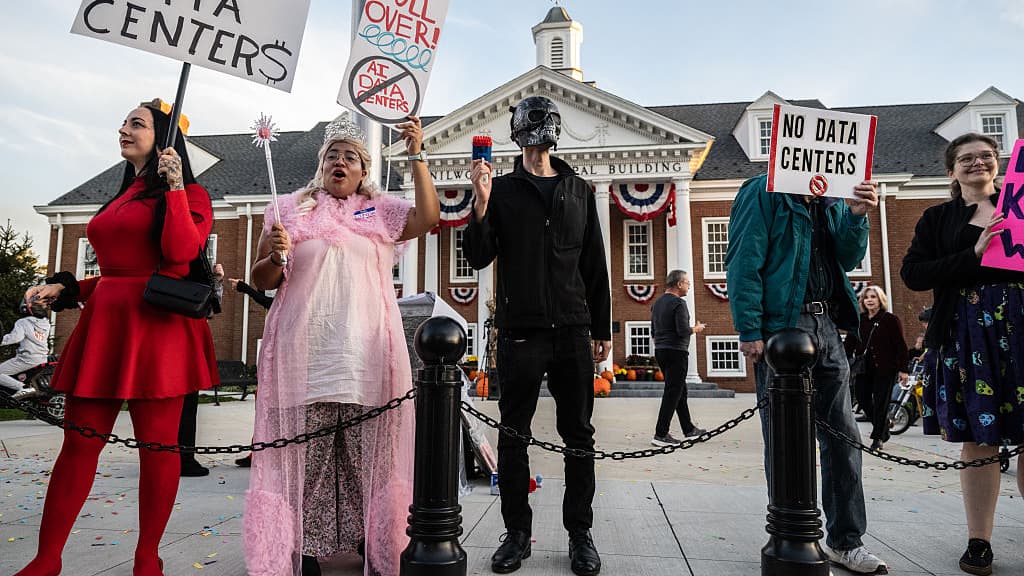 Congress’s Permitting Bill Is a ‘Massive Giveaway’ to the AI Data Center Industry, Critics Warn
time.com· 4d
A TIME article by Andrew R. Chow reports that the Senate advanced the bipartisan American Affordability and Jobs Act, which would ease energy construction and require data centers to pay grid upgrade costs, but which critics like Allie Rosenbluth call a "massive giveaway" to the data center industry. Supporters, including labor leaders and many experts, contend it will create jobs and lower household bills, while Trump, urging passage, wrote that "China will take any Data Center that we don't want."
 WATCH LIVE: Senate returns to Capitol Hill days after Democrats win back control
pbs.org· 5d
The Senate convenes days after Democrats won back control in the midterms, set to take up a bipartisan bill shortening permitting timelines for energy projects and data centers. The AP writers report that Democrats' win could complicate the bill's passage, which Trump urged senators to back and major environmental groups including the Sierra Club oppose.
 Elon Musk and the tech bros banked on Trump and lost. Humbled, humiliated: what will they do next? | Jonathan Liew
In a Guardian opinion column, Jonathan Liew argues that big tech banked on Donald Trump and lost the 2026 midterms, where Democrats won seats on anti-datacentre tickets, 46 of 47 datacentre ballot measures were defeated, and markets sold off tech stocks. He also mocks Keir Starmer's pledge to test AI before regulating it, criticises the UK's AI growth zones policy, and forecasts the datacentre issue will rise in democratic salience in Britain.
Senate advances sweeping energy legislation in first major action since midterm elections
apnews.com· 5d
In its first major action since midterm elections, the Senate voted 73-25 on 9 November 2026 to take up bipartisan legislation shortening permitting timelines for energy projects and data centers, a bill championed by four senators and backed by clean energy and oil and gas industry groups. Environmental groups including the Sierra Club oppose the measure as weakening safeguards, while President Trump said he will not approve wind turbines despite the bill's inclusion of wind, and its sponsors predict lower electricity costs, jobs, and emissions cuts.
Video: Protesters rally against data centres in Finland
yle.fi· 5d
Yle News video shows weekend protests across Finland against data centres, with demonstrators calling for a freeze on construction and police estimating around 1,300 people at the Helsinki rally; organiser Sakari Bister of the 'Rein in Data Centres' initiative voices concern about electricity and nature. Other Yle reports cover Kela's mouse-click monitoring of workers, a passport renewal rush, and Inter Turku's title win.
 Data centers need power – lower income, rural residents pay the price | Cornell Chronicle
cornell.edu· 5d
A Cornell Chronicle article reports on new research in Nature Energy finding that data center growth has raised wholesale electricity prices — up 15% in Virginia and 20% in the southern San Francisco Bay Area — while data centers paid on average only 38% of the $8.25 billion in linked infrastructure costs in 2025, with lower-income and rural households bearing much of the rest. Fengqi You and Cheng Feng recommend changes to cost-sharing rules, shifting data center power use away from peak hours, and charging large energy users directly.
 1 in 4 data centers run in areas with stressed water supply, study finds
washingtonpost.com· 5d
A Washington Post article by Michael Eisenstein reports a study finding that 1 in 4 data centers run in areas with stressed water supply, a key flashpoint in growing public backlash over AI-driven data-center expansion. It cites other Post reporting: 7 in 10 Americans oppose nearby data centers, and opposition is reaching U.S. statehouses.
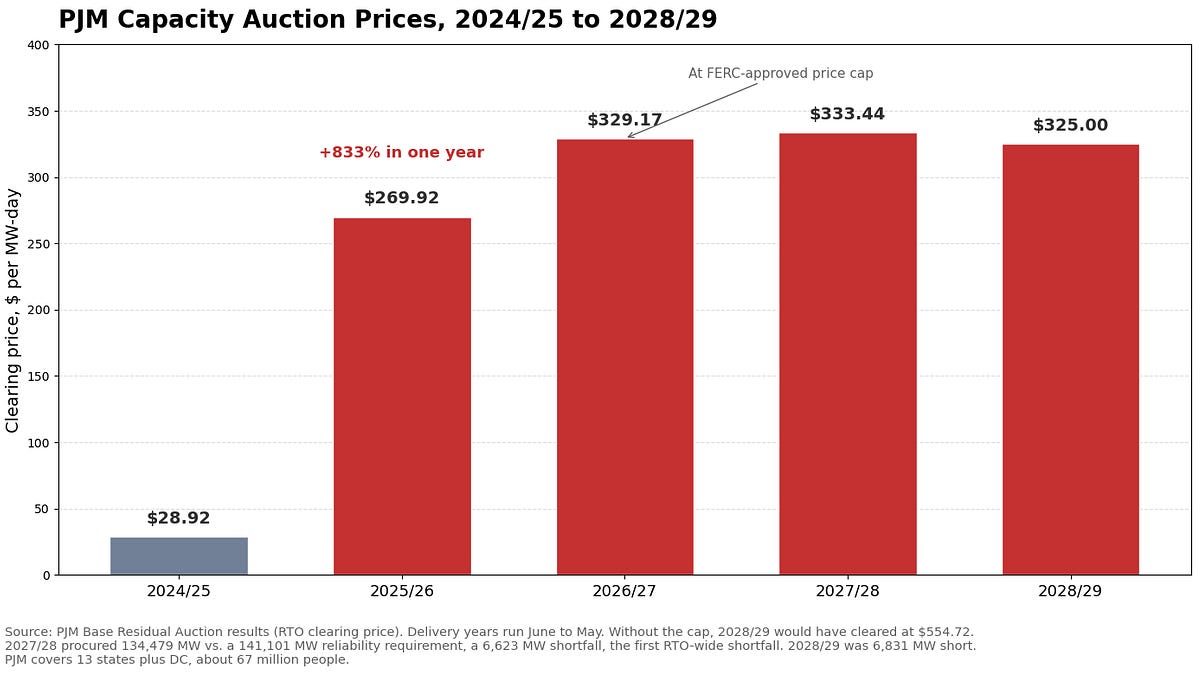 Data Centers Added $29 Billion to Power Bills in 13 States
substack.com· 6d
Nathan Hammer's Substack article examines how data centers added an estimated $29.4 billion to power bills across PJM's 13 states — the market monitor's counterfactual figure from four capacity auctions that rose from $28.92 to over $330 per megawatt-day — and how households pay for forecast load years before data centers are built. It surveys four states' protective tariffs (Ohio, Oregon, Georgia, Oklahoma), notes disputed attributions from PJM, the Edison Electric Institute, and dueling studies, and argues that where regulators made data centers pay their own way, households were protected.
 After the midterms, things are looking rocky for Elon Musk and data centers | TechCrunch
techcrunch.com· 6d
A TechCrunch Equity podcast episode discusses what the midterm elections mean for tech, after voters rejected dozens of data center ballot measures and elected politicians including Texas governor-elect Gina Hinojosa who campaigned on restricting them. Sean O'Kane says Elon Musk's half-billion dollars in Republican donations bought basically nothing, while Anthony Ha forecasts the next two years will be harder for hyperscalers, and Kirsten Korosec says OpenAI's new compute campus policy drops NDAs and secrecy.
 Post-wave Politics
In his newsletter, Bill McKibben examines the Bipartisan American Affordability and Jobs Act, a 417-page permitting bill Senate Democrats were set to debate, arguing that while its transmission build-out has value, over the fifteen crucial years ahead it would do essentially nothing on emissions, and quoting critics like David Bookbinder and EarthJustice's Abigail Dillen who say it guts environmental review to fast-track gas pipelines for data centers. He also surveys the midterms — including Will Lawrence's oil-money-defying House win and Colorado's rejection of a 'right to gas' measure — backs Emily Atkin's call to tax the more than $130 billion oil companies have made from the Iran war, and notes China pairing data centers with renewables while the US skips COP 31 in Antalya, Turkey.
 'It would facilitate Gaza genocide': Protesters storm Microsoft planned site
middleeasteye.net· 7d
The Middle East Eye, publishing an AFP report, describes several hundred activists occupying the construction site of a planned Microsoft data centre in Amsterdam's Sloterdijk district on 6 November 2026, halting work for the day as part of a two-day European mobilisation called by the Stop Dirty Data Centers coalition, which demands a pause in new data centre construction. Protesters organised by Geef Tegengas and Fossielvrij accused the project of facilitating Israel's genocide in Gaza and AI warfare, and Dutch agency ANP reported police arrested between 150 and 200 protesters.
 The Guardian view on the AI backlash: American voters want a say in their future | Editorial
A Guardian editorial argues the 2026 midterms show the political bill for the AI boom is falling due: Democrats won on resistance to datacentres, a $3.2tn market sell-off hit Nvidia and Elon Musk hard, and Donald Trump dismissed AI fears as a "hoax". It welcomes Democrats taking public concerns seriously and recommends politicians strengthen workers' bargaining power and share productivity gains fairly.
 Democrats stayed quiet on climate. Now it's time to act
thebulletin.org· 8d
Michael E. Mann's Bulletin opinion piece argues that after the 2026 midterms swept Democrats to power on affordability concerns, they should re-engage on climate, unite around data center regulation, and fast-track a bill to Trump's desk by mid-January while 'pirating' BAAJA's ratepayer protections. He also recommends cutting war funding with Iran and urges Schumer and Jeffries to step aside if not up to the challenge.
 Will Democrats Rein in Big Tech? It Starts With Privacy and Data Centers - CNET
cnet.com· 8d
 Maybe Telling Americans They're Useless Eaters Who Must Perish for the Glorious AI Revolution Was a Bad Idea: Midterm Thoughts
ghost.io· 8d
A blog post argues that Democrats' 2026 midterm win punished big tech, citing polls showing 76% of Americans oppose data centers in their community and 7 in 10 say the government is not regulating AI enough. The author blames tech leaders' arrogance and forecasts bipartisan support for regulation, urging voters to press Democrats to rein in big tech.
 Democratic sweep in Texas could usher in environmental reforms
motherjones.com
An Inside Climate News article reproduced by Mother Jones reports that Democrats swept Texas, with Gina Hinojosa unseating three-term governor Greg Abbott to become the state's first Hispanic leader and James Talarico defeating Attorney General Ken Paxton for US Senate, ending decades of Republican rule. It says the sweep, driven partly by outrage over data center buildout, could bring environmental reform, with Hinojosa campaigning on a data center moratorium and a 2021 Texas Climate Plan.
 Big Tech lost big in the 2026 election | The Vergecast
youtube.com· 8d
Nilay Patel and David's Vergecast argues big tech lost big in the 2026 midterms: Democrats swept up and down the ballot, Texas flipped blue, and 40 of 41 data-center ballot measures in 10 states went against data centers. The hosts call the results a possible wall for the AI industry, and cover incoming Democratic oversight of tech, FCC chairman Brendan Carr, Google's search troubles, SpaceX's wireless ambitions, the new MacBook Pro, and a Free Press reporter's ChatGPT-edited photo that changed the image it claimed to brighten.
 Assessing the Impact of the Midterm Elections on US Tech Policy
techpolicy.press· 8d
Tech Policy Press's podcast episode has Justin Hendrix, Alexandra Reeve Givens, Robert Weissman, and Brian J. Chen assessing the midterm elections' impact on US tech policy after Democrats' sweeping wins. The panelists say data centers and AI governance will remain defining issues, Weissman calls it the most expensive and most corporate-funded election in American history, and Chen describes Josh Shapiro's pivot from data center booster to issuing an executive order restricting them.
 How Big Tech Lost the Midterms
Politico Magazine's Calder McHugh and Alec Hernandez recount how a scattered coalition of AI-safety advocates — led by Brad Carson, Jay Shooster and Rishi Bharwani — took on the tech industry's $100 million Leading the Future super PAC after the Senate rejected a federal preemption provision in July 2025. Backed by Anthropic's millions and buoyed by data-center backlash, pro-regulation groups outspent the industry $44.4 million to $27.9 million, won races for Manny Rutinel and Scott Wiener, and made AI a live issue for 2028.
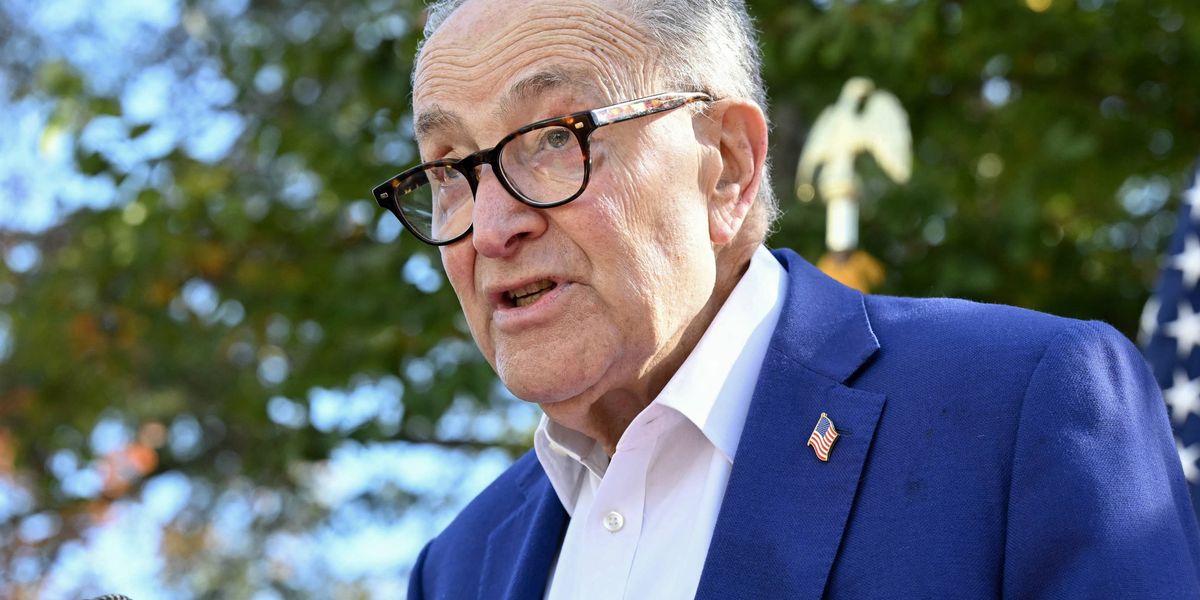 'No Blank Checks for Big Tech': Schumer Faces Protest Over 'Dirty Data Center Deal' | Common Dreams
commondreams.org· 9d
Common Dreams reports that protesters plan to gather outside Sen. Chuck Schumer's Brooklyn home Friday, demanding he block the Bipartisan American Affordability and Jobs Act—a permitting bill they call the "dirty data center deal"—before Monday's procedural vote that will require Democratic support. More than 160 groups urged Congress to reject the bill, warning it would gut environmental protections and fast-track AI data centers, while reports cite Schumer's lack of a public position and lead Democratic sponsor Sheldon Whitehouse's data center and AI investments, and note that voters in 10 states backed anti-data-center initiatives.
 Top Democrats call to rein in AI buildout after midterms sweep: 'National data center moratorium now'
cnbc.com· 9d
Democrats' big 2026 midterm wins, after many campaigned against data centers, are prompting party leaders to call for restrictions on the AI build-out, with Sen. Bernie Sanders writing "National data center moratorium now" and Rep. Yassamin Ansari urging a pause on AI development as a Day 1 priority. AI-linked stocks fell after the election, with chip stocks leading — Nvidia down 8% and the iShares Semiconductor ETF tumbling nearly 9% — as investors worried the Democratic wins could affect data center construction.
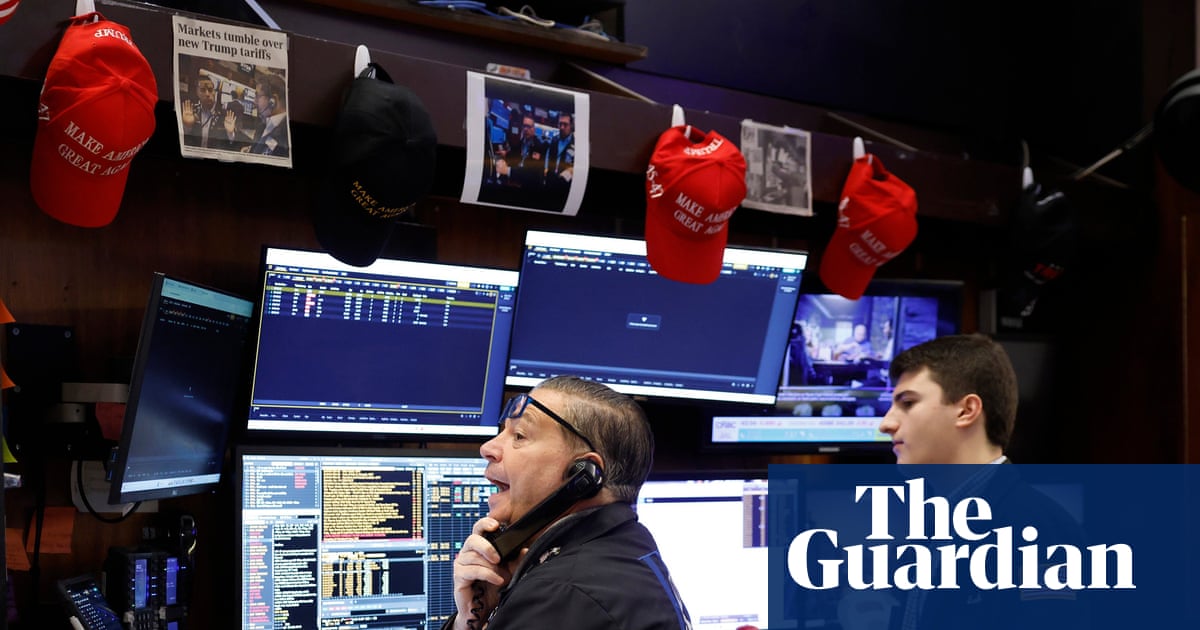 Nasdaq heading for worst day in 18 months as Wall Street sustains widespread losses
The Guardian reports a sharp Wall Street sell-off in which the Nasdaq fell up to 5% into correction territory, led by chip stocks, as investors anticipated tougher regulation of datacentre expansion after the Democrats' success in the 2026 midterms. The Dow dropped more than 1,000 points, the VIX jumped 40%, and analysts warned the AI buildout will slow.
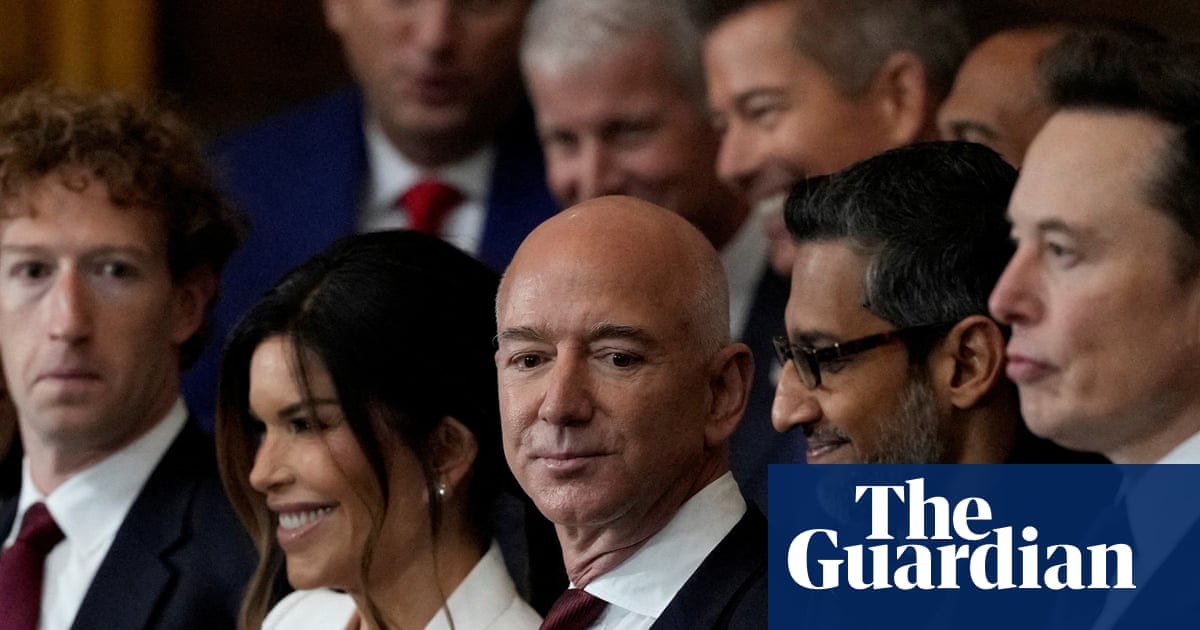 Tech barons cozied up to Trump. What will they do in newly blue America?
Blake Montgomery's Guardian analysis examines how tech billionaires who cozied up to Trump — Elon Musk, Jeff Bezos, and Mark Zuckerberg sat front row at his January 2025 inauguration as Musk's fortune passed $1tn — now face a newly blue America after Democrats took Congress and governors' mansions in 2026 midterms amid anger over tech, AI datacenters, and the super rich. He forecasts congressional investigations into Musk's department of government efficiency and xAI's $200m military contract, an inquisition for Zuckerberg, and datacenter moratoriums that may hamstring AI companies.
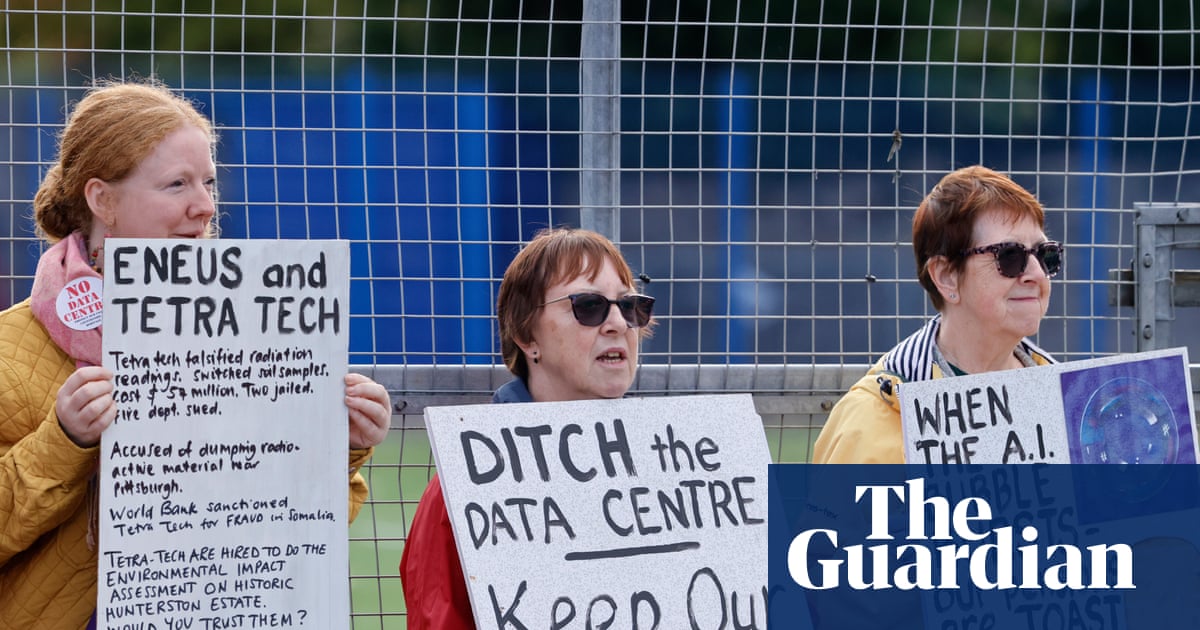 Activists across Europe prepare two days of protests against datacentres
The Guardian reports that more than 100 campaign groups, including Friends of the Earth, Greenpeace and Foxglove, are planning two days of 'Stop Dirty Data Centres' protests across 15 countries, calling for a moratorium on large datacentre projects. Planned actions range from a Microsoft demonstration in Denmark and a Dublin march to an event in east London, where organisers expect several hundred attendees at larger gatherings.
 Trump’s Energy Revolution Is Over. Now a New Era Begins.
heatmap.news· 9d
In a Heatmap News analysis, Robinson Meyer argues that Donald Trump's fossil fuel and AI-era energy revolution is over, with the 2026 Democratic landslide — powered by cheap-energy appeals and 75% opposition to data centers in Heatmap's polling — ushering in a new era of moderate energy politics. He predicts Democrats will expand clean energy while facing tough trade-offs, and recommends they keep both Trump's failures and their own in mind.
 Voters Rejected A.I. in the Midterms. Now Comes an Era of Scrutiny.
nytimes.com· 10d
A New York Times news article reports that in the 2026 midterms voters limited or blocked data center development in 40 of 41 local ballot initiatives, more than half in Ohio, and elected officials promising A.I. safeguards. It says Democrats now plan investigations into A.I. companies' ties to the Trump administration — including scrutiny of Nvidia's Jensen Huang and Elon Musk — while figures like Ohio's Senator-elect Sherrod Brown and Texas governor-elect Gina Hinojosa ran against data centers, though President Trump is expected to veto bills slowing the industry.
 Voters rebuff data centers in every ballot measure except one during the 2026 midterms
MacKenzie Sigalos reports for CNBC that in the 2026 midterms voters backed data-center restrictions or rejected pro-development measures in nearly every contest with results as of November 4, with Harwood, North Dakota the lone exception. Anti-data-center messaging featured in major Democratic wins in Ohio and Texas, and Sigalos says the AI data-center boom hit a roadblock on election night.
 Voters rebuff data centers in every ballot measure except one during the 2026 midterms
Voters in the 2026 midterms sided against data centers in every one of the 41 local ballot measures across 10 states except one, and Democrats who campaigned on pausing or regulating projects won key races in Ohio, Wisconsin, Georgia, and Texas. Elon Musk, the cycle's largest individual donor at $474 million, wrote on X after losing both of Texas's marquee races that data centers in space are looking appealing.
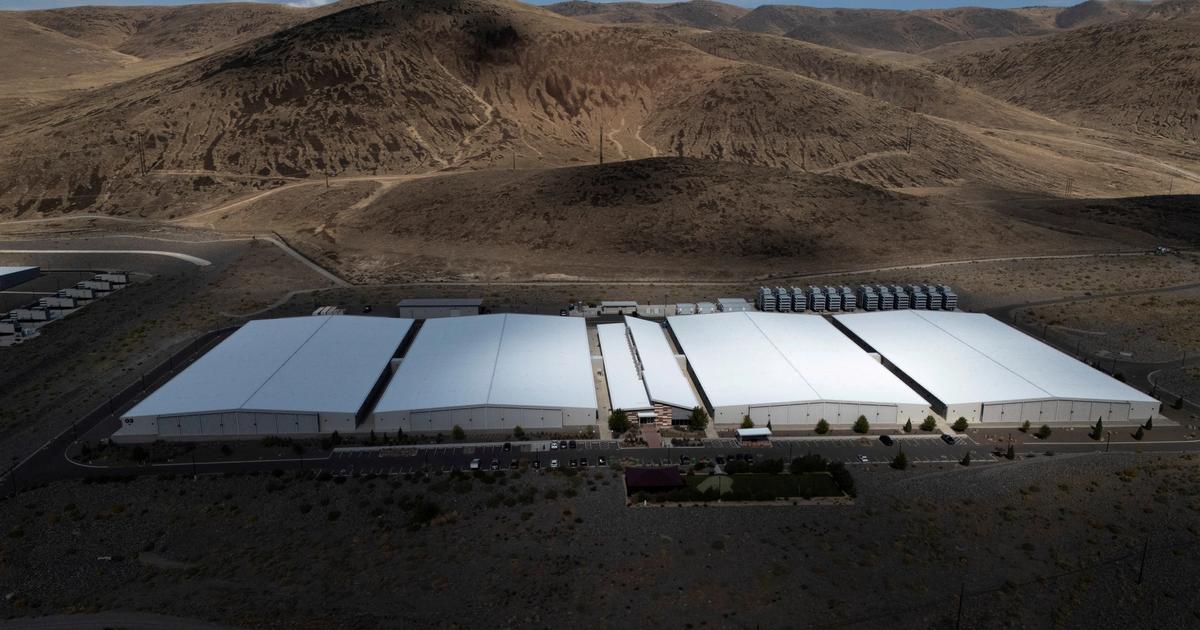 US voters roundly reject data centers in ballot measures
semafor.com· 10d
Semafor Business reports that voters in more than 30 localities across nine states passed moratoriums, bans, and constraints on data centers on 3 November 2026, pushing GOP candidates toward tougher regulation and spooking financiers of the AI buildout. The newsletter also rounds up Democrats' midterm wave, CVS Health's split, and tech debt worries.
 US-Zwischenwahlen: Rechenzentren noch größere Verlierer als die Republikaner
heise.de· 10d
heise.de reports that in the US midterms, voters in dozens of municipalities, mainly in Illinois and Ohio, backed measures against data centers — per Ballotpedia, in 37 of 41 such votes, never once for them. It sets this against the Democrats winning House and Senate majorities amid dissatisfaction with Donald Trump's presidency.
 Trump tells CNBC he can work with Dems on ‘many more things than people understand’
CNBC's live blog tracks a Democratic midterm wave on 4 November 2026 — sweeping the House and Senate, flipping five governorships including Texas and Georgia, and driving the Dow up more than 1,500 points — as President Trump tells CNBC he can work with Democrats on "many more things than people understand" while blaming the Iran war's oil prices for the losses. The blog also covers Hakeem Jeffries' speaker bid, Pete Hegseth's uncertain future, voters rejecting data center measures in 40 of 41 races, and uncalled Senate counts in Mississippi and Alaska.
 Voters across the country reject data centers • Stateline
stateline.org· 10d
Stateline reports that voters across the country overwhelmingly backed ballot measures restricting data centers — from outright prohibitions to moratoriums — with only one pro-construction measure, in North Dakota, winning. Residents in both parties' communities cite energy costs, pollution, water use, and lost farmland, and a UMass Amherst poll found just 11% of Americans would support an AI data center locally.
 AI stocks slide as Texas governor result raises data center risks
CNBC reports that AI-linked stocks slid in overnight trading after Democrats' 2026 midterm wins, with Gina Hinojosa's projected Texas governor victory over Greg Abbott raising fears of data center restrictions in a state holding 27% of planned gigawatts. Nasdaq-100 futures fell 0.8%, while CoreWeave dropped 7% and analysts warned a Democratic Texas win could hit the AI trade hard.
 Hakeem Jeffries Says Impeachment and Getting Even Aren’t Priorities
newrepublic.com· 10d
The New Republic reports that House Minority Leader Hakeem Jeffries, after Democrats' 2026 midterm takeover of the House, says impeaching Donald Trump and getting even are not priorities—voters want costs addressed instead. The article also covers Mike Johnson stepping down as speaker as Jim Jordan and Steve Scalise jockey for Republican leadership, Republican finger-pointing over the losses, voters rejecting data center projects, and abortion measures winning across four states.
 Here’s where data centers are on the ballot
A Washington Post article reports that at least 40 U.S. jurisdictions vote on data center measures on November 3, 2026, with most in Ohio, where 18 cities and towns will decide whether to restrict or permit them. Citing a Washington Post-ABC News-Ipsos poll, it says significant majorities of Americans oppose new data center construction.
 Old, Polluting Jet Engines Are Being Scavenged to Power Data Centers
A New York Times series on the Trump administration's weakening of environmental protections reports that companies are stripping jet engines from retired airliners in Arizona's desert boneyards and converting them into generators that power-hungry data centers are buying up. Elon Musk's xAI has installed converted turbines in Mississippi with higher emission limits, drawing a lawsuit from the Southern Environmental Law Center on behalf of the NAACP, while the Trump administration has sided with xAI and urged data centers to generate their own power.
 Europe must choose between AI and climate goals, data center lobby says
politico.eu· 21w
Politico reports that the European Data Centre Association's president, Lex Coors, says Europe must prioritize AI over immediate climate ambitions, possibly relying on gas-fired power, or surrender tech sovereignty to China. Energy Commissioner Dan Jørgensen welcomes data centers only if they support the energy transition, and climate groups urge the Commission to hold the line.
 Hyperscalers Sign White House Pledge to Fund Data Center Power, Grid Upgrades
powermag.com· 36w
POWER reports that on 4 March 2026 seven hyperscalers—Amazon, Google, Meta, Microsoft, OpenAI, Oracle, and xAI—signed a White House-brokered voluntary Ratepayer Protection Pledge to fund new generation and all grid upgrades for their data centers without charging residential or commercial ratepayers. The article details PJM's FERC proposals and large-load tariffs, companies' bilateral cost-allocation deals, EPRI's projection that data centers could reach 9–17% of U.S. demand by 2030, and skepticism that the non-binding pledge carries enforcement or auditing.
 Ratepayer Protection Pledge
whitehouse.gov· 36w
The White House's Ratepayer Protection Pledge calls on leading US hyperscalers and AI companies to build, bring, or buy all the energy their data centers need and pay its full cost whether or not they use it. Under the pledge, companies would cover infrastructure upgrades, negotiate separate rate structures with utilities and states, hire locally, and share backup generation during shortages, commitments the White House says will protect American households from higher bills and lower electricity costs long term.
URGENT! THE END CLIMATE SILENCE NEWSLETTER
mailchi.mp· 45w
The End Climate Silence newsletter warns that the Bipartisan American Affordability and Jobs Act, written by a bipartisan group of senators and backed by Trump, exempts fossil fuel expansion from environmental review, locks in permits against agency reversal, and could make future climate action illegal, while its transmission provisions alone support the fossil-fuel phaseout. Saying the bill tilts energy policy permanently toward fossil fuels and data centers, it urges readers to email or call their representatives to vote no before Monday the 9th.
 Boom or bust: How to protect ratepayers from the AI bubble | Brookings
brookings.edu· 1y
A Brookings commentary by David M. Klaus and Mark MacCarthy argues that AI data centers should pay the full cost of the power they consume, warning that the boom's massive energy demands are driving rate increases that burden ordinary customers. Citing rising electricity rates, utility petitions in Virginia and Ohio, and state efforts to impose separate data center tariffs, the authors recommend tariffs that isolate data center costs and frontloaded infrastructure payments to protect ratepayers and utilities from the bubble's risks.
Berkeley Lab Report Evaluates Increase in Electricity Demand from Data Centers | Energy Analysis Division
lbl.gov· 1y
A Berkeley Lab report on U.S. data center energy use says data centers consumed about 4.4% of U.S. electricity in 2023, with usage climbing from 58 TWh in 2014 to 176 TWh in 2023, largely due to AI server growth. It projects data center consumption to reach between 6.7 and 12% of U.S. electricity, or 325 to 580 TWh, by 2028.
https://eta-publications.lbl.gov/sites/default/files/2024-12/us_data_center_energy_usage_report_lbnl-2001637.pdf
Lawrence Berkeley National Laboratory's 2024 United States Data Center Energy Usage Report, produced for the Department of Energy under the Energy Act of 2020, estimates that U.S. data centers consumed 176 TWh in 2023, about 4.4% of national electricity use, after rapid growth in GPU-accelerated AI servers more than doubled demand between 2017 and 2023. It projects 2028 consumption between roughly 325 and 580 TWh, or 6.7% to 12.0% of U.S. electricity, and calls for greater transparency, ongoing data collection, and research into efficiency strategies and grid impacts.
