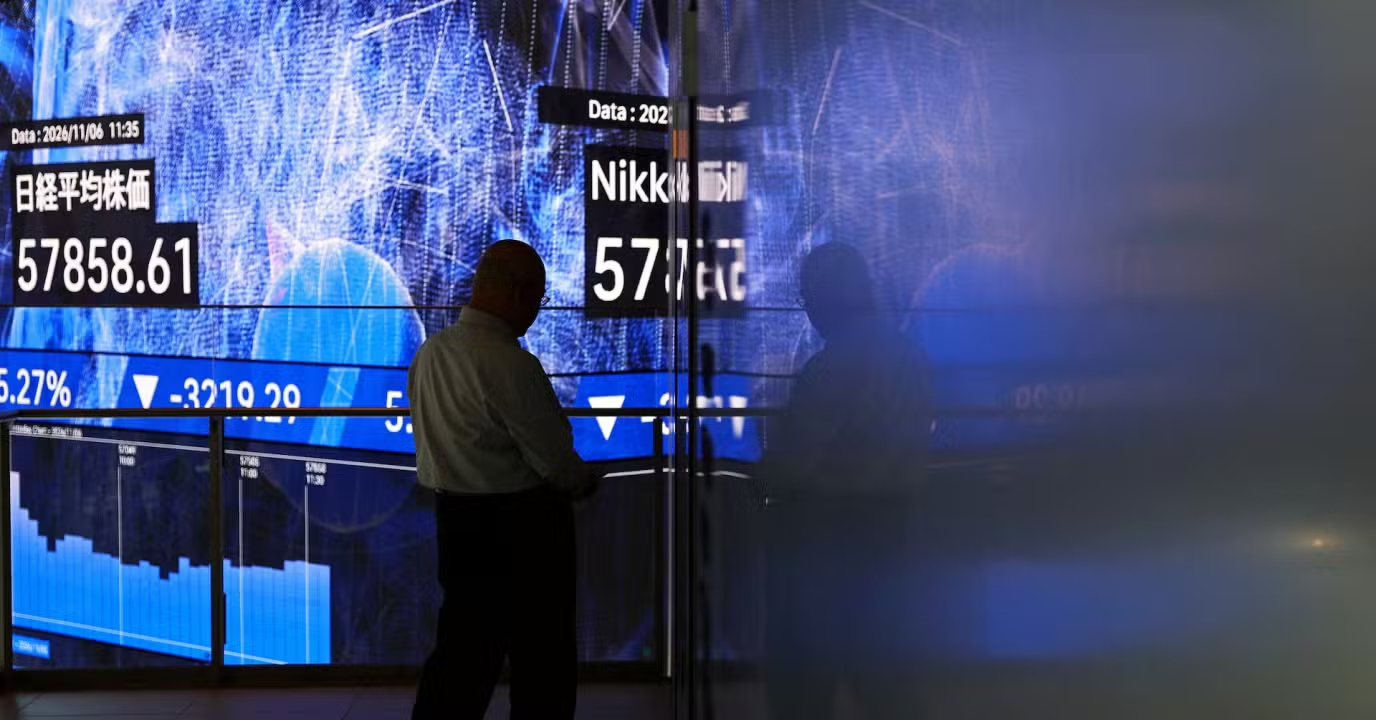
Is this a dead turkey bounce?
In her Reuters column on the day ahead in European and global markets, Stella Qiu reports that Asian shares bounced back with Wall Street closed for Thanksgiving, after a bruising month in which investors' faith in the AI trade was badly shaken by the shock departure and return of Nvidia CEO Jensen Huang. Nasdaq futures rallied 2.4% and Japan's Nikkei jumped 1.9%, clawing back some of its 7.4% monthly loss. She says whether the rebound has legs or is simply a dead cat bounce in thin holiday liquidity is the trillion-dollar question, and that Nvidia's return hardly guarantees easy money for the wider AI ecosystem.
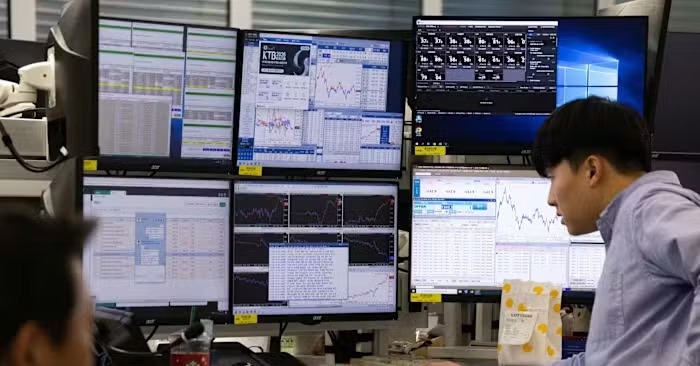
Stocks advance in Asia after volatile US trading over AI risks
Stocks advance in Asia after volatile US trading driven by worries over artificial intelligence risks.
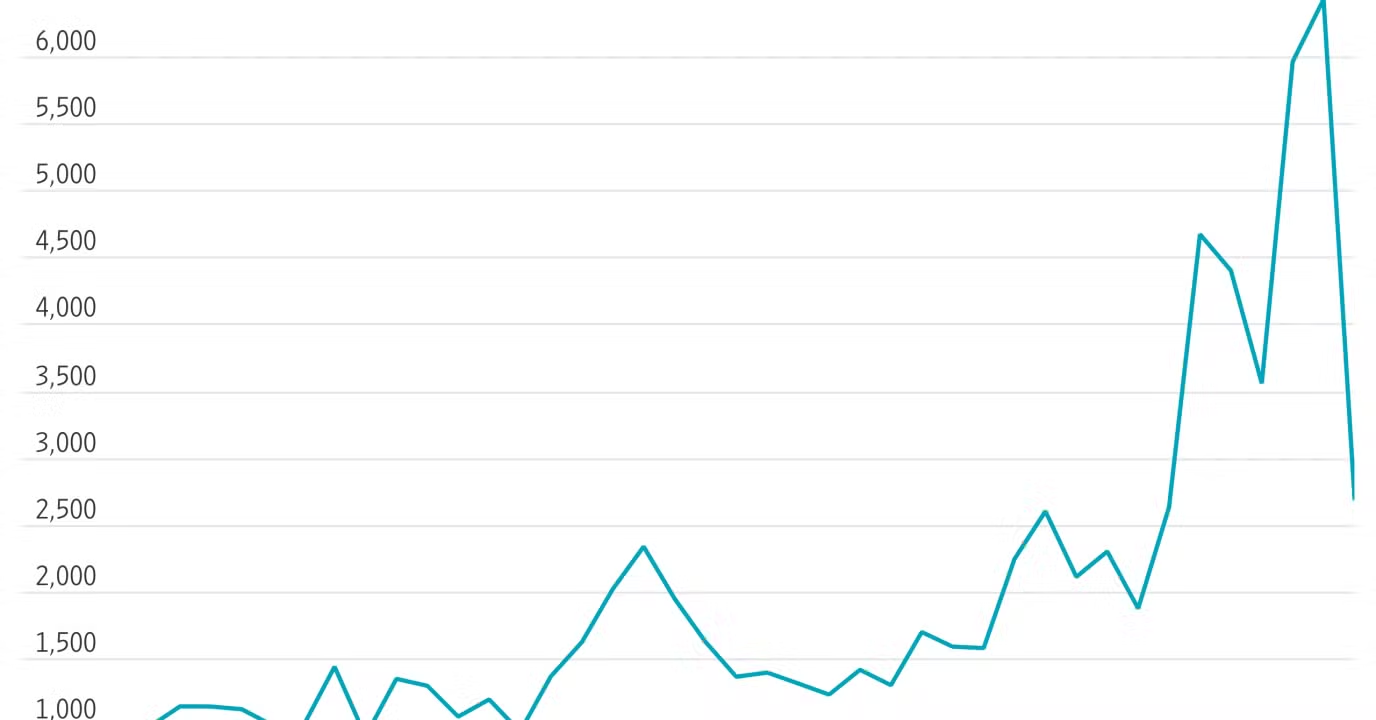
SoftBank Stock Drops Another 15% as Slump from AI Eclipses Covid
SoftBank's shares dropped 14.8% on 25 November 2026, extending a slump the WSJ article ties to the AI downturn. The stock is now down 68% from its all-time high in early June 2026, wiping out over $200 billion in market value, a slide the article says has eclipsed SoftBank's Covid-era plunge. Eliot Brown writes that the once-buoyant SoftBank balloon continued to deflate.
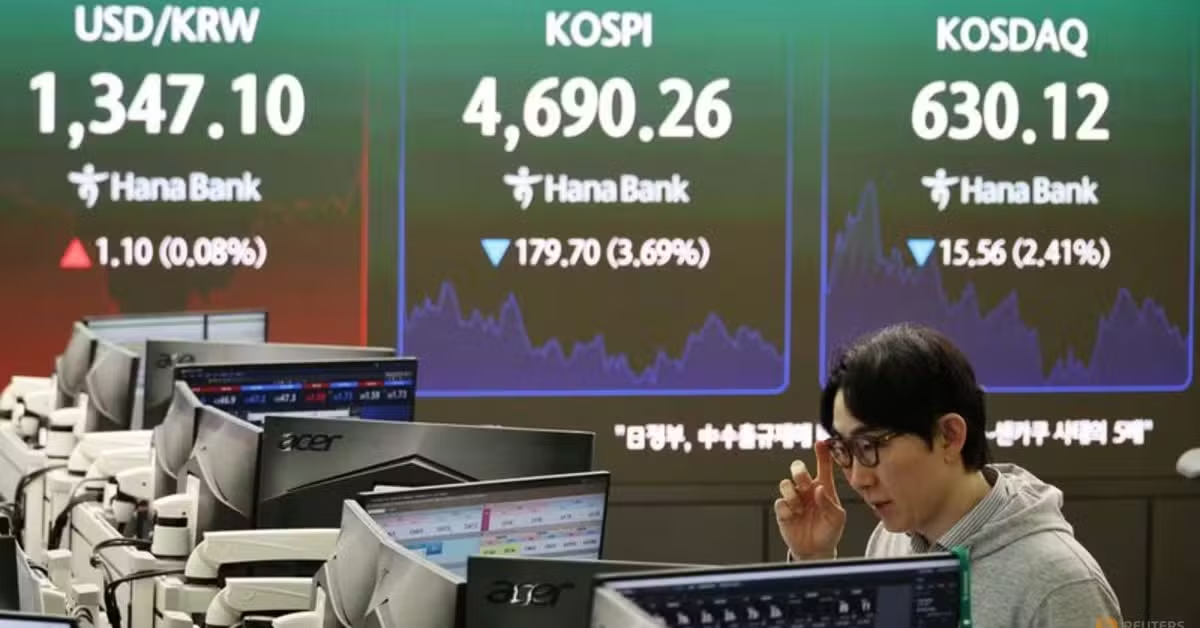
Tech firms back in crosshairs as Huang rally reverses
An AFP news report says tech firms tumbled again on 25 November 2026, a day after news that Nvidia chief executive Jensen Huang had returned to his post less than two weeks after resigning over extramarital affairs, including with an alleged Chinese spy, sent Asian markets surging. Taipei, Tokyo and Seoul sank eight per cent, more than three per cent and more than five per cent respectively, and Nvidia shed almost six per cent on Wall Street, as analysts pointed to huge worries remaining about the colossal sums pumped into the AI buildout and when returns, if any, will be seen. SPI Asset Management's Stephen Innes said the rally had acquired the characteristics of a dead-cat bounce, with professional investors apparently using the opening provided by the Huang comeback to unload technology exposure rather than rebuild it. Nvidia also remains under scrutiny from investigators including at the FBI and on Capitol Hill for allegedly helping Chinese firms gain access to its top-line chips.

Aasian pörssit syöksyvät
Asian stock markets opened in deep decline on Wednesday as doubts about the AI boom returned to investors, a sharp reversal after the Japanese and South Korean markets had been up several percent only the previous day. AFP reports Japan's Nikkei 225 fell 3.1 percent to 56,802.90 points and South Korea's Kospi fell 4.8 percent to 4,764.70. The selling followed a down day in the United States and Europe, where investors kept selling AI-related stocks as earlier enthusiasm over Jensen Huang's return to Nvidia faded.
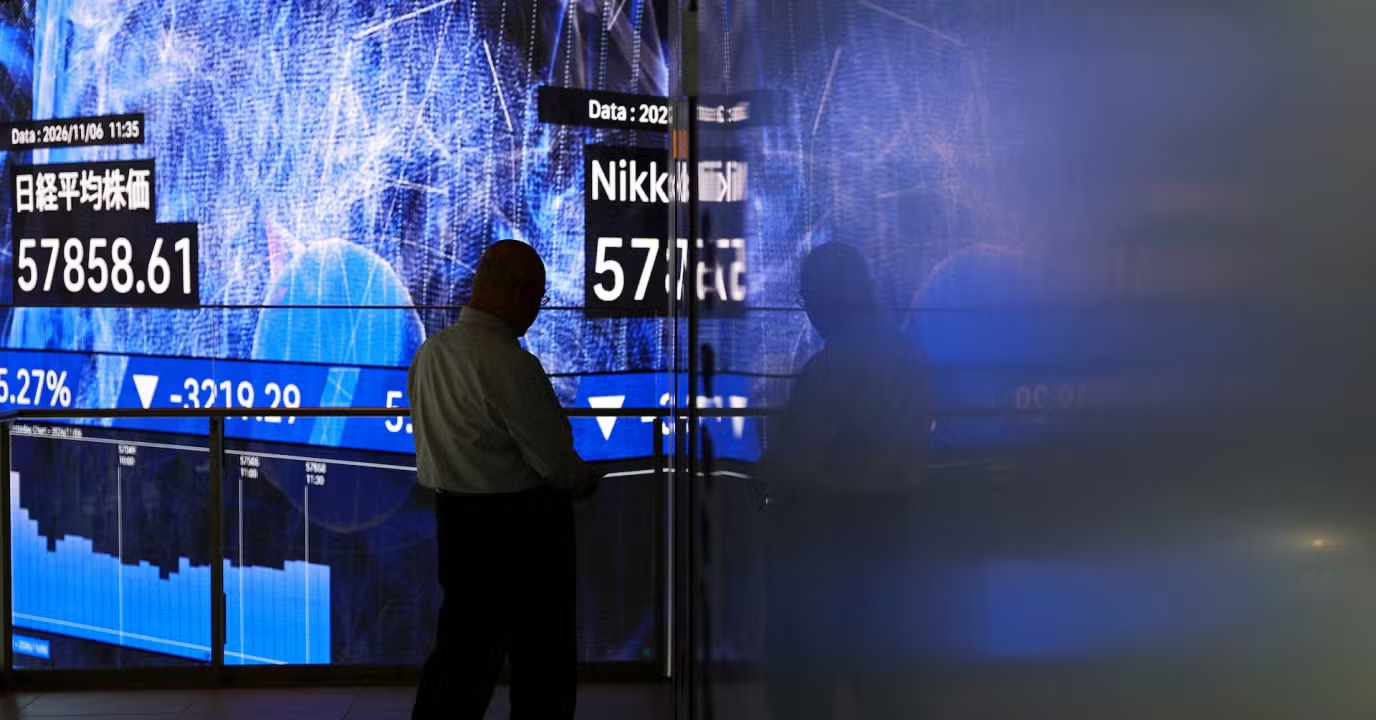
Stocks retreat as AI rebound stumbles, tariff threats loom
Asian stocks plunged as fresh US tariff threats hit sentiment and a tech-led rally fizzled, with the region's chip-heavy markets bearing the brunt. MSCI's broadest index of Asia-Pacific shares outside Japan was down 3.2%, led by a drop of as much as 6.4% in South Korean shares, an 8.6% decline at the worst point in Taiwan, and a fall of as much as 3.7% in Japan's Nikkei 225. Three people with knowledge of the matter told Reuters that the US Trade Representative's office is preparing to release findings of a probe into alleged excess industrial capacity among 16 major US trading partners, including China and the EU, that could pave the way for new tariffs. Hua Nan Securities analyst Kevin Su said the selloff across the region was mainly because of the tariff issue, with expectations of rate hikes also suppressing risk appetite.
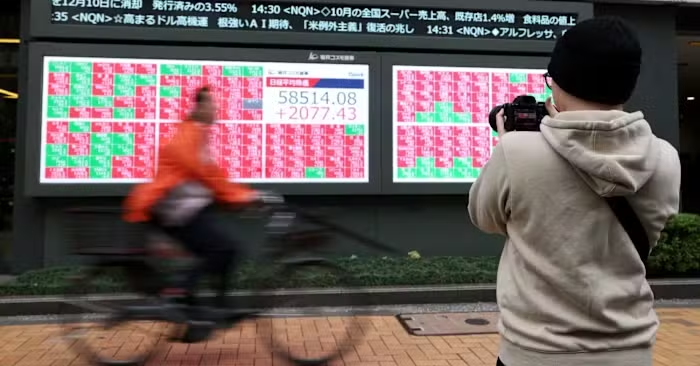
Asian markets lose ground as AI fears return
The Financial Times reports that Asian markets lost ground as fears about artificial intelligence returned.

SoftBank drops over 11% as Wall Street AI sell-off ripples across Asian tech names
CNBC reports that Asian technology stocks tumbled on Wednesday, led by a rout in Japanese semiconductor stocks, as renewed concerns over the AI trade rattled investors after an overnight sell-off on Wall Street. SoftBank Group shed 10%, Nvidia supplier Advantest plunged 12.26%, and Tokyo Electron slumped 10.9%. Korean chipmakers Samsung Electronics and SK Hynix, key suppliers of high-bandwidth memory for AI accelerators, both fell more than 7%.
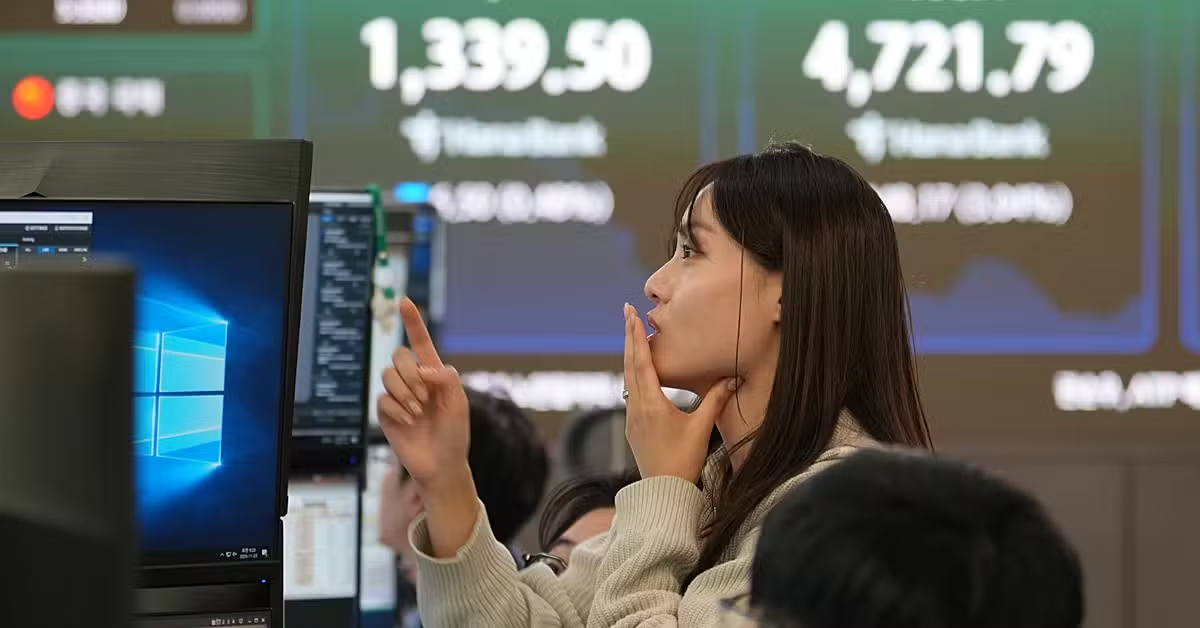
Tech back in the firing line as traders track Wall Street rout
Asian stock markets struggled to recover on 23 November 2026 as tech firms stayed in the firing line after a Wall Street rout, with even a bounce in US futures failing to inspire buying. Scandal-hit Nvidia had plunged 14% in New York, dragging the Nasdaq into negative territory for the year, and the index had lost almost a fifth of its value since hitting a record high in October 2026. The selling carried into Asia, with Seoul diving more than 4% as chipmakers SK hynix and Samsung each dropped 4%, while Hong Kong, Shanghai, Sydney, Singapore, Wellington and Jakarta were deep in negative territory. Authorities in some countries moved to limit the damage: Taiwan made it harder to short stocks, China eased borrowing to buy stocks, and South Korea considered a stabilisation fund unused since the global financial crisis. Traders' fears centred on the AI trade, further Federal Reserve rate hikes, tighter regulation under a Democrat-led Congress, and the US Commerce Department's move to close a loophole letting Chinese firms access Nvidia's AI chips remotely. Forex.com's Fiona Cincotta says nerves over AI capital spending, returns and timing, combined with Democratic control of Congress and higher rates for longer, are fuelling concerns about the sector.
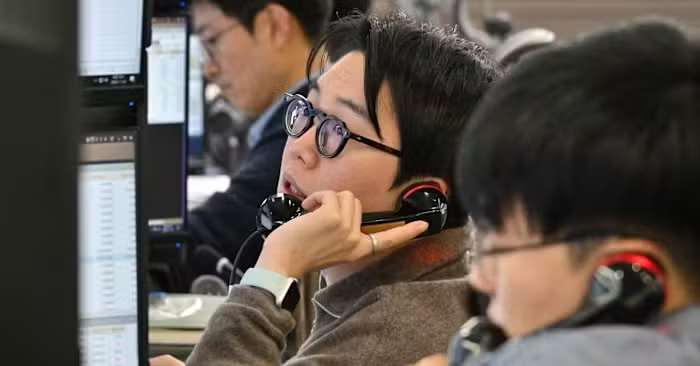
Asian regulators rush to support sagging markets as AI trade falters
Asian regulators rushed to support sagging markets as the AI trade faltered, according to a Financial Times report.
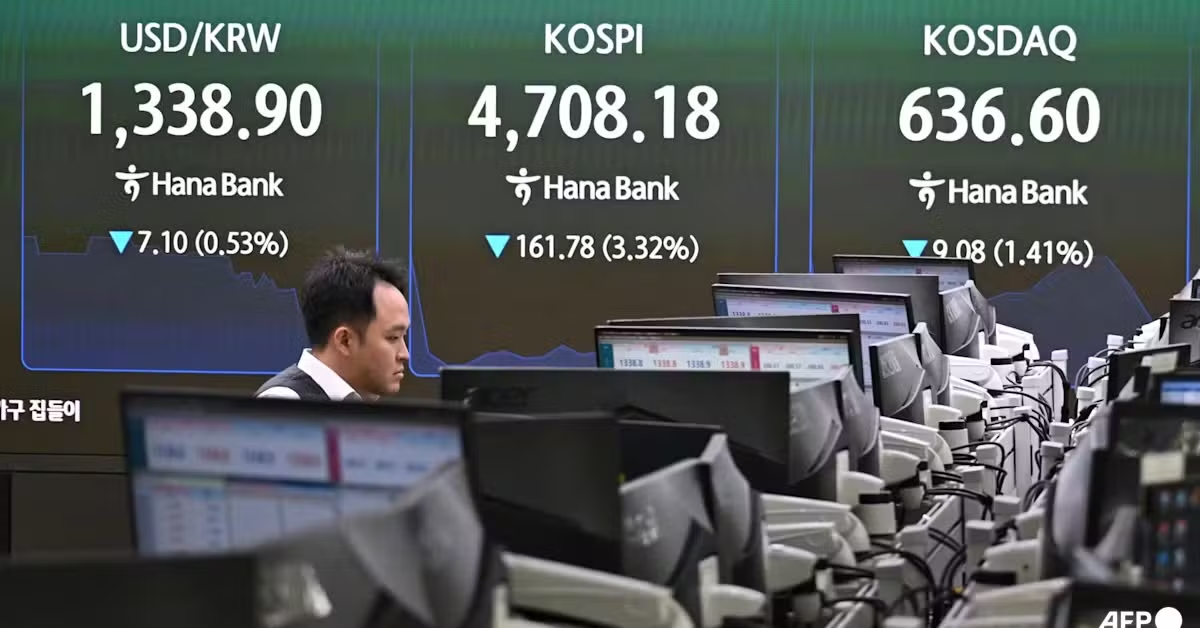
Asian tech back in the firing line as traders track Wall Street rout
Asian stock markets struggled to recover from the previous week's sell-off, with tech firms again in the firing line as investors tracked a rout on Wall Street. Nvidia's 14 per cent plunge in New York dragged the Nasdaq into negative territory for the year, and the selling carried into Asia, where Seoul dived more than 4 per cent as chipmakers SK Hynix and Samsung dropped 4 per cent each. A bounce in US futures failed to inspire buying amid fears over the AI trade, the prospect of more Federal Reserve rate hikes and tighter regulation under a Democrat-led Congress. The losses have led authorities to act: Taiwan is making it harder to short stocks and China has made it easier to borrow money to buy them, while South Korea is considering a stock-market stabilisation fund not used since the global financial crisis.
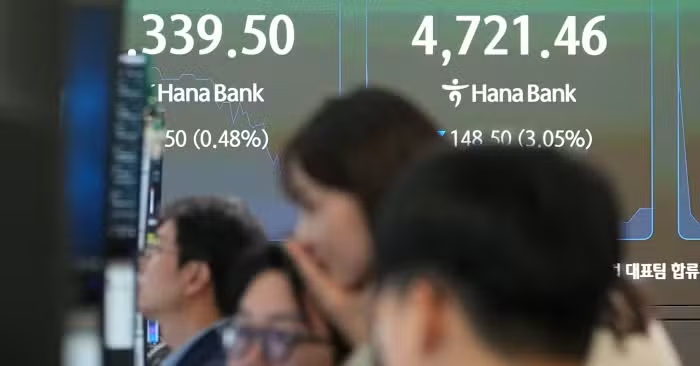
Tech stock sell-off deepens in Asia
The Financial Times reports that a tech stock sell-off is deepening in Asia.
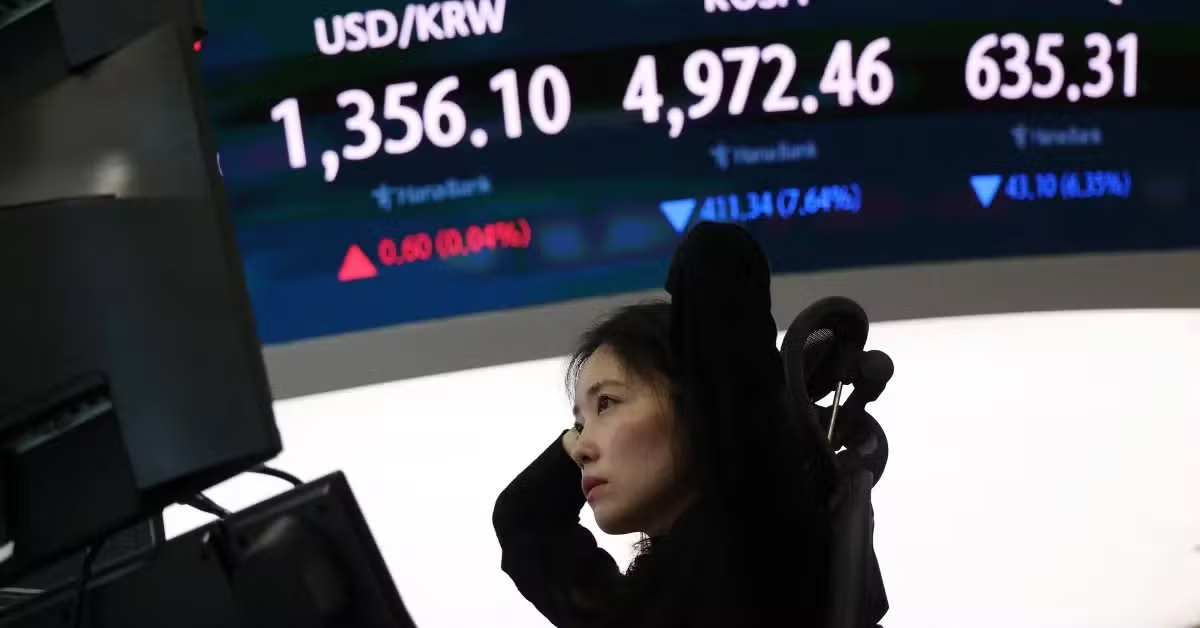
South Korea’s stock market tumbles as AI bubble fears mount
Al Jazeera reports that South Korea's Kospi fell as much as 3.7 percent in early trading on Monday, 23 November 2026, as fears mount that the AI boom may be running out of steam. The drop extends a sell-off from Friday, when the Kospi closed down 5.2 percent, Japan's Nikkei 225 fell 5.1 percent and Taiwan's Taiex dropped 6.2 percent, while Wall Street's S&P 500 posted a seventh straight loss and the Nasdaq erased all of its 2026 gains. Investors have long worried that tech firms cannot sustain their multi-trillion-dollar AI infrastructure investments, concerns Al Jazeera says were worsened by an alleged spying scandal roiling chip giant Nvidia. Investors anticipate more volatile trading as other regional markets open and expect the incoming Democratic-led US Congress to push for tighter regulation of the AI sector.

The AI bust is a growing threat to China's economy and a 'moment of real danger' for President Xi Jinping, analyst warns | Fortune
A Fortune article reports Yardeni Research's warning that the AI bubble has already popped in China, with an even worse crash than the American one threatening the economy and a 'moment of real danger' for President Xi Jinping. The tech-heavy STAR 50 index has fallen 44% from its summer 2026 high, and Premier Li Qiang has called stabilizing capital markets the top priority for the rest of the year. Yardeni argues the downturn jeopardizes Xi's plan to turn savers into stock investors who finance the AI buildout and replace the broken property model, and warns that unless households stop viewing Shanghai as a casino with odds set by the Politburo, his dream of a Chinese Wall Street may remain just that. Fortune notes new U.S. technology curbs on China's chip access and the spy scandal that dethroned Nvidia's Jensen Huang add further risks, while analysts at Capital Economics say the controls threaten to slow China's AI catch-up.
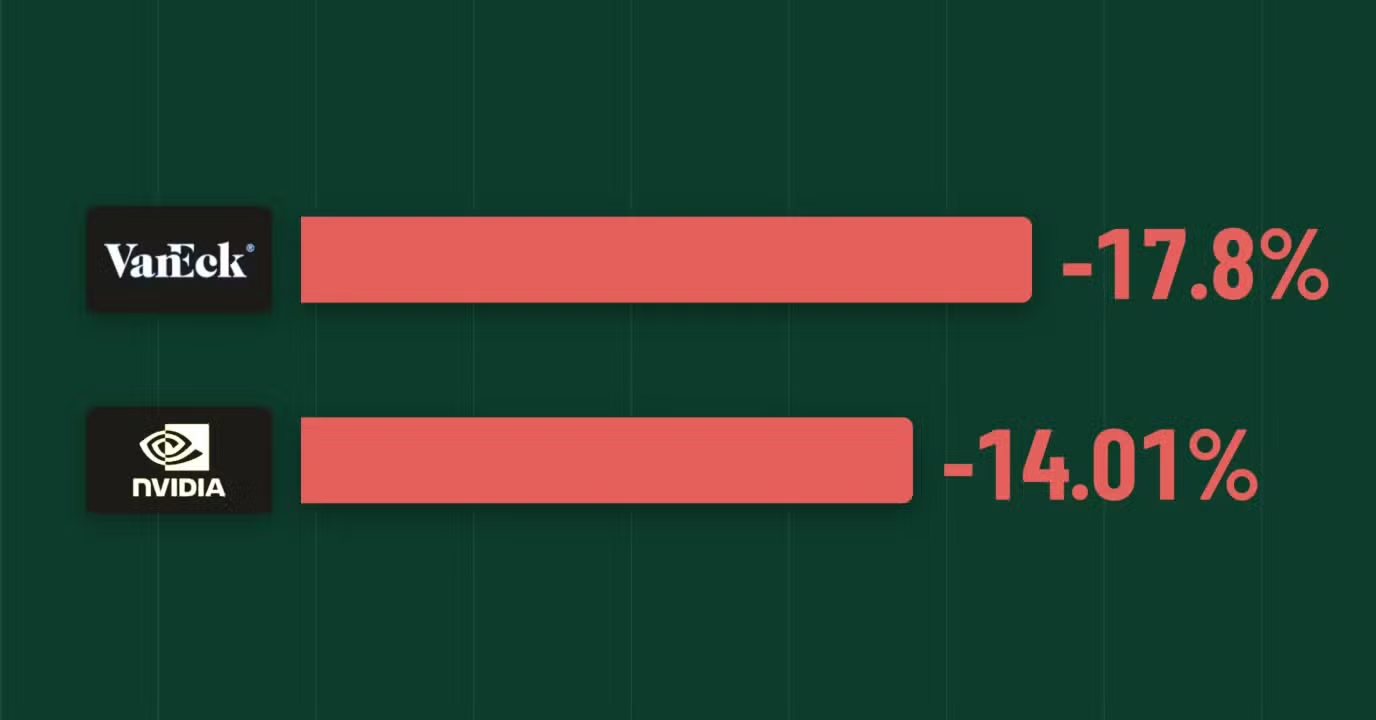
Chip Stocks are Now Repeating What Happened in 2001
Chip stocks just had their worst week since 2001, and the article argues they are now repeating the dot-com era's collapse. The PHLX Semiconductor Index fell 10.73% on Friday, November 20, 2026, and ended the week down 17.13%, its fourth-worst week since 1994, with every worse week coming as the dot-com bust extended. The author's argument rests on speed: the index took 151 days to fall 42.5% from its June 2026 record, against 214 days in 2000, yet he judges that today's leaders earn far larger profits than chipmakers did then, a difference strategist Matt Orton also stresses. NVIDIA, the largest holding in the VanEck Semiconductor ETF, dropped 14.01% on the Friday, and Jensen Huang has resigned as its CEO amid a reported SEC review of its accounting, though no misconduct has been established. 24/7 Wall St. infers the faster fall likely uses up the selling sooner unless forced sellers remain, and says NVIDIA's next quarterly filing is worth reading closely.

Anthropic IPO fails to calm AI jitters as tech stocks plummet
Anthropic's bumper market debut failed to dispel growing worries about the AI sector's massive investments and sky-high valuations as technology shares nosedived on Friday, November 20, dragging stocks into the red around the world. Anthropic shares briefly rocketed from an initial offering price of $83 to over $110 despite a broader Wall Street sell-off, but fell back to close below $89 on Friday. The tech-dominated Nasdaq closed down more than 5% and the S&P 500 shed 3.7%, while stock markets in Tokyo, Seoul and Taipei, home to leading AI-linked firms, tumbled between 5 and 6.2%. Nvidia slumped 14.01% after the US Commerce Department moved to close a loophole allowing Chinese companies to access its AI chips remotely, and its founder and CEO Jensen Huang resigned following revelations of extramarital affairs. Dan Coatsworth, head of markets at AJ Bell, says the shares' performance in coming days could provide one of the clearest tests yet of whether investors believe the enormous sums poured into AI will generate attractive returns.

Vanguard's VXUS Falls 7% and VWO Drops 8.5% This Week as Taiwan's Stock Market Posts Its Worst Week Since 1991. Here's the Loss on a $1 Million IRA and What Rebalancing Rules Say to Do
A 247wallst.com article reports that Vanguard's Total International Stock ETF (VXUS) fell 7% and its Vanguard FTSE Emerging Markets fund (VWO) dropped 8.5% in the week to Friday 20 November 2026, as Taiwan's main index lost 17.5% in its worst week since 1991. Taiwan is about a third of VWO and 8.69% of VXUS, which is what dragged the funds down. On a $100,000 stake, VXUS was down $7,043 and VWO down $8,514, counting Friday's thin pre-market trading. Using a hypothetical 67-year-old retiree with a $1 million IRA, the article calculates her international slice slipped only from 20% of the account to 19.4%, short of the 15% line both Vanguard's 5-point trigger and Larry Swedroe's 5/25 rule wait for, so the rules ask for no trade, and it advises leaving both stock funds alone.
Taiwan Stock Market Falls 6.2% to Cap Its Worst Week Since 1991 as KOSPI Closes Down 5.2% and Nikkei 225 Drops 5.1% in AI Chip Selloff
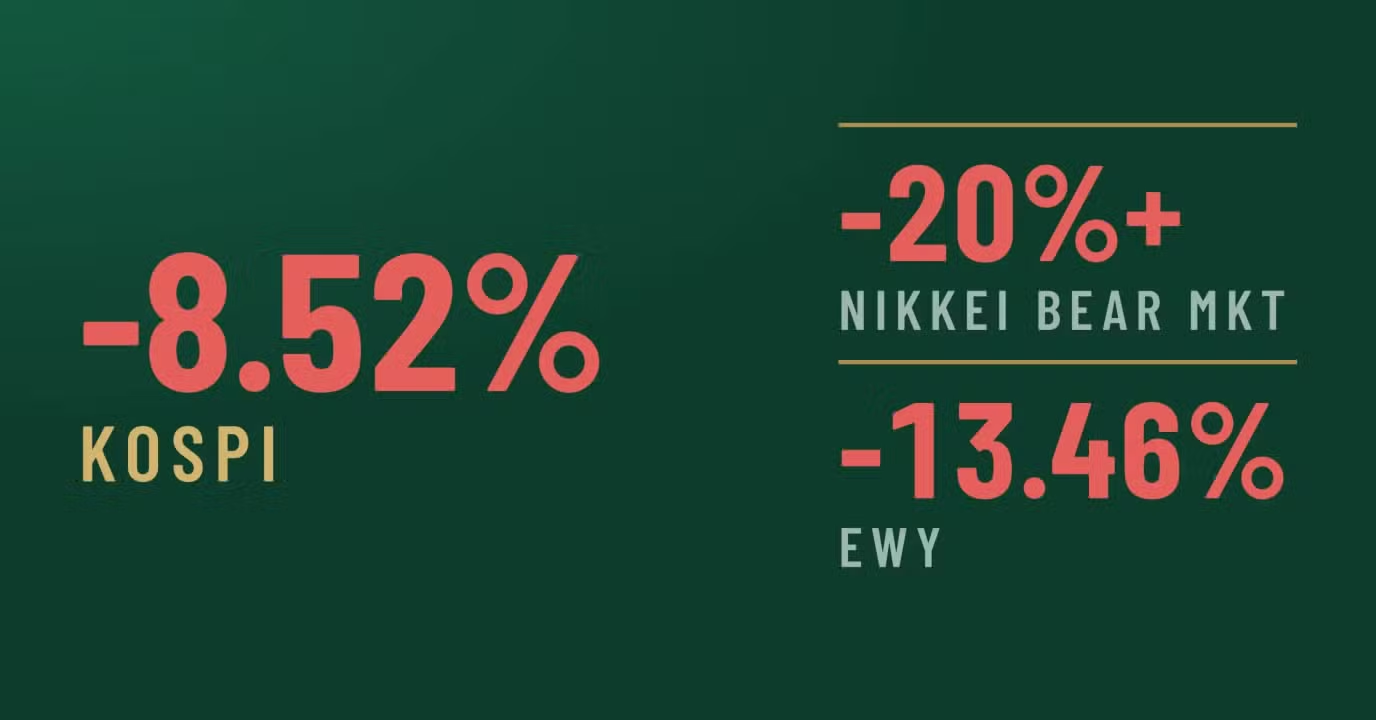
A 247wallst.com market report says an AI chip selloff that began on Wall Street ran through a full Asian session on November 6, 2026, with Taiwan's Taiex falling 6.2% to cap its worst week since 1991, South Korea's KOSPI closing down 5.2% and Japan's Nikkei 225 dropping 5.1%. For the week, the Taiex lost 17.5%, the KOSPI 7.9% and the Nikkei 7.7%, with heavy losses at chip and AI-linked names such as SoftBank, down 14.5%, Samsung Electronics and TSMC. The selloff followed U.S. losses on November 5, when the Nasdaq fell 2.3% after AMD sank 7.7% on a short seller's report. Author Jeremy Phillips reads the Seoul and Tokyo closes, each finishing below their midday levels, as a sign sellers stayed in control to the end, and notes the three markets' large weight in international and emerging markets index funds.

South Korea's Stock Market and the Nikkei 225 Sink More Than 4% as the AI Selloff Spreads From Wall Street. Here's How Much of a Target-Date Fund Is in Samsung, SK Hynix and TSMC
247wallst.com reports that South Korea's stock market and Japan's Nikkei 225 both sank more than 4% on the morning of November 20, 2026, as Wall Street's AI selloff spread to Asia. The KOSPI fell 5.04% to 4,879.10, its first trip under 4,900 since February 2026, and the Korea Exchange triggered a five-minute pause on program selling, while Samsung Electronics and SK hynix each dropped about 6% and Taiwan's Taiex lost 5.46% a day after falling 4.40%. To show what that means for ordinary savers, the article notes that Samsung, SK hynix and Taiwan Semiconductor make up about 1.7% of Vanguard's Target Retirement 2030 Fund, a default in many 401(k) plans, so a 61-year-old with $500,000 in such an account had about $6,907 in South Korea and the Seoul drop cost roughly $348.

South Korea's Stock Market Sinks 4.6% as KOSPI Heavyweights SK Hynix and Samsung Fall 6% After Wall Street's AI Selloff
South Korea's KOSPI sank about 4.6% on the morning of November 20, 2026, led by falls of roughly 6% in Samsung Electronics and SK Hynix after Wall Street's AI-driven selloff. In its news article, 247wallst.com reads the drop as Seoul catching up to a reversal New York had already marked in, made larger because the two chipmakers make up nearly half the KOSPI's value and take close to three percentage points off the index when both fall about 6%. It tempers that reading: the figures are morning prices, both companies' profits are at records, and a Seoul analyst says fund rotation after a large IPO tends to be short-lived. Foreign investors have sold heavily all year, a net 222 trillion won of KOSPI shares through November 17 with about 85% of it out of Samsung and SK Hynix, in what Kiwoom Securities analyst Han Ji-young called 'essentially... a full-fledged Sell Korea trend.'

Asian tech stocks fall sharply after Anthropic's blockbuster IPO
Asian tech shares fell sharply on the morning of Friday, November 20, 2026, as investors ran out of fresh catalysts after Anthropic's blockbuster initial public offering. Lingering concerns over artificial intelligence restrictions and export controls weighed on sentiment, and AI-related shares had already had a bumpy ride in the preceding weeks amid growing worries over the data center boom.

Taiwan Semiconductor Slipped 14% This Month Amidst Tech Contraction: 175% Gains to Materialize According to One Wall Street Desk
An article by Alex Sirois on 247wallst.com reports that Taiwan Semiconductor stock fell 13.72% in the month to November 19, 2026, amid a broad chip-stock selloff, yet Wall Street's targets imply large upside: the average target of $586.69 leaves 61.8%, and Aletheia Capital's Street-high $1,000.00 target implies about 175.8%. That $1,000.00 target is an outlier, the article notes, since it requires multiple expansion on top of earnings growth, while the consensus target only needs the current trend to hold. Author Alex Sirois leans toward opportunity, since earnings estimates are rising while the stock falls and the selloff has hit the whole sector, but sellers take control if AI revenue concerns turn into actual order cuts.

Chip Stocks Are Having Their Worst Two Months Since 2008
A 247wallst.com article reports that chip stocks are in their worst two-month stretch since 2008, with the PHLX Semiconductor Index down 23.9% since September 30 after falling 15.36% in October and another 10.09% in November so far, including a 5.28% drop on November 16 that left all 30 members lower. Only 11 two-month stretches since May 1994 have been worse, and none came after 2008. The decline follows SemiAnalysis cutting its AI accelerator spending forecasts by 28% for 2028 and 40% for 2030, a new Commerce Department rule restricting remote access to advanced U.S. chips, and NVIDIA's announcement that CEO Jensen Huang had resigned, which 24/7 Wall St. ties to about $735 billion in lost market value. 24/7 Wall St. says the 2008 comparison holds only if the index closes November below about 9,817, and points to NVIDIA's November 17 earnings report as the next test.
Asian markets mostly drop as AI stocks remain under pressure
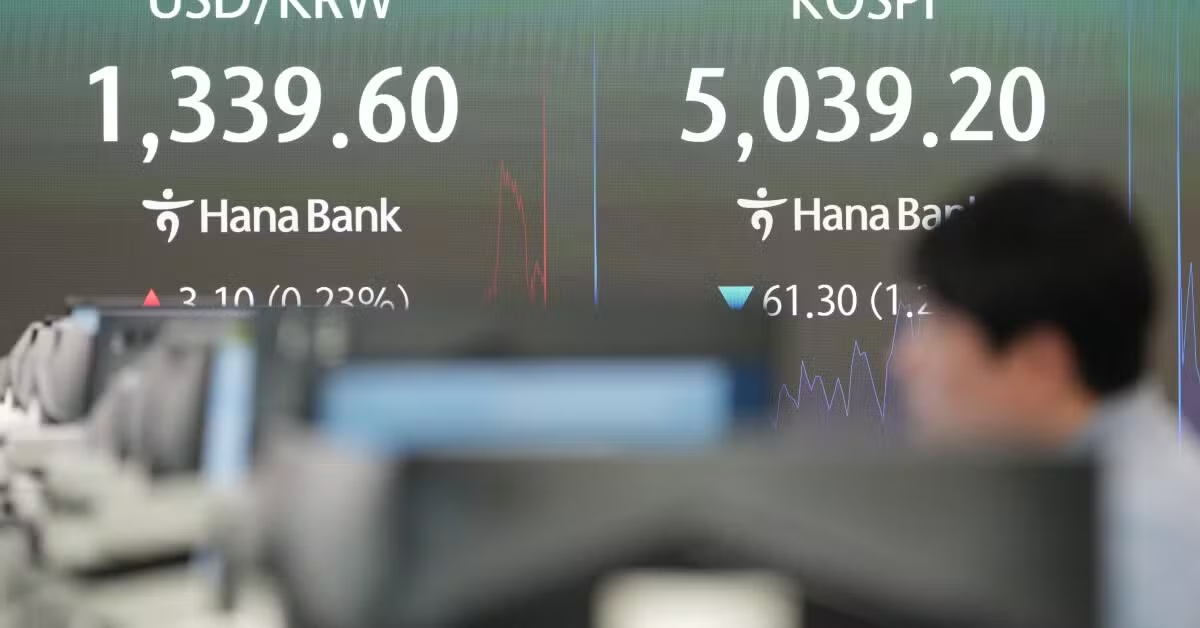
Asian shares mostly declined on 17 November 2026 as AI stocks remained under pressure ahead of Nvidia's latest earnings report, following a day of broad losses on Wall Street led by Nvidia itself. South Korea's Kospi fell 2.6% to its lowest level in six months and closed below 5,000 points for the first time since February, while SoftBank, an OpenAI investor, dropped 3.9% and has lost more than 33% in a month. Nvidia has lost $735 billion in market value since disclosures of CEO Jensen Huang's extramarital affairs and his ties to an alleged Chinese spy, and his resignation is the latest challenge for an AI industry already facing bubble criticism and new Trump administration rules restricting remote access to advanced U.S. chips. Interim CEO Colette Kress is set to report the quarterly results to Wall Street, and investors are also watching the ASEAN and APEC summits for progress on trade amid heightened geopolitical tensions.

