No EU budget deal in Brussels as Macron rebukes Le Pen's 'funny arrogance'
UE: faute d'accord, la question du budget pour 2028-2034 reportée au mois de décembre
rfi.fr· 4h
Pas d'accord sur le budget européen à Bruxelles, mais une passe d'armes entre Macron et Le Pen
france24.com· 5h
Les discussions sur le budget de l’Union européenne menacées par les échéances électorales françaises
lemonde.fr· 6h
Macron accuses ‘arrogant’ Le Pen of speaking as if she already won
politico.eu· 11h
Emmanuel Macron rabroue Marine Le Pen et sa « drôle d’arrogance »
«Il faut plus d’humilité quand on fait campagne, même si on s’y voit déjà» : le coup de griffe d’Emmanuel Macron à Marine Le Pen
liberation.fr· 13h
EN DIRECT, présidentielle 2027 | Emmanuel Macron à propos de Marine Le Pen : « C’est une drôle d’arrogance de penser qu’elle serait déjà en charge du destin de la France »
Paris and Berlin seek to shield EU budget from Marine Le Pen
ft.com· 29h
European Union leaders meeting at an extraordinary summit in Brussels on 26 November 2026 failed to overcome their deep disagreements on the EU's long-term budget for the 2028-2034 period, and no deal was reached. Negotiations deadlocked throughout the summit, with small-group meetings between states while other countries skipped certain sessions.
The divides ran deep. The frugal countries led by Germany called for further budget cuts with priority for defense and fighting immigration, while France defended a more ambitious budget and Poland, Italy and Spain called for more funds for agriculture and social and territorial cohesion. German Chancellor Friedrich Merz also made any agreement conditional on the participation, without exception, of all EU countries in the financing of Ukraine, a condition aimed at Hungary, the Czech Republic and Slovakia, which are reluctant to help finance Ukraine.
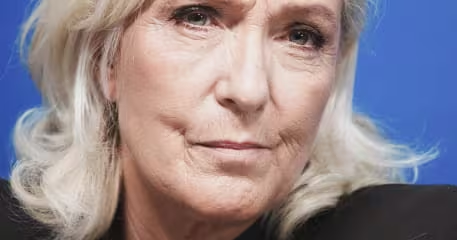
The fight over timing turned political in Paris and Berlin, which are seeking to shield the long-term budget from Marine Le Pen. The far-right leader, a contender in France's presidential election, accused Emmanuel Macron and EU institutions of deliberately rushing the negotiations so that she would have no say in them, denouncing what she called 'low political manoeuvres' aimed at concluding an agreement that would be difficult to challenge if she won. Macron, speaking at a press conference on the sidelines of the summit, warned that if negotiations are not wrapped up by 31 December he will stop participating and leave the task to his successor, saying he will not be in a position, politically or democratically, to reopen the discussion afterwards.
On the evening of 26 November, Macron appeared extremely disappointed by the direction the negotiations were taking, and his circle pushed back on Le Pen, saying the budget is not being negotiated in secret and is already at its fourth version since the European Commission presented its proposal in July 2025. On 27 November, EU leaders scheduled a meeting for 17 and 18 December to finalize the budget in time to transmit their multiannual proposal to the European Parliament.
Paris and Berlin are seeking to shield the EU's long-term budget from Marine Le Pen.
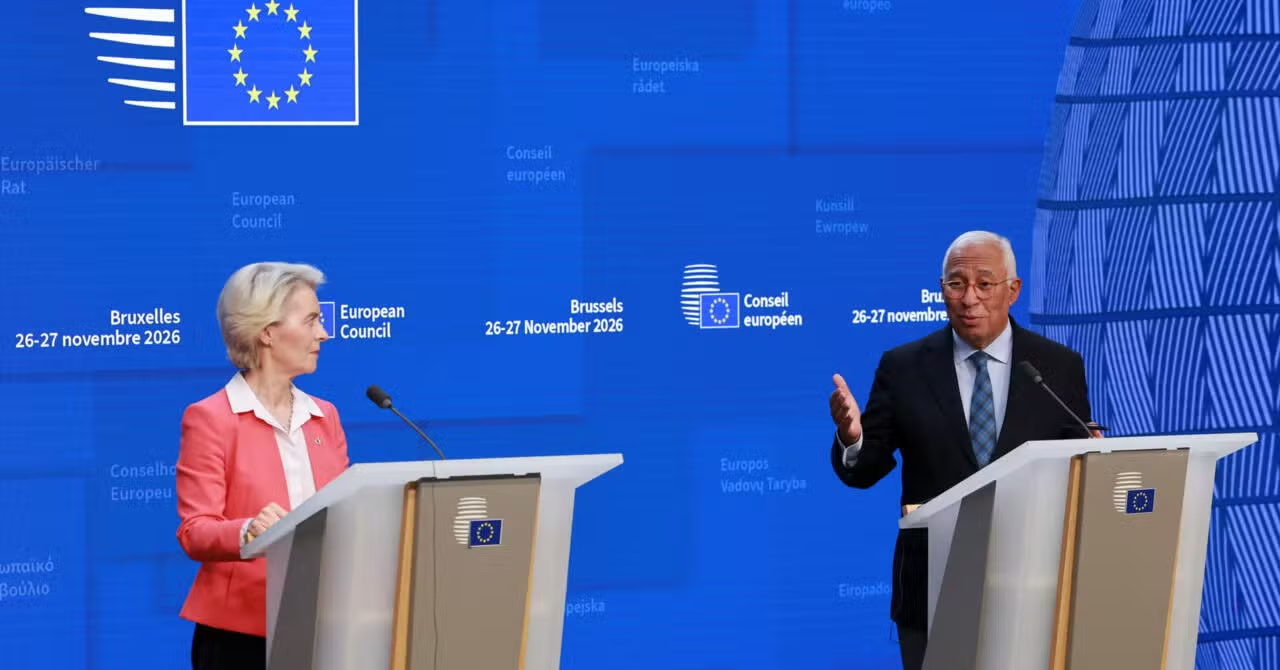
French President Emmanuel Macron spoke at a press conference on the sidelines of an extraordinary European Council meeting in Brussels on 26 November 2026 devoted to reviewing the EU's long-term budget for 2028-2034.
At the press conference in Brussels, Emmanuel Macron said of Marine Le Pen, 'It is a strange arrogance to think that she would already be in charge of the destiny of France'.
Emmanuel Macron said, 'Until proven otherwise, she has not been elected. And your servant is elected until 13 May 2027'.
Emmanuel Macron said more humility is needed when campaigning, because a candidate is not already installed even if they already see themselves in the post.
Marine Le Pen had earlier denounced 'low political manoeuvres' aimed at concluding an agreement on the EU's multiannual budget by the end of the year that would be difficult to challenge if she won the presidential election.
Emmanuel Macron said he was 'vigilant' about the respect of the French electoral calendar.
Marine Le Pen accused Emmanuel Macron and EU institutions of deliberately rushing negotiations on the EU's 2028-2034 budget to make sure she does not have a say in them.
Emmanuel Macron warned that if negotiations on the EU's 2028-2034 budget are not wrapped up by 31 December he will stop participating and leave that task to his successor, a post Marine Le Pen may win.
Emmanuel Macron said that after 31 December he will not be in a position, from a political or democratic standpoint, to reopen the budget discussion and bring it to a conclusion.
Emmanuel Macron appeared extremely disappointed by the direction the budget negotiations were taking on the evening of 26 November.
European Union leaders scheduled a meeting for 17 and 18 December to finalize the budget so that they could transmit their multiannual budget proposal to the European Parliament in time.
The circle of Emmanuel Macron said the EU budget is not being negotiated in secret and is already at its fourth version since the European Commission presented its proposal in July 2025.
Marine Le Pen accused European leaders of seeking to 'prevent the democratic expression of the French people' by rushing the conclusion of an agreement on the EU's next multiannual budget before the French presidential election.
Marine Le Pen said that if elected French president she would halve France's contribution to the EU budget and end military aid to Ukraine.
The leaders of the 27 European Union member states failed at the Brussels summit on 26 November 2026 to overcome their deep disagreements on the EU budget for the 2028-2034 period.
The frugal countries led by Germany called for further budget cuts with priority for defense and fighting immigration, while France defended a more ambitious budget and Poland, Italy and Spain called for more funds for agriculture and social and territorial cohesion.
Negotiations deadlocked throughout the summit, with small-group meetings between states while other countries skipped certain sessions.
German Chancellor Friedrich Merz made any budget agreement conditional on the participation, without exception, of all EU countries in the financing of Ukraine, a condition aimed at Hungary, the Czech Republic and Slovakia, which are reluctant to help finance Ukraine.
Friedrich Merz said a reduction of 200 billion euros is a 'lower limit' and that 'we will not stop there'.
Friedrich Merz said he is confident about the prospect of an agreement at the 'intense' summit planned for December.
Emmanuel Macron called the budget cuts a 'strategic error', warning of the risk of European investments falling behind China and the United States.
Emmanuel Macron promised to fight to fully preserve the current amount of the Common Agricultural Policy.
Emmanuel Macron said he does not think that resuming the discussions after the election is the preferable solution for Europe.
European Council President Antonio Costa played down the deadlock, saying 'It is a negotiation process' and that the summit was a 'necessary step'.