Macron warns EU budget cuts are a 'strategic error' as leaders meet over CAP funds
Emmanuel Macron rabroue Marine Le Pen et sa « drôle d’arrogance »
lemonde.fr· 23h
«Il faut plus d’humilité quand on fait campagne, même si on s’y voit déjà» : le coup de griffe d’Emmanuel Macron à Marine Le Pen
liberation.fr· 24h
Coupes budgétaires : l’Europe est en train de faire une «erreur stratégique», prévient Emmanuel Macron
Budget de l'UE: la France hausse le ton sur la Politique agricole commune
rfi.fr· 30h
Budget de l’UE : la France ne veut « pas un euro » de moins pour la PAC, prévient Emmanuel Macron
PAC : Emmanuel Macron recevra les syndicats agricoles mercredi pour faire le point sur le prochain budget européen
Avant le sommet de l’UE consacré à son budget, la France s’oppose à la baisse de 204 milliards proposés par le Conseil européen
French President Emmanuel Macron warned that cutting the EU budget would be a 'strategic error' as European Union leaders moved to negotiate the bloc's 2028-2034 spending, with farm funding the main fight. France had already spoken out against the draft budget on 21 November 2026, and on 25 November Paris called the proposal put forward by European Council President Antonio Costa on the preceding weekend very disappointing, because it lowers the budget for the common agricultural policy.
Macron said France's current CAP envelope is 66.25 billion euros of European credits, a level France wants kept in the next multiannual budget, and he had promised farmers in early 2026 that no euro would be missing from the next CAP cycle for 2028-2034.
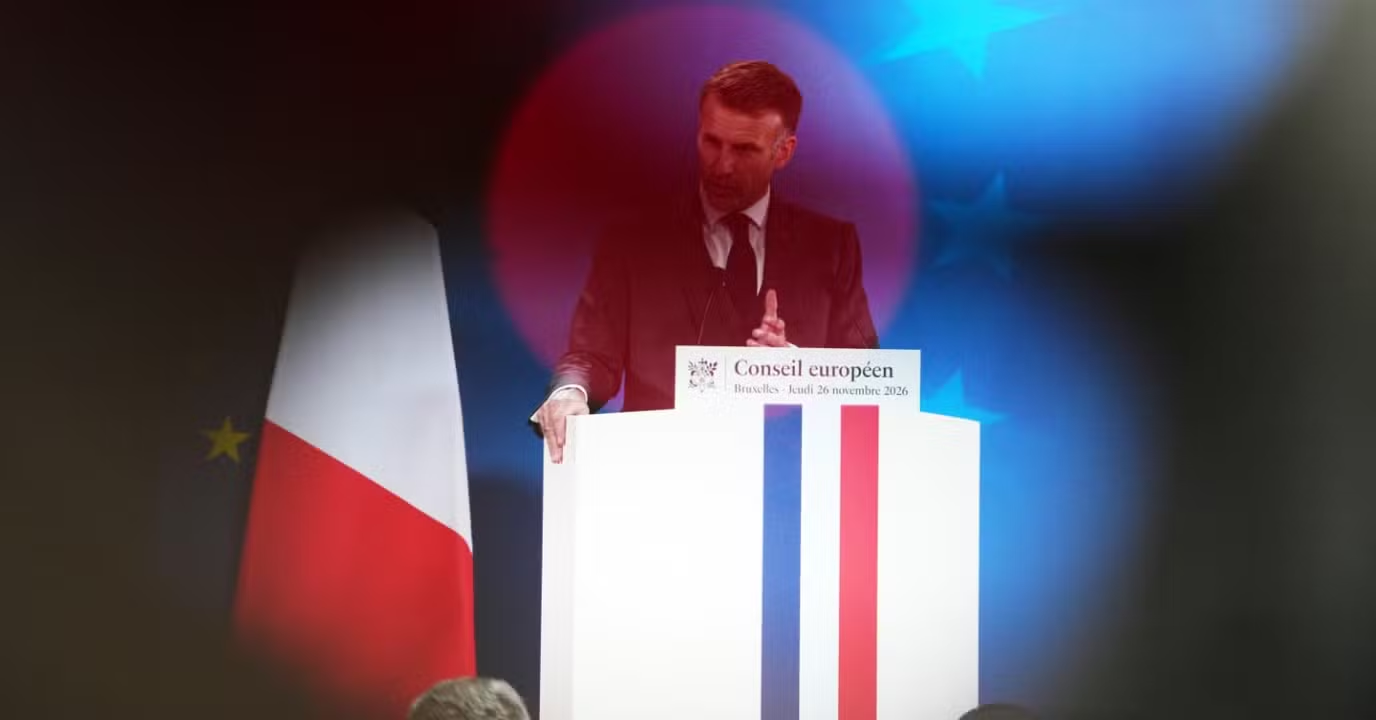
On 26 November 2026, EU leaders met in Brussels at an extraordinary European Council to negotiate the Union's 2028-2034 budget. The draft under negotiation reserves more than 293 billion euros for farmer income support under the CAP, against 282 billion for 2021-2027. The European Commission, however, proposes ending the CAP's separate budget and integrating it into cohesion policy within one large common fund, a free envelope states could use for agriculture, fisheries, cohesion, asylum or immigration, letting agricultural funds compete with other priorities from 2028.
France called for the protected share of the budget set aside for the CAP to be increased and argued for an ambitious budget, opposing the cut of 204 billion euros proposed by the European Council ahead of the summit. Costa had presented a budget reduced by 204 billion euros from the European Commission's proposal, which stood at 2,000 billion euros in 2025. Poland, Italy and Spain likewise called for more European funds, while the frugal countries, led by Germany, refused any increase and demanded cuts in the cohesion fund. Outside the talks, several hundred farmers planned to demonstrate in Brussels on 26 November to defend agricultural financing.
France warned that the budget proposal put forward by European Council President Antonio Costa on the preceding weekend was very disappointing.
The proposal on the table provides for a lower budget for the common agricultural policy in the EU's 2028-2034 budget.
Macron said France's current CAP envelope is 66.25 billion euros of European credits and that France wants to keep that level in the 2028-2034 multiannual budget.
Macron promised farmers in early 2026 that no euro would be missing from the next CAP cycle for 2028-2034.
Emmanuel Macron warned before agricultural unions at the Elysee Palace on 25 November that France wants 'not one euro' missing from the common agricultural policy in the future EU budget, calling it the first condition of a possible agreement.
Macron said the common agricultural policy is France's first objective in the budget negotiations.
Annie Genevard said the week before that if the EU budget devoted to the CAP does not increase, the presidential commitment that 'not a centime will be missing' would pass through internal arbitrations within the government.
EU leaders met in Brussels on 26 November 2026 at an extraordinary European Council to negotiate the Union's 2028-2034 budget.
The draft budget under negotiation reserves more than 293 billion euros for farmer income support under the CAP, against 282 billion for 2021-2027.
The European Commission proposes to end the CAP's separate budget and integrate it into cohesion policy within one large common fund, with a free envelope states could use for agriculture, fisheries, cohesion, asylum, or immigration, leaving national leeway that would let agricultural funds compete with other priorities from 2028.
France called for the protected share of the budget set aside for the CAP to be increased and argued for an ambitious budget.
Poland, Italy, and Spain called for more European funds in the 2028-2034 budget, while the frugal countries, led by Germany, refused any increase and demanded cuts in the cohesion fund.
Several hundred farmers planned to demonstrate in Brussels on 26 November to defend agricultural financing.
Annie Genevard told farming representatives at the Elysee on 25 November that 'We will have to fight'.
Emmanuel Macron warned that if there is no agreement he will not continue negotiations on the next budget beyond December.
The FNSEA said the risk of the reform is creating distortions of competition between states that would fund certain actions and states that would not.
EU leaders negotiating the 2028-2034 budget aimed to reach an agreement by Christmas.
France opposed the cut of 204 billion euros proposed by the European Council for the EU's future budget ahead of the summit on 26 November 2026.
European Council President Antonio Costa had presented a budget reduced by 204 billion euros from the European Commission's proposal, which stood at 2,000 billion euros in 2025.
France had already spoken out against the EU's 2028-2034 budget on 21 November 2026.
At the Brussels summit on 26 November, Emmanuel Macron renewed his warning that the EU is making a 'strategic error' with the cuts proposed for its future 2028-2034 budget and said 'We are going to formalize a decline in European public investment compared with China and the United States.'
In a statement on 21 November 2026, the French presidency called the new negotiating box for the next European multiannual budget 'very disappointing', saying 'the account is not there', in particular on the CAP and on guaranteeing farmers' income support.