US chip curbs send fallout through Southeast Asia as TSMC halts some Chinese orders
New US Chip Rules Threaten Pain for Southeast Asia
bloomberg.com· 25h
Treasury secretary says no further restrictions are needed for Nvidia chip exports to China
apnews.com· 38h
TSMC Is Halting Some China Chip Orders as a New U.S. Rule Kicks In
247wallst.com· 2d
US AI chip curbs hit China tech stocks, spur self-sufficiency push
reuters.com· 2d
Chip supply chain warns of broader disruption from new US export controls
nikkei.com· 2d
'All Chinese players' will rely on domestic chips eventually: Tencent
Southeast Asia’s data center boom leaned on Chinese demand. New U.S. rules put that pipeline at risk
cnbc.com· 4d
Singapore defends status as a ‘trusted business hub’ after the U.S. proposes extending AI chip controls to Southeast Asia | Fortune
fortune.com· 5d
Singapore, Malaysia grapple with US chip curbs targeting Southeast Asia
Clampdown on China Chip Loophole Puts Billions in Loans at Risk
Chips down, knives out
politico.com· 5d
Bessent pushed new AI chips rule over Commerce objections
US moves to block China’s remote access to AI chips amid Nvidia scandal
aljazeera.com· 5d
Trump sees ‘both sides’ as Nvidia scandal fuels feud between top aides
washingtonpost.com· 5d
Asia’s Data Center Hotbed Hit by US Chip Curbs as Trump Visits
Trump administration tightens restrictions on flow of AI chips ahead of China trip | CNN Politics
cnn.com· 5d
Commerce closes China’s backdoor to Nvidia chips after White House steps in
Commerce Department Moves to Crack Down on Chip Exports
wsj.com· 5d
Trump administration orders Commerce to close chip loophole at heart of Nvidia scandal
Trump Administration Moves to Close A.I. Chip Loophole Ahead of China Trip
nytimes.com· 5d
Nvidia fallout: Commerce cracks down on third-country loophole that allowed China to use computing power
US Moves to Limit Remote Access to Advanced AI Chips
Lutnick Pushed to Weaken Chip Rules That Overlap With His Family Business
Bessent blames Lutnick's Commerce Department for not restricting Nvidia chips to China
pbs.org· 8d
The US Commerce Department issued an interim rule on November 16, 2026, barring restricted countries from renting advanced AI computing power from data centers abroad.
The rule requires licenses for advanced chip exports to Indonesia, Malaysia, Singapore, Thailand and Brazil and restricts data centers serving Chinese, Russian and Iranian firms.
The Bureau of Industry and Security said Treasury and the National Security Council wrote the rule, exposing a rift with Commerce Secretary Howard Lutnick.
The rule took effect on November 19; Taiwan Semiconductor Manufacturing halted some advanced orders from Chinese designers and held back shipments pending licenses.
Chinese tech stocks slumped, with Z.AI down 22 percent and MiniMax down 34 percent, and companies raced toward a domestic AI ecosystem.
ByteDance and Alibaba had used remote access to Nvidia chips in Southeast Asian data centers, and the curbs threaten the region's data center boom.
Scott Bessent publicly said Treasury, State, Defense and the US Trade Representative had favored export controls on Megaspeed International for months while the Commerce Department was in charge.
Scott Bessent said he was frustrated with the Commerce Department's delay in implementing controls over the export of certain Nvidia chips to China.
Bessent said President Trump made it very clear that China should not receive any Nvidia chips above the H100.
Commerce Secretary Howard Lutnick had advocated a less stringent version of the chip controls under consideration, drawing criticism from lawmakers and administration officials.
The action came after rising criticism of Commerce Secretary Howard Lutnick over the possible diversion of Nvidia's most advanced chips to China.
The rule restricts overseas data centers supplying significant computing power to companies headquartered in high-risk countries including China, Russia and Iran, and requires customer due diligence.
US technology companies could receive exceptions under the rule.
The rule requires companies to obtain licenses before selling or shipping advanced AI chips to Indonesia, Malaysia, Singapore, Thailand and Brazil, flagged as higher-risk for diversion to China.
The Bureau of Industry and Security said the interim final rule was written by and at the direction of the Treasury Department and the National Security Council.
Public comments on the interim final rule are due 60 days after its publication in the Federal Register.
Craig Singleton said "the fact that Treasury and the National Security Council wrote and directed the rule suggests the White House felt it had to step in and get it done."
Sam Bresnick of Georgetown University's Center for Security and Emerging Technology said the impact on remote chip access "is going to be pretty immediate because you're going to have companies outside of China violating laws if they allow Chinese companies to access the chips."
The Bureau of Industry and Security said "the rule is designed to ensure that existing restrictions on access to sensitive American technology cannot be circumvented through remote computing arrangements involving data centers in third countries."
The US Commerce Department issued an interim final rule on November 16, 2026, barring companies in restricted countries from renting advanced AI computing power from data centers abroad.
The rule replaces a Biden-era export control rule that the Trump administration let lapse the year before.
Sources said the Commerce Department resisted the rule while Treasury Secretary Scott Bessent, Secretary of State Marco Rubio and US Trade Representative Jamieson Greer pushed for it.
A senior administration official said officials were bracing for a Chinese response that might come after Trump's visit.
President Donald Trump said of Scott Bessent and Howard Lutnick, "They're fine. One wants to be friendly with China, and one wants to have a blow up with China."
Trump said he has no plans to fire Commerce Secretary Howard Lutnick and defended delaying the Megaspeed designation, telling CNN's Alayna Treene that acting without a delay could have produced a blow-up with China.
Chinese foreign ministry spokesperson Guo Jiakun called the new restrictions "a typical case of economic coercion and long-arm jurisdiction" and said Beijing "will take necessary measures to resolutely safeguard its legitimate rights and interests."
Chris McGuire called the rule "the first good-faith effort to actually close loopholes in export controls in a year and a half."
The rule was announced shortly before President Donald Trump traveled to Southeast Asia and ahead of a meeting with Chinese leader Xi Jinping.
The White House ordered the Commerce Department to close the remote-access loophole, and hours later President Donald Trump softened, saying he understood both sides of the debate.
The Commerce Department said the new rule would take effect on November 19, 2026.
Chris McGuire said the Bureau of Industry and Security statement shows the administration is not on the same page, that it is dangerous to trust Commerce leadership to enforce the rule, and that the loopholes will continue to be exploited.
Christopher Padilla said he could not recall another case of an agency publicly distancing itself from a rule issued under its own authority, and warned the statement opens an opportunity for China to find workarounds.
Governments and companies in Singapore and Malaysia rushed to assess the fallout from the new US chip export rules.
Singapore said it was engaging US authorities and affected companies and exploring trusted access for its companies, while Indonesia said it was reviewing the rule.
A Singapore government spokesperson wrote that "Singapore is a trusted international business hub, underpinned by a strong rule of law" and that the country does "not condone companies using their association with Singapore to circumvent or violate the laws of other countries."
Thailand's vice minister for commerce, Kirida Bhaopichitr, said "We don't want to be a hub for transshipment of these goods from the U.S. to China, so we'll more closely scrutinize these companies, especially data centers."
Digital Realty's APAC head Serene Nah said "It's still an interim rule," and the company's executives said they remain positive the new rule will not dampen demand for AI compute in Southeast Asia.
Southeast Asian facilities already serving large Chinese customers have 90 days to apply for a US license or face future export restrictions.
Malaysia's investment, trade and industry minister, Johari Abdul Ghani, said companies that want to be in the game have to follow US regulations.
Leah Fahy of Capital Economics forecast that any investment slowdown from the rules could knock 0.2 percentage points off Malaysia's GDP growth forecasts through 2028.
Jessica Brandt of the Council on Foreign Relations said the new restrictions will likely make building and operating the data centers "slower and costlier".
Chris McGuire urged Washington to close the loophole that would let Chinese companies rent computing power from US data centers before it is exploited.
Tencent President Martin Lau says the latest US curb will only accelerate the development of Chinese chipmakers and that all Chinese tech companies ultimately will rely on domestic chips and supply chains.
Industry executives in the semiconductor supply chain say the new export controls are having a far broader impact than initially expected, reaching beyond advanced AI chips and beyond China.
Chinese technology stocks slumped in the two weeks after the curbs, with Z.AI down 22 percent and MiniMax down 34 percent.
Alibaba CEO Eddie Wu says the new US rule will affect Alibaba's products and services next year and could force the company to lower its 20-gigawatt computing target.
Alibaba says its cloud revenue growth will likely slow to 30 to 45 percent next year from 53 percent in the latest quarter as it adjusts to the restrictions.
Tencent President Martin Lau says the US restrictions will slow the development of Tencent's next-generation AI model in the near term and accelerate China's shift towards domestic chips.
Tencent says its cloud business will be largely unaffected because its AI services rely mainly on inference workloads that can run on domestic chips.
Counterpoint Research's Neil Shah says AI startups such as Moonshot AI, Z.AI, MiniMax and DeepSeek will be hit harder than hyperscalers, with the impact "far more prominent" in frontier model training.
Iluvatar CoreX, a chip supplier to ByteDance, said it has built close ties with domestic semiconductor supply-chain partners to safeguard supplies, and its shares fell 17 percent on market concerns.
The US Commerce Department's interim final rule, "Addressing Remote Access to Advanced Semiconductors," took effect on November 19, 2026.
The cutoff for Chinese AI chip designers ordering chips from Taiwan Semiconductor Manufacturing moved to 16nm, and the company told affected customers to stop ordering without US export licenses.
Affected Chinese customers of Taiwan Semiconductor Manufacturing will generally be limited to 28nm and 40nm nodes if their chips avoid high-bandwidth memory and advanced packaging.
Taiwan Semiconductor Manufacturing is screening orders placed through middlemen in Taiwan, the US, Europe, Japan and Southeast Asia, checking customers' parent companies, shareholders and shipping routes.
Taiwan Semiconductor Manufacturing and Samsung Electronics have held back some shipments to Chinese customers while export licenses are pending.
Treasury Secretary Scott Bessent said the proper chip restrictions are in place, remote access has been curtailed, and no further limits on older Nvidia chip sales to China are needed.
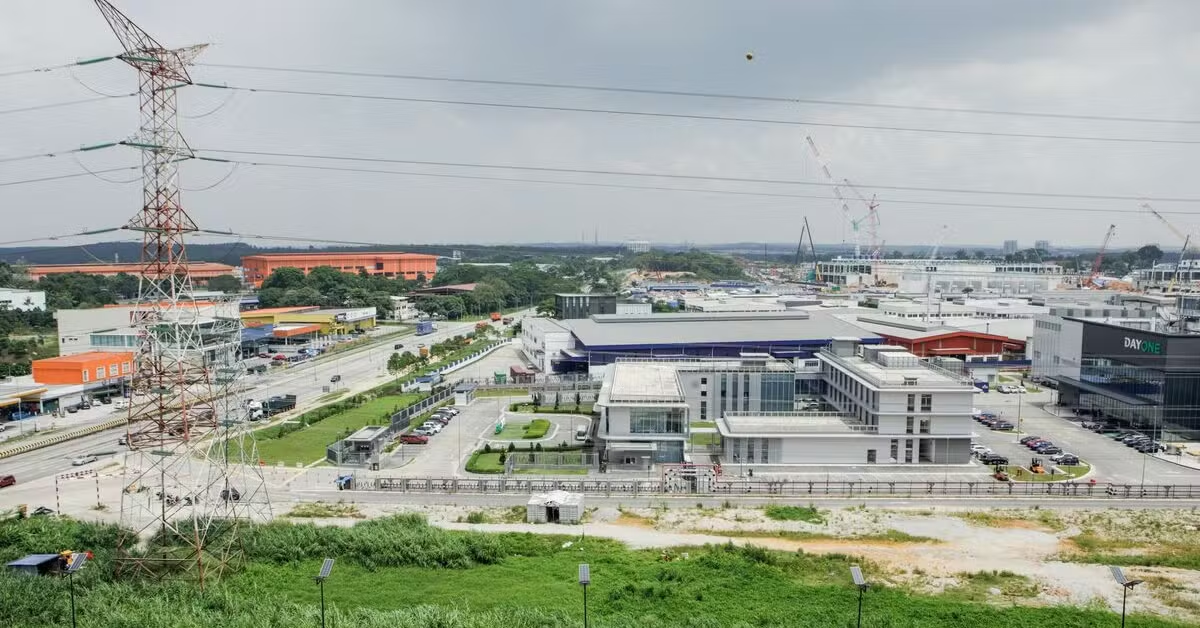
The Trump administration's latest round of restrictions on advanced AI chips, dropped the week before November 21, 2026, sent shockwaves through Southeast Asia as well as Beijing.
Claire Jiao says the chip restrictions set off shockwaves among Southeast Asian neighbors that had built a lucrative business serving Chinese demand.

