
Trump’s grip on GOP tested as MAGA allies head for exit
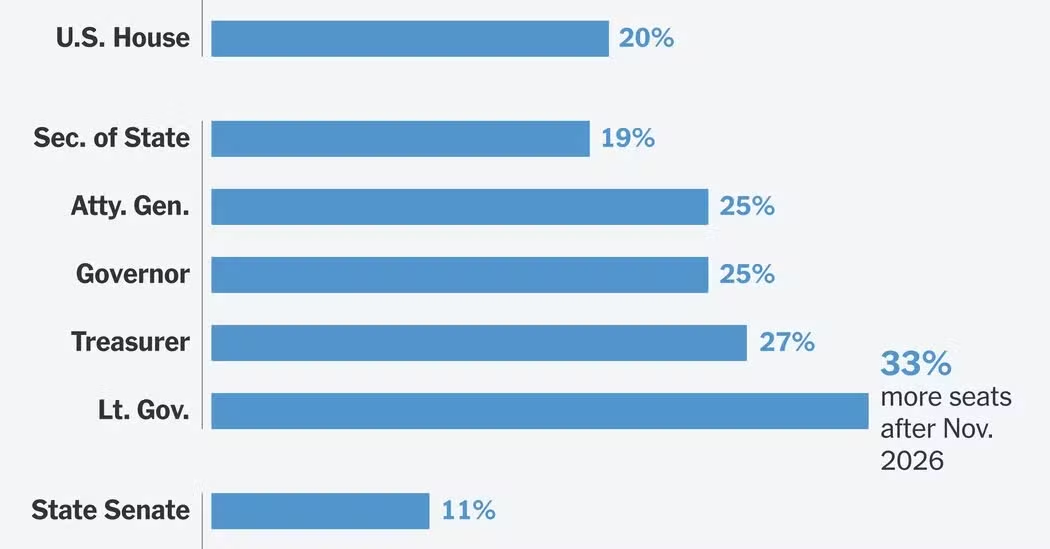
See How Much Democrats Gained, From Congress to State Races
Democrats won sweeping gains in the November 2026 elections, flipping nine U.S. Senate seats, 44 net House seats, six governorships, and hundreds of state legislative seats, even in states Donald Trump won in 2024. They swept every statewide race on the ballot in Texas and flipped six state legislatures, leaving almost half of U.S. states under full Democratic control. A New York Times analysis of census data puts three-quarters of Americans under a Democratic governor once those elected take office, up from 57 percent. The article says the new governing power could allow checks on the Trump administration and passage of favored policies, though it is unclear whether Democrats can hold the seats.
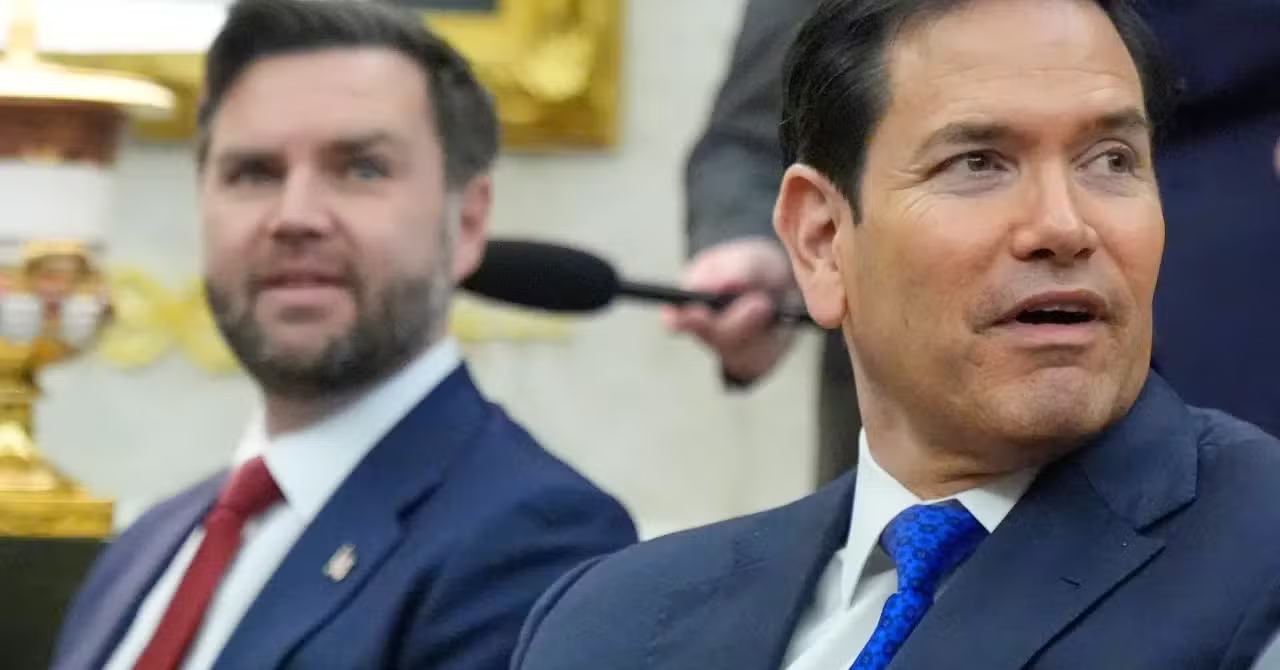
Ben Shapiro says Republicans need a ‘complete rebuild’ before 2028
In a NewsNation report, commentator Ben Shapiro says Republicans face a much bigger challenge than picking a new 2028 nominee: the party's coalition broke in 2026 and its next effort will have to be 'almost a complete rebuild' rather than a copy-and-paste of Donald Trump's movement. He pushed back on the idea that a nominee can simply inherit Trump's supporters, and argues candidates may need to distance themselves from the administration's baggage while still appealing to the base. That casts doubt on Marco Rubio, who leads early 2028 polls and drew attention at a White House briefing the Associated Press called a public 'audition' for successors. Shapiro suggests 2032, citing Rubio's relative youth, 'might not be a terrible idea' instead, while Trump has declined to endorse a successor.
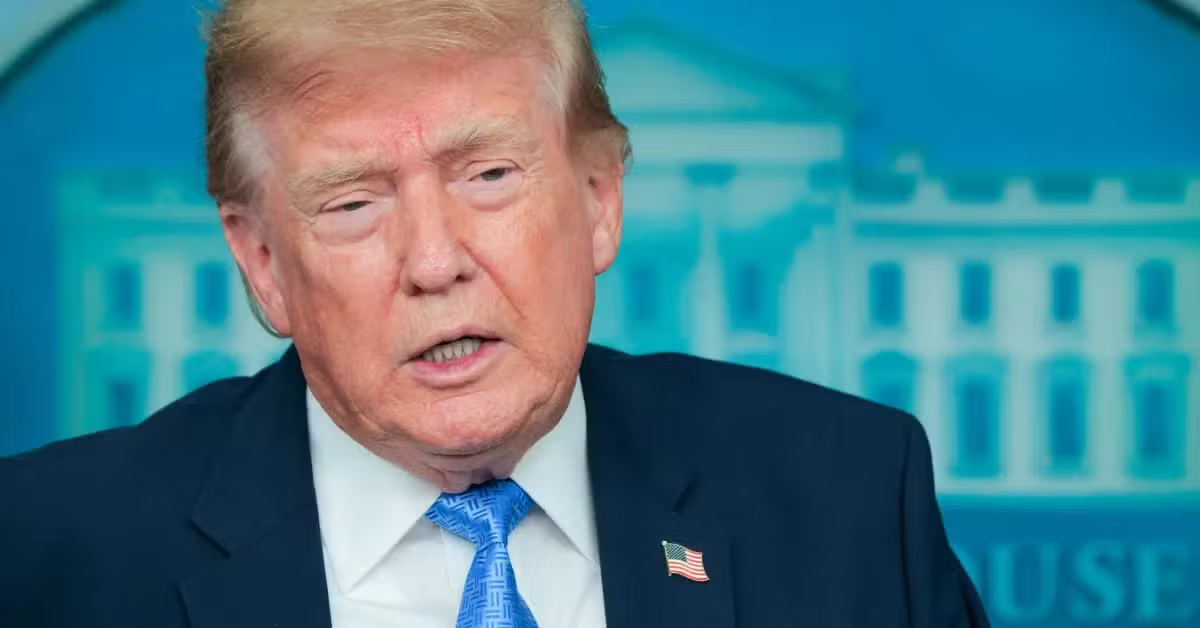
Trump shares inaccurate ranking of presidents' midterm losses
Newsweek reports that President Donald Trump shared a Truth Social graphic ranking the top 10 presidents' midterm losses, placing his 2026 defeat eight seats behind seven past presidents, days after Republicans lost both chambers of Congress on November 3, 2026. The fact-check finds the graphic miscounts, including a Clinton 1994 total of 62 rather than 63 and wrong figures for Reagan's 1982 midterms, and omits bigger defeats, notably Warren G. Harding's 85-seat loss in 1922 and Grover Cleveland's 1894 loss of 125 House seats, which Newsweek says surpasses any other midterm defeat. It is Trump's second such graphic in days, and he has blamed candidates, Fox News, the war in Iran and gas prices while insisting the results would have differed if he were on the ballot.
US midterms 2026: What happens before the new Congress takes office?
Al Jazeera explains in an explainer what happens between the Democrats winning both houses of Congress in the 2026 midterms and taking power in January 2027. The old Congress returned on 9 November for a lame-duck session, with Republicans still holding majorities and able to pass laws until the 120th Congress starts at noon on 3 January 2027. Urgent business includes approving another funding bill by an 11 December deadline, which Al Jazeera calls one of the biggest challenges, since failure could partly shut down the government, while parties pick leaders: Republicans re-elected John Thune, and Chris Van Hollen is challenging Chuck Schumer for Senate majority leader in a vote on 1 December. Al Jazeera notes Democratic control does not guarantee their priorities become law, since Trump can veto legislation, but the party will gain committee chairs with subpoena power, control of Senate confirmations, and the ability to investigate his administration, and Hakeem Jeffries has called for ending the war in Iran, stopping the tariffs, and reversing Medicaid and food assistance cuts.

Trapped GOP chair admits grim truth after massive midterm wipeout
In its own report, RawStory relays a Politico survey of more than two dozen Republican state and county officials after Election Day: party leaders reeling from their worst midterm losses in a generation have reached the bleak conclusion that Donald Trump is not going anywhere in 2028. The officials blame a poor political environment, driven by Trump's handling of the economy and the war in Iran, yet many stopped short of blaming him himself, which Politico calls a sign that criticism of Trump remains verboten within the party. The interviews show a party at a loss: some officials want to move on entirely, among them Oklahoma GOP chair Charity Linch, who says Republicans should let the Trump era be gone by 2028, while others, like Kentucky chair Robert Benvenuti, say Trump should not take a back seat, and many are simply resigned to him doing whatever he wants. A Reuters/Ipsos poll put Trump's approval at 32% overall and 70% among Republicans, and a Politico poll found 56% of his own 2024 voters think the GOP needs distance from him, but Trump has endorsed RNC chair Joe Gruters for another term, and an RNC spokesperson quoted in a statement calls him the party's unequivocal leader.

‘Grandfather’ or ‘godfather’? Republicans know they’re stuck with Trump
POLITICO reports that Republican leaders trying to recover from their midterm losses accept that President Trump will keep a dominant role in the party into 2028, even though some wish he would go. The article draws on interviews with more than two dozen Republican state and county officials since Election Day, who differ on whether to move on from Trump, keep him involved, or simply accept that he will do what he wants. No one expects the party to distance itself from Trump, and he has already moved to hold his grip by endorsing RNC Chair Joe Gruters for another term and directing his super PAC to fundraise ahead of 2028, though some chairs back KC Crosbie's challenge to Gruters instead. Officials largely blame the poor political environment rather than Trump himself for the losses, and a POLITICO poll found 56% of his 2024 voters think the party needs to distance itself from him, while Kansas chair Danedri Herbert voices the piece's question by hoping Trump becomes the party's mentor grandfather rather than its godfather.
Democrats Have 56 Senate Seats. Is That Enough? - Newsweek
Newsweek reports that Democrats, strengthened by Mary Peltola's victory in Alaska, now hold 56 Senate seats, their largest majority since the opening months of Barack Obama's presidency, and together with an estimated 259 House seats will control Congress for the final two years of Donald Trump's second term. The piece's point is that this margin cannot govern alone: Democrats would need four Republicans to break a filibuster and 11 Senate and 31 House Republicans to override a veto, leaving legislation uncertain. What they gain instead is broad authority to investigate the administration, stall Trump's nominees, subpoena documents and force politically difficult votes, ending the leverage one pivotal Democrat like John Fetterman previously held. Scholars quoted, including Philip Wallach and Sarah Binder, note the red-state wins created a broad caucus with competing interests, and Newsweek concludes the majority could reshape Washington not by letting Democrats govern but by forcing a weakened president to reckon with Congress again.
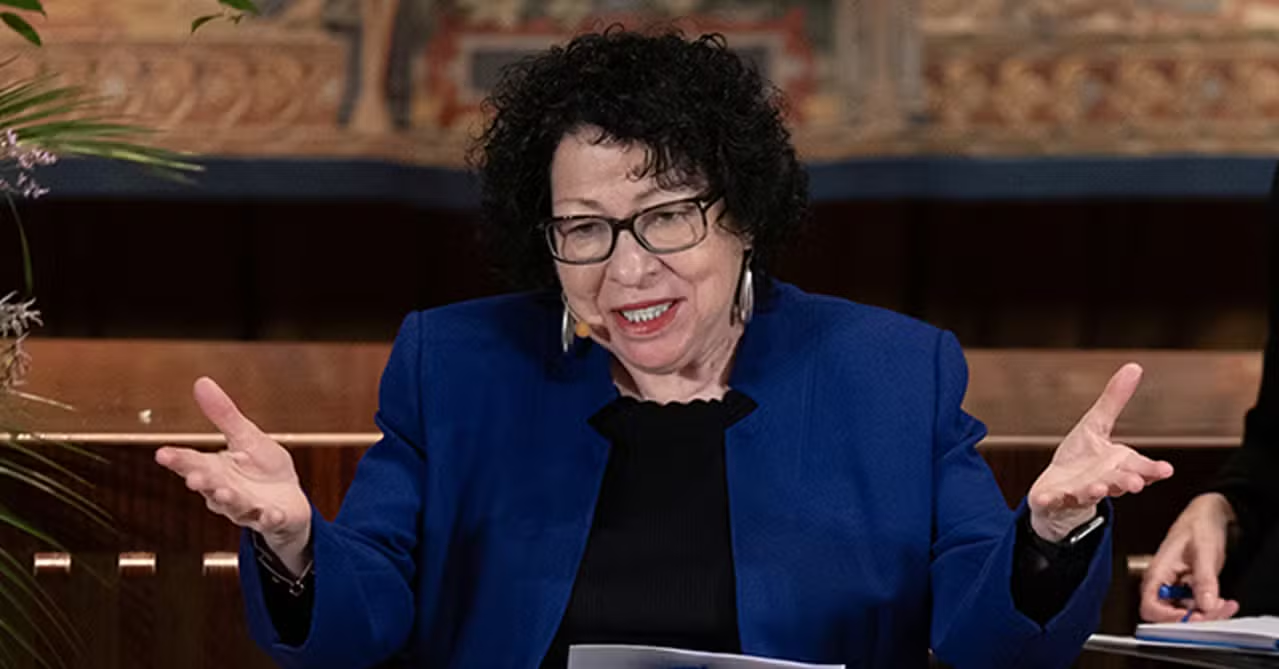
Sotomayor suggests Supreme Court colleagues may applaud midterm results as safeguard
In a news report, Supreme Court Justice Sonia Sotomayor suggests her colleagues may applaud the Democrats' sweeping midterm victories, because she says they were counting on elections as an institutional safeguard when they issued the ruling granting Donald Trump and former presidents broad criminal immunity. Asked whether her colleagues relied on elections as a check, she replied 'absolutely', though she does not know whether they liked the election's message. Speaking at an American Philosophical Society event in Philadelphia, she continued to criticize the 6-3 immunity decision, saying her colleagues missed that no man is above the law and hoping it will be overturned. In her view, the remaining institutional controls in the political system are not enough.

Black voters swung the South. Their message to Democrats: Don't squander this
A Mother Jones feature reports that Black voters powered the Democrats' 2026 midterm wins across the South and, gathered at the Facing Race conference in Raleigh days afterward, warned the party not to squander the moment. Politico's analysis of initial election data found majority Black counties in the South saw the greatest turnout surges, and according to Nationhood Lab, CNN exit polls showed democracy ranked behind only the economy among voter concerns in Georgia, South Carolina, Mississippi, and Florida, where Democrats made significant gains. Keisha Lance Bottoms became the first Black woman governor in US history, Scott Colom won a Mississippi Senate seat that makes him the state's first Black senator since Reconstruction, and Roy Cooper flipped a North Carolina Senate seat. Honored at the conference, Stacey Abrams told attendees Black voters 'were never going to let' discrimination stop them and called on them to hold newly elected officials accountable, while warning in her newsletter that the country still lives under what political scientists call competitive authoritarianism. A central complaint ran through the gathering: Mother Jones reports Senate Majority PAC gave Sherrod Brown in Ohio $150 million but Colom only $2.2 million, and Angie Nixon in Florida and Jamie Davis in Louisiana seemingly got no direct funding at all. Colom, days after his win, said the party 'can't continue to allow that lack of investment,' and attendees saw the victories as a starting point, not an ending.

After winning historic trifecta, Arizona Democrats could enact sweeping pro-voting agenda
Democracy Docket reports that Arizona Democrats will hold the governor's office and both legislative chambers in 2027 for the first time in six decades, positioning them to pass pro-voting measures like the Voters First Act and the Arizona State Voting Rights Act. The article notes some voter-approved rules, including Proposition 200's citizenship requirements, cannot simply be repealed.
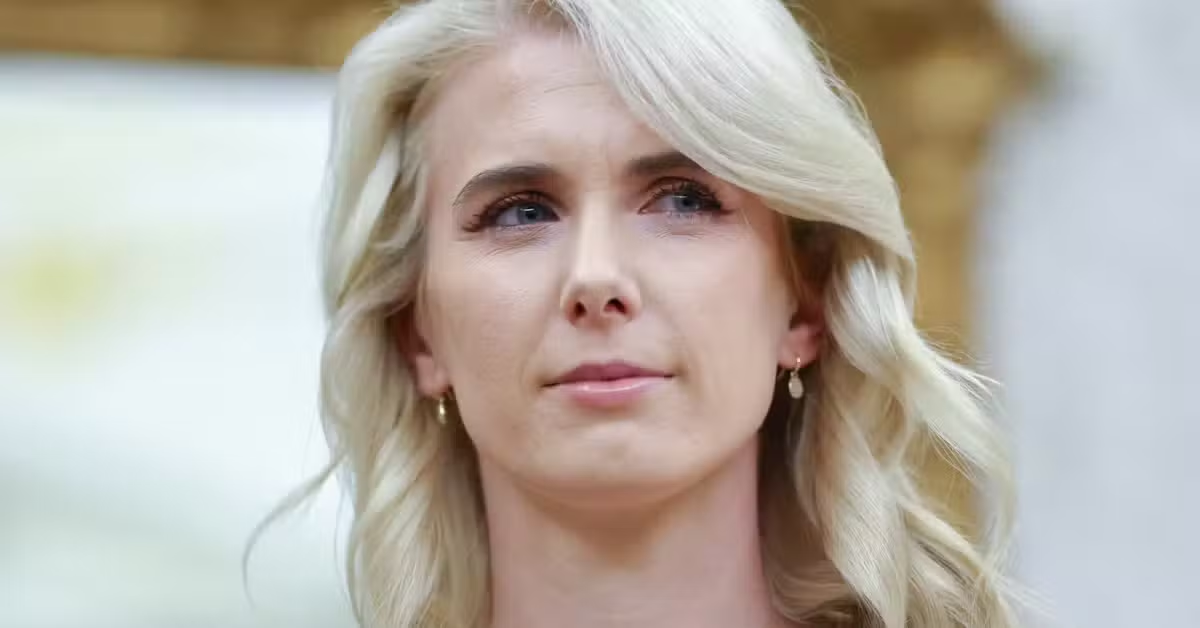
“Weird Little Echo”: Natalie Harp’s Eerie New Way of Hyping Up Trump
A New Republic politics blog leads with Michael Wolff's account on the Daily Beast podcast Inside Trump's Head that aide Natalie Harp, now Trump's de facto gatekeeper who has written of him as a father figure and Mr. Darcy type, echoed Trump's "so much better than they said we would do" as midterm losses rolled in — what the outlet calls a new way of feeding his delusions. Its other items cover bipartisan holds on Palantir's Michael LoSapio, a California bar probe of ex-press secretary Katie Zacharia, Kyrsten Sinema's unregistered permitting-reform push, and the Guardian's findings on Kristine Blanche's herbal tinctures.

From Beto to ‘Blexas’: how Democrats flipped Texas during the midterm elections
The Guardian feature recounts how Texas Democrats, after years of losses and internal overhaul, flipped the state in the 2026 midterms: James Talarico defeated Ken Paxton to become the first elected Democratic US senator there in nearly 30 years, Gina Hinojosa became the state's first Latina governor and first Democrat in the office since 1995, and Democrats took 20 state House seats, all four Texas supreme court seats and both appellate courts up for election. It traces the groundwork to a $30m coordinated campaign, Texas Together, uniting the state party, Texas Majority Pac and Powered By People, and to recruiting 104 mostly first-time candidates who ran on affordability and healthcare over culture-war rhetoric.
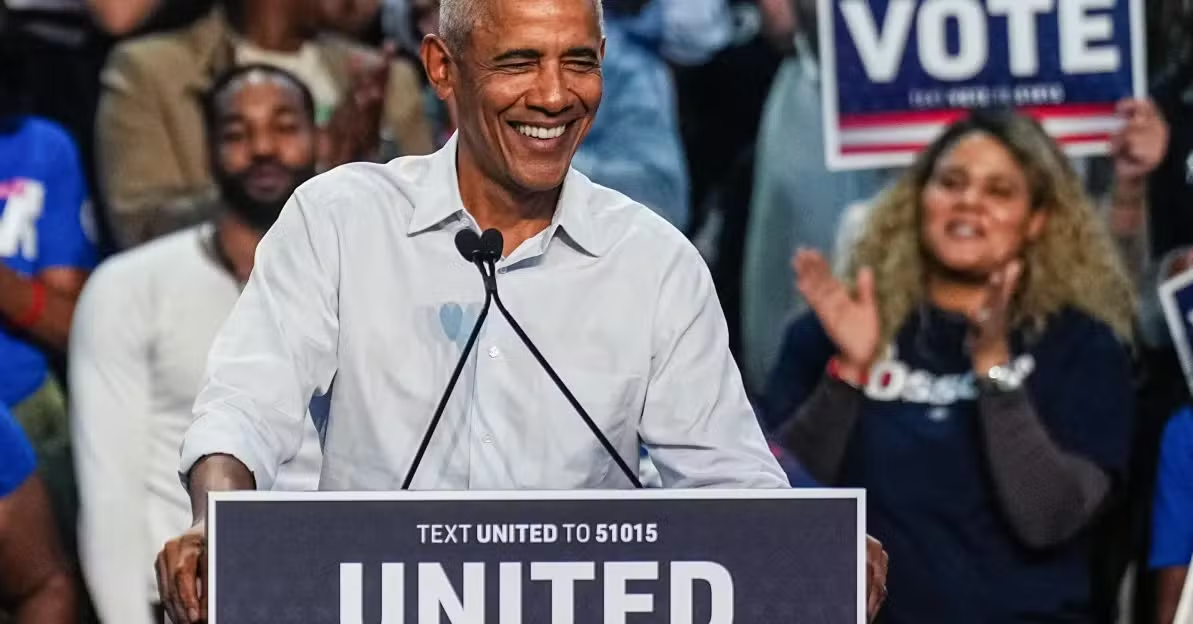
Gen Z is getting nostalgic for the Obama era — with an asterisk
A Vox article by Rachel Janfaza reports that Gen Z is nostalgic for the Obama era, with social media flooded by videos and edits celebrating Democrats' 2026 midterm wave, many made by young users with little memory of that time. In an Instagram post, Rep. Alexandria Ocasio-Cortez explains "millennial cringe" and says millennials have been chasing the feeling of their first vote ever since.
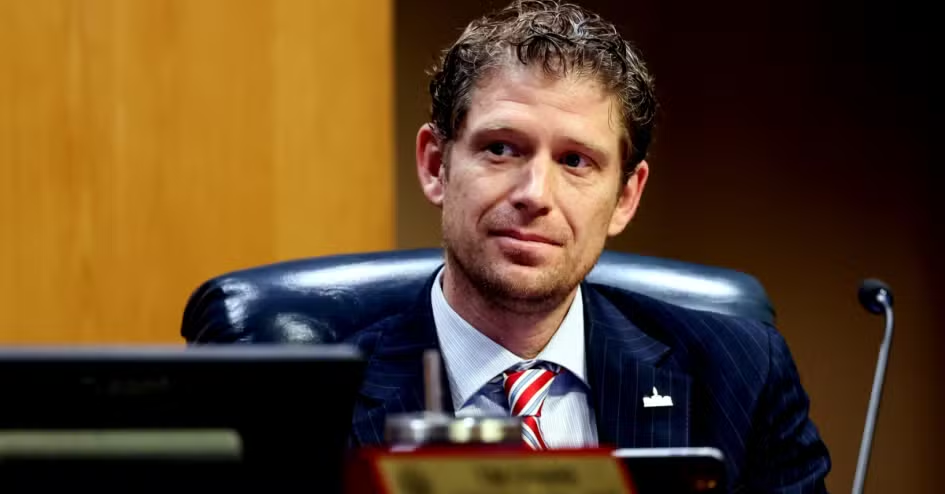
Tarrant County GOP is soul-searching, finger-pointing
The Texas Tribune reports that Tarrant County Republicans are soul-searching and finger-pointing after losing all 17 contested countywide races in the 2026 midterms, a sweep that ended the party's 40-year hold on the county judge seat as every statewide Republican candidate lost the county by more than 11 points. The infighting opened with a Nov. 11 open letter from moderates blaming the county party's leaders for alienating voters, and two days later 76 Republican leaders and volunteers published their own letter defending those leaders. The losses came despite the 2025 redistricting meant to give Republicans a 4-1 commissioners court advantage, an effort the Tribune describes as one that backfired. Matt Krause, the last Republican commissioner and the only one not on the ballot, denies the redistricting affected how people voted, calls the election a wake-up call, and is preparing to work with the court's four Democrats beginning in 2027, saying common ground and party unity will be essential heading into 2028.

Instant frontliners: North Carolina’s surprise delegation knows they’re running on borrowed time
In the November 2026 midterms, a group of largely unknown Democratic newcomers rode a national blue wave to defeat some of North Carolina's most prominent Republicans, including Rep. Richard Hudson, chair of the House Republican campaign arm, shifting the state's delegation from a 10-4 Republican edge to a likely 11-3 Democratic one. Politico reports the state's new House Democrats know they are on borrowed time, with their districts already pegged as frontline battlegrounds. Their upset was aided by Republican missteps, including a backfired 2025 redistricting effort now Wikipedia's top example of 'dummymandering,' Rep. Chuck Edwards dropping his bid after an ethics investigation, and President Trump's spat with Sen. Thom Tillis, who retired, clearing the way for former Gov. Roy Cooper. The freshmen are already acting: Rep.-elect Jamie Ager co-led more than 50 freshmen in pitching leaders on a stock-trading ban, and the delegation agrees on pushing to reverse GOP cuts to Medicaid and nutritional assistance and to fight Trump's effort to shrink FEMA as the state recovers from Hurricane Helene. Their future may hinge on whether Democrats, who won the state House, draw new maps, while Republicans insist the wins are a temporary blip and plan to reclaim the seats in 2028.
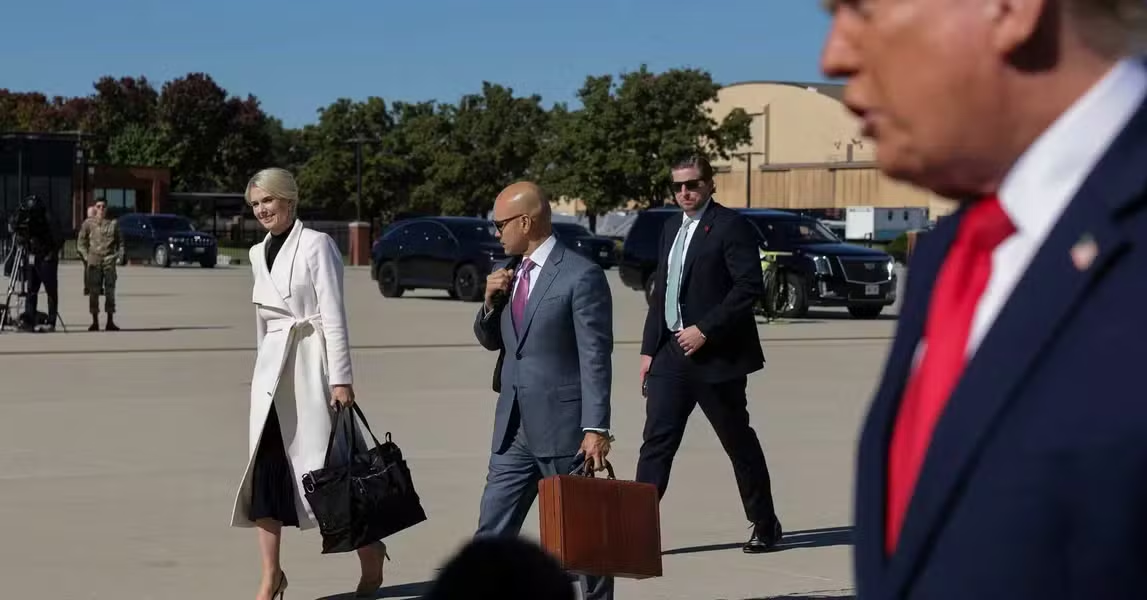
White House's 'little echo' has insiders worried Trump is done for: biographer
RawStory reports biographer Michael Wolff saying on the "Inside Trump's Head" podcast that White House insiders fear Donald Trump cannot process the GOP's midterm loss, with aides invoking words like "PTSD" and "trauma." Wolff describes aide Natalie Harp echoing Trump's election-night refrains — "so much better" — as his "weird little echo."

Keisha Lance Bottoms says Democrats better spend big on the South
In a Politico interview, Georgia Governor-elect Keisha Lance Bottoms — the first Black woman elected governor in the United States — says her 2026 win and Democrats' pickups of Senate seats in North Carolina, South Carolina, and Mississippi show the party must invest more in the South. She says the national party should trust local people who know their communities, and that Democrats shouldn't have to beg and borrow to run Southern campaigns.

Elie Mystal: Accountability for Elon is coming from Democrats in Congress & new Texas Democratic AG
On The Dean Obeidallah Show, Elie Mystal argues the midterms gave Democrats subpoena power over corrupt Trump officials, with Robert Garcia, Jamie Raskin, and Sheldon Whitehouse chairing key committees and Democratic attorneys general in Texas, New York, and beyond. Mystal predicts state attorneys general will pursue accountability if Trump pardons his people, urges Democrats to run on making daily life work and on Supreme Court reform before 2028, and reads out Scott Colom's post asking Nike to give Mississippi valedictorians a shoe, which he warns Democrats not to cozy up to.

The midterms were the largest win for either party in 50 years
An NPR article by Domenico Montanaro and Julianna Conley calls the 2026 midterms the biggest win for either party in 50 years: Democrats took 56% of House votes to the Republicans' 42% and have flipped 46 GOP-held seats, possibly rising to 49. NPR says Democrats will likely hold their largest House majority since the early 1990s, topping past waves like 2010's 64-seat Republican gain.
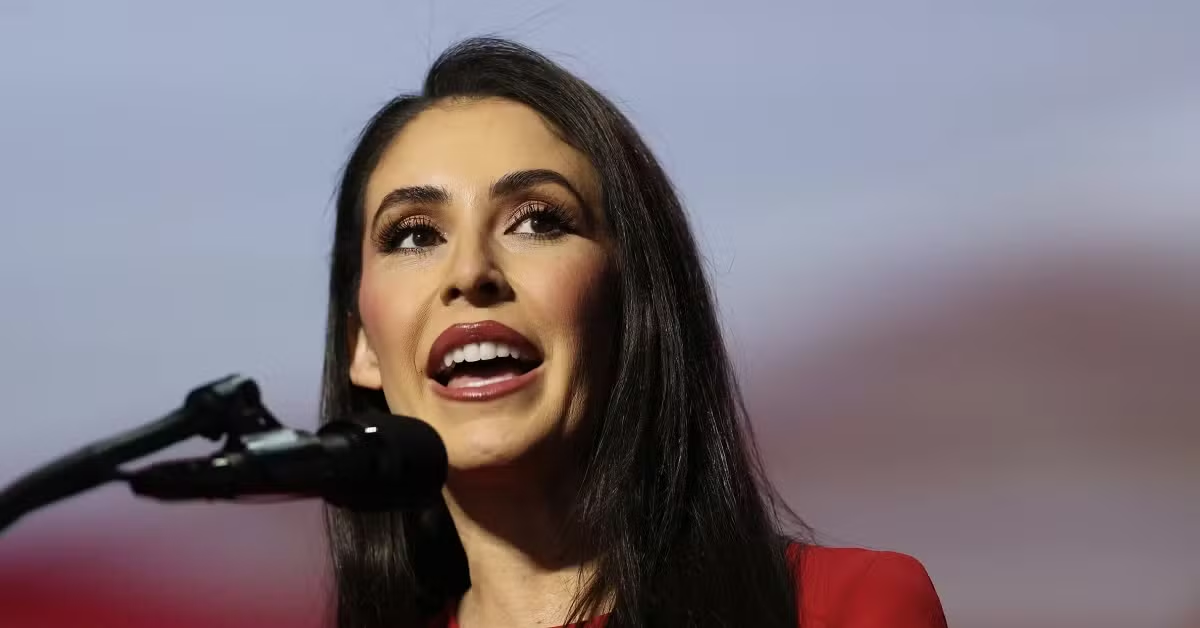
The midterms were bad for Republicans. The closest races show how it was nearly even worse.
NBC News looks at the closest 2026 midterm races to show how Republicans' losses could have been even worse, with Rep. Anna Paulina Luna winning re-election by less than a percentage point. Republicans lost nine Senate seats and at least 42 House seats, a result the article calls a devastating blue tsunami.

AG Blanche OUTFLANKED by 30 Dem Attorney Generals led by California and Now TEXAS!!!
Legal AF's Michael Popok interviews California Attorney General Rob Bonta about a blue wave that flipped five states' attorney general offices — including Texas — taking Democrats from 24 to 29, which Bonta calls a blockbuster trade for Democrats and a rebuke of Trump and MAGA extremism. They also discuss Bonta's lawsuit against OpenAI, filed in San Francisco Superior Court on claims it failed to safely develop and test its AI models, with Popok adding the Democratic Attorneys General Association spent $35 million and Alaska may bring the total to 30.

'Narcissistic injury': Doctors flag 'major toll' on Trump's brain from midterm battering
Raw Story reports that doctors specializing in geriatrics, neuropsychology and vascular health say President Donald Trump's outbursts after the Republicans' midterm losses suggest narcissistic injury and possible cognitive decline. Vascular surgeon Anahita Dua and neuropsychologist Sanam Hafeez say the stress of rejection is taking a major toll, while Mary Trump wrote the losses could be "catastrophic" for him.

Voters Rejected Washington’s Foreign Policy; Congress Must Listen | Common Dreams
In an opinion article, Common Dreams argues that voters rejected Washington's foreign policy in the midterms and that the new Congress must listen. It points to Democrats' sizable new majorities, over 40 House seats and nine Senate seats, and NBC News exit polls in which 74% of voters called the Iran War a crucial or major factor in their vote. It cites Vice President JD Vance's own postmortem, 'The real reason we lost is obvious to almost everyone. The reason we lost is the war,' and says Trump's proposed $1.57 trillion military budget is opposed by 65% of the country. The outlet urges Democrats, with help from Republicans who read the results, to end the Iran War and endless wars, cut the Pentagon budget to $750 billion, abolish Immigration and Customs Enforcement, and cut off US support for Israel and other human rights violators, following the People-First Foreign Policy Pledge it helped launch.

Democrats won big. Now they’re arguing about why.
Vox's Andrew Prokop writes that after Democrats won the 2026 elections by a large margin, moderates and progressives each claimed vindication — moderates citing winners who distanced themselves from the left, progressives pointing to economic populism embraced even in red states. He says Democratic leaders will now have to decide whose case shapes the party's agenda.

Odessa Republican sees path to bipartisanship in the Texas House
In a Texas Tribune interview at its Rural Symposium in Abilene, State Rep. Brooks Landgraf, an Odessa Republican, says he sees opportunities for bipartisan changes that could benefit rural Texas ahead of the 2027 session, after Democrats won statewide seats and half of the Legislature in the 2026 election. He attributes Republican losses with rural voters partly to their feeling taken for granted by long-standing leadership and to dissatisfaction with Trump administration policies, and he calls on his party to step away from 'ragebait' issues and return to 'kitchen table' matters. Public education is where he sees bipartisan reform as most ripe: he supports raising the per-student basic allotment and scrapping the STAAR test, which the Legislature voted in 2025 to replace with three shorter tests starting in the 2027-28 school year, though Gov.-elect Gina Hinojosa pledged during her campaign to end it. Landgraf calls the Rainy Day Fund money sitting in a non-interest-bearing account and not working for the people of Texas, recommends reinvesting part of it, which mainly comes from oil and natural gas severance taxes, into rural infrastructure including water and electricity systems, and forecasts that Hinojosa's pledge of $1,500 checks from the fund is unlikely to clear the required supermajority. Shelby & Brooks Landgraf has been a financial supporter of The Texas Tribune within the past five years.
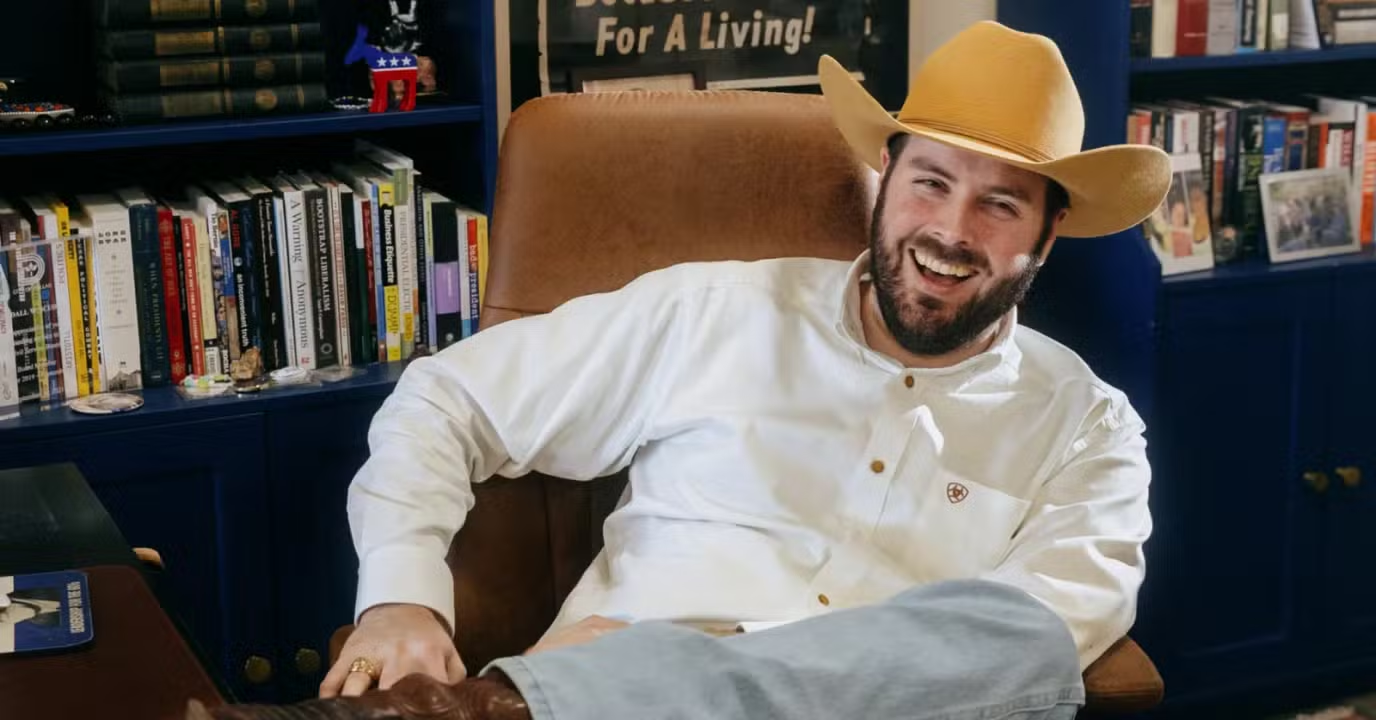
The Man Who Broke the Texas Democratic Party to Save It
A Rolling Stone profile of Texas Democratic Party chair Kendall Scudder traces his 20-month overhaul of the party — moving its headquarters to Dallas, clearing its debt, recruiting candidates for every race through the Texas Challengers program, and building its first coordinated campaign — ahead of the 2026 election, in which Democrats won the governorship, a Senate seat, the state House for the first time since 2002, and other downballot offices. Rolling Stone argues the sweep rested on Scudder's organizing rather than anti-Trump sentiment, writing that Texas is now a blue state, if he can keep it.
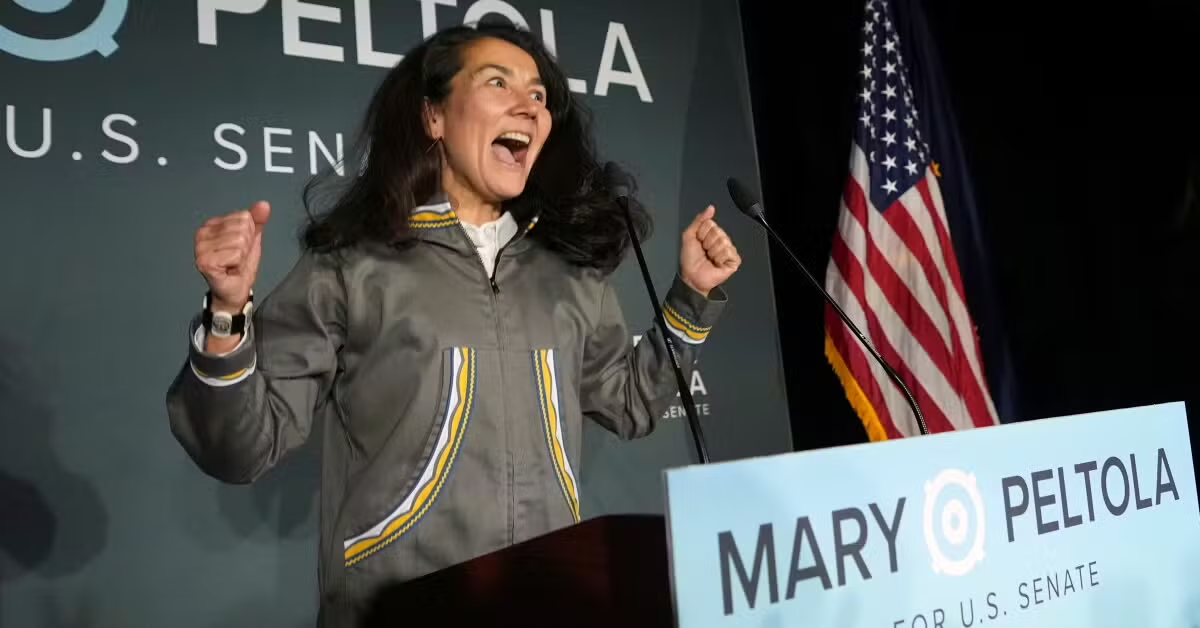
Democrats flipped 9 US Senate seats — the most in almost 70 years
Democrats flipped a ninth Republican-held US Senate seat in the 2026 midterms, their biggest midterm Senate gain in nearly 70 years. Mary Peltola's defeat of incumbent Republican Dan Sullivan in Alaska was the ninth, and with her victory Democrats hold a 56-44 majority when the new Congress begins in January, their largest Senate advantage in 16 years. The party last gained nine or more Senate seats in a midterm in 1958, when it took 13 Republican-held seats under Republican President Dwight Eisenhower. Democrats also reclaimed the House, picking up 42 seats, continuing the historical pattern of midterm losses for the president's party.
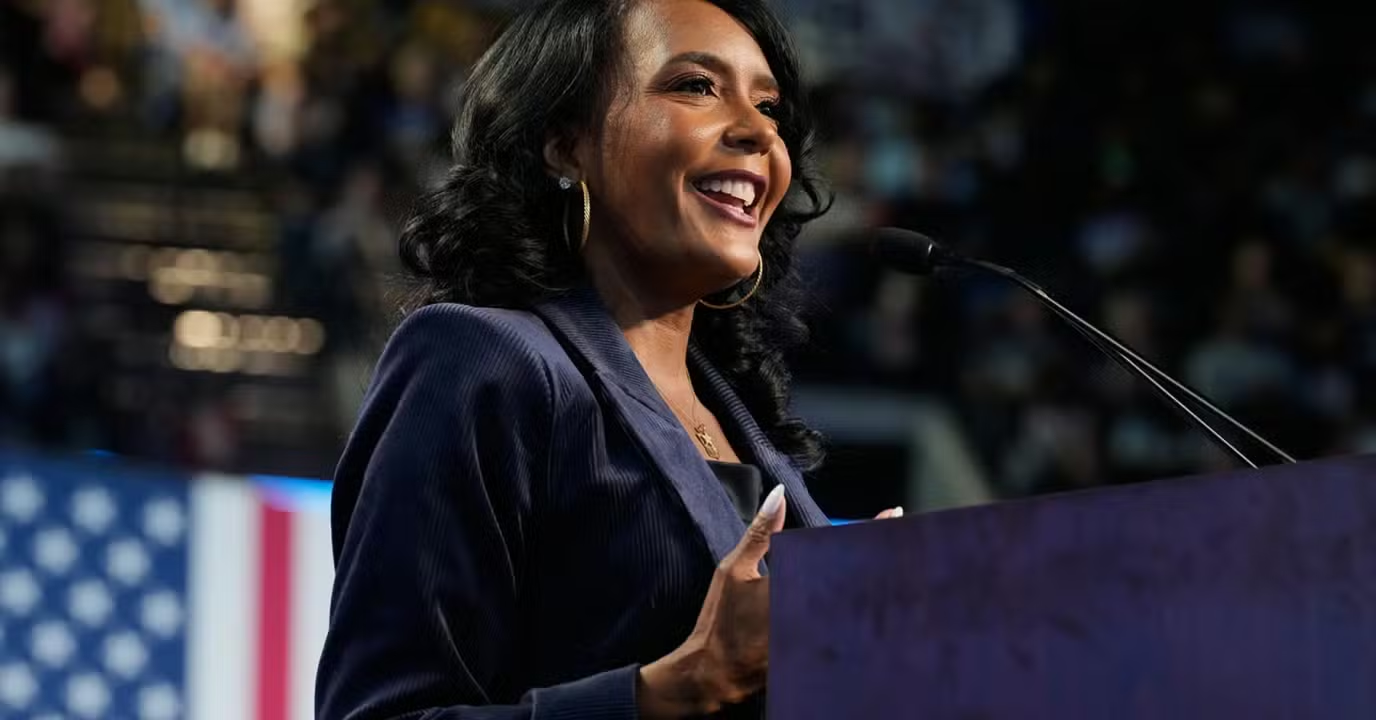
2 in 5 Americans will live in states with Democratic women governors
A 19th News article reports that by January 2027 there will be 15 Democratic women governors, meaning 2 in 5 Americans will soon live in a state led by a Democratic woman chief executive, up from just two states, Oregon and Rhode Island, in 2018. The article says the growth was no coincidence: the Democratic Governors Association launched its Women Governors Fund in 2018, and its chair, Massachusetts Governor Maura Healey, says it has invested $120 million in races with Democratic women candidates over eight years. Among the newly elected, Keisha Lance Bottoms became the first Black woman elected governor anywhere in the United States, and Democrats are on track to hold 30 governorships in 2027, half of them women.
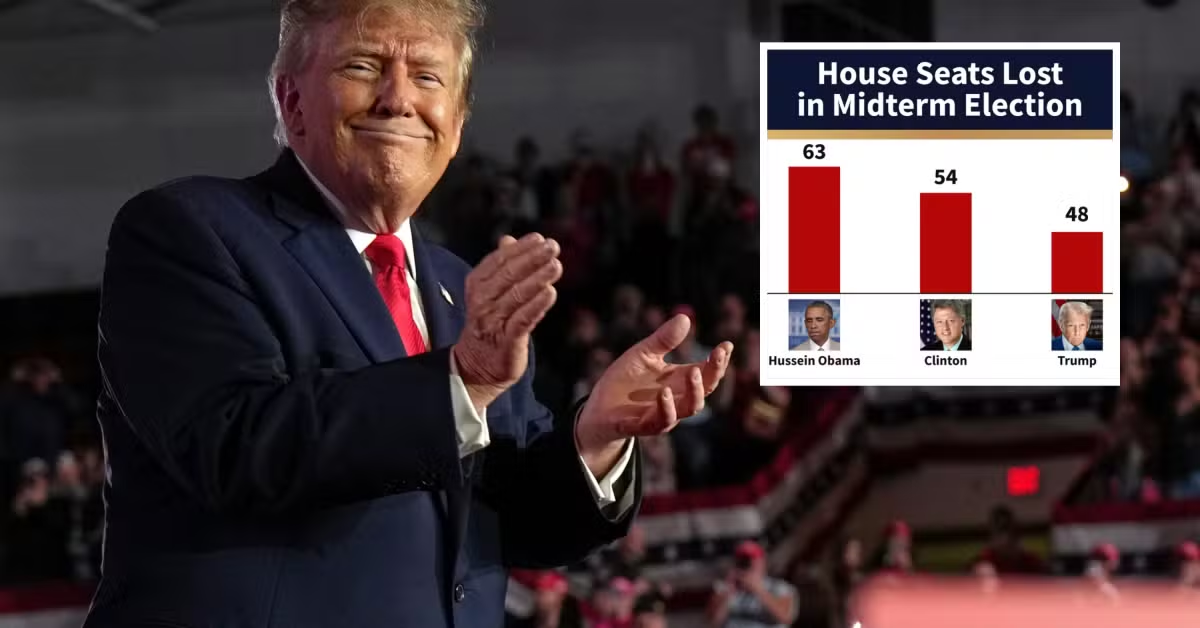
Donald Trump's midterm election charts leave out key details
Newsweek reports that President Trump's midterm comparison charts, posted on Truth Social on November 15, 2026, mix and match election cycles, omit details, or are visually inaccurate, in ways that appear to show Republicans avoided the scale of losses suffered by past administrations. The Obama figures in his charts combine House losses from the 2010 midterms, when Democrats lost 63 seats, with Senate losses from the 2014 midterms, pairing each cycle's larger loss. The charts also leave out the 2018 midterms entirely, when Republicans lost 41 House seats but gained two Senate seats. Observers noted the House bar labeled 48 appears drawn closer to the 30-seat mark, and Newsweek notes that if Democrats win Alaska's still-uncalled Senate race, Trump's Senate loss would tie Obama's nine-seat result rather than beat it; when asked about the data, the White House said to 'refer to the TRUTH'.

‘The American people said SCREW YOU!’: Nicolle and Maddow on how ‘weirdo’ Trump’s reign is ENDING
In a live episode of 'The Best People' recorded at the Orpheum Theater in Boston, Nicolle Wallace interviews Rachel Maddow about her new book 'Department of Fate' and Maddow's reading of the midterm results: on Trump's authoritarian project, she says, the American people just said 'screw you.' Maddow argues election denialism was an autocratic effort to make people see elections as a rigged suckers game and stop participating, and that turnout in the midterm election, the second highest in a century, killed it. She says the revolt was people-powered, built by protests from the earliest days of the administration while universities made deals, law firms capitulated, and institutions had to be dragged over the line against their will. Her book tells that story through the Justice Department's history, from Amos Ackerman, who sent it after the Ku Klux Klan in 1870, to Lewis Post, who canceled three out of four Red Raid deportation cases in 1920. Maddow says Bill Barr fatally wounded the department by turning its power inward and giving Trump a taste of what it could do, that it is now effectively dead under Todd Blanche, and that the new Congress, which created the department, should reform and rebuild it.
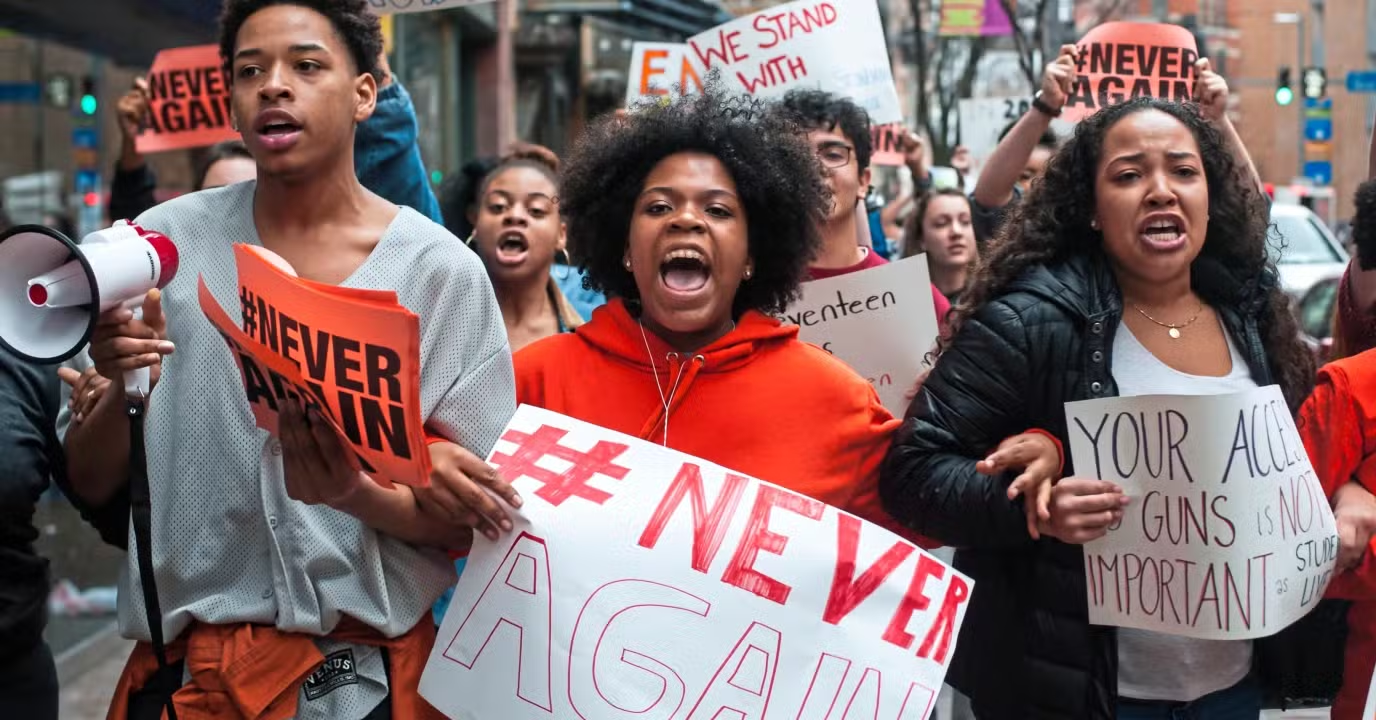
Newly empowered Democrats ready to overhaul gun laws in red states
In a Stateline report republished on Daily Kos, the November 2026 midterms unexpectedly opened new avenues for gun law overhauls in states where tighter restrictions had been largely written off. Democrats flipped at least five Republican governor seats, including Gina Hinojosa in Texas and Keisha Lance Bottoms in Georgia, and picked up legislative chambers in states including Texas, Georgia, Pennsylvania, and Wisconsin, in some cases giving Democrats the trifectas needed to enact changes. Not all paths are clear: some Democrats face divided or Republican-controlled legislatures, and in Texas the Senate stays in Republican hands. Less than a week after the midterms, Texas Democrats filed several gun bills, including a repeal of the state's ban on red flag laws, and the president of Texas Gun Rights said in a blog statement that Republicans should look for no common ground on confiscation.
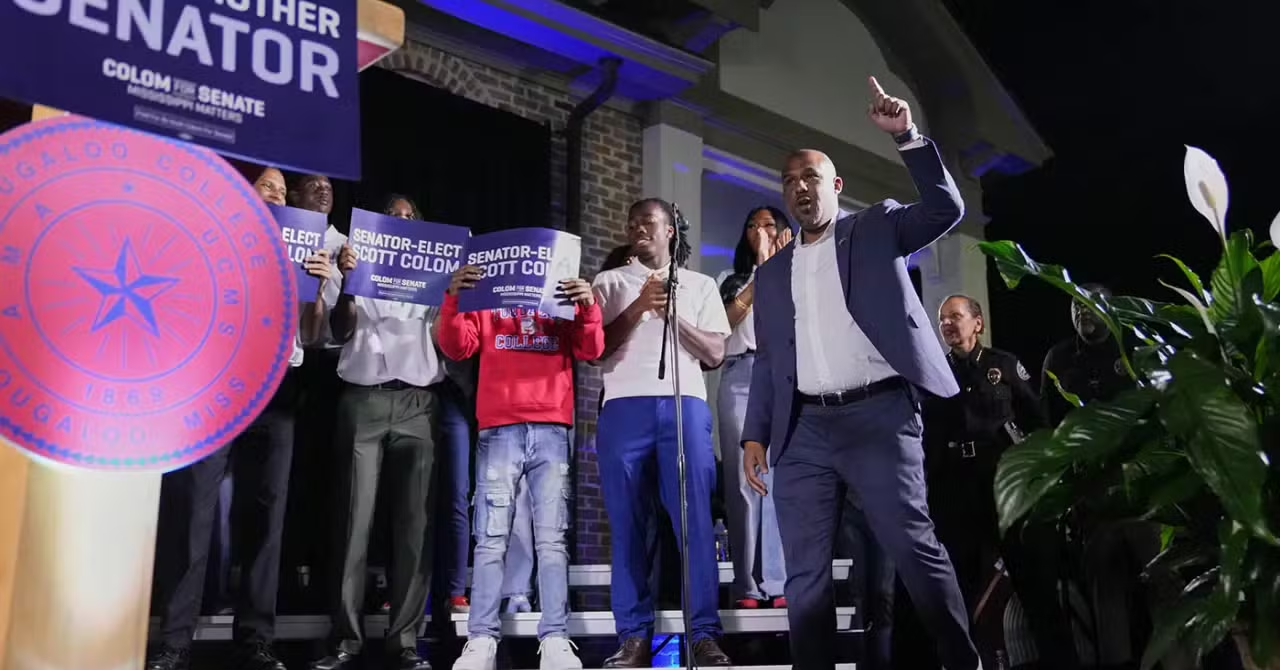
Democrats bullish on South after historic midterms gains
A news report says Democrats are bullish on the South after midterm victories that flipped Senate seats in North Carolina, South Carolina, Texas and Mississippi, delivered Democratic governors in Texas and Georgia, and took state Houses in Texas, Georgia and North Carolina. The wins broke long barriers: Scott Colom became Mississippi's first Black senator in more than a century, Keisha Lance Bottoms is the country's first Black woman governor, and Annie Andrews upset a Trump-picked incumbent to become South Carolina's first Democratic senator in almost three decades. Black voters who had shifted right in the last presidential election turned out in big numbers, which the article links to President Trump's poor approval ratings and redistricting critics panned as diluting Black political power. Kentucky Governor Andy Beshear said in a post on X that Southern Democrats have long been overlooked but are 'on the rise,' and strategists like Fred Hicks say any Southern states in play changes the presidential calculus, predicting Georgia will be 'the new Iowa' if the party invests through 2027. Southern Democrats are calling on the national party to stop being 'gun-shy' and organize on the ground a year or two before 2028 instead of waiting.
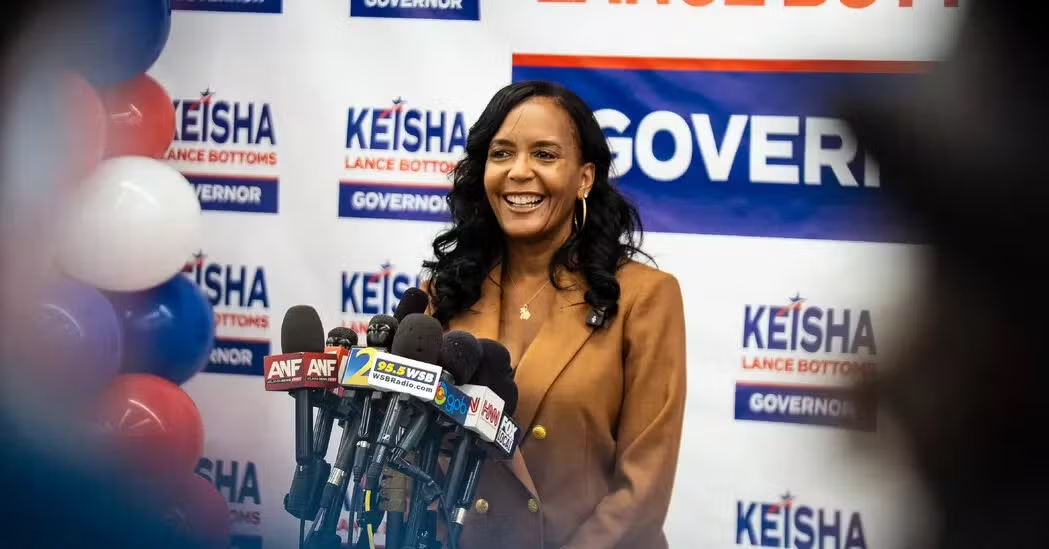
The Reward for Black Women’s Work in Georgia: Leaders Who Look Like Them
Black women in Georgia claimed the governor's office and nearly every top statewide post, a sweep that a New York Times article presents as the reward for decades of groundwork. Keisha Lance Bottoms's win made Georgia the first state to elect a Black woman as governor, and seven of the state's eight top elected offices will now be held by Black women, all Democrats, who also took the Georgia House for the first time in more than 20 years. The article traces the sweep to a more than decade-long effort going back to Stacey Abrams, who lost her own gubernatorial campaigns but built the infrastructure that harnessed Georgia's demographic shifts, and to Black women who knocked doors and drove voters to the polls long after disappointments. Some organizers and newly elected officials, including Penny Brown Reynolds, warned the wins cannot be a blip: they must build a lasting pathway across the South, mindful that Southern history shows Black political gains are often followed by backlash.
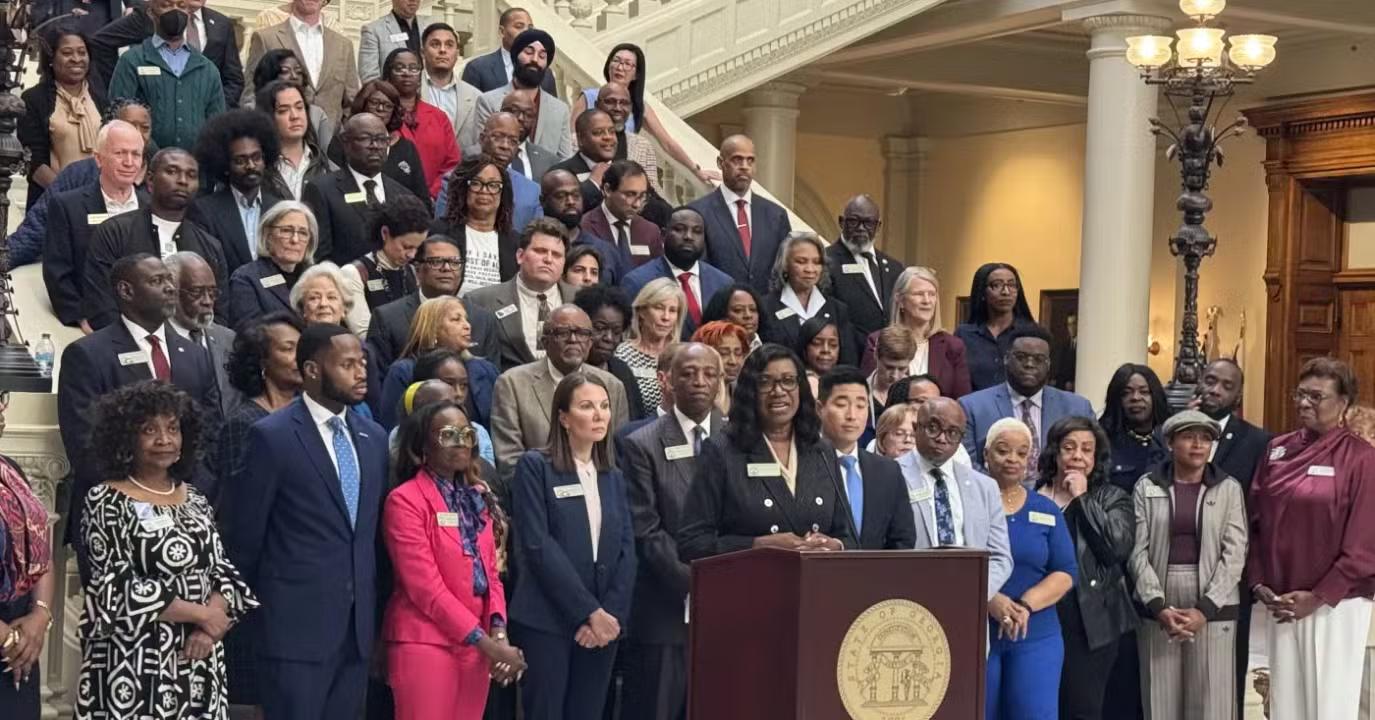
Midterm voters ended the long-running GOP dominance in state legislatures
The 2026 midterm elections broke the Republican dominance of state legislatures that had held since 2010. Pennsylvania elected a Democratic state Senate majority for the first time since Jimmy Carter was president, Texas Democrats won the state House for the first time in 24 years, and Georgia's House turned Democratic after more than two decades. NPR's count says Democrats likely lead in 24 state legislatures to the Republicans' 22, having gained six new trifectas, including Arizona's first since 1966. The Republican State Legislative Committee blamed an anti-incumbent mood and heavy Democratic spending, while Democrats credited putting statehouses at the center of a national strategy, and the shift could now reshape laws on taxes, abortion, health care and school funding.

Will Trump’s lame duck presidency push him further beyond constraints of the law?
The Guardian examines whether Donald Trump's presidency, weakened by the Democrats' 13-point 2026 midterm landslide, will push further past legal constraints in his final two years, citing an eight-month Iran war, immigration raids and cost-of-living pressures as the rout's causes. Miles Taylor warns Trump may defy court orders and escalate abroad, while Newt Gingrich predicts an aggressive comeback and Hillary Clinton expects him to become "even weirder and, sadly, more dangerous".
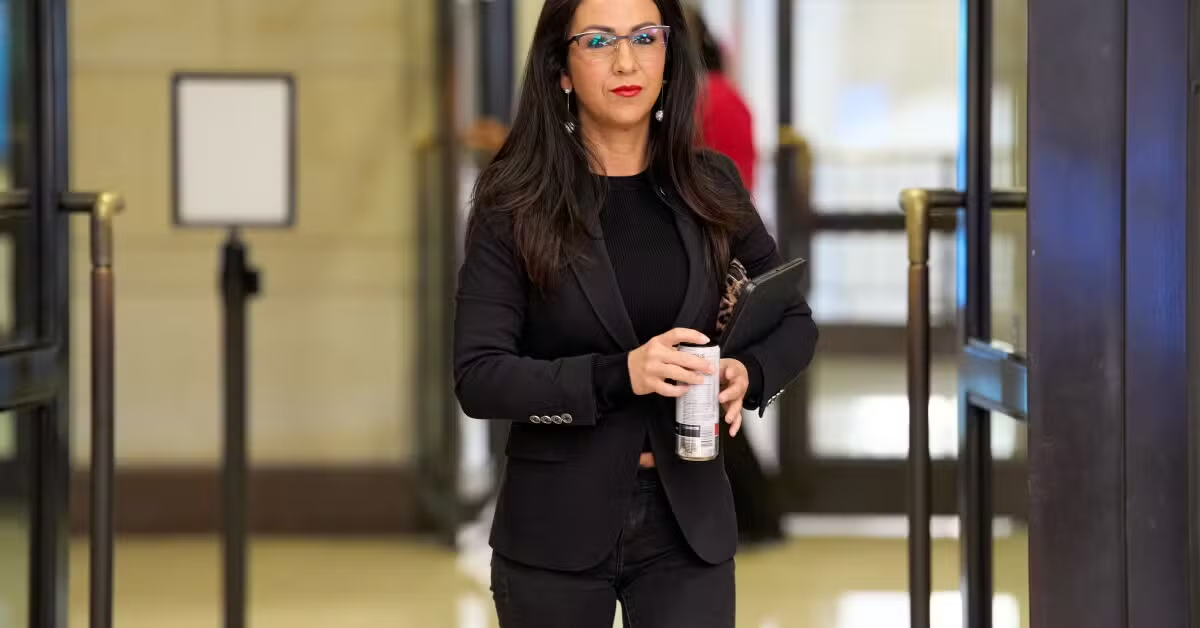
Rep. Lauren Boebert of Colorado loses House seat to Democrat Eileen Laubacher
Democrat Eileen Laubacher, a former Navy rear admiral, has defeated three-term Republican Rep. Lauren Boebert in the race for Colorado's 4th Congressional District seat in the November 2026 midterm elections. The loss stands out because Republicans carried the district by more than 18 percentage points in 2024, and the AP calls it one of several surprising Republican losses in an election shaping up to be the most lopsided in half a century. Boebert, who rose to notoriety alongside Donald Trump's Make America Great Again movement, drew notice for refusing to pass through Capitol metal detectors and taunting Rep. Ilhan Omar as part of the 'jihad squad', and had moved across Colorado to the more Republican district after barely surviving her first reelection. Returning to the Capitol, she said of the Republican losses, 'We collectively failed'.

How Texas’ Blue Takeover Could Soon Begin Impacting Texans’ Lives
A Time report says the November 2026 elections abruptly turned Texas blue: Democrats won every statewide race, Gina Hinojosa upset Governor Greg Abbott to become the state's first Latina governor and first Democrat in the office since the 1990s, and Democrats took the state House for the first time in over two decades. Republicans still hold the Texas Senate, the state Supreme Court, the Court of Criminal Appeals, and most of the railroad commission, though Democrats broke Republican winning streaks dating to 1994 on the courts and claimed a railroad commissioner seat for the first time since 1990. Experts and incoming officials tell Time the victories could soon affect Texans across several areas: attorney general-elect Nathan Johnson would review state agreements with ICE and stop suing out-of-state doctors for mailing abortion pills, Hinojosa has vowed to stop family immigration detention, fire Texas Education Agency Commissioner Mike Morath, and impose a moratorium on new data center approvals, while advocates expect possible easing of restrictions on abortion access and transgender Texans. The new executive branch takes office in January, when the new legislature convenes for its first session.

Democrats Flip Two More Governor’s Offices in Massive Win
The New Republic's post-midterm roundup reports Democrats won the Kansas and Alaska governorships — Cindy Holscher succeeding term-limited Laura Kelly, CNN calling Alaska for Jonathan Kreiss-Tompkins — and argues the 2026 results mark a sea change giving Democrats state-level majorities unseen in decades. It also covers JD Vance and Marco Rubio distancing themselves from Trump, Vance reportedly weighing shelving his 2028 campaign, Nvidia CEO Jensen Huang's resignation as his affair with suspected Chinese spy Alice Huang surfaced, Tom Emmer's calls to have Ilhan Omar removed from Congress, and Trump's interest in military action against Cuba.
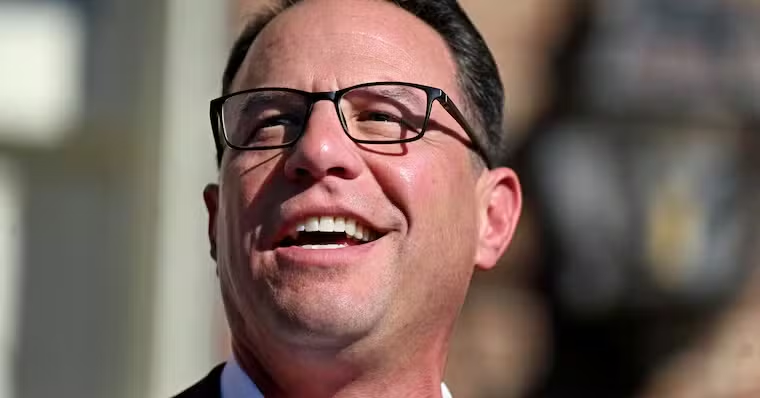
Josh Shapiro’s blowout victory is his strongest case for 2028. How do other potential presidential contenders compare?
A news analysis argues that Pennsylvania Governor Josh Shapiro's blowout reelection victory in the 2026 election is his strongest case for a 2028 presidential run. Fresh off the win, Shapiro is getting more involved on the national stage, joining potential rivals at a 'What's Next' conference in Denver, where he said running for president will be a 'personal decision'. A pollster says the massive victory lays 'a pretty good groundwork' for a possible presidential bid. The piece weighs how other potential presidential contenders compare.

Democrats have reached a détente in their internal war. Will it last?
POLITICO reports that Democrats' long-warring progressive and moderate factions have reached a détente after the party's midterm romp, with half of progressives and moderates saying the party is more unified since the election. The poll, conducted by PF Global from 7 to 10 November 2026 among 2,000 U.S. adults, shows two-thirds of Democratic midterm voters now believe progressives make the party stronger, up from 41 percent before Election Day, after progressives flipped purple districts and moderates flipped deep-red turf. The truce may be temporary: 78 percent of Democratic voters say cutting the cost of living is the top priority, but Democrats diverge on whether to pursue systemic reform or targeted solutions, and POLITICO forecasts those splits spilling onto the 2028 presidential campaign trail as would-be candidates push a public truce.
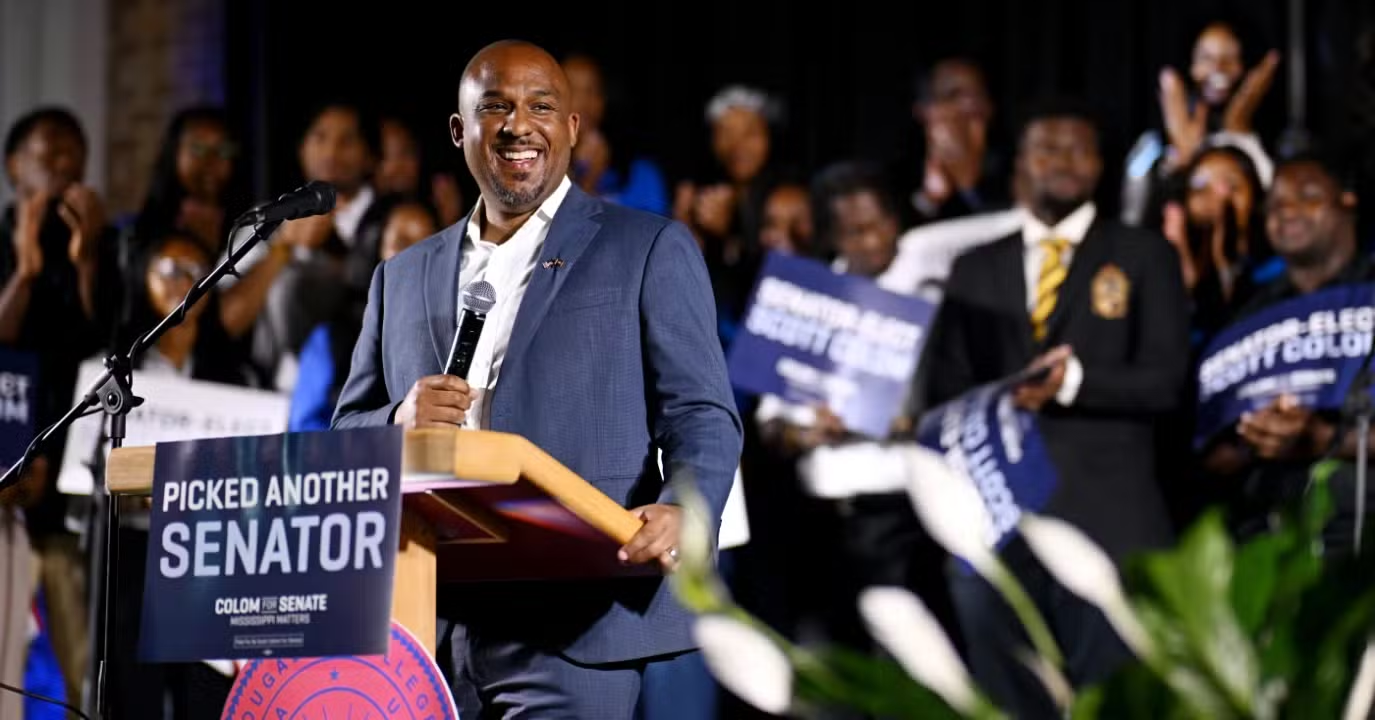
These two voter turnout trends explain what happened across the South in the election
An NPR analysis of turnout data finds Democratic victories across the South in 2026 were driven just as much by who stayed home as by who showed up, with Republican turnout falling sharply while Democrats came close to matching their 2024 numbers. In the six southern states analyzed, turnout dropped 26% in Trump-won counties against 19% in Harris-won counties, and the swing toward Democrats averaged 22 points, larger than the national swing of about 14.5. The analysis credits this differential turnout with flipping Senate seats in North Carolina, South Carolina and Mississippi, where Democrat Scott Colom leads incumbent Cindy Hyde-Smith by just over 5,600 votes. The data also showed a surge in Black voter participation, spurred in part by a Supreme Court decision that gutted part of the Voting Rights Act, with majority-Black counties turning out at about 85%.
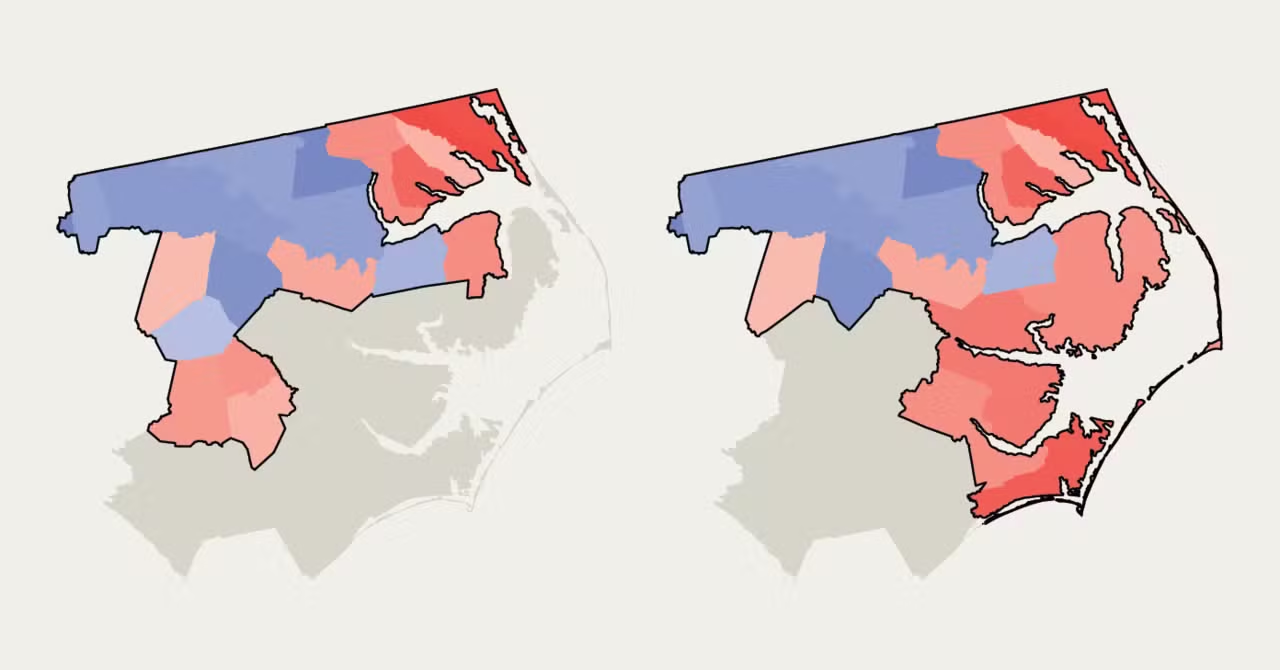
How badly did Republican gerrymandering fail?
The Economist's Graphic detail column examines whether Republican gerrymandering backfired in 2026, finding maps in North Carolina and Texas meant to add House seats instead delivered near-nothing — North Carolina's 11-3 split favours Democrats and Texas's map sent one more Democrat to Congress. By the paper's assessment, gerrymandering gained Republicans just two seats on net, and it expects the redrawn maps to face their real test only when a close national vote makes boundaries matter, possibly in 2028.

We’re All Worth Fighting For
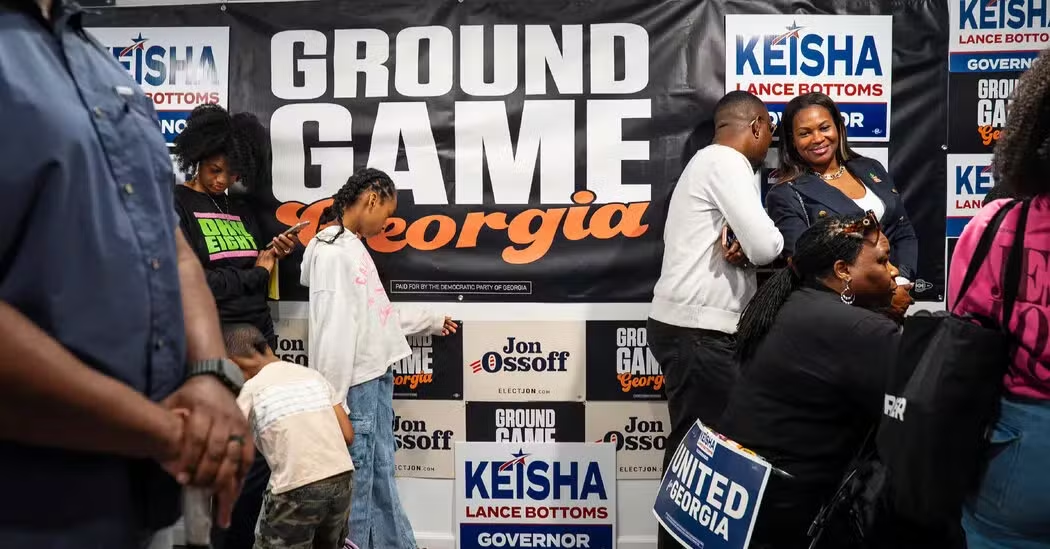
Black Turnout Rose in Georgia, Powered by Younger Voters
Georgia's validated 2026 voter history shows Black voters made up roughly 32 percent of the electorate, the highest share of any election since 2012, and the surge was powered by young Black voters whose turnout outpaced that of young white voters, erasing a gap that saw 33 percent of registered white voters under 30 turn out in 2022 against 22 percent of Black voters. That rise, alongside a heavy swing to Democrats among voters under 30 across all racial groups, helped fuel a Democratic sweep: Jon Ossoff won re-election by 18 points, the largest margin for a statewide Democrat in more than two decades, Democrats flipped the state house and every statewide office, and Keisha Lance Bottoms became the state's first Black governor. The data comes from Georgia, one of the first states to report validated voter history and one of the few where voters register with their race, and the turnout was closely watched after an April Supreme Court ruling weakened the Voting Rights Act and set off redistricting that diluted Black representation in several states.

A Democratic Ground Game Reshaped the Political Map of the South
A Bloomberg news report finds that years of Democratic organizing across the South culminated in the 2026 midterms with major wins, including Scott Colom unseating Cindy Hyde-Smith to become Mississippi's first Black US senator since the early 1880s and Keisha Lance Bottoms becoming the first Black woman elected governor in the US. The groundwork dates to Stacey Abrams' narrow 2018 loss in Georgia, after which organizers registered and turned out Black voters, with Fair Fight working in Mississippi since 2018 to register voters, recruit candidates, and train staffers, including helping nine of 17 municipal candidates win in 2025. Bloomberg's own data show turnout rose 13.9 percentage points on average in Mississippi counties that were at least 50% Black, versus 9.8 points elsewhere, and South Carolina saw more than 503,000 Black voters cast ballots, up 29% from the total of nonwhite voters in 2022. The effort faced headwinds, as the Supreme Court struck down parts of the Voting Rights Act in April 2026 and Mississippi's restrictive voting process forced Jackson State students whose ballots needed curing to reach a circuit clerk's office, which organizer Jakari Holland helped by arranging shuttles.

‘Too big to rig’: Democrats’ midterm landslide divides election deniers
A news report says the election deniers, anti-voting activists and MAGA faithful who spent months pushing false voting claims are divided over the Democrats' historic 2026 midterm landslide. Some, like former Stop the Steal architect Ali Alexander, forecaster Seth Keshel and commentator Megyn Kelly, who called the results 'too big to rig,' accept the results may be legitimate, and Michael Flynn told Donald Trump in an open letter to accept the defeat. Trump himself asked followers whether anyone really believed the results were 'honest,' and others, including Kari Lake, Mike Lindell and Joe Hoft, keep spreading claims of rigged machines and stolen counts. The report says the movement's mission will not stop: Cleta Mitchell's Election Integrity Network laid out goals including strict voter ID laws, rolling back mail voting and making certification harder.

The Democratic tsunami Is a “sea change” for reproductive rights
A Mother Jones report says the Democratic midterm tsunami is a sea change for reproductive rights, handing the party six new state trifectas, five new attorneys general, and at least 545 new state legislative seats. The biggest surprise came in Texas, the state with the country's most radical anti-abortion policies, where Nathan Johnson replaces Ken Paxton as attorney general and has already said he will stop suing out-of-state abortion providers. In states where access was curtailed after Roe fell, Democrats could now repeal restrictions, codify protections, and even try to eliminate the Hyde Amendment through budget reconciliation. But advocates warn the fight is not over: Donald Trump's vetoes could stall federal efforts, the Justice Department could revive the Comstock Act, and the FDA is expected to clamp down on abortion pills.
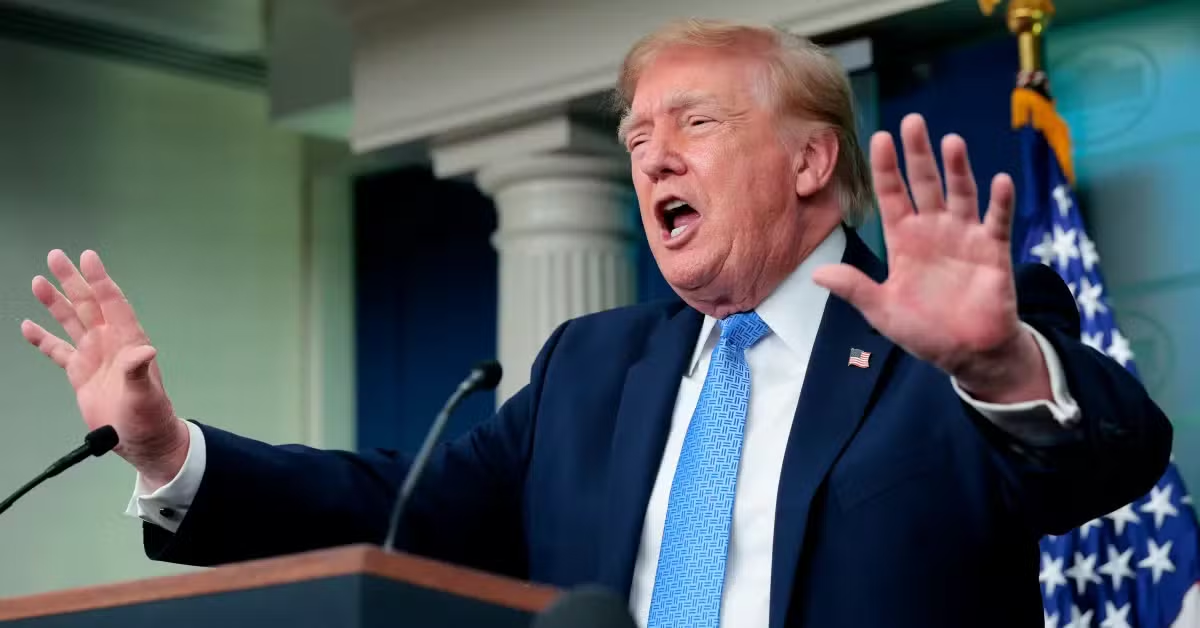
Trump’s Midterm blow: The Conversation
Newsweek's The Conversation column reports that Democrats won control of both the House and the Senate in the midterm elections, ousting Republicans across the country and gaining power to obstruct President Trump's agenda in what is seen as a sharp rebuke of him and his party. Republicans have begun laying blame: Vice President JD Vance said the party should have ended the Iran war, tackled living costs, prioritized America First policies, and changed ties with Israel, while Ron DeSantis and Marjorie Taylor Greene blamed Trump squarely and called for a wider reckoning. A White House official struck a defiant tone, saying Trump's absence from the ballot and weak Republican candidates helped explain the losses. Standout reader comments treat the vote as a referendum on Trump rather than an endorsement of Democrats, with one noting that gridlock now simply shifts, as Trump keeps the veto pen and impeachment would still fall short of the 67 Senate votes needed to convict.

House Democrats’ majority approaches a modern record
In its roundup of developing stories, The Washington Post reports House Democrats' majority approaching a modern record: they have won at least 254 seats and estimate a majority close to 260 as just over a dozen races remain uncalled. Democrats last held 258 seats after the 1992 election, and Minority Leader Hakeem Jeffries called it the largest majority any party has had this century, while Speaker Mike Johnson said the results were not what Republicans hoped for. The roundup also reports international experts meeting this week on whether the United States will lose its measles-elimination status after 5,182 cases in 2026 and at least nine deaths. It also notes the FDA will require GLP-1 labels to warn of a rare potential risk of vision loss, that Massachusetts State Police will pay Karen Read $100,000 to settle her lawsuit over a fired investigator's racist and misogynistic texts, that Gallup finds death-penalty support at 49 percent, the lowest in more than 50 years, that Pete Buttigieg announced a book, 'Next,' stoking talk of a 2028 run, and that a nor'easter could bring the season's first snow to Northeast mountains.

MAGA Fury Erupts as Trump Blurts Out Damning Admission about GOP Loss
An episode of The New Republic's podcast The Daily Blast examines the MAGA backlash after Donald Trump told CBS News that mass deportations were a big reason for the GOP's electoral loss, even calling undocumented immigrants good workers. Host Greg Sargent and political scientist Julia Azari discuss the coalition's crackup — quoting furious influencers who rage that amnesty would be a "disaster" — and say JD Vance will struggle to knit it back together while Democrats can drive wedges into it.

AOC Brilliantly Explains How Congress Really Works After Democrats’ Historic Midterm Sweep
In a livestream, Alexandria Ocasio-Cortez explains how Congress really works after Democrats won one of the largest House majorities in decades. She says the incoming members will not be sworn in until January 3, leaving Republicans holding the House and Senate majorities in a lame duck period until the end of the year. The speaker is elected by members of Congress rather than voters, with the real decision made by secret ballot in a caucus vote, and the job combines legislative wrangling with fundraising in the hundreds of millions, which is why she says there has never been a speaker who took no donor money and why she is not running. She illustrates the stakes with her own loss of an Energy and Commerce seat to a more pro-corporate Democrat who later cast the one vote that killed legislation to let prescription drug prices be negotiated down.

540-Plus Seats Flipped, 6 New Trifectas: Dem Wins At The State Level Keep Piling Up
Democrats flipped 549 state legislative seats from Republicans, took 12 chambers, and won at least six new trifectas in the midterm elections, meaning they will control a majority of the country's state legislative chambers for the first time in a generation and marking the largest shift in state power since the GOP wave of 2010. The wins rest on years of groundwork and heavy spending, including $100 million from The States Project across 21 states and a Texas campaign that ran candidates in every seat for the first time since 1972. With full control in states like Wisconsin and Texas, Democrats plan to redraw maps, expand Medicaid, and repeal Gov. Greg Abbott's school voucher plan, though Trump can still veto federal bills.
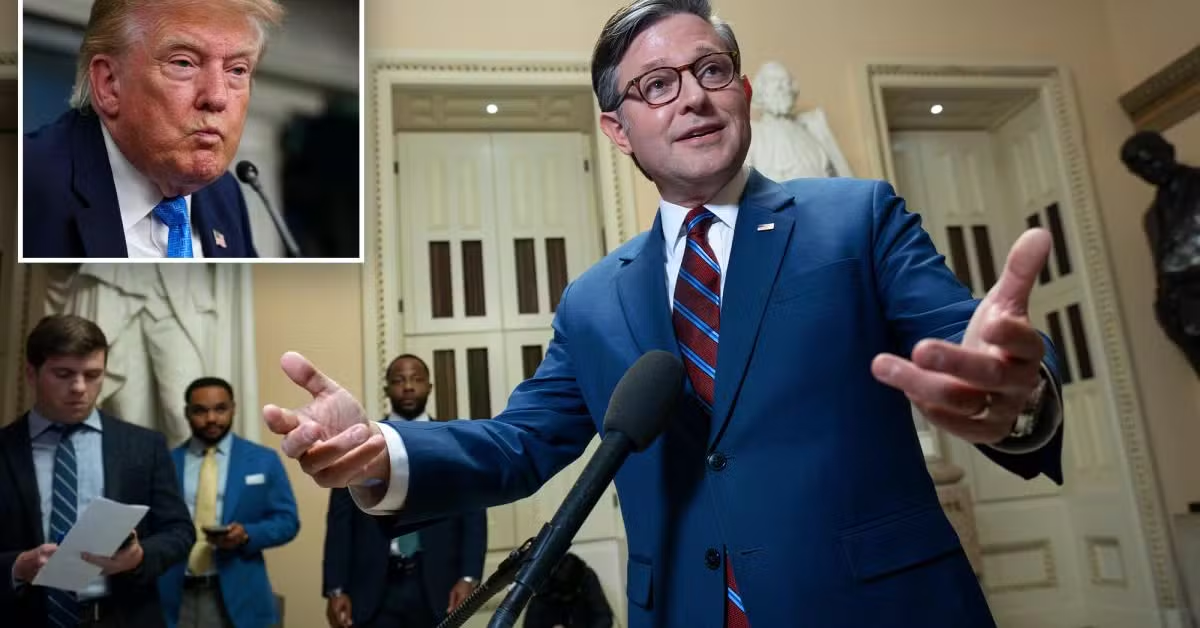
Mike Johnson slams voters for making ‘wrong choice,’ predicts ‘circus’ after GOP’s midterm drubbing
In a CNN interview less than a week after Republicans lost both chambers of Congress in the November 2026 midterms, outgoing House Speaker Mike Johnson says voters made the wrong choice and predicts the next two years under Democratic control will be a bit of a circus and chaos, calling it a great tragedy. Democrats flipped more than 40 House seats, and Johnson will lose the speakership when the new Congress is seated in January 2027, with Hakeem Jeffries poised to take the gavel; Johnson has ruled himself out of the race for GOP Minority Leader. He is the most senior Republican to lash out at voters, though others in the party assign different blame: Vice President JD Vance points to the Iran war and Ron DeSantis to corporatist Republicans. He also dismisses suggestions President Trump should change course and calls impeaching Secretary of War Pete Hegseth, which Democrats are moving toward, a terrible look.

The Democratic Party gained power across the country in the midterms. Now what?
An NPR analysis says the Democratic Party's sweeping 2026 midterm wins have handed it power across the country, and the question now is what it does with it. Democrats flipped dozens of House districts and at least seven Senate seats in mainly Trump-won communities, and after two years out of power in Washington they now control a majority of governorships. NPR reports Democrats will enter the next Congress with one of the largest majorities in a generation, with House Minority Leader Hakeem Jeffries expected to become the first Black speaker. Turbocharged Black turnout helped elect the country's first Black female governor in Georgia, and Republican-led redistricting efforts backfired as Democrats gained seats across the South. Democratic chairman Ken Martin calls the cycle the biggest in the party's history, a repudiation of Donald Trump, and says the South will be the frontline for whether the party's power holds, with Texas now a blue state in his telling. Georgia Senator Raphael Warnock, a floated 2028 contender, says the victories are proof the South is central to American politics and that Democrats must now deliver an economy that works for working families.
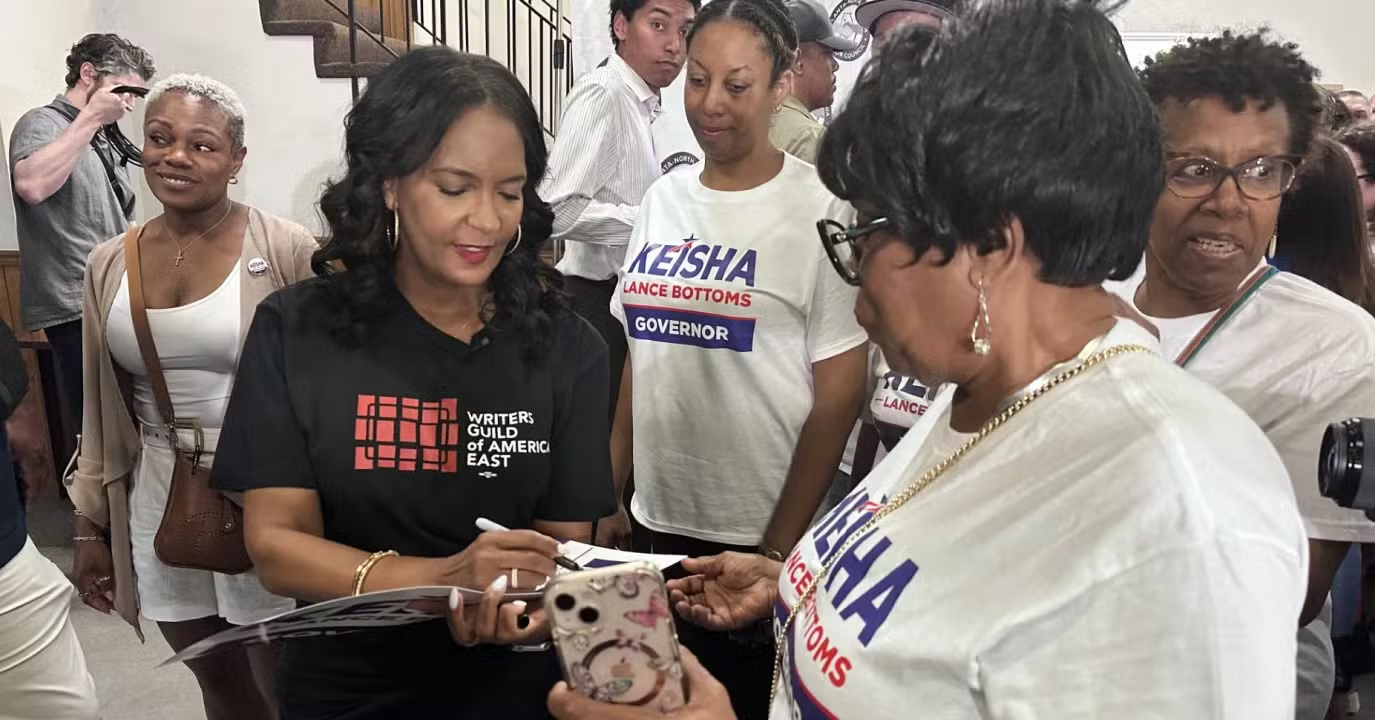
Black Women Carried Democrats to Victory—Again - The American Prospect
In an analysis article for The American Prospect, Naomi Bethune reports that Black voters, and Black women above all, turned out in record numbers in the 2026 election, propelling Democrats to major wins and Black women candidates to historic ones despite the Trump administration's efforts to curb voting rights. After the Supreme Court's Louisiana v. Callais ruling destroyed Section 2 of the Voting Rights Act, Southern states redrew congressional maps to dilute Black voters' power, but the strategy backfired and made Republicans the minority party in Congress. In Georgia, more than 560,000 Black women voted early, up 31 percent from 2022, and Keisha Lance Bottoms won the governorship with 54 percent, becoming the country's first Black female governor alongside seven other Black women winning statewide races. Bethune attributes the wins to grassroots organizing led by and for Black women, though she raises doubts about whether the party will now address the economic hardships, from federal job cuts to affordability, that Black women candidates were elected to fix.

Trump’s End Could Come Sooner Than Anyone Thinks (w/ Mark Blumberg) | Psycho Politics
The Bulwark's Psycho Politics episode interviews Mark Blumberg, a 30-year Justice Department veteran who left in February for the Rule of Law Project, which he says investigates ICE and Border Patrol abuses and public corruption the department no longer pursues, packaging cases for outside prosecutors. Host George, comparing Trump's circle to Hitler's bunker via the film Downfall, says he does not think Trump will last the next two years and that an impeachment vote will become a no-brainer in the House.

'Beaten and Disinterested' Trump Makes 'Flaccid' Claim That Midterms Were Rigged | Common Dreams
Common Dreams reports that a week after Democrats won both houses of Congress in what some call a 'blue tsunami,' Donald Trump claimed on Truth Social that the midterms were tainted by voting machine fraud, the kind of denial that sparked the 2021 Capitol insurrection. The article quotes Trump writing that 'It's all about the machines, which are far more important than the voter,' though polls had widely forecast Democratic gains and there is no evidence of widespread vote problems despite a handful of localized machine issues. Observers quoted see the denial as muted after Trump initially congratulated the Democrats: Mike Rothschild calls it 'a pale shadow of 2020 denialism' from a beaten, disinterested Trump, while Tangle News founder Isaac Saul says it 'feels pretty flaccid' and even Trump offers it as an afterthought.

Everyone Thought Bill Kristol Was Crazy. Then Election Night Happened. | Bulwark Daily
On a Bulwark Daily episode posted November 9th, host Tim Miller and Bill Kristol savor an election that vindicated Kristol's lone prediction of a very big blue wave, one bigger than 1994 or 2006, flipping 11 state legislative chambers and giving Democrats the Senate and House by wide margins on a national popular vote of about 56 to 44. A mashup of Kristol's pre-election takes, including his call of 57 or 58 Senate seats, plays on the show, and Kristol admits he had bought in to the conventional wisdom that gerrymandering and polarization capped a wave at 30 House seats, which the results disproved. Looking ahead, they expect Donald Trump will not go quietly into 2028, refusing to endorse JD Vance and staying central to the race, and both recommend Democrats press their majorities rather than negotiate, starting with a Pete Hegseth impeachment vote Kristol predicts he will lose in a Republican House.

Trump Blurts Out Surprise Admission About Losses, Wrecking MAGA’s Spin
In his New Republic opinion column, Greg Sargent argues that Donald Trump blurted out an admission in a 60 Minutes interview that wrecks the MAGA spin on the GOP's midterm losses. Trump acknowledged that his immigration agenda both helped and hurt, saying that deporting people with good jobs who had committed only the one violation of entering illegally might have been too tough for the large group of Americans who think such immigrants should be allowed to stay. Sargent says this sabotages the explanations MAGA figures offer to forestall any GOP softening, including JD Vance's claim, widely read as a concession, that only enforcement tactics alienated voters, when exit polls show 58 percent of voters said enforcement has gone too far and voters said immigrants help the country by 61 percent to 39 percent. Yet Sargent predicts Trump will not act on the realization, since he installed Stephen Miller, the agenda's architect, as chief of staff, rewarding him with even more power.

Trump casts doubt on Democrats’ historic midterm wins
The Washington Post's live blog reports that President Trump, a week after Democrats won both chambers in the midterms, is questioning the results in social media posts without evidence, as Rep. Thomas Massie prepares a Republican-led impeachment of Defense Secretary Pete Hegseth, whose aides are circulating talking points to defend him. It also covers GOP leadership races, Republicans' pre-January agenda push, the College Football Playoff's expansion to 24 teams, the auction of a handwritten final draft of Martin Luther King Jr.'s "I Have a Dream" speech, and advice on Roth conversions.

Trump Finally Emerges From Election Loss Stupor to Cry Fraud
Nearly a week after telling The New York Times he was 'absolutely willing' to accept the Republicans' midterm losses, Donald Trump emerged to cry fraud on Truth Social, asking how the polls could be so wrong and blaming the voting machines, though The New Republic's live blog notes it was not clear which polls he meant. His own pollster, Tony Fabrizio, had warned since 2025 that Republicans would take a major hit, and the blog suggests Trump's expectations may have been manipulated by his sycophantic staff. In the fallout, Trump announced Stephen Miller would replace Susie Wiles as White House chief of staff, and former adviser Calley Means accused Wiles's team of catering to industry lobbyists, including the vape and pharmaceutical industries, without Trump's full knowledge. Republicans are already turning away from JD Vance's nascent 2028 presidential run toward Marco Rubio and Ron DeSantis. In a 60 Minutes interview, Trump called his previous immigration positions 'too tough,' said his deportation policies hurt him in the midterms, and signaled a possible legal status for working, taxpaying undocumented immigrants.
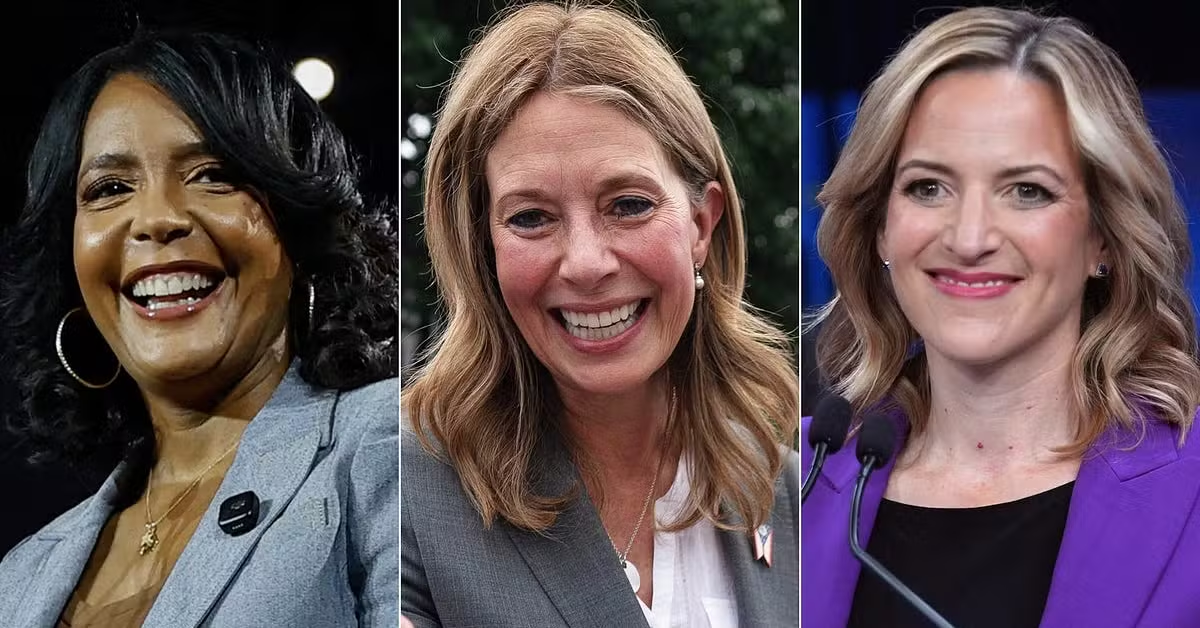
Real Men Are Thrilled About All the Women Elected Last Week
In an opinion essay on his Substack, John Fugelsang celebrates the Democratic women who made history in the midterm elections, winning twelve governorships and, for the first time, more than 100 House seats, 115 as he writes. He catalogs the firsts: Deb Haaland as the first Native woman elected governor, Keisha Lance Bottoms as Georgia's first woman governor and the first Black woman to govern any state, Peggy Flanagan as the first Native woman in the Senate, Gina Hinojosa as Texas's first Latina governor, and Amy Acton as Ohio's first woman governor. He argues the results refute the advice that Democrats needed to be more macho to win, saying voters did not want a government run like a locker room. Against centuries of misogyny, he says real men are thrilled by competent women, that the milestones change whose experiences shape policy, and that a boy is not less of a man because a woman becomes governor.
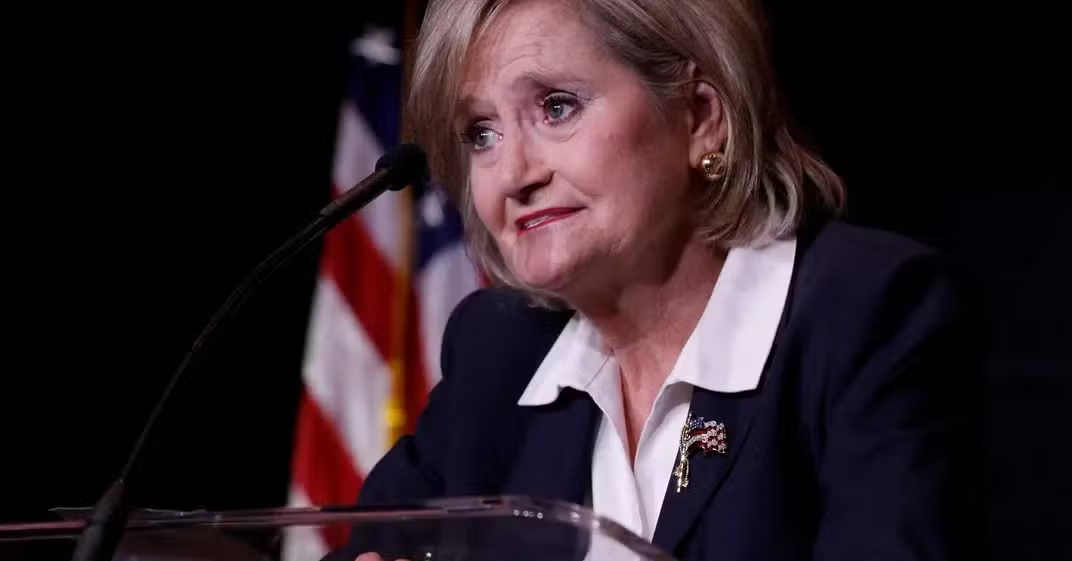
Dems storm Deep South as GOP’s ‘safe’ red states start to crack amid ‘paradigm shift’
A RawStory news report says midterm results in states long written off as safely red are prompting Democrats to rethink the view that a polarized electorate leaves only a few swing states in play. Annie Andrews flipped a Senate seat in South Carolina, and Justin Pearson lost by 1 percentage point in a Tennessee House district drawn to heavily favor Republicans. Democrats argue there is a paradigm shift, with Pearson saying there is no path to House or Senate majorities without the South, and DNC Chair Ken Martin vowed the party will keep investing in the South into 2028.
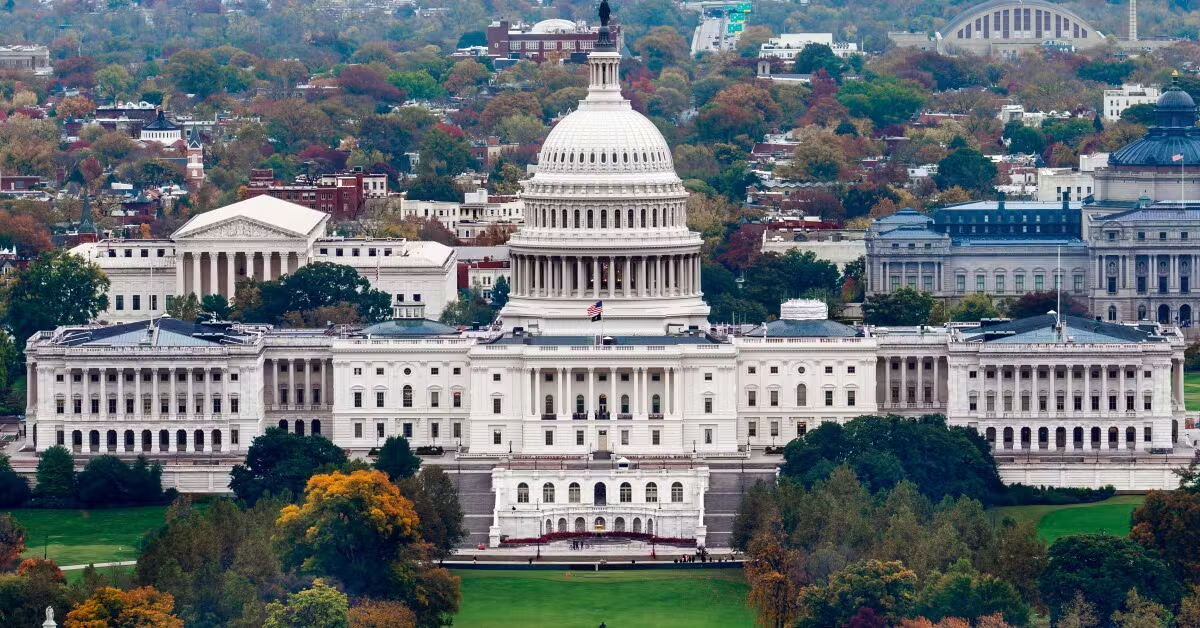
Congress returns to a changed Washington after GOP's election wipeout
Congress returns to a Washington transformed by the 2026 midterm elections, in which voters flipped control of both chambers from Republicans to Democrats, including milestone Senate wins in Texas and Kansas. Republicans have six short weeks of lame-duck session before the new Congress takes over on 3 January 2027, with funding the government by mid-December to avoid a shutdown among the priorities, and Trump is doubling down on political threats despite the losses, tapping Stephen Miller as chief of staff. A first order of business is expected to be a resolution to impeach Defense Secretary Pete Hegseth over the Iran war, which many Republicans blame for the wipeout, and a number of Republicans have signaled they could join Democrats in supporting it, though Trump defends Hegseth as 'basically winning two wars.' Incoming lawmakers arrive emboldened on the Democratic side and sober among Republicans, and leadership fights loom: Steve Scalise and Jim Jordan face off for House speaker, while Hakeem Jeffries is on track to become the nation's first Black speaker.
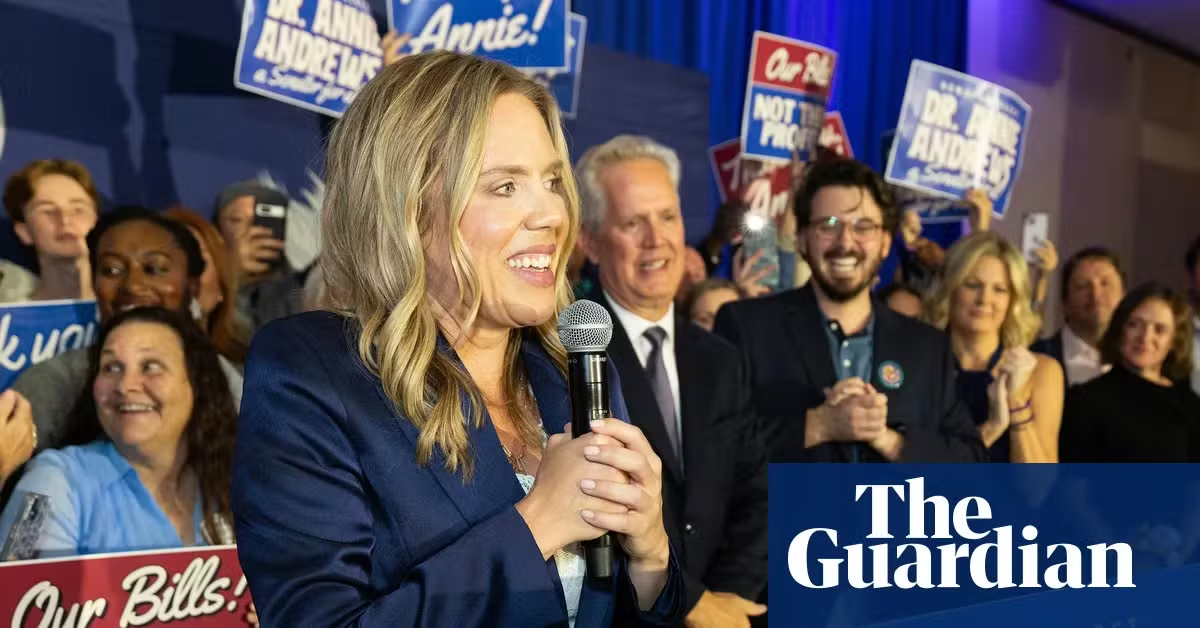
‘A complete repudiation’: public health won big in US midterm elections
In a Guardian news report, public health leaders and doctors who made healthcare central to their platforms won across the November 2026 US midterms, from Annie Andrews, who campaigned on impeaching health secretary Robert F Kennedy Jr after measles tore through South Carolina, to governor-elect Amy Acton and senator-elect Abdul El-Sayed, whose Covid response records their opponents tried and failed to use against them. Voters also rejected proposed abortion restrictions in several states, and Virginia passed a constitutional amendment enshrining marriage equality and reproductive rights. Julie Scofield of Defend Public Health calls the outcome a complete repudiation of President Trump's policies, while scientist Mallory Harris, who found out she was pregnant as 2026 became the worst year for measles in the US since before she was born, says the results suddenly made things a lot less scary. Experts say the leadership changes will dramatically reshape action on abortion, gender-affirming care, and vaccines, though Scofield notes many public health decisions rest with the states and some candidates, including Annie Andrews and James Talarico, softened their support for gender-affirming care.

Democrats won big on issues like immigration. But ICE still has the money
In a 2026 midterm postmortem, NPR reports that Democrats swept immigration-adjacent races — Texans elected Gina Hinojosa as the state's first Latina governor and their first Democratic senator in nearly 40 years, and border counties flipped — yet ICE, the highest-funded federal law enforcement agency with roughly $240 billion from Congress, retains the money to continue mass deportations through Trump's term. Advocates and incoming lawmakers like Rep. Bennie Thompson are calling for oversight and defunding, while private detention contractors CoreCivic and the GEO Group assured investors that enforcement funding remains secure.

Democrats won big. Can they lower your grocery bill?
An NPR article asks whether Democrats, fresh off winning control of both houses of Congress in the November 2026 midterms, can actually lower grocery bills. Affordability and high food costs were top of mind for voters, and that economic strain helped Democrats take Congress plus gains in state capitals, including at least 28 Democratic governors next year. Incoming Democrats plan to cut grocery bills by rolling back Trump's tariffs, defending food assistance, blocking food industry mergers, and state measures like waiving fees for markets in food deserts and cutting sales taxes on groceries. But their Senate majority is not filibuster-proof, and NPR reports Trump may have little appetite to reverse his tariffs or the Iran war, two main causes of high prices, which have also raised energy, transport, and fertilizer costs.
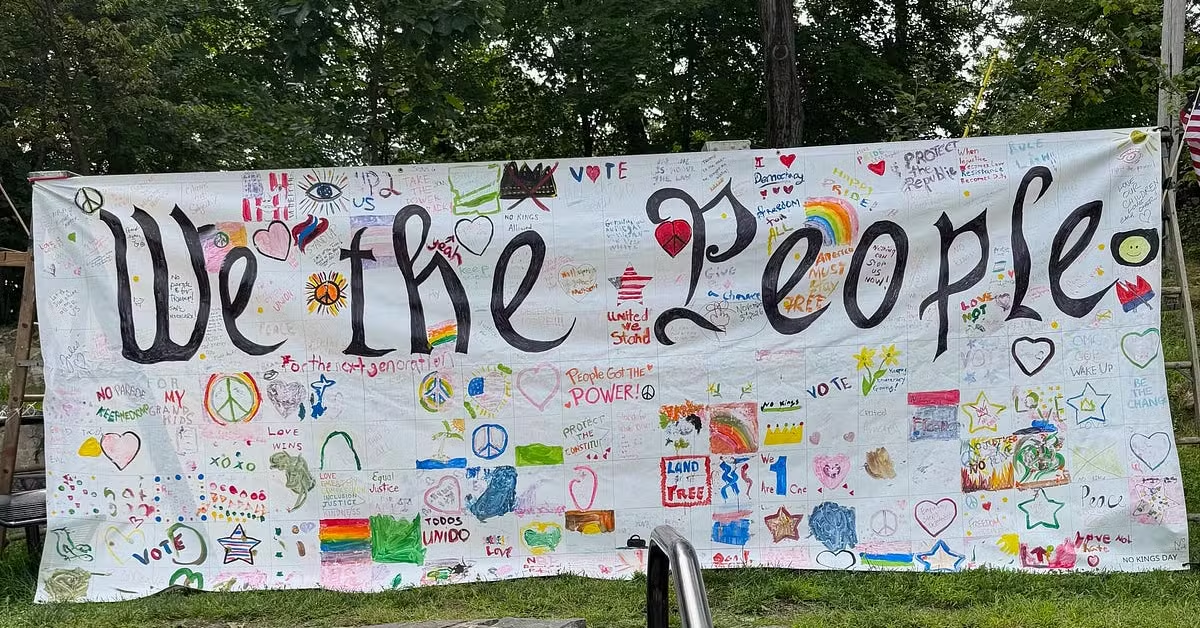
Maintaining calm while GOP panics.
In a Substack essay, Robert B. Hubbell urges Democrats to stay calm and ignore pundits after their November 3, 2026 midterm 'Blue Tsunami,' arguing Chuck Schumer and Hakeem Jeffries must earn the unfilled Speaker and Majority Leader posts and citing Trump's call to imprison Democrats and Todd Blanche's threats to investigate them as signs of panic. He also explains how the National Popular Vote Interstate Compact works and could take effect for 2028 if states with 48 more electoral votes join.
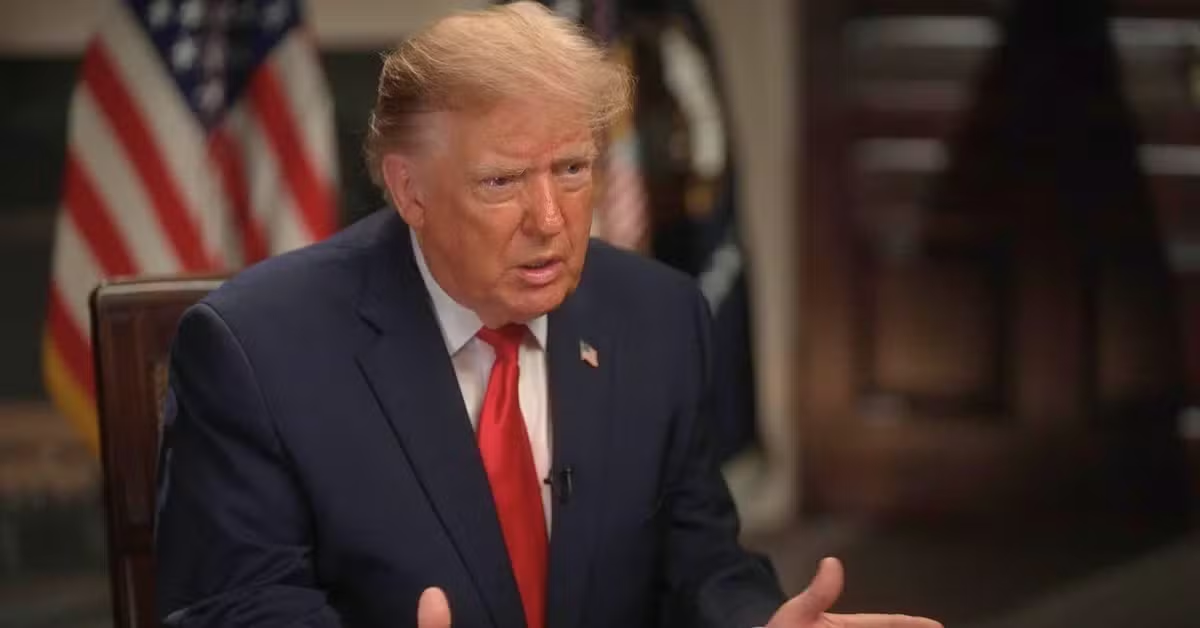
Read the full transcript of Ross Douthat's interview with President Trump
CBS News posts the transcript of Ross Douthat's interview with President Trump, which covers the Republicans' midterm losses, the wars in Iran and Ukraine, the economy, immigration, his family's cryptocurrency company, and UFOs. Trump blames the midterm losses on the Iran war and rising gas prices, says he is close to a deal to end the Ukraine war, expects to issue many pardons when he leaves office, grades himself A+ on closing the border, and says he hates some of his enemies and always will.
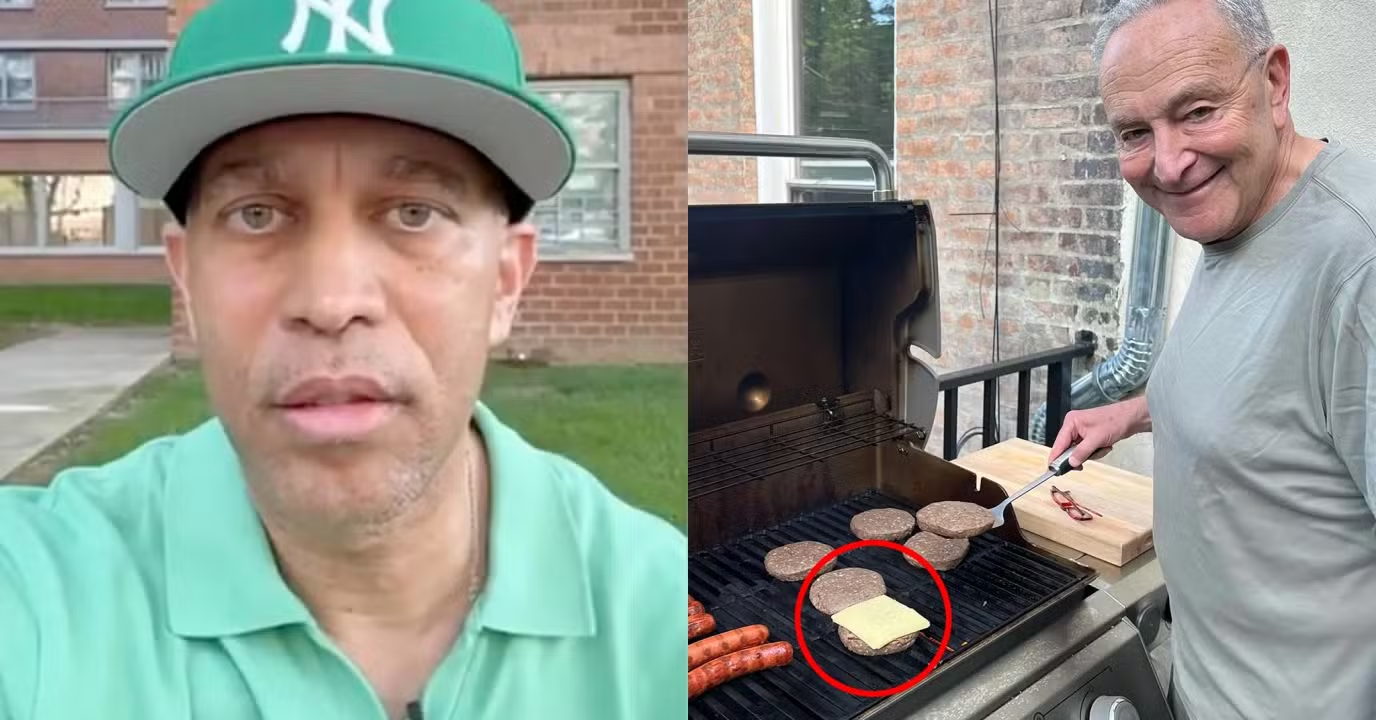
Democrats’ Victory Will Be Wasted Without New Leadership
Current Affairs argues that Democrats' 2026 landslide—powered by left-wing winners like Abdul El-Sayed, Angie Nixon, and Troy Jackson who triumphed despite Chuck Schumer's opposition or neglect—will be squandered if the party keeps its current leadership. It says Chuck Schumer and Hakeem Jeffries must be replaced, suggesting figures like Bernie Sanders, Chris Van Hollen, or Alexandria Ocasio-Cortez.
BREAKING: Trump Lashes Out After Midterm WIPEOUT
Democracy Docket's newsletter reports that days after telling The New York Times he was 'absolutely willing' to accept the midterm results, Donald Trump posted on Truth Social that the Democratic wins could not be real and ordered Attorney General Todd Blanche to investigate Democrats who promised to hold his administration accountable, calling them 'EXTORTIONISTS'. The results he questioned included James Talarico's victory over Ken Paxton in Texas. On the morning of the newsletter, Blanche appeared on CNN and would not rule out investigations into Democratic lawmakers who carry out oversight, saying 'there could be' such investigations. Founder Marc Elias breaks down Trump's claims and threats and what exit polls say about an election that centered on democracy.
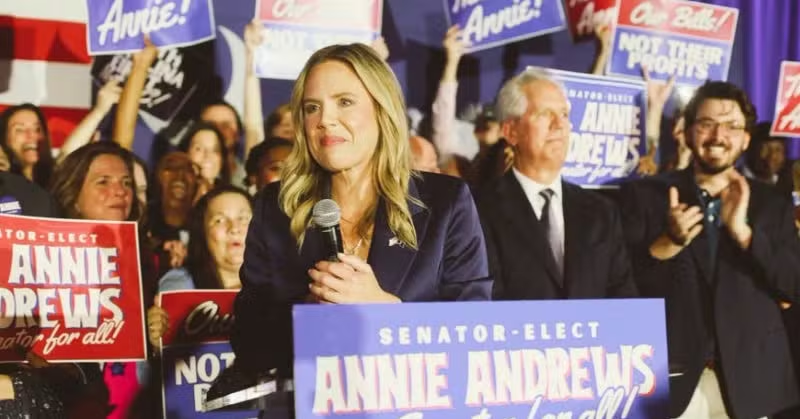
Our Wins Of The Week
The Big Picture's roundup of the week's wins reports Democrats' sweeping victories in the 3 November 2026 elections, where they won new majorities at every level of government and took the popular vote by a 13-point margin. They held Senate seats in Georgia, Michigan, and New Hampshire while flipping several seats in deeply Republican states, including Adam Hamilton becoming the first Democratic Senator from Kansas in nearly 100 years. Citing Owen Winter, the post notes the popular vote margin is the largest of any party's since 1976, and it forecasts Democrats entering 2027 with more than 250 House seats and, if Mississippi and Alaska flip as expected, a 56-44 Senate majority.
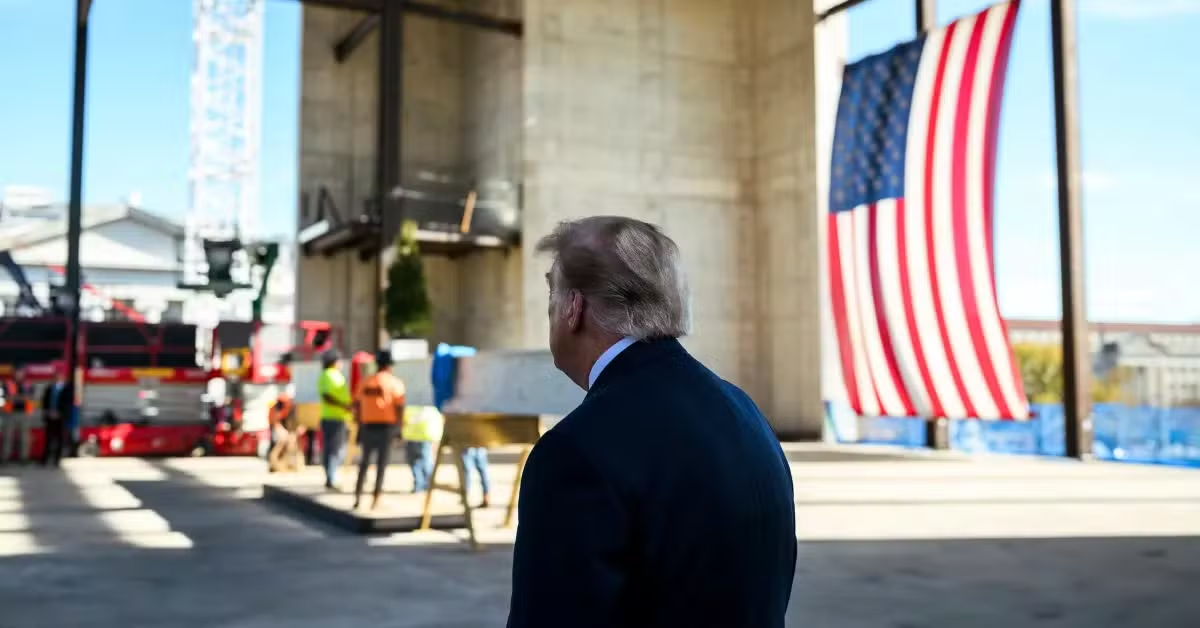
Trump enters the anger stage over the GOP's catastrophic loss
Mother Jones reports that after days of not publicly acknowledging the Republican Party's midterm losses, President Trump entered a weekend of angry posts that the magazine reads as his move out of the denial phase of grief and into the anger stage. He first stayed quiet, touring his under-construction White House ballroom and complaining on TruthSocial about daylight saving time, before reposting allegations that the Democratic wins were fraudulent, including one claiming Democrats materialized 20 million new votes, and demanding a Justice Department investigation into Democratic threats against Republican donors. His weekend also brought the appointment of Stephen Miller as chief of staff, a defense of Pete Hegseth against impeachment calls, a claim that the stock market lost $3 trillion in a day, and an offer of the press secretary job to UFC CEO Dana White, who per CNN speedily declined. Mother Jones reads the flurry of posts as Trump trying out responses to see what might stick, and notes his pet projects like the ballroom will soon be at risk once Democrats control the appropriations process.

For Trump and America, a Clear Election Verdict but a Murky Future
Peter Baker, the New York Times' chief White House correspondent, reports that the 2026 midterms swept Donald Trump's Republicans from Congress in what he calls the most devastating midterm repudiation of a president in half a century or more. Democrats won sweeping victories even in Texas, Kansas, and South Carolina, and Baker reads the result as a public grown weary of Trump even in places he won handily. Trump has offered no humility, instead naming Stephen Miller chief of staff, offering the press secretary job to Dana White of the Ultimate Fighting Championship, and letting the White House post that 'TRUMP IS STILL YOUR PRESIDENT.' Baker argues the days of virtual one-man rule are over, but warns a wounded Trump may thrash powerfully against an opposition Congress armed with subpoenas, as the country enters an uncertain interregnum and attention turns to the first open presidential race since 1976.
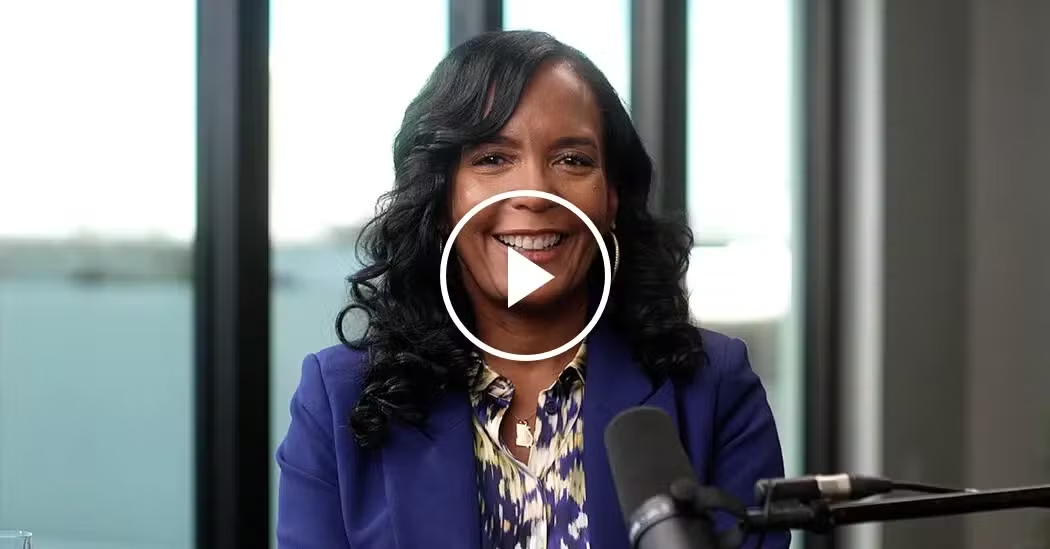
Video: Keisha Lance Bottoms on What Democrats Can Do to Make Their Victory Last
In a New York Times video interview for 'The Interview,' Georgia governor-elect Keisha Lance Bottoms says her party's sweep in Georgia was won on everyday concerns, not identity, and that Democrats must keep listening and delivering to make the victory last. Bottoms is the first Black woman ever elected governor of a US state and the first Democrat to win the Georgia governor's race in more than 25 years, prevailing despite being massively outspent by Republican Rick Jackson. She says that as she campaigned for a year and a half, cost of living, affordability, and access to health care topped voters' concerns, and that she was elected not just by Black voters but by a cross-section of Georgians worried about the same things. Lulu Garcia-Navarro cites New York Times voting data showing Black women turning out in huge numbers and Black men who had backed Donald Trump returning to the Democrats, while the video's narration says her win, along with Senator Jon Ossoff's reelection, affirms Georgia's shift from a Republican stronghold to a state Democrats can win. Bottoms says she will lead divided government, with Republicans holding the state Senate and Democrats the House, and lists priorities including Medicaid expansion, eliminating the grocery tax, funding schools, and expanding mental health services. She warns Democrats had better keep listening to the people and being up front about what they have done and fallen short on: in a clip from her victory speech she says, 'If we don't listen and if we don't deliver, then shame on all of us.'

Here are the midterm races to watch that are still too close to call
A live-updates article tracks the midterm races still too close to call, with 19 House races and two Senate races undecided and Democrats holding majorities in both chambers: Scott Colom leads Sen. Cindy Hyde-Smith narrowly in Mississippi, and Mary Peltola leads Sen. Dan Sullivan in Alaska under ranked-choice voting. Sen. Ron Johnson accuses the Trump administration of corruption while pushing to postpone Senate Republican leadership elections, and President Trump says he is replacing chief of staff Susie Wiles with Stephen Miller.

Will this week's blue wave election usher in a Democratic president in 2028?
A CNBC analysis of wave elections since 1938 finds that a big midterm defeat for the party in the White House, like this week's 2026 blue wave, statistically says little about who wins the presidency two years later. The 2026 midterms, with Democrats gaining an estimated 41 House seats per an MS NOW tally, rank 10th in the analysis, the biggest loss for the party in power since 2018. The historical record is split: in the top four wave elections before a president's final term, the incumbent went on to win reelection, such as Roosevelt in 1940 and Obama in 2012, while in the next five the incumbent party lost, as when Kennedy beat Nixon in 1960 and Biden beat Trump in 2020. Democratic pollster Jay Campbell explains that presidential elections turn heavily on each party's nominee and candidate quality, and a lot can happen in two years.

‘Swaggering assholery’ REJECTED: Voters threw ‘toxic chuds’ out on their butts, says Hayes
The night after Tuesday's landslide election, Chris Hayes argues on his MS NOW commentary show that voters rejected the swaggering cruelty of MAGA politics and threw out its most toxic Republicans, from Max Miller, beaten by almost 10 points, to Vivek Ramaswamy, beaten by eight in Ohio. Donald Trump's answer, announced the same day, was to drop Susie Wiles as chief of staff and put Stephen Miller in charge of his agenda, which Hayes calls a giant middle finger to the majority who voted against exactly that. Pete Hegseth is not resigning over impeachment calls now coming from Republicans as well as Democrats, with outgoing congressman Thomas Massie saying he will file articles of impeachment unless Hegseth quits, and instead posted a defiant Pentagon video Hayes calls a complete abuse of a government office. Hayes says the consequences reach beyond the polls, with figures like Harmeet Dhillon resigning, but warns Trump's remaining two years will be all the more dangerous with Miller and Hegseth in place.
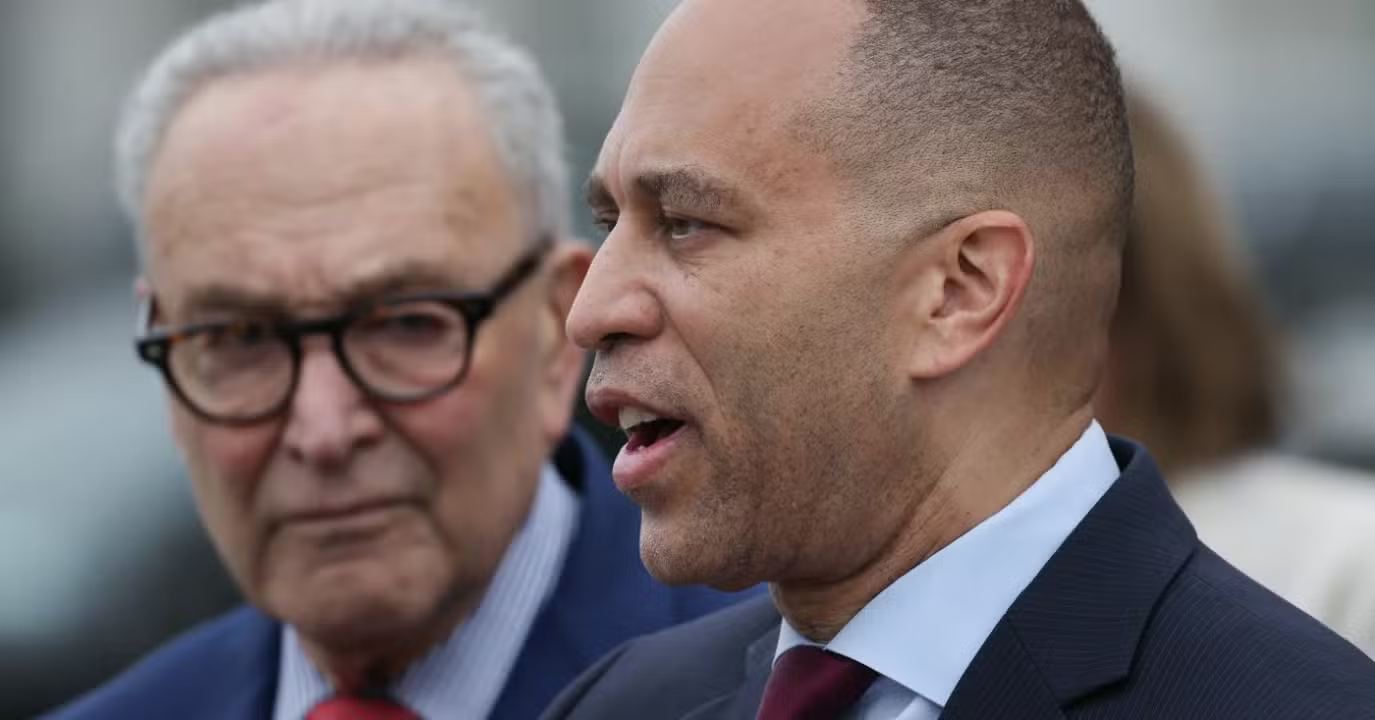
The economy propelled Democrats to victory. What can they actually do about it?
Democrats recaptured both chambers of Congress in the 2026 midterm elections, propelled by an affordability message, but their narrow majority leaves them unable to overturn a presidential veto and likely facing Republican filibusters in the Senate. Hakeem Jeffries and Chuck Schumer say they are clear-eyed about the mandate to act on affordability come January, and Democrats signal bills on health care costs, premium tax credits, and Medicaid cuts, plus plans to reassert congressional authority over tariffs and force votes on a war powers resolution to end the Iran war. Analysts say the best use of the majority is passing popular bills and daring Trump to veto them, which would show voters where Democrats and the president differ; Senator Kirsten Gillibrand says Trump vetoing common-sense bills would make 2028 very favorable for Democrats.
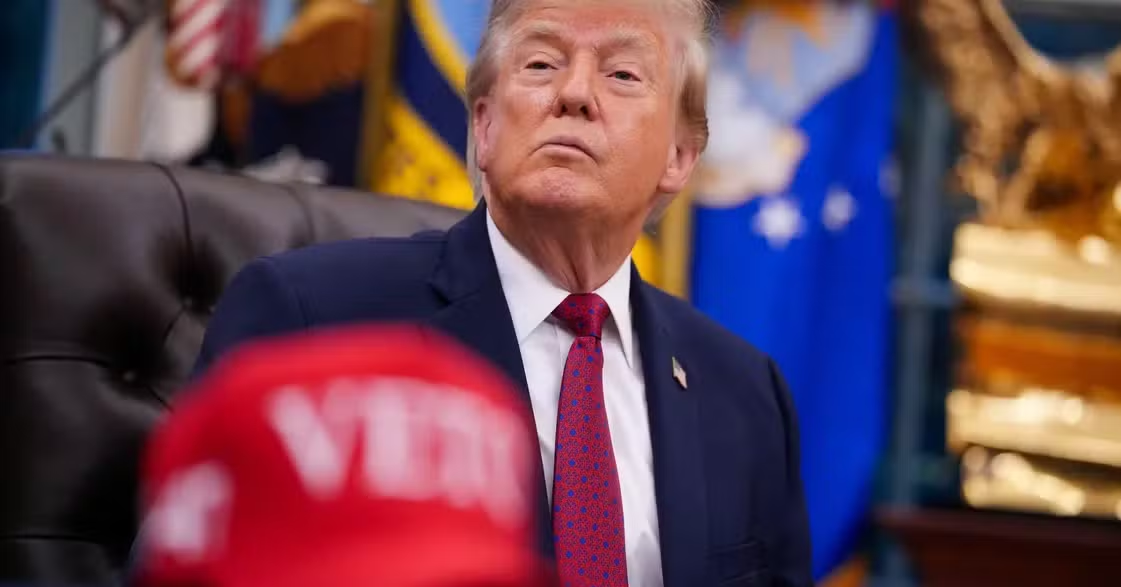
Trump Has Made A Noticeable Change In How He Acts Since The Election. Therapists Have A Theory Why.
A HuffPost article reports that therapists have a theory for President Donald Trump's calm demeanor since the midterm elections, in which a blue wave cost Republicans control of the House and Senate: he is deliberately managing his public image. Instead of raging over the loss, he has focused on glamour projects like the White House ballroom, reminded people of his veto power, and told The New York Times, "We'll work with the Democrats." Clinical psychologist Denise Dudley calls this "impression management," a power move meant to minimize the significance of a setback and signal that he is confident, in control, and still president, while therapist Shenikka Moore-Clarke says she does not know if the calm reflects his real state and does not trust it either way. Experts do not know how he will act as Democrats take control of Congress, with decolonial neuropsychologist Will Lacey-Bisetty expecting his defensive side to appear if Democrats push for real change.
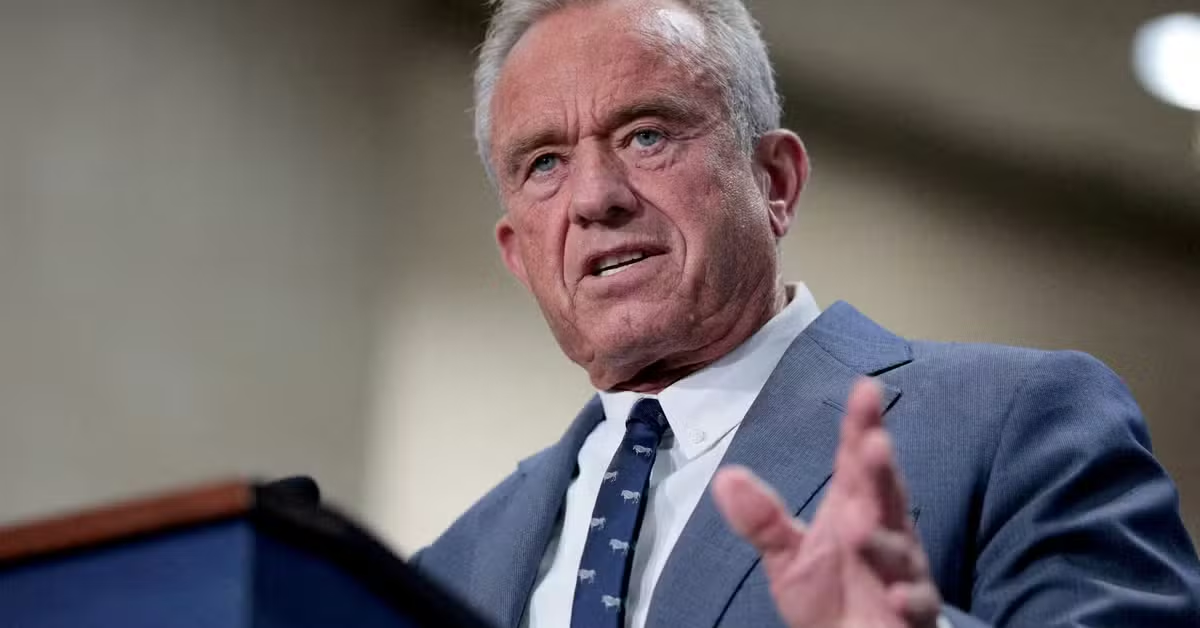
Democrats want RFK Jr’s ‘head on a platter’ after midterms triumph
The Independent reports that after Democrats' 3 November 2026 midterm victory, party leaders plan to pursue Health Secretary Robert F. Kennedy Jr. with investigations, impeachment calls, and resignation demands, as Senator Angela Alsobrooks posts, "RFK Jr must resign or be fired." The results cost Kennedy's MAHA movement at least 64 of the 97 candidates it endorsed, deepening a rift between Trump's MAGA and MAHA that allies like Joseph Ladapo say may even be a good thing.

Big Tech lost big in the 2026 election | The Vergecast
Nilay Patel and David's Vergecast argues big tech lost big in the 2026 midterms: Democrats swept up and down the ballot, Texas flipped blue, and 40 of 41 data-center ballot measures in 10 states went against data centers. The hosts call the results a possible wall for the AI industry, and cover incoming Democratic oversight of tech, FCC chairman Brendan Carr, Google's search troubles, SpaceX's wireless ambitions, the new MacBook Pro, and a Free Press reporter's ChatGPT-edited photo that changed the image it claimed to brighten.
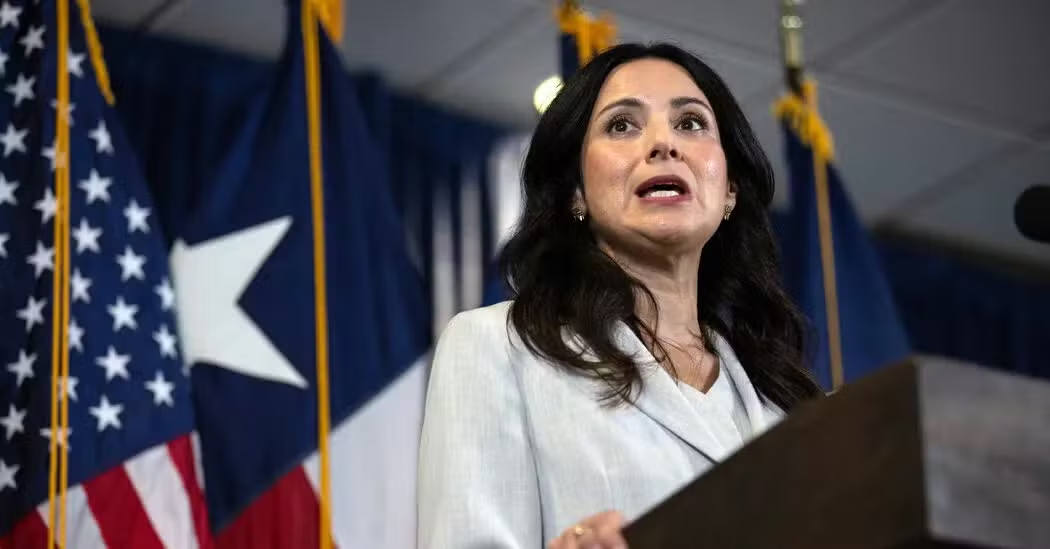
Gina Hinojosa Will Be Texas’s First Democratic Governor in Decades. Republicans Won’t Make It Easy.
Democrats swept Texas's election, winning from U.S. Senate down the ballot, taking the Texas House for the first time since 2003, and unseating Greg Abbott, Ken Paxton, and Dan Patrick. Gina Hinojosa, a longtime state representative who has never held statewide office, takes over as governor in January and pledges affordability measures like a $1,500 refund check, abolishing school vouchers, and firing Texas Education Agency head Mike Morath on her first day. But the article forecasts resistance: the Republican-led State Senate can reject her appointees, and Republican senators including the abortion ban's author Bryan Hughes promise to be the firewall against her policies. A former Abbott adviser says Hinojosa will face gridlock unless she compromises, though she says she plans a bipartisan transition, and her party says it will put pocketbook issues ahead of social fights.

Mary Trump: 'Investigate ALL OF THEM' After Trump's Midterm Wipeout | 6 Questions | Steven Beschloss
Lincoln Square's Six Questions marks the midterms with host Steven Beschloss speaking to Mary Trump about a Democratic landslide they frame as a repudiation of Donald Trump — at least 250 House seats, a 56-to-43 national margin, historic wins in Texas, Georgia, and South Carolina, and both seeing his quick acceptance of defeat as strategic. Mary Trump, who calls the result seismic, urges wide-ranging investigations — "basically investigate all of them," including Elon Musk, whose $500 million in spending she says bought nothing.

US elections 2026 live: Democrats hold nearly 100 more House seats than Republicans as blue wave continues to grow
The Guardian's live blog reports a Democratic wave in the 2026 midterms, with the party holding a 253–155 House lead after flipping seats including New York's seventeenth, where Army veteran Cait Conley unseated Mike Lawler, and New Jersey's second, where mayor Zack Mullock beat Jeff Van Drew, while Nithya Raman took the Los Angeles mayoralty from Karen Bass. Donald Trump accepted the results despite his administration's months-long efforts to sow doubt about them, signed an executive order declaring his gold-decorated Oval Office "a national monument," and saw justice department official Harmeet Dhillon resign, while Ted Cruz called the Republican defeat a "Watergate-level repudiation."

"This Was An Extinction Level Event For Republicans," Ron DeSantis Says Midterm Voters Rebuked Trump
In an interview posted by commentator Anton Daniels, Florida Governor Ron DeSantis says the midterm was a rebuke of President Trump and the Congress by Democrats, independents, and some crossover Republicans, and calls Texas a potential extinction event for the party, arguing Republicans who cannot win states like Texas, Kansas, or Iowa are not viable nationally. He says Florida still felt the wave but held the swing to about 10 to 12 points against Texas's roughly 20, crediting trust built with voters and an overwhelmingly passed property tax initiative, and won every statewide race while keeping a strong state Senate majority. He blames both sides of Pennsylvania Avenue, saying Republican voters stayed home over promised conservative priorities like immigration and judicial moves that Congress never delivered. Daniels agrees, calling the outcome an extinction level event that was really a rebuke of Trump rather than of candidates like Greg Abbott.

AIPAC’s dwindling allies in Congress
The pro-Israel lobby AIPAC is set to enter the next Congress with far fewer allies after more than 30 of its preferred candidates lost in the Nov. 3, 2026, midterms, and it was defeated in more than three-fourths of the competitive races where it backed an incumbent. In a memo obtained by POLITICO, AIPAC privately acknowledged significant 'challenges' ahead and said it would stop directly endorsing candidates or contributing to campaigns while continuing its support through its United Democracy Project super PAC. The losses include Susan Collins, for whom it bundled more than $3.3 million, more than for any other candidate, and whom Maine Democrat Troy Jackson defeated. J Street cited the results as evidence of AIPAC's waning influence, having spent $3 million to defeat six AIPAC-backed Republicans, all of whom lost, though AIPAC says it will work with returning and newly elected members of both parties, and many of its losses were not driven solely by Israel policy debates.
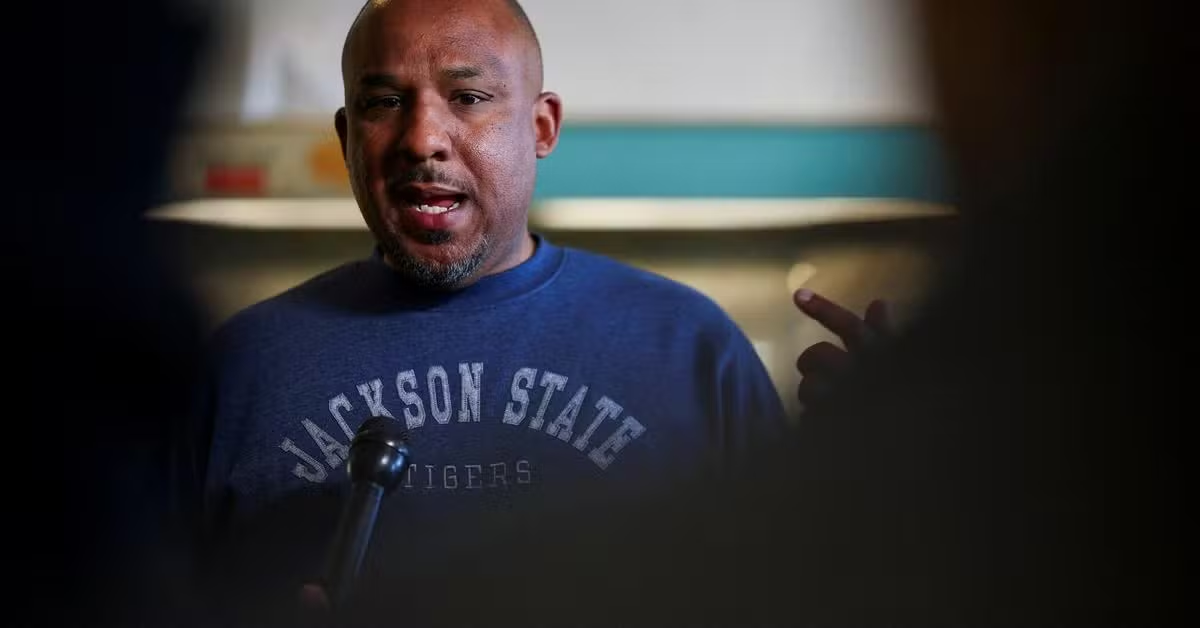
Exclusive: Democrats flock to Mississippi amid Senate vote tally
In its midterm-aftermath newsletter, Semafor reports that Democrat Scott Colom's lead over Republican Sen. Cindy Hyde-Smith has grown to 1,724 votes in Mississippi's ongoing Senate count. The DSCC and Elias Law Group are on the ground observing the tally, and Senate Majority PAC has spent $2.2 million on Colom, on top of at least $500,000 from the DSCC. The National Republican Senatorial Committee has asked county clerks to preserve provisional ballots, while Hyde-Smith's campaign vows outstanding votes from Republican counties will reinforce her path to victory. Sen. Catherine Cortez Masto told Semafor she feels confident as votes keep breaking Colom's way.

A NIGHT TO REMEMBER
In a jubilant Substack post, D. Earl Stephens, a former Managing Editor of Stars and Stripes, recounts a sweeping Democratic victory in the 2026 midterm elections and calls it Americans proving they can still do 'the greatest things ever.' He says Democrats won the Senate, the House, and many governor's races, with Wisconsin, Michigan, and Pennsylvania going resoundingly blue, Gina Hinojosa winning Texas, and Dr. Andrews unseating Senator Lindsey Graham in South Carolina by 4 percentage points. Stephens says Texas and its 40 electoral votes are now purple, so Republicans can never win another presidential election in our lifetimes, and credits Black voters, who backed Democrats roughly 90%-10%, as the backbone of the wave. He ties the night to a call he got the morning after the 2008 election from a French reporter with Le Monde, who said Americans do the stupidest things ever and the greatest things ever, so 'We never know what to expect!'
Democrats' victory was clear. The party's future is not
Democrats won their largest congressional majority in decades in the 2026 midterms, but the victors span the ideological spectrum, leaving the party's future unsettled. Progressives scored breakthrough wins, with Abdul El-Sayed taking Michigan's Senate seat despite being outspent and opposed by Chuck Schumer's establishment, and Troy Jackson defeating longtime GOP Sen. Susan Collins in Maine, while moderates flipped Republican strongholds such as Kansas and South Carolina. The AP Voter Poll found moderates made up about half of the Democratic winning coalition, up from roughly 4 in 10 in recent elections, yet about one-third of Democratic voters identified as democratic socialists. The AP describes the results as a repudiation of President Donald Trump, but with leaders like Hakeem Jeffries and Chuck Schumer expected to keep their posts and President Trump retaining veto power, the party now faces a debate over direction that Ro Khanna and others expect to play out in the 2028 presidential primary.

JD ABANDONS SHIP: IRAN WAR Was Political Disaster
Breaking Points reads JD Vance's first post-election reaction to the Republicans' 2026 midterm losses, in which he blames the Iran war, as the opening pitch of his 2028 campaign. Quoting his post on air, the show says Vance argues turnout was not the problem: many 2024 Trump-Vance voters switched, citing ending the war, the cost of living, and changing the relationship with Israel, and he writes, 'The reason we lost is the war. The president himself said so last night.' A co-host calls the post a setup to distance Vance from a war he publicly defended, while pro-war commentators retort that pro-Israel Republicans built his career and the memorandum of understanding, not the war, was the problem. The show forecasts that nobody tied to the Trump administration can win in 2028, and that voters will not accept Vance as an innocent bystander to the record he fronted.
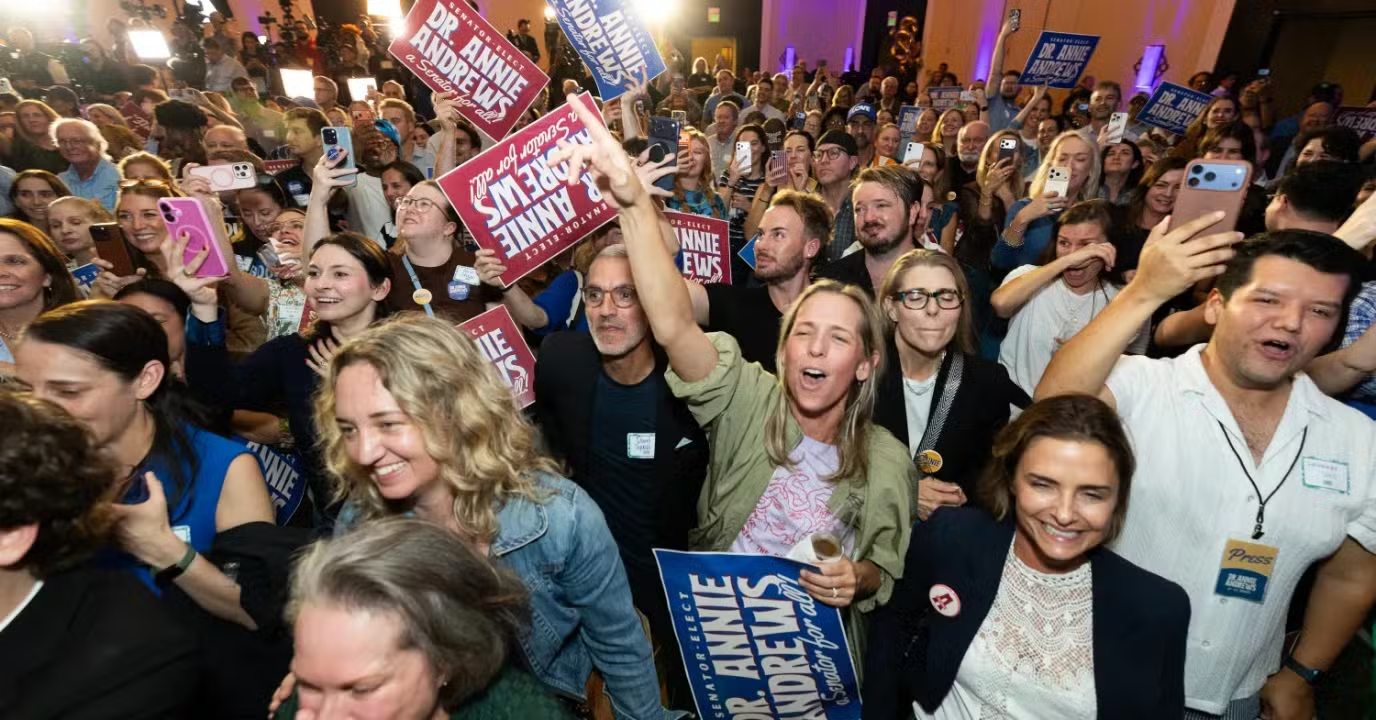
America isn’t the only nation celebrating the blue tsunami
A Daily Kos article by Alix Breeden reports that Democrats swept the House and Senate in November 2026 and the win was celebrated abroad: Ontario Premier Doug Ford called it a "victory for Canada," Mexico launched investigations into U.S. ICE facilities after at least 15 Mexican nationals died in custody, and Spanish Prime Minister Pedro Sánchez said the far-right is "crumbling." California elected Xavier Becerra its first Latino governor, while Russian state media warned of Trump's wrath falling on Europe.

Trump’s Heart Breaks As Canada Sings Saddest Song After Loss | Lego, Bill Clinton & Slow English
In a LEGO brick parody news video, IRAN LEGO NEWS tells a satirical story of the midterm election on Tuesday, 3 November 2026, in which networks projected Democrats would win the House, a result headlines called a major setback for President Trump, with voters focused on prices, tariffs, and the war in Iran. The video has Ontario Premier Doug Ford doing cartwheels over the results, saying Americans spoke most of all on tariffs because tariffs are tied to everything people pay for, while warning the trade war is not over. It has Prime Minister Mark Carney saying talks with Washington had begun, that culture, sovereignty, and other trade deals were off the table, and quoting him: "We have made progress, but we haven't finished," alongside Canada's new associate membership with the European Union. A joke song runs through it, singing of Trump's heart breaking as Canada sings the saddest song after his loss.

Here’s What Happens When Trump’s Star Implodes
The Bulwark argues that after Democrats' midterm rout, the Republican Party's decade of revolving around Trump shows signs of collapse: JD Vance publicly blamed the loss on the Iran war, Republicans per CNN are pinning the wipeout on Defense Secretary Pete Hegseth, whom Rep. Thomas Massie plans to impeach, while Trump himself chatted aimlessly about his new East Wing ballroom. Canadian columnists, meanwhile, counsel wariness of a Trump trade deal and expect years of damaged U.S.–Canada relations.

Elon Musk Deletes Smug Election Posts After They Backfire and His Businesses Tank by $120 Billion
Futurism reports that after Democrats swept the midterm elections, Elon Musk deleted his posts urging support for Republican candidates, including a "Vote red today!" tweet, after spending $447 million on the races. Bloomberg estimates the share drops in Tesla and SpaceX wiped out over $120 billion, while Futurism judges most of his spending went to waste.

Didn’t Take Long: Dems Are Already Hiring the Lawyers Who Will Bury Trump And His Friends
Dean Blundell's Substack post argues that after Democrats' 2026 midterm sweep, congressional investigations of Trump and his allies are already underway: within 24 hours of the results, House Judiciary's Democratic staff posted a job listing for oversight counsel, and Jamie Raskin and Robert Garcia say their teams have spent months preparing. Blundell says Democrats flipped at least 35 House seats, took the Senate, and plan probes of Trump-linked firms, ballroom donors, crypto ventures, and the DOJ, with hearings expected as early as February 2027. He jokes that Mike Johnson's protection program closed on election night.

Was Elon Musk the US midterms' biggest loser? – Stateside with Kai and Carter
A Guardian episode of Stateside with Kai and Carter examines whether Elon Musk was the biggest loser of the US midterms, noting he put $446m into Republican-aligned groups since 2025 and that Democrats won all five Senate races where his America Pac spent the most. Carter Sherman and Kai Wright, joined by tech editor Blake Montgomery, discuss what the blue tsunami means for Musk, the tech industry's poor investment, and the fate of AI datacenters.

Progressives hail ‘blue wave’ victories in US midterm elections as top Democrats push for unity
In a Guardian news report, progressives hail the Democratic Party's 2026 midterm victories, retaking the Senate and House in formerly Republican strongholds, as a win for their movement that repudiates the party's establishment as much as Donald Trump's presidency. Progressive Abdul El-Sayed won in battleground Michigan after defeating moderate Haley Stevens in a bitter primary, while Adam Hamilton in Kansas and Josh Turek in Iowa flipped Senate seats. The New York Times analysis found the Democratic House popular vote share was the largest of any election since 1976. Progressive leaders argue their ideas flipped the seats and now eye the 2028 primaries, where they expect to face moderates, while Chuck Schumer and other top Democrats insist the party will be united on costs and corruption.
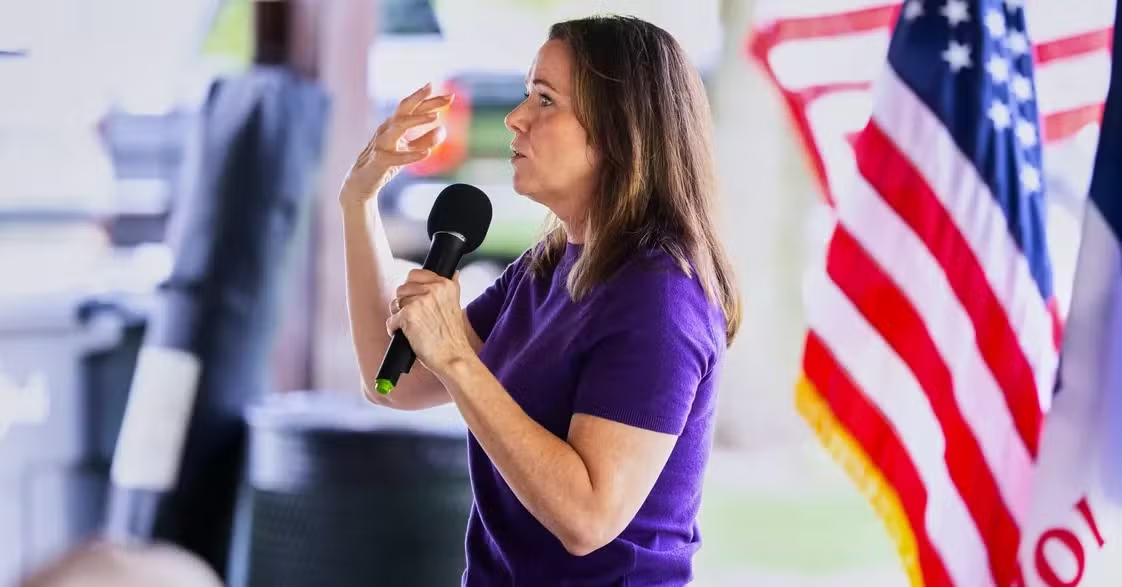
How Trump's Corruption Helped Democrats Create A Blue Wave
In a HuffPost analysis of the 2026 midterms, Democrats' landslide gains in both chambers of Congress and at the state level came after years of struggle to make President Donald Trump's self-dealing a signature issue, from a gifted Qatari plane to $1.4 billion in cryptocurrency earnings and nearly 29,000 presidential stock trades. The key, the piece finds, was linking corruption to rising costs: after the war in Iran pushed gas above $4 a gallon, polling for House Majority PAC showed voters blaming out-of-touch politicians for high prices, and exit polls had 90% of the electorate calling corruption crucial or major, favoring Democrats 57% to 41%. Candidates such as Christina Bohannan, who won Iowa's 1st District by nine points, and James Talarico, who flipped a Texas Senate seat, ran on anti-corruption pledges like a congressional stock-trading ban. But much pre-election polling showed voters trusted neither party to clean up Washington, and party officials said following through on anti-corruption votes would be key to rebuilding trust.
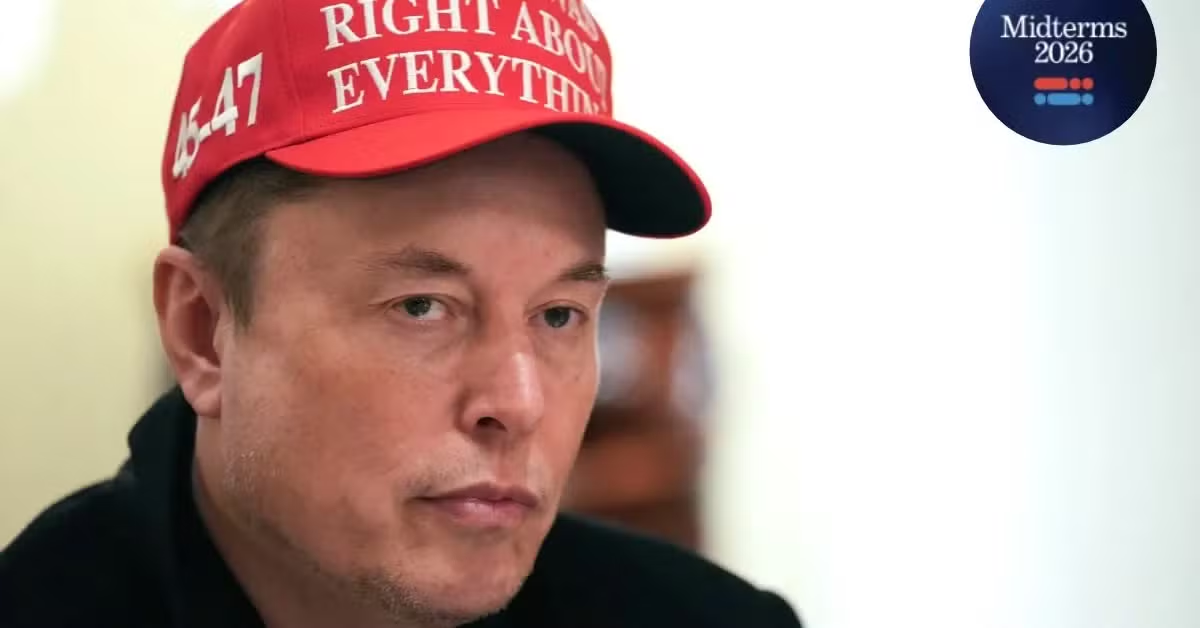
What a blue Texas means for Elon Musk’s future
Democrats swept Texas statewide offices in the 2026 election, and Newsweek's analysis argues the political climate Elon Musk left California to escape may now be catching up with him in Texas. Gina Hinojosa won the governorship, the first Democrat since 1990, and James Talarico beat Ken Paxton for U.S. Senate by more than 12 points, despite Musk giving nearly half a billion dollars to Republican groups, including at least $168 million backing Paxton. Hinojosa has promised a moratorium on data center approvals and to review the more than $1.6 billion in tax incentives Musk's companies received, and her incoming attorney general has warned he shows no deference to Musk. But her reach is limited: Republicans kept the state Senate 19-12, her orders would run through agencies full of Greg Abbott appointees, and Musk's main AI data centers sit near Memphis, outside her jurisdiction.
Does the blue wave mean lower gasoline and diesel prices soon? Don't hold your breath
A news analysis by NPR's Willa Rubin argues that the Democrats' wide midterm win, driven by voter fury over war-inflated fuel prices, will not soon mean lower gasoline and diesel prices. The new Congress is not sworn in until January 2027, and experts say U.S. legislators have limited powers over a price set by a complex global market; most pre-election actions to lower fuel prices, like Trump's loosened dyed diesel rules and a deal to lift sanctions on Russian diesel, came through the White House and did little. The high prices trace to the war in Iran blocking the Strait of Hormuz, through which about a fifth of the world's oil once flowed, driving average gasoline to $4.12 a gallon and diesel to a record $6.52 in September 2026. Even with a peace deal, analysts Jaime Brito and Jorge León say oil would need months to move again, with gasoline and diesel possibly returning to prewar levels in three months at best, more likely six or more, and hiccups that could stretch it to a year; Brito adds that expensive gasoline could be a new normal.

The South flexes political power in midterms, sets regional influence in 2028 election
An NPR analysis argues that the 2026 midterm results transformed the electoral map so that the future path to power for both parties runs through the South. Black voter turnout surged in states including Louisiana and Georgia, Democrats flipped U.S. Senate seats in North Carolina, South Carolina and Texas, and Georgia's Keisha Lance Bottoms won the governor's race to become the nation's first Black woman governor. Writer Stephen Fowler says Republican-led redistricting in states like Alabama, Texas and Florida, rushed after a Supreme Court ruling gutted part of the Voting Rights Act, backfired: of nine targeted House seats, the Associated Press had called only one for Republicans. Texas, Florida, Georgia and North Carolina together represent more than a third of the 270 electoral votes needed to win the White House, and Fowler writes the southern swings matter for both parties looking ahead to 2028.

November 4, 2026
In her newsletter, Heather Cox Richardson reports that Democrats swept the November 3, 2026 midterms, flipping both chambers of Congress, seven Senate seats, and governor's races in states including Texas and Georgia, with election scholar Michael McDonald estimating turnout of about 124.3 million voters. She reads the result as a historic rejection not just of Donald Trump but of the Republican ideology, rooted in the 1970s and built by Ronald Reagan, that tied racial and gender inequality to economic prosperity, noting voters elected firsts like the nation's first Black female governor. Republicans answered differently: J.D. Vance blamed the Iran war, Ron DeSantis called the result close to an extinction-level event for his party, and Trump insisted he wasn't on the ballot. A commenter calls her account rose-colored, likening the victory to Gettysburg, a midwar win rather than a final repudiation.
The MeidasTouch Podcast - Podcast - Apple Podcasts
An Apple Podcasts listing for The MeidasTouch Podcast centers its latest episodes on Ben Meiselas reporting a sweeping midterm defeat in which Democrats took control of both the House and Senate. In a live special edition breaking down the results, Ben Meiselas interviews Pennsylvania Governor Josh Shapiro and then New York City Mayor Zohran Mamdani about the message voters sent and what comes next. He reports that Trump went silent after the wipeout, with the White House closing off press access and nearly 11 hours passing without a post, and that some of Trump's most loyal supporters are walking away. Other episodes cover Fox News's election-night coverage of the losses, Iran's warning to Trump after the defeat, and New York Times reporting on the administration's plans for a possible invasion of Iran. The listing says the podcast, active since 2020, is rated 4.9 out of 5 from 55,450 ratings and releases new episodes with all three Meiselas brothers every Tuesday and Friday.
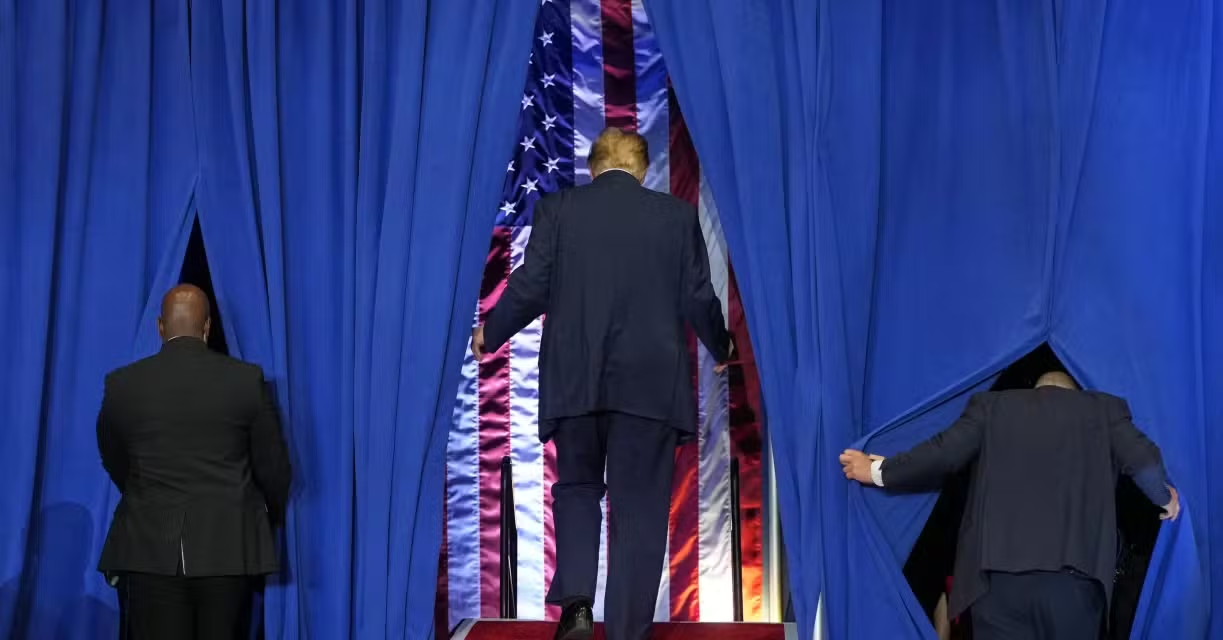
How Trump Lost the Midterms
A Wall Street Journal article by Josh Dawsey, Alex Leary, and Lindsay Wise recounts how President Trump's Iran war, immigration crackdown, and focus on White House renovations led Republicans to sweeping defeat in the November 3, 2026, midterms, with Democrats winning Senate races in Georgia, South Carolina, North Carolina, and Texas. It details his costly Senate picks like Ken Paxton, aides' failed warnings on affordability, and Trump's own view that his absence from the ballot was the biggest issue.
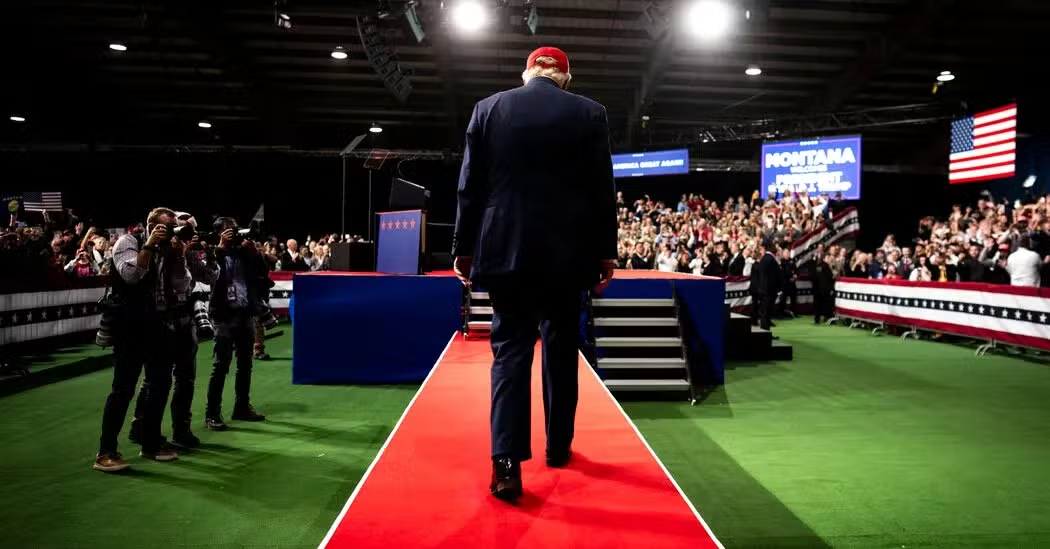
Inside Team Trump’s Historic Collapse in the 2026 Midterm Elections
A New York Times investigation reconstructs how President Trump and his party suffered a historic collapse in the 2026 midterms, with Democrats storming to a huge House majority and Senate control, powered by wins in Republican strongholds like Kansas, South Carolina and Texas. Six days before the vote, more than two dozen of Trump's top strategists held a grim call given to gallows humor about funerals and fleeing the country, and the party was on track to lose the national House vote by about 13 points, the worst in half a century. The article traces the defeat to the Iran war the candidate Trump had promised never to start, which closed the Strait of Hormuz, pushed gas past $4 a gallon and dragged on past his four-to-six-week timeline, alongside corruption reports showing Trump, his family and associates had enriched themselves through the presidency, which voters came to name their top concern. Trump's own choices made it worse: he endorsed the scandal-ridden Ken Paxton over an incumbent senator and lost by 12 points, backed the inexperienced Darline Graham for her late brother's South Carolina seat, and threatened wavering senators into retirements that left open seats. His mid-decade redistricting push carved five new Republican House seats, but Democrats countered with their own maps and recruited strong candidates deep into red territory. The account rests on interviews with more than 70 lawmakers, strategists, White House officials and aides, many anonymous, and argues the scale of the loss was far from inevitable: it was radical overreach, broken promises, and a hubris the article calls the governing philosophy of Trump's second term.
BREAKING: Blue Tsunami CRUSHES Republicans as Trump Folds
In an election-night live stream on his own Democracy Docket, Marc Elias celebrates a Democratic wave in the 2026 midterms: Democrats took House and Senate majorities, more governorships than at any time since 1993, and control of nine of the ten largest states, with Republicans failing in the very places they gerrymandered, including Texas, Florida, and North Carolina. Two Senate races remain uncalled in Alaska and Mississippi, where Elias forecasts a win for Scott Column, who led Cindy Hyde-Smith by 1,852 votes at day's end; Elias discloses his law firm represents Column's campaign and says the remaining ballots will break Column's way, making him the first Black senator from Mississippi since Reconstruction. He also predicts the Department of Justice's Alaska election suit, which lost in court before the election, and a Republican lawsuit seeking a Texas hand count will not stop results from being certified. Trump told the New York Times he is 'absolutely willing to accept those results,' but Elias calls him a congenital liar and doubts the promise will hold. Elias, who built his reputation on recounts from Al Franken's 2008 race to Biden's 2020 case, says Democrats should use their sweep for a bolder pro-democracy agenda and oversight of an administration he says operated without it.
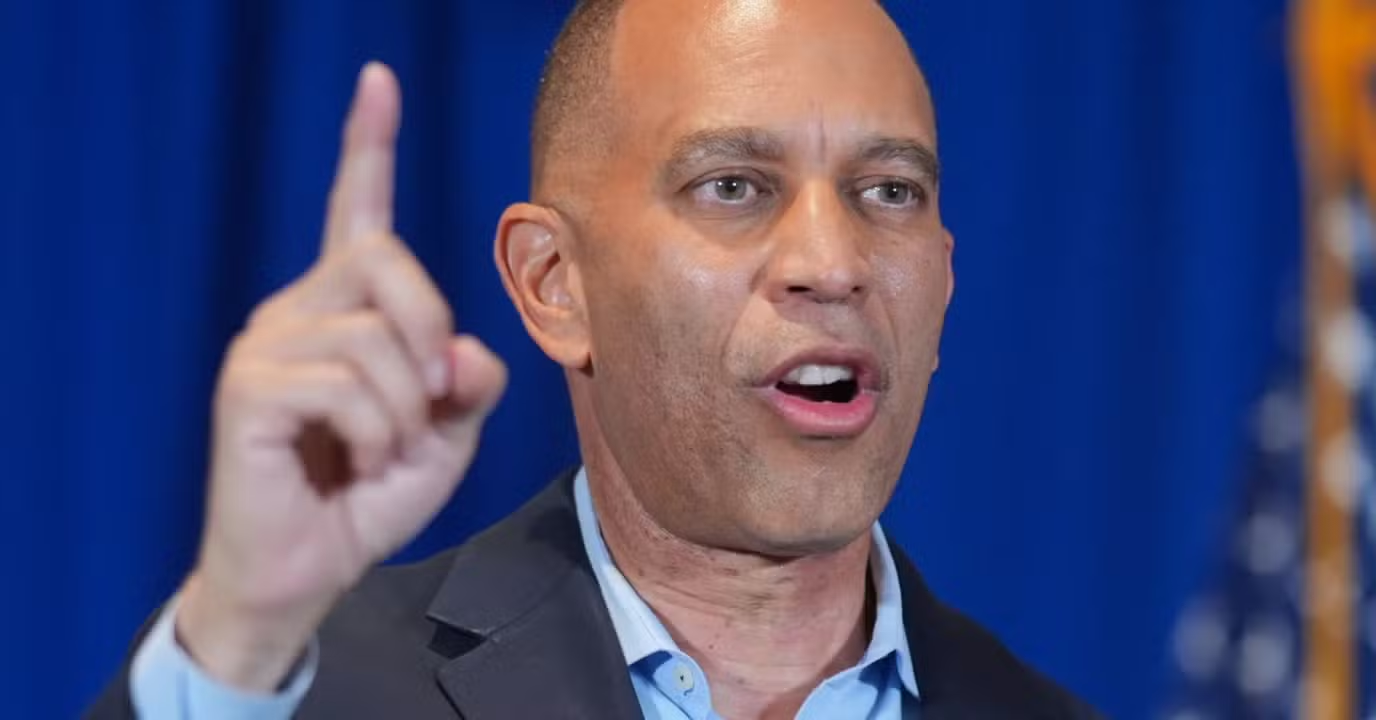
Democrats won Congress. But can they deliver on their promises?
Al Jazeera examines how far Democrats can deliver after winning both chambers of Congress in the November 2026 midterms on pledges to cut living costs, end the war on Iran, investigate Donald Trump, and curb his immigration crackdown, though they take control only in January 2027. Experts say Republican cooperation or Trump's sign-off will be needed for much of the agenda, while committee probes into the Trump family's wealth, the war, and ICE need no White House approval, and Trump threatens to veto everything.
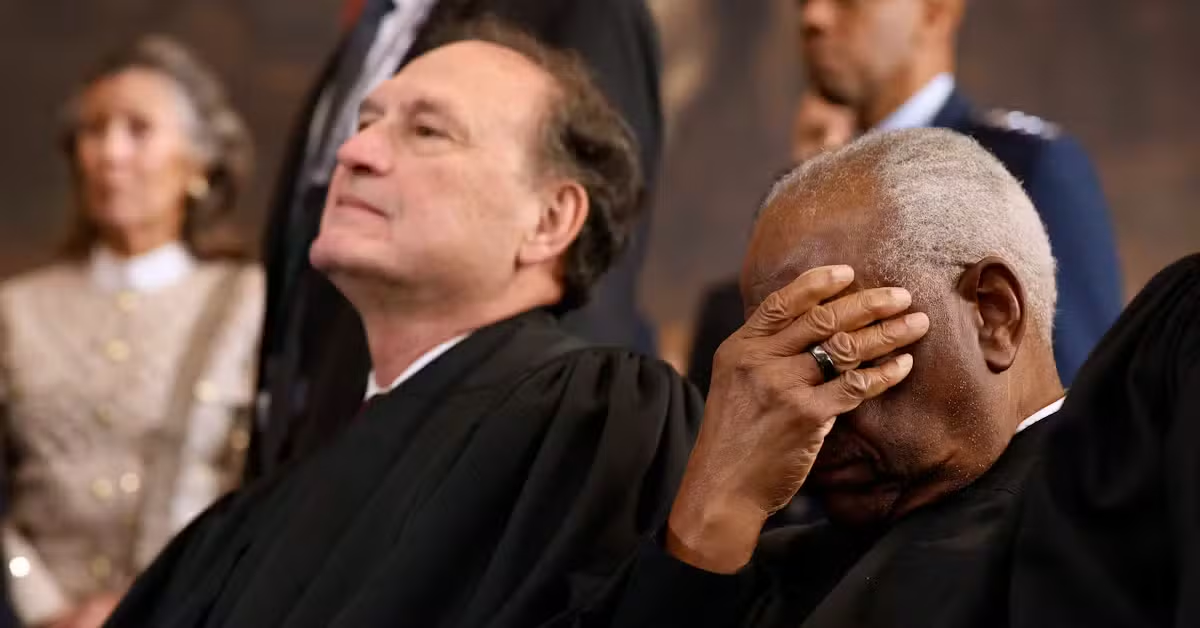
Voters Just Changed the Trajectory of the Supreme Court
Matt Ford's New Republic article argues the 2026 midterms reshaped the Supreme Court's future, with Democrats taking firm Senate control through wins including Sherrod Brown's Ohio victory and Nathan Johnson's Texas attorney general win, which Ford calls perhaps the night's most consequential downballot result. He forecasts Democrats will invoke the Garland precedent to refuse conservative court nominees, and says the results make it significantly more likely the court will not get younger or more conservative until 2032 at the earliest.

Trump Wrestles With New Reality: A Lame Duck With Two Years Left to Fight
In a New York Times analysis, Katie Rogers reports that midterm voters gave Democrats control of both the House and the Senate, leaving Donald Trump to confront an identity he would rather not have: a lame duck with two years left in his second term. Trump denied the defeat was his fault or the result of his decision to go to war with Iran, while Vice President JD Vance publicly blamed the Republican losses on that war, in what the article calls an apparent effort to separate himself from Trump. Aides including Stephen Miller and Russell T. Vought had already planned what Trump could accomplish through executive power alone, a tool he retains alongside his veto, and he was vague about his plans, telling Dan Bongino he has "many, many things in the hopper". Democrats vow to investigate government abuses, alleged corruption by his associates, and ICE tactics, and Representative Robert Garcia, poised to lead House Oversight, tells them to 'LAWYER UP'.
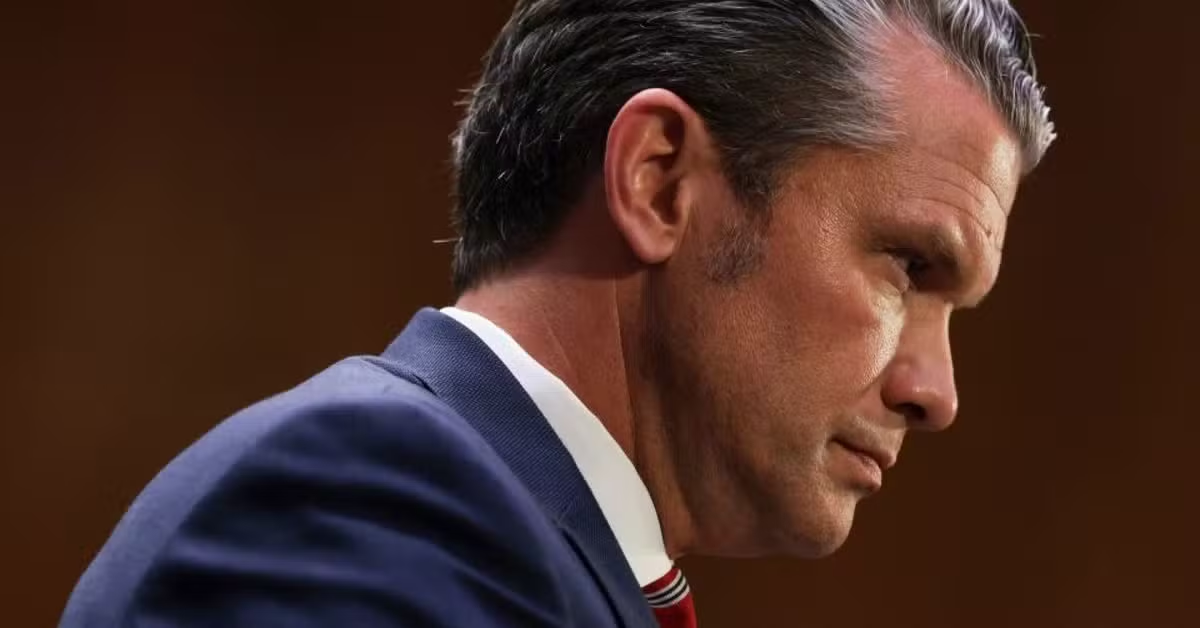
Republicans quickly turn against Pete Hegseth after midterms rout
CNN reports that after the GOP's midterm losses, Republicans are moving quickly to pin the defeat on Defense Secretary Pete Hegseth, blaming him for selling President Trump on the war in Iran with no exit strategy. Rep. Thomas Massie plans to trigger an impeachment vote when Congress returns, and CNN reports the House could vote as soon as that week, with multiple Republican sources expecting it to pass. Republicans say privately that Hegseth oversold the US ability to win quickly and kept pushing escalation as the war became a quagmire that drove voters against the party, though they concede the problems went beyond the war and remain unwilling to blame Trump directly. Trump has publicly defended Hegseth, saying he is doing a very good job, and White House officials say his confidence has not wavered, even as some in his orbit see Hegseth as an obvious fall guy. A person close to Hegseth says he expects to stay in his role and is prepared to fight the impeachment effort, and Pentagon spokesman Sean Parnell says he will not back down.

A MAGA media civil war erupts over who’s to blame for the GOP’s thrashing
In a Washington Post article, Scott Nover reports a civil war within MAGA media over who is to blame for the GOP's midterm thrashing. Vice President JD Vance says Wednesday that the reason his party lost is the war. President Donald Trump tells Fox News early Wednesday that Iran, high gas prices, and the absence of his name from midterm ballots were partly to blame, and writes on Tuesday evening that Fox News itself bears some responsibility for the loss for interviewing Democrats.

2026 midterm election results live: Democrats sweep Congress. What’s next for Trump?
MS NOW's live coverage reports Democrats reclaimed the House and Senate in the 2026 midterms, flipping at least 35 House seats and seven Senate seats as Trump-backed candidates lost from Texas to Michigan. Highlights include Abdul El-Sayed becoming the first Muslim elected to the U.S. Senate, Democrats winning statewide in Texas for the first time since 1990, Scott Colom's razor-thin Mississippi lead, and Trump blaming the Iran war for the sweep while Democrats like Jim Himes vow to cut off war funding and Hakeem Jeffries launches his speaker bid.

Schumer, Jeffries say cutting costs is job No. 1 for Democratic majority
In a news report, Senate Minority Leader Chuck Schumer and House Minority Leader Hakeem Jeffries say cutting costs is job No. 1 for the Democratic majority after the party swept both chambers in the 2026 midterms. Democrats flipped seven Senate seats, including three in states Republicans had held for decades, and now hold 54 Senate seats and 229 House seats, with two Senate races and 67 House races still uncalled. The election was largely a referendum on President Donald Trump's handling of the economy and affordability issues tied to the U.S. war with Iran. Jeffries says House Democrats' priorities are affordability and accountability, including reversing Medicaid cuts, extending Affordable Care Act tax credits, ending the Iran war, and stopping Trump's tariffs, and he calls the result an American tsunami rather than simply a blue wave.

Trump, MAGA SELF IMPLODE After MASSIVE LOSS
In the wake of a big midterm loss for Republicans, Breaking Points argues Trump is pivoting to conciliation while the right fractures over who to blame and Democrats head into fights over leadership and the Iran war. The hosts play Trump congratulating Democrats on Fox News and telling Politico he wants to work with them, though they doubt that willingness and note he pushed back when a reporter pointed out he had told people to vote as if he were on the ballot. They say the blame game splits between the Wall Street Journal's line that tariffs sank the party, Mark Levin's attack on a 'woke Reich', and Laura Loomer's warnings, while the hosts insist the loss was really about the Iran war. On the Democratic side they point to a brewing challenge to Chuck Schumer's leadership and call the December 11 funding deadline the line in the sand on whether Democrats keep funding the war.

Vance blames Republicans’ midterm losses on Iran war, cost of living
Vice President JD Vance said his party's midterm election defeat was caused by the war President Donald Trump launched, breaking sharply with Trump by owning the failures of the administration's policies. He blames the losses on the Iran war and the cost of living, and he is seen as a potential 2028 presidential contender. Commenters on the article criticize him as opportunistic and accuse him of complicity in the administration's divisive rhetoric.

Midterms: how the blue wave took Congress in three minutes – video
A Guardian video explains how the blue wave took Congress in the US midterm elections. Democrats took control of both the House and Senate, unseating Donald Trump's Republican majorities. The Guardian characterizes the result as a devastating blow to Trump and his party.
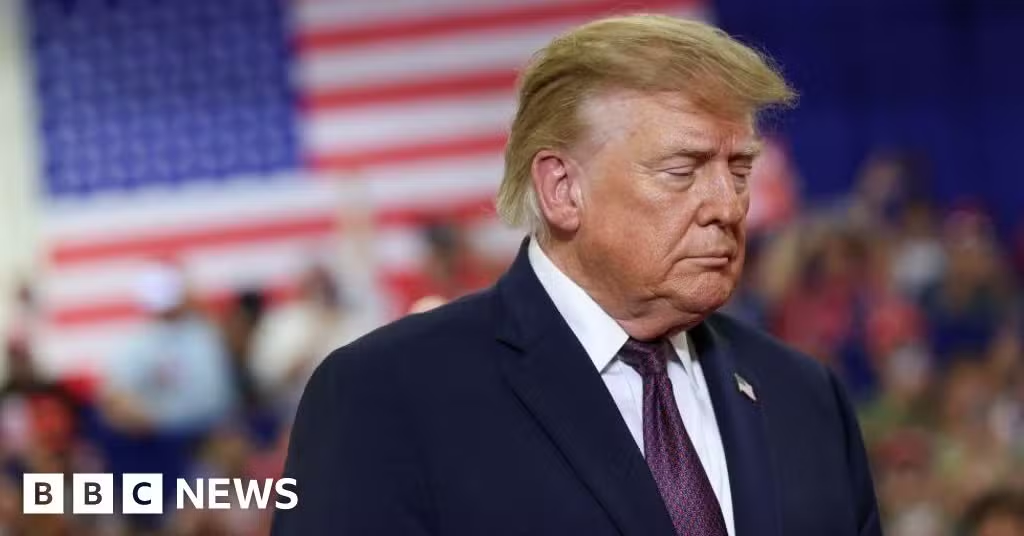
'This is a disaster': Angry Republicans blame Trump for midterms defeat
Angry Republicans are blaming President Trump for the party's defeat in the 2026 midterm elections, after Democrats won upset after upset in deep-red states like Texas, Kansas and South Carolina and flipped both chambers of Congress. In a BBC News report, a dozen Republican operatives, campaign officials and White House allies, many speaking on background, said Trump dragged the party down with unpopular policies, a low job approval rating, his focus on his own legacy and an obsession with Washington construction projects, with one White House ally calling public disapproval over the Iran war, tariffs and the immigration crackdown a 'perfect storm'. Trump rejected the blame, writing on Truth Social that he was not on the ballot and would have won 'IN A LANDSLIDE' if he had been, while allies pointed to the history of midterms, in which the party in the White House has gained seats only three times since 1934, and to weak Republican candidates in battleground states. The defeat leaves Trump facing a motivated Democratic majority eager to investigate his administration and block his agenda, and some Republicans say the party must now grapple with a post-Trump future.

6 takeaways from Democrats' big wave on election night
NPR's Domenico Montanaro argues Democrats scored a jaw-dropping 2026 midterm wave, winning majorities in both the House and Senate and even carrying red states, though he notes nothing predicted quite such a romp. The sharpest shock came in Texas, where Trump's yearlong push for Republican-friendly redistricting backfired: James Talarico won the Senate race by roughly 12 points, the first Texas Democrat sent to the Senate since 1988, and Democrats flipped two congressional districts Trump had won by at least 14 points, despite Republicans spending more than $413 million. Montanaro says the gerrymander failed because Latinos, a group Trump had nearly won in 2024, voted differently amid anger over aggressive deportations, and a voter poll showed 62% of voters disapproved of Trump's job performance and two-thirds said his policies had worsened the economy. Looking ahead, he expects heavy 2028 reverberations, with Democrats facing pressure to deliver results without a filibuster-proof Senate majority and more Republican candidates entering the primary rather than simply carrying the Trump torch.

Election 2026 live updates: Democrats take Congress as Trump distances himself from historic losses
Democrats took control of the House and Senate in the 2026 midterms, and a Washington Post live blog reports the losses were the worst Republicans had suffered in half a century, with defeats even in states Trump won handily and against candidates he personally backed. Trump told Fox News, 'I don't like to consider it a defeat for me; I wasn't on the ballot,' though he had spent two months urging Americans to vote as if he were, and he acknowledged the war in Iran contributed to the losses while insisting the results were not a repudiation of his presidency. Democrats also won a majority of governor's mansions for the first time in 16 years, and Keisha Lance Bottoms's win in Georgia will make her the first Black female governor of a U.S. state next year. With control of Congress in January, Democrats are expected to launch investigations into Trump and his administration, and House Speaker Mike Johnson reportedly will not try to stay on as Republican leader after the rout.
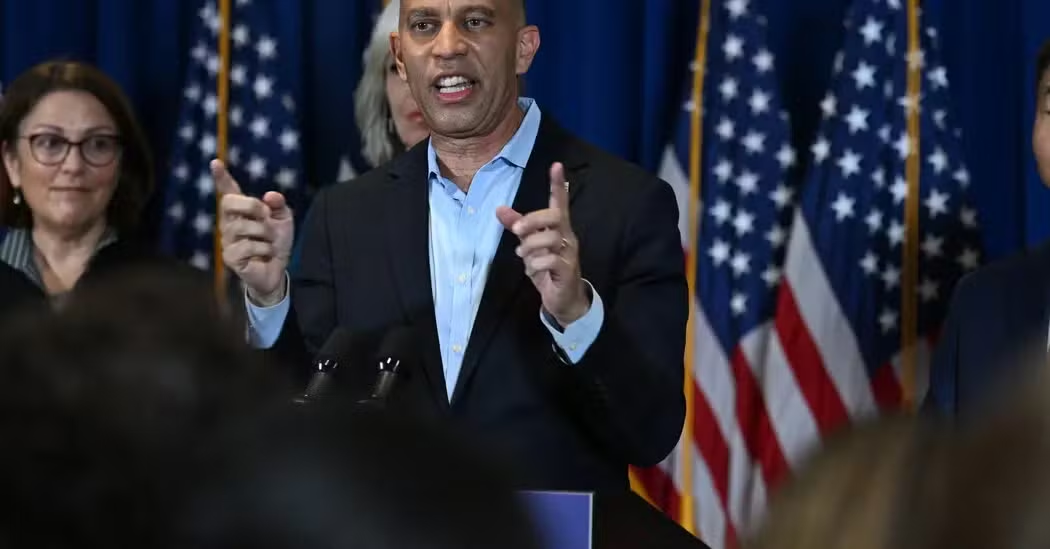
2026 Midterm Elections Live Updates: Democrats Vow to Check Trump After Winning Congress
The New York Times reports that a new political era opened in Washington the day after the 2026 midterms, as Democrats vowed to use their sweeping majority to check President Trump's power. Democrats were on track for at least a 50-seat House majority and their largest Senate majority since at least 2012, with at least 54 seats, and they netted at least 330 state legislative seats, winning full control of 22 state governments and taking Texas for the first time since 2003. Prominent Republicans blamed the wipeout on Trump's agenda, with Vice President JD Vance breaking with the president to blame the war with Iran, and Times reporter David Gelles argues Trump's energy policies helped trigger the rout. Trump, appearing at his White House ballroom construction site the day after the defeat, never mentioned the election results.
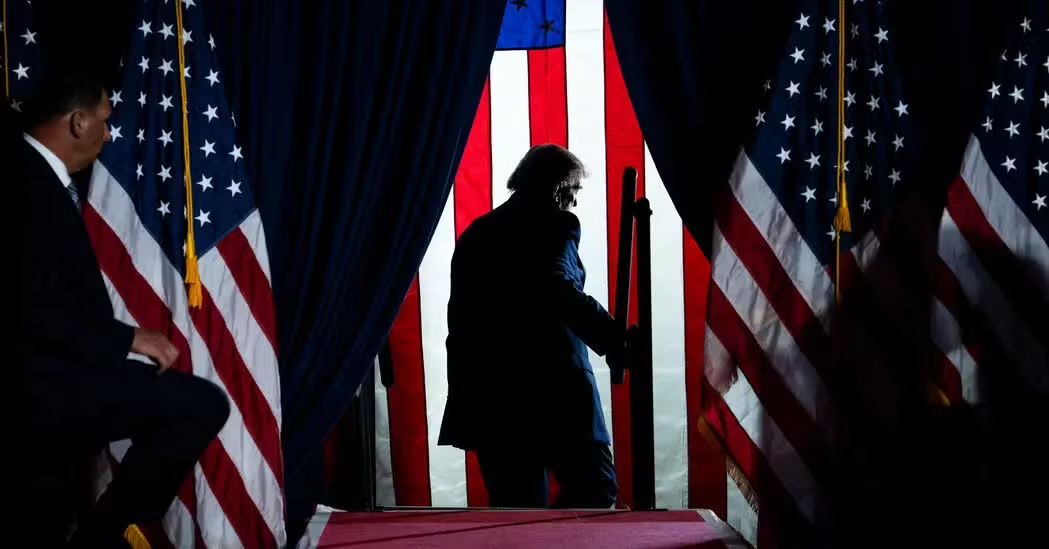
Angry Voters Usher in Beginning of the End to the Trump Era
Peter Baker's New York Times analysis casts the 2026 midterm Democratic wave — a roughly 13-point national House margin, the largest since at least 1976 — as the beginning of the end of the Trump era, after President Trump made the election a referendum on himself and voters balked at high gas prices, the Iran war, and alleged profiteering. Others push back: Lynn Vavreck argues sky-high gas prices may have mattered more than any political realignment, while Joe Grogan says the party is still Trump's and David McIntosh urges Republicans to return to their principles to win in 2028.

Everything you need to know from the US midterm elections
The Democratic Party has won both the US Senate and the House of Representatives, taking control of Congress for the rest of Donald Trump's presidency, in a midterm night the BBC's reporters cover as a string of historic firsts. Gina Hinojosa became the first Latina elected governor of Texas, Abdul El-Sayed became the first Muslim US senator by defeating Mike Rogers in Michigan, and Hakeem Jeffries is poised to take over as Speaker, which would make him the first black person in the role. Democrats also took governor's races in Georgia, where Keisha Lance Bottoms beat billionaire Rick Jackson, while veteran Republican senator Susan Collins lost in Maine to logger Troy Jackson after a tactic of distancing herself from Trump failed. Trump, who spoke conciliatorily through the evening and conceded the Democrats did a "good job", said he would accept the results but blamed the US-Israel war on Iran and high fuel prices for blunting his economic message.
Democrats capture full control of Congress, NBC News projects, fueled by victories in deeply Republican states
NBC News projects that Democrats have captured full control of Congress in the 2026 midterms, flipping six Republican-held House seats and making gains beyond their 2018 results, with 43% of exit-poll voters citing opposition to Donald Trump as a reason they voted as they did. The piece reports Trump told voters to pretend he was on the ballot, and quotes his post-election claim that if he had been, Republicans would have won in a landslide.

Voters pummel GOP out of power
Voters forcefully rejected President Donald Trump and Republicans in the 3 November 2026 midterm elections, handing Democrats wins in GOP strongholds nationwide in what Republicans accepted as a historic defeat, the long-feared 'blue wave.' By 11:30 p.m. Democrats had flipped eight GOP House seats, enough for a majority if Republicans could not gain elsewhere, and Texas voters elected at least two Democrats statewide, flipping the Senate seat and the governor's mansion. County-level data showed Democrats doing on average more than 8 points better than Kamala Harris did in 2024, with nearly every state, district and county moving toward them. Republicans blamed Trump, with many citing the war in Iran, which sent gas prices soaring, and economic frustration, while Trump himself wrote on Truth Social, 'I wasn't on the Ballot and if I was, we would have won IN A LANDSLIDE!'

【米中間選挙2026】 民主党、上下両院で主導権を奪う見通し トランプ政権を有権者が否定 - BBCニュース
US media on election night projected that the Democratic Party would win majorities in both the House of Representatives and the Senate in the 3 November 2026 midterms, unseating the Republican majorities that had advanced Donald Trump's policies. CBS News put Democrats on course for at least 239 House seats and a Senate majority of 52, with some final results days away as mail-in ballots were counted. BBC wrote that a Democratic Congress could block Trump's bills and launch investigations, with Defense Secretary Pete Hegseth seen as a possible impeachment target. Trump told the New York Times he accepted the results and looked forward to working with Democrats, while writing on Truth Social that his name was not on the ballot.
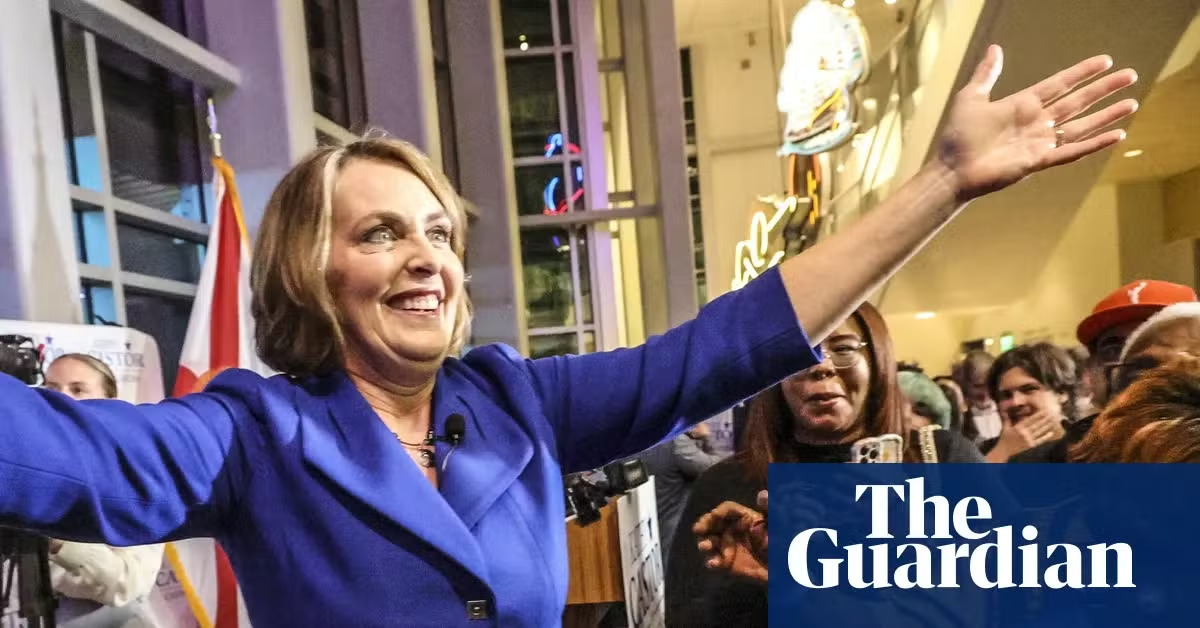
Democrats poised to sweep Florida congressional districts redrawn by Republicans
Democrats have won three of the four Florida congressional districts that Ron DeSantis and the Republican legislature redrew earlier in 2026 to favor Republicans, and lead narrowly in the fourth, in what The Guardian calls a major blow to Trump's party on a strong Democratic night. The redraw was part of a nationwide effort by Donald Trump and his allies, with Republicans also remapping districts in states including Texas, Missouri, and North Carolina. By the Guardian's analysis, had the four new districts existed in 2024, Trump would have won all but one by double digits, making the outcome a reversal of what the maps were built to deliver. Harvard election law professor Nicholas Stephanopoulos is quoted saying gerrymandering is not yielding the gains the GOP hoped for in a blue wave environment, though the party's new maps would still outperform its old ones in a neutral setting.
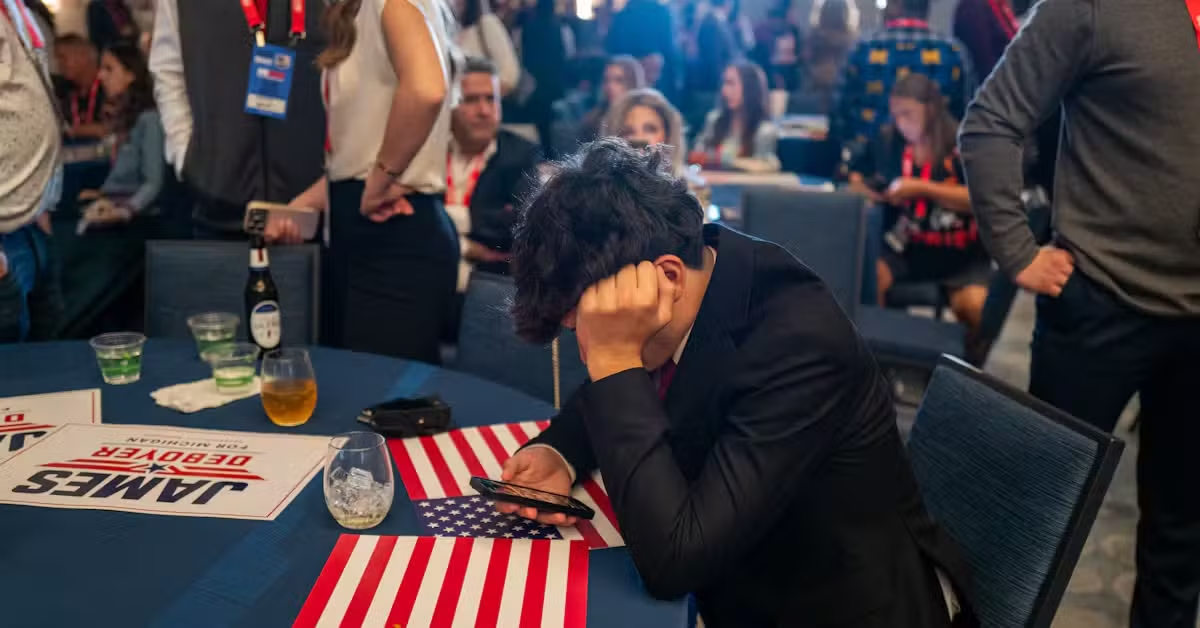
Republicans Forced to Reckon With How They Destroyed Their Own Party
The New Republic reports that Democrats took the House, Senate, and governorships across the country in the 3 November 2026 midterms, as Republican gerrymanders in Texas, Florida, Ohio, Alabama, Missouri, and North Carolina backfired, and it savors the party's reckoning. Republicans traded blame: Ron DeSantis faulted lawmakers and warned of a lost decade; John Cornyn and Mitt Romney, in quoted posts on X, cited broken coalition politics and bad character; JD Vance and even Donald Trump Jr. pointed to the Iran war; and Trump, conceding the war hurt, insisted he'd have won if he'd been on the ballot and that Hegseth's job is safe.
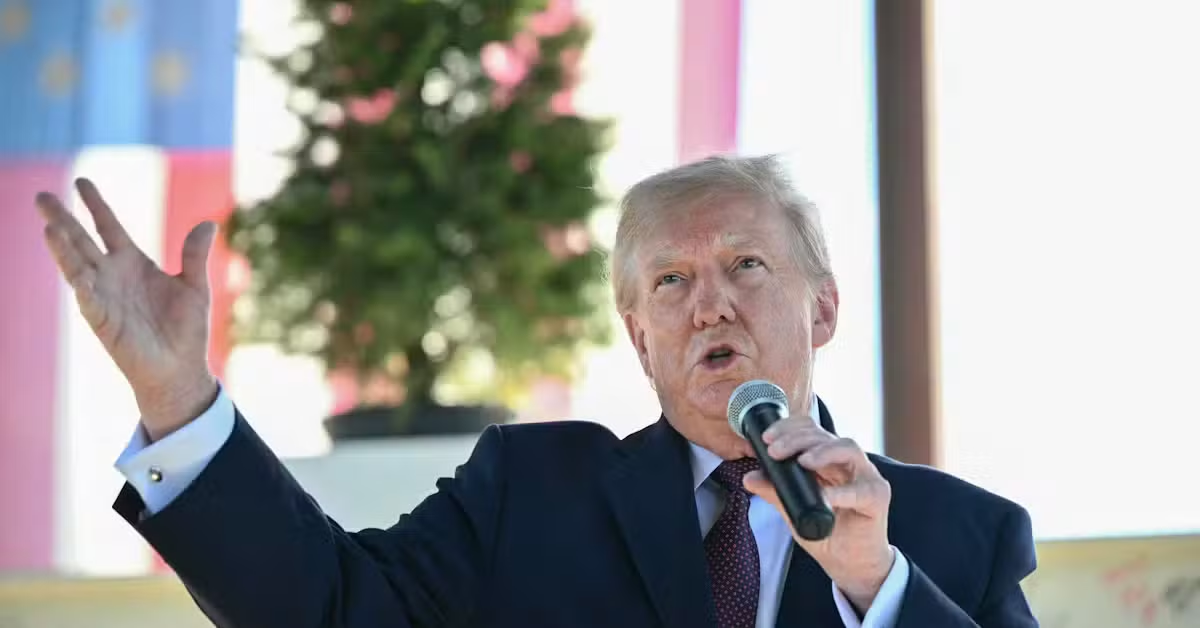
Trump Says There’s No Way Democrats Are Going to Impeach Him
A New Republic report says President Donald Trump brushed off the Democrats' 2026 midterm sweep, declaring there is no way they will impeach him and that doing so for no reason would destroy their party. The losses came despite Republican gerrymandering in states like Texas, where the party lost four of five seats it had drawn for itself, and NBC exit polls found 74 percent of voters saw the Iran war as a crucial or major factor. Vice President JD Vance wrote that the war is why Republicans lost, and CBS News reports Trump has been asking advisers whether Defense Secretary Pete Hegseth should keep his job. Trump, whose first speech after the defeat was about the White House ballroom, says Republicans would have won had he been on the ballot.

Trump Rages Wildly Over Losses—and Accidentally Reveals How MAGA Dies
In an opinion column for The New Republic, Greg Sargent argues that Donald Trump's furious response to the November 2026 midterm losses reveals that the MAGA coalition has disintegrated and will not endure in anything like its current form. Democrats flipped Senate seats in states Trump carried by double digits, including Iowa, North Carolina, and South Carolina, and won well over 250 House seats. Trump's 2024 gains among Latinos and young voters evaporated, and exit polls showed Democrats gaining 14 points among working-class whites. Trump blamed Fox News, the Republican candidates, and his own consultants, posting that he wasn't on the ballot, which Sargent reads as his belief that the MAGA agenda cannot fail and can only be failed.

Democrats Win Enough Seats Nationwide to End Electoral College
The New Republic reports that Democratic 2026 midterm wins in Pennsylvania, Michigan, Arizona, Wisconsin, and Nevada could lift the National Popular Vote Interstate Compact—already passed by 19 states holding 222 electoral votes—to 283, effectively nullifying the Electoral College without a constitutional amendment. It also describes Republican redistricting in Texas, Florida, Ohio, North Carolina, Alabama, and Missouri backfiring as voters chose Democrats anyway, and quotes Trump brushing off regrets while saying Hegseth is doing a very good job, though CBS News reports his job may be in jeopardy over the Iran war.
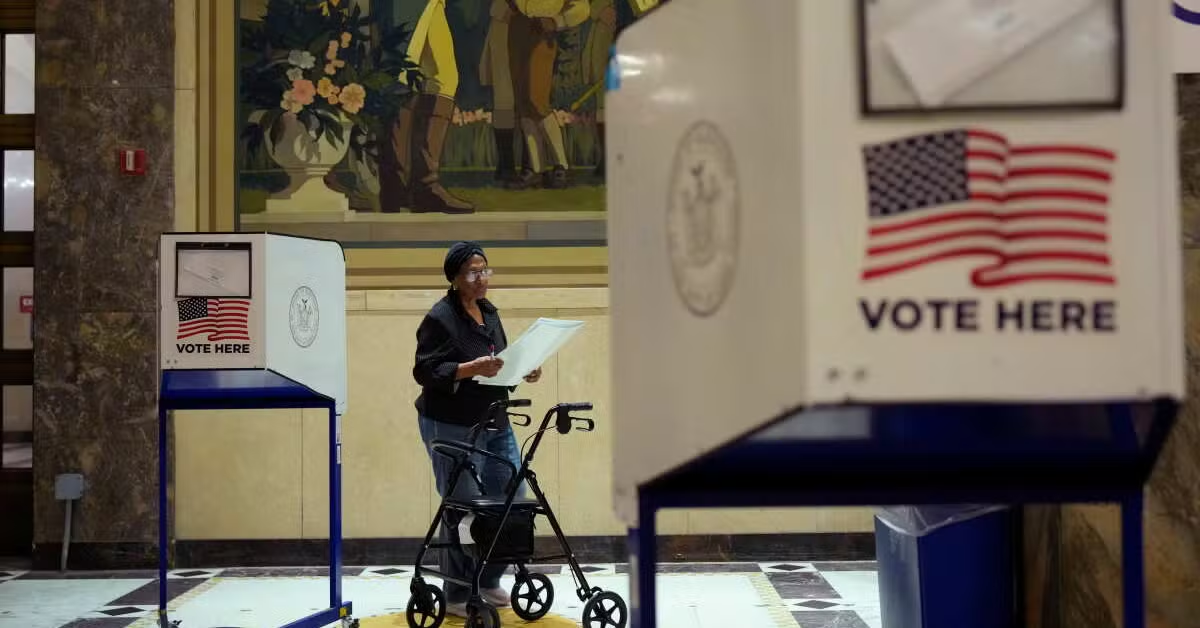
Midterm elections live updates: First polls begin to close with control of Congress at stake
In a live blog edited by Associated Press editors, Election Day 2026 begins with the first polls closing in Indiana and Kentucky, as Democrats need to flip four Senate seats and three House seats to take control of Congress from Republicans and rebuff President Trump's agenda. The AP Voter Poll finds economic discontent dominating the vote: about 8 in 10 voters say inflation has caused severe or moderate hardship, roughly two-thirds say Trump's policies have worsened economic conditions, and about 4 in 10 call the economy the country's most important issue, while about three-quarters feel angry or dissatisfied with the country's direction. The Senate contests drawing the most attention are in states Trump won widely, such as Alaska, Texas and Georgia, where Democrat Mary Peltola faces incumbent Dan Sullivan and Trump has directed the Justice Department to investigate a same-named candidate and called for Peltola's prosecution. Trump urged supporters to pretend he is on the ballot and campaigned in red states, while voting hiccups included Chicago polling places running out of paper ballots and extended hours in North Carolina after computer problems.

2026 Senate midterm election results as Democrats win control, Schumer vows "legislative razor wire" against Trump
CBS News' live blog of the 2026 Senate midterms projects Democrats taking both chambers, with a 54-seat Senate majority built on upsets in Texas, South Carolina, Kansas, Maine, Ohio, Iowa and North Carolina. Chuck Schumer vowed "legislative razor wire" against Trump, while Mississippi and Alaska remain toss-ups and Trump, in his first public appearance since the losses, touted the new White House ballroom.

Midterms aux États-Unis : la nuit électorale en direct
Mediapart's live blog of the 3 November 2026 midterm election night tracks a Democratic wave: the party won the 218 House seats for a majority and reached 51 Senate seats, flipping conservative bastions like Texas, where James Talarico defeated Ken Paxton, South Carolina, and Kansas, while Keisha Lance Bottoms took the Georgia governorship. Donald Trump, whom the election became a quasi-referendum on, conceded Democrats had worked hard for ten years while denying defeat, Elon Musk's reported half-billion dollars in spending failed to save Republicans, and US papers headlined a historic rejection of the president.

Trump faces midterm verdict with control of Congress at stake
Reuters previews the US midterm elections on 3 November 2026 as a referendum on Donald Trump's second term, with all 435 House seats and 35 Senate seats at stake. Polls and analysts favor Democrats to win the House, needing 13 of 47 competitive races by one forecast count, while the Senate battle spans nearly 10 close races mostly on Republican turf, where Democrats must win at least two of seven double-digit Trump states. Reuters attributes Trump's approval hovering near his all-time lows to voter frustration over the war with Iran and rising fuel prices. His Justice Department has launched a criminal probe into Alaska recruitment allegations, sued to block ballots in California, a suit the Supreme Court declined to halt, and deployed 1,000 monitors in what it calls the largest Election Day monitoring effort in history, while Democrats warn Trump may challenge results if Republicans lose.

