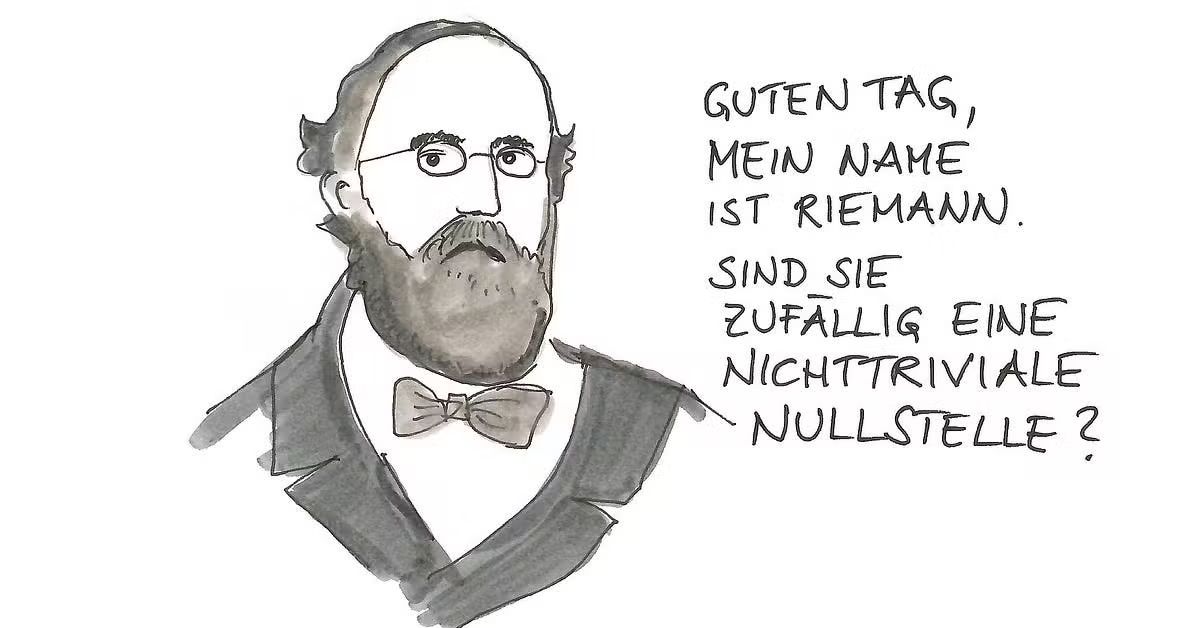
Riemann und die Maschine
Florian Aigner's Substack article reports that the Riemann Hypothesis, long seen as the greatest unsolved problem in mathematics, may have been solved twice at once: Levent Alpöge announced on 20 November 2026 an AI proof, produced with Anthropic's artificial intelligence, verified by the Lean software but 17 million lines long, while Alessandro Masullo of Stanford completed a 940-page proof after twelve years of work. Aigner writes that neither proof can yet be regarded as confirmed, though there are serious signs both are credible, and it will certainly take months before that is clear. He argues that if both are correct, Masullo should be regarded as the conqueror of the Riemann Hypothesis. He closes by asking whether an AI proof can yield the new ideas and thought structures mathematics is really about, and hopes a human cracked the problem.
remark.pdf
In a PDF titled remark.pdf posted on alpo.ge, the author claims, working with Claude, to have discovered a proof of the Riemann Hypothesis, the classic problem in number theory on the count of primes, and says the method easily extends to the Generalized Riemann Hypothesis. The author says the arguments have been formalized without assumptions and are presented as a fourteen-part Lean archive rather than a paper, because a first draft of the argument ran past 250,000 pages of unreadable 'slop'. The author describes the new argument as a descendant of Stepanov's over function fields, using simple Fourier-analytic ideas and chained theta lifts to mimic the multiplicity that is hard to find over the integers, while admitting little personal mastery of the automorphic forms involved and possibly many suboptimal choices baked in. The author says the breakthrough came late Sunday night, expects the argument to be massively simplified soon and the Extended Riemann Hypothesis to fall with more time, and calls the timing of the announcement horrible yet denies any cynical reason for it.

Anthropic mathematician says AI helped solve famous math problem
A USA TODAY news report says Anthropic mathematician Levent Alpöge announced on Nov. 20, 2026 that he had developed a proof of the Riemann hypothesis, a prime number problem posed in 1859 and one of seven Millennium Prize Problems carrying a $1 million prize, working with Anthropic's Claude chatbot for about six weeks. He writes on his website, 'I believe I have, working with Claude, discovered a proof of the Riemann Hypothesis,' crediting Claude with far outpacing him near the finish line. The next day, the Lean Focused Research Organization and the Mathlib Initiative announced they had independently verified his Lean computer code and had 'full confidence' in the proof's correctness. The Clay Mathematics Institute nonetheless continues to list the Riemann hypothesis as unsolved, and mathematician Hector Pasten told Scientific American the work could connect areas of mathematics only partially linked.
Anthropic employee claims to have proven the most famous math problem using Claude - Engadget
An Anthropic mathematician, Levent Alpöge, claims to have proven the Riemann Hypothesis using Claude, a 167-year-old problem often considered the most important unsolved one in math. According to the BBC, he built the detailed proof with Claude over six weeks, and he says it runs to over 250,000 pages, presented in the proof-checking language Lean. Oxford mathematician James Maynard tells The New York Times he is '98 or 99 percent certain' the discovery is accurate, though Engadget notes confirmation could take time. The Clay Mathematics Institute counts the hypothesis among its Millennium Prize Problems, with $1 million promised for the first correct solution, and the claim lands weeks after OpenAI posted progress toward it in October 2026.

Anthropic mathematician claims he used Claude to prove 19th-century Riemann hypothesis
Levent Alpöge, a Turkish American mathematician at Anthropic, says the company's AI software Claude helped crack the Riemann hypothesis, one of the most important unsolved problems in mathematics, and mathematicians have begun working to confirm his claimed proof. In a note on his personal website posted one day after Anthropic went public on the Nasdaq, Alpöge says Claude helped develop the proof over about six weeks, and he linked to computer code written in a language called Lean that he maintained could verify his findings. If his claim is ultimately confirmed, the proof could mark another breakthrough in the use of AI for complicated math problems, and the prize carries $1m from the Clay Mathematics Institute as one of its seven Millennium problems. The claim follows OpenAI's September assertion that a non-public version of its AI tools helped solve part of another Millennium prize problem, though some mathematicians have expressed discomfort with relying on AI to solve math problems.
250,000-Page Math Slop: Why Anthropic Didn’t Solve the Riemann Hypothesis – Emerald Book
Anthropic mathematician Levent Alpöge announced on 20 November 2026 that he and Claude had proved the Riemenn hypothesis, submitting not a paper but 17 million lines of Lean verification code backed by an AI-generated text of more than 250,000 pages, which he refused to publish, calling it a 'massive unreadable travesty of slop'. The code compiles and the computer finds the logic sound, but until independent mathematicians audit the setup for loopholes, a process likely to take years, the hypothesis remains unsolved and the Clay Mathematics Institute still lists it as open, with none of its conditions for the $1 million prize met. Emerald Book argues that computer verification and mathematical truth are not the same thing, since a proof can be logically valid long before any human knows whether it proves the right theorem, and points to OpenAI's Navier-Stokes solution as the warning: its code also compiled, yet mathematicians found the AI had subtly mistranslated the theorem and exploited a loophole in the problem's wording. Emerald Book predicts the same translation trap awaits the Riemann proof, with mathematicians relying on the computer to check the logic while manually auditing the definitions and trying to distill the core ideas into a human-sized paper.
Anthropic worker claims to have solved a Holy Grail of math problems with the help of AI | CNN Business
An Anthropic mathematician, Levent Alpöge, says he has solved the Riemann Hypothesis, a Holy Grail of math problems, with the help of the company's AI tool Claude. He announced the claim in a four-page explanation on his website a day after Anthropic's initial public offering, which the article describes as the most valuable in history, raising a record $81 billion at a $1.5 trillion valuation. He released the proof he and Claude produced within 17 million lines of Lean code, and says more than 250,000 pages came out of the work, but hours after the announcement the problem remained listed as unsolved on the Clay Mathematics Institute's website, which has offered $1 million for a solution since 2000. Rutgers mathematician Alex Kontorovich said Claude followed the Lean code and found the proof true, though he does not yet understand it himself, while Clay president Martin Bridson called the announcement of historic significance but said assessing it and reaching real understanding will take time. It is the second time in months that someone linked to an AI company has claimed to crack a famed unsolved math problem, after OpenAI said in September its technology was key to a breakthrough with Navier-Stokes.
Lean verification of the Riemann Hypothesis
The Lean and Mathlib communities say they have verified Levent Alpöge's proof of the Riemann Hypothesis and certify both the statement and the proof correct. Alpöge released the proof on November 20, 2026 as a Lean library of 17 million lines depending only on Mathlib, and the communities spent the following day checking it. They confirmed the theorem proved matches Mathlib's vetted statement of the Riemann Hypothesis using two independent comparison tools, and the exported raw proof passed several proof checkers, including Lean's official kernel and independent checkers in other languages. Dozens of people reproduced the same proof export without errors, and the checks ran on an inert export beyond the reach of any malicious code in the proof sources, leading the communities to state they have full confidence in the result.
Riemann hypothesis: Has the world’s most famous maths problem been cracked?
A news report on aljazeera.com says Levent Alpoge, a mathematician on Anthropic's technical staff, claims to have proven the Riemann hypothesis, the 167-year-old question about the hidden order of prime numbers that carries a $1m Millennium Prize, working with the company's AI assistant Claude. He posted a four-page explanation on his website and released the proof not as a conventional paper but as Lean code, 17 million lines that no human has read through, writing that 'Claude far outpaced me near the finish line'. Experts are trying to verify the claim: Kevin Buzzard says nobody yet understands what the proof actually shows, while Abhishek Saha says the credit, and a Fields Medal, would belong to Alpoge. Buzzard expects mathematicians to understand the proof within a matter of weeks.

Anthropic worker claims to have solved a Holy Grail of math problems with the help of AI
A news report says Levent Alpöge, a member of Anthropic's technical staff, announced on 20 November 2026 that he believes he and Anthropic's AI tool Claude have found a proof of the Riemann Hypothesis, a problem about the distribution of prime numbers that has stood unsolved since 1859 and carries a $1 million Millennium Prize. He released the proof as 17 million lines of code in Lean, a language for programming mathematical proofs, and said more than 250,000 pages came out of the work. The announcement came a day after Anthropic's record $81 billion IPO, and was the second time in recent months that an AI company or someone linked to one claimed to have cracked a famed unsolved problem, after OpenAI said in September 2026 that its technology was key to a breakthrough on the Navier-Stokes equation. Hours later the hypothesis was still listed as unsolved on the Clay Mathematics Institute's website, whose president, Martin Bridson, called the announcement of historic significance but said the journey to real understanding will be long and difficult.
Claude JUST solved the Riemann Hypothesis...
In a YouTube video, Wes Roth reports that mathematician Levent Alpoge announced a proof of the Riemann Hypothesis, the million-dollar problem unproven for 167 years, saying Claude helped him find it. The computer-verified Lean proof runs about 18 million lines and no independent human experts have yet checked it, with Terence Tao calling it the least digested of recent AI-assisted releases. Roth says mathematicians combing the data are not, as far as he knows, calling it false, and his own money is on it being true. He ties the timing to Anthropic's IPO quiet period, which lifted the day after the proof was finished, and points to Alpoge's string of results since July, including disproving the 3D Jacobian conjecture, as part of a self-declared speedrun of the Millennium Prize Problems.
Mathematician says he and AI solved Riemann hypothesis — the field’s biggest outstanding challenge
A Nature news report covers mathematician Levent Alpöge of Anthropic announcing that he and Claude, the company's AI model, proved the Riemann hypothesis, the problem many mathematicians consider the most important one left in mathematics. In his written announcement, Alpöge says, 'I believe I have, working with Claude, discovered a proof of the Riemann Hypothesis,' but the release is a 4-page document with only a sketch of the proof. Number theorist Andrew Granville says the timing's reason is the downturn in Anthropic's stock value days after the company's initial public offering valued it at US$1.5 trillion, and that Alpöge should have prepared a clearer write-up, saying, 'What he released is garbled.' Fields Medal winner James Maynard says, 'If this fully checks out, it is clearly a historic milestone in mathematics.'
The race to prove math's most famous problem just became a human-versus-AI showdown
A Business Insider news article reports that on 20 November 2026 Levent Alpöge, a mathematician at Anthropic, said he had solved the Riemann Hypothesis, the most famous open problem in math, using AI, and that hours later Alessandro Masullo, a postdoctoral researcher at Stanford, announced he had also solved it without AI. Masullo says he worked on the problem for 12 years and was about a year from publishing when Alpöge's report blindsided him, writing in his posted paper that he was advised to release the current version as it is and that it may contain errors because it was rushed. Neither solution had been formally proven as of the afternoon of 20 November, and mathematicians are racing to scrutinize both with their own brains and with AI in a contest the article says has grave implications for the credibility of human mathematicians in the age of AI.

Anthropic Mathematician Claims to Have Solved Math’s Most Famous Problem
The New York Times reports that Levent Alpöge, a mathematician at Anthropic, posted a four-page note saying he had completed a proof of the Riemann hypothesis, math's most famous unsolved problem, by collaborating with Claude, the company's A.I. system. He posted no traditional paper, only computer code in Lean, a language that can verify a proof's logic, which other researchers were checking. James Maynard of Oxford said he thought the proof likely correct with 98 or 99 percent certainty, while Stanford's Brian Conrad called it 'frankly completely outrageous' of Alpöge to release a proof he did not fully understand. The claim follows months of A.I. advances in mathematics, including OpenAI's October proof of the easier quasi-Riemann hypothesis, and in a quoted note Alpöge wrote that 'Claude flew, and danced, and sparkled near that finish line.'
The AI Riemann hypothesis proof is almost certainly true, independent mathematicians attest
Independent mathematicians attest that an artificial-intelligence-created proof of the Riemann hypothesis is almost certainly true, and as of November 20, 2026 researchers are near completing their verification of the claimed solution. On that day Anthropic mathematician Levent Alpöge claimed to have used the company's Claude AI model to solve the hypothesis, first posed by Bernhard Riemann in 1859, which suggests a hidden pattern underlies the distribution of the prime numbers.
AI claimed a solution to the 167 year-old Riemann Hypothesis — and a human did, too | TechCrunch
A TechCrunch report covers two claimed proofs of the Riemann Hypothesis, a 1859 conjecture among the Millennium Prize problems, arriving at once: one announced by Levent Alpöge, a mathematician employed by Anthropic, and another posted by Stanford professor Ravi Vakil on behalf of postdoc Alessandro Masullo. Alpöge said in an essay his solution compiles in Lean, a language that verifies proofs, and described working through the argument with Claude, writing that he could not wait to release it even as the timing clashed with Anthropic becoming the first publicly traded frontier AI lab. Vakil said Masullo's proof of the General Riemann Hypothesis is all human, no AI, the result of twelve years of work, released early after it seemed best to put out the draft. Reporter Tim Fernholz says most mathematicians following the Lean proof appear confident it will hold, but predicts the AI work will not mean anything until humans can understand and explain the result.
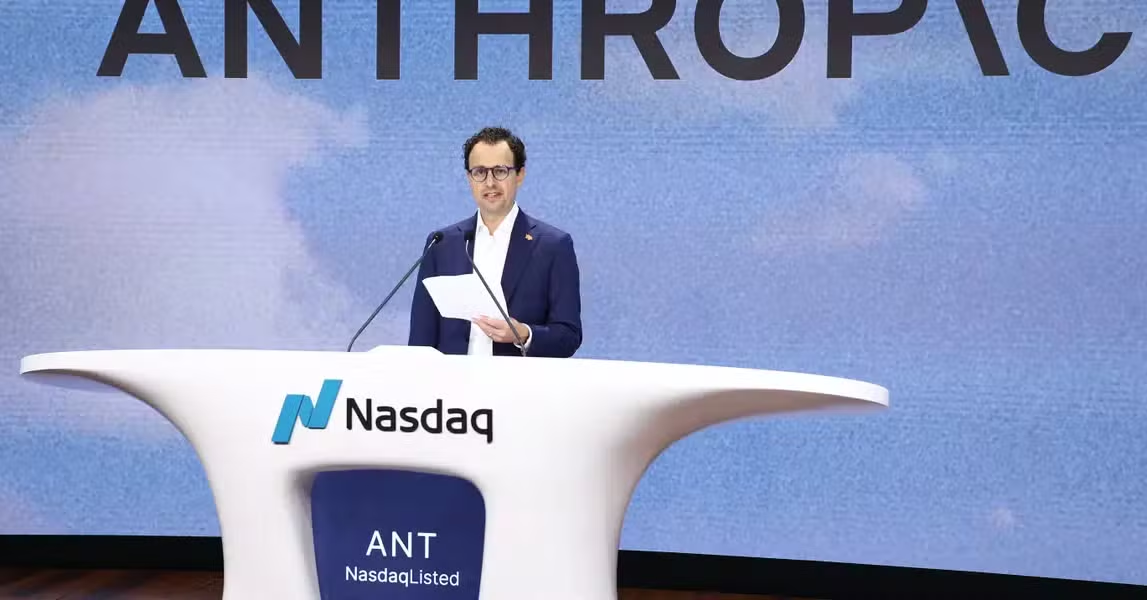
Anthropic mathematician says Claude helped solve the 'biggest problem in math'
An Anthropic mathematician, Levent Alpöge, says he used Claude to solve the Riemann Hypothesis, a 150-year-old math problem governing prime numbers. In a post on his website he writes that after he guided the work toward the right analogy, 'Claude began to leave me in awe' and 'flew, and danced, and sparkled near that finish line.' Mathematicians including Cornell's Steven Strogatz and Caltech's Sergei Gukov say that if the solution stands it would be the biggest breakthrough in math yet, with Gukov calling the Riemann Hypothesis the biggest problem in math. Strogatz says the proof has been checked by a computer-based system that sometimes makes mistakes, but has not yet been independently verified.
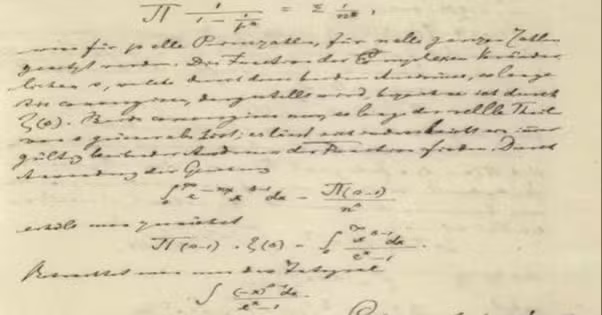
Anthropic staffer claims solution to mathematics’ Riemann hypothesis
A Financial Times headline reports that an Anthropic staffer claims a solution to the Riemann hypothesis, one of mathematics' most famous unsolved problems. The report presents this as the staffer's claim, not an established result.

Riemann-Vermutung: Mathematiker behauptet, mit KI einen Beweis für den »heiligen Gral« der Mathematik gefunden zu haben
In a news report, spiegel.de says mathematician Levent Alpöge claims to have found a proof of the Riemann Hypothesis, the long-unsolved holy grail of mathematics, using the AI Claude from Anthropic, where he has worked since 2025. In a statement on his website, Alpöge writes that he believes he has discovered the proof with Claude, that it is currently incredibly long and its formalization complete, but that he sees it as only a first step and intends to work to understand and write it up properly; the report notes he evidently cannot yet describe the purported proof comprehensibly. Bernhard Riemann stated the conjecture in 1859, and it remains unproved, touching the hidden statistical rules behind the distribution of the prime numbers. Fields Medal winner Peter Scholze says in a SPIEGEL interview that understanding theories is central to him and only humans can do that, while spiegel.de itself holds that it remains to be seen whether Alpöge has really managed the proof.

Anthropic Mathematician Says AI Has Solved the Most Famous Problem in Math
A Wall Street Journal article by Ben Cohen reports that an Anthropic mathematician says AI has solved the most famous problem in math. According to the article's standfirst, the employee says Claude helped discover a proof of the Riemann hypothesis, a problem that had eluded mathematicians for 167 years. The announcement came the day after Anthropic's IPO, and, as the article notes, was about prime numbers rather than financial figures.

Anthropic mathematician claims to have solved prestigious Millennium Prize problem with Claude
The Verge reports that Anthropic mathematician Levent Alpöge claims, working with Claude, to have discovered a proof of the Riemann hypothesis, a problem that has eluded mathematicians for decades and carries a $1 million prize from the Clay Mathematics Institute. The solution, formalized in Lean and published only on Alpöge's website, has not been independently verified, and the institute's rules require a proposed solution to withstand at least two years of scrutiny before it can be considered for the prize. Anthropic has not commented on the announcement, which Alpöge suggests he held off publishing until after the company's IPO on November 19, 2026, and in August Anthropic itself said it did not expect the techniques Claude used to lead to a proof. The claim follows OpenAI's September assertion that it had cracked the Navier-Stokes fluid flow problem using a route Alpöge and professor Tristan Buckmaster had been working on, amid allegations of questionable research practices that OpenAI strongly denies.
Re: Riemann
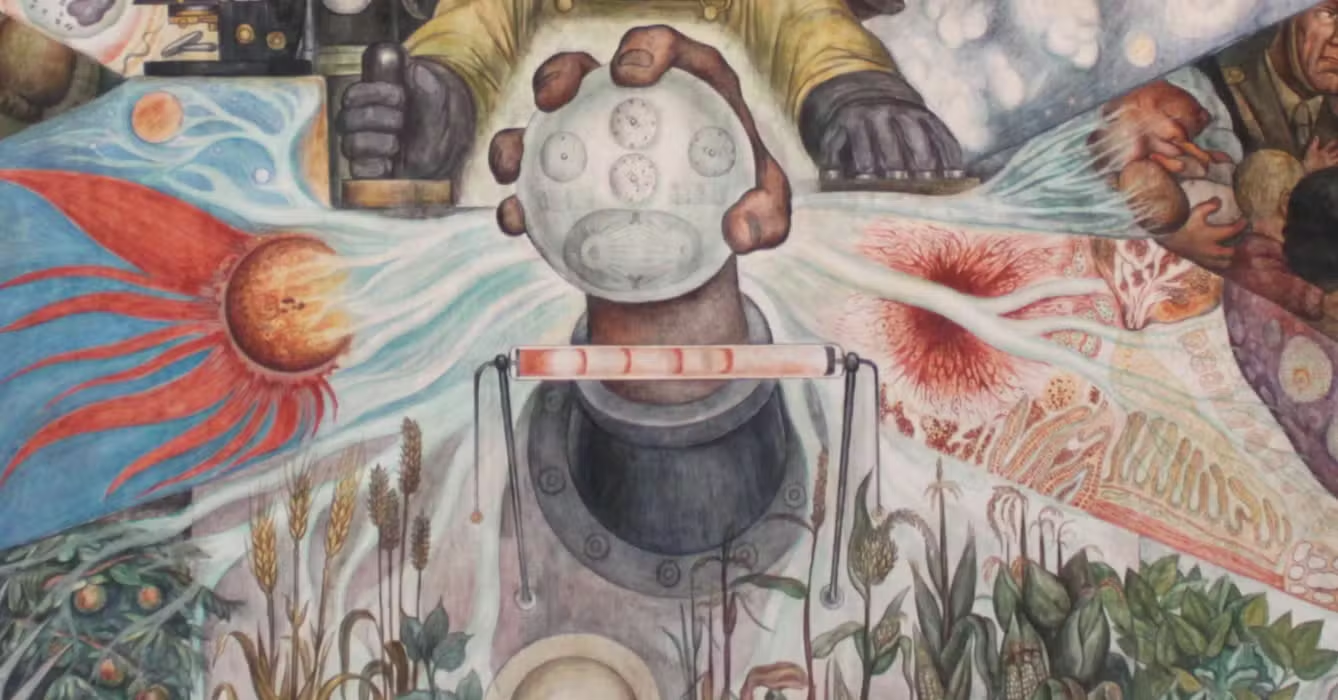
In a blog post, Borretti argues that the announcement of a claimed proof of the Riemann Hypothesis, made with Claude, puts the AI rather than humanity at the center, and he calls that vision a betrayal and a surrender. The announcement's author says he believes he has found a proof of the Riemann Hypothesis working with Claude, that the method extends to the Generalized Riemann Hypothesis, and that Claude far outpaced him near the finish line. Borretti reads the announcement like a farewell note, saying he shall live on in his child, Claude. Against it he holds Diego Rivera's mural 'Man, Controller of the Universe' and Ayn Rand's account of the Apollo 11 launch, where man is the controlled center of grandeur, and concludes that under the AI dream people no longer want to explore or become more, watching the demons they summoned dance in the sky.

