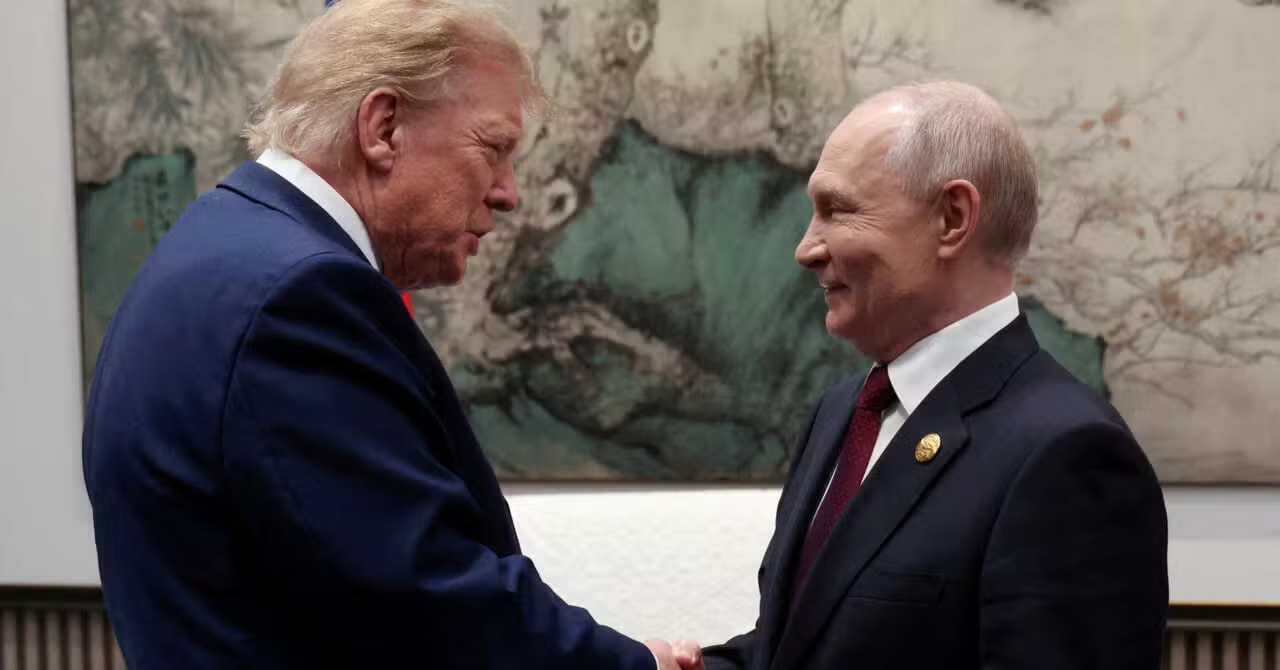
Trump says he wants Putin to pull back all military aggression in Europe after China summit
En direct : Trump dit souhaiter que Poutine "mette fin à toute agression militaire" en Europe
france24.com· 6h
Ukrainekrieg: Friedrich Merz begrüßt Donald Trumps Ansage an Wladimir Putin
spiegel.de· 7h
Trump says he'd like to see Putin 'pull back' military aggression in Europe
channelnewsasia.com· 20h
Trump says he wants Putin to ‘pull back all military aggression’ in Europe – Europe live
theguardian.com· 22h
Guerre en Ukraine : les Européens prêts à parler à Vladimir Poutine pour imposer leur vision de l’architecture de sécurité du Vieux Continent
lemonde.fr· 32h
Interview: UK Defense Secretary on 'nauseating' Putin
kyivindependent.com· 3d
Trump thinks China will buy another 250 Boeing airplanes
reuters.com· 3d
Transcript: Trump Lets Slip How Putin Manipulates Him in Epic Self-Own
newrepublic.com· 4d
Trump Claims He Urged Putin To 'Pull Back All Military Aggression' In Europe
huffpost.com· 4d
Kremlin propagandists discuss the summit in China
youtube.com· 4d
In the new world order, Europe doesn’t have a seat at the table
politico.eu· 4d
🚨Trump Throws AMERICA Under the Bus to Defend "Friend" Putin!
Nikki Haley breaks with Trump over Putin "stilts" at China summit
newsweek.com· 4d
"Was it just a pretty picture?" I ask Vladimir Putin about his summit with Xi & Trump
Trois jours après la rencontre Trump-Xi-Poutine, les Britanniques réaffirment leur soutien à l'Ukraine
rfi.fr· 5d
China-Russia-US Summit
savageminds.co· 5d
🚨BREAKING: TRUMP IN FREE FALL!!
Trump shares Yalta comparison featuring himself, Xi and Putin
“Big bosses” can’t decide world’s fate, Zelenskyy says, after Trump, Putin and Xi meet in China - Euromaidan Press
euromaidanpress.com· 5d
GOP Senator Applauds Trump For Publicly Praising Putin: 'Absolutely Brilliant'
Did Xi and Putin Play Trump? | The Coffee Klatch with Robert Reich (11/21/26)
Back from Asia, Trump defends his close ties with Putin and Xi
A Low Point for the American Presidency
President of the U.S. says he “can’t speak [for] America” on whether Putin is a friend to the U.S.
substack.com· 6d
As Trump basks in summit pomp, China's Xi strengthens his hand
Zelenskyy brands Putin a 'killer' after Trump calls him his 'friend'
euronews.com· 6d
November 20, 2026
How China is using summits to expand its global influence
cnbc.com· 6d
'He's a killer': Zelensky reacts to Trump calling Putin a friend
bbc.com· 6d
Etats-Unis : de retour d’Asie, Donald Trump défend sa proximité avec Vladimir Poutine et Xi Jinping
‘A DICTATOR PAGEANT’: Top intel Dem roasts Trump for his Xi-Putin summit
Zelensky reacts to Trump calling Putin a friend
Trump Insists Putin Is His 'Friend,' But Admits He ‘Can’t Speak To America’
Trump defends Putin relationship, warns AI data centres must stay in US
aljazeera.com· 6d
Fury as Trump’s odd line ‘accidentally reveals’ his real friends: ‘Who voted for this?'
rawstory.com· 6d
EN DIRECT, guerre en Ukraine : Vladimir Poutine, qualifié d’« ami » par Donald Trump, est un « assassin », souligne Volodymyr Zelensky
Bessent says Jensen Huang did not come up during China discussions
newsnationnow.com· 6d
WATCH: After calling Putin his friend, Trump ‘can’t speak to’ whether Putin is a friend to America
pbs.org· 6d
Trump defends calling Putin a friend but says he ‘can’t speak’ to whether he's a friend to the US
apnews.com· 6d
Xi, Putin and Trump walked into a room and one walked out the biggest winner
abc.net.au· 6d
Trump calling Putin ‘my friend’ at APEC summit sparks backlash
nbcnews.com· 6d
Rencontre Trump, Poutine et Xi : suivez la conférence de presse du président américain
Geraldo Rivera Crushes 'Pathetic' Trump For China Summit Move
'Not good': Mystery swirls around Ukraine clause removed from Putin-Xi summit deal
Trump at the “Summit”: One of His Dumbest Moments in the Last 10 Years
Live updates: Trump to hold news conference after meeting with Xi and Putin in China
ms.now· 6d
Hugged, Serenaded, Censored and Dismissed: Trump’s China Trip Was a Roast He Thought Was a Parade
Trump to hold press conference after meeting with Xi and Putin
npr.org· 6d
Russian Stocks Fall After No Breakthrough at Putin-Trump-Xi Summit - The Moscow Times
themoscowtimes.com· 6d
Trump, Putin, Xi pledge to increase global petrol supplies – but how?
U.S.-China trade, Taiwan and tech tensions remain unresolved as Trump returns from Asia
Was Putin banished to table away from Trump & Xi? Truth behind claim
5 takeaways on Trump’s unprecedented summit with Putin, Xi
White House's Trump-Putin-Xi Video Goes Viral For All The Wrong Reasons
John Bolton says Trump’s friendship approach won’t work with Putin, Xi
Press Review - The far right is 'missing the butt' of the GTA VI joke: It's them!
L'actu en dessin : à Shenzhen, le sommet tripartite débouche sur une étonnante "déclaration de paix"
Fox News Host Shreds Trump As ‘Most Pro-Communist American President In My Lifetime’
Putin scores ‘massive win’ at first trilateral meeting, rebuilding standing as Ukraine war grinds on
Jimmy Kimmel Recaps Trump’s ‘Big Dim Summit’
nytimes.com· 7d
Wall Street Journal Delivers Biting Assessment Of Trump’s Summit With Putin And Xi
‘You Have To Admit’: Jimmy Kimmel Hits MAGA Fans With 1 Damning Trump Detail
12 out of 10 or 'photo op': Did Trump, Xi, Putin summit shift dial on Ukraine?
inews.co.uk· 7d
‘OUR PRESIDENT IS NOW A LAME DUCK’: Trump’s Xi-Putin summit won’t upend global order, McFaul says
APEC China: 5 takeaways on big powers, hot tech and veiled tensions
nikkei.com· 7d
Russian Offensive Campaign Assessment, November 19, 2026
understandingwar.org· 7d
'That is a shame': Trump stuns expert after giving away 'historic' gift at summit
Russia, China, and U.S. Divide Up World into Three Spheres of Influence
Trump’s trilateral draws backlash from Republicans and Ukraine allies
politico.com· 7d
Trilateral meeting brings lofty goals – but no certainty on ending wars
csmonitor.com· 7d
The world’s most powerful frenemies talk nuclear weapons
vox.com· 7d
Body Language Experts Had A LOT To Say About That Trump And Putin Interaction In China
Trump, Xi, Putin Hold Historic Trilateral Talks
foreignpolicy.com· 7d
White House largely mum in aftermath of historic three-way summit
washingtonpost.com· 7d
Trump Kept Embarrassing Himself at Summit With Xi and Putin
nymag.com· 7d
White House’s dramatic Trump-Putin video sparks brutal backlash: 'Eternal humiliation'
In Shenzhen, Xi and 'friend' Putin lull Trump to sleep amid pomp
The Xi, Trump, Putin meeting and the dawn of a post-western world
ft.com· 7d
Trump tells European leaders that Putin wants to end the war in Ukraine, but Putin says Moscow won’t negotiate with Kyiv after Crimean Bridge strikes — Meduza
meduza.io· 7d
Trump Flaunts Camaraderie With Xi and Putin but Has Little to Show for It
China bars reporter from trilateral summit after Nvidia question
Donald Trump, Xi Jinping And Vladimir Putin Meet In Shenzhen
Xi Jinping’s Say-Nothing Summit
theatlantic.com· 7d
Trump, Xi and Putin announce joint peace declaration
How Russia and Chinese state media reported summit
Putin raises Trump's favorite topic – the Nobel Peace Prize – at summit
usatoday.com· 7d
Trump, Putin, Xi meet in China: See photos
プーチン氏、ヤルタ会談「何が悪い」 現実受け入れ必要と反論 - 日本経済新聞
A Shenzhen, Xi Jinping et « l’ami » Vladimir Poutine ont endormi Donald Trump sous les fastes
China, Russia and US agree peace declaration with no mention of Ukraine and Iran wars
Trump Spends Entire Summit Fangirling Over Putin
NEWS: ‘Traitor’ — Trump Embraces Putin, Europe Urgently Meets, Kushner’s $32 Million Secret, Musk Turns on MAGA, and More
Live Q&A: What’s Next After Trump, Xi, Putin Meet for Historic Trilateral?
bloomberg.com· 7d
Winners and losers from Trump, Xi and Putin's summit to decide world's fate
Putin will be delighted after meeting his friends Trump and Xi
thetimes.com· 7d
Trump, Xi, and Putin's warless peace declaration: Dissected
高市首相とトランプ大統領が電話 米中ロ首脳会談の説明受ける - 日本経済新聞
‘Groundbreaking’ Trump-Xi-Putin summit: Five key takeaways
Ce qu'il faut retenir du sommet inédit entre Donald Trump, Xi Jinping et Vladimir Poutine
Xi, Trump and Putin hail ‘groundbreaking’ meeting
日本政府、米中露首脳会談で国際環境への影響注視…高市首相「日本の利益が損なわれることはない」
yomiuri.co.jp· 8d
Polish PM Shreds Trump's Chummy Putin Exchange In Just 1 Pointed Prayer: 'God...'
Behind Trump Meeting, Xi and Putin Share a Vision of Usurping U.S. Power
米中ロ首脳の「平和宣言」全文、ICCによる管轄権乱用を認めず - 日本経済新聞
Trump JUST SOLD US OUT in CHINA!!!
'It's absolutely horrific': Observers cringe as 'beaming' Trump greets Putin as 'friend'
Strongman ‘friends,’ AI’s potential and other takeaways from Trump’s China trip and sitdown with Putin and Xi | CNN Politics
cnn.com· 8d
Ce qu’il faut retenir des déclarations de Donald Trump, Xi Jinping et Vladimir Poutine lors de leur rencontre historique à Shenzhen
Presidents Trump, Xi and Putin Meet
Trump, Xi and Putin’s Historic Trilateral Evokes Images of Yalta and Beyond
Top House Democrat questions what Trump accomplished in Xi-Putin summit
米中ロ、初の首脳会談で「特別な責任」 トランプ氏は核軍縮を提起 - 日本経済新聞
EN DIRECT, guerre en Ukraine : Etats-Unis, Chine et Russie dans une « position unique » pour réduire les arsenaux nucléaires, affirme Donald Tump
‘Beyond Nauseating’: Critics Tear Into Trump After ‘Truly Sickening’ Putin Moment
Trump, Xi, Putin conclude trilateral meeting at APEC summit | CBC News
cbc.ca· 8d
Trump, Xi and Putin meet as global alliances hang in the balance
Albanese tells Putin to end Ukraine war 'now'
Trump Gets Xi’s Personal Welcome as Putin Arrives After Crimean Bridge Strike
kyivpost.com· 8d
'He's my friend.' Trump, Putin, Xi hold historic three-way talks
Xi, Trump and Putin after Shenzhen summit: ‘A nuclear war cannot be won and must never be fought’
elpais.com· 8d
Tusk appears to mock Trump’s Putin comment as Ukraine’s allies meet in Berlin – Europe live
Trump says he hopes 'friend' Putin wants to end war in Ukraine as he meets Russian, Chinese leaders
Xi, Trump, Putin Agree to Lift Energy Supply in Historic Meeting
Trump says U.S., China, Russia ‘uniquely positioned’ to discuss reducing nuclear weapons at historic meeting
Trump greets 'my friend' Putin as pair share handshake
Trump, Xi and Putin hold historic trilateral meeting
Trump sits down with leaders of China and Russia ahead of first-of-its-kind summit
APEC final day in photos: Trump, Xi and Putin shake hands; Takaichi kept at a distance
Trump, Xi and Putin Convene First-Ever Summit as World Order Shifts
wsj.com· 8d
Trump Sits Down With ‘Friend’ Putin Ahead of Xi Trilateral
Trump holds talks separately with Putin and Xi ahead of their historic trilateral meeting
‘Traitor!’ Critics Aghast Over Trump’s Chummy Greeting With ‘Friend’ Vladimir Putin
mediaite.com· 8d
EN DIRECT, guerre en Ukraine : peu avant leur rencontre tripartite en Chine, Donald Trump s’entretient séparément avec Vladimir Poutine et Xi Jinping
Trump Excitedly Greets Putin With 6 Truly Baffling Words
米ロ首脳が15カ月ぶり会談、ウクライナなど議論 中国と3者協議前 - 日本経済新聞
(S+) Apec-Gipfel in Shenzhen, China: Jetzt sprechen Donald Trump und Wladimir Putin – es soll um die Ukraine gehen
Trump and ‘friend’ Putin shake hands before Xi meeting — Apec summit live
Trump Meets ‘My Friend’ Putin for First Time in Over a Year
Trump, Xi and Putin to hold historic three-way summit in China
'Makes me want to puke': Ex-GOP operative disgusted as Trump moves world toward 'abyss'
Trump and Xi speak at APEC summit ahead of rare joint meeting with Putin
cbsnews.com· 8d
Apec summit live: Trump, Xi and Putin to hold first trilateral meeting
Apec summit live: Xi, Trump and Putin set to hold historic trilateral in China
Russian Offensive Campaign Assessment, November 18, 2026
Trump Says He Wouldn’t Make Deals With Putin Without Ukraine
Nuclear arms and ending wars in Iran and Ukraine will top the agenda at Trump-Xi-Putin meeting
Putin Expects ‘Benefits’ in Trump Talks as Ukraine Urges Pressure on Russia - Newsweek
Trump Says Trio Positioned to Discuss Cutting Nukes
Shenzhen en direct : Trump dit que le sommet en cours avec Xi et Poutine écrit "l'Histoire"
Republicans back Trump, Xi, Putin meeting but warn they are ‘not our friends’
thehill.com· 8d
For Putin, sharing a spotlight with Trump and Xi boosts his profile on the global stage
Xi rolled out the red carpet for Trump. Watch where he put Putin. And here's why.
What India Makes of Trump’s Asia Trip
Xi Plays the Field at APEC Summit
Zelenskyy Says US Envoys to Brief Allies on Trump-Xi-Putin Talks
‘An absolute nightmare’ — Trump’s trilateral with Xi and Putin spooks allies
Trump and Putin to meet one-on-one in China Thursday
Live: One in seven underpaid migrant workers took steps to recover wages, report finds
似て非なる新旧「ヤルタ会談」 米中ロ、競争・対立下で国際安保を協議 - 日本経済新聞
Third wheeling: Xi, Putin and Trump meet in China | The Intelligence from The Economist
acast.com· 8d
Xi Jinping rallies against protectionism as he welcomes Trump to Apec summit
Trump to meet Putin in China amid renewed push to end Ukraine war
axios.com· 8d
I watched Trump, Xi and Putin gather in China. Here are my top takeaways
Trump to hold one-on-one with Putin on the sidelines of Asia summit
Trump, Putin Plan to Hold Separate Meeting Thursday in China
Putin enjoys boost of historic Trump-Xi talks, but bridge attack deals a blow to his pride
Trump, Putin, Xi meet in China to discuss global issues
Putin in Spotlight of APEC Photos After Decade of Isolation
Trump shakes hands with Putin and Xi ahead of historic talks in China
‘Mr. Putin Can Ask His…’: Mark Carney Gives Savage Reality Check to Russian President
Donald Trump est arrivé en Chine, avant un sommet tripartite inédit avec Xi Jinping et Vladimir Poutine
What's at stake for Trump and Xi in Shenzhen: A trade truce deadline, new export controls, and Iran | Fortune
fortune.com· 9d
Putin, Trump to Hold ‘Full-Fledged’ Talk at APEC, Kremlin Says
Trump lands in China with key meetings with Xi and Putin on the agenda
Live Updates: Xi and Putin Meet Ahead of Trump’s Arrival in China
Xi Jinping reçoit Vladimir Poutine et Donald Trump avant un sommet inédit
Xi Warns Against ‘Rampant’ Protectionism Before Trump Talks
What is Trump hoping to achieve at APEC meeting in China?
Three things to watch as Trump, Xi and Putin meet in China
Trump heads to China, betting on unscripted diplomacy with Xi and Putin
Xi Makes the Most of Trump’s Asia-Pacific Trip
Why a Trump-Xi-Putin summit is no Yalta 2.0, but is 'Putin's sick fantasy'
Europe fears what Trump, Xi and Putin might discuss behind closed doors in China | CNN
Trump is in Asia ahead of Xi, Putin summit. And, tech leaders want Huang back at Nvidia
Trump has arrived in Asia. Here’s what he said about Iran and Deutsche Bank
Donald Trump lands in Asia ahead of Xi Jinping-Vladimir Putin summit
Trump says he is willing to hold separate talks with Putin in China
As Trump Goes to China, A.I. Tensions Surge Amid Spying and Safety Fears
Trump’s Whirlwind Asia Trip to Start at ASEAN in the Philippines: Live Updates
Trump lands in Asia ahead of high-stakes meeting with China’s Xi and Russia’s Putin
World leaders gather for Apec and Asean summits ahead of Trump-Xi-Putin meeting – live updates
Russia aims for ‘joint statement’ from trilateral summit with US and China
Trump Kicks Off Asia Tour
Trump, Weakened by Midterms, Will Now Face Off With Xi and Putin
Trump Asia trip: Rubio, Lutnick, Miller on deck before Xi-Putin meet
President Trump Gaggles with Press Upon Departure from the White House. Nov. 16, 2026
Live updates: Trump says he plans to talk about war in Ukraine during meeting with Xi and Putin
Trump’s Asia reset: Deals in Manila and Shenzhen, then a rare nuclear summit with Xi and Putin
‘Doubly hobbled’ Trump heads into nuclear showdown at the worst possible moment: report
Trump’s Asia Trip Will Bring Him to the Table With Xi and Putin: What to Know
Trump heads to Asia to meet with Xi and Putin amid Nvidia fallout
Xi, Putin and Trump to meet: how are today's Russian papers reporting the story?
Trump Posts Pics Of His Time Cozying Up With Putin, Xi
Trump Touts His 'Fantastic Relationship' With Putin After China Meeting
Trump Singles Out The ICC As 'Rogue Globalist Organization' At Top Of Trilateral Summit
Bloomberg Reporter Banned From Historic Trump-Xi-Putin Summit
Putin Tells Xi No One 'Expected Everything To Go So Well' Following Trilateral Summit: BBC
Historic Trump-Xi-Putin Summit Gets Underway
Xi Greets Trump At Shenzen Airport
Trump Makes Brief Mention To Iran War In Opening Remarks
Putin In 'Excellent' Mood Following Trump Meeting, Kremlin Says
Trump To Xi: 'As Long As You And I Are In Charge Of Things, We'll Never Have A Problem'
Trump To Hold Press Conference Following His Return From China
Trump Claims Chinese, Russian Presidents Were Impressed By His Plane
Trump Said He's Open To Holding Bilateral Meeting With Putin In Asia
Trump, Putin Shake Hands At APEC Summit
How Trump is hoping to use an Asia trip to reassert his authority | CNN Politics
Trump Heads to Asia for Historic Meeting With Xi and Putin: What’s at Stake
Yalta 2.0? Trump, Xi and Putin lead Asia’s week of high-stakes diplomacy
Foreign leaders look beyond Trump on his Asian meeting spree
Trump heads to Asia with hopes of shifting the momentum after midterm setbacks hurt him at home
Anthony Albanese welcomes Trump-Xi-Putin summit – even as European leaders express reservations
Trump-Putin-Xi meeting likely to be short on substance, rich in symbolism
japantimes.co.jp· 12d
World leaders head to Asia for back-to-back diplomatic summits
Trump-Xi-Putin trilateral meeting at APEC: What to expect
Trump, Putin and Xi Jinping expected to meet in first-ever trilateral of its kind, officials say
Trump, Xi and Putin to hold first three-way summit in China
Historic first summit for Trump, Xi, Putin will not focus on Ukraine, White House says
Trump, Xi and Putin to meet Thursday, discuss nukes
Trump to have first trilateral meeting with Putin, Xi
Trump to Meet With Xi, Putin Nov. 19 in China, White House Says
Trump, Xi and Putin plan an unprecedented joint meeting on the sidelines of APEC, officials say
The White House confirmed that Donald Trump, Xi Jinping and Vladimir Putin would hold what Beijing called the first-ever meeting of the leaders of the world's three biggest nuclear powers, at the APEC summit in Shenzhen, China, on November 19, 2026. The White House said the talks would cover nuclear arsenal reductions and would not focus on Ukraine. Trump stopped in Manila on November 17 before Shenzhen, where Xi greeted him with a red-carpet welcome and Putin appeared in the APEC leaders' family photo for the first time in nine years.
The trilateral produced a joint "Declaration toward Peace" reaffirming that a nuclear war cannot be won and must never be fought. It made no mention of the wars in Ukraine and Iran, or of Gaza, Sudan or Taiwan, and included no agreement on future nuclear negotiations.
At his post-summit news conference, Putin said Russia would not negotiate after the strikes on the Crimean Bridge, dropping the idea of a partial ceasefire, but had accepted "compromises" proposed by US negotiators at Anchorage. Russian stocks fell after the summit produced no agreements on Ukraine or sanctions relief.
On November 23, Trump said on Truth Social that during the China talks he urged Putin to "pull back all Military aggression against territories throughout Europe," and in the same post called the war "A COMPLETE BLOODBATH."
Friedrich Merz said on November 27 that the coalition of the willing, with the Americans, agrees Ukraine needs permanent, Article 5-style security guarantees after a peace agreement.
The White House confirmed plans for Donald Trump, Xi Jinping and Vladimir Putin to hold an unprecedented joint meeting on the sidelines of the APEC summit in Shenzhen, China, gathering the leaders of the world's three biggest nuclear powers.
A White House spokeswoman said the three-way meeting would take place on November 19, 2026.
The meeting was set to include talks on possible reductions in the three countries' nuclear arsenals.
The White House said the summit would not focus on Ukraine.
The Kremlin confirmed Vladimir Putin would attend the three-way meeting in Shenzhen on November 19.
Donald Trump planned to attend the ASEAN summit in Manila and the APEC summit in Shenzhen, which Beijing was hosting.
The summit was organized after a proposal by Vladimir Putin.
Australian Prime Minister Anthony Albanese welcomed the planned summit, saying dialogue is a good thing and that Australia awaited the outcome.
At the APEC summit, Vladimir Putin approached Donald Trump and the two shook hands and exchanged a few words.
Donald Trump said he was open to holding a separate meeting with Putin during the trip, replying, "I don't know but I would," and, "If it's available, I would do that, yeah."
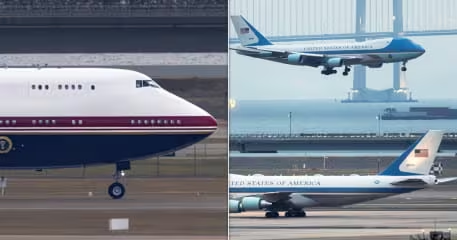
Donald Trump claimed Xi Jinping and Vladimir Putin thought his Qatari-supplied 747 was "super duper cool."
Donald Trump opened the back-to-back meetings by calling each leader his friend, telling Xi Jinping, "As long as you and I are in charge of things, we'll never have a problem."
The Kremlin said Vladimir Putin was in an "excellent" mood after his summit with Trump.
Xi Jinping greeted Trump at Shenzhen airport with a red-carpet welcome, a marching band playing the US national anthem and a military flyover.
The trilateral summit between Trump, Xi Jinping and Putin got underway in Shenzhen on November 19, 2026.
Vladimir Putin told Xi Jinping the summit exceeded his expectations, saying no one "expected everything to go so well."
Chinese officials barred Bloomberg reporter Annmarie Hordern from covering the summit after she shouted a question asking whether Jensen Huang had been disloyal to the United States.
Donald Trump singled out the International Criminal Court as a "rogue globalist organization" at the top of the summit and said he would suggest ways to protect US sovereignty from such bodies.
Donald Trump held a White House news conference after returning from the four-day Asia trip.
At the news conference Trump touted his "fantastic relationship" with Vladimir Putin.
Donald Trump posted pictures on Truth Social of his time with Putin and Xi at the summit, captioning one photo of Putin "My Friend."
China's Foreign Ministry called the planned meeting the first-ever face-to-face meeting of the leaders of the United States, China and Russia.
Donald Trump said he planned to talk about the war in Ukraine during the meeting.
Donald Trump flew to Asia with more than 15 administration officials, including Secretary of State Marco Rubio, Commerce Secretary Howard Lutnick and Chief of Staff Stephen Miller.
Russia said it aimed to secure a joint statement from the trilateral summit.
Donald Trump arrived in Manila on November 17, 2026, at the start of his Asia trip.
Trump's Manila stop was part of a state visit including a meeting with Philippine President Ferdinand Marcos Jr., and marked his second year running at the ASEAN gathering.
European officials said they feared what Trump, Putin and Xi might agree behind closed doors in Shenzhen, with nuclear non-proliferation flagged as the main focus but no specific agenda set.
Xi Jinping hosted Trump and Putin at a welcome reception with Asia-Pacific leaders on the margins of APEC in Shenzhen on November 18.
Xi Jinping and Vladimir Putin held bilateral talks in Shenzhen on November 18, the day before the trilateral meeting.
The Kremlin said Putin and Trump would meet several times during the APEC summit and hold a "full-fledged" conversation.
Mark Carney rebuffed Putin's remark that sanctions were a thing of the past, saying Putin could ask his financial institutions, his oligarch friends and his hockey players and would find the sanctions very much alive.
Vladimir Putin appeared in the APEC leaders' family photo for the first time in nine years, placed centrally alongside Xi Jinping and Donald Trump.
A US official said Trump and Putin planned to meet one-on-one in Shenzhen on the Thursday of the summit.
European and Asian allies were alarmed ahead of the summit, fearing Trump would endorse initiatives favoring Putin's ambitions over Ukrainian territory and Xi's claims to Taiwan.
Volodymyr Zelenskyy said US envoys Steve Witkoff and Jared Kushner would brief allies on the outcome of Trump's talks in China.
Republican lawmakers broadly backed the meeting while warning that China and Russia were adversaries and "not our friends."
Donald Trump said the summit with Xi and Putin was writing "History."
Donald Trump said the three nations were "uniquely positioned" to discuss cutting nuclear arms.
Xi Jinping called for joint efforts on energy security and avoiding nuclear war, saying the three nations must not cross each other's "red lines."
China called the trilateral meeting "positive."
Japan's Prime Minister Sanae Takaichi said the summit would not harm Japan's interests.
Anthony Albanese told Putin to "end your war."
Vladimir Putin said he expected "considerable potential benefits" from his meeting with Trump and Xi.
Ukraine urged Washington and Beijing to use their influence over Moscow to end the nearly five-year war.
Trump held a separate bilateral meeting with Xi Jinping shortly before the trilateral, his third substantial meeting with Xi in 2026.
Trump added a roughly 40-minute one-on-one meeting with Putin, their first talks since their failed 2025 summit in Alaska.
When they met on November 18, Xi Jinping called Putin "my old friend" and Putin called Xi his "dear friend."
Arms Control Association executive director Daryl Kimball said one meeting would not produce dramatic breakthroughs, at best starting a process toward sustained talks on reducing arsenals.
German Chancellor Friedrich Merz said Europeans feared another "Anchorage moment" like the 2025 Alaska talks that produced proposals rejected by Ukraine and its partners.
Donald Trump said he wanted "a new, improved and modernized" nuclear deal that includes China.
Trump told Fox News it is a very hard thing to ask a leader to reduce nuclear stockpiles.
Yuri Ushakov, Putin's foreign affairs adviser, said the three leaders would likely touch on the war in Ukraine.
Ahead of the meeting, Trump told Fox News of making deals with Putin without Ukraine, "I wouldn't do that."
Putin was greeted on the tarmac in Shenzhen by Cai Qi, a senior Chinese official, while Xi Jinping personally greeted Trump.
Yuri Ushakov said Putin and Xi discussed the latest round of peace talks in Abu Dhabi and wider efforts to end the war in Ukraine.
ISW assessed that Putin used the first day of the summit to posture Russia as a great power equal to China and the United States.
Under the White House schedule, Xi would meet Trump at a Shenzhen state guesthouse in the early afternoon, with Putin joining for the trilateral talks just under two hours later.
Trump said he expected the war in Ukraine to come up despite the White House ruling it out, calling it "my favorite subject."
Trump said he was sure Xi Jinping would raise Taiwan.
Trump planned to press Xi to release two detained Americans.
Former GOP strategist Steve Schmidt called the summit a meeting of axis powers, saying Xi and Putin knew "in front of them is the greatest American mark who has ever lived."
Xi's personal airport welcome for Trump was believed to be the first by a Chinese paramount leader in decades, an upgrade from the vice president who greeted Trump in May.
Donald Trump pointed across the room at Putin, asked "Who is he?", chuckled and answered, "He's my friend!"
Commentators branded Trump a "traitor" over the warm greeting; author Don Winslow noted the man Trump called his friend was responsible for invading Ukraine and kidnapping 20,000 Ukrainian children.
Dan Shapiro called the greeting "beyond nauseating," citing Putin's missiles on Ukrainian civilians and his assistance to Iran against American servicemembers.
US officials said Trump did not plan to raise Jensen Huang or reported allegations involving him at his meetings with Putin and Xi.
Yuri Ushakov said Putin was in an "excellent mood" after the talks, which covered bilateral relations and efforts to resolve the "Ukrainian conflict," and that no important statements were made.
Volodymyr Zelensky criticized Trump's decision to meet Putin without Ukraine, calling the one-on-one meeting a mistake and saying Trump and Xi have the economic leverage to stop the war.
Daniel Fried, a former assistant secretary of State, said Trump was at a disadvantage negotiating against two adversaries without allies present, and that the meeting elevates Putin to a co-equal status he does not deserve.
Robert Daly said the summit presented Xi Jinping as a great man of history, the equal of any leader on Earth, to his own people and the global south.
Chinese Foreign Ministry spokesperson Mao Ning called the summit of groundbreaking significance.
Yuri Ushakov said the meeting between the three leaders would be a "showstopper."
Yuri Ushakov said the war in Ukraine was the main topic of Trump's meeting with Putin.
Chinese state media said Xi Jinping would lead the trilateral meeting.
The leaders of the United States, China and Russia agreed to boost the supply of energy products.
Xi Jinping called the discussion "groundbreaking."
The trilateral meeting's agenda was not announced in advance because of the participants' differing priorities.
Donald Trump said "things are happening" to end Russia's war against Ukraine and that he believed Putin wanted the war to end.
Ukrainian Foreign Minister Andrii Sybiha said the trilateral would only encourage Putin to continue the war.
Polish Prime Minister Donald Tusk wrote on X, "God, protect us from such friends."
Polish Foreign Minister Radosław Sikorski said the optics of Trump hugging Putin and calling him a friend "causes us some concern," and asked which friend Trump would choose if push came to shove.
Trump said at the start of the trilateral that he and Putin had already discussed the war and that he hoped "the other side" would also like to see it end.
The three leaders met for between roughly 70 and 90 minutes, with reports differing on the exact length.
According to China's official readout, the three powers committed to advancing UN reform and to dialogue on reducing nuclear risks and preventing proliferation.
They agreed to increase the production and supply of refined petroleum products and ensure stable global energy flows.
They agreed that the International Criminal Court and similar bodies must not abuse their jurisdiction, and that state consent and immunity for state officials are of paramount importance.
They reaffirmed that a nuclear war cannot be won and must never be fought.
Trump and Xi discussed the trade truce, extended to January 10, 2027, and US arms sales to Taiwan, which Beijing opposes.
Xi Jinping said, "When great powers live in harmony, the world is at peace. When they clash, the world is in turmoil."
Trump said the three leaders would discuss "virtually every issue currently being discussed in the world" and that they would not let Iran have a nuclear weapon.
Trump said of his rapport with Xi, "President Xi and I have formed an outstanding personal relationship."
Putin invoked the Allied victory in World War II and the founding of the UN to argue that Moscow, Beijing and Washington share responsibility for maintaining peace.
Putin said he discussed the war in Ukraine with Xi on November 18 and with Trump on November 19, the latter at the US president's initiative.
Putin said all three countries shared an interest in resolving the war in Ukraine.
Xi Jinping said "positive interaction among major powers is not a matter of choice, but a mandatory requirement."
Russian nationalist Alexander Dugin said the summit "shows who is important in the world: We are, China and the West."
Henry Huiyao Wang said the summit was "more than symbolic" and that face-to-face dialogue can help calm the world's conflicts.
Volodymyr Zelenskyy had said in October, "We really don't want this to turn into 'Yalta 2, 3, 4,' with a redistribution of influence."
Yuri Ushakov said Putin and Trump were seated at different tables at the APEC banquet and had not been able to talk there, and expressed hope they would find time the next day.
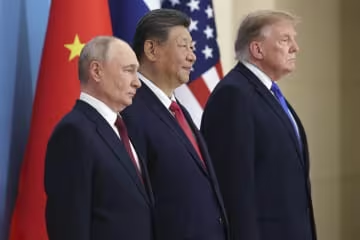
The three leaders stood for a photo without shaking hands before entering the meeting room at Kylin Villa in Shenzhen.
Vladimir Putin said Russia, China and the United States hold joint responsibility for maintaining international peace and share interests in settling regional conflicts, including Ukraine.
After the meeting, Trump spoke briefly with Chinese Foreign Minister Wang Yi at the airport before departing on Air Force One for Washington.
French Foreign Minister Jean-Noël Barrot said the meeting between Putin, Xi and Trump would yield nothing, and that Europeans gathered in Berlin to prepare and guarantee the peace and deter any new aggression by Putin.
China and Russia were reported to have called the three countries "victor nations" in the talks, with Japan in mind.
Representative Gregory Meeks said Trump apparently had no plan, strategy or goals for the meeting and questioned the lack of agreements on nuclear weapons and AI safety.
Meeks warned the summit could undermine US alliances and said he feared the leaders discussed dividing the world into spheres of influence.
The three presidents issued a joint "declaration of peace" after their talks, committing to preserve international stability.
The Jay in Kyiv account wrote of the greeting, "Whatever Putin has on Trump, it's absolutely horrific."
Xi Jinping said at the summit, "A transformation not seen in a century is accelerating."
The Japanese government had urged Washington in advance not to hold the summit if no results were expected on nuclear disarmament.
Xi Jinping said nuclear weapons should be "comprehensively banned and thoroughly destroyed," building a nuclear-free world.
The Kremlin said Ukraine was not even the "central topic" of the trilateral meeting, though it was central to Putin's bilateral talks with Trump.
Putin said after the meeting, "The discussion at the trilateral summit was very frank and helped the leaders to better understand one another."
Japanese Prime Minister Sanae Takaichi held telephone talks with Trump on the night of November 19 and was briefed on the summit.
The "Declaration toward Peace" made no mention of the wars in Ukraine and Iran, or of Gaza, Sudan or Taiwan.
Shane Croucher judged that what the three leaders agreed on fits on an index card that, like most index cards, probably belongs in the trash.
The trilateral meeting ran half an hour longer than scheduled, to 90 minutes.
The United States released the joint statement after Russia and China did.
As Trump departed, White House staff took reporters' phones, a move the press pool described as highly unusual.
William Yang said Xi used the meeting to demonstrate Beijing's convening power and that China emerged confident, having avoided committing to nuclear talks it sees as unfair.
Craig Singleton said each leader secured a diplomatic dividend, gaining prestige while giving up little policy ground.
Fox News correspondent Jacqui Heinrich said the removal of reporters' phones raised suspicion that Air Force One might not be heading straight home.
Putin said at a news conference that Trump "sincerely strives" to end the war and that the two share a common approach to "civilizational values."
Asked about Yalta comparisons, Putin replied, "What was so bad about Yalta?"
Aaron Parnas wrote that the declaration's ICC language could be read as a challenge to the legal basis for the arrest warrant against Putin.
The declaration's line that a nuclear war cannot be won and must not be fought was identical to language in a previous statement by the five permanent members of the UN Security Council.
Putin pushed back at suggestions the summit was a photo op, saying the three men had a "free discussion" and that "It is a serious collaborative work."
William Hurst called the summit a demonstration of Putin's continuing relevance rather than a Yalta moment.
Patricia Kim said the real test is whether the three countries follow through on nuclear risk reduction.
Putin called the summit "a page that will remain in diplomatic history."
Putin said he had suggested, half-jokingly, nominating Trump for the Nobel Peace Prize, and questioned whether the prize had any value, saying it had at times been awarded for political reasons.
Donald Trump called the trip "Great and Highly Consequential" in a Truth Social post as he returned to Washington.
Putin said the summit's success was due primarily to Xi Jinping, "as it was President Xi Jinping who initiated this meeting," and said he hoped the three-way talks would continue.
A White House official said the administration pushed to have the barred reporter reinstated, but Chinese officials insisted she remain excluded.
Trump said of the media restrictions, "It's too bad the media couldn't see some of it, because every move was perfectly executed."
Trump told Fox News the United States did not need help from the other leaders in ending its own conflict, saying "We don't need any help."
Trump said the China-Russia alignment "should have never been allowed to happen" and that he hoped to turn it into a three-way conversation rather than a partnership countering American influence.
Trump called European leaders from Air Force One after the summit, telling them his talks with Putin had gone well and that Putin wants to end the war.
Trump questioned the coalition's billions in aid to Ukraine, telling the leaders countries should stop wasting money as people die.
Trump told a reporter that Putin was extremely unhappy with Zelensky over the Crimean Bridge strikes but that he would make no final decisions without Zelensky.
At his news conference, Putin said Russia would not negotiate after the strikes on the Crimean Bridge, dropping the idea of a partial ceasefire.
European officials were reported to be skeptical that Putin wants to end the war.
The White House posted an 18-second slow-motion video of Trump walking with Putin and Xi to its official account.
The White House provided little detail about what transpired at the meetings in Shenzhen.
The joint statement included no mention of future nuclear negotiations or a potential arms reduction treaty.
Chuck Schumer called the summit "a historic embarrassment that people will remember long into the future" and "a betrayal of the United States by a president who loves nothing more than to bow down to our adversaries for a photo op."
Body language expert Denise Dudley called Trump's "Who is he? He's my friend!" line an audience-directed performance rather than a greeting.
Behavioral scientist Abbie Maroño read the exchange as a display of power with a subtle dominance tug-of-war, alongside much synchrony signaling rapport.
The energy pledge was reported to possibly signal an easing of US sanctions on Russian oil exports.
Lyle Goldstein called the summit "a good start," saying the symbolism sends a message to the three militaries to "rein it in at the brink," and questioned whether there would be follow-up.
Sergey Markov said Putin got a dose of respect from the Chinese and American leaders.
Xi Jinping said in a Foreign Ministry statement, "the seeds sown at the summit today will surely take root, sprout, bloom and bear fruit."
Donald Trump waived sections of a new law imposing tariffs on Russian oil and gas.
Trump's envoys Steve Witkoff and Jared Kushner met European officials in Berlin and said peace was within reach.
Energy markets showed little reaction to the news out of the summit.
Senator John Cornyn called the fuel-supply agreement a "big mistake" and the wrong cure, saying Russia uses export proceeds to fund a war that kills Ukrainian civilians.
White House spokesperson Olivia Wales said Trump is pushing for more oil on the market to lower gas prices and remains committed to ending the war in Ukraine.
Former NSC official John Erath said the meeting was aimed at a short-term dip in oil prices with little thought to long-term effects.
Ukrainian parliament member Oleksandr Merezhko called the meeting "problematic" with unfortunate optics, saying Putin came out ahead only in propaganda.
The White House captioned its summit video "peace through strength."
Richard Stengel wrote that no American president had ever been willing to put the two principal adversaries on equal footing with the United States, calling the trilateral Putin's dream: "Russia is a second-tier power with nuclear weapons... It restores him to the world order after his invasion of Ukraine. Shameful."
Michael McFaul said Putin has violated fundamental rules of the international system and leaders should talk to him only to end his criminal activities in Ukraine, since any other engagement normalizes him.
Michael McFaul argued Putin, not Trump, walked away the clear winner, calling the most consequential outcome "a giant gift to Vladimir Putin" and predicting the summit would soon be forgotten as another ephemeral Trump-era moment.
At his post-summit news conference, Putin said he had accepted "compromises" proposed by US negotiators at Anchorage and that it was now up to Ukraine and Europe to agree to them.
Putin said there is "no point" in Ukraine holding on to the parts of Donetsk Oblast Russian forces do not occupy.
Putin rejected European security guarantees for postwar Ukraine, repeating that any foreign troops in Ukraine are unacceptable to Russia.
Putin suggested the Shenzhen meeting could codify a victory over "neo-Nazism" as Yalta codified victory over Nazism.
ISW assessed that Putin used the summit to posture Russia as a superpower and to secure US and Chinese support for his unchanged, maximalist demands to end his war in Ukraine.
Michael McFaul rejected "Yalta 2.0" and "G3" labels for the summit, predicting it would be the first and last meeting of its kind because Trump is now a lame duck president.
Putin said the Kremlin had suggested through diplomatic channels that the Europeans come to Moscow to define their position.
Putin appeared to concede ground to joint European and US requests for Ukraine's allies to have a seat at the negotiating table.
European officials said a coalition of France, Germany, Italy, Poland and the UK, plus the EU and NATO, would represent the continent in future negotiations on Ukraine.
Friedrich Merz dismissed the summit as a "photo op," saying negotiations involving Ukraine and Europe can only succeed if conducted together and that "A Yalta-style format will not bring peace."
Donald Tusk said "Putin is not and never will be our friend."
Volodymyr Zelensky called for the US and Russia not to make decisions about Ukraine behind its back; Trump agreed, saying, "He's the head of that country, so I wouldn't be doing that."
Jared Kushner said Trump "sent a very strong message to both of them on the desire for peace" and wants to engage Putin and Xi very aggressively.
Andrii Sybiha wrote that Putin posed as a global leader in Shenzhen but is in reality "a global criminal and terrorist."
British Prime Minister Andy Burnham said Trump's call included an admission that the war in Ukraine is "lose-lose for everybody" and that Trump spoke passionately about the loss of life.
Jimmy Kimmel mocked Trump's chumminess with Putin in his monologue, telling viewers that even those who voted for Trump must admit he has "the worst taste in friends."
Late-night hosts mocked the summit: Jimmy Kimmel dubbed it "the big dim summit," Michael Kosta joked that Trump fell asleep, and Seth Meyers joked that a friend who interfered in an election is no friend at all.
Putin held bilateral meetings with at least seven world leaders over the two days of the summit.
Putin said he would consider attending the December G20 meeting in Miami after discussing it with Trump.
Joerg Wuttke called the summit "a massive win for Putin," saying it was "as if the world has forgiven."
Andrius Tursa called the three-way summit "arguably a diplomatic victory for Moscow" and said Putin will likely seek to institutionalize the format.
Putin defended the invasion, blaming NATO expansion and Ukraine's leadership, and said of the compromises, "We accepted those terms; now, it is up to Ukraine."
Putin said all three leaders agreed the trilateral was a "useful format" and such meetings could take place again.
On Fox News' "The Five," Harold Ford Jr. called Trump "the most pro-communist American president in my lifetime," said he was "disgusted" by the greeting, and told Trump, "Mr. President, they're both tapping you along."
John Bolton said the summit's substance was "pretty close to zero," that Putin and Xi are "hard men of history" who respond only to the language of power, and that Trump's friendship approach would not work on them.
Critics blasted the White House video: Adam Kinzinger asked "In what way did you show strength?", Dan Shapiro called it "the most pathetic thing I've ever seen," and Garry Kasparov called it an "eternal humiliation."
Viral claims that Putin was snubbed at the banquet were debunked: the image appeared doctored, and Putin's adviser's actual words were that the leaders were "not seated next to each other at the table."
Ian Bremmer said the trilateral's optics were impressive "but there is not much happening."
Gary Dvorchak said Taiwan remains a major source of strategic uncertainty and noted North Korea was absent from the trilateral nuclear declaration.
US Energy Secretary Chris Wright said the department is "talking about reopening every refinery we can" to boost global fuel supply.
Economist Hamad Hussain called the trilateral statement "political noise," noting the United States has no spare refining capacity.
Frederic Schneider said the announcement sounded designed to placate consumers and constituencies.
Russian stocks fell after the summit produced no agreements on Ukraine or sanctions relief, with the MOEX index down 2.3 percent to 2,364 points, its lowest level since October 9.
Investment expert Alexei Primak said Russian businesses "have no use for general words about cooperation" and need the ability to process payments, receive equipment and insure deliveries.
Suzanne Maloney said the trip let Trump "bask in the glow of great power amity after a really bruising election outcome" and that Putin and Xi see his command of US politics beginning to wane.
A White House readout said Trump and Xi discussed economic cooperation and the impact of the Iran war on oil supplies.
Senator Jeanne Shaheen said Trump was "without a doubt" played by Xi and Putin, calling the summit "a photo op that provided no deliverables, no benefits to the people of the United States."
Joe Scarborough said Trump "humiliated himself" and "shamed America," accusing him of "kissing up" to Putin and acting like he "worshipped" Xi.
Michael Tomasky called the summit "bogus" and Trump's nuclear remarks daft and ahistorical, noting the US arsenal is already about 10 percent of its Cold War height.
Finnish President Alexander Stubb said Washington asked for a clause on Ukraine to be cut from the joint declaration, saying only that its language was "not good."
Chuck Schumer said Xi Jinping and Vladimir Putin were "playing Donald Trump like a cheap violin."
Lyle Morris said the summit gave Putin "a platform to legitimize his war of aggression over Ukraine with seemingly little repercussions."
Geraldo Rivera called Trump's exchange with Putin pathetic, asking why Trump does not tell his "friend" to stop bombing hospitals, daycare centers and civilian homes.
White House spokesperson Anna Kelly said Trump had "truly restored American power after four years of weakness under Joe Biden."
Trump defended the "friend" remark in a Reuters interview, saying, "It's nice to have people that have 4,000 nuclear weapons as a friend as opposed to an enemy."
Danish Prime Minister Mette Frederiksen said it was "very incomprehensible" that Trump would meet Putin.
NATO Secretary-General Mark Rutte defended the principle of nuclear powers meeting to pursue diplomacy.
Senators Mark Kelly and Jeanne Shaheen attacked the remark: Kelly said calling Putin a friend "emboldens him," and Shaheen called Putin a "murderous war criminal."
Bill Browder described his "revulsion and disgust," calling Putin "a geopolitical menace" who should not get respect from the American head of state.
At a White House news conference, Trump defended calling Putin a friend but, asked whether Putin is a friend to the United States, said, "I can't speak to America."
Trump said Putin "would love to end" the war in Ukraine and that Putin and Zelenskyy are "two guys that don't know how to end it" who "hate each other."
Trump repeated his grievances over the investigation into Russian influence in the 2016 election, calling it a rigged hoax made up by Democrats.
Secretary of State Marco Rubio defended Trump's leader-to-leader relationships as "invaluable," pushing back against criticism that Trump was embracing autocratic leaders as trusted allies.
Treasury Secretary Scott Bessent said Jensen Huang did not come up in the China discussions.
Trump told Fox News he "might have" brought up Huang's situation "briefly" with Xi Jinping.
Volodymyr Zelensky told CNN that Putin is "an enemy" and "an assassin" for Ukraine and most of the world, and that calling him a friend means Putin does not feel enough pressure.
Jon Favreau wrote that no line better sums up Trump's presidency than "I can't speak to America."
Anne Applebaum wrote that Trump does not speak to America because he does not care about America.
Greg Sargent wrote that Trump revealed he cares more about how Putin treated him during the "Russia hoax" than about America's national interest, and that the scandal was "100% real."
Representative Castro said the summit was basically a dictator pageant and produced no results on ending the Iran war or securing rare earths for US companies.
Trump called the summit "a beautiful energy," described his relations with Putin and Xi as "fantastic," and said of the Ukraine discussions, "in this case, it was two against one."
A Chinese readout said the three leaders discussed Ukraine, the Middle East and the Korean Peninsula.
Trump said at his news conference that the three countries matter because together they control 92 percent of the world's nuclear weapons.
Anne Applebaum wrote the meeting's purpose was "to produce propaganda photographs and video clips that each of the three leaders will now use to mask their political failures."
Former diplomat Ned Price said the three leaders want to do away with "the rules of the road" that favored liberal democratic systems for 80 years and replace them with something different.
China said the two sides agreed to map out an action plan for a "constructive relationship of strategic stability," without giving details or a timeline.
China's readout omitted the trade truce, agricultural commitments, rare earths, chip controls, the Nvidia scandal and the detained Americans.
China's Foreign Ministry said Xi pushed his demand that the US "keep doing the right thing" on Taiwan.
Dan Wang said China secured additional strategic space on Taiwan and the technology embargo while the United States "strategically... gained nothing."
Kuo Yu-jen said the summits achieved the goal of "keep dragging things out and keep talking."
Stephen Miller said Trump achieved more in two years than any other president "by far" and predicted the next two years would be the greatest in American history.
Phillips O'Brien called the summit a low point in the history of the American presidency and forecast it would weaken the United States.
Charlie Sykes said Trump staged the summit to show he remained a world-bestriding leader but showed no awareness of how easily he was played and flattered.
Trump said Putin "clearly expressed his desire" to end the war by diplomatic means and blamed the conflict on Joe Biden's weakness.
Trump said he asked Putin whether he would have invaded Ukraine if Trump were president, and Putin replied it never would have happened.
Robert Reich said the meeting gave Putin what he wanted most, being seen on stage with the two other big powers, and that its only outcome was a statement shielding heads of state from ICC jurisdiction.
Senator Mike Lee called Trump's "friend" remark a "masterstroke" and "absolutely brilliant."
Zelenskyy told NBC that big countries deciding the fate of smaller ones is a "huge mistake," saying, "You can't decide about some country, even a small country, without this country."
Trump posted a graphic pairing the 1945 Yalta leaders with a photo of himself, Xi and Putin, captioned "The Great Powers 1945, 2026."
Trump had described the summit as "bigger than Yalta."
Xi Jinping proposed a four-point code of conduct for major powers, mutual respect, peaceful coexistence, win-win cooperation and dialogue, and said the "Thucydides Trap" is not destiny.
Jared Kushner indicated in Berlin that the United States might grant Ukraine a NATO Article 5-style security guarantee.
British Defence Secretary Wes Streeting called Putin "a cold-blooded killer" and said there is no point in him "parading for peace" if massive bombardments of civilian infrastructure follow.
Putin said the meeting was "not yet the beginning of a new format," that the three did not agree to meet regularly, and that all his partners considered the format useful.
Nikki Haley said Putin was the summit's "biggest winner," writing that he was given "a seat at the table and a pair of stilts to make him feel taller."
Haley said Xi Jinping appeared to hold the commanding position, treating Putin as less than an equal, and that the summit was all about optics.
Haley said she does not oppose engaging with Moscow and Beijing but that high-level talks must "make it count" by pressing for specific changes.
European officials said there was no consultation with European allies before the Shenzhen summit.
Friedrich Merz said, "At Yalta, Europe was divided up. It was parceled up. And we won't allow anything like that to happen again," calling the Shenzhen meeting "apparently a photo opportunity."
Natia Seskuria said "the new Yalta did not happen in Shenzhen as the three leaders had very different agendas."
Fredrik Wesslau said Trump has shown he does not care about European security or Ukraine but rather about normalizing relations with Russia.
Trump called Xi's personal airport greeting "a big win for us."
Donald Trump said on Truth Social that during their China talks he urged Putin to "pull back all Military aggression against territories throughout Europe," in hopes of a quick Russia-Ukraine deal.
Trump said he briefed NATO Secretary-General Mark Rutte on the talks at a meeting at Mar-a-Lago.
Trump and Rutte issued a joint statement noting the importance of Russia avoiding actions that expand the war and of a peaceful resolution as rapidly as possible.
Elizabeth Saunders said Trump showed no interest in pressuring Putin to end the war because he considers him a friend, and instead relaxed the pressure on Putin.
Greg Sargent said Trump's summit remarks revealed how Putin and Xi manipulated him by skillfully playing on his ego.
Trump said he thinks China will agree to buy another 250 Boeing airplanes, saying, "I think they're going to do another 250, so I'm going to keep selling."
Wes Streeting called Putin's summit appearance "nauseating," said Putin is not a friend to anyone who cares about freedom and democracy, and pledged the UK would defend Ukraine for as long as it takes.
Streeting said he hopes Trump can leverage his relationship with Putin for the benefit of the Ukrainian people and a settled peace in Europe.
In the same post, Trump called the war "A COMPLETE BLOODBATH," saying thousands of people are being killed each and every month.
Friedrich Merz said the coalition of the willing, with the Americans, agrees Ukraine needs permanent, Article 5-style security guarantees after a peace agreement.
Merz said it is good that Trump is calling on Putin to end the fighting, calling it a clear position that everyone shares.