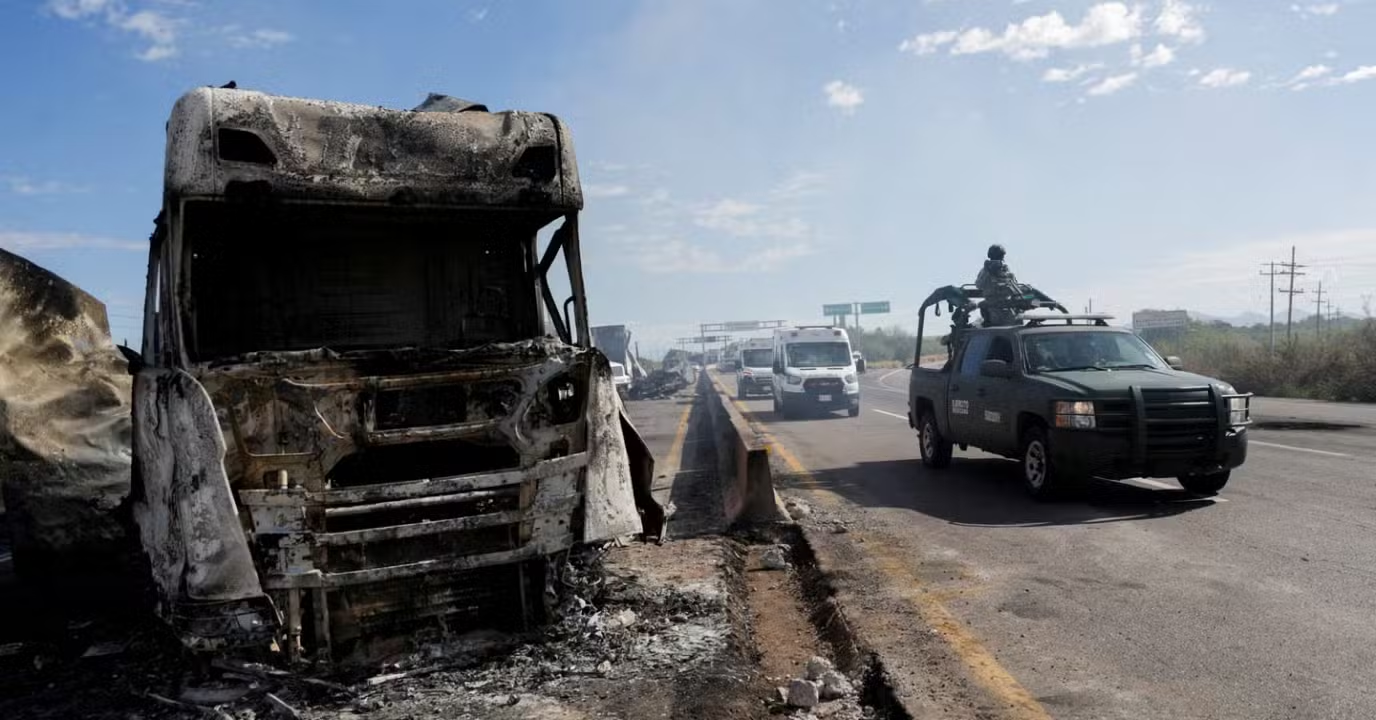
Mexico's El Chapo Isidro capture leaves 16 cartel members and 4 soldiers dead
Mexique : premiers résultats positifs pour la politique sécuritaire de la présidente Claudia Sheinbaum
lemonde.fr· 30h
Mexico used U.S. drones to arrest alleged drug trafficker ‘El Chapo Isidro’
washingtonpost.com· 5d
Mexico nabs yet another top drug lord, but history of 'Kingpin Strategy' mixed
reuters.com· 5d
US requests extradition of arrested Mexican drug lord 'El Chapo Isidro', official says
Eleven killed in burst of violence during Mexican cartel leader’s capture
aljazeera.com· 7d
Mexico captures drug kingpin on FBI's most wanted list
channelnewsasia.com· 7d
Mexico detains top cartel boss 'El Chapo Isidro,' setting off violence
npr.org· 8d
Le Mexique arrête le baron de la drogue «Chapo Isidro» recherché par le FBI
rfi.fr· 8d
Mexico captures top drug lord 'El Chapo Isidro,' latest in string of arrests
FBI’s Most Wanted Drug Lord ‘Chapo Isidro’ Captured in Mexico - Newsweek
newsweek.com· 8d
Cartel kingpin on FBI’s most wanted list captured in dramatic Mexican military operation | CNN
cnn.com· 8d
Mexican forces captured Fausto Isidro Meza Flores, known as El Chapo Isidro, in Guasave, Sinaloa, on 20 November 2026, and took him to Mexico City. Armed clashes followed, with militants setting up roadblocks and helicopters firing at ground targets; gunfire interrupted a baseball game, sending players and spectators fleeing. Authorities also detained Germán N., known as Serafín and described as the group's second-in-command, and José N., described as its financial operator. Mexico's Defense Ministry initially said 4 soldiers and 7 attackers were killed, while 8 alleged criminals were arrested. Authorities said violence had substantially subsided by Saturday, and residents could resume normal activities.
On 23 November, the United States requested Meza Flores's extradition, but Mexican officials had not said whether they would act. Mexico's Defense Ministry said U.S. drone intelligence helped track him in the week before his capture; Defense Secretary Ricardo Trevilla Trejo said Mexico had shared information about his whereabouts with U.S. counterparts for 3 months.
Mexican authorities later said the operation had been prepared for 3 months and involved 361 soldiers. During the night after the capture, cartel members blocked roads with more than 80 burned vehicles while attacking a convoy headed toward Culiacán. Authorities said the clashes left 16 cartel members and 4 soldiers dead.
On 20 November 2026, Mexican forces captured Fausto Isidro Meza Flores, known as El Chapo Isidro, in Guasave, Sinaloa, and took him to Mexico City.
Armed clashes followed the capture in Guasave, where militants set up roadblocks and helicopters fired at ground targets.
Gunfire interrupted a baseball game at Kuroda Park, sending players and spectators fleeing.
Mexico's Defense Ministry said elite forces used stealth and surprise and came under attack with gunfire and explosives.
Local authorities in Guasave confirmed an attack on federal personnel.
Sinaloa's state government urged Guasave residents to stay indoors and avoid traveling, and said authorities had been deployed to restore order.
Fausto Isidro Meza Flores was detained alongside Germán N., known as Serafín and described as the group's second-in-command, and José N., described as its financial operator.
Guasave municipal security chief Juan de Dios López Rubio said aerial operations were continuing and warned residents to take care on roads where tire-puncturing devices had been left.
Mexico's Defense Ministry said 4 soldiers and 7 attackers were killed, and 8 alleged criminals were arrested, including 5 who were handed over to prosecutors in Culiacán.
Authorities said violence in Sinaloa had substantially subsided by Saturday and residents could resume normal activities.
Authorities seized a .50-caliber rifle, a grenade launcher, 2 hand grenades and other weapons.
U.S. Northern Command congratulated Mexican forces and said its counter-cartel task force had worked with other U.S. agencies on information leading to the capture.
U.S. Ambassador to Mexico Ronald Johnson said intelligence sharing helped make the operation possible and praised sustained cooperation between the countries.
Homeland Security Investigations called the operation a major blow to a powerful Mexican cartel network.
Sinaloa state authorities said the situation was under control and being addressed by all levels of government.
A man who appeared to be Fausto Isidro Meza Flores urged his men to calm things down because it was over and there were children, women and innocent people.
Guasave resident and firefighter Paola Sánchez said firefighters sheltered at their station overnight and waited until Saturday morning for orders to check for burning businesses or vehicles.
Paola Sánchez said thousands of people had taken shelter from intense gunfire and that many businesses, cars and trucks had been burned; she said conditions looked calm on Saturday.
The U.S. Drug Enforcement Administration called the capture a significant blow to a violent criminal organization and said it underscored the importance of intelligence sharing.
Mexican Security Secretary Omar García Harfuch called the detention an important step toward pacifying Sinaloa.
Mexican security analyst David Saucedo said the capture reflected pressure from the United States and warned that the kingpin strategy could fuel violence while leaving the wider network intact.
U.S. Attorney General Todd Blanche called the operation the result of a bilateral effort to eliminate terrorists in Mexico, offered condolences to the families of the soldiers killed and thanked the Mexican government.
The U.S. Department of Justice said Fausto Isidro Meza Flores's group trafficked large quantities of drugs into the United States and used extreme violence.
On 23 November 2026, the United States requested the extradition of Fausto Isidro Meza Flores; Mexican officials had not said whether they would act on the request.
Mexico's Defense Ministry said U.S. drone intelligence helped locate and track Fausto Isidro Meza Flores in Sinaloa in the week before his capture.
Mexican Defense Secretary Ricardo Trevilla Trejo said Mexico had shared information about Meza Flores's whereabouts with U.S. counterparts for 3 months and used drone footage and phone communications to pinpoint his location.
During the night after the capture, cartel members blocked roads with more than 80 burned vehicles while attacking a convoy headed toward Culiacán.
Mexican authorities said the clashes left 16 cartel members and 4 soldiers dead.
Mexican authorities said the operation had been prepared for 3 months and involved 361 soldiers.

