Mexico to try captured cartel chief 'El Chapo Isidro' despite US extradition request
Mexico to try ‘El Chapo Isidro’ despite US extradition request
aljazeera.com· 5d
Mexico Took Down a Top Drug Kingpin. Can It Dismantle His Cartel?
wsj.com· 5d
Mexico nabs yet another top drug lord, but history of 'Kingpin Strategy' mixed
reuters.com· 5d
L’arrestation de «Chapo Isidro» au Mexique, signe du renforcement de la lutte contre les cartels
rfi.fr· 6d
Suspected Sinaloa cartel kingpin captured, faces extradition to US
newsnationnow.com· 6d
How El Chapo Isidro, alleged Mexican cartel leader, was captured
Eleven killed in burst of violence during Mexican cartel leader’s capture
Mexican ‘drug kingpin’ on FBI’s most wanted list captured in raid
thetimes.com· 7d
Mexico captures top drug lord 'El Chapo Isidro,' latest in string of arrests
cnbc.com· 8d
Mexico detains top cartel boss 'El Chapo Isidro,' setting off violence
npr.org· 8d
Violence erupts in Sinaloa after Mexico captures alleged drug trafficker
ft.com· 8d
Alleged Mexican drug cartel boss ‘El Chapo Isidro’ arrested in special forces raid
theguardian.com· 8d
Who is El Chapo Isidro, the alleged cartel boss arrested in Mexico?
Mexico detains top cartel boss ‘El Chapo Isidro,’ one of FBI’s 10 most wanted fugitives
politico.com· 8d
Mexico seizes cartel boss ‘El Chapo Isidro,’ among FBI’s most wanted
washingtonpost.com· 8d
Heftige Feuergefechte bei Festnahme von Drogenkartell-Boss
spiegel.de· 8d
Mexico Arrests Sinaloa Drug Kingpin on FBI’s Most Wanted List
bloomberg.com· 8d
Top drug lord 'El Chapo Isidro' captured, latest in string of arrests
usatoday.com· 8d
Mexico captures top drug lord 'El Chapo Isidro,' latest in string of arrests
Mexico's military captures drug kingpin on FBI's most wanted list
abc.net.au· 8d
Le Mexique arrête un baron de la drogue recherché par le FBI
france24.com· 8d
Mexico detains top cartel boss 'El Chapo Isidro,' one of FBI's 10 most wanted fugitives
apnews.com· 8d
Le Mexique arrête Fausto Isidro Meza, alias « Chapo Isidro », un puissant chef de cartel recherché par le FBI
lemonde.fr· 8d
Top Drug Kingpin Is Captured by Mexican Army as Gunfire Erupts
nytimes.com· 8d
FBI’s Most Wanted Drug Lord ‘Chapo Isidro’ Captured in Mexico - Newsweek
newsweek.com· 8d
Cartel kingpin on FBI’s most wanted list captured in dramatic Mexican military operation | CNN
cnn.com· 8d
Mexican special forces captured Fausto Isidro Meza Flores, the alleged leader of the Guasave-based cartel Los Mazatlecos, on Friday night in Guasave, Sinaloa, ending more than a decade on the run. The raid followed weeks of planning and two earlier failed attempts: the two countries exchanged intelligence for three months using drones, his communications were intercepted, and more than two dozen elite soldiers stormed the house where he was tracked, backed by Black Hawk helicopters.
The capture set off hours of gunfire in Guasave. Cartel members blocked roads and set vehicles ablaze in several municipalities, gunfire sent players and fans fleeing mid-game from a baseball match, and residents sheltered overnight in schools and gyms. Mexico's Defense Ministry said four soldiers died and seven attackers were killed; a report published on 23 November put the toll at twenty dead. The violence had substantially subsided by Saturday, and authorities said residents could resume normal activities.
Meza Flores, whom the FBI had offered a 5 million dollar reward for, was flown to Mexico City with his alleged second-in-command and alleged financial operator. US prosecutors accuse him of trafficking fentanyl, cocaine and other drugs and want him extradited on charges including narcoterrorism, which carry the death penalty or mandatory life. Mexico had not outlined an extradition timetable, and on 24 November he was reported to face local charges in Mexico for weapons offences and methamphetamine possession with intent to sell.
Mexico's military captured Fausto Isidro Meza Flores, the alleged leader of the Guasave-based cartel known as Los Mazatlecos, on Friday night in Guasave, Sinaloa.
Mexico's defense ministry said elite military forces moved in with stealth and surprise, came under attack with gunfire and explosives, and that militants set up roadblocks in several nearby municipalities.
Footage verified as showing Mexican security force helicopters firing at ground targets and circling over Guasave was published.
Gunfire sent players from the Venados de Mazatlan and Algodoneros de Guasave and their fans fleeing mid-game from a baseball game at Kuroda Park in Guasave.
The FBI had offered a 5 million dollar reward for Meza Flores, whom it accused of importing heroin, methamphetamine, cocaine, fentanyl and marijuana into the United States.
Meza Flores was taken to Mexico City following his arrest, which Mexico's defense ministry said was carried out with help from the United States.
The Sinaloa state government urged Guasave residents to stay indoors and avoid traveling on the roads.
Meza Flores had evaded authorities for more than a decade before his capture.
Troops using surveillance technology to locate him stormed the property from several directions, with National Guard special forces known as the Wolves and Army commandos known as the Bats taking part.
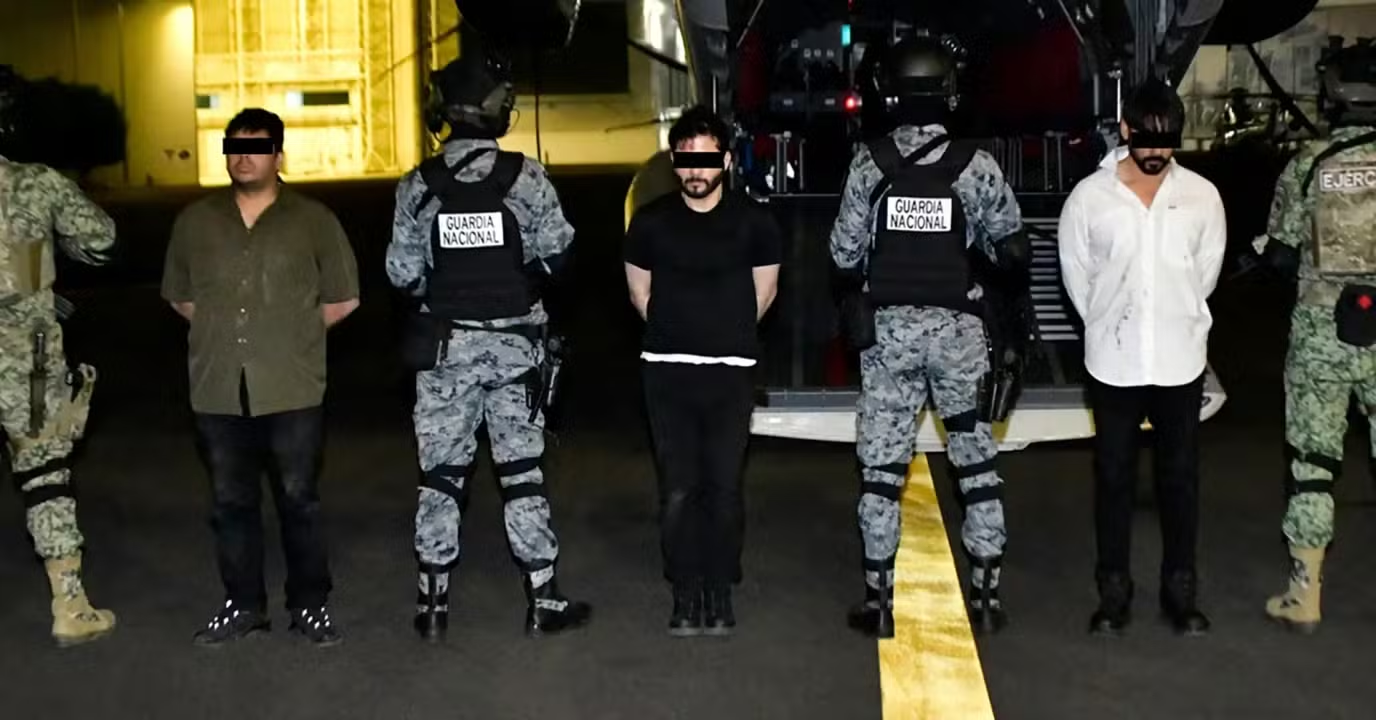
Meza Flores was detained with his alleged second-in-command German N, alias Serafin, and alleged financial operator Jose N, and all three were flown to Mexico City on a Mexican Air Force aircraft and handed to prosecutors.
He was wanted in the United States on drug trafficking and firearms charges.
Cartel members blocked roads and set vehicles ablaze in Ahome, Guamuchil, Guasave and Navolato, prompting an emergency operation to reopen the highways.
Gunfire was heard during the third inning of the baseball game, prompting pitcher Victor Buelna to stop his delivery and alert his catcher.
Guasave's municipal security chief Juan de Dios Lopez Rubio said, "The operation continues; the planes are still flying low over here," and warned residents to take care on roads littered with tire-puncturing devices.
Meza Flores, aged 44, was arrested in Guasave, about 150 kilometers from Culiacan.
Authorities counted ten roadblocks between Guasave and Culiacan, where security forces set up numerous checkpoints.
An armed navy operation against criminal groups, carried out with helicopters, was reported.
The Mexican government said intelligence from the Trump administration helped authorities capture Meza Flores, while giving few details on how the two countries coordinated.
Meza Flores was one of the leaders of the Beltran Leyva criminal organization and an ally of a rival faction of the Sinaloa cartel.
He was wanted in Mexico for organized crime, and the United States had requested his extradition for drug trafficking.
Roadblocks were reported on the outskirts of Culiacan, leading to the deployment of hundreds of soldiers.
Residents sheltered overnight in supermarkets, schools and gyms, leaving at dawn once the clashes ended.
A video circulating on social media showed a man who appeared to be Chapo Isidro asking his men to "calm the game down" because "it is finished now" and there were "children, women, innocents".
Sinaloa Governor Graciela Dominguez said security forces were working in coordination with various authorities to restore security and allow safe movement.
Mexican Security Secretary Omar Garcia Harfuch said the arrest "is the fruit of intelligence work and bilateral cooperation with the United States".
Mexico's Defense Ministry said four Mexican Army infantry soldiers died in the operation, that security forces killed seven attackers, and that eight alleged criminals were arrested, three transferred to Mexico City and five handed to the Attorney General's Office in Culiacan.
Meza Flores and his cousin, the organization's second-in-command, were taken to Mexico City at 5:20 a.m. and handed to the Specialized Prosecutor's Office for Organized Crime, along with his brother-in-law, the group's financial operator.
Security Minister Omar Garcia Harfuch said authorities seized, among other weapons, a .50-caliber rifle, a grenade launcher and two hand grenades.
The US State Department says Meza Flores's organization smuggled vast amounts of heroin, methamphetamine, cocaine and marijuana into the United States for over 20 years.
US Northern Command congratulated Mexican forces and said its counter-cartel task force had worked with other US agencies on the information that led to the capture.
The violence in Sinaloa had substantially subsided by Saturday, and state authorities said residents could resume normal activities.
US Ambassador to Mexico Ronald Johnson said, "The exchange of strategic intelligence between the United States and Mexico helped make this operation possible," adding, "Results like these are not achieved overnight. They are the product of sustained cooperation and trust. This is what we can accomplish when we work together. We will continue pursuing criminals."
Homeland Security Investigations called the operation "a MAJOR blow to one of Mexico's most powerful cartel networks."
Sinaloa state authorities said "the situation is under control and being addressed by all levels of government."
The fighting reportedly lasted for hours, with military and navy helicopters firing on buildings and vehicles, and rockets were reported used against the helicopters.
Unconfirmed reports said a nephew of Meza Flores was killed during the operation and that Meza Flores was injured and receiving medical treatment.
Meza Flores was a key ally of the Sinaloa Cartel faction known as Los Mayos.
Video released by Mexican authorities showed heavily armed men in camouflage marching a man who appeared to be Meza Flores through a dimly lit house and putting him in the back of a truck.
Omar Garcia Harfuch said armed forces would remain deployed in Sinaloa state to protect civilians and called the detentions an important step in pacifying Sinaloa.
A Mexican federal official said the army and National Guard special forces were unable to extract Meza Flores from Guasave until 4 a.m. on Saturday because of the violence.
Guasave firefighter Paola Sanchez said thousands of people took shelter from intense gunfire in grocery stores and other locations, that "Last night, many businesses were burned ... along with cars and trucks," and that "Everything looks calm today."
The DEA said the capture "delivers a significant blow to a ruthless criminal organization that has used extreme violence to traffic deadly drugs, including fentanyl, a designated weapon of mass destruction, into American communities" and "underscores the critical importance of intelligence sharing in targeting dangerous cartel leaders."
Security analyst David Saucedo said, "What is evident is this is a product of pressure from the United States," adding the capture marked another case of the kingpin strategy that critics warn could fuel more violence.
Experts warned the capture could set off another wave of violence in a region already caught up in a power struggle between warring cartel factions.
Residents said the firefight in Guasave broke out about 7 p.m. on Friday.
A tense calm settled over Guasave after the operation.
The raid followed weeks of detailed planning and two previous attempts to detain Meza Flores.
US officials flew reconnaissance drones over the area where Meza Flores was believed to be holed up, and Mexican military analysts used the live video to determine his daily routines.
His communications, including text messages with his mother, wife and sister, were intercepted to confirm events and meetings he planned to attend.
He was tracked to the Guasave home through phone and radio communications and drone surveillance, and special forces used his voice, build and gait to confirm his identity before moving in.
Officials first staged two diversions in Los Mochis before targeting the house in Guasave.
More than two dozen undercover soldiers from the Joint Special Force elite army unit stormed the location, covered by dozens of other soldiers and two Black Hawk helicopters that fought cartel gunmen in armored pickup trucks.
After the capture, two helicopters flew toward Los Mochis to create the impression Meza Flores was being taken there while a third helicopter engaged the gunmen, and special forces drove him out of Guasave in an armored vehicle.
Mexico's Secretariat of National Defence said the capture highlighted its "unwavering determination to curb organised crime activities to protect and safeguard the public's peace and security".
Mexican officials said the United States and Mexico had exchanged intelligence for three months, using drones, to pinpoint Meza Flores's location.
The US Justice Department indicated the US investigation was led by a Homeland Security Task Force.
US prosecutors accuse Meza Flores of trafficking fentanyl, cocaine and other drugs into the United States, and he faces six federal counts including narcoterrorism and conspiring to provide material support to a terrorist organization, carrying the death penalty or mandatory life in prison.
Mexico had not outlined a timetable for Meza Flores's extradition to the United States.
Mexican officials said Meza Flores had been arrested four times in Mexico before but was released each time.
Mexican officials said 16 cartel suspects had been killed since the operation.
A report published on 23 November said the operation left twenty dead, including four Mexican soldiers, a higher toll than the defense ministry's count of eleven.
The Drug Enforcement Administration hailed an "important victory against one of the most violent criminal networks in Mexico".
Security analysts said the removal of Meza Flores could further destabilize the ongoing turf war in Sinaloa, which has already left hundreds dead or missing.
Meza Flores faces local charges in Mexico for weapons offences and methamphetamine possession with intent to sell.
Mexican Attorney General Ernestina Godoy told reporters Mexican authorities "are going to put him on trial in this country."

