UN Security Council schedules talks after ICJ finds Myanmar guilty of Rohingya genocide
El fallo del Tribunal Internacional de Justicia sobre el genocidio rohinyá influirá en el caso de Gaza
elpais.com· 4h
Following ICJ Ruling on Myanmar Genocide, Is Israel Next?
truthout.org· 15h
Rights groups urge sanctions after ICJ finds Myanmar guilty of genocide against Rohingya
pbs.org· 32h
Malgré l’arrêt historique de la Cour internationale de justice, les Rohingya ne sont pas près de rentrer en Birmanie
lemonde.fr· 38h
ICJ Finds Myanmar Committed Genocide. What Comes Next?
foreignpolicy.com· 40h
UN court cites military Facebook posts while finding Myanmar guilty of genocide
theverge.com· 41h
Myanmar, China object to landmark ICJ ruling on Rohingya genocide
aljazeera.com· 42h
What does the ICJ’s Rohingya genocide ruling mean for Gaza?
Myanmar calls international court ruling on Rohingya genocide 'unfair'
abc.net.au· 46h
U.N. top court’s landmark ruling on state-sponsored Rohingya genocide ‘unfair,’ Myanmar says
nbcnews.com· 46h
Myanmar calls ICJ ruling on genocide 'unfair'
reuters.com· 47h
Myanmar dismisses UN court ruling finding country responsible of Rohingya genocide as 'unfair'
apnews.com· 2d
« La Birmanie doit ramener les Rohingya chez eux », exhorte le président de l’Assemblée générale de l’ONU, après la décision historique de la CIJ sur le génocide de 2017
Celebrations in Australian suburbs at international court's genocide ruling
Tears of joy, prayers for return home: Rohingya react to genocide ruling
Rohingya: Historic International Court of Justice ruling finds Myanmar guilty of genocide
Myanmar: Statement by the Spokesperson on the judgement of the International Court of Justice
europa.eu· 2d
In the Rohingya refugee camps, watching Myanmar being found guilty of genocide: 'This is a time to remember those who are no longer with us'
Rohingya : un arrêt historique de la Cour de justice internationale reconnaît la Birmanie coupable de génocide
Jeremy Bowen: Myanmar genocide verdict is historic and could have far-reaching implications
bbc.co.uk· 2d
The Genocide Ruling Against Myanmar Is a Remarkable Moment for the Rohingya – and Global Justice
zeteo.com· 2d
Historisches Urteil: Die Machthaber in Myanmar haben Völkermord an den Rohingya begangen
taz.de· 2d
World reacts to ICJ finding Myanmar guilty of genocide against Rohingya
ロヒンギャ迫害でジェノサイド初認定、国際司法の転機 ガザにも影響 - 日本経済新聞
nikkei.com· 2d
ICJ Finds Myanmar Guilty of Committing Genocide Against Rohingya Muslims
The ICJ’s historic genocide judgment belongs to the Rohingya
prospectmagazine.co.uk· 2d
Dans les camps de réfugiés rohingya, après la reconnaissance du génocide commis par la Birmanie : « C’est d’abord un moment pour se souvenir de ceux qui ne sont plus là »
Myanmar Committed Genocide Against the Rohingya, Top Global Court Finds
nytimes.com· 2d
Myanmar becomes first state found responsible for genocide by UN court
axios.com· 2d
Myanmar committed genocide against Rohingya minority, top UN court rules
bbc.com· 2d
Gerechtshof stelt genocide op de Rohingya vast: ‘Dit is slecht nieuws voor Israël’ - The Rights Forum
rightsforum.org· 2d
For the first time, UN’s highest court finds a country responsible for genocide: Myanmar
politico.com· 2d
Myanmar committed genocide against Rohingya minority, top U.N. court rules
washingtonpost.com· 2d
What the ICJ genocide ruling means for the Rohingya people
La ONU declara culpable de genocidio contra los rohingyas a Myanmar, el primer Estado condenado por este crimen - BBC News Mundo
国際司法裁、初のジェノサイド認定 ミャンマーによるロヒンギャ迫害 - 日本経済新聞
ICJ rules that Myanmar committed genocide against Rohingya muslims
Top U.N. court rules Myanmar committed genocide against the Rohingya
npr.org· 2d
Myanmar committed genocide against Rohingya, ICJ rules
Breaking: Myanmar committed genocide against Rohingyas, UN court says
Uno-Gericht stuft Myanmars Vorgehen gegen Rohingya als Völkermord ein
spiegel.de· 2d
Myanmar committed genocide against Rohingya Muslims, UN court rules
thetimes.com· 2d
UN court rules Myanmar committed genocide in landmark ruling
ft.com· 2d
La Birmanie a commis un génocide à l’encontre de la minorité rohingya, statue la Cour internationale de justice
ミャンマーのロヒンギャ迫害、ジェノサイドと認定 ICJが判決 | 毎日新聞
mainichi.jp· 2d
UN top court finds Myanmar guilty of committing genocide against Rohingya minority | CNN
cnn.com· 2d
Myanmar found guilty of genocide against Rohingya people by top UN court
thenational.scot· 2d
Myanmar committed acts of genocide against Rohingya minority, world’s top court rules
theguardian.com· 2d
El Tribunal Internacional de Justicia concluye que Myanmar cometió genocidio contra los rohinyás
UN top court finds Myanmar guilty of genocide against Rohingya
LIVE: ICJ verdict in Myanmar Rohingya genocide case
youtube.com· 2d
Live Updates: Myanmar Faces Genocide Verdict at U.N. Court Over Rohingya Massacres
Myanmar committed genocide against its Rohingya minority, UN's top court rules
Les forces birmanes ont tué "des milliers de civils rohingyas", déclare la CIJ
france24.com· 3d
La CIJ juge que la Birmanie a commis un génocide à l'encontre des Rohingya
In a landmark judgment, top UN court says Myanmar committed genocide against the Rohingya
ICJ to rule on Rohingya genocide case against Myanmar: What’s at stake?
ICJ to rule on Rohingya genocide case against Myanmar
ICJ Rules Myanmar Committed Genocide Against Rohingya
ICJ to rule on Rohingya genocide case: What to expect
What to Know About the Myanmar Genocide Case at the World Court
Fears grow that US will impose sanctions on ICJ judges ahead of Myanmar genocide ruling
In A Landmark Judgment, Top U.N. Court Says Myanmar Committed Genocide Against The Rohingya
huffpost.com· 5d
World’s top court to rule if Myanmar committed genocide against Rohingya
The International Court of Justice has ruled, nine votes to six, that Myanmar committed genocide against the Rohingya in its 2017 military operations.
The court ordered Myanmar to let Rohingya return safely, pay compensation, and prosecute perpetrators, with the compensation amount still to be determined.
The judges found about 10,000 Rohingya were killed and more than 700,000 fled to Bangladesh in the 2017 clearance operations in northern Rakhine State.
It is the first time an international court has held a state responsible for genocide; the ruling is final but the court cannot enforce it.
Myanmar rejected the ruling as unfair, China criticised it, and the UN Security Council has scheduled consultations for 25 November at Britain's request.
The Gambia brought the case in 2019; rights groups now urge sanctions, while China and Russia are expected to block any Security Council action.
The International Court of Justice ruled nine votes to six that Myanmar committed genocide against the Rohingya in its 2017 military operation, rejecting its defence that it fought insurgents.
Fears grew that the United States could impose sanctions on International Court of Justice judges over the impending ruling, and the judges took advice on protecting their assets.
US Ambassador to the UN Mike Waltz warned ICJ judge Navi Pillay that Washington "will not allow globalist, faux judges to weaponise the law against our troops", accusing her of "tipping the scales" in the Myanmar proceedings.
The court was set to deliver its verdict on 19 November 2026, seven years after The Gambia filed the case with the backing of the Organisation of Islamic Cooperation.
The Gambia, a West African nation with no direct connection to the violence, took Myanmar to the International Court of Justice in November 2019.
It was the first time the International Court of Justice had found a state responsible for committing genocide.
The court held hearings on the merits in January 2026, with seven states including Canada, France and the United Kingdom backing The Gambia's case.
In January 2020 the court ordered Myanmar to take emergency measures to prevent genocidal acts, and in 2022 it ruled The Gambia could bring the case.
The court found Myanmar's military systematically spread anti-Rohingya hate speech portraying the Rohingya as sub-human, but did not find the Facebook posts themselves showed intent to destroy the group.
The ruling was only the fourth time since the Nazi Holocaust that an international court found the legal threshold for genocide had been met.
Fortify Rights campaigner Matthew Smith forecast the ruling will provide momentum to efforts to hold the perpetrators and architects of the genocide individually criminally accountable.
UK Foreign Secretary Ed Miliband said Britain was expelling Myanmar's defence attache and urgently calling for a UN Security Council session on the judgment.
Rohingya rights activist Yasmin Ullah said she was beyond ecstatic and that the judgment validates the experience the Rohingya have had.
The court found that about 10,000 Rohingya were killed and more than 700,000 fled to Bangladesh in the 2017 operations, which targeted roughly 815,000 Rohingya.
Lawyer Philippe Sands, who helped bring the case, called it an "historic judgment" that was "right up there with the great moments of international justice: Nuremberg, Pinochet, and others".
UN human rights chief Volker Türk called the suffering inflicted on the Rohingya a "stain on the conscience of humanity" and said the decision "must now translate into real action".
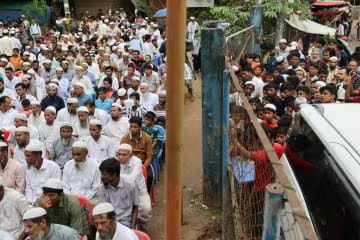
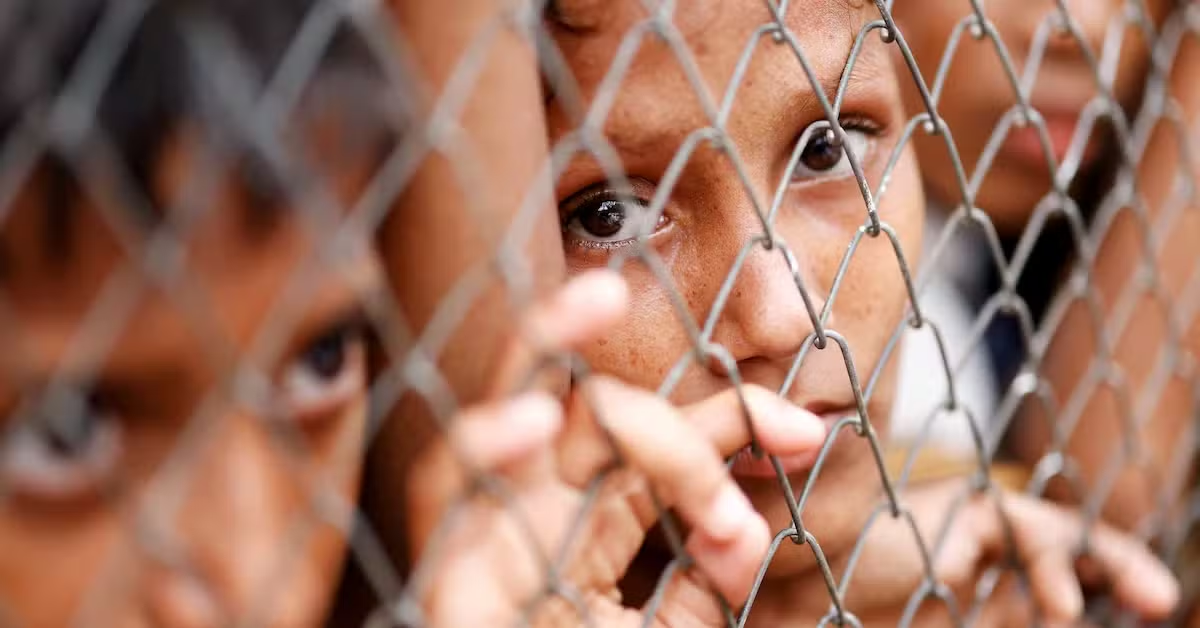
Thousands of Rohingya refugees in Bangladesh's Cox's Bazar camps cheered and wept as the verdict was read, some holding signs reading "thank you, Gambia".
The court ordered Myanmar to investigate and prosecute those responsible, allow the safe return of displaced Rohingya, and pay compensation, with the amount to be set in later proceedings.
Gambian Attorney General Dawda Jallow said on the steps of the Peace Palace, "We will stand with the Rohingya until justice is served."
Amnesty International Secretary General Agnes Callamard called the ruling "a historic and authoritative recognition of the atrocities committed against the Rohingya" and said it must serve as a wake-up call to the international community.
Callamard urged governments not to welcome Min Aung Hlaing "on the international stage" and to stop any transfer of weapons, security and surveillance equipment, and military assistance to Myanmar.
Human Rights Watch senior international justice counsel Maria Elena Vignoli called the ruling a "long-awaited recognition of the suffering the Rohingya have endured from Myanmar's military".
Sophia University professor emeritus Yasuhiro Ueki forecast that effective measures cannot be expected from the Security Council because of the vetoes of China and Russia, though he called the ruling historic.
The Gambia welcomed the ruling with "profound satisfaction" as "a historic day for international justice" and called on Myanmar to comply "fully and without delay".
The Organisation of Islamic Cooperation commended the judgment, saying it offered "redress for victims" and upheld "the principle of no impunity".
Myanmar's shadow National Unity Government said it respects the authority of the International Court of Justice and pledged to consider the court's findings and orders.
Women's Peace Network executive director Wai Wai Nu said the ruling had shattered the military's decades-long efforts to erase Rohingya identity, deny their existence and dismiss their suffering.
Rohingya activist Nay San Lwin said justice for the Rohingya means restoration of their citizenship, recognition of their identity and their safe and dignified return home.
UN Special Rapporteur on Myanmar Yanghee Lee called it a "deeply emotional day for all Rohingya people", adding that "justice has been decided, but not yet delivered".
The European Union urged Myanmar to fully implement the ruling without delay, saying compliance with the court's decisions is an obligation under international law, not optional.
By a majority of its 14 judges, the court found Myanmar violated the Genocide Convention six times, failing to prevent and to punish genocide.
UN Secretary-General Antonio Guterres welcomed the ruling as "a demonstration of international justice and a reaffirmation that impunity for such horrific acts must not stand".
Gambian Justice Minister Dawda Jallow said, "The victory belongs to the Rohingya. They survived, they testified, and today they were believed," crediting the courage of Rohingya who came to The Hague.
Rohingya refugee Umme Ruman said she celebrated with tears of joy because, for the first time, the world acknowledged what happened to her people.
Atlantic Council fellow Michael Kugelman forecast that the ruling will change the dynamics of negotiations between Bangladesh and Myanmar over the return of Rohingya refugees.
Australian Foreign Minister Penny Wong called on Myanmar to comply fully with the judgment and its obligations under international law.
UN General Assembly President Khalilur Rahman, also Bangladesh's foreign minister, visited the Cox's Bazar camps and urged Myanmar to take the Rohingya home in safety and dignity.
General Assembly President Khalilur Rahman urged Myanmar at the Cox's Bazar camps to take the Rohingya home and comply with the court's decisions in good faith, saying a written judgment does not mean justice in real life.
Myanmar's government dismissed the genocide ruling as unfair, presidential spokeswoman Khine Khine Soe noting that the nine-to-six vote was not unanimous.
Myanmar presidential spokeswoman Khine Khine Soe said, "Not all 15 judges agreed with the decision, it was not a unanimous ruling. I would say that it was unfair."
Asked for a response to the ruling, Khine Khine Soe said major world leaders had previously said "political bodies" similar to the International Court of Justice "should not abuse their judicial authority".
The United States said it was watching closely ahead of the verdict against Myanmar.
China criticised the genocide ruling a day after joining the United States and Russia in urging international bodies to refrain from abusing their jurisdiction.
Chinese foreign ministry spokesperson Guo Jiakun said the international community should make joint efforts to avoid complicating the issue, a day after Beijing said such rulings are "not conducive to the settlement of disputes".
Rights groups called for military and economic sanctions against Myanmar, targeting its oil and gas sector and the networks supplying weapons to its military.
The UN Security Council scheduled closed consultations on the ruling for 25 November 2026 and a private meeting for 7 December, at the United Kingdom's request.
International Crisis Group analyst Daniel Forti forecast no immediate Security Council action, saying, "The ICJ ruling will not alter China's calculations, and it is hard to imagine that either Beijing or Moscow would support any potential Security Council resolution that attempts to enforce the court's recommendations."
Justice for All called on the Trump administration to support a General Assembly resolution demanding Myanmar's compliance and urged sanctions targeting the country's oil and gas sector and the networks supplying its military.
Amnesty International Secretary General Agnes Callamard said, "The U.N. Security Council should impose a global arms embargo and refer the entire situation in Myanmar to the International Criminal Court."
Rohingya rights activist Yasmin Ullah said the judgment "will only mean something if governments act on it" and called on every UN member state to act, starting with sanctions against Min Aung Hlaing.
General Assembly spokesperson Melissa Summers said Assembly President Khalilur Rahman plans to hold an informal dialogue with the UN's 193 member nations on the ruling.