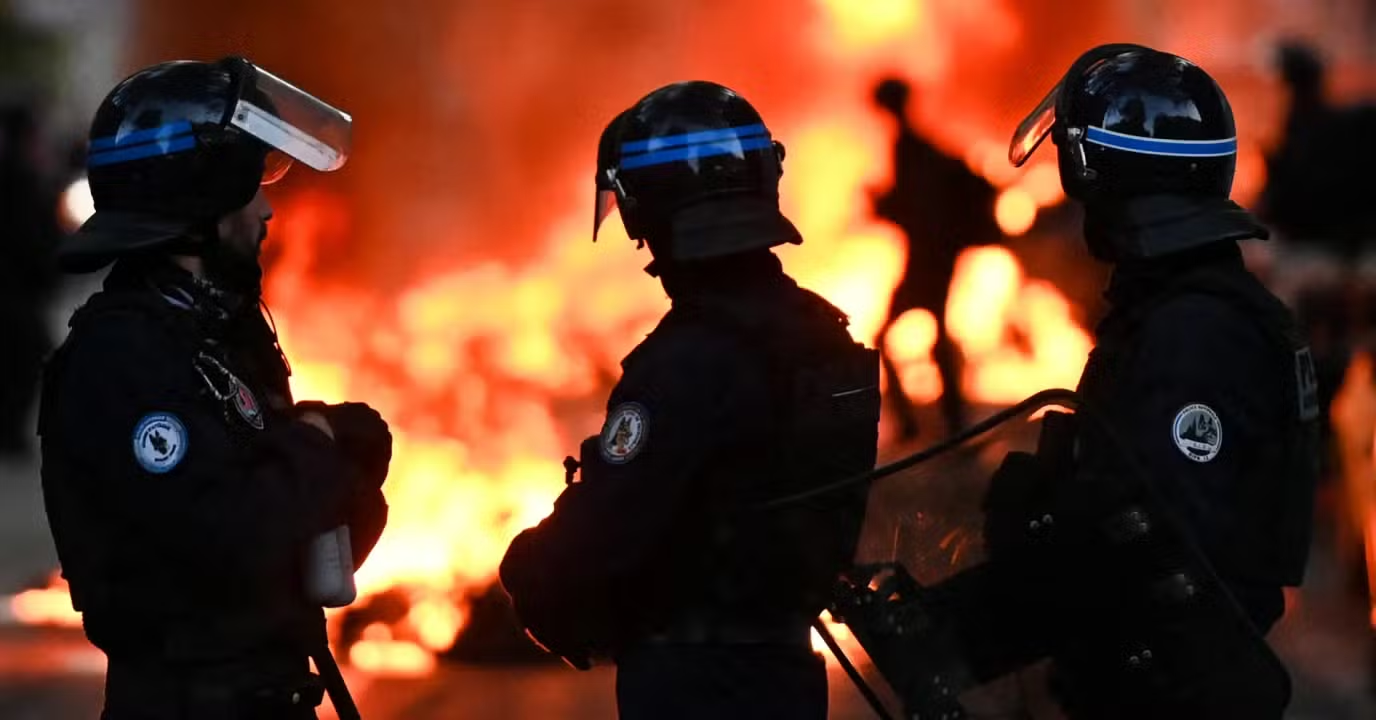
Photos: People rally across France over living costs, public services
A photo essay by AFP published on aljazeera.com on 22 November 2026 shows tens of thousands of people marching in cities across France for the sixth consecutive weekend, demanding better public services and venting anger over the rising cost of living and deepening inequality. The movement began in mid-September 2026 when high school students called for improved learning conditions, and has since grown into a nationwide campaign against soaring prices, failing public services and police brutality. The protests have been largely peaceful but marked by sporadic violence on the margins and repeated accusations of police brutality. Attendance figures differ: organisers reported 150,000 protesters on Saturday, down from 800,000 at the first weekly demonstration on 17 October 2026, while France's interior ministry put the turnout at 82,500 and said numbers had significantly declined.
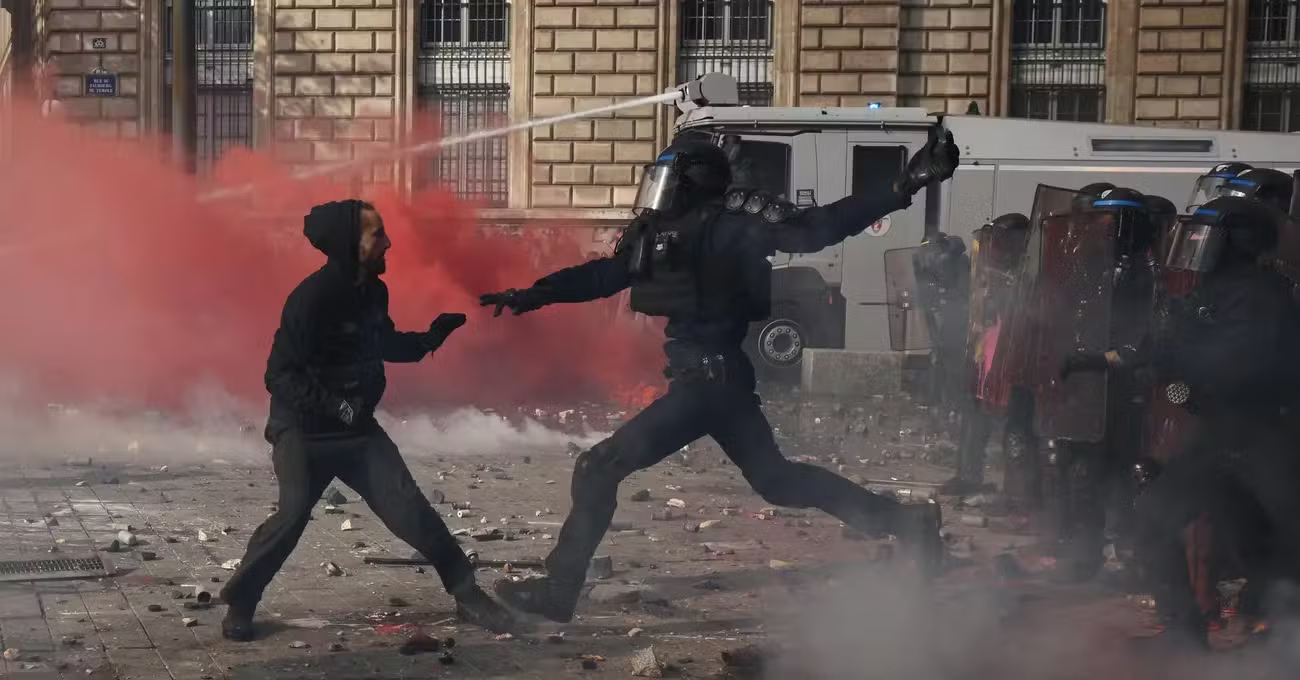
Polizeigewalt in Frankreich: Sie wollen die Abschreckung, sie bereiten Le Pen den Weg
A Zeit Online commentary on police violence in France reports a string of severe injuries to teenagers during weeks of high school protests. On 28 September, an officer shot 14-year-old Eden with a grenade launcher from close range, shattering nearly all his upper teeth, tearing out several lower ones, and breaking his jaw in two places; he had been demonstrating that morning for better schooling, like thousands of students across France. Days later, 16-year-old Maël permanently lost the sight in one eye to a police rubber bullet in Tours, and a grenade shredded Evan's hand in Lens as he blockaded his school. The title draws the conclusion that the authorities want this deterrence, and are paving the way for Le Pen.
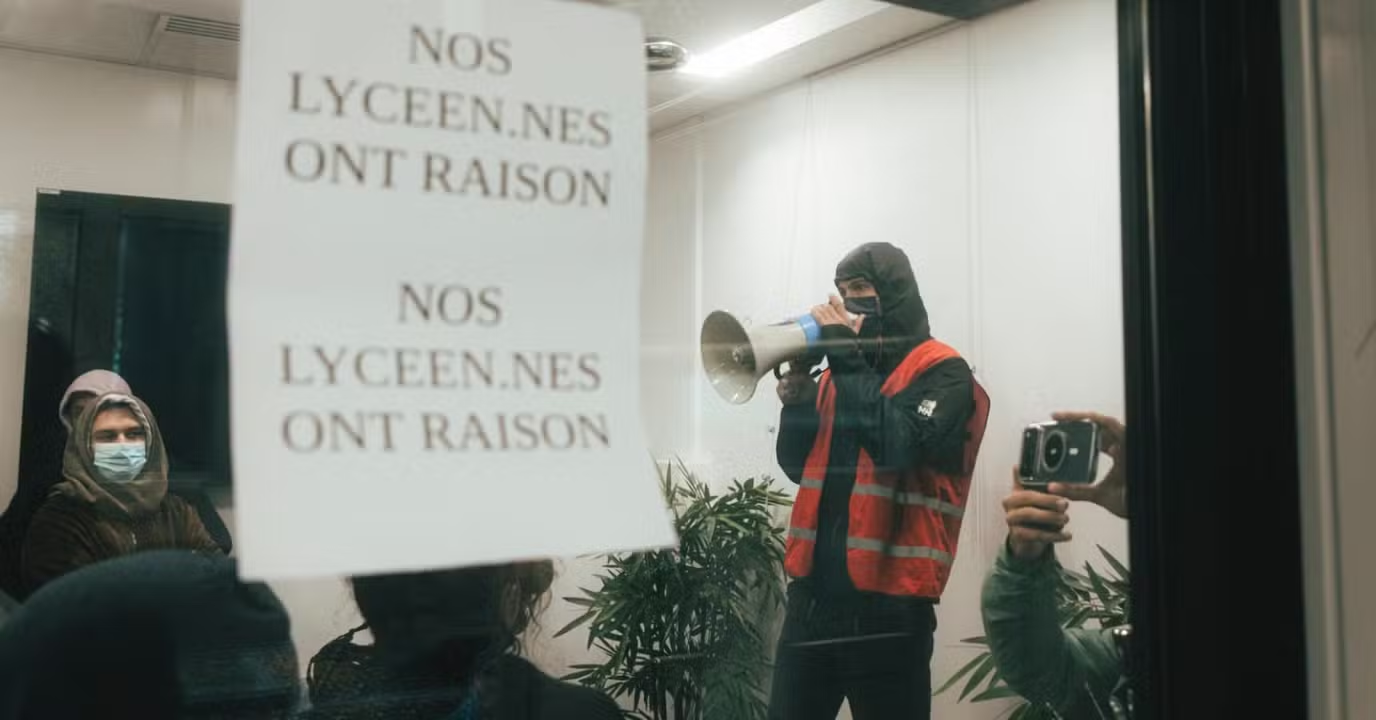
Mobilisation lycéenne : les introuvables preuves des accusations de « complicité » de violences portées par Matignon à l’encontre d’enseignants
Prime Minister Sébastien Lecornu accused a small minority of lycées of planned violence, saying some people within them were complicit, and warned that accomplices, including national education staff, would be prosecuted. Interior Minister Laurent Nuñez said on LCI that investigations were under way and that cases of possible staff complicity had been reported. Media outlets citing an executive source put forward at least 40 suspected cases, but the authorities refused publicly to give a single supporting example, and the education community reacted with shock and indignation.

"Comment on se reconstruit ?" : dans les plaies des manifestants gravement blessés
An AFP feature on TV5MONDE Info follows protesters seriously injured by law enforcement during France's student and social movement as they ask how to rebuild. An AFP count based on testimonies, lawyers, and NGO censuses finds at least 31 people seriously injured, 16 of them maimed, while the authorities give no official tally and the police inspectorate has opened more than 140 investigations. Among those profiled, Pranny Ouch lost part of a leg to what she and her lawyer believe was a grenade shard in Paris, podiatrist Rémi Aubert says police batons and kicks in Marseille cost him eight teeth, and an activist called 'Oliv' carries a 6 cm crater in her leg from a grenade wound. Their lawyers plan to take Interior Minister Laurent Nuñez before the Cour de justice de la République for authorizing 'maiming' weapons, which he defends as legal and indispensable.
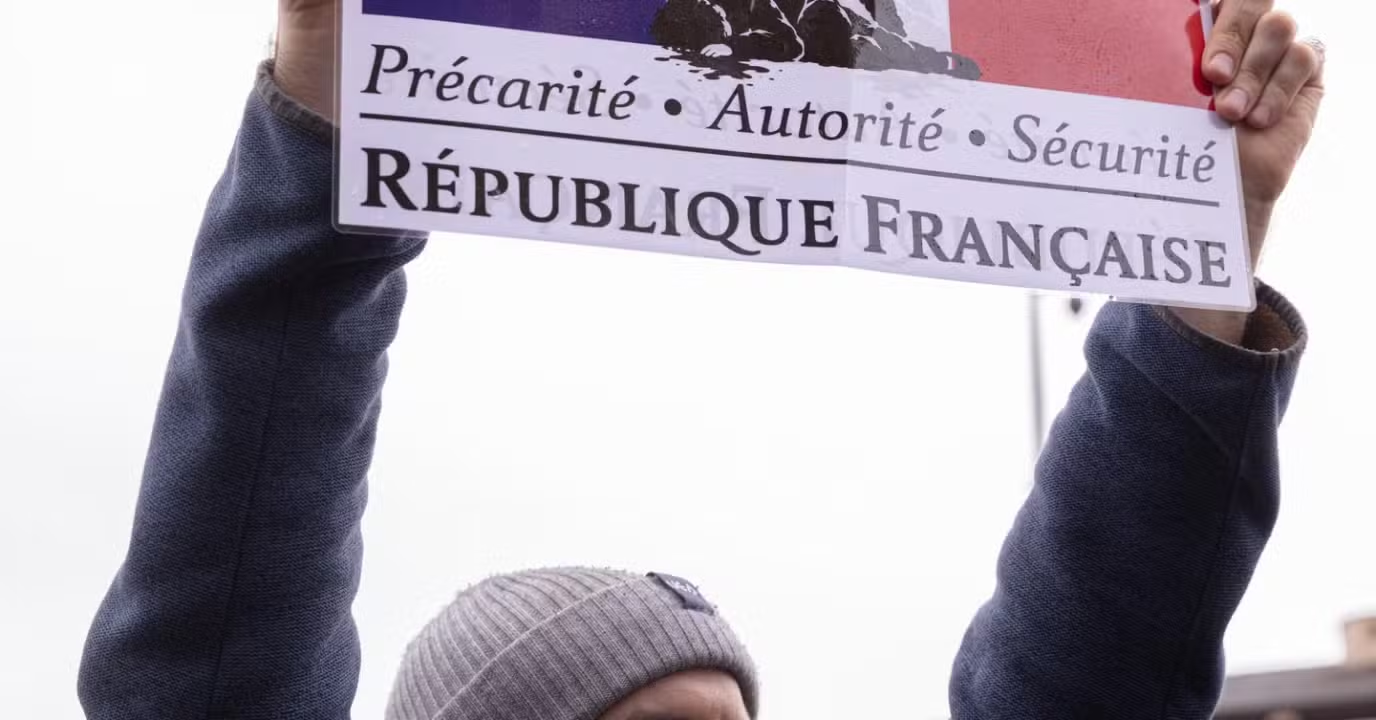
Mouvement lycéen : l’impossible débat sur le « maintien de l’ordre à la française »
Le Monde examines the contested debate over French-style policing during the high school movement, as dozens of videos daily denounce police practices and 183 investigations have been opened. The Interior Ministry reports 2,829 injured officers, a count criticized for lacking detail, while videos claim severe injuries to demonstrators and forces point to protester violence.
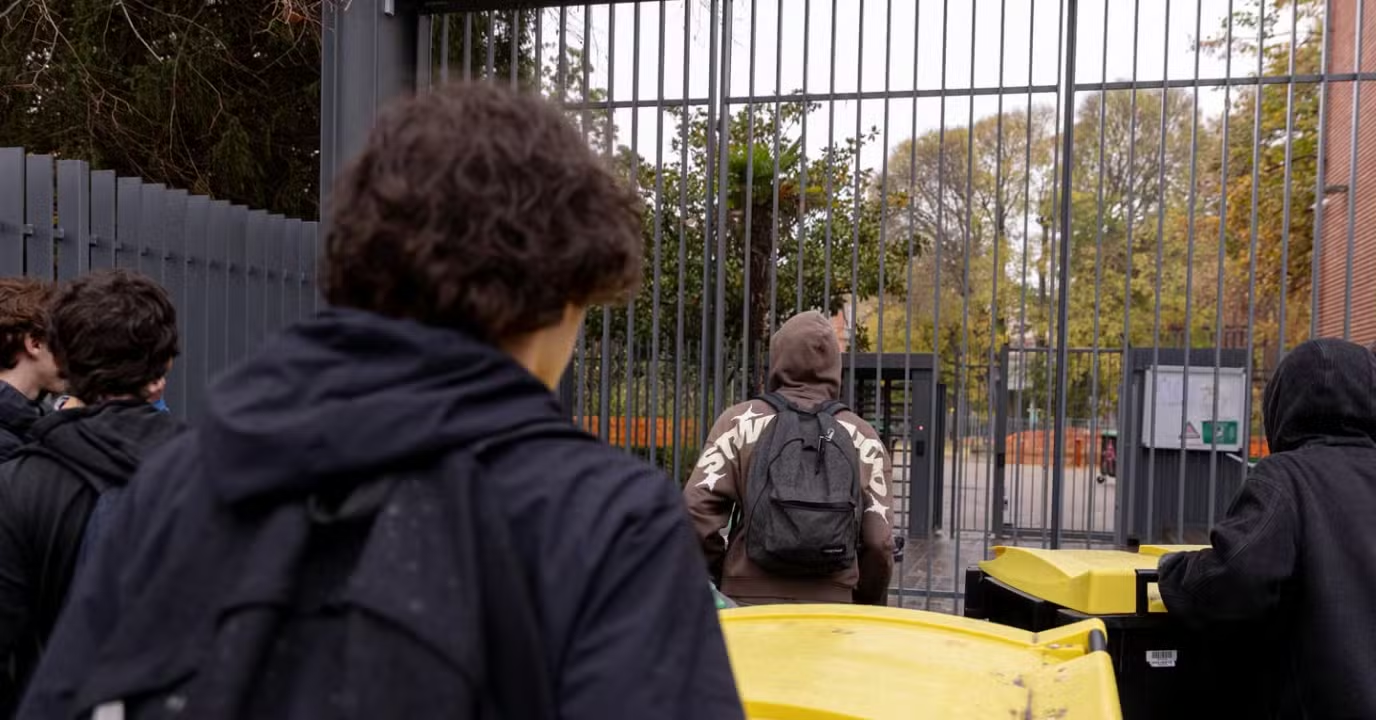
Mobilisation lycéenne : 3 000 conseils de discipline entre septembre et le 1er novembre, selon le ministre de l’éducation nationale, Edouard Geffray
Education minister Edouard Geffray says about 3,000 disciplinary councils took place between September and 1 November over violence committed during the high school movement, with more than 1,000 criminal complaints filed. In a telegram sent the Friday before, the government had asked academy rectors to strengthen and systematize disciplinary sanctions against students and ministry staff taking part in blockades. Geffray says about fifteen students in Paris were permanently expelled, and that the blockade situation has become residual, while the still-mobilized high school union USL put forward 350 high schools at a standstill out of 3,700.
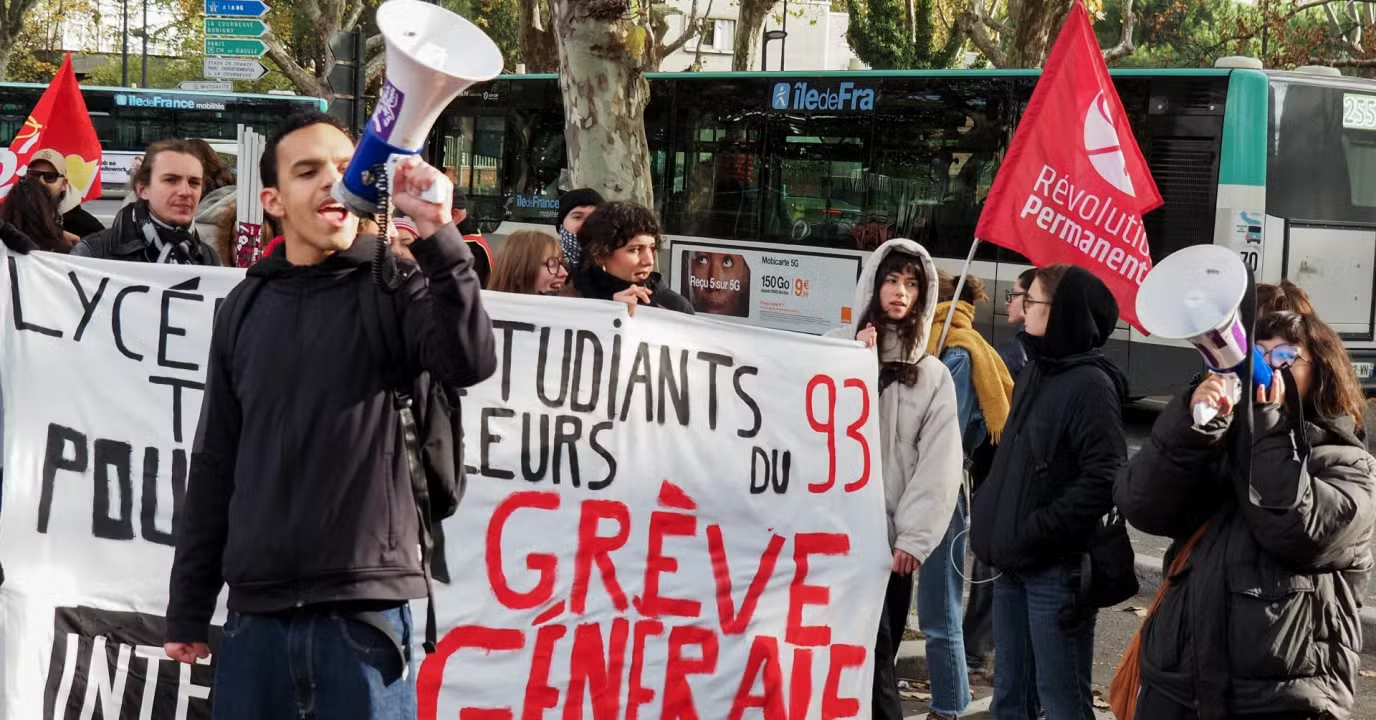
Young French students who see ‘no change’ keep up protests in Paris suburbs
Al Jazeera reports that young French students, especially in Paris suburbs like Saint-Denis, are keeping up school blockades and protests over poor classroom conditions — including rats, dirty facilities, and scarce resources — months after the movement began at a Creteil high school in September 2026. Paul Eluard's head teacher stepped down 'as a safety precaution' after teachers accused him of letting police arrest a student, while President Macron says the government will respond 'in the most concrete way possible' and MP Louis Boyard of France Unbowed, accused of exploiting the movement, calls it organic and the students justified.
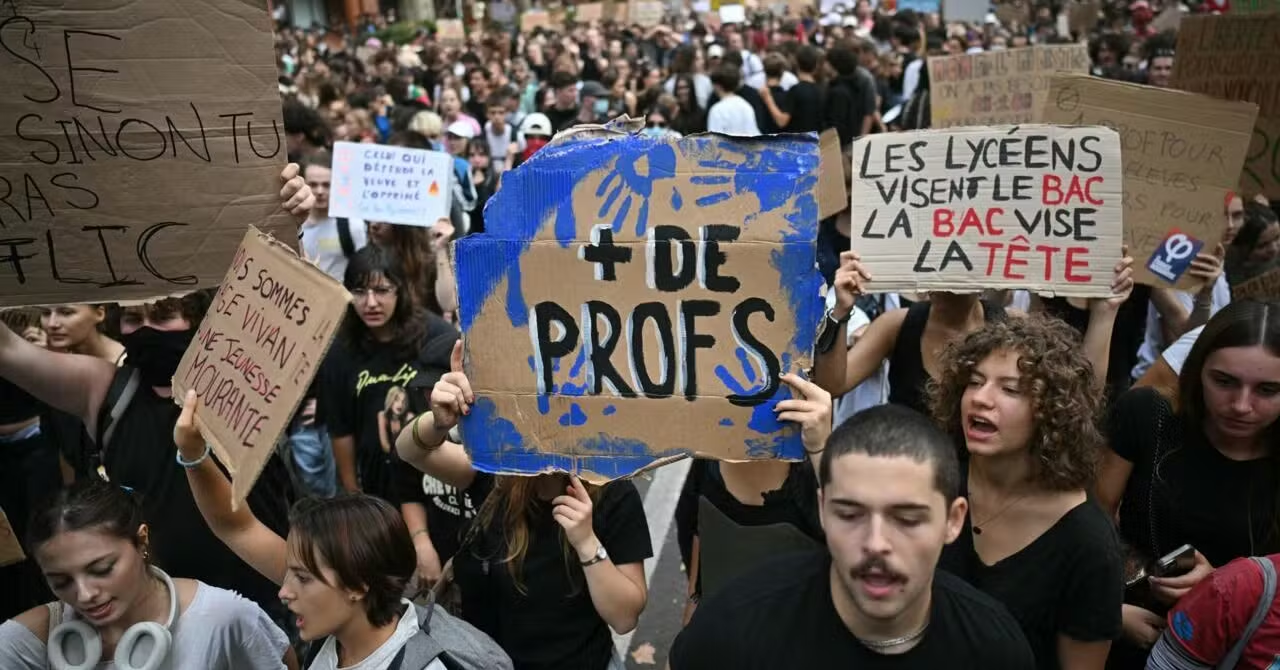
Dans les lycées, le personnel éducatif éprouvé après deux mois de mobilisation
France 24 reports that French high school staff are worn down and divided after two months of pupil mobilization against learning conditions, as unions join a new day of mobilization on 17 November 2026. At the lycée Jean-Jacques Rousseau in Sarcelles, reopened since early November, management has introduced timetables announced one or two days ahead to limit how many pupils are present at once. Teacher Gaël Bonneau-Blescel, appalled by the handling of the situation, calls the consultation with staff almost nonexistent and recommends half-capacity operation, as used after Covid-19, saying the administration cannot hear it because it treats hours as owed to pupils rather than lessons. A general-education teacher at the lycée René Cassin in Gonesse describes a daily police presence, with officers blocking gatherings and searching bags since the Toussaint holidays, and says about ten pupils have been arrested, many leaving devastated or humiliated. Thomas, an education assistant at Sarcelles, says staff feel taken for human shields, doing untrained missions from crowd control to putting out bin fires, and some colleagues accuse others of encouraging the firework mortars that are a point of tension. Unions denounce minister Sébastien Lecornu's claim that a logistics plan to deliver mortars is being set up inside some lycées.
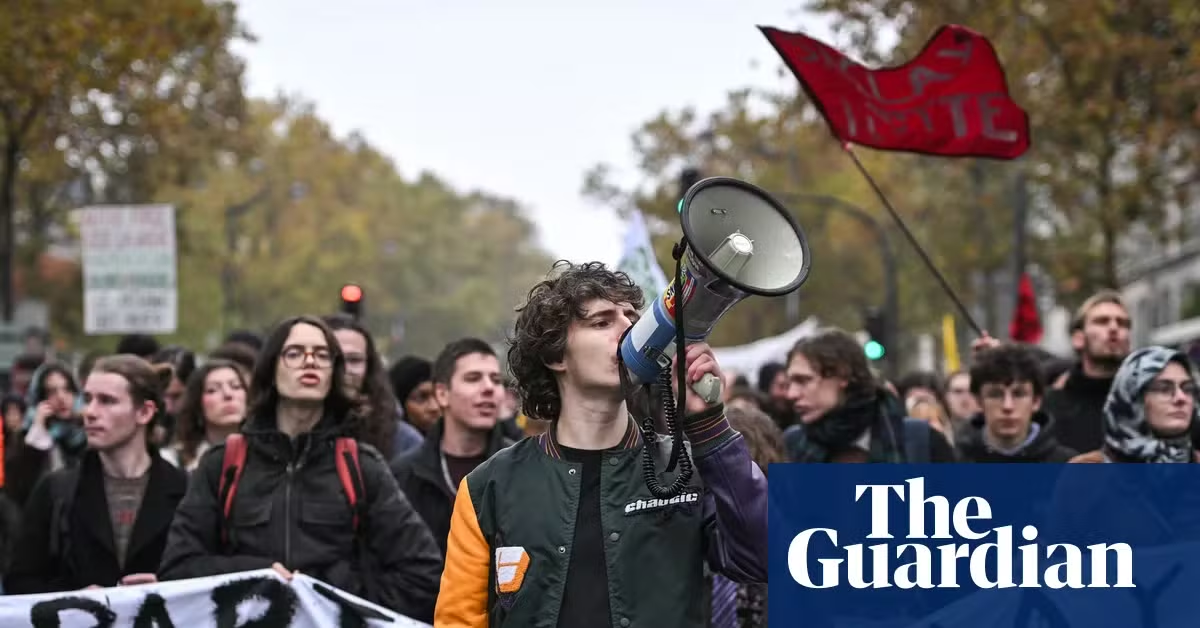
‘We need to get back to class’: some teachers lose patience as France enters its eighth week of student protests
The Guardian reports that some French teachers are losing patience as student protests over school conditions – repairs, replacement teachers, overcrowding and university admissions – enter an eighth week, with hundreds of schools barricaded, thousands marching in Paris, and 360 pupils and 245 staff injured. Students like 16-year-old Alex, who rises at 4am to build bin blockades, say demonstrations are the only way to be heard, while teachers such as Julien Roy of Lycée Balzac in Tours describe exhausted staff, pupils scared of police, and warn the crisis will leave children bitter and broken unless France de-escalates and returns to class.
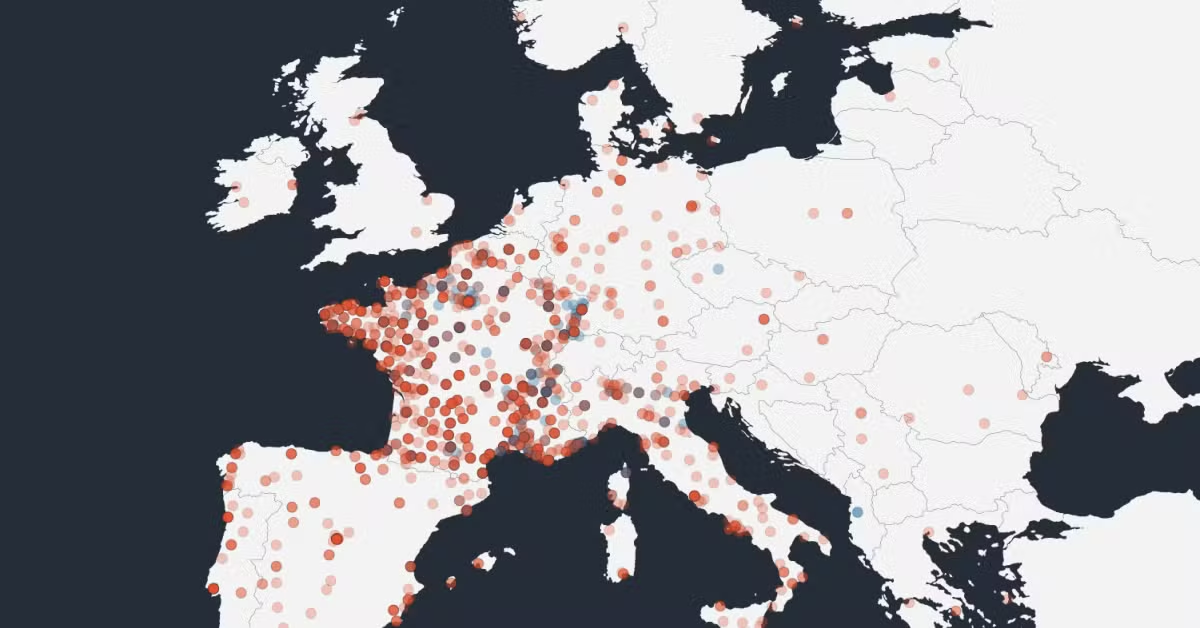
Mapping how France’s protest wave spread across Europe
Al Jazeera maps France's 2026 protest wave, which began in mid-September with students over overcrowded classrooms and grew into cost-of-living demonstrations that have spread to 30 other European countries. Police used tear gas in Paris and Lyon, a teenager lost a hand in Lille, and UN experts called France's arrests of several thousand mainly minors disproportionate; ACLED counted more than 1,200 protests and riots in France by 30 October, with the rate at almost 66 a day.
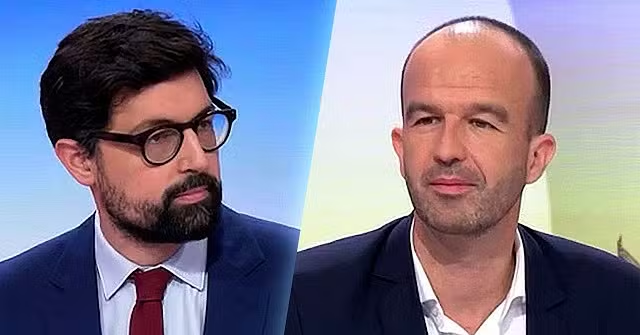
🔴 Sortie de notre programme, mobilisations sociales : Manuel Bompard, invité de France info !
In a France Info interview less than six months before the first round of the presidential election, La France Insoumise coordinator Manuel Bompard presses the government to answer the country's social mobilizations with rapid wage increases, calling the huge demonstrations the most numerous since the movement against retirement at 64 and urging Sébastien Lecornu to propose a genuine boost to the minimum wage at his social conference. He warns that if Lecornu forces his budget through with no votes, for example with a 49.3, La France Insoumise will file a censure motion to bring down the government, and he says left-wing leaders' demands for the Prime Minister's resignation mean the question of his departure, and even the President's, arises. He argues the government has its own levers, raising the minimum wage and revalorizing civil servants' index point, frozen for nearly ten years, rather than only telling employers to make efforts. The interview coincides with the release of the party's programme 'L'Avenir en commun' as a book with 1,069 proposals, financed by making the richest and very large enterprises contribute through the Zucman tax and the solidarity tax on wealth, and with a meeting at le Bourget the next day where Jean-Luc Mélenchon will speak.
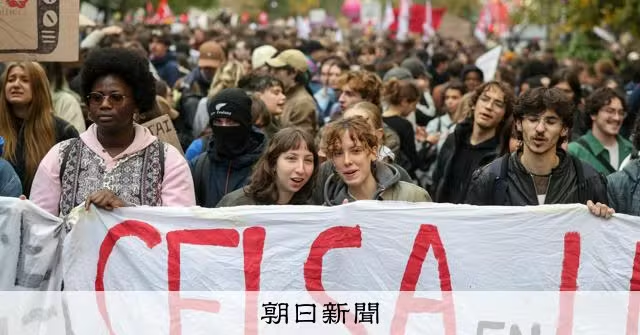
フランスのデモに57万人「若者が目覚めさせた」 世代超え最大規模:朝日新聞
An Asahi Shimbun news article reports that demonstrations across France on 5 November 2026, begun by high school students in September over education conditions, drew 575,000 people and grew into the largest cross-generational protest yet, with unions, workers, and retirees joining. Commenters Yu Sato and Aki Kajiwara note the movement's spread and young people's anger at having their futures decided by politics, as Professor Sylvain Kahn of Sciences Po is interviewed on what underlies the protests.

