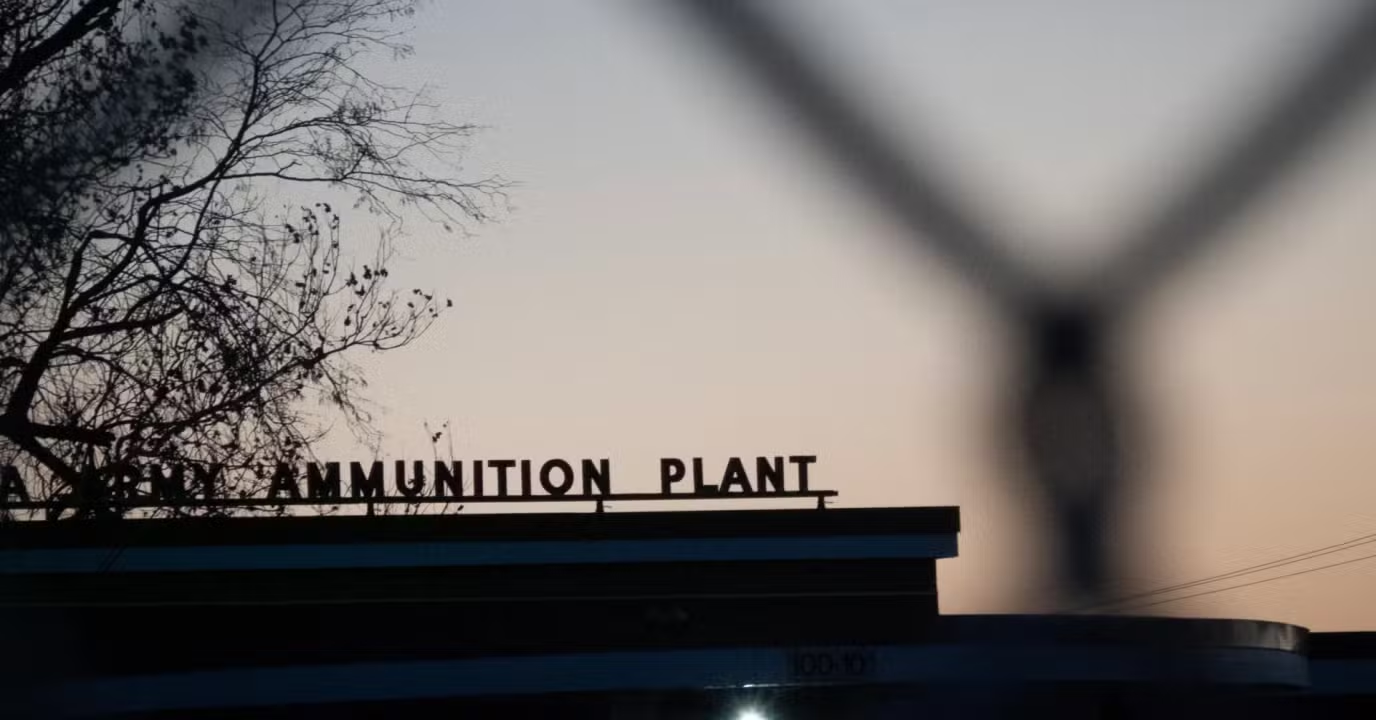
Justice Department says Army can detonate Iowa lead azide without EPA permit
Why is the US Army detonating lead-rich explosives in Iowa?
aljazeera.com· 9h
The dangers of lead and how to minimize exposure
newsnationnow.com· 11h
The Army Plans to Blow Up Tons of Toxic Explosives. It Rejected a Safer Option.
nytimes.com· 11h
Here’s what we know about the Army’s planned detonation in Iowa after a judge ordered temporary pause | CNN
cnn.com· 18h
DOJ drags Army into court standoff with explosive warning for red state: report
rawstory.com· 26h
Trump Administration Says Army Can Blow Up Lead-Laced Explosives
Colonel says controlled detonation ‘safest’ despite Iowa blast delay
Trump Administration Says It Can Detonate Iowa Lead Despite Court Order
washingtonsun.com· 29h
Court Temporarily Blocks Trump EPA's Permit for Army to Detonate Toxic Lead Explosives in Iowa Town | Common Dreams
commondreams.org· 33h
Court grants request to prevent military from detonating bomb-making chemicals in Iowa
pbs.org· 34h
Outrage, questions swirl as Army delays blowing up stockpile of toxic lead azide
arstechnica.com· 34h
Detonation of 5 tons of lead azide in Iowa indefinitely suspended by court order
nbcchicago.com· 34h
Court stay prevents US Army from detonating bomb-making chemicals in Iowa
apnews.com· 34h
Judge halts Army’s plan to detonate 5 tons of bomb-making material as Iowa residents worry about lead exposure | CNN
Detonating A Huge Pile of Lead Azide. Really.
science.org· 36h
Army Postpones Detonation of Toxic Lead Azide in Iowa After Public Outcry
truthout.org· 36h
Army's plan to blow up unstable explosives faces another setback
usatoday.com· 38h
Iowans say warning Army is going to blow up degraded lead came too late
washingtonpost.com· 43h
Army postpones plan to detonate nearly 10,000 pounds of lead azide until Monday
abcnews.com· 2d
Army Delays Toxic Lead Detonation to Monday After Pressure From Iowa Leaders
The Army is detonating a toxic "lead bomb" in Iowa. It forgot to warn people.
motherjones.com· 2d
'Madness': Chaos after Trump admin delays alert about potentially toxic blast
Army blast postponed amid health fears, evacuations
Iowans brace for lead dust cloud as Army plans to detonate 5 tons of bomb-making chemicals
Just Rinse It Off, Army Says Before Blowing Up Five Tons of Lead Compound
theintercept.com· 2d
US army plan to detonate bomb-making chemicals has Iowa residents bracing for lead dust cloud
theguardian.com· 2d
Iowa Leaders Only Got Five Days' Notice of the Army’s Plans to Explode Toxic Lead
Iowa residents brace for a lead dust cloud as Army plans to detonate 5 tons of bomb-making chemicals | CNN
US Army delays detonation of bomb-making chemicals in Iowa amid public safety concerns
chicagotribune.com· 2d
Army Warns Iowa of Toxic Cloud as It Prepares to Blow Up Old Ammo
Iowa residents brace for a lead dust cloud as Army plans to detonate bomb-making chemicals
nbcnews.com· 2d
Army evacuates small Iowa town ahead of detonation of lead-based explosive
youtube.com· 2d
The US Army’s plans to detonate 5 tons of bomb-making chemicals is worrying Iowa residents
Army's planned detonation in Iowa raises concerns over lead exposure
U.S. Army delays planned detonation of unstable explosives in Iowa that could send toxic dust into Illinois
cbsnews.com· 3d
Iowa town to evacuate Friday for Army’s controlled lead detonation
Iowans Brace For Lead Dust Cloud As Army Plans To Detonate 5 Tons Of Unstable Chemicals
huffpost.com· 5d
The Army plans to detonate 68 barrels of lead azide, about 9,700 pounds including roughly 6,900 pounds of lead, stored for more than 20 years at the Iowa Army Ammunition Plant. Inspections in early 2026 found the ethanol and water keeping the primer chemical stable had evaporated and crystals had formed, leaving it too volatile to move, so experts decided to blow it up in place.
Air-dispersion modeling showed a potential lead plume stretching nearly 100 miles from the plant, later revised down to 60 miles, and school districts including Mediapolis and Danville canceled classes for the planned Friday, November 20 blast. Facing complaints that federal agencies had known of the deteriorating stockpile since April while the office of Iowa Governor Kim Reynolds was briefed only on November 16, the Army postponed the detonation to Monday, November 23.
The Iowa Environmental Council and the Sierra Club's Iowa chapter sued to halt the blast, and the Eighth Circuit Court of Appeals stayed the EPA's emergency permit on November 19 pending their emergency motion. Attorneys for the federal government responded that the Army can treat hazardous waste without a permit when there is an immediate threat to health, safety, property, or the environment, and said they would answer the motion on or before November 22.
The plan itself has drawn scrutiny: the Army hired MuniRem Environmental to neutralize the chemicals, then canceled the contract citing safety concerns, though a contracting officer told the firm the decision was not based on deficiencies in its approach. An Army assessment said the blast would cause no significant health impacts, but the Army offered no studies backing its advice to hose lead dust off property.
White House and Pentagon officials are said to be unhappy with Acting Army Secretary Adam Telle over the short notice given to state and local officials. Illinois Governor JB Pritzker sought a commitment of federal help, but the Trump administration denied federal disaster funding to Illinois, while Reynolds activated Iowa's Emergency Operations Center late Friday.
As of the latest word, the Army still intends to carry out the detonation on Monday, with residents of about 80 homes asked to evacuate and modeling showing parts of western Illinois across the Mississippi River could be exposed to lead dust.
The U.S. Army plans to detonate about 5 tons of unstable bomb-making chemicals at the Iowa Army Ammunition Plant, with the blast set for Friday.
Some Iowa residents worry that a cloud of lead dust from the detonation could cause environmental contamination and health problems.
Officials recommend that some residents of nearby Middletown vacate the area or, if they cannot leave their homes, stay inside with windows and doors closed.
The Army asks residents to vacate Middletown's City Park neighborhood from 8 a.m. to 2 p.m. on Friday during two controlled detonations at the plant, partly over concerns about broken windows.
The Army says the operation to dispose of degraded lead azide is allowed by the Environmental Protection Agency.
Justine Barati, a public affairs specialist for Army Sustainment Command, says inspections in February and March found the stored lead azide, a primer chemical in munitions, unsafe to use or even move, so experts decided to detonate it in place.
Barati says the explosion could send lead particles as far north as Maquoketa, Iowa, and that leftover residue can be removed by hosing off property.
The Army says it is using water sprays, wetting soil before and after the project, removing impacted soils, monitoring the area and the air, and offering residents shelter at the Armed Forces Reserve Center in Middletown.
The Army says residents will hear a loud noise, feel vibrations from two consecutive rapid detonations, and see a plume of dust.
Middletown resident Daren Paul Morris says of mowing his grass, "I don't know if I would mow the grass for the first time until it rained good. You know you don't want to kick up all that dust."
The U.S. Army delays the detonation until Monday after elected leaders and environmental groups raise concerns about a plume of toxic lead dust spreading across parts of Iowa and Illinois.
Acting Secretary of the Army Adam Telle says in a post on X that public safety is the Army's top priority and that he has directed Army Materiel Command to postpone the detonation at the plant until Monday, November 23.
Telle says the postponement holds the detonation until the latest possible moment before a forecasted temperature drop that would risk further destabilizing the material.
The Army prepares to detonate 68 barrels of lead azide stored for more than 20 years at the plant, with residents of southeastern Iowa and northwest Illinois warned about possible lead dust exposure.
Justine Barati says the barrels became drier and more volatile than expected and cannot be safely transported.
Army air-dispersion modeling shows a potential airborne lead plume extending close to 100 miles from the plant.
Some schools in the plume path cancel classes scheduled for November 20, 2026.
Barati confirms there are no plans to offer lead blood testing related to the detonation.
Residents whose property is damaged may submit claims to the Army, and some property owners may be asked to allow environmental sampling on their land.
University of Iowa researchers Drew Latta and David Cwiertny begin independent monitoring research of the detonation.
Toxicologist Jennifer Sample recommends the state of Iowa close all schools in the plume path.
Sample says dogs allowed outside could carry lead dust back into homes and should be washed before returning indoors, and that wildlife could absorb lead particles.
Drew Latta says there is a lot of unease and that if the Army has evidence that can make it go away, it needs to communicate it better, and quickly.
David Cwiertny, director of the University of Iowa's Center for Health Effects of Environmental Contamination, writes that hosing down lead-containing dust does not mean it is "magically gone."
Barati says projected exposures would be minimal and temporary, the equivalent of living in a mining town for one hour.
Army officials recommend people in potentially affected areas stay indoors with windows closed, set ventilation systems to recirculate air, avoid travel through the area, and wet-clean surfaces children may contact.
The Environmental Protection Agency approves an emergency permit on November 13, 2026, requiring the Army to track air and dust dispersion and notify the public five days in advance.
The notification goes out on Sunday, November 15, to communities as far as 100 miles away.
The Army shared details at a public meeting in Middletown in October 2026, advising that a detonation was planned for an unspecified November date.
Mediapolis city officials, approached in late October about allowing soil, water and air testing, learn of their potential exposure only on November 15, when the map puts the city dead-center in the dust exposure area.
Mediapolis Community School District announces on November 17 that it will close school on November 20.
The Mediapolis public library will close, the fire department will hose down playgrounds, the EPA will run a command center in Mediapolis to sample air, soil and water, and the city will conduct its own testing.
Iowa Governor Kim Reynolds' office says it was first briefed on the public advisory on November 16.
The Army says it assembled a panel of experts in munitions chemistry, engineering and environmental safety to draw up the detonation plan.
The barrels of lead azide are surrounded on all sides by concrete buried under soil, with sand barriers stacked two stories high.
EPA documents show alternatives such as chemically neutralizing the drum contents were considered, and officials say any plan involving handling the drums would increase the probability of accidental, fatal detonation.
Environmental and public health officials in Illinois urge the military to conduct comprehensive sampling in Illinois after the detonations.
Mediapolis Deputy City Clerk Amy Stucker says, "The biggest issue we're having is the lack of information."
Patrick O'Shaughnessy of the University of Iowa says it is still unknown how much lead dust will end up in the atmosphere and on surfaces, and that he is particularly concerned for toddlers.
Officials expect the dust from the detonation to linger for no more than one hour, depending on wind speed.
Barati says the soil will be sprayed with water and the air misted during the detonation to keep the majority of lead on Army property.
Army inspectors found in March that the ethanol and water keeping the lead azide stable had evaporated and crystals had formed, after the material sat at the plant for two decades with only annual inspections.
The Army says it is monitoring weather patterns and will update its exposure maps regularly before and after the detonation.
Middletown's former mayor describes the highly explosive, highly volatile substance as an open emergency for locals.
Correspondent Zackary Smith calls the Army's failure to communicate with the region a real failure, saying people outside Middletown learned of the detonation from the news and social media.
Zackary Smith says the lead dust could endanger not only people but also crops, farm animals, and household pets.
Middletown residents learned in March 2026 that the Army needed to dispose of several dozen barrels of lead azide after the plant paused operations as part of a review and the degraded material was discovered.
Justine Barati says of moving forward with the detonation, "We're really concerned about the weather situation. We're really concerned that it will detonate on its own."
The Army issues an updated prediction late Wednesday that lead dust could travel up to 60 miles, down from its earlier estimate of 100 miles.
In an environmental assessment released Wednesday, the Army says the blast would cause a brief loud noise and a short-lived cloud of dust and lead particles and would not result in significant health impacts to the public or the environment.
Air monitors have been set up and the Army says it will publish updated estimates of the plume's trajectory on the Friday morning of the detonation.
The Army Corps of Engineers is conducting predetonation soil sampling for about 150 local residents who requested it and will offer testing after the blast, with remediation if testing exceeds regulatory thresholds.
The EPA says on its website that the explosion risk from the material presented "an imminent and substantial threat to human health and the environment."
The Army says destroying the stockpile in place is the only responsible option and "restores vital military-industrial readiness."
Army spokeswoman Lori McFate says rain forecast for the Saturday after the blast could help clean lead dust off surfaces, saying "We are all banking on a good wash."
Jill Holler of Muscatine, within the projected plume path, says she will evacuate with her family and asks how the detonation would affect the crops and cows on the nearby family farm.
Patrick O'Shaughnessy expects deposited lead levels to be very low but highest near the detonation site, and urges testing to determine lead deposited on foliage.
O'Shaughnessy says strong winds "will actually spread it further" and that no one really knows how the situation will work out.
Erik D. Olson of the Natural Resources Defense Council says he would evacuate and that the idea there is no alternative to open detonation of the stockpile is staggering.
Jacob Hamblin says the Army and the EPA appear to be avoiding a future disastrous explosion with a controlled one now but are courting long-term controversy over health effects.
Iowa Governor Kim Reynolds calls for the detonation to be delayed as the planned Friday blast approaches.
The Defense Department and the EPA have known since at least April 2026 that the Army was storing 68 barrels of degrading lead azide at the Middletown plant.
The Army applied in October 2026 for an emergency permit to detonate the lead explosives, determining the risk of uncontrolled explosions was too great to leave the barrels in place or move them.
The Army has not said publicly what efforts were made to address the lead explosives between April and October 2026.
The Illinois EPA says the regional federal EPA office in charge of permitting the explosion did not notify the state about the planned detonation.
Iowa State University's extension office is providing soil-test kits to residents and recommending farmers remove livestock from grazing areas in the plume's path and keep them inside after the explosion if possible.
Dr. Sameer Vohra, director of the Illinois Department of Public Health, says Illinois residents who may be affected can stay safe by staying indoors and keeping windows closed for 24 to 48 hours.
Mason Mauro, a spokesman for Governor Reynolds, says all planning and permitting for the detonation have been managed at the federal level by the Army with the EPA, which engaged local public health and emergency management officials to assist with community awareness.
The Danville Community School District, a few miles northwest of the plant, will close on the day of the detonation.
An updated plume map no longer puts Mediapolis, a city of nearly 2,000 residents, in the dust plume's path.
Lt Col Daniel Nosse, commander of the Iowa Army Ammunition Plant, says, "The safety of our people and our neighbors is non-negotiable."
Danville Superintendent Pat Wallace writes that he initially intended to keep schools open but that enough uncertainties made canceling "the most responsible decision," saying, "I am not suggesting that the detonation will result in unsafe conditions. The reality is that we simply do not know exactly what conditions will look like Friday afternoon."
Asked what scientific evidence supported its advice that residents hose lead dust off their property, the Army provided no studies or technical analysis.
Asked what concentrations of airborne lead it expected in surrounding communities, the Army did not provide specific projections.
An Army handout prepared for an October 15 community open house acknowledged the detonation could damage nearby homes and contaminate surrounding property.
Justine Barati says in a Radio Iowa interview that if people have concerns about lead azide being on their property, all they have to do is hose it off and it's gone.
Patrick O'Shaughnessy says the Army's plume model is basically a colored blob on a map that does not show the projected concentration of settled dust, and recommends testing surfaces, including playground equipment, every three or four days for about a month.
O'Shaughnessy says the airborne plume could dissipate within hours, potentially ending the inhalation hazard by the evening of November 20, but the public does not know how long to take precautions.
Peter S. Thorne of the University of Iowa says hosing lead dust off surfaces will move it into soil or surface water and will not eliminate the contamination, calling the situation a case of neglect that left only bad choices.
University of Iowa researchers are preparing to independently assess the detonation's consequences, including measuring potential lead contamination and conducting their own plume modeling.
Barati says the Army does not anticipate long-term health impacts from the detonation.
Dr. Robert Mixsell of MercyOne Genesis Convenient Care warns significant lead exposure can cause "abdominal pain, headache, fatigue, irritability, and cognitive changes."
Zachary Smith says many residents are upset by the short notice, learning of the airborne lead risk with only five days' warning after the Army learned months ago that the material had become unstable, and notes the Army released its report of alternative options only during the afternoon.
Acting Army Secretary Adam Telle says public communication is essential to public trust and the Army will continue to actively engage with state and local officials throughout the region to distribute accurate, up-to-date information.
An Army command spokesperson says mitigation measures including water spraying and soil wetting are planned to reduce lead exposure and would not be possible if the explosives detonated unexpectedly.
Backlash to the Army's detonation plan took off on November 19 over reports that federal agencies had known about the deteriorating explosives for months while Iowa leaders learned of the plan only days before.
Reporter Jeff Stein calls the story a "completely crazy story," highlighting the gap between when federal officials learned about the explosives and when Iowa leaders got word of the planned blast.
A Pentagon correspondent writes of the blast's timing, "Best we can do is days before Thanksgiving."
Rachel Cohen, communications director for Senator Mark Warner, writes that mothers on Reddit are freaking out about the blast and that she too would absolutely lose her s, t.
Iowa writer Raymond Baker declares the situation "Madness!"
The Iowa Environmental Council and the Sierra Club's Iowa chapter file a lawsuit to halt the detonation on the Thursday before the planned Friday blast.
The Department of Defense had concerns about the deterioration of an Iowa-based lead azide stockpile as early as 2004, though it is unclear whether it was the same stockpile.
Iowa Republican state Representative Gary Mohr says he was swamped with messages from confused and scared constituents, saying "The Army is doing it for their benefit, but I'm not sure they are looking at it for the safety of Iowans."
Iowa Representative-elect Lindsay James writes that "If basic requirements for safety are not being met, this detonation should not go on as planned Friday."
Iowa Senator-elect Josh Turek says he is pushing for answers on the detonation, writing that as someone born with spina bifida due to his father's exposure to Agent Orange he is deeply concerned about Friday's planned detonation in Middletown.
Army representatives tell Middletown residents that "Packing and transporting it poses an unacceptable risk of accidental detonation to personnel handling and transporting as well as to the public."
Sen.-elect Josh Turek of Iowa, Sen. Tammy Duckworth of Illinois, and Rep. Ashley Hinson of Iowa call for the Army to postpone the November 20 blast and provide more information about possible health risks.
A senior Trump administration official says White House and Pentagon officials are "pissed" at Acting Army Secretary Adam Telle for giving state and local officials only days to prepare when his team has known about the detonation since September 2026, and that Telle can expect to be held responsible if the detonation goes badly and people are harmed.
Another official close to the White House and the Defense Department says Pentagon spokesperson Sean Parnell and the department "have not been happy with" Telle generally.
Acting Army Secretary Adam Telle will be in Iowa for the detonation.
Rep. Ashley Hinson says surrounding communities were not given adequate notice about the planned detonation and deserve clear answers and transparent safety protocols before it moves forward.
Sen. Joni Ernst says the Army is "just using an abundance of caution, but the risk will not be that great," and that experts have studied the lead azide and it must be detonated because it cannot simply be left in place.
Justine Barati says 68 barrels, approximately 9,700 pounds, of lead azide are set to be detonated at the plant.
The Army asked residents near Middletown City Park and Butterfly Park to temporarily evacuate for several hours before and after the detonation.
Multiple school districts planned Friday closures, including Burlington Community School District, which serves Middletown, as well as Mediapolis, Columbus, Danville and Winfield Mt. Union, and had yet to issue updated plans after the postponement.
The Army has not announced a time for the Monday detonation, and updated guidance in light of the postponement had not been released.
The Army says a large "safe zone" extends well beyond the area the blast can reach, with fire and emergency responders staged and on standby.
Iowa Sen. Chuck Grassley says he raised concerns and questions about the controlled detonation with the Army, emphasized the need for increased communication, and says the delay is "to further educate the public."
Iowa Gov.-elect Rob Sand says "An unacceptable lack of communication and clarity has made Iowans understandably concerned and angry about this situation," and that the public deserves to know why other options were worse if this is the safest.
The U.S. Eighth Circuit Court of Appeals issues a one-sentence order late November 19 staying the EPA's permit for the detonation until it rules on an emergency motion by the Iowa Environmental Council and the Sierra Club.
The groups argue the permit was issued without sufficient consideration of environmental standards, disposal alternatives, and adequate notice to the public potentially in harm's way.
Officials say the controlled detonation's heat should incinerate the lead azide.
Iowa Governor Kim Reynolds says she asked Acting Army Secretary Adam Telle to delay the detonation and is grateful for the announcement.
Iowa Environmental Council executive director Sarah Green says it very well could be the case that the Army has no other safe alternative for disposing of the lead azide, but the federal government needs to do better at communicating the health risks of lead contamination and providing more time to keep communities and vulnerable groups like children and pregnant women safe.
In March 2026, the Defense Department determined the lead azide was "unserviceable hazardous waste."
An Army document describes storage bunkers prepared for the explosion with 19,000 cubic yards of lime-fill foundation and 300 sand-filled barriers arranged to direct the blast toward the south and southwest.
The Army, the EPA, and the University of Iowa are installing air and soil monitors across eastern Iowa.
Derek Lowe argues the detonation is probably the best solution only because all the others are even worse, and says no one appears to have done this sort of thing before on this scale.
Derek Lowe says there could be noticeable amounts of lead-contaminated dust drifting 20 to 30 miles with the wind, though there seems to be little threat to groundwater.
Derek Lowe says he expects the favorable weather conditions that led to Friday being chosen for the detonation to hold for a bit.
Lucy Giehl, who lives 4 miles north of the plant, asks what officials will do during the three-day delay to help people be better prepared, saying many details have not been addressed with the public.
Daren Paul Morris says officials have not really told residents how toxic the fallout is, and says he plans to evacuate.
Acting Army Secretary Adam Telle says the Army discovered the degrading lead azide in March, immediately began communicating with stakeholders and residents, developed a scientifically validated, fully coordinated safety plan before engaging the public, and determined a controlled detonation posed the lowest risk.
Patrick O'Shaughnessy says sizable lead particles would likely land within 20 miles of the detonation and only much smaller ones would travel downwind toward Iowa City, and he and colleagues plan to test and monitor the air and ground.
Earthjustice files a petition on behalf of Iowa groups seeking a review of the EPA's emergency permit.
Attorneys for the federal government say in a filing that the Army can in emergency situations treat hazardous waste without a permit when there is an immediate threat to human health, public safety, property, or the environment.
Attorneys for the federal government say they will respond to the groups' emergency motion on or before November 22.
Earthjustice attorney Thien Chau says the Army cannot detonate under the permit while the permit is stayed.
Chau says the emergency exception requires showing there is no other possible safe alternative for treating the material, a bar that is very high.
Chau says attorneys expect the appeals court will try to decide before the detonation planned for November 23.
Attorneys from Earthjustice, the Iowa Environmental Council, and the Sierra Club share updates on the indefinite hold and their legal challenge at a press conference on Friday afternoon.
In a joint statement, the Army, the Department of Health and Human Services, and the EPA say the entire interagency is working together to ensure the detonation is conducted in the safest fashion possible, that officials have been meticulously planning since March, and that all agencies are prepared to take the most extreme mitigation measures available to ensure there is no risk to the public.
As of November 20, the Eighth Circuit had not issued a schedule for ruling on the emergency motion or deciding whether there will be a hearing.
The Army did not immediately return messages seeking comment on how the court action would affect its plans.
Sen. Tammy Duckworth says the operation was poorly planned and poorly communicated, that families were abruptly told to avoid the area unsure whether they would return to broken homes or face risks to their air and water, calls it a failure of leadership of epic proportions, and says she will continue to demand answers and accountability.
Earthjustice attorney Thien Chau says the Army left 68 drums of a primary explosive to degrade for 20 years until it decided the only safe option was to blow them up near populated areas, turning a storage management failure into a public health catastrophe for people in at least two states.
Chau says the Army is knowingly blanketing communities with lead and putting the burden on families to understand and mitigate the risks of the lead dust plume, which Earthjustice notes may linger on yards, gardens, and play areas for years.
Wally Taylor, legal chair of the Sierra Club's Iowa chapter, says it is obvious the Army is proceeding recklessly and that Iowans deserve an environmental and health impact statement and an investigation into better alternatives than the extreme planned explosion.
The forecast for Middletown shows temperatures dropping significantly on Sunday night and again on Monday night.
The joint statement from the Army, the EPA, and the Department of Health and Human Services did not acknowledge the court order blocking the permit.
Thien Chau says the EPA regulation cited by the Justice Department is "an extraordinary and extreme backstop for situations where there is truly nothing else that can be done," with an incredibly high bar, and urges the Army strongly not to rely on it to sidestep demands for transparency and protections.
The Army says it still intends to carry out the detonation on Monday, November 23.
Retired Marine Corps Colonel Michael Jernigan, who spent 30 years as a combat engineer, says the controlled detonation is the "safest thing to do," likening it to controlled burns that prevent forest fires, since powdered lead would damage people over years or generations while an explosion would kill before you count to one.
Residents of about 80 homes near the plant have been asked to evacuate before the detonation.
Heavy steel doors to the bunkers have been removed and soldiers have built a two-story barricade of sand-filled wire baskets around each bunker.
Illinois Governor JB Pritzker spoke by phone with Acting Army Secretary Adam Telle seeking a commitment that federal agencies would assist with the response, and the Trump administration has denied federal disaster funding to Illinois.
Late Friday, Iowa Governor Kim Reynolds activated the state's Emergency Operations Center to coordinate state agencies during the planned detonation.
Protesters demonstrated outside the Iowa Army Ammunition Plant on Thursday.
Justine Barati says the Army believes its bunkers are strong enough to contain much of the resulting detonation.
Jacob Draves, a fourth-generation farmer an hour north of the blast site, says he fears lead falling on his land would bind with the soil and impede next spring's crops, and figures his herd and at least 24 calves will be exposed to the toxin.
Mediapolis Mayor Charles Massner says he hopes the postponement gives officials more time to review other options, and that if the wind shifts the delay is good news for his town but not for others.
Burlington Mayor Jon Billups says he was not happy about the delay and would rather have a planned detonation than risk a potentially more dangerous accidental blast.
Brittany Quint of Columbus Junction says preparing for the detonation feels like preparing for the apocalypse, and her husband Benjamin asks where people are supposed to go when they are told to evacuate.
Dr. Joel Ryon, chief medical officer with Great River Health, recommends residents follow the Army's guidance to avoid the plume area for one to two hours, close windows at home, and wipe down anything a child might touch outside.
Barb Burrell, who lives near the plant's property line, thinks people's concerns about the blast are overblown and says she plans to be home for the blast.
The EPA emergency permit went into effect on November 13, 2026 and runs through February 11, 2027.
The latest modeling shows parts of western Illinois just across the Mississippi River could be exposed to lead dust from the blast.
Middletown city clerk Brieanna Beck says plant officials have regularly updated city officials and she shared each update on the city's Facebook page, and confirms the plant sent letters to homes potentially affected by the detonation.
Illinois Governor JB Pritzker says Illinois is "still seeking more data" from the Army and EPA on how the detonation could impact Illinoisans.
Thien Chau says there does not appear to be sufficient understanding of how far the plume would spread and which bodies of water, including the Mississippi River, and land, including where people live, would be blanketed with lead dust.
Patrick O'Shaughnessy likens the approach to "the solution to pollution is dilution," saying the hope is that lead spread over a wider area will not stay in high-level concentrations.
Michael Schmidt, general counsel of the Iowa Environmental Council, says the federal government, including the Army and the EPA, cannot be trusted to adequately inform Iowans about the risks, and that Iowans deserve a transparent, coordinated response to an "unprecedented event."
Environmental advocates call on state leaders including Governor Reynolds at a Friday news briefing to take control of communication over the potential detonation.
Governor Reynolds says her office and state agencies are coordinating with EPA and Army officials to "continuously monitor the situation and keep local partners informed."
The Army awarded a contract for the material to MuniRem Environmental, a Georgia firm whose chemicals neutralize munitions, then canceled it two months later citing safety concerns and opted to detonate the material instead.
MuniRem Environmental presented its chemical technology in March to the Army's expert panel, proposing to spray bunker interiors and barrel surfaces to neutralize spontaneous explosion risks before determining how to safely open the barrels.
The Army's documents say the chemical alternative could process as many as 10 drums per day, requiring up to 22 days to work through the stockpile.
An Army contracting officer told MuniRem in emails that the decision not to use its chemical neutralization method "was not based on deficiencies" in its proposed technical approach.
MuniRem Environmental has filed public records requests seeking information on why its technology was dismissed and has not received a response.
The controlled detonation involves placing explosive charges around the material in both bunkers and blowing them up simultaneously.
In a letter to Governor Reynolds, EPA regional administrator Jim Macy wrote that any movement of the barrels, or even removing the lids, could cause a spontaneous detonation posing "a significant risk to personnel and the surrounding population."
MuniRem chief executive Valentine Nzengung says the Army gave no reason for the cancellation other than that then-Army Secretary Dan Driscoll made the final determination to order a controlled detonation, and says any disposal decision should protect public health.
A spokesman for Dan Driscoll said Driscoll commissioned a study with several federal agencies that oversee explosive safety and agreed with their findings that controlled detonation offered the safest possible solution.
Purdue professor Andrew J. Whelton says open burning and open detonation are last-resort practices, and that if a non-detonation option could have been chosen, avoiding the deliberate detonation is a major decision.
Retired Navy explosive ordnance disposal technician Deakin Donley says proceeding with the detonation is unfortunately the only viable option remaining, and the incident will be a lesson learned for stockpile management cited for decades to come.
Cate Caldwell says what happened in Iowa instilled a lot of fear and made people overly cautious because they were not aware of what was happening.
Environmental and wellness expert Helen Christoni recommends keeping a stock of drinking water, an air purifier, and a water purifier in a home emergency kit.
The 68 drums contain about 9,700 pounds of lead azide, including roughly 6,900 pounds of lead.
Bruce Lanphear, a paediatric epidemiologist at Simon Fraser University, says the explosion does not destroy the lead but redistributes it as fine particles of metallic lead, lead oxides, and other lead compounds.
Dr. Aaron Specht of Purdue University says "everyone should be shocked to learn this problem has been left long enough to warrant the potential catastrophic fallout from this situation."
Justine Barati says, "we're trying to do a controlled detonation to minimise the impact to the community and the environment. This is not something that we take lightly. We know that this is a disruption to people and that is not our intent, but we're trying to do this in the safest manner possible".

