Eisenkot signs second coalition pact with Democrats ahead of December 6 Israeli deadline
Israël : Gadi Eisenkot et Yaïr Golan nouent un accord de coalition en vue d'un futur gouvernement
france24.com· 9h
Koalitionsverhandlungen in Israel: Beendet Gadi Eisenkot die Ära Benjamin Netanyahu?
spiegel.de· 19h
As he races to unseat Netanyahu, Eisenkot reaches deal with left-wing party
washingtonpost.com· 20h
Israël: Gadi Eisenkot et le parti de gauche nouent un accord de coalition
rfi.fr· 20h
Israël : Gadi Eisenkot et le parti de gauche Les Démocrates nouent un accord de coalition, premier pas vers la formation d’un gouvernement
lemonde.fr· 21h
Israel’s Eisenkot takes steps towards replacing Netanyahu
ft.com· 21h
Israel's Gadi Eisenkot reaches deal with left-wing parties
thehindu.com· 21h
Democrats join Eisenkot coalition: Golan poised to replace Ben-Gvir as minister
haaretz.com· 29h
Anti-Netanyahu bloc vows to swear in Israel's new government by end of week
abc.net.au· 33h
Israel’s Eisenkot secures first coalition partner in bid to form government
aljazeera.com· 2d
Israël : le parti de gauche Les Démocrates suspend les négociations avec celui de Gadi Eisenkot
Israel's Eisenkot clinches first coalition agreement in bid to form government
reuters.com· 2d
Israël: pas d'avancée entre les partis d'Eisenkot et de Netanyahu pour la formation d'un gouvernement
Israël : Gadi Eisenkot invite le parti de Benyamin Nétanyahou à des négociations de coalition
En Israël, les négociations patinent autour de la formation du gouvernement
Eisenkot plans Knesset vote on gov't led by him even if coalition talks fail
Palestine Weekly: Israel’s political reshuffle as the occupation grinds on
Eisenkot: 'Netanyahu's conduct is a threat to democracy. He must not remain in power'
ynetnews.com· 11d
Netanyahu says only a unity government can guarantee Israel’s security
Netanyahu may fall, but his far-right legacy in Israel is going nowhere
Israel's new Knesset was sworn in on 10 November 2026 without a government, after no bloc won the 61-seat majority needed in the 27 October election, and Gadi Eisenkot, chairman of the Yashar party, was tasked with forming the next government by 6 December. Benjamin Netanyahu explored a unity government with the former army chief, whom he met on 12 November, but Eisenkot ruled out both the Arab parties, whose 19 seats would have given his bloc a majority, and any coalition led by Netanyahu.
Talks with Netanyahu's Likud went nowhere. Yashar invited Likud to marathon coalition talks beginning 21 November, and their emissaries met for more than four hours at a Herzliya hotel on 22 November without agreement, stalling on the place of Itamar Ben-Gvir's far-right party, indispensable to Netanyahu but unacceptable to the opposition, and on the premiership, with Likud refusing any rotation. Four rounds of talks in the days before 26 November were held without notable progress.
Eisenkot turned instead to smaller pacts. On 24 November Yashar announced that he and Avigdor Lieberman, head of Israel Our Home, had agreed to sign a coalition pact, the first such alliance since the election. That same day the Democrats, Israel's main centre-left party led by Yair Golan, suspended their coalition talks with Yashar over disputes on the distribution of ministerial portfolios, but on 26 November the two parties announced they had agreed the terms of a deal and signed it, Eisenkot's second coalition pact ahead of the 6 December deadline. It gives the Democrats four ministerial portfolios, an expanded national security ministry, Labour, Communications, and Culture and Sport with a new directorate for democracy, and makes Golan a minister in place of Ben-Gvir.
The emerging coalition of Yashar, Lieberman's party and the Democrats holds only 36 of the 61 Knesset seats a majority requires, and the Beyachad party of former prime minister Naftali Bennett, with 12 seats, has yet to sign a formal agreement. Israeli media reported on 25 November that Eisenkot was hoping to form a new government by the following Wednesday, before the deadline.
Benjamin Netanyahu is reported to be looking at forming a unity government with former army chief Gadi Eisenkot as the opposition seeks to unseat him.
Itamar Ben-Gvir claimed Netanyahu now has a choice of selecting himself to 'save Israel' or former army chief Eisenkot.
Bezalel Smotrich warned his ultra-Orthodox allies against negotiating with Eisenkot, saying Eisenkot will 'dump them' once he uses their votes to oust Netanyahu.
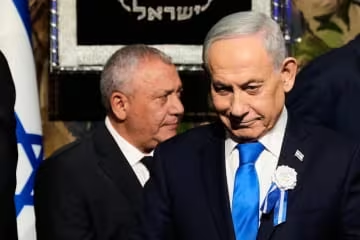
Benjamin Netanyahu and Gadi Eisenkot met on 12 November 2026 to discuss a possible national unity government.
Netanyahu's proposed unity government would include Jewish parties from the centre and the right and exclude Arab parties.
In a video statement on 14 November, Netanyahu said his meeting with Eisenkot 'only strengthened the conviction that it is essential to form a national unity government', saying only such a government can guarantee Israel's security.
Netanyahu called on Eisenkot to meet, saying 'Let's meet in one room, without preconditions'.
Netanyahu said a national unity government could 'eliminate the Iranian threat once and for all' and warned Tehran would 'not hesitate to use nuclear weapons against us'.
Eisenkot dismissed the appeal as a ploy within minutes, saying 'These tricks don't work on me' and that Netanyahu 'knows he lost the election'.
Hours after the unity-government negotiations, Eisenkot said Netanyahu and his circle's conduct is a tangible, direct and immediate threat to Israeli democracy and that he must not hold the reins of power for even one more minute.
Eisenkot said Israel should under no circumstances face another election round with Netanyahu as prime minister, saying that as long as Netanyahu is in office there will be no more fair elections.
Israel's parliament speaker was due to be replaced on 17 November 2026 as power in Israel is rearranged.
Avigdor Liberman was approved as chair of the Knesset's Foreign Affairs and Defence Committee in the week before 17 November 2026.
Eisenkot ruled out a government with the Arab parties, whose 19 seats would give his bloc 67 seats, above the 61-seat majority.
In a 10 November address to the new Knesset, Netanyahu said Arab-led parties 'seek to destroy the Jewish state' and demanded a Zionist unity government instead of partnering with them.
Eisenkot called Netanyahu's speech 'hate-filled' and the campaign against Palestinian citizens of Israel 'racist and violent'.
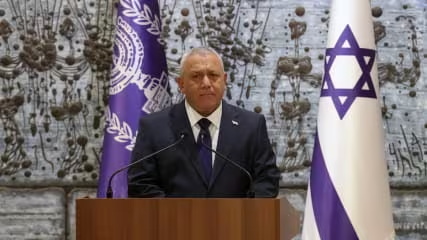
Gadi Eisenkot, chairman of Yashar, has been tasked with forming Israel's next government.
Eisenkot intends to bring a proposed government to a Knesset vote before his mandate expires, even if coalition negotiations led by his bloc fail.
Eisenkot, leader of the outgoing opposition's Zionist bloc, has until 6 December 2026 to form a coalition.
Negotiations over forming Israel's next government are stalling even as the timetable accelerates.
Netanyahu's Likud has demanded that Netanyahu alone lead the government for four years and that Itamar Ben-Gvir's far-right party take part in it.
Eisenkot's camp called the Likud's demands a mere political maneuver.
Avigdor Liberman firmly rejected the minority-government option, asserting that only a coalition including the ultra-Orthodox parties can keep Netanyahu out of power.
On 20 November 2026, Eisenkot's Yashar party invited Likud to a series of marathon coalition talks beginning the next day.
Representatives of Yashar and Likud had already met on the Sunday before the invitation.
Eisenkot is open to forming a government with Likud members but has ruled out joining a coalition led by Netanyahu.
Eisenkot's bloc is divided between an alliance with the ultra-Orthodox, a pact with the Arab parties, or a national unity government with Netanyahu.
Yashar said the invited talks reflect 'a real commitment to forming the widest possible government' and that Eisenkot will 'neglect no avenue' to 'obtain the breakthrough needed to form a government'.
Naftali Bennett said his party would refuse to ally with Netanyahu 'or his bloc, whatever the circumstances', and that he will make sure Netanyahu is not the next prime minister.
Bennett said he is determined to establish a reform government led by Eisenkot.
Emissaries of Netanyahu's Likud and Eisenkot's Yashar met for more than four hours at a Herzliya hotel on 22 November 2026 without agreeing on a unity government.
The talks stalled on the place of Itamar Ben-Gvir's extremist party in the coalition, indispensable for Netanyahu but unacceptable for the opposition, and on the premiership, with Likud refusing any rotation.
Immediately after the Herzliya meeting, Netanyahu rejected on social media any coalition supported by Arab deputies.
Yair Lapid denounced Netanyahu's post as hypocrisy.
Yair Golan denounced the negotiations as a 'stab in the back of voters'.
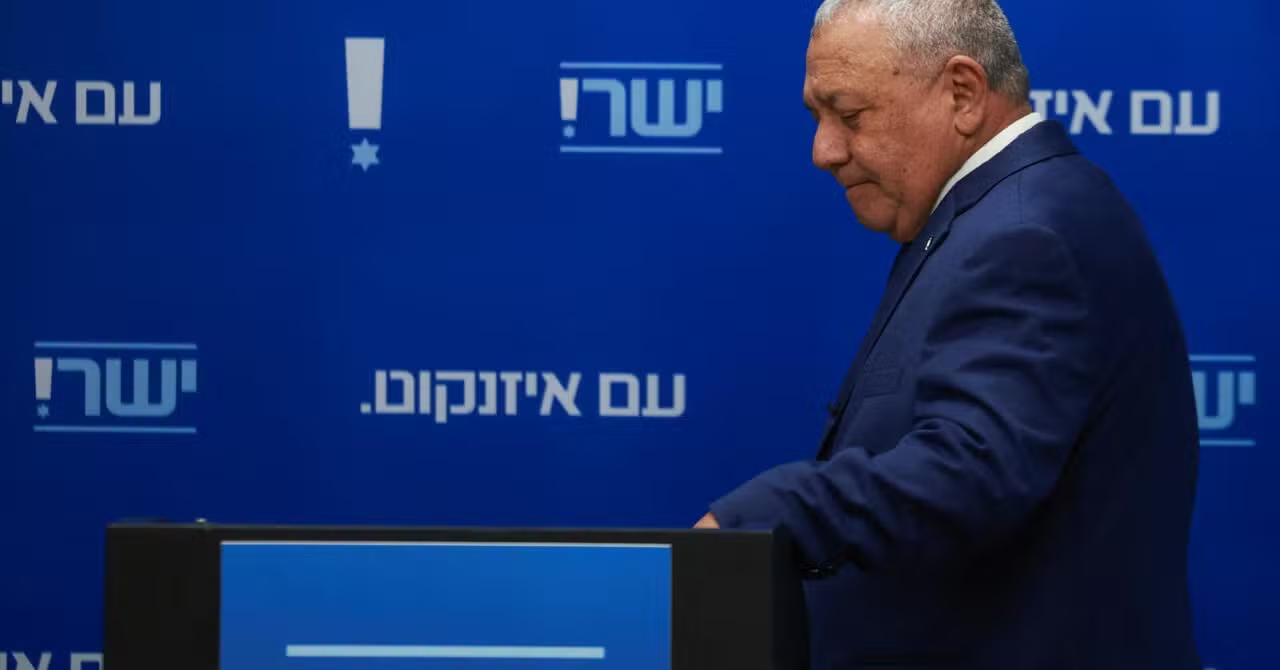
Eisenkot's Yashar party announced on 24 November 2026 that Eisenkot and Avigdor Lieberman, head of the Israel Our Home party, agreed to sign a coalition pact after meeting that day, the first such alliance since the 27 October election.
The Democrats, Israel's main centre-left party, announced on 24 November 2026 that they were suspending coalition talks with Yashar.
In a post on X, the Democrats said they were suspending the discussions with Yashar, citing progress in negotiations toward a unity government with Netanyahu and parallel deadlock in negotiations on a change government.
The Likud wrote on its Telegram channel 'They are falling apart', commenting on the Democrats' withdrawal.
The Knesset was sworn in on 10 November 2026 without a new government after no bloc won a 61-seat majority in the 27 October election.
Eisenkot has held a series of smaller meetings across party lines, including with Likud, and advanced talks with the ultra-Orthodox party United Torah Judaism.
On 25 November, Israeli media reported Eisenkot was hoping to form a new government by the following Wednesday, before the 6 December deadline.
The anti-Netanyahu bloc vowed to swear in Israel's new government by the end of the week.
Eisenkot said efforts to form a new government are moving at 'full speed' and that the talks reflect 'a genuine commitment to forming the broadest government possible'.
Avigdor Liberman said a government with a Jewish majority that includes the ultra-Orthodox parties can be formed by the end of the following week.
Two members of the opposition bloc said they will not sit with the Joint List or the United Arab List.
Yair Golan has pushed Eisenkot to reach a deal with the Arab parties.
Mairav Zonszein of the International Crisis Group said the talks are in part genuine but in part a performance to gain legitimacy, because Eisenkot will have to rely on the Arab parties' 19 seats.
Joint List chairman Yousef Jabareen accused Netanyahu of fuelling hostility toward Israel's Arab population.
In a social media post, Netanyahu said, "You must not form a government with supporters of terrorism!"
Eisenkot's Yashar party and Yair Golan's Democrats announced on Thursday 26 November 2026 that they had agreed on the terms of a coalition deal, paving the way to finalize and sign an agreement to form a government.
Yair Golan is poised to replace Itamar Ben-Gvir as a minister under the deal.
The Democrats said their coalition deal with Yashar will bring them four ministerial portfolios: an expanded national security ministry, Labour, Communications, and Culture and Sport with a new directorate for democracy.
The Beyachad party of former prime minister Naftali Bennett, with 12 seats, has yet to sign a formal coalition agreement with Yashar.
In a joint statement, Eisenkot and Golan said they 'have agreed to sign a coalition agreement between the two parties'.
Media reports linked the suspension of the Yashar-Democrats talks to disputes over the distribution of ministerial portfolios in a future government.
The Democrats said, "With this coalition pact, we are opening the way to the end of the Netanyahu government to save Israeli democracy."
The emerging coalition of Yashar, Liberman's party and the Democrats holds 36 of the 61 Knesset seats needed for a majority.
Four rounds of talks between Yashar and Likud in the days before 26 November 2026 were held without notable progress.
Avigdor Lieberman warned on 26 November against any unity government with Netanyahu, saying on X that Netanyahu 'will drag out the negotiations to form a "national unity" government until the last moment, then look for a pretext to scuttle them' and 'drag the country into new elections'.
Lieberman advocated an alliance with the ultra-Orthodox parties rather than with the Arab parties.
The Democrats pushed Eisenkot to form a government, even a minority one, backed by the two Arab-majority lists, and view his unity-government talks with Likud with disfavour.
Naftali Bennett pushed for an alliance between Eisenkot and Netanyahu excluding the Arab and ultra-Orthodox parties, with possible rotation of the premiership, writing on X that 'the best (solution) for the Israeli state is to have a Zionist union government serving the public led first by Eisenkot'.