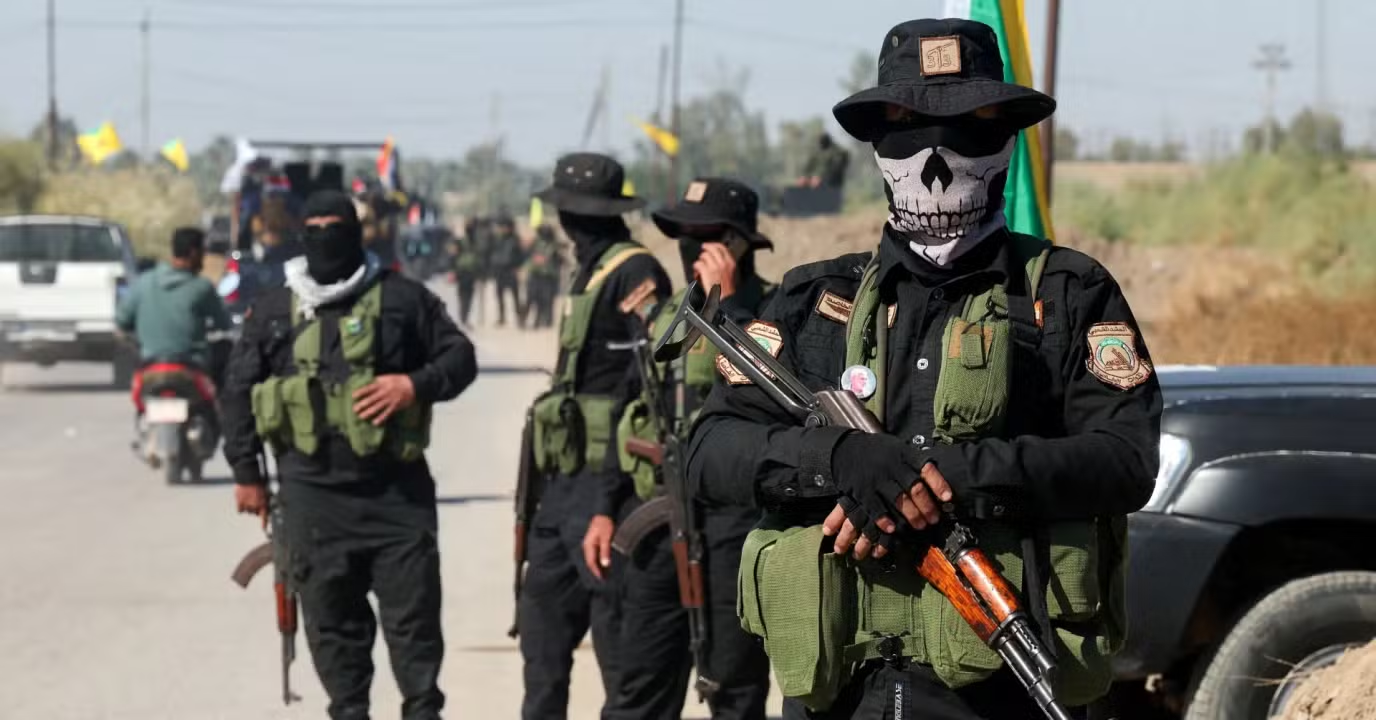
Iraqi forces enter Kataib Hezbollah bastion of Jurf al-Sakhar under compromise deal
What next for Iraq’s push against militias following Jurf al-Sakhar deal?
aljazeera.com· 6d
Irak: le gouvernement et une faction pro-iranienne s'entendent pour la reprise d'une région par les forces irakiennes
rfi.fr· 8d
Iraqi forces deploy to Jurf al-Sakhar after deal with Iran-backed group
LIVE: Iraqi forces enter Jurf al-Sakhar in Babel Province
youtube.com· 9d
En Irak, l'armée s'apprête à entrer dans un bastion du groupe pro-iranien Kataeb Hezbollah
france24.com· 9d
Iraqi security forces began deploying on 20 November 2026 in Jurf al-Sakhar, a bastion of the Iran-backed group Kataib Hezbollah in Babel Province about 60 kilometers south of Baghdad, under a compromise deal that officials said was meant to ease tensions. The confrontation began when Prime Minister Ali al-Zaidi announced an investigation into suspected oil smuggling there and urged the group, which has held the area for more than ten years, to leave. Kataib Hezbollah denied involvement in the smuggling and on 17 November refused his demand to withdraw.
Esmail Qaani, head of the Quds Force of Iran's Revolutionary Guards, met al-Zaidi on 16 November, and sources said a compromise was reached with his help. Under it, government forces including the Hashd al-Shaabi enter the area while Kataib Hezbollah gradually redeploys to the periphery over at least a month rather than withdrawing completely; a deal sealed on 19 November set the fighters to move to other areas of Iraq within a month. The deployment is understood to have been driven by pressure from the United States and its Gulf allies.
Iraqi state media reported on 19 November that the deployment would begin the next day, and military spokesman Sabah al-Numan said an official decree had been issued for a command headquarters to start operating at 6 a.m. on 20 November, overseeing army, police and Hashd units. The government gave the group a deadline of Friday, 20 November to leave. Lieutenant General Ahmed Hatem Hamid said a control headquarters had been established with the Federal Police in charge, and a combined force of an army brigade, a Federal Police battalion, an Energy Police regiment and two Popular Mobilisation Forces brigades is to protect the area's oil pipelines.
Kataib Hezbollah met its own leader and Hashd commanders and called the results positive, though a source in the group insisted it would not leave the sector. As of 22 November the group may retain influence there through Popular Mobilisation Forces units, and the deployment is likely to take weeks to complete.
Iraqi Prime Minister Ali al-Zaidi announced an investigation into suspected oil smuggling at Jurf al-Sakher, about 60 kilometers south of Baghdad, and urged the Iran-backed group Kataeb Hezbollah to leave the area.
Kataeb Hezbollah denied involvement in the oil smuggling and on 17 November 2026 refused al-Zaidi's demand to withdraw from Jurf al-Sakher, which the group has held for more than ten years.
Esmail Qaani, head of the Quds Force of Iran's Revolutionary Guards, met Ali al-Zaidi on 16 November 2026, and sources said a compromise was reached with his help.
Under the compromise, government forces including the Hashd al-Shaabi are to enter Jurf al-Sakher while Kataeb Hezbollah gradually redeploys its forces to areas on the periphery over at least a month rather than withdraw completely.
Iraqi state media reported on 19 November 2026 that government forces would begin deploying in Jurf al-Sakher on 20 November 2026, and military spokesman Sabah al-Numan said an official decree had been issued for a command headquarters there to begin operating at 6 a.m. local time that day, overseeing units from the army, the police and the Hashd al-Shaabi.
Kataeb Hezbollah said it met its own leader and leaders of the Hashd al-Shaabi and called the results of the meetings positive, while a source in the group insisted it would not leave the Jurf al-Sakher sector.
Iraqi government military spokesman Sabah al-Numan said, "An official decree has been issued for the creation of a command headquarters" at Jurf al-Sakher.
Kataeb Hezbollah military spokesman Jaafar al-Husseini said, "The problems between us and the head of government will be settled through discreet channels."
Iraqi security forces began deploying in Jurf al-Sakhar in Babel Province on 20 November 2026, with security officials saying at a press conference that the deployment is taking place under a compromise deal to ease tensions with Kataib Hezbollah.
The Iraqi government gave Kataib Hezbollah a deadline of Friday, 20 November 2026 to leave Jurf al-Sakhar.
The deployment is understood to have been driven by pressure from the United States and its Gulf allies.
Under the deal sealed on 19 November 2026, Kataib Hezbollah fighters are to withdraw from Jurf al-Sakhar within a month and move to other areas of Iraq.
A combined force comprising an Iraqi army brigade, a Federal Police battalion and an Energy Police regiment, joined by two brigades from the Popular Mobilisation Forces, is to protect the oil pipelines in the Jurf al-Sakhar area.
Lieutenant General Ahmed Hatem Hamid said on 20 November 2026 that a control headquarters had been established in Jurf al-Sakhar and that the Federal Police would control the facility.
Prime Minister Ali al-Zaidi told the troops entering Jurf al-Sakhar they are "not waging war" and that "Everyone present there are your brothers, the sons of this nation, and their blood is our blood."
Ali al-Zaidi insisted that his decision to restrict weapons to state control is final.
Baghdad-based analyst Fadel Abu Raghif said the deal came after about two months of lengthy and delicate negotiations and wrangling with Kataib Hezbollah.
Kataib Hezbollah may retain its influence in Jurf al-Sakhar through Popular Mobilisation Forces units, and the deployment process is likely to take weeks to complete.
Iraqi affairs expert Akeel Abbas said Baghdad, not the issue of oil smuggling, was the reason for the government's intervention in Jurf al-Sakhar.
Zeidon Alkinani of the Doha-based Arab Perspectives Institute called the deal a positive step secured through negotiation rather than armed confrontation, and said, "The remaining questions are how long this will take and what the armed groups will want in return."
Zeidon Alkinani said, "How the next phases go will determine whether this becomes a real return of state authority or just a rearrangement of who controls the area."
Tallha Abdulrazaq said the deal was compromised by the presence of militia and pro-militia personnel in the security contingent sent by Baghdad, and that, "Effectively, we're changing Shia militias for Shia militias, but in uniform."
Tallha Abdulrazaq said there has been no announcement about disarming Kataib Hezbollah personnel or dismantling the missile and drone manufacturing facilities the group set up with Iranian expertise.

