EU summit ends without deal on Ukraine financing as decisions move to December summit
Why Bulgaria, Czechia, Hungary, and Slovakia are complicating the latest EU push for a Ukraine loan
kyivindependent.com· 8h
Orpo: Ratkaisut EU-budjetista ja Ukrainan tukemisesta siirtyvät joulukuulle
yle.fi· 19h
EU leaders clash over record-high budget amid Ukraine funding standoff
euronews.com· 27h
'Solidarity' and winter top EU agenda as leaders discuss new support for Ukraine
After initial reluctance, Bulgaria will join €45 billion Ukraine loan
EU budget and Ukraine aid headed for collision at turbulent summit
En direct : bataille en vue à Bruxelles sur le budget et l'aide à l'Ukraine
france24.com· 41h
Budget européen : l’Ukraine complique les tractations
liberation.fr· 2d
Days before key summit, EU countries want to help Ukraine, but can't agree on how
Russia Is Trying to Divide Europe: Sweden Calls for Stronger Support for Ukraine #shorts
youtube.com· 11d
EU leaders met in Brussels on November 26 and 27 for an extraordinary summit meant to unlock long-term financial support for Ukraine and talks on the bloc's 2028-2034 budget, but ended without a deal on either.
The plan on the table was a 45 billion-euro joint-debt loan, covering two-thirds of a 70 billion-euro hole in Kyiv's 2027 budget on top of an ongoing 90 billion-euro credit line, with allies including the UK, Norway, Canada, and Japan expected to cover the rest.
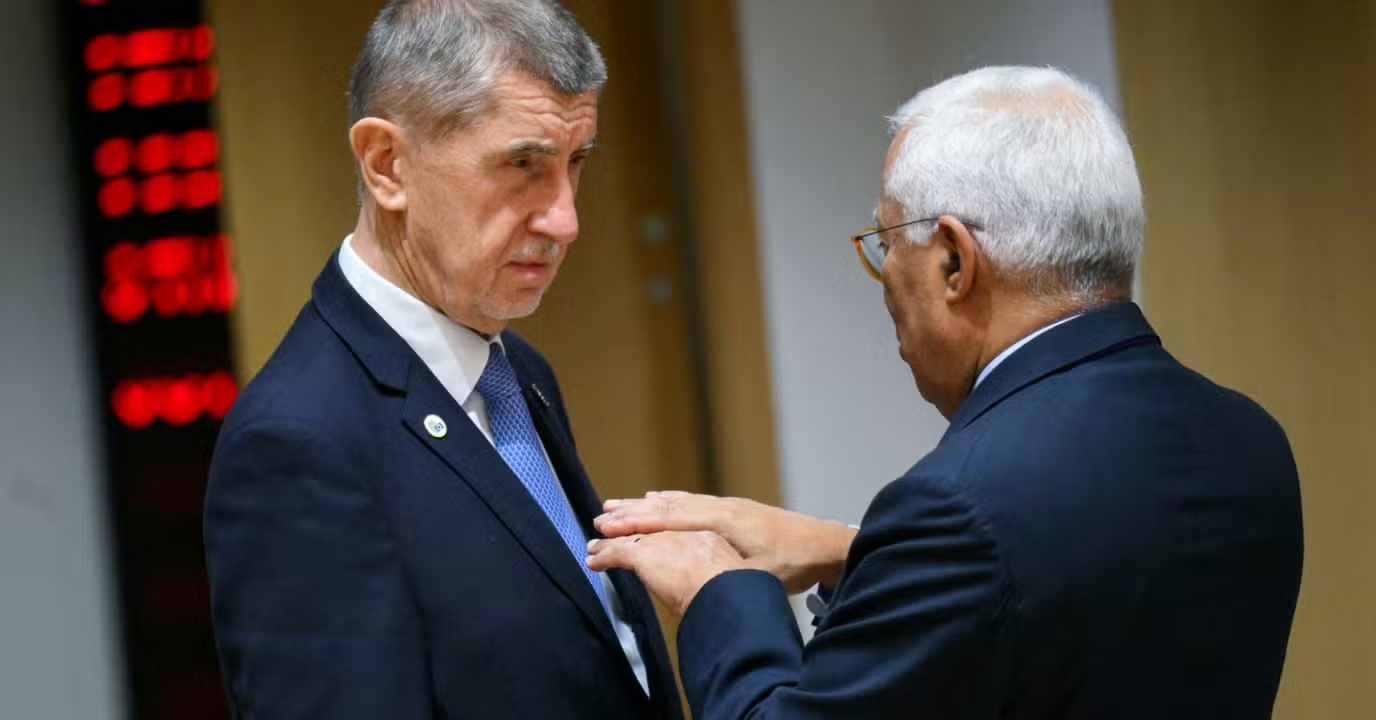
European Council President Antonio Costa, whose November 21 compromise served as the basis for the talks, offered a further compromise on November 26 cutting his original budget proposal by 204 billion euros, but it failed to bridge the gap between fiscally conservative states demanding deeper cuts and the 17 Friends of Cohesion calling the trims excessive.
Slovakia, Czechia, Hungary, and Bulgaria said they would not join the new loan, though Bulgarian Prime Minister Rumen Radev, who had initially opposed the scheme, confirmed on November 26 that his country would take part only in the loan's 20 billion-euro budget component, not weapons and ammunition.
On the summit's final day, Costa said 24 member states supported the loan and that the question would be revisited in December, with the Commission having drafted the legal text on the basis that all 27 participate and offering no position on partial contributions.
There is no clarity on how Bulgaria could in practice contribute only in Ukrainian areas with a Bulgarian-speaking minority, and Hungarian and Slovak leaders Péter Magyar and Robert Fico appear to be positioning themselves similarly.
Under Commission proposals, more than 200 billion euros in immobilized Russian assets may be used if Russia does not agree to pay reparations, or the EU would be liable for the loan's full amount.
A Swedish government official warned that Russia is trying to divide Europe and to decrease Europe's support for Ukraine.
The official recommended that the answer to Russia's attempts must be increased support for Ukraine and increased pressure on Russia.
EU leaders are set to meet in Brussels on November 26 and 27, 2026, to discuss long-term financial support for Ukraine and the bloc's budget for 2028-2034.
EU ambassadors held a first budget discussion on November 24, based on a Commission proposal to lend Kyiv 45 billion euros in 2027 and a compromise by Council President Antonio Costa.
National notes from the talks show Ukraine support as a rare point of consensus, with no country opposing the 100 billion euros earmarked for Kyiv, though some were unclear what the total includes.
A Commission analysis expects 55.4 billion euros to be needed for interest payments on existing Ukraine loans in the next budget cycle, which the proposal would place outside budget ceilings.
Italy and Bulgaria questioned whether the interest payments would really be paid separately from the 100 billion euros, and Austria rejected a special instrument for them.
Only Slovak Prime Minister Robert Fico has publicly opposed the 45 billion-euro loan, and diplomats expected Bulgaria to join Hungary, Czechia, and Slovakia in staying out.
Hungary and Czechia want leaders to decide separately on covering Ukraine's loan costs, keeping the file apart from the wider budget, against Chancellor Friedrich Merz's position that the two move together.
Estonia said the 100 billion euros foreseen for Ukraine would be an "absolute minimum".
France warned that mounting political pressure in Paris meant that if negotiations continued into January 2027, a deal would no longer be possible before the April 2027 presidential election.
Slovak Prime Minister Robert Fico claimed Hungary shares his opposition to the 45 billion-euro loan.
A new proposal by European Council President Antonio Costa, presented on November 21, 2026, is to serve as the basis for the summit's budget negotiations.
A European diplomat said the two summit days will be "long".
The EU's member states aim to reach an agreement on the budget by the end of 2026, before national elections including the French presidential election further complicate the debates.
EU leaders met in Brussels on November 26 for an extraordinary summit meant to unlock tense talks on the future EU budget, which includes an additional 100 billion euros for Kyiv.
German Chancellor Friedrich Merz said he will make any budget agreement conditional on the "without exception" participation of all 27 EU countries in financing Ukraine.
Slovak Prime Minister Robert Fico called Merz's condition "blackmail".
European Council President Antonio Costa offered a compromise cutting his original budget proposal by 204 billion euros.
The Commission's 45 billion-euro joint-debt loan is meant to cover two-thirds of a 70 billion-euro hole in Kyiv's 2027 budget, on top of an ongoing 90 billion-euro credit line.
Fiscally conservative states rebranded as "modernisers" demand deeper cuts to agriculture and cohesion spending, while the 17 Friends of Cohesion say the compromise cuts excessively across the board.
Slovakia, the Czech Republic, Hungary, and Bulgaria have said they do not want to participate in the new loan.
The Commission offered countries the option to opt in to the loan's 20 billion-euro budget strand and out of its 25 billion-euro military strand.
Allies including the UK, Norway, Canada, and Japan are expected to cover the remaining third of the 70 billion-euro gap.
Antonio Costa told leaders ahead of the summit, "The time has come to reach an agreement".
Hungarian Prime Minister Péter Magyar said it would have been more useful to put forward a relatively good proposal rather than "playing out a bazaar scene reminiscent of Cairo, Tunis, or Marrakesh".
France's government called Costa's compromise "highly disappointing", even though it includes the digital services tax Paris has long advocated.
A senior diplomat said it is very difficult to understand that four countries receiving so much EU cohesion funding are being so egoistic about the common good of security, calling it unacceptable.
The Élysée said the negotiations cannot go beyond December, noting several other member states will also hold elections through 2027.
Marine Le Pen, frontrunner in the French presidential election, vowed to upend the deal and cap France's contribution at 5 billion euros per year.
Bulgarian Prime Minister Rumen Radev confirmed on November 26 that Bulgaria will join the 45 billion-euro loan but only its 20 billion-euro budget aid component, not weapons and ammunition.
The loan would generate between 2 billion and 2.5 billion euros in annual interest payments falling on member states.
Kyiv will not be asked to repay the loan's principal until Moscow provides war reparations.
Radev had initially opposed the scheme, arguing Bulgaria had to rein in public spending.
Radev said at the Brussels summit, "We are ready to join it", adding there will be no money from Bulgaria for weapons or the war.
Radev asked that Bulgaria's contribution be concentrated in areas of Ukraine home to a historical diaspora of 300,000 Bulgarians.
European Commission President Ursula von der Leyen said she is "very confident" that all 27 countries will back her proposal.
Hungary, Czechia, and Slovakia had been allowed to opt out of a 90 billion-euro EU loan for Ukraine agreed in April 2026.
A senior EU official said the November 25 ambassadors' meeting felt the opt-out was a one-off required for quick agreement and will not set a precedent.
Austrian Chancellor Christian Stocker said "It is about solidarity here. This is not a one-way street", and that opt-outs can no longer be a way in the future.
Swedish Prime Minister Ulf Kristersson said the opt-out is not in accordance with the rules of the European Council and should not be made a new tradition.
Dutch Prime Minister Rob Jetten said Ukrainians are fighting also for European democracy and values, and there should be absolutely no opting out.
Czech leader Andrej Babis called tying Ukraine's financing to the budget discussion completely absurd, asking whether the EU will pay Ukraine 135 billion euros yearly for 10, 20, or 30 years.
Romanian President Nicușor Dan said Russia calculates that winter benefits it, and that realistically the chances of peace are much greater in the spring than in the winter.
Lithuanian President Gitanas Nauseda said Ukraine must be supported in solidarity by all, and forecast Russia will try to make the Ukrainian people suffer one more terrible winter.
Estonian Prime Minister Kristen Michal forecast Ukraine will face a winter "like hell" and said Ukraine must know Europe has its back money-wise.
German Chancellor Friedrich Merz warned that failing to support Ukraine and help end the war would mean new refugee flows, which he said is in no one's interest in Europe.
The long-term budget under negotiation at the summit is a record-high spending package.
Spanish Prime Minister Pedro Sánchez is skipping the summit ahead of Spain's national elections on November 29, 2026, and delegated his voting powers to French President Emmanuel Macron.
Italian Prime Minister Giorgia Meloni said leaders remain "light-years away from a solution" ahead of the talks.
Finnish Prime Minister Petteri Orpo forecast that decisions on the EU's financial framework and on supporting Ukraine will move to the December European Council summit.
Orpo said the negotiations remain very far from solutions, with the size of the 2028-2034 financial framework the biggest open question, still too large for Finland and other net contributor countries.
Orpo said the aim is a solution in which all 27 countries take part, with one model under discussion that countries with reservations join only civilian support for Ukraine, not military support.
Orpo said European Council President Antonio Costa has a big job ahead in finding compromises the member states can accept.
EU leaders failed to significantly advance talks on Ukraine financing and the next multi-year budget at the November 26-27 summit, with four countries preventing agreement on the 45 billion-euro loan.
European Council President Antonio Costa said 24 member states supported the loan proposal and the question would be revisited in December, with Bulgaria participating only in the non-military component focused on regions with its national minority.
The Commission drafted the loan's legal text on the basis that all 27 EU countries participate and has not expressed a position on countries contributing to only part of it.
There is no clarity on how Bulgaria could in practice contribute only in areas of Ukraine with a Bulgarian-speaking minority.
The loan would function as a single borrowing action on the markets rather than two distinct debts, one for defense spending and one not.
For the loan's 25 billion-euro defense portion, Kyiv must submit shopping lists to the EU before purchases and provide receipts afterward to receive funds.
Commission proposals say more than 200 billion euros in immobilized Russian assets may be used if Russia does not agree to pay reparations, or the EU would be liable for the loan's full amount.
Hungarian and Slovak leaders Péter Magyar and Robert Fico appear to be positioning themselves similarly to Bulgaria on the loan.
Péter Magyar said at the end of the summit, "Of course there should be solidarity with a country at war, but the member state should decide what the money should go to."
Robert Fico told Slovakia's European Affairs committee on November 25 that "every country should have the right to express its own form of solidarity with Ukraine".
Fico called the idea of contributing only to the civilian part of the loan "a kind of trick on the part of the Commission", likening it to an execution where only one shooter has a live round.
Fico said he is not "entirely convinced that giving money to Ukraine is the right thing to do", citing "the massive corruption scandals that regularly shake Ukraine" and estimates of stolen money.
Fico called the 45 billion-euro loan "not a loan in the real sense of the word", a pure grant repaid only after Russia pays war reparations, which he said will never happen.
Ursula von der Leyen said after the summit, "I am pleased that there is wide support for our proposal ... now it is in the Council's hand to finalize the work."