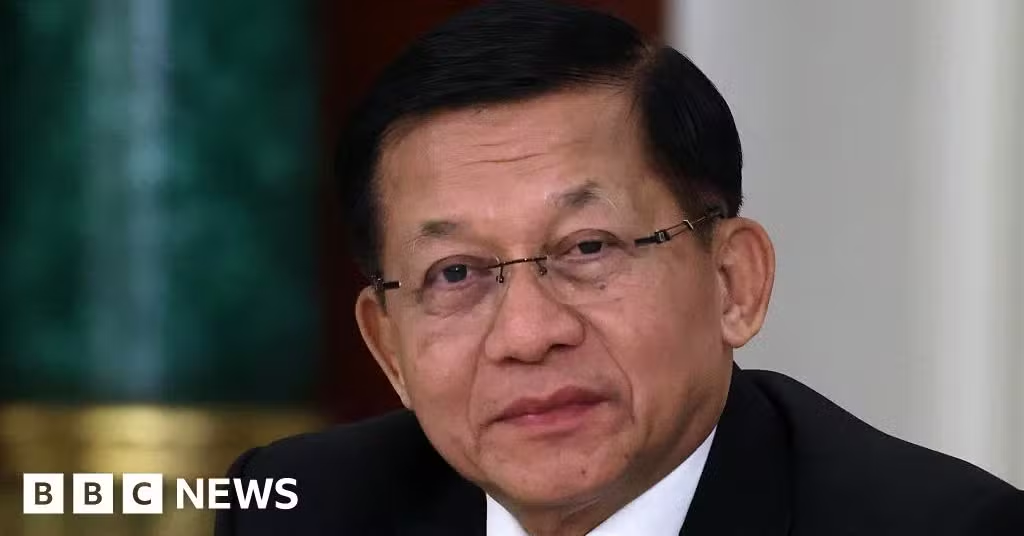
Myanmar refuses to comply with parts of ICJ Rohingya genocide ruling
Myanmar refuses to comply with 'inappropriate' parts of ICJ genocide ruling
bbc.com· 2d
Myanmar won't comply with 'inappropriate' parts of genocide ruling: Leader
channelnewsasia.com· 3d
Génocide des Rohingyas: la décision historique de la CIJ peut-elle faire jurisprudence?
rfi.fr· 7d
What does the ICJ’s Rohingya genocide ruling mean for Gaza?
aljazeera.com· 8d
Myanmar Committed Genocide Against the Rohingya, Top Global Court Finds
nytimes.com· 9d
Myanmar committed genocide against Rohingya minority, top UN court rules
What the ICJ genocide ruling means for the Rohingya people
ICJ rules that Myanmar committed genocide against Rohingya muslims
lemonde.fr· 9d
La Birmanie a commis un génocide à l’encontre de la minorité rohingya, statue la Cour internationale de justice
Myanmar committed acts of genocide against Rohingya minority, world’s top court rules
theguardian.com· 9d
Les forces birmanes ont tué "des milliers de civils rohingyas", déclare la CIJ
france24.com· 10d
La CIJ juge que la Birmanie a commis un génocide à l'encontre des Rohingya
ICJ to rule on Rohingya genocide case: What to expect
The Gambia brought a case against Myanmar at the International Court of Justice in November 2019, accusing it of violating the Genocide Convention through its treatment of the Rohingya. Myanmar denied genocide and said its forces were responding to armed attacks.
On 19 November 2026, the court ruled by 9 votes to 6 that Myanmar committed genocide during its 2017 crackdown, finding intent to destroy a substantial part of the Rohingya. It said evidence supported an estimate of 10,000 killed, and found that more than 700,000 fled to Bangladesh.
The court ordered Myanmar to facilitate the safe, voluntary and dignified return of Rohingya refugees, investigate and punish suspected perpetrators, and provide restitution and proportionate compensation, with the amount to be determined later. It also set a November 2028 deadline for Myanmar to report on its compensation plan.
On 25 November 2026, Myanmar leader Min Aung Hlaing said the country would not comply with parts of the ruling it considered inappropriate. He said use of the term genocide had seriously damaged Myanmar's reputation.
The Gambia filed a case at the International Court of Justice in November 2019, accusing Myanmar of violating the Genocide Convention through its treatment of the Rohingya.
Myanmar denied committing genocide and argued that its forces were responding to armed attacks.
The Gambia asked the court to order Myanmar to prosecute those responsible, enable the Rohingya's safe return, restore property, recognize their right to identify as Rohingya and provide compensation where property could not be returned.
On 19 November 2026, the International Court of Justice ruled that Myanmar committed genocide against the Rohingya during its 2017 crackdown, finding that Myanmar acted with intent to destroy a substantial part of the group.
The court said Myanmar's soldiers killed thousands of Rohingya civilians, perpetrated large-scale sexual violence, committed extreme violence against children and targeted people fleeing toward Bangladesh.
The court found that evidence supported an estimate of 10,000 Rohingya killed during the 2017 operations.
A 23-year-old Rohingya rape survivor said, “I want justice to be done.”
The survivor said rapists should be severely punished and the court should rule specifically on the rape of women.
Myanmar representative Ko Ko Hlaing said, “Myanmar was not obliged to stand by with its arms folded and leave the field open to the terrorists.”
Gambian Justice Minister Dawda Jallow said, “Myanmar's Rohingya were targeted by a will to destroy.”
Mohammed Osman said, “They shot my father, forced my mother and a few other women into a house, raped them, and then set fire to our home”.
International Court of Justice President Yuji Iwasawa said the court was “fully convinced that Myanmar committed acts falling under … the genocide convention with an intent to destroy a substantial part of the Rohingya population in Myanmar”.
The court said Myanmar's security forces killed thousands of Rohingya civilians, carried out large-scale sexual violence and extreme violence against children, and targeted Rohingya fleeing toward Bangladesh.
Ko Ko Hlaing said Myanmar was not obliged to stand by with its arms crossed and leave the field open to terrorists.
The International Court of Justice ordered Myanmar to facilitate the safe, voluntary and dignified return of Rohingya refugees and to investigate and punish people suspected of genocide.
The court said Myanmar must provide compensation, with the amount to be determined later.
Dawda Jallow said after the ruling, “the victory belongs to the Rohingya. They survived. They testified.”
The International Court of Justice ordered Myanmar to cease acts of violence, investigate suspected perpetrators, prosecute and punish those found guilty, and guarantee the acts will not recur.
The court ordered restitution measures including return of Rohingya property or replacement of damaged collective property, searches for missing people, dignified burials, rehabilitation and protection from persecution.
The court ordered Myanmar to submit a report within 2 years outlining its compensation plan, with a November 2028 deadline.
Fortify Rights campaigner Matthew Smith called the ruling a huge day for the Rohingya and said people had waited a very long time for it.
Smith forecast that the ruling would provide momentum for efforts to hold perpetrators and architects individually criminally accountable.
The Gambia's lead counsel Arsalan Suleman called the judgment a landmark victory and an important step toward accountability.
Smith said the court's reparations statement was especially important and gave the parties grounds to negotiate details.
Smith said reparations should be comprehensive, meaningful and shaped by Rohingya survivors, separate from aid, and accompanied by official acknowledgement of wrongdoing.
Smith recommended financial compensation, restitution of land and property, restoration of citizenship and rights, safe return, medical care, trauma support, education and livelihood opportunities.
Smith said meaningful reparations could help restore rights, dignity and a measure of justice, though no amount of money could undo genocide.
The International Court of Justice ruled by 9 votes to 6 that Myanmar committed genocide and violated several other provisions of the Genocide Convention.
The court found that around 10,000 Rohingya were killed, more than 700,000 fled to Bangladesh and approximately 815,000 were targeted.
The court found that Myanmar destroyed evidence by disposing of bodies and clearing sites, and failed to prosecute perpetrators.
The court found that Myanmar's discriminatory policies included limits on married couples having more than 2 children.
The court said Myanmar must pay proportionate reparations, with the amount to be set later.
Mohammed Nowkim said, “This is like formal recognition of our suffering” and “The Rohingya have been waiting for justice for decades”.
Human Rights Watch called the ruling “long-awaited recognition of the suffering the Rohingya have endured”.
UN human rights chief Volker Türk called the Rohingya's suffering, misery and humiliation a “stain on the conscience of humanity” and said the decision “must now translate into real action”.
Lawyer Philippe Sands called the judgment an “historic judgment” and said it ranked among the great moments of international justice.
Legal Action Worldwide executive director Antonia Mulvey said the court rejected Myanmar's counterterrorism defense and found rape and sexual violence to be acts of genocide.
The International Court of Justice found that Myanmar failed to prevent genocide and to punish it, but did not find that Myanmar incited private individuals to commit genocide.
The court ordered Myanmar to provide restitution, including return and reunification, and compensation if those measures were not possible, with compensation to be determined in further proceedings.
Gambia Attorney General Dawda Jallow welcomed the decision finding Myanmar culpable of the “crime of crimes” and said, “We will stand with the Rohingya until justice is served.”
Human Rights Watch senior international justice counsel Maria Elena Vignoli urged concerned governments to press Myanmar's military government to comply and ensure refugees' safe, voluntary return.
Open Society Justice Initiative executive director James Goldston said the decision “reaffirms the vital role they play in establishing truth”.
Mohammed Yeasin said, “I am happy about the I.C.J., but I don't know when my sorrows will end.”
US Ambassador to the United Nations Mike Waltz accused Navi Pillay of “tipping the scales on the ICJ's current proceedings on Myanmar” and claimed she intended to lower the genocide-proof threshold for later use against American and allied soldiers.
Former political prisoner Wai Wai Nu said Myanmar's army had spent decades trying to erase Rohingya identity, deny their existence and minimize their suffering, and that the judgment ended that state lie.
International law specialist Johann Soufi said genocidal intent can coexist with other aims, including fighting an armed group, and that other objectives do not necessarily cancel intent to destroy a protected group.
Soufi said the court assesses genocidal intent by considering the full set of acts, including crimes against children.
Volker Türk said the court had sent states a strong message that those responsible for genocide would be held to account.
Gambian President Adama Barrow called the ruling a “historic day for international justice”.
On 25 November 2026, Myanmar leader Min Aung Hlaing said the country would not comply with parts of the International Court of Justice ruling it considered inappropriate.
Min Aung Hlaing said the use of the term genocide had seriously damaged Myanmar's reputation.
Min Aung Hlaing called the case a “one-sided accusation” and said he would not accept actions that undermined the nation.
The Myanmar government described the decision as unfair and “a great disappointment”.

