
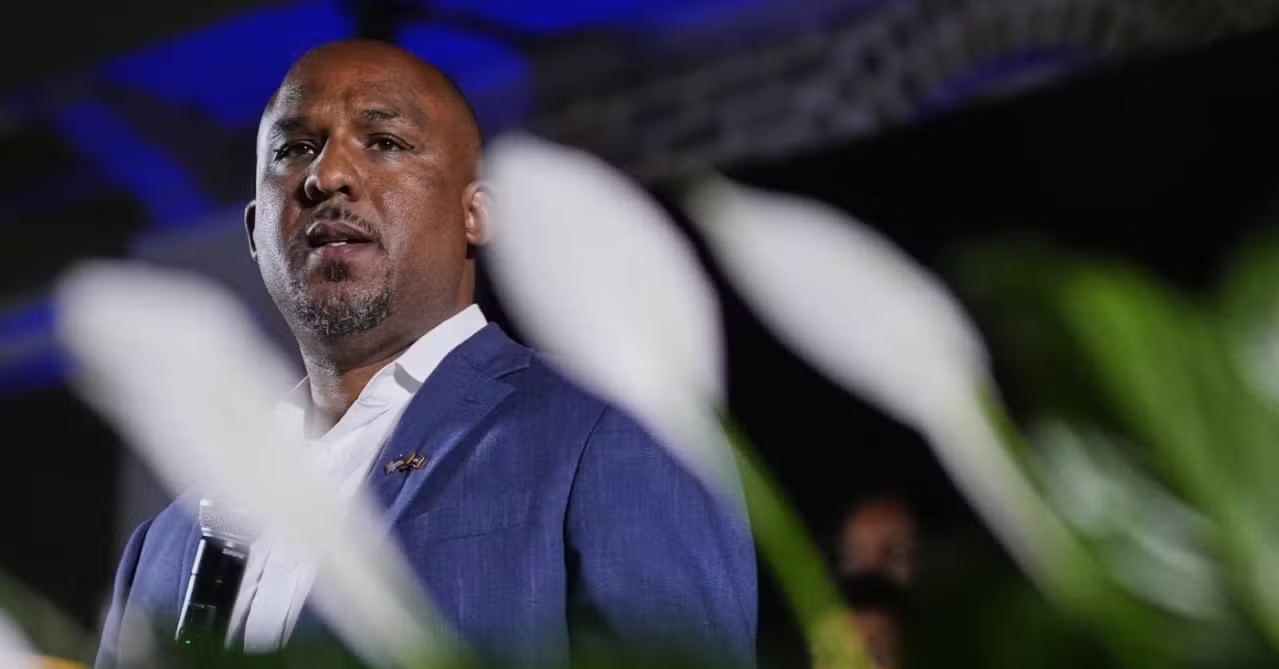
Scott Colom wins Mississippi Senate race, first Black senator since Reconstruction
Summary
- Mississippi Democrat Scott Colom, a 43-year-old district attorney, defeated Republican Senator Cindy Hyde-Smith by 4,669 votes after a week-long count.
- He is Mississippi's first Black senator since Reconstruction and the first ever elected by the state's voters, joining 55 Senate Democrats.
- He is the state's first Democratic senator since 1982; Alaska's Senate race remained the last uncalled.
- Colom urged Democrats to invest more in Mississippi and the rural South so his low-resource win is not a one-time event.
- The count was delayed by a voter purge using Experian address data that forced thousands onto affidavit ballots despite civil rights groups' warnings.
- Hyde-Smith blocked his 2023 federal judgeship; accounts differ on whether it motivated his run.
Reactions
- Mississippi Republican Party chairman Mike Hurst acknowledged Colom's strong showing but said the state remains Republican.
- NAACP president Derrick Johnson credited voters who refused to be intimidated; supporters at Tougaloo College compared the hope to Barack Obama's 2008 election.
- Bryan Stevenson called Colom's win an extraordinary new moment for Black voters, tracing it to Mississippi's history of violent voter suppression.
- Southern Democrats and strategists urged the national party to invest in the South ahead of 2028, saying the region should not be ceded.
- The Daily Show's Desi Lydic mocked Hyde-Smith for celebrating prematurely, joking that she had 'been celebrating losers her whole life.'
- Nikole Hannah-Jones said the victory came in spite of the Democratic Party and was paid for by civil rights foot soldiers.
Voices newest first
Timeline newest first
Colom urged Democrats on 'Meet the Press' to channel more financial and political investment into Mississippi and deliver for the rural South.
Colom, stranded in Atlanta after a nationwide FAA ground stop, vowed to ensure Donald Trump follows through on his campaign promises and to support legislation restricting congressional stock trading.
Colom declined to back Chuck Schumer or Chris Van Hollen for Senate Democratic leader and said he hopes to raise the minimum wage and return tariff policy to Congress.
Colom ended election night on November 3 leading Cindy Hyde-Smith by 28 votes; his margin grew past 5,000 in the days before she conceded.
Analysts estimated Colom won 91 percent of Mississippi's Black voters and 25 percent of white voters, as the Black share of the electorate rose to 33 percent from 30 percent.
Secretary of State Michael Watson's office used Experian address data to purge Mississippi's voter rolls despite warnings; Experian disavowed the use, and Watson threatened to sue.
An essay argued Colom's victory was predictable after earlier close races, noting the Democratic Senatorial Campaign Committee left Mississippi out of a $40 million investment initiative.
Ryan Sayles, 27, filmed and edited the viral 'pick another protein' ad mocking Hyde-Smith's beef-price advice that helped Colom win.
Colom said it was 'not accurate' that Chuck Schumer recruited him, credited Mississippi voters, said he forgave Hyde-Smith, and pledged to work with Senator Roger Wicker.
The Associated Press called Mississippi's Senate race for Colom on November 11, and Hyde-Smith conceded, saying she respected Mississippi voters' decision.
Colom credited his win partly to mobilization after the Callais decision and Republican efforts to carve up Representative Bennie Thompson's district.
Local activists registered 40,000 new Mississippi voters, and Black turnout surged to help power Colom's upset.
Colom credited door-to-door canvassing over big money for his victory by under 5,000 votes.
Colom's win gave Democrats a 55-seat Senate majority in the 2026 midterms.
Colom called on Hyde-Smith to concede, citing a 4,404-vote gap that he said left her no mathematical path.
The Supreme Court ruled 5-4 in Marc Elias's favor against the Republican National Committee on counting late-arriving Mississippi mail ballots, adding about 3,000 ballots.
Final tallies put Colom's margin of victory at 4,669 votes over Hyde-Smith.
Colom led Hyde-Smith by 2,574 votes four days after the election, blamed Secretary of State Michael Watson in part for voters' difficulties, and pushed for early voting.
Sources newest first
Colom urges Democrats to invest more in Mississippi after Senate win
Democrats bullish on South after historic midterms gains
Senator-elect Scott Colom vows to ensure Trump follows through on his promises
Dems can win more in Mississippi if they spend money, Scott Colom says
Scott Colom’s Senate Win Is the Democrats’ Most Shocking Flip of the Midterms
‘We gotta do something’: the coalition that helped elect Scott Colom to Senate
“A rich message, but a poor campaign”: How Scott Colom beat the odds in Mississippi
vox.com· 34h
The Numbers Behind Scott Colom’s Stunning Upset in the Mississippi Senate Race
Scott Colom wins Mississippi Senate seat. Nvidia CEO resigns amid Chinese spy affair. Schumer challenged for Majority Leader.
Mississippi GOP Leader Loses It as Experian Exposes Election Disaster
Trump gives Scott Colom ‘a lot of credit’ for campaigning at a MAGA rally
There’s A Mississippi The National Media Rarely Talks About. Scott Colom’s Win Put It On Display.
Scott Colom: the Democrat who conquered the reddest of red states
ft.com· 2d
The story behind the viral ad that helped Scott Colom win in Mississippi
Colom: ‘Not accurate’ to say Schumer recruited him
Desi Lydic Takes Swipe At Outgoing GOP Senator With Awkward Election Night Moment
November 12, 2026
Scott Colom's historic victory marks 'new moment' for Black voters, Bryan Stevenson says
pbs.org· 2d
The Day Old Dixie Died
Meet the 27-year-old behind the protein ad that helped flip Mississippi
Scott Colom makes history in Mississippi. Two other Black men did the same 150 years before him
REPORT: JD Vance DESPISED, MAGA In SHAMBLES
It’s Official In Mississippi
Scott Colom: ‘The Callais decision helped me’
Colom’s Mississippi Win Shows a Seismic Shift in the Deep South
Scott Colom Is Mississippi’s First Black Senator in 150 Years
theatlantic.com· 3d
I tweeted about Scott Colom–then Democratic leaders’ offices blew up my phone
Scott Colom Wins Stunning Victory, Becomes Mississippi’s First Black Senator Since Reconstruction
democracynow.org· 3d
Colom wins Mississippi Senate race. And, White House warns Dems over future probes
In Mississippi, Scott Colom Supporters Celebrate Historic Senate Win
How Scott Colom defied the odds to go from district attorney to Mississippi's Democratic US Senator
Mississippians rejoice after Scott Colom victory: ‘God came back and gave us all the marvels’
'WE ARE HAPPY, BUT WE KNEW IT WAS COMING!’: Mississippi voters celebrate Scott Colom’s historic win
‘145 years after the last Black senator’: Nikole Hannah-Jones reacts as Miss. elects Colom
‘Emotional and energizing’: Bryan Stevenson on Colom’s MOMENTOUS victory in Mississippi
【米中間選挙2026】 民主党コロム氏が歴史的勝利、ミシシッピ州の連邦上院選 - BBCニュース
BREAKING: Scott Colom VICTORY in Mississippi as Trump Goes Into MAGA Meltdown
LIVE: Scott Colom speaks after winning the Senate race in Mississippi
Scott Colom wins Mississippi Senate race in major victory for Democrats
Symone CLOCKED Mississippi's Senate FLIP back in JANUARY
ミシシッピで民主44年ぶり勝利確実 黒人上院議員は約150年ぶり:朝日新聞
asahi.com· 3d
A Vindication
Mississippi Senate results: Scott Colom narrowly defeats Cindy Hyde-Smith, flipping another seat for Democrats in midterm elections
yahoo.com· 3d
Mississippi Senate stunner: Cindy Hyde-Smith concedes to Democrat Scott Colom
BREAKING ELECTION ALERT: Scott Colom WINS Mississippi Senate race making HISTORY
Democrat Scott Colom flips Mississippi Senate seat, becomes state's first Black senator since Reconstruction
lemonde.fr· 3d
How Scott Colom won deep-red Mississippi with little help from Democrats
Mississippi Elects Its First Black Senator Since Reconstruction
Democrat Scott Colom unseats Cindy Hyde-Smith in shocking Mississippi Senate win
Democrat Scott Colom wins closely watched US Senate race in Mississippi
aljazeera.com· 3d
Democrat Scott Colom seals surprise win in Mississippi Senate race
Scott Colom Wins Mississippi US Senate Race, Will Be State's First Black Senator in 146 Years
Democrat Scott Colom wins Mississippi Senate race
Democrat Scott Colom wins Senate race in Mississippi
Mississippi Election Live Updates: Democrat Scott Colom Wins Senate Seat in Historic Midterm Upset
Mississippi, once the epicenter of Jim Crow, elects its first Black senator since Reconstruction
motherjones.com· 3d
Scott Colom wins Mississippi Senate election over incumbent Republican Hyde-Smith
cnbc.com· 3d
Scott Colom Wins Mississippi Senate Seat in Historic Victory
wsj.com· 3d
Mississippi elects Democrat Scott Colom as state's first Black US senator since Reconstruction
Scott Colom wins Senate election in Mississippi
Mississippi elects Democrat Scott Colom to Senate in massive upset
In Major Upset, Scott Colom, a Democrat, Wins Mississippi Senate Seat
Democrat Scott Colom wins Mississippi Senate race, breaking the GOP’s grip on the state
nbcnews.com· 4d
Democrat Scott Colom wins election to U.S. Senate from Mississippi
Scott Colom defeats Cindy Hyde-Smith, who blocked his judgeship over trans rights
advocate.com· 4d
CNN Projects Scott Colom to Defeat Cindy Hyde-Smith, Colom Calls on Hyde-Smith to Concede
Mississippi Senate race ‘leans Democratic’ after key ballot deadline
Scott Colom’s lead widens in Mississippi Senate race after Democratic stronghold counts affidavit ballots
Something Historic is Happening in Mississippi
Colom’s lead widens in Mississippi Senate race as final ballots are counted
Mississippi’s key Democratic stronghold rejected most affidavit ballots
Colom Is On Track to Win the Mississippi Senate Seat
Colom extends slim lead over Hyde-Smith in Mississippi Senate race
Live updates: Democrat Scott Colom wins election to US Senate from Mississippi
The Making of a Mississippi Miracle
In Mississippi Senate race, tempers flare over aggressive GOP vote count observers
Mississippi Senate race hits key ballot deadlines. Here’s what comes next
Mississippi Forward
Mississippi Senate candidate Scott Colom attacks Cook Political Report accuracy
Mississippi Senate ballot deadline looms, as Democrat’s lead remains steady
Scott Colom and Black Mississippians stand on the cusp of Senate history as vote count stretches on
How Mississippi Reached the Verge of Electing a Black Senator
How a Mississippi election came down to the clerk’s office
MAGA senator’s comeback now a ‘mathematical impossibility’: legal expert
rawstory.com· 7d
Scott Colom And Black Mississippians Stand On The Cusp Of Senate History As Vote Count Stretches On
Here are the midterm races to watch that are still too close to call
Democrat Scott Colom’s lead widens in Mississippi Senate race
Scott Colom and Black Mississippians stand on the cusp of Senate history as vote count stretches on
Scott Colom and Black Mississippians stand on the cusp of Senate history as vote count stretches on
Democrat Scott Colom’s lead widens in Mississippi Senate race that remains too close to call
'Where is Cindy Hyde-Smith?': Red state Dem taunts MIA senator as his lead keeps growing
Colom leads Mississippi Senate race, Hyde-Smith says she is 'not backing down'
foxnews.com· 8d
Who Counts in Mississippi?
medium.com· 8d
Black Democrat Flips KKK Founder's County In Historic Win
‘Protect the will of the voters’: Mississippi's Scott Colom lays out pro-voting agenda in exclusive interview
No one knows how many ballots are outstanding in Mississippi's Senate race
LIVE: Mississippi Senate ballot fight heats up
Scott Colom Is Overperforming Affidavit Ballots in North Mississippi—Even in Hyde-Smith Friendly Counties
Colom Leads Hyde-Smith in Mississippi Senate Race After Latest Vote Report
Mississippi makes it harder to cast a ballot than almost anywhere else. Voters defied the system
2026 Election Results Live Updates: Democrats’ Lead in Mississippi Senate Midterm Grows
Purple Mississippi? Black Voters Power Dem Wins Across the South
The Coalition Jim Crow and the Lost Cause Was Built to Stop
Mississippi: The Lawyers Have Shown Up
Scott Colom Flips County Named for Ku Klux Klan Founder Nathan Bedford Forrest
In Tight Mississippi Senate Race, Votes Are Carefully Scrutinized
Colom campaign says GOP seeks to ‘violate Mississippi voters’ rights’ as legal battle ignites
These are the races in the House and Senate that haven't been called yet
Mississippi Senate race heads toward ballot fight
Lafayette County's Affidavit Ballots Break for Scott Colom 69%-29%, Far Exceeding His Overall Margin
BREAKING: MAJOR UPDATE on FINAL Senate races
Mississippi Senate: Colom, Hyde-Smith gird for ballot legal fight in razor-thin race
Exclusive: Democrats flock to Mississippi amid Senate vote tally
semafor.com· 10d
The Legal Wrangling Over Mississippi’s Deadlocked Senate Race Has Begun
washingtonsun.com· 10d
Colom could make history in Mississippi. These Democrats were early believers.
GOP kicks off bid to throw out votes in Mississippi Senate race
Democrat expands lead in Mississippi Senate race
dailykos.com· 10d
What happens if Mississippi’s Senate race ends in a near tie? The state has no recount law.
What’s Happening in Mississippi
Cindy Hyde-Smith blocked Scott Colom from becoming a judge for being pro-trans. Now, he might take her Senate seat
What’s Up With the Mississippi Miracle-in-Progress as Scott Colom Inches Toward Victory?
What’s delaying the US Senate election results in Mississippi and Alaska?
Mississippi's unbelievable blue turn
Mississippi Senate race heads to an extended vote count and possible ballot battle
Scott Colom on Cusp of Historic Senate Upset in Deep-Red Mississippi, Fueled by Surge of Black Turnout | Common Dreams
commondreams.org· 11d
Mississippi’s tight Senate race could hinge on ‘affidavit’ ballots
Liveblog: Mississippi's 2026 U.S. Senate Election Results
Mississippi has no recount law. Here’s how a battle over its Senate nail-biter might play out
Black voter turnout appears high on Election Day, according to voter coalition
Mississippi Democrat Scott Colom defies odds, pulls further ahead in vote tally
Live 2026 US Senate and House Election Results for Mississippi, Nationwide
Mississippi U.S. Senate 2026: Live Midterm Election Results, Hyde-Smith vs. Colom
Mississippi U.S. Senate Midterm Election 2026: Live Results
Mississippi’s October Surprise - The American Prospect
prospect.org· 13d
Senate Democrats Could Have 4 Identical Twins If This One Candidate Wins
NAACP Sends Staff To Mississippi Amid Tight Senate Race
Honor the Legacy of Medgar Evers and Vote on Tuesday, November 3rd
Mississippi U.S. Senate Election Live Results 2026
This is a brilliant ad. Vote Scott Colom the next US Senator from Mississippi!
Mississippi Senator's "Pick Another Protein" BACKFIRES in Campaign Ad
She done lost her damn mind.
In Mississippi, a Democrat Challenges the Senator Who Blocked His Judgeship
Background newest first
Memorial opens to victims of 2015 mass shooting at Charleston church
Our Wins Of The Week
Follow The Money To Schumer’s Inner Circle & Jeffries’ Secret Donors
The Sunday Morning Wrap-Up
Sec. Duffy says ‘I can’t apologize’ for decades-old air traffic control infrastructure
This week at The Warning: No more excuses. No more restraint.
Sunday thought: Our Work Has Just Begun
Why Mary Peltola is on track to win in Alaska, even if ranked choice ballots come into play
Blue-Rimmed Gold Coin Commemorating the Supreme Court's Gutting of the Voting Rights Act in Louisana v. Callais Decorated Federalist Society Luncheon Tables #ELB
electionlawblog.org· 25h
Perhaps the Rumors of Democracy’s Demise Were Premature
The Key Overlooked Trend of the Midterms: Democrats Finally Made Themselves More Local
Can Chris Van Hollen Really Unseat Chuck Schumer?
rollingstone.com· 31h
Opinion | ‘There’s No Juice Left to Squeeze From MAGA’
White evangelicals voted less, and less for the GOP, new analysis says
After blue wave, Federalist Society is ready to move on from Trump | CNN Politics
cnn.com· 35h
Opinion | Democrats need to invest more time in the South — and then invest more money
Democrats won Congress. Can their leaders read the room? | Opinion
newsweek.com· 36h
Five Questions with Mississippi Voting Rights Lawyer Amir Badat
Brooks and Marcus on how Republicans are responding to midterm losses
Welcome to the Stephen Miller–Jim Jordan Administration
Opinion | The Racial Progress Deniers
Working Families Party Joins Call for Schumer to Step Aside in Senate Leader Race | Common Dreams
MAGA Propagandist Paid by Russian Government Shows Up at Mar-a-Lago
Blexas and Bliss(issippi), w/ Beto O’Rourke and Wright Thompson
thebulwark.com· 2d
Van Hollen’s Challenge to Chuck Schumer - The American Prospect
Fuck Your Feelings and Forward Your Mail.
Chris Van Hollen Challenges Chuck Schumer For US Senate Majority Leader
Mississippi Secretary of State crashes out over Experian voter data after election fiasco
Alito Goes After Lower Court Judges Who Dare to Rule Against Trump
Full List of Senators Who Back Chris Van Hollen Over Chuck Schumer
Don’t Give the Lame-Duck Congress An Inch
Zelensky says Starlink limits continued in the middle of his talks with U.S., Russia
Escape From New York
These two voter turnout trends explain what happened across the South in the election
Seth Meyers Is Excited by Scott Colom’s Historic Win in Mississippi
The First Vibe Shift Left in Years
liberalcurrents.com· 2d
Friday briefing: Why people are turning to folklore in our disconnected age
Dan Patrick concedes Texas ‘turned purple’ after Democrats’ historic blue wave
Chris Van Hollen says he will run for Senate majority leader, challenging fellow Democrat Chuck Schumer – live
Chris Van Hollen Set to Challenge Chuck Schumer for Senate Majority Leader
Sen. Chris Van Hollen says he will challenge Sen. Chuck Schumer for majority leader
The SAVE America Act wouldn’t have stopped the blue wave
‘Now I’m Angry With You’: Kellyanne Conway Openly Frustrated With GOP Strategy
We’re All Worth Fighting For
Black Turnout Rose in Georgia, Powered by Younger Voters
A Democratic Ground Game Reshaped the Political Map of the South
Musical Chairs on the MAGA Titanic
Before Scott Colom, these two men were the last black US senators in Mississippi
United Airlines blocks AI agents from booking flights
Is Ayanna Pressley About to Challenge Hakeem Jeffries for Speaker?
zeteo.com· 3d
DAY AHEAD - My Daily Editorial Note
Southern Democrats Repudiate MAGA Racism
A blue wave helped offset for now a falling tally of Black members in the U.S. House
Latest Breaking News Videos | Fox News Video
- BBC
- BBC
I spent two years defending these Mississippi ballots
One Easy Trick for Dems to Maintain Their Blue-Wave Gains
The Man at the Center of Scott Colom’s Protein Ad
BRUCE, Blanche Kelso | US House of Representatives: History, Art & Archives
house.gov
Sen. Van Hollen Criticizes Schumer for Siding with AIPAC and Crypto Lobbies in Primaries
Rep.-elect Don Leonard Says Senior Dems Threatened to Make His Life “Living Hell” over Jeffries Vote
Howard Lutnick in Trouble as GOP Turns Against Him Over Nvidia Scandal
Live updates: Senators investigate whether Health Secretary RFK Jr. lied to Congress about Samoa trip
ICE Deletes Posts After Getting Sued for Arresting U.S. Citizen
Democratic group illegally hid its donors, watchdog alleges in FEC complaint
History has a warning for the new Democratic majority
Just How Historic Is the 2026 Election, Really? It’s an Overwhelming Victory for Democrats against All Odds
This GOP wipeout just keeps getting bigger by the day
The three names I never forget
Peltola surpasses combined Dan Sullivan votes after latest drop
Opinion | The pollsters who ‘nailed’ 2024 just whiffed on 2026
The Case Against Chuck Schumer
Bernie Sanders says he won’t support Chuck Schumer for Senate majority leader
After the Wave, the Work
Schumer Support CRUMBLES As Van Hollen Emerges
Judge keeps East Potomac tree-cutting ban in place ahead of planned closure
Hegseth’s security threatens journalists with removal from news conference
Opinion | What a Democratic South Would Mean for American Politics
The Democratic Party gained power across the country in the midterms. Now what?
Black Women Carried Democrats to Victory—Again - The American Prospect
A Republic, If We Can Fix It
Schumer Faces Pressure to Step Aside as Chris Van Hollen Hints at Run for Senate Majority Leader
Vanderbilt University shuts down devices after cyber attack
‘Our system was overwhelmed’: Huge Mississippi turnout spurs calls for expanded access
Pat Summitt, Willie Mays, unicorns featured on new postage stamps
Judo star announces run for president of France
Everyone Thought Bill Kristol Was Crazy. Then Election Night Happened. | Bulwark Daily
Texas lieutenant governor supports stripping Democratic successor of powers
Post-midterm DOJ leadership shake-up continues
AG Todd Blanche accused of obstructing ballot curing with Mississippi meeting
Trump Veers Back Into Claims of Rigged Election, Questioning Midterm Results
The democracy election
It’s Not a Pivot. It’s a Performance.
Dems storm Deep South as GOP’s ‘safe’ red states start to crack amid ‘paradigm shift’
DAY AHEAD - My Daily Editorial Note
Democrats Want Their Party to Rethink Its Southern Strategy
In the Deep South, the “Red Wall” and History Collapse
washingtonmonthly.com· 6d
Trump Gives Sen.-Elect Scott Colom ‘A Lot Of Credit’ For His Victory In Mississippi
Todd Blanche Claims DOJ Independence From Trump Is A 'Misperception,' Again
Trump: Paxton Made A Mistake Not Agreeing To Debate Before Midterms
Colom Noncommittal On Schumer As Senate Majority Leader
Blanche Concedes Failure To Prosecute 'Seditious Six' As Trump Renews Push For Action
The Content Creator Behind Scott Colom's Viral Ad Tells Politico How It Came Together
Live updates: Trump says Iran war is militarily 'effectively over’ as House moves to vote on impeaching Hegseth
Transcript: Trump Unravels as GOPers Admit He Wrecked Their 2028 Map
Mississippi voters frustrated by surge in ‘inactive’ registrations before Election Day
Five Takeaways from the midterms
Our Wins Of The Week
The Sunday Morning Wrap-Up
Midterm Elections Live Updates: After Democratic Sweep, Victorious Candidates Discuss What Comes Next
- HISTORY-OF-FELONY-DISENFRANCHISEMENT-RESTORATION-OF-CIVIL-RIGHTS-IN-VIRGINIA.1830-2024.pdf
wm.edu
Erin Burnett OutFront 11/7/26 | CNN Breaking News Today November 7, 2026
Alabama elects its first openly gay sheriff.
The People's MANDATE Crosses A MILLION SIGNATURES
Judge taps ex-prosecutor to probe lawyer conduct in Trump golf course fight
Macklemore says 9 U.S. venues turned down his Free Palestine tour
Gerrymandering backlash helped power Democrats’ blue wave
Schumer poised to lead Senate again after surviving Democratic backlash
Midterm Media Offender Mailbag
Black voter turnout surges in US south despite Republican redistricting drive: ‘They could not stop the momentum’
Callais Backlash: The South Votes to Escape the Past
'We once again saved America from herself': LaTosha Brown on Black voters' power
Democracy | The Original MFP Editor Was Beaten With a Tire Iron. The Work Must Prevail.
Sold a Lie: Why Young Men Punished Trump
Mississippi Goddamn
ghost.io· 9d
Mississippi Senate race votes at risk after state eliminates mail ballot curing rule
Surprising Turnout Rates in 2026 Midterms
brennancenter.org· 9d
Chuck Schumer faces revolt despite blue tsunami—Full list of Democratic rebels
London police say there could be ‘many more’ potential Russell Brand victims
Let the Investigations Begin!
thenation.com· 9d
9 most stunning outcomes from the blue tsunami
Fox closes $22B deal to buy Roku, a transaction that will remake streaming
U.S. House Election Results
National Politics Will Never Be the Same: Juan González on How Latino Voters Remade the Political Map
The Base Wants Someone Else. Schumer Has the Votes
time.com· 9d
DAY AHEAD - My Daily Editorial Note
‘The South rose up’: Black lawmakers urge Democrats to invest in region before 2028
Incoming Freshman Senators Call for New Leadership to Replace Top Democrat Chuck Schumer
Transcript: Democratic “Moderation” Isn’t What Produced the Wave
Trump’s gerrymandering push flops as Democrats win redrawn seats
newsfromthestates.com· 10d
Adam Hamilton: Knock Holes in the Darkness
Judge blasts administration for planning to deport Iranian immigrants back to Iran during wartime
abcnews.com· 10d
Black Southerners Voted at Unusually High Levels — and They Voted for Democrats
The Blue Tsunami Was the Revenge of the Black South
slate.com· 10d
The Return of Anything-Can-Happen Elections
nymag.com· 10d
Senate Democrats will not let Trump put a 'right-winger' on the Supreme Court, Schumer vows
Top DOJ official and longtime Trump ally Harmeet Dhillon resigns
Several Mississippi voters need their ballots ‘cured.’ Here’s how the process works
BLUE MISSISSIPPI: Republicans Suffer 40 YEAR WIPEOUT
The biggest story from Tuesday’s Trump rebuke is what didn’t happen | Will Bunch
inquirer.com· 10d
Black voters help propel Democrats, including history makers, in sweeping midterm victories
The Democrats’ Midterm Sweep Could Chart a New Path for Canada | The Tyee
thetyee.ca· 10d
The South flexes political power in midterms, sets regional influence in 2028 election
November 4, 2026
Will the Democratic Leadership Dare to Be Bold?
BREAKING: Blue Tsunami CRUSHES Republicans as Trump Folds
Mississippi made thousands of valid voters inactive ahead of critical Senate race
LIVE: MAGA gets UNCOVERED as Trump and GOP Get BURIED
'The American people REVOLTED': Nicolle reacts to 'unbelievable SHELLACKING' of Trump and MAGA
2026 midterm election results live: Democrats sweep Congress. What’s next for Trump?
The GOP’s mid-decade gerrymandering strategy was an epic fail
US-Midterms: Ein Perfekter Sieg auf fast allen Ebenen
taz.de· 11d
Schumer, Jeffries say cutting costs is job No. 1 for Democratic majority
spectrumlocalnews.com· 11d
On TV, the Midterms Offered Drama and a Casting Change
TOTAL WIPEOUT: Dems 56 SEATS?, MS BLUE?
Sports Owners Got Very Little for Their Money in Midterm Elections
frontofficesports.com· 11d
“Over a Decade of Organizing”: Keisha Lance Bottoms Elected First Black Woman Governor in U.S. History
US midterm elections 2026 live updates: Democrats take control of Congress in major setback for Trump
Five reasons why Republicans lost so badly
The 7 Senate Flips That Ended Decades of Republican Control
Election 2026 live updates: Democrats take Congress as Trump distances himself from historic losses
2026 Midterm Elections Live Updates: Democrats Vow to Check Trump After Winning Congress
Vermont Proposal 4 Election Results 2026: Equal Protection
Trump tells CNBC he can work with Dems on ‘many more things than people understand’
Stocks Rise as Democrats Flip Control of Congress
Democrats win the Senate, setting up divided government for remainder of Trump's term
Democratic Party flips US Senate in 2026 midterm elections
Trump Rages Wildly Over Losses—and Accidentally Reveals How MAGA Dies
The Democrats’ extraordinary triumph, explained
economist.com· 11d
Mississippi Voters More Than Double Absentee Ballot Totals From 2022 Midterms
2026 Senate midterm election results as Democrats win control, Schumer vows "legislative razor wire" against Trump
cbsnews.com· 11d
The Supreme Court’s gutting of the Voting Rights Act is mobilizing Black voters. Just look at Alabama.
Black voters could sway the midterms in surprising places
salon.com· 12d
Michigan U.S. Senate 2026: Live Midterm Election Results, El-Sayed vs. Rogers
U.S. Senate Midterm Election 2026: Live Results
U.S. Senate Midterm Election 2026: Live Results
U.S. Senate Midterm Election Live Results 2026 - NBC News
2026 midterm election results live: Senate, House updates
Live updates: 2026 US midterm elections and results
Election Eve
Opinion | Justice Kagan Sounds an Alarm About the Court
Amy Acton Won't Speak To Election Loser Vivek Ramaswamy After His 'Terrible And Despicable' Ad
Cybertrucks Winding Down Production In Texas After Years Of Poor Sales
Alaska U.S. Senate Election Live Results 2026
When to Expect Midterm Results in Each State on Election Night
Jim Crow was on the ash heap of history. Then came the Roberts court.
Don’t Eyeroll: Dems Have Mississippi in Their Sights
What You Need to Know About The Times’s 2026 Election Results and the Needle
The Mississippi Free Press is using journalism to “make democracy work a little better.”
cjr.org· 45w
- The Daily Beans - Podcast - Apple Podcasts
apple.com· 1y
Black women are the backbone of the Democratic Party. Harris moved them forward
independent.co.uk· 2y
Sen. Hyde-Smith Blocks Biden Judge Pick for Mississippi Over Trans Rights, Soros
Scott Colom - Wikipedia
wikipedia.org· 4y
Raphael Warnock and the Solitude of the Black Senator (Published 2021)
Visiting James Chaney: Road to End U.S. Racism Long and Winding, But One We Must Travel
Home
19thnews.org· 6y
'Public hanging' remark by Mississippi's Sen. Cindy Hyde-Smith draws rebuke ahead of runoff
List of African-American United States senators - Wikipedia
- The Riddle of Hiram Revels
umich.edu· 20y
Mississippi State Sovereignty Commission - Wikipedia
Civil Rights Act of 1957 - Wikipedia
Hiram R. Revels - Wikipedia
Voting Rights Act of 1965 - Wikipedia
